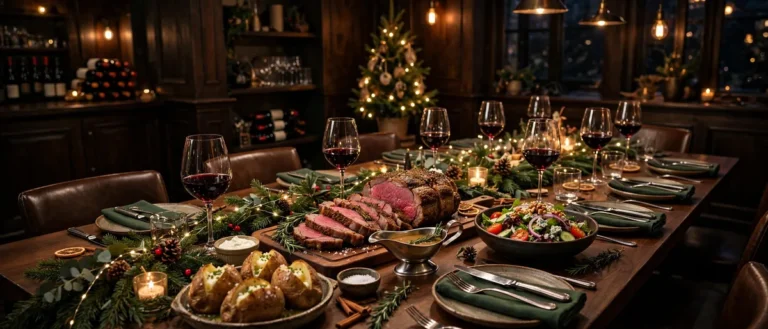
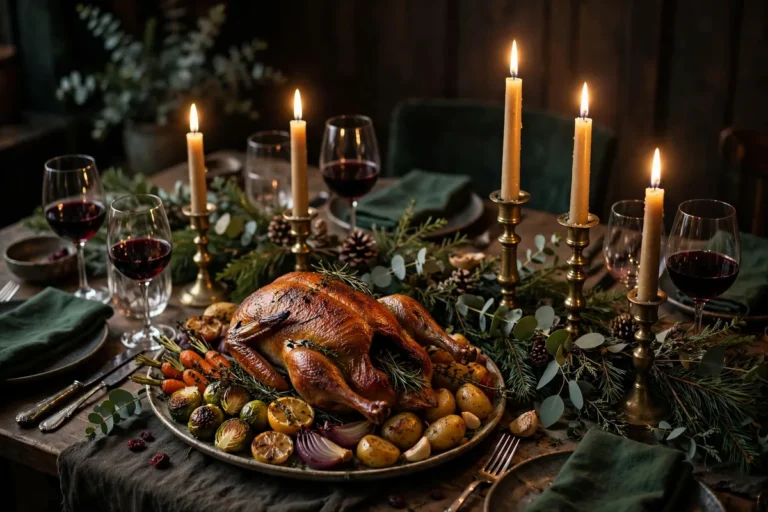
Italian Christmas dinner traditions are among the most food-obsessed in the world — and in Italy, Christmas dinner isn’t one meal but two: the fish-centered Cenone della Vigilia (the “big supper” of Christmas Eve) and the meat-and-pasta Pranzo di Natale (Christmas Day lunch), each with its own rules, regional dishes, and desserts. Add the legendary Feast of the Seven Fishes celebrated by Italian-American families — with its seven (or more) seafood courses — and you have a holiday food culture rich enough to fill a cookbook.
This guide covers it all: the structure of Italian Christmas Eve and Christmas Day meals, 14+ classic dishes across Italy’s regions, the truth behind the Seven Fishes, the desserts that define the season (panettone vs. pandoro and beyond), and practical tips for hosting your own Italian Christmas dinner — including links to our Italian Christmas traditions overview and Christmas dinner ideas for more inspiration.
How Italian Christmas Dinner Works: Two Meals, One Holiday
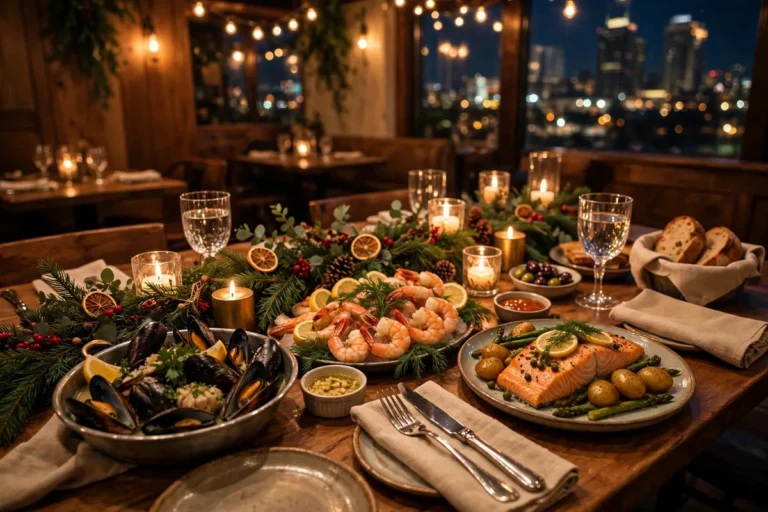
To understand Italian Christmas dinner traditions, you must first grasp the rhythm. Christmas Eve (la Vigilia) is historically a day of abstinence in the Catholic calendar, so the evening meal — the Cenone — is built around fish and seafood, no meat allowed. Families gather late, often after evening Mass, for a long multi-course seafood supper that can stretch past midnight into Christmas morning.
Christmas Day flips the script. The Pranzo di Natale, served as a long lunch starting around 1 PM, is the year’s most abundant meal: antipasti, a rich pasta or baked course, a roast meat centerpiece, vegetables, cheeses, fruit, and an armada of desserts. If the Cenone is elegant restraint, the Pranzo is glorious excess. December 26 (Santo Stefano) is for leftovers — and trust Italians to have strong opinions about which leftovers are best.
One more thing: there is no single “Italian” Christmas menu. Italy’s food is fiercely regional, and Christmas magnifies every local identity. A Neapolitan Cenone (anchovy-laden, tomato-rich) looks nothing like a Venetian one (risotto, baccalà mantecato), and a Piedmontese Pranzo (agnolotti, brasato al Barolo) shares little with a Sicilian one (pasta with sardines, buccellato). The dishes below are organized by region so you can build a coherent menu — or mix and match like a modern Italian family.
The Feast of the Seven Fishes: What It Really Is
The Feast of the Seven Fishes (Festa dei Sette Pesci) is the Christmas Eve seafood marathon most associated with Italian Christmas dinner traditions — but here’s the twist: it’s largely an Italian-American invention. Southern Italian immigrants, especially from Naples and Sicily, brought the Vigilia fish-fast tradition to America, where abundance transformed a humble abstinence meal into a seven-course (or more) seafood spectacle.
Why seven? Theories abound: the seven sacraments, the seven days of creation, the seven hills of Rome. Italian-American families treat the number as a minimum, not a maximum — nine, eleven, and thirteen fishes are all documented. In Italy itself, nobody calls it “the Seven Fishes”; the Vigilia meal simply features lots of fish, and the exact count varies by family and region.
A classic Seven Fishes progression runs: (1) baccalà (salt cod) salad or baccalà mantecato on crostini; (2) marinated anchovies or sardines; (3) shrimp cocktail or scampi; (4) fried calamari; (5) linguine with white clam sauce or spaghetti alle vongole; (6) whole baked fish (branzino or orata); (7) eel — capitone, the traditional Neapolitan Christmas eel, grilled or fried. If you’re hosting a Seven Fishes dinner, pace it like Italians do: small portions, long pauses, and bread for the sauces.
14 Classic Dishes of Italian Christmas Dinner Traditions
1. Baccalà — Salt Cod, the Christmas Eve Anchor
Baccalà (dried, salted cod, rehydrated over 2–3 days) is the single most widespread Christmas Eve fish in Italy. Preparations vary by region: baccalà fritto (battered and fried, Roman style), baccalà alla napoletana (braised with tomatoes, olives, capers, and pine nuts), baccalà mantecato (Venetian whipped cod with olive oil, served on polenta crostini), and baccalà alla livornese (Tuscan, in tomato sauce). The fish’s firm, flaky texture and deep savoriness make it the backbone of the Cenone — and properly desalted, it’s sublime.
2. Capitoni — Christmas Eel
In Naples, Christmas Eve without capitone (large female eel) is unthinkable. The eel is traditionally bought live from the fishmonger — a famous Neapolitan street spectacle — then grilled, fried, or baked with bay leaves. Eel’s rich, fatty flesh was historically a poor family’s luxury: one eel feeds many, and its snake-like form was said to resemble the serpent of evil, making its consumption a symbolic victory. Outside Naples, eel appears in Lazio and parts of the Veneto too.
3. Spaghetti alle Vongole — Clams, the First-Course Classic
No Italian Christmas Eve is complete without a pasta with seafood as the primo. Spaghetti alle vongole (with clams, garlic, white wine, parsley, and chili) is the Neapolitan and Roman standard; linguine ai frutti di mare (mixed seafood) is the showier alternative. The rule is ironclad: no cheese on fish pasta — a point of genuine Italian culinary law that Christmas dinner is not the time to test.
4. Risotto alla Pescatora — The Northern Seafood Primo
In the Veneto, Lombardy, and Piedmont, the Cenone primo is often risotto rather than dried pasta: risotto alla pescatora (fisherman’s risotto with mixed seafood and tomato) or the inky, dramatic risotto al nero di seppia (cuttlefish ink risotto) of Venice. A proper risotto — mantecato with butter and finished all’onda (wavy) — is the northern cook’s flex, and Christmas Eve is its stage.
5. Tortellini in Brodo — Emilia-Romagna’s Christmas Day Opener
On Christmas Day, the north opens with tortellini in brodo: tiny hand-folded tortellini (filled with pork loin, prosciutto, mortadella, and Parmigiano-Reggiano) served in a crystal-clear capon broth. In Bologna and Modena, this is the Christmas primo — non-negotiable, and the subject of fierce family debate over the correct filling ratio. The broth must be rich but clear; the tortellini must be small enough to fit a spoon by the dozen.
6. Agnolotti del Plin — Piedmont’s Pinnched Pasta
Piedmont answers Emilia’s tortellini with agnolotti del plin — small, pinched ravioli filled with roasted meats, served either in broth or, more luxuriously, dressed with the roasting juices of the Christmas brasato al Barolo (beef braised in Barolo wine). The pairing of agnolotti and brasato is the Piedmontese Christmas Day one-two punch.
7. Lasagne al Forno — The Southern Baked Pasta
In Naples, Campania, and much of the south, Christmas Day’s primo is baked: lasagne di Carnevale-style rich lasagne layered with ragù, ricotta, meatballs (polpettine), and hard-boiled eggs; or cannelloni filled with ricotta and spinach. These are project dishes — assembled the day before, baked on the 25th — and they feed a crowd, which is precisely the point.
8. Cappone Ripieno — Stuffed Capon, the Christmas Roast
The traditional Christmas Day roast of the north and center is cappone — a castrated rooster, larger and more tender than a chicken, stuffed (ripieno) with a mixture of its own offal, breadcrumbs, Parmigiano, and herbs, then slow-roasted and often served with mostarda (mustard fruits). In Lombardy, the capon is also the source of the Christmas broth. Turkey (tacchino) has made inroads via American influence, but the capon remains the connoisseur’s bird.
9. Cotechino e Zampone con Lenticchie — New Year’s Crossover
Technically a New Year’s dish — cotechino (large pork sausage) or zampone (pig’s trotter stuffed with sausage meat) served with lentils (whose coin shape symbolizes wealth) — this Modena-born classic increasingly appears on Christmas Day tables too, especially in Emilia-Romagna and Lombardy. It’s rich, porky, and unapologetic.
10. Insalata di Rinforzo — Naples’ “Reinforcement” Salad
The great Neapolitan Christmas salad: cauliflower, pickled peppers (pupaccelle), olives, anchovies, and vinegar — so named because it’s “reinforced” (rinforzata) with new ingredients as the bowl empties over the holiday days. It’s the acidic, crunchy counterpoint to the Cenone’s richness, and it keeps for days.
11. Panettone vs. Pandoro — The Great Dessert Debate
Italy’s Christmas dessert war: panettone (Milan’s tall, domed, candied-fruit-and-raisin brioche) versus pandoro (Verona’s star-shaped, all-butter, fruit-free cake, dusted with vanilla sugar). Families declare allegiance; many serve both. Artisanal versions — from historic Milanese and Veronese bakeries — bear no resemblance to mass-market boxes. Serving ritual matters: panettone is sliced vertically into wedges; pandoro is sliced horizontally into star-shaped layers, sometimes stacked with mascarpone cream.
12. Struffoli — Neapolitan Honey Balls
Struffoli — marble-sized fried dough balls glazed in honey and studded with candied fruit and sprinkles, piled into a wreath or cone — are Naples’ Christmas dessert. The name likely derives from the Greek strongoulos (round). They’re made in enormous batches, given as gifts, and eaten by the handful for days.
13. Torrone — Christmas Nougat
Torrone (nougat with honey, egg whites, and toasted almonds or hazelnuts) is a pan-Italian Christmas sweet, with famous versions from Cremona (torrone cremonese), Benevento, and Sicily. It comes hard (friabile) or soft (morbido), chocolate-covered or plain — and a Christmas table without a torrone box is, in many families, simply incomplete.
14. Panforte and Ricciarelli — Siena’s Spiced Gifts
From Siena: panforte, the dense, peppery medieval cake of honey, nuts, candied fruit, and spices, dusted with powdered sugar; and ricciarelli, chewy almond-paste ovals. Both are Christmas-market staples and elegant dinner-table endings with Vin Santo for dunking.
Regional Menus: Building Your Own Italian Christmas Dinner
A Neapolitan Cenone (Christmas Eve)
Antipasti: marinated anchovies, octopus salad (insalata di polpo), baccalà fritters. Primo: spaghetti alle vongole. Secondo: capitone (grilled eel) or orata al forno (whole baked sea bream). Contorno: insalata di rinforzo. Dolce: struffoli, torrone, panettone. Wine: a crisp Falanghina or Greco di Tufo.
A Piedmontese Pranzo (Christmas Day)
Antipasti: vitello tonnato, bagna càuda (warm anchovy-garlic dip), carne cruda. Primo: agnolotti del plin. Secondo: brasato al Barolo with roasted potatoes. Dolce: pandoro with zabaione, torrone. Wine: Barolo or Barbaresco — it’s Piedmont; there’s no other answer.
A Sicilian Christmas Table
Sicily blends both meals with Arab-Norman echoes: pasta con le sarde (pasta with sardines, wild fennel, pine nuts, and raisins), sarde a beccafico (stuffed sardines), swordfish rolls (involtini di pesce spada), and for dessert buccellato (fig-and-nut filled pastry ring) and cassata-adjacent ricotta sweets. The flavors are sweet-sour (agrodolce) in the island’s unmistakable style.
Table Culture: How Italians Actually Eat at Christmas
Understanding Italian Christmas dinner traditions means understanding the table culture around them. Meals are long — three to five hours — and nobody apologizes for it. Courses arrive in strict order: antipasto, primo, secondo (with contorno), dolce, frutta, caffè, digestivo. Bread is on the table throughout (for fare la scarpetta — mopping up sauce, a gesture of appreciation, not bad manners), and water and wine are the only standard drinks; asking for a cocktail with dinner marks you as a tourist.
The antipasto spread deserves its own appreciation. A Christmas antipasto in Italy is a composed abundance: affettati (cured meats — prosciutto di Parma, culatello, salame), formaggi (Parmigiano-Reggiano aged 24+ months, taleggio, gorgonzola dolce), marinated vegetables (sottoli and sottaceti), and on Christmas Eve, their seafood equivalents — smoked salmon, swordfish carpaccio, seafood salads. In Piedmont, the antipasto might be the meal’s highlight: bagna càuda, the hot anchovy-garlic-olive-oil dip eaten with raw and cooked vegetables, is practically a ceremony.
Children are not seated separately, not rushed, and not served a different meal — Italian Christmas dinner is multigenerational by default, and the long table with grandparents at its center is the point. Tombola (Italian bingo) traditionally follows the Cenone, with small prizes and family-wide cheating; in many families the game matters as much as the meal. The evening ends not with a television but with conversation, panettone crumbs, and the feeling that nobody is in a hurry to leave — which, in the end, is the real tradition.
Santo Stefano: The Art of Christmas Leftovers
December 26, Santo Stefano, is Italy’s official leftovers day — and Italians treat leftovers as a second cuisine, not a compromise. The great baked pastas (lasagne, cannelloni) are sliced and reheated, arguably better on day two. Roast capon becomes insalata di cappone or shredded into broth. The insalata di rinforzo is literally designed to be reinforced and re-served. Panettone gets its most glorious second act as French toast-style panettone fried in butter, or cubed into a trifle-like zuccotto with mascarpone.
This leftover culture is worth adopting: plan your Christmas quantities with Santo Stefano in mind, and the 26th becomes a relaxed, grazing day of the holiday’s greatest hits — no cooking required, just reheating and assembling. It’s the Italian answer to the question of what to do with a feast, and it’s one of the most practical Italian Christmas dinner traditions to borrow.
Hosting Guide: Timing and Tips
Two days before: Start desalting baccalà (change water 2–3 times daily). Make the ragù for baked pasta; it improves overnight. Bake or buy panettone/pandoro — artisanal loaves are worth the splurge.
Christmas Eve: Prep seafood in the morning; make the primo sauce base; fry baccalà and calamari just before serving (fried seafood waits for no one). Serve the Cenone late — 8:30 or 9 PM is authentically Italian — and don’t rush: the meal is the evening’s entertainment.
Christmas Day: The Pranzo starts around 1 PM and runs 3–4 hours. Assemble baked pasta in the morning; roast the capon or brasato low and slow; open the good wine. Between courses, serve frutta secca — dried figs, dates, walnuts, hazelnuts — the traditional Italian Christmas nibble. End with espresso (never cappuccino after a meal — another ironclad rule) and a digestivo: limoncello in the south, amaro or grappa in the north.
Your Shopping List: Pantry Essentials for an Italian Christmas
If you’re cooking Italian Christmas dinner traditions from scratch, stock the pantry first. The non-negotiables: 00 flour and semola for fresh pasta; a wedge of Parmigiano-Reggiano (24-month minimum — accept no substitutes); San Marzano tomatoes; good extra-virgin olive oil (a peppery one for finishing); anchovies (salt-packed, from Cetara if you can find them); capers from Pantelleria; dried porcini; carnaroli rice for risotto; clams and mussels (buy the day of, from a trusted fishmonger); mascarpone; candied orange and citron; honey (millefiori for struffoli); almonds, hazelnuts, and walnuts; and Vin Santo for both cooking and dunking.
For the Seven Fishes or a serious Cenone, befriend your fishmonger early in December: order the baccalà (or buy it already desalted), reserve a whole branzino or orata, and ask about capitone if you’re feeling Neapolitan. For Christmas Day, order the cappone or a quality brasato cut (beef chuck or cheek) from the butcher, and buy the panettone or pandoro from the best Italian bakery you can reach — this is the one item where artisanal quality transforms the experience. With the pantry stocked and the orders placed, the cooking itself becomes the pleasure it’s meant to be — and the table becomes the celebration.
In Pictures: Italian Christmas Dinner Traditions
Italy’s Christmas is two feasts — the meatless Vigilia on Christmas Eve and the grand meat dinner on Christmas Day.

An Italian Christmas Eve table: spaghetti with clams, fried calamari, baked fish and mussels under candlelight in a rustic dining room.
Watch: Italian Christmas Dinner Traditions
Chef Jasper explores the Feast of the Seven Fishes — an Italian-American Christmas Eve tradition — with linguine and clam sauce.
At a Glance: Italian Christmas Dinner Traditions
The courses of an Italian Christmas.
| Dish | When | Key detail |
|---|---|---|
| Feast of the Seven Fishes | 24 December | Christmas Eve’s meatless seafood banquet — seven or more fish dishes; theories for “seven” include the sacraments |
| Baccalà | 24 December | Salt cod — fried, in salads, or mantecato — the most traditional of the fishes |
| Linguine alle vongole | 24 December | Clam sauce pasta — a classic primi of the Vigilia table |
| Christmas Day dinner | 25 December | The meat feast: tortellini in brodo, roast veal or turkey, and all the antipasti |
| Panettone & pandoro | December | The sweet breads of Christmas — raisin-studded panettone, sugar-dusted pandoro |
| Santo Stefano | 26 December | St Stephen’s Day — public holiday, leftovers and family visits |
| La Befana | 6 January | Epiphany’s broomstick gift-bringer closes the season — 8 December to 6 January in all |
Frequently Asked Questions
What do Italians eat for Christmas dinner?
Italians eat two Christmas meals: the Cenone della Vigilia on Christmas Eve (a fish and seafood supper — baccalà, eel, clams, calamari) and the Pranzo di Natale on Christmas Day (antipasti, a rich pasta like tortellini in brodo or lasagne, a roast such as cappone or brasato, plus panettone or pandoro). Menus vary enormously by region.
What is the Feast of the Seven Fishes?
A Christmas Eve seafood feast of at least seven fish dishes — but it’s primarily an Italian-American tradition, developed by southern Italian immigrants in the US from the Vigilia fish-fast custom. In Italy, Christmas Eve simply features abundant fish without the “seven” framework. Typical dishes: baccalà, calamari, clams, shrimp, baked whole fish, and eel.
Why don’t Italians eat meat on Christmas Eve?
Christmas Eve (la Vigilia) is historically a day of abstinence in the Catholic calendar — meat is avoided as a form of vigil before the feast. Fish became the celebratory alternative, and the meatless Cenone is now a beloved tradition in its own right, with the grand meat courses reserved for Christmas Day lunch.
Panettone or pandoro — which is the real Italian Christmas cake?
Both are authentic: panettone (with candied fruit and raisins) is Milan’s; pandoro (plain butter cake, no fruit) is Verona’s. There’s no winner — families pick sides, and many serve both. For the best experience, buy artisanal versions from Italian bakeries rather than mass-market boxes.
Can I make an Italian Christmas dinner ahead of time?
Yes — much of it is designed for it. Ragù, baked lasagne, brasato, torrone, struffoli, and panettone all improve or hold well made ahead. On the day, focus on fresh execution: fry the seafood last-minute, cook pasta al dente, and roast the capon low and slow. Start baccalà desalting 2–3 days ahead.
What wine should I serve with Italian Christmas dinner?
Match the region: Falanghina or Vermentino with the Christmas Eve seafood; Barolo, Chianti Classico Riserva, or Taurasi with Christmas Day roasts. Finish with Vin Santo or Moscato d’Asti for dessert. Italians drink regionally — when in doubt, serve what the dish’s region drinks.
Buon Natale, Buon Appetito
Italian Christmas dinner traditions remind us that the holiday table is a story: of fasting and feasting, of the sea on the 24th and the land on the 25th, of a hundred regional identities expressed in pasta shapes and dessert allegiances. Whether you attempt the full Seven Fishes, roast a cappone, or simply serve panettone with good coffee, you’re participating in one of the world’s great food cultures at its most generous. For more holiday table inspiration, see our best Christmas movies to play during the long lunch, our French Réveillon menu for a cross-border comparison, Mexican Christmas tamales and pozole for another family-centered feast tradition, and our complete guide to Italian Christmas traditions for the customs beyond the table.