Learning how to celebrate Valentine’s Day at home might be the best relationship upgrade nobody talks about. Forget the February 14th restaurant gauntlet — the marked-up prix fixe menus, the 5:30 p.m. reservation slots, the neighboring couple’s argument as your ambience. At home, Valentine’s Day becomes what it was always supposed to be: a day shaped entirely around the two of you, at your pace, on your couch, with your food and your music and nobody else’s timeline.
But “staying in” needs a plan, or it dissolves into the most expensive version of a regular Saturday: takeout eaten in silence, half-watched TV, and the vague feeling that the day slipped away. The couples who love their at-home Valentine’s Days are not luckier or more creative than anyone else — they just decided in advance what the day would look like. Intention is the entire difference between “we didn’t go out” and “we had the best Valentine’s Day ever.”
This is the complete guide to celebrating Valentine’s Day at home: a full hour-by-hour itinerary from morning to midnight, dozens of activity ideas matched to your couple type, six evening date-night formats with setup instructions, a decorations guide at three budget levels, a week-before preparation checklist, ideas for long-distance couples celebrating apart, and answers to the questions couples actually ask. Treat it as a menu — pick what fits, skip what does not, and build a day that feels like yours.
The Golden Rules of Celebrating Valentine’s Day at Home
Before the itinerary, five principles that make or break an at-home Valentine’s Day. Get these right and almost any activity becomes romantic; get them wrong and even the best plan feels flat.
1. Plan it like an event, not a default. The danger of staying home is formlessness. Write the day’s plan down — even loosely — and tell your partner “I planned our day.” The planning itself is romantic; it says this day mattered enough to prepare for.
2. Change the environment. Your home on Valentine’s Day should not look like your home on a random Tuesday. Candles, flowers, a rearranged living room, a blanket fort — some visible signal that today is different. Environment cues the brain faster than intentions do.
3. Phones go away for defined stretches. Not “let’s try to be present” — an explicit agreement: phones in a drawer from breakfast until lunch, and again from dinner until bed. Defined stretches feel doable; vague aspirations feel oppressive and fail.
4. Build in both togetherness and anticipation. The best at-home Valentine’s Days have a rhythm: a morning surprise, an afternoon activity, an evening centerpiece. Gaps between planned moments create anticipation, which is half the romance.
5. End the day deliberately. Do not let Valentine’s Day dissolve into scrolling in bed. Plan the ending — a slow dance in the living room, reading your cards to each other, stargazing, a nightcap with one last toast. The ending is what the day will be remembered by.
The Complete Hour-by-Hour Itinerary
Below is a full-day framework. Shift times to match your life — the structure matters more than the clock. Total planned cost for this itinerary: $30–$60, mostly groceries and candles.
| Time | Moment | What Happens | Prep Needed |
|---|---|---|---|
| 8:00 a.m. | The wake-up | Breakfast in bed (see our full breakfast-in-bed guide) with a handwritten card | Tray ready, card written the night before |
| 9:30 a.m. | Slow morning | Coffee together, no phones; read cards aloud; talk about favorite memories from the past year | None — just presence |
| 11:00 a.m. | The morning adventure | A walk somewhere beautiful — a park, a neighborhood you love, a trail — with hot drinks to go | Thermos, comfortable shoes |
| 1:00 p.m. | Lunch, upgraded | Cook lunch together (or a great picnic indoors if weather is bad); open a bottle of something | Groceries bought in advance |
| 3:00 p.m. | The afternoon activity | Pick one from the activity menu below — the “main event” of the daylight hours | Activity-specific (see below) |
| 5:30 p.m. | The transformation | Split up for one hour: shower, change, each person prepares one surprise (dessert, playlist, the table) | Divided tasks agreed in advance |
| 6:30 p.m. | Cocktail hour | Drinks and a small appetizer; the evening officially begins | Drink ingredients ready |
| 7:30 p.m. | Dinner | The home-cooked Valentine’s dinner (see our dinner ideas guide) served in courses | Follow the dinner timeline |
| 9:30 p.m. | The evening experience | One date-night format from below: movie, tasting, games, spa, stargazing | Setup done during dinner lulls |
| 11:30 p.m. | The ending | Slow dance, nightcap, exchange one final note or toast; phones stay away | One song picked in advance |
Morning Ideas: Start the Day Like It Matters
Mornings set the emotional tone, and Valentine’s morning has one job: make your partner feel chosen before the day begins. Beyond breakfast in bed, consider these:
- The love-note trail. Hide five to ten small notes around the house — in the coffee mug cabinet, on the bathroom mirror, in a jacket pocket — each with one reason you love them or one favorite memory. They will find them all day long.
- The morning walk with a twist. Walk your usual route, but bring a thermos of good coffee and stop somewhere with a view. Familiar places feel new when you are deliberately savoring them together.
- Recreate your first morning. If you remember the first morning you woke up together — the diner, the coffee shop, the terrible instant coffee in that first apartment — recreate some piece of it. Nostalgia is concentrated romance.
- Write the day’s “menu” together. Over breakfast, lay out the plan for the day on paper like a restaurant menu: “Today’s specials.” Letting your partner see the thought you put in is part of the gift.
Afternoon Activities Matched to Your Couple Type
The afternoon is the flexible heart of the day — two to three unscheduled hours that need one anchor activity. Pick the one that matches who you actually are, not who Valentine’s marketing thinks you are.
For the Homebodies: The Ultimate Cozy Afternoon
Build a blanket fort in the living room (yes, really — adults, blankets, fairy lights; it is objectively delightful), make hot chocolate from scratch with real chocolate, and do a puzzle together or read side by side. The goal is delicious, unhurried nothing — the luxury of having nowhere to be.
For the Foodies: The Progressive Tasting Afternoon
Turn your kitchen into a tasting tour: a cheese and honey pairing at 2 p.m., a chocolate tasting (three to four bars, different cacao percentages, tasted blind) at 3, and a cocktail or mocktail invention challenge at 4, where each person creates a signature Valentine’s drink and the other judges it. Delicious, interactive, and you learn something.
For the Creatives: The Make-Something Afternoon
Paint portraits of each other (the worse the artist, the funnier and more treasured the result), build a scrapbook page of your year together, or try a pottery-at-home kit. Making something with your hands side by side creates the absorbed, companionable focus that researchers link to relationship satisfaction — and you get a keepsake.
For the Adventurers: The Micro-Adventure
You do not need to leave home to have an adventure, but a small one nearby counts: geocaching in your neighborhood, a photo scavenger hunt (each person lists ten things to photograph; compare results over dinner), or a “tourist in your own town” walk to somewhere you have never been within a mile of home. Novelty — even tiny novelty — is rocket fuel for romance.
For the Competitors: The Tournament Afternoon
Board games, card games, video games, or a cooking competition (each person makes the same dish; blind taste test). Keep stakes playful — loser makes tomorrow’s breakfast, winner picks tonight’s movie. A little rivalry, handled with humor, is electric.
Evening Date-Night Formats (Pick One as Your Centerpiece)
Dinner ends around 9:30; the evening needs one more act. Each format below includes setup instructions so it feels like an event, not an afterthought.
1. The Curated Movie Night
Not “let’s see what’s on” — a curated night. Pick a theme (movies from the year you met, a director retrospective, so-bad-they’re-good), make themed snacks, build a blanket nest with every pillow in the house, and institute a no-phones rule with an intermission for discussion. Print tiny “tickets.” The curation is what makes it a date instead of TV.
2. The Home Wine (or Chocolate, or Cheese) Tasting
Buy three bottles in a theme — three Malbecs at different prices, three regions’ Pinot Noir — and taste blind with a simple scorecard: look, smell, taste, guess the price. Add a cheese plate and good bread. You will be shocked how much fun structured tasting is, and you will learn what you actually like instead of what labels tell you to like.
3. The Fondue & Games Night
Cheese fondue followed by chocolate fondue (see our dinner guide), with a stack of two-player games between courses. The fondue keeps your hands busy and your bodies close; the games keep the energy playful. This is the highest coziness-per-dollar format on the list.
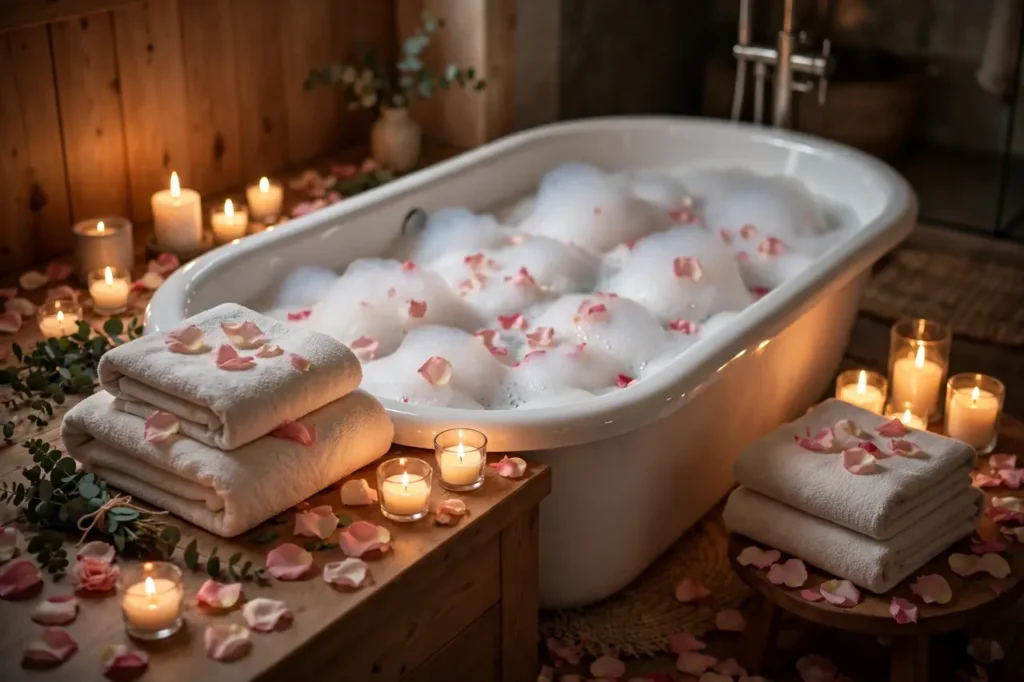
4. The DIY Spa Evening
Take turns: face masks, foot soaks with Epsom salts and essential oils, shoulder massages (ten minutes each, with a timer — fairness matters), calming music, dim lights, herbal tea. Unplug the doorbell if you can. It sounds simple because it is simple — and it is one of the most genuinely relaxing things two people can do together.
5. The Memory Lane Evening
Go through old photos together — phones, printed albums, that box in the closet — and tell the stories behind them. Make a “top ten moments” list of your relationship so far and read it aloud. Then write predictions for the next year and seal them in an envelope to open next Valentine’s Day. Couples who reminisce together report feeling closer afterward; nostalgia is a bonding mechanism, not just a feeling.
6. The Stargazing Finale
If weather and location allow: blankets, hot drinks in a thermos, a stargazing app, and a backyard, balcony, or even a car parked somewhere dark. February skies are crisp and clear in many places, and there is something about looking up together that makes everything else feel small in the best way. Check a light-pollution map beforehand — driving twenty minutes to darker skies transforms the experience.
Decorations: Three Budget Levels
Decorations are the fastest way to signal “today is different.” You do not need much — you need visible.
| Level | Budget | What to Get | Impact |
|---|---|---|---|
| Essential | $10–$15 | Tea lights (a big bag), one bunch of grocery-store flowers, handwritten notes | Transforms the evening; the 80/20 of romance decor |
| Elevated | $25–$40 | Above plus: string fairy lights, a table runner or cloth napkins, pillar candles, rose petals | Feels designed, not decorated |
| All-out | $50–$80 | Above plus: balloon garland or arch, fresh flower arrangements, themed tableware, scented candles | Full transformation; great for milestone years |
Placement matters more than quantity: cluster candles in groups of three at different heights rather than scattering singles; put flowers where you will actually see them (dining table, bathroom, bedside — not the hallway); and light everything 30 minutes before the moment, not during it. A pro tip from event stylists: dim or turn off overhead lights first, then add candles — candlelight only reads as romantic against darkness.
The Week-Before Checklist
An at-home Valentine’s Day fails in the preparation, not the execution. Run through this checklist in the week leading up — most items take minutes, and together they eliminate every common failure mode.
- 7 days out: Agree on the rough shape of the day together (or plan a surprise and tell your partner only “I’ve got the 14th handled”). Order anything that needs shipping: candles, fairy lights, a card.
- 5 days out: Plan the dinner menu and the evening format. Check what you already own before shopping — half of “I need to buy everything” is forgetting what’s in the pantry.
- 3 days out: Grocery shop for non-perishables and drinks. Confirm any reservations if part of your day leaves the house (a wine tasting, a show). Charge the camera or clear phone storage for photos.
- 1 day out: Buy fresh items (flowers, perishables). Make anything that improves overnight: dessert, marinades, cookie dough. Write the card — not the morning of, when your handwriting and thoughts are both shaky. Set the table if you have the space.
- Morning of: Follow the day’s timeline. Tidy the visible rooms (romance and clutter are incompatible). Put fresh towels in the bathroom if the spa evening is planned. Then stop preparing and start enjoying — over-preparation anxiety is the enemy of presence.
Celebrating Apart: Long-Distance Valentine’s Day at Home
Distance does not cancel Valentine’s Day; it just changes the format. The key insight for long-distance couples: synchronize, don’t just call. A video call where you are both doing the same thing feels like togetherness; a call where you are just talking about your separate days feels like a meeting.
- Cook the same meal together over video. Agree on a recipe in advance, shop for the same ingredients, and cook “together” with laptops propped in the kitchen. Eat at the same time, candles lit on both ends.
- Watch party with rules. Use a watch-party feature, pick the movie in advance, make the same snacks, and keep a shared notes doc for live commentary. The shared ritual matters more than the film.
- Send a physical box ahead of time. A care package — their favorite snacks, a candle, a handwritten letter, something to open on camera — gives the day a tangible anchor that no video call provides.
- Take a virtual tour together. Many museums, aquariums, and national parks offer free virtual tours. Pick one, “walk through” it together on a call, and pretend you are tourists. It is surprisingly fun.
- Write and exchange “open when” letters. “Open when you miss me,” “open when you can’t sleep” — a set of sealed letters is a gift that keeps giving for months.
What NOT to Do on Valentine’s Day at Home
Don’t “wing it.” The number one killer of at-home Valentine’s Days is the absence of a plan. “We’ll figure it out” becomes takeout and TV by 7 p.m. Plan loosely, but plan.
Don’t over-schedule. The opposite failure: a minute-by-minute itinerary with no breathing room feels like a corporate offsite. Leave gaps. The best moments of the day will happen in the unplanned spaces between planned ones.
Don’t spend the day on chores “since we’re home anyway.” Laundry, deep cleaning, and assembling furniture are Valentine’s Day poison. Tidy, don’t clean. The house needs to look cared for, not renovated.
Don’t compare your day to anyone’s social media. Your Valentine’s Day is for the two of you, not an audience. The couples posting elaborate setups are performing; you are participating. There is no contest.
Don’t skip the ending. As the evening winds down, resist the drift toward separate screens. Plan the last thirty minutes deliberately — it is what the whole day will be remembered by.
New Couples vs. Long-Term Couples: Tuning the Day
An at-home Valentine’s Day hits differently depending on where you are in the relationship — and the plan should reflect that.
For new couples (dating under a year): Keep it light, playful, and low-pressure. A full day of intense romance can feel like too much too soon; instead, anchor the day around one shared activity (cooking together, the tasting afternoon, a hike) and one nice dinner. Avoid the heavy nostalgia formats — you do not have a decade of photos yet, and that is fine. The love-note trail works beautifully for new couples because it is sweet without being weighty. And keep the evening’s expectations relaxed: the goal is fun and connection, not a milestone.
For long-term couples (years in): Lean into depth and ritual. This is where the memory-lane evening, the sealed predictions envelope, and recreating your first date shine — you have history to draw on, so use it. Long-term couples also benefit most from the “transformation” principle: after years of ordinary Tuesdays in the same living room, visibly changing the space signals that this day is set apart. And be honest about energy: if a full-day itinerary sounds exhausting, compress it. A perfect Valentine’s evening (great dinner + one experience + a deliberate ending) beats a dutiful full day that leaves you both tired.
For married couples with busy lives: Treat Valentine’s Day at home as protected time, not another project. The week-before checklist exists precisely so the day itself feels restful. Lower the production values, raise the presence: phones away, no logistics talk, one good meal, and an early night. Sometimes the most romantic thing a busy couple can do is simply be unavailable to the world together.
Watch: 15 Cute Valentine’s Day Ideas
Need visual inspiration? This video is packed with cute Valentine’s Day ideas — DIY cards, romantic breakfast ideas, and creative crafts you can do at home together. Watch it in the week before and steal your favorites.
FAQs About Celebrating Valentine’s Day at Home
Is it okay to just stay home on Valentine’s Day?
Completely — and increasingly, it is the preference. Staying home is not “doing nothing”; it is choosing intimacy, control over the evening, and a fraction of the cost. What matters is intention: a planned, thoughtful day at home beats a thoughtless expensive night out every time.
How can I make Valentine’s Day at home feel special and not boring?
Three levers: change the environment (lights, candles, rearranged furniture), follow a plan with distinct phases (morning, afternoon, evening each get their own moment), and remove the everyday (no chores, no work talk, phones away). Special is a function of contrast with the ordinary — create the contrast deliberately.
What do couples actually do on Valentine’s Day at home?
The most popular formula is: a special breakfast or morning surprise, a shared afternoon activity (walk, cooking, games, creative project), a home-cooked dinner served with intention, and one evening experience (movie night, tasting, spa, stargazing). The itinerary table above lays out a complete version hour by hour.
How much should I budget for Valentine’s Day at home?
A genuinely lovely day runs $30–$60: groceries for a nice dinner ($30–$40), candles and flowers ($10–$15), and maybe a bottle of wine. The decorations table above shows three tiers from $10 to $80. For tighter budgets, a heartfelt handwritten note — borrow inspiration from our anniversary wishes collection — keeps the romance well under $25.
What if my partner and I have different ideas of romance?
Build the day with one “their thing” and one “your thing,” plus one compromise. If one of you wants adventure and the other wants coziness: morning hike, afternoon blanket fort. Naming the trade explicitly (“this morning is yours, tonight is mine”) prevents the quiet disappointment of mismatched expectations.
How do we celebrate Valentine’s Day at home with kids in the house?
Include them in the daytime (family breakfast, a craft, a walk) and reclaim the evening: early bedtime or a movie-and-popcorn setup for the kids, then the romantic dinner and evening format for the two of you after. Many couples also celebrate on the weekend before or after the 14th when babysitting is easier.
What is a good Valentine’s Day surprise I can pull off at home?
The love-note trail (notes hidden around the house, found all day) has the highest delight-to-effort ratio of any surprise. Runners-up: a room transformed while they are out, a video montage of your photos, or recreating your first date’s meal. Surprises work best when they show thought, not money.
Should we get each other gifts if we are celebrating at home?
Gifts are optional, not required — many couples celebrating at home skip traditional gifts in favor of experiences. If you do exchange, keep it small and personal: a book they’d love, something handmade, or an experience gift. Our Valentine’s gifts for her and gifts for him guides have ideas at every price.
What if Valentine’s Day falls on a weekday and we both work?
Celebrate in the evening only, and shift the bigger plans to the nearest weekend — there is no rule that romance must happen on a Tuesday. Do one small morning gesture (a note on the coffee maker, a text with the evening plan), then run the dinner-plus-evening portion of the itinerary after work. Many couples find the “Valentine’s weekend” version more relaxed than the actual day.
A Final Word Before February 14th
The restaurants will be packed, the prix fixe menus will be overpriced, and thousands of couples will have perfectly fine, perfectly forgettable evenings. Yours does not have to be one of them. A planned day at home — breakfast in bed, an afternoon that feels like play, a dinner you cooked with your own hands, an evening that ends deliberately — is not the budget option or the lazy option. For a lot of couples, it is simply the better option.
So pick your itinerary, buy the candles, write the card tonight, and close the door on February 14th with the two of you inside. If you want to make it a yearly ritual, our guide to creating your own Valentine’s traditions will help you build on this year, and our Valentine’s Day date ideas collection has fresh inspiration whenever you need it. Happy Valentine’s Day — make it yours.