
How Much Can You Make Renting Out Your Garage? Honest 2026 Earnings Guide
Empty square footage is an asset most homeowners ignore: peer-to-peer storage platforms let you rent garage bays, driveway spots, and spare rooms to people who need storage without paying for a commercial unit. The income is modest per space but remarkably passive — often under an hour of monthly effort — and the demand is structural, driven by housing costs and urban density. Ranges below reflect host reports across platforms; dense metros pay double or triple what rural areas do.
Below you will find the full picture: realistic earning tiers, the factors that move you up or down, the real costs most people forget, and concrete scenarios showing how the math works at different levels. We have also included the tax basics every side hustler needs and a straight-talking conclusion — because an honest earnings guide should leave you better informed, not just more optimistic.
A note on earnings: Every dollar figure in this guide is a reported range drawn from freelancer surveys, platform data, and industry reporting — not a promise. Side-hustle income varies enormously with your market, skill level, pricing, and the hours you actually put in. Treat ranges as planning estimates, track your own numbers from day one, and be skeptical of anyone guaranteeing a specific income. Results vary, and that is normal.
Renting Out Your Garage Earnings at a Glance
The table below summarizes the typical ranges we see reported by working operators. Detail on each tier follows — including who it fits and what it takes to get there.
| Level | Typical range | Monthly equivalent | What it looks like |
|---|---|---|---|
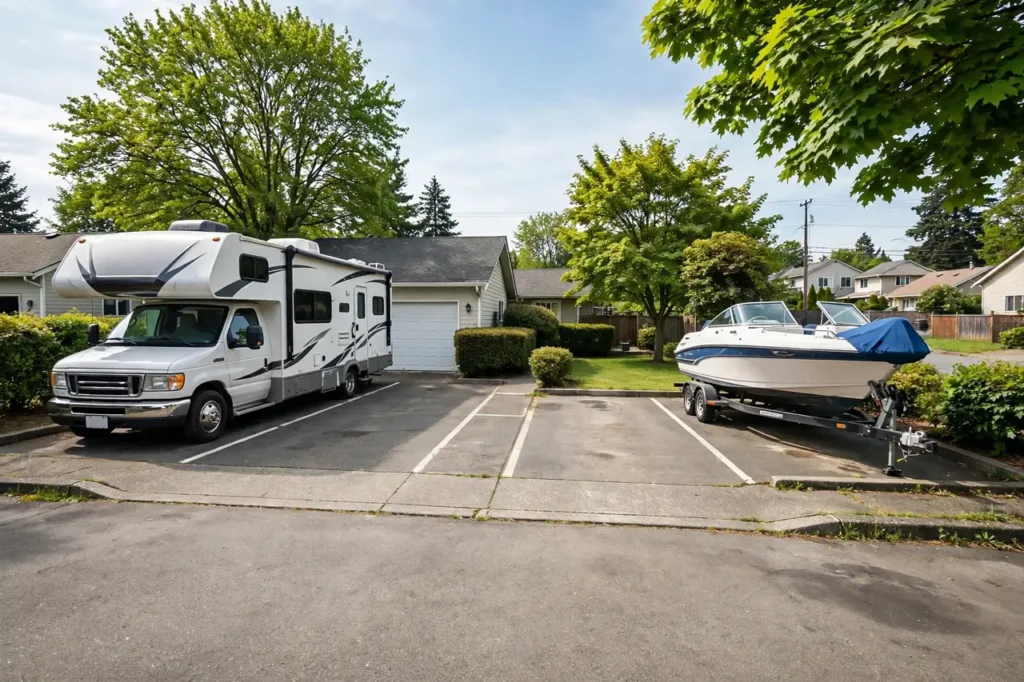
| Driveway / parking spot | $50–$150/month | $600–$1,800/year | The simplest listing: a paved spot for a car, boat, or RV. Minimal effort, minimal requirements — if you have the space, this is nearly free money. |
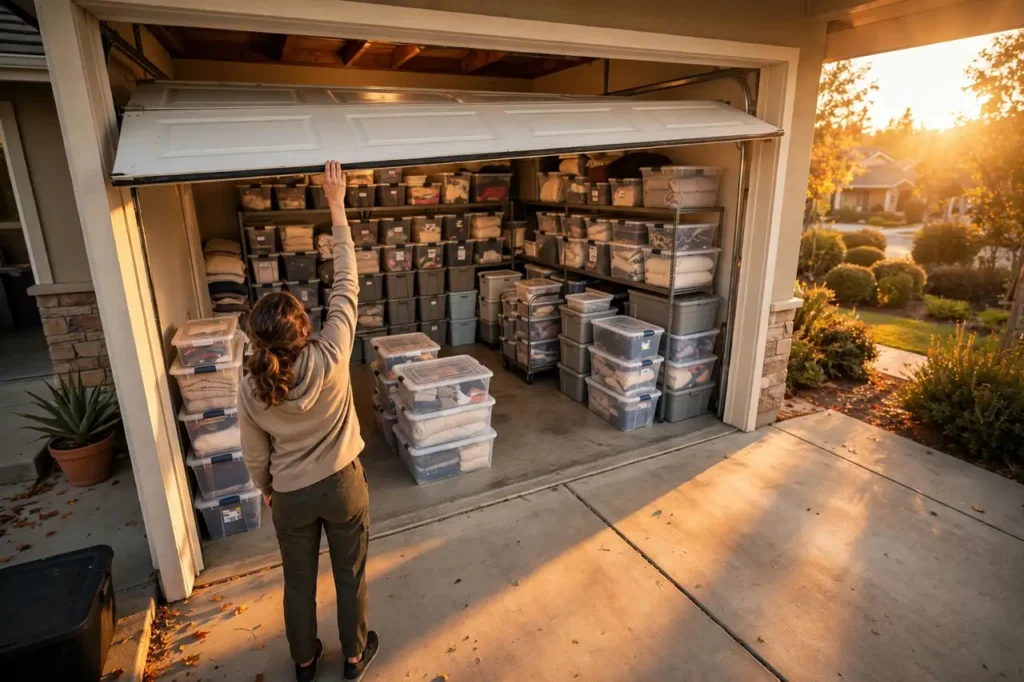
| Single garage bay | $100–$300/month | $1,200–$3,600/year | Enclosed, lockable space for household goods, a vehicle, or business inventory. The core product most hosts list first. |
| Full two-car garage | $200–$500/month | $2,400–$6,000/year | In dense cities with expensive commercial storage, a clean two-car garage rents fast. Climate control or easy access pushes toward the top of the range. |
| Multiple spaces / small lot | $500–$2,000/month | $6,000–$24,000/year | Hosts with acreage, outbuildings, or commercial-adjacent property who list RV/boat storage for 5–20 vehicles. Approaches a real business with real (but manageable) operations. |
Earnings by Level: The Full Breakdown
Driveway / parking spot: $50–$150/month
$600–$1,800/year. The simplest listing: a paved spot for a car, boat, or RV. Minimal effort, minimal requirements — if you have the space, this is nearly free money.
Single garage bay: $100–$300/month
$1,200–$3,600/year. Enclosed, lockable space for household goods, a vehicle, or business inventory. The core product most hosts list first.
Full two-car garage: $200–$500/month
$2,400–$6,000/year. In dense cities with expensive commercial storage, a clean two-car garage rents fast. Climate control or easy access pushes toward the top of the range.
Multiple spaces / small lot: $500–$2,000/month
$6,000–$24,000/year. Hosts with acreage, outbuildings, or commercial-adjacent property who list RV/boat storage for 5–20 vehicles. Approaches a real business with real (but manageable) operations.
What Actually Determines Your Earnings
Two people doing space owners can earn wildly different amounts. These six factors explain most of the gap — and most of them are within your control.
Location density
The entire game. Urban and suburban areas with expensive housing and scarce storage pay 2–4x rural rates. A garage bay near downtown Seattle might fetch $300/month; the same bay an hour out might fetch $100.
Enclosed vs. open
Lockable, weatherproof space commands a 50–100% premium over open driveway parking. Renters pay for security and weather protection — emphasize both in your listing.
Access terms
24/7 self-access rents best but means renters coming and going. Limited-access (by appointment, daytime only) earns slightly less but preserves your privacy — price the trade-off consciously.
Space condition
Clean, dry, pest-free, well-lit space with a working door rents fastest and retains renters longest. A $200 cleanup and new lighting often pays back in the first month.
Vehicle vs. household storage
Vehicle storage (cars, RVs, boats, trailers) typically pays more per square foot than box storage and involves less renter traffic. RV/boat owners especially struggle to find affordable options.
Lease length
Monthly renters pay the highest rates; 6–12 month commitments deserve a 10–20% discount that buys you stability. Annual prepay options reduce churn to near zero.
The Real Costs (Do Not Skip This)
Gross revenue is vanity; net profit is sanity. Here are the costs that come off the top for space owners — budget for all of them or your ‘earnings’ are fiction.
| Cost item | Typical amount | Notes |
|---|---|---|
| Listing & platform fees | 0–15% of revenue | Some platforms charge hosts nothing and take renter-side fees; others take a cut. Read the terms — fee structures vary widely. |
| Space preparation | $100–$400 one-time | Cleaning, shelving, lighting, lock upgrades. Usually the only real startup cost. |
| Extra insurance | $0–$300/year | Check your homeowner’s policy: some cover it, some exclude business activity. A rider is cheap peace of mind. |
| Security (optional) | $50–$200 | A camera or smart lock pays for itself in renter confidence and dispute protection. |
| Increased utilities | Negligible | A light left on occasionally. Effectively zero for most hosts. |
How to Increase Your Earnings
Once you understand the ranges, the question becomes: how do you climb them? These six levers are the highest-ROI moves reported by experienced space owners.
List vehicle storage specifically
RV, boat, and trailer owners are the most underserved renters and pay the best rates. If your space fits them, say so prominently.
Offer 24/7 access
Self-access with a smart lock or gate code widens your renter pool and justifies top-of-market pricing.
Photograph it empty and clean
Renters cannot visualize their stuff in your clutter. Empty, swept, well-lit photos book 3x faster than 'here is my garage with my stuff in it.'
Add simple security
A visible camera and a sturdy lock are worth $25–$50/month in renter willingness to pay — and they protect you too.
Discount annual prepay
Offer 10–15% off for 12 months paid upfront. You trade a small discount for zero vacancy risk and cash today.
List every space separately
Garage bay, driveway spot, shed, side yard — list them all. Renters search specific needs, and four modest listings often outperform one big one.
Three Realistic Scenarios
Ranges are useful; concrete examples are better. Here is how the math plays out for three typical space owners at different levels of commitment.
The suburban garage bay
Tom lists half his two-car garage at $175/month near Denver. One renter stores boxes and a motorcycle on a 12-month lease. Annual gross: $2,100. Costs: $150 in prep, nothing ongoing. Effort: maybe 2 hours a year. Net: ~$1,950 for space he was not using.
The driveway RV spot
Lena rents a side-yard RV pad at $225/month outside Austin. Two long-term renters over the year (one 8 months, one 4 months) = $2,700 gross. She adds a $120 security camera and spends an hour a month on communication. Net: ~$2,500/year, nearly passive.
The multi-space host
Greg lists 8 RV/boat spots on his rural-adjacent acreage at $150/month each, 75% average occupancy = $10,800/year gross. Platform fees, gravel maintenance, and a gate system run ~$1,800. Net: ~$9,000/year for a few hours a month — his most profitable 'crop.'
The Outlook: Where This Is Headed
Storage demand is structurally growing — urbanization, smaller living spaces, and the sheer accumulation of stuff guarantee it. Commercial storage rates keep rising, which widens the price umbrella peer hosts operate under. The outlook for 2027+ is stable-to-growing for well-positioned hosts, with one caveat: as platforms mature, expect more professional competition (people buying properties specifically for storage rental) in the best markets. Early movers with good spaces and strong reviews will be entrenched; late entrants will compete harder for thinner margins.
One final note on using these numbers: revisit this guide’s framework annually, not just once. Re-run your own tier assessment every twelve months — costs change, platforms adjust their terms, and your skills compound. The hustlers whose earnings grow year over year share one habit: they treat their income like a dashboard to optimize, reviewing pricing, costs, and time investment on a schedule instead of running on autopilot. Set a yearly reminder; your future self will thank you.
How to Price Your Work (Without Underselling Yourself)
Pricing is where most side hustlers leave the most money on the table. Beginners almost always price too low — then discover they cannot raise rates later without losing the clients they attracted with bargains. Here is a framework that works across service hustles.
Start from your costs, not your courage
Calculate your true floor first: materials, platform fees, payment processing (usually ~3%), mileage, and the self-employment tax set-aside from the tax section above. Then add your target hourly value. If the resulting price feels “too high,” that feeling is the beginner tax — check what established providers in your market actually charge before discounting yourself. Mystery-shop three competitors’ quotes; you will usually find you were about to undercut the market by 30% or more.
Package beats hourly
Wherever the work allows it, sell defined packages instead of open-ended hours. “Website refresh package: $1,200” converts better and earns more than “$40/hour, however long it takes,” because clients buy outcomes, not time. Packages also let your effective hourly rate rise as you get faster — the reward for skill should go to you, not evaporate into cheaper quotes.
Raise rates on a schedule
Build raises into the plan: new clients pay the new rate, and existing clients get 30 days’ notice once or twice a year. A 10–15% annual increase roughly tracks your growing skill and is rarely the reason anyone leaves. The clients who leave over a modest increase are almost always the highest-maintenance ones — losing them is a feature, not a bug.
Never compete on price alone
There is always someone cheaper, including someone overseas charging a tenth of your rate. Compete instead on reliability, communication speed, and specialization. “I answer within 2 hours and deliver on the exact day promised” wins more business than a 20% discount, and it attracts clients who respect the work.
Getting Your First Clients: A Practical Playbook
The work itself is rarely the hard part of a side hustle — getting strangers to trust you with money is. You do not need a big ad budget; you need a repeatable system for the first 10 clients, because everything after that runs substantially on referrals.
Start with warm outreach (week 1–2)
Make a list of 50 people who know you — former colleagues, neighbors, community groups, alumni networks — and tell them plainly what you are offering and who it is for. Not a mass blast: short, personal messages. The ask is not “hire me,” it is “do you know anyone who needs this?” Warm introductions convert at multiples of cold outreach, and your first 3 clients will very likely come from this list.
Build one proof asset
Before you market broadly, create one thing that proves competence: a portfolio page with 5–10 strong samples, a before/after gallery, or 2–3 detailed case notes. If you have no paid work yet, do 2–3 free or steeply discounted jobs for ideal clients in exchange for testimonials and portfolio rights. This is an investment, not charity — cap it, time-box it, and stop the moment you have proof.
Pick one channel and go deep
Spread across six platforms, your marketing is a hobby. Dominant on one, it is a pipeline. For local services, that is usually Google Business Profile plus Nextdoor and local Facebook groups. For digital services, it is usually one freelance marketplace plus one content channel (LinkedIn posts, short-form video, or a simple SEO blog). Publish on a schedule for 90 days before judging results — most people quit right before compound interest kicks in. Our Digital Marketing for Small Business guide covers the low-cost tactics in detail.
Ask for referrals systematically
After every successful job, ask: “Who else do you know who might need this?” Then make it frictionless — a short link, a one-line description they can forward. A simple referral thank-you (a gift card, a discount on their next job) turns one client into a small sales team. Roughly speaking, a healthy service hustle should see 30–50% of new business arriving via referral within the first year; if yours is near zero, the work is not the problem — the ask is missing.
Legal Basics: Structure, Licenses, and Insurance
You do not need a law degree to start a side hustle, but three legal checkboxes protect you from the problems that sink beginners.
1. Business structure
Most side hustles start as sole proprietorships — the default the moment you sell something. It costs nothing and requires no paperwork, but it also offers no separation between you and the business: your personal assets are exposed if something goes wrong. An LLC (limited liability company) creates that separation for a state filing fee that typically runs $50–$500 depending on where you live. There is no universal “right” answer; many people start as sole proprietors and form an LLC once revenue becomes meaningful. Compare the trade-offs in our LLC vs Sole Proprietorship guide, and read LLC Explained for the plain-English mechanics.
2. Licenses and permits
Requirements vary wildly by hustle and locality. Food businesses face health-department rules; home services may need trade licenses; some cities require a simple business license for any commercial activity. Check your city and county websites before you take your first paying job — a 20-minute search now beats a fine later.
3. Insurance
General liability insurance for a small service business often costs $30–$75 per month and covers the “what if I break something / someone gets hurt” scenarios that keep owners up at night. If clients visit your home or you handle their property, it is close to essential. Professionals selling advice or creative work should look at professional liability (errors & omissions) coverage as well.
Finally, get an EIN (Employer Identification Number) from the IRS — it is free, takes minutes online, and lets you keep your Social Security number off client forms. See How to Get an EIN for the walkthrough.
Side-Hustle Taxes: What to Know Before the Money Arrives
Taxes are the least exciting part of any side hustle and one of the most expensive to get wrong. In the United States, income from a side hustle is generally taxable even if no employer withholds anything — and the IRS expects you to handle it yourself. Here is the practical version, not the textbook version.
Self-employment tax is the surprise bill
W-2 employees split Social Security and Medicare taxes with their employer. When you earn side income as a freelancer or sole proprietor, you pay both halves yourself — currently 15.3% on net earnings, on top of regular income tax. A common rule of thumb is to set aside 25–30% of every side-hustle dollar the moment it lands, in a separate savings account you do not touch. People who skip this step routinely face a painful April surprise in year one.
Quarterly estimated payments
If you expect to owe more than about $1,000 in tax beyond withholding, the IRS generally wants you to pay in quarterly installments (April, June, September, January). Miss them and you can owe underpayment penalties even if you pay in full at filing time. Mark the dates on your calendar the week you start earning; the IRS “Direct Pay” tool makes each payment a five-minute job.
Track everything from day one
Open a separate checking account or at least a dedicated spreadsheet for the hustle. Log income when it arrives and photograph every receipt for business expenses — mileage, supplies, software subscriptions, home-office costs. Clean records do two things: they maximize the legitimate deductions you are entitled to (which directly lower that 15.3% bite), and they make tax season a weekend task instead of a month-long excavation. Our guide to Small Business Bookkeeping walks through a simple system that works for one-person operations.
Deductions beginners miss
Commonly overlooked write-offs include the home-office deduction (if you have a dedicated workspace), a portion of your phone and internet bill, professional development (courses, books), business insurance premiums, and mileage driven for the hustle at the IRS standard rate. Keep in mind that deductions reduce taxable income — they do not make spending free money. And when in doubt on anything gray-area, a one-hour consult with a CPA (often $150–$300) usually pays for itself many times over. This is general information, not tax advice; rules change and your situation is your own.
Watch Out for Side-Hustle Scams
Any field where beginners are eager and information is asymmetric attracts scammers. Legitimate opportunities never need your money upfront to “unlock” earnings — keep that sentence taped to your monitor.
Red flags that mean walk away
- Pay-to-work fees: “Pay $299 for the starter kit / certification / exclusive territory before you can earn.” Real employers and real clients pay you; the money flows toward you, not away from you (aside from normal business costs you choose yourself).
- Guaranteed income claims: “Earn $5,000/month guaranteed!” as covered in our earnings note above — guarantees in an uncontrolled market are fiction.
- Overpayment schemes: A “client” sends a check for too much and asks you to forward the difference. The check bounces; the forwarded money was real. Never accept overpayments.
- Vague work, urgent pressure: If you cannot get a straight answer about what the work actually is, or you are told the offer expires today, it is not an opportunity — it is a script.
- Requests for sensitive data early: No legitimate first step requires your bank login, full SSN (beyond standard tax forms after real work begins), or remote access to your computer.
How to verify before you commit
Search “[company/platform name] + scam / reviews / reddit” and read past the first page. Check how long the operation has existed. For marketplaces, confirm you are on the real domain (scammers clone login pages). Trust the pattern across many reviews, not any single glowing testimonial — those are cheap to fake.
A Quick Word on Timing and the Economy
Side-hustle demand is not immune to the broader economy — when household budgets tighten, discretionary services feel it first, while repair, resale, and value-oriented hustles often hold up better. Before committing startup money, skim the current picture in our US Economy News: Inflation, Jobs & Interest Rates roundup. The hustles in this guide are evergreen skills rather than fads, which is exactly why they survive cycles: people always need homes photographed, resumes written, and cars cleaned, in good years and lean ones.
Frequently Asked Questions
How much can you make renting out your garage?
Most single-space hosts report $100–$300/month ($1,200–$3,600/year) for a garage bay, with driveway spots at $50–$150/month and full two-car garages reaching $200–$500/month in dense metros. Multi-space hosts with land can reach $500–$2,000/month. It is modest per space but among the most passive income available — often under an hour of effort monthly.
Is renting out my garage legal?
Usually yes, but check three things: your HOA rules (many restrict commercial activity), local zoning (some cities limit home businesses), and your homeowner’s insurance (verify coverage for renter-stored property). Most suburban hosts operate without issues; HOA-governed communities are where problems arise.
What if a renter's stuff gets damaged or stolen?
Platform agreements typically clarify that hosts are not insurers of stored property, and renters are advised to carry their own coverage — but verify your platform’s terms and your homeowner’s policy. Good lighting, locks, and cameras prevent most incidents; clear written agreements handle the rest.
How does this compare to renting out a spare room?
Storage renters are boxes, not people: no shared kitchens, no noise, no personality conflicts — and lower income ($100–$300 vs. $500–$1,500/month). Choose storage for passivity, spare rooms for yield. Some hosts do both with different spaces.
What does the tax situation look like?
Rental income is taxable; related expenses are generally deductible against it. Keep a simple ledger from day one — our Small Business Bookkeeping guide shows a system that takes minutes a month.
Should I form an LLC for this?
Most single-space hosts operate as sole proprietors; hosts with multiple spaces or significant assets often use an LLC for liability separation. Compare in our LLC vs Sole Proprietorship guide.
The Complete Guide Series
This post is part of our in-depth series on this side hustle. Each guide stands alone, but together they cover the topic from every angle — start with whichever question is on your mind:
- Renting Out Your Garage: How to Start in 2026 (Step-by-Step Guide) — the complete 10-step launch plan with startup costs, pricing guidance, marketing tactics, and the mistakes that sink most beginners.
- Renting Out Your Garage Pros and Cons: An Honest 2026 Review — an unflinching look at the advantages, the real drawbacks, who thrives, who should pass, and the best alternatives to consider.
Reading all three gives you the full decision-making picture: what it pays, how to launch it, and whether it fits your life. Bookmark the series and work through them in any order.
Keep Reading on DayZora
These guides cover the business foundations behind any side hustle:
- New to business entities? Start with what an LLC is.
- Side-hustle demand follows the cycle — check the current economy for context.
- Protect your time while building with our work-life balance tips.
- For the full launch checklist, see our guide to launching a business.
The Bottom Line
Renting Out Your Garage can be a genuinely worthwhile side hustle — the earning tiers above show real ranges earned by real people, not hype. The honest summary: expect the lower tiers while learning, invest in the factors that move you up (skill, positioning, systems, and consistency), budget the real costs from day one, and give it 12–18 months of serious effort before judging the ceiling. Side-hustle income is earned twice: once in the work, and once in the learning that makes the work valuable. Start lean, track everything, and let your own numbers — not anyone’s promises — guide how far you take it.