A birthday cake gets the photos, but homemade dog birthday treats win the party. Treats are what you hand to every canine guest, what you stuff into party favor bags, what you use for the birthday games, and what the birthday dog snacks on for days afterward. A single homemade dog birthday treats recipe can produce dozens of biscuits from a few dollars of pantry ingredients — no preservatives, no mystery “animal digest,” no ingredients you cannot pronounce.
This guide is a complete treat workshop: twelve tested recipes organized by style (crunchy baked biscuits, soft training treats, no-bake bites, and frozen party pops), a master safety reference, bake-time and storage charts, gift-packaging ideas that make your treats look boutique, and honest answers to the questions owners ask — including how long homemade treats last and whether they are actually cheaper than store-bought. (They are. Dramatically.)
Why Homemade Treats Beat Store-Bought
The commercial dog treat aisle is a marvel of marketing and a minefield of ingredients. Many mass-market treats list “meat and bone meal,” “animal digest,” corn syrup, and chemical preservatives like BHA and propylene glycol — all legal, none ideal. Even premium treats cost $8 to $15 per bag for what is essentially flour, flavor, and packaging. Homemade treats flip the equation: you control every ingredient, you skip every preservative, and a batch of 40 biscuits costs roughly $2 to $4.
There is a freshness factor too. Homemade treats contain no preservatives, which means they taste better — dogs notice — but also means you must respect storage rules (covered below). For dogs with allergies, homemade is often the only option: you can build treats around exactly the proteins and carbs your dog tolerates, something no commercial “limited ingredient” bag does as precisely. And for the birthday specifically, homemade treats carry a meaning no store bag can match. You made these, by hand, for this dog, for this day.
Safety Rules for Dog Treat Baking
Every recipe in this guide follows the same safety foundation. Memorize the never-list: xylitol/birch sugar (lethal — check every peanut butter, yogurt, and “sugar-free” label), chocolate/cocoa (theobromine toxicity), grapes and raisins (kidney failure risk), macadamia nuts, onion, garlic, leeks, chives (red blood cell damage), nutmeg beyond trace amounts, and alcohol. Safe flavor heroes: xylitol-free peanut butter, banana, pumpkin puree (plain, never pie filling), unsweetened applesauce, carrots, blueberries, plain Greek yogurt, eggs, oats, and small amounts of honey and cinnamon.
The 10-percent rule governs treats as strictly as cake: all treats combined should supply no more than 10 percent of daily calories. On the birthday, when treats flow freely, cut the regular meals by a quarter to a third to keep the day’s total sane. And introduce any brand-new ingredient in a tiny amount a day or two before the party — a treat recipe is no place to discover a sensitivity.
Crunchy Baked Biscuits
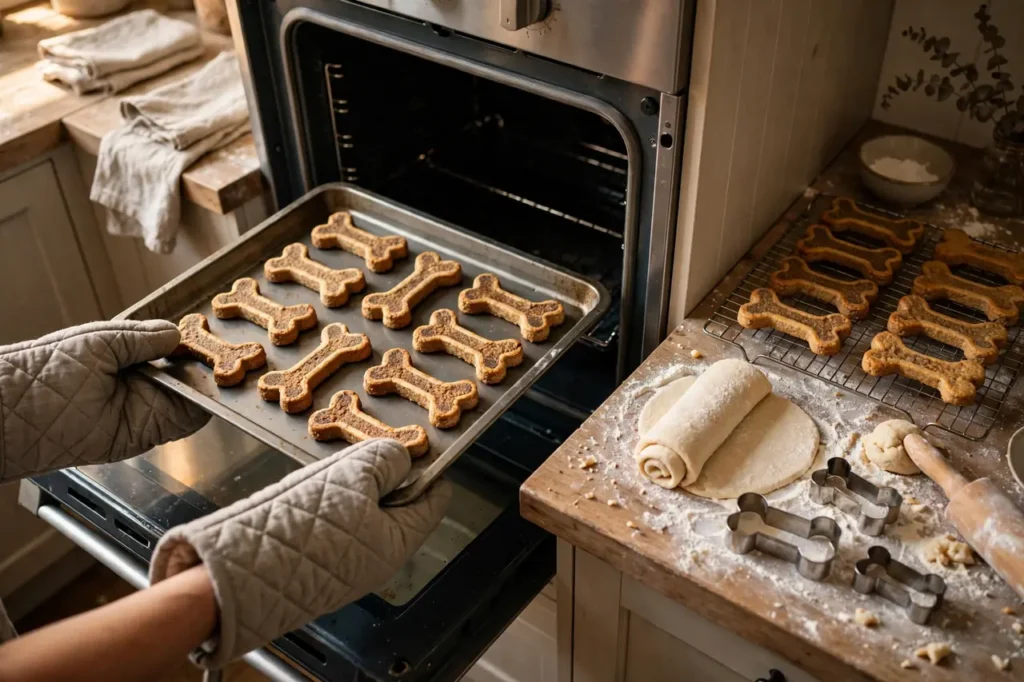
Baked biscuits are the backbone of the treat table: shelf-stable for a week or more, endlessly shapeable with cookie cutters, and sturdy enough to bag as favors. The key to crunch is low, slow baking — driving moisture out without burning.
1. Classic Peanut Butter Birthday Biscuits
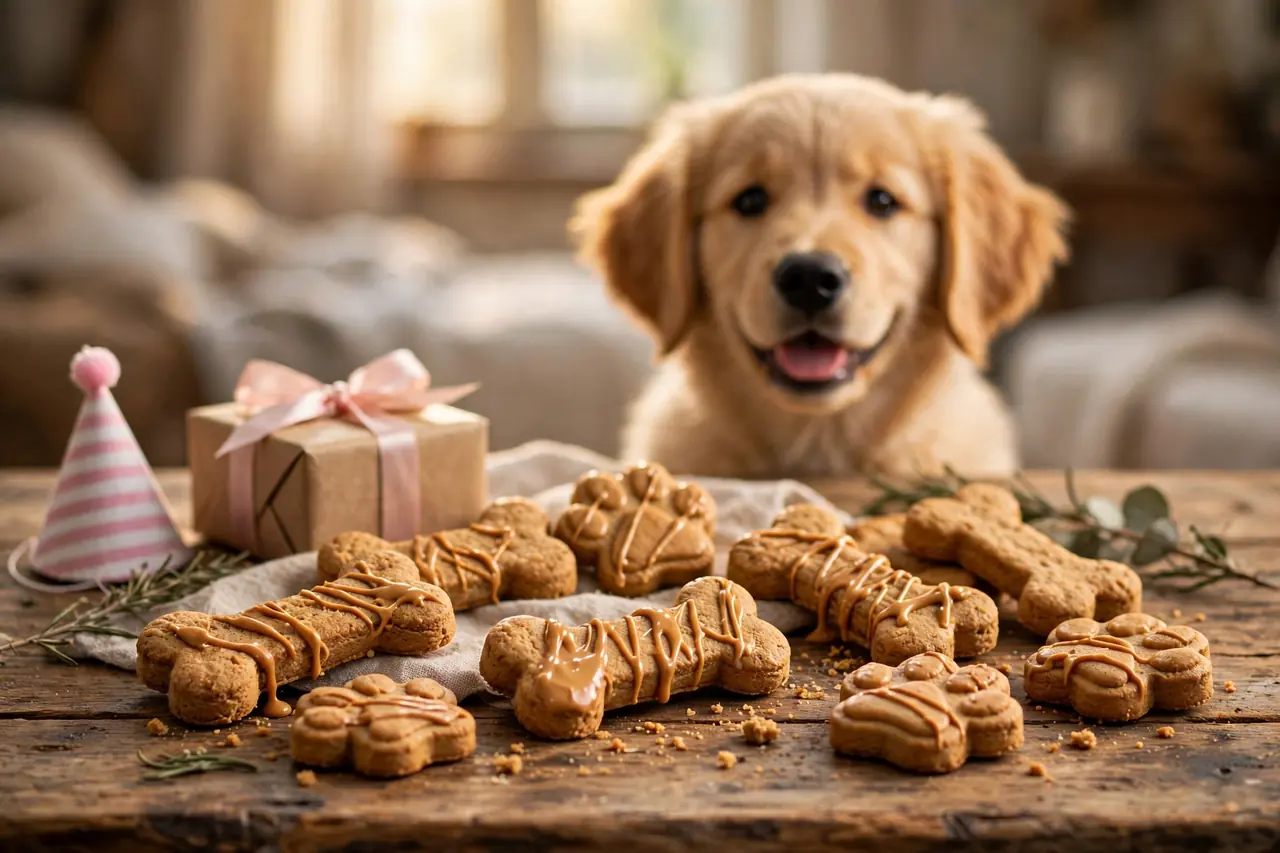
Makes about 36 biscuits. Whisk 2 cups whole wheat flour with 1 teaspoon baking powder. In a second bowl, stir 1 cup xylitol-free creamy peanut butter, 1 cup low-sodium chicken broth (or water), and 1 tablespoon honey until smooth. Combine into a firm dough, roll ¼-inch thick on a floured surface, and cut with bone- or paw-shaped cutters. Bake at 350°F (175°C) for 20 minutes, then turn off the oven and leave the biscuits inside for 1 hour to crisp. They should snap, not bend.
2. Cheddar-Apple Crunchers
Makes about 30 biscuits. Combine 2 cups oat flour, 1 cup finely shredded sharp cheddar, and ½ cup finely diced apple (no seeds). Add 1 beaten egg and ¼ cup water, mixing into a stiff dough. Roll, cut, and bake at 325°F (160°C) for 25 minutes, then oven-crisp for 45 minutes. The cheese makes these intensely aromatic — the birthday dog will smell them from the other room. Use real cheddar, not “cheese product,” and keep portions modest; cheese is rich.
3. Sweet Potato & Cinnamon Stars
Makes about 40 small biscuits. Mash 1 cup baked sweet potato flesh until completely smooth and stir in 1½ cups oat flour, ½ teaspoon cinnamon, and 1 beaten egg. The dough is soft — chill 30 minutes before rolling. Cut into stars, bake at 350°F for 18 to 22 minutes, and oven-crisp 30 minutes. The natural orange color needs no decoration, and the cinnamon reads as “birthday spice” to human noses.
4. Blueberry Oat Hearts
Makes about 32 biscuits. Pulse 1 cup fresh blueberries with ¼ cup water into a puree. Mix 2 cups oat flour with the blueberry puree, 1 beaten egg, and 2 tablespoons coconut oil. Roll ¼-inch thick, cut into hearts, and bake at 350°F for 20 minutes plus 45 minutes of oven-crisping. The berries tint the biscuits a gorgeous purple that looks spectacular in favor bags — natural color, zero dye.
| Recipe | Oven temp | Bake time | Oven-crisp time | Yield |
|---|---|---|---|---|
| Peanut Butter Birthday Biscuits | 350°F / 175°C | 20 min | 60 min | ~36 |
| Cheddar-Apple Crunchers | 325°F / 160°C | 25 min | 45 min | ~30 |
| Sweet Potato & Cinnamon Stars | 350°F / 175°C | 18–22 min | 30 min | ~40 |
| Blueberry Oat Hearts | 350°F / 175°C | 20 min | 45 min | ~32 |
Soft Training-Style Treats
Soft treats are the workhorses of the party: use them for birthday games, trick performances, and rewarding calm behavior around guests. They must be small (pea-sized for most dogs), soft enough to eat in one gulp without crumbling, and aromatic enough to hold attention amid distractions.
5. Three-Ingredient Peanut Butter Softies
Makes about 60 tiny treats. Mix 1 cup oat flour, ½ cup xylitol-free peanut butter, and ¼ cup unsweetened applesauce into a soft dough. Roll into pea-sized balls (about ½ teaspoon each), place on a parchment-lined sheet, and flatten slightly with a fork. Bake at 325°F for just 12 to 15 minutes — you want them set but still soft. Cool completely; they firm up as they cool. These are the single most useful treat in this guide: fast, foolproof, and universally loved.
6. Salmon Training Tidbits
Makes about 50 tiny treats. Blend one 5-oz can of salmon (drained, bones checked) with 1 egg and ¾ cup oat flour into a thick paste. Spread ¼-inch thick on a parchment-lined baking sheet and bake at 350°F for 15 minutes until firm. Cool, then cut into pea-sized squares with a pizza cutter. The fish aroma makes these the highest-value reward in the house — reserve them for the birthday trick show. For caption ideas when the tricks hit social media, browse our dog quotes collection.
7. Pumpkin Pie Soft Bites (Dog-Safe)
Makes about 48 treats. Stir 1 cup plain pumpkin puree, 1½ cups oat flour, 1 beaten egg, and ½ teaspoon cinnamon into a soft dough. Roll into small balls, flatten, and bake at 350°F for 14 to 16 minutes until just set. These stay soft for days and the pumpkin fiber is gentle on stomachs — the best choice for the sensitive-stomach guest dog.
No-Bake Birthday Bites
No-bake treats are the party-day saviors: no oven timing, no cooling racks, minimal dishes. They rely on the refrigerator or freezer for structure and are ready in under an hour including chill time.
8. Peanut Butter Oat Energy Balls
Makes about 24 balls. Mix 1½ cups rolled oats, ¾ cup xylitol-free peanut butter, ¼ cup honey, and 2 tablespoons ground flaxseed. The mixture should hold together when squeezed — if crumbly, add peanut butter a teaspoon at a time. Roll into 1-inch balls (smaller for small dogs), place on a parchment-lined tray, and refrigerate 1 hour until firm. Roll half the batch in crushed freeze-dried blueberries for a festive two-tone presentation. Keep refrigerated; these soften at room temperature.
9. Frozen Yogurt Party Pops
Makes 12 pops. Blend 2 cups plain Greek yogurt, 1 mashed banana, and 2 tablespoons xylitol-free peanut butter until smooth. Pour into silicone mini-muffin molds or ice cube trays, press a small dog biscuit halfway into each as a “stick,” and freeze 4 hours or overnight. Unmold and serve immediately — these melt fast, which is part of the fun. For summer birthdays, these double as the cooling station: set out a tray on ice and let dogs (supervised) pick their own.
10. Carob-Dipped Pretzel Twists (Dog-Safe)
Makes about 20 twists. Melt ½ cup carob chips (verify 100% carob, no cocoa) with 1 teaspoon coconut oil in the microwave in 20-second bursts, stirring between each. Dip dog-safe pretzel-shaped biscuits halfway, place on parchment, and sprinkle with crushed freeze-dried strawberries before the coating sets. Refrigerate 20 minutes. They look like boutique human treats and taste like a celebration — the favor-bag showpiece.
Frozen Treats for Hot-Weather Parties
11. Watermelon Mint Coolers
Makes 12 coolers. Blend 2 cups seedless watermelon chunks (seeds and rind removed — the rind causes stomach upset) with 6 to 8 fresh mint leaves and ½ cup water. Pour into molds and freeze 4 hours. Watermelon is hydrating and low-calorie; mint freshens breath. These are nearly calorie-free, making them the guilt-free party treat — serve freely, within reason.
12. Bone Broth Pupsicles
Makes 10 pupsicles. Fill silicone molds ¾ full with low-sodium bone broth (no onion or garlic — check the label), drop a blueberry and a tiny piece of cooked chicken into each, and freeze overnight. Unmold into a bowl of cold water for serving — the broth melts into a savory “soup” as the dog licks, extending the experience to 15 minutes of blissful occupation. For an outdoor summer party, these buy you 15 minutes of calm from every dog present, which is worth more than gold.
Storage Chart: Keeping Homemade Treats Safe
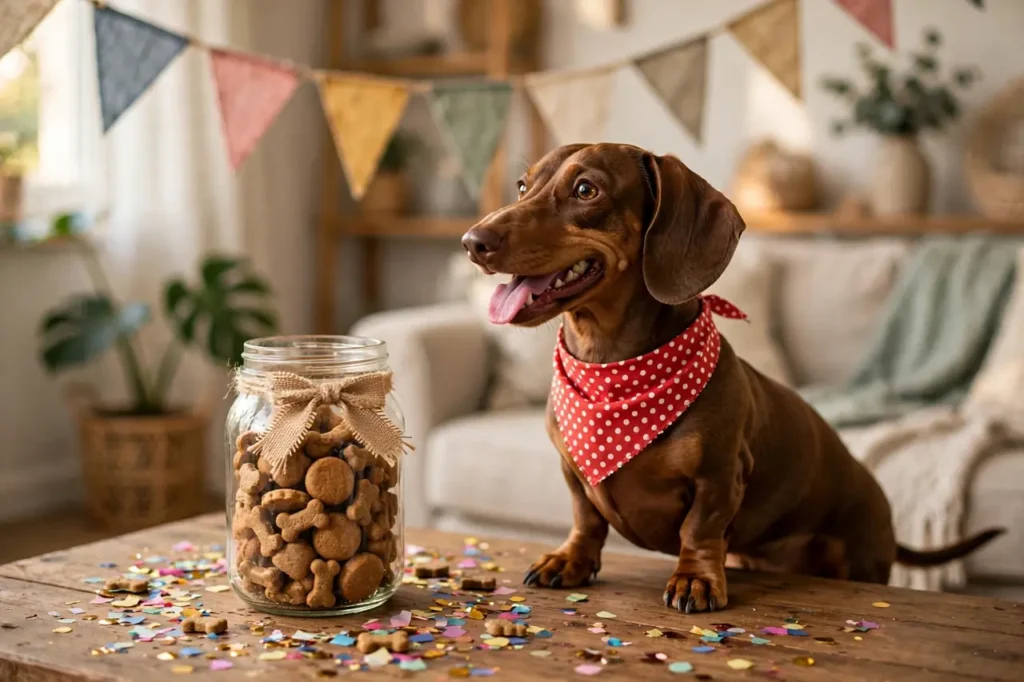
No preservatives means real shelf-life limits. This chart covers every recipe type in this guide — when in doubt, refrigerate, and trust your nose: off smells mean the batch is done.
| Treat type | Room temperature | Refrigerated | Frozen |
|---|---|---|---|
| Crunchy baked biscuits | 7–10 days (airtight) | 3 weeks | 3 months |
| Soft baked treats | 2–3 days | 1 week | 3 months |
| No-bake energy balls | Do not store at room temp | 1 week | 2 months |
| Frozen yogurt pops / pupsicles | Serve immediately | Do not refrigerate (melts) | 2 months |
| Carob-dipped treats | 3–5 days (cool room) | 2 weeks | 2 months |
Gift Packaging: Treats as Party Favors
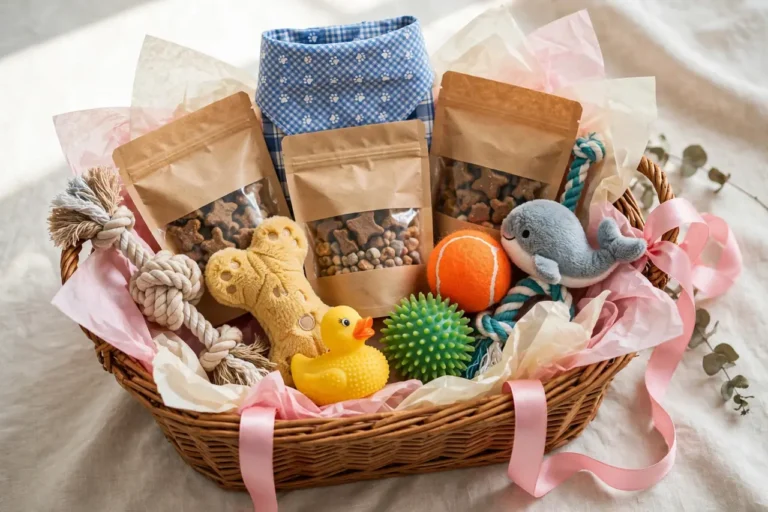
Homemade treats become unforgettable party favors with ten minutes of packaging. Fill small kraft paper bags or cellophane bags with a mix of two biscuit types, fold the top, and seal with a sticker printed with the birthday dog’s name and the party date. Tie bone-shaped biscuits with twine in bundles of three for a rustic look. For the full boutique effect, nest treats in shredded paper inside small cardboard bakery boxes — the kind sold for wedding favors — with a “thank you” tag.
Label everything. A simple tag listing the treat name and ingredients (“Peanut Butter Biscuits: peanut butter, flour, egg, honey”) is thoughtful for guests with allergic dogs and looks professional. Include a “best by” date one week out for biscuits. If any guest dog has known allergies, pack them a separate bag from the pumpkin or blueberry recipe — the hypoallergenic option — and hand it to their human personally. That small gesture will be remembered longer than the cake.
Cost Comparison: Homemade vs. Store-Bought
The economics are not close. A batch of 36 peanut butter biscuits costs roughly $2.50 in ingredients (flour, peanut butter, egg, honey from pantry staples) — about 7 cents per treat. A comparable bag of premium commercial biscuits runs $9 to $14 for 20 to 30 treats — 40 to 60 cents each. Even accounting for your time and the oven’s electricity, homemade costs one-fifth to one-tenth as much. For a party needing 100+ treats across recipes, the savings land between $30 and $60 — enough to fund the decorations, the cake ingredients, and the favor bags combined. The only “cost” is about two hours of enjoyable kitchen time, ideally with the birthday dog supervising from a strategically chosen floor spot.
The Science of Crunch: Texture, Teeth, and Satisfaction
Texture is not just a preference — it changes how a treat functions. Crunchy biscuits require chewing, and chewing does three useful things: it slows consumption (a dog that crunches a biscuit in 20 seconds absorbs the experience better than one that inhales a soft treat in two), it provides mild mechanical cleaning of tooth surfaces, and it delivers psychological satisfaction — the “work” of crunching is inherently rewarding to dogs. This is why the crunchy biscuits in this guide make the best favor-bag and free-choice party treats: they occupy the dog.
Soft treats serve the opposite function: speed. A pea-sized soft treat can be eaten in one gulp without the dog losing focus, which makes them ideal for training sequences, trick performances, and rapid-fire reward games where you need the dog’s attention back in two seconds. Using crunchy treats for rapid training is a mistake — the dog spends the critical learning moment crunching instead of thinking. Match the texture to the job: crunchy for occupation and favors, soft for training and games, frozen for cooling and long-duration calm. The best birthday treat tables offer all three, because a party needs all three jobs done.
One honest note on dental claims: crunchy treats support dental hygiene mechanically, but they do not replace brushing or professional cleanings. Think of them as a helpful supplement — better than nothing, not a substitute for care. The Veterinary Oral Health Council maintains a list of products with proven dental efficacy if you want treats that do more than crunch.
Treats for Special Diets
Party hosts increasingly need treats for dogs with dietary restrictions — and the guest list often includes them. For grain-free dogs, replace flour 1:1 with a blend of ⅓ coconut flour and ⅔ almond flour, add one extra egg per cup of flour replaced, and expect a more delicate biscuit; the sweet potato stars adapt best. For low-fat needs (pancreatitis-prone dogs), use the pumpkin pie soft bites with the egg white only (skip the yolk) and no coconut oil — and confirm with the owner’s vet first, since “low-fat treat” thresholds vary by case.
For protein-allergic dogs, identify the trigger first: the most common canine food allergens are beef, dairy, wheat, and chicken. A dog allergic to chicken does fine with the salmon tidbits; a wheat-allergic dog gets the oat-flour versions. When the allergy is unknown, the safest party treat is the simplest: the watermelon mint coolers or a plain frozen banana slice — single-ingredient, obviously safe, and still festive. Always ask guest humans about allergies before the party, not at the treat table. A quick text — “Any food allergies I should bake around?” — takes ten seconds and prevents the worst party surprise.
Birthday Treat Timeline: When to Bake What
Treat-making for a party rewards planning. Work backward from party day:
- Two weeks out: bake all crunchy biscuits. They keep 7–10 days at room temperature, and you can freeze them for longer — bake early, freeze, and thaw the night before.
- One week out: bake soft training treats and freeze in portion bags. Make favor bags (without perishable treats) and label them.
- Two days out: make no-bake energy balls; they need 1 hour to set and keep a week refrigerated.
- Night before: freeze all yogurt pops and pupsicles (4+ hours minimum, overnight is better). Thaw biscuit batches if frozen.
- Party morning: assemble favor bags with the full mix, set up the treat table, and put frozen treats in a cooler with ice packs.
- During the party: bring out frozen treats 10 minutes before serving; keep the rest chilled. Replenish the treat table in small batches rather than all at once — it stays fresher and looks abundant longer.
This timeline spreads about three hours of total work across two weeks, so no single day feels like a baking marathon. The freezer is your best friend: nearly everything in this guide freezes well, which means the “two weeks out” session can actually happen a month out if life gets busy.
Flavor Pairing Guide for Creative Bakers
Once you have the base techniques down, inventing your own birthday treats is straightforward — dogs love a reliable set of flavor pairings. Peanut butter pairs beautifully with banana, pumpkin, apple, and carob. Cheese (cheddar, parmesan) pairs with apple, sweet potato, and bacon bits. Fish (salmon, tuna) pairs with sweet potato and egg. Pumpkin pairs with cinnamon, ginger (a tiny pinch — dogs tolerate small amounts), and peanut butter. Blueberry pairs with oat and yogurt. Mint pairs with watermelon and banana.
The formula for a new biscuit: pick a base flour (2 cups), a wet binder (1 egg + ½ cup puree or broth), a star flavor (½ to 1 cup), and an aromatic accent (cheese, cinnamon, mint, or bacon). Keep the never-list in mind, keep new ingredients to one per experiment, and test each creation on the birthday dog before the party. Some of the best “recipes” in dog-baking history started as a clean-out-the-fridge improvisation — the dog does not know it was an accident, and you do not have to tell.
Watch: Homemade Dog Treats from Scratch
Watching the dough textures — how firm the biscuit dough should feel, how soft the training treats stay — makes every recipe here easier. This video bakes homemade dog treats from simple pantry ingredients:
Frequently Asked Questions
Answers to the most common questions about baking, storing, and serving homemade dog treats.
How long do homemade dog treats last?
It depends on the type. Crunchy baked biscuits last 7 to 10 days at room temperature in an airtight container, 3 weeks refrigerated, and 3 months frozen. Soft baked treats last 2 to 3 days at room temperature and a week refrigerated. No-bake and frozen treats must stay refrigerated or frozen. See the storage chart above for the full breakdown.
Are homemade dog treats actually cheaper?
Dramatically. A batch of 36 biscuits costs about $2.50 in pantry ingredients — roughly 7 cents per treat — versus 40 to 60 cents per treat for premium commercial biscuits. For party quantities (100+ treats), homemade saves $30 to $60 even after accounting for time and electricity.
Can I use regular flour in dog treats?
Yes. Whole wheat flour is the standard base in this guide — nutritious and structurally reliable. All-purpose white flour also works but offers less nutrition. For wheat-sensitive dogs, oat flour substitutes 1:1. For grain-free needs, coconut flour works at ⅓ the amount plus an extra egg per cup replaced.
Why did my biscuits come out soft instead of crunchy?
They needed more drying time. After the initial bake, turn off the oven and leave the biscuits inside for 30 to 60 minutes (the “oven-crisp” step in each recipe). Also check thickness — biscuits rolled thicker than ¼ inch stay soft in the center. And cool completely on a rack before judging; biscuits crisp significantly as they cool.
Can puppies eat homemade treats?
Puppies over 12 weeks can have small amounts of the baked recipes — break biscuits into pea-sized pieces. Keep portions tiny; puppy digestive systems are sensitive. Puppies under 12 weeks should stick to their regular food. Avoid the cheese-heavy recipes for very young puppies.
What treats are best for dogs with sensitive stomachs?
The pumpkin pie soft bites and the blueberry oat hearts are the gentlest in this guide — pumpkin fiber soothes digestion and oat flour is the mildest grain. Introduce any new treat in a tiny amount first. For chronically sensitive dogs, bake a plain batch with just oat flour, pumpkin, and egg.
Can I sell my homemade dog treats?
Maybe — pet treat sales are regulated at the state level in the US, and requirements vary enormously: some states require a feed license, guaranteed analysis labels, and commercial kitchen standards, while others have cottage-food-style exemptions. Research your state’s department of agriculture rules before selling a single bag. This guide covers home and gift use, not commercial production.
How do I keep treats from molding?
Moisture is the enemy. Cool biscuits completely before bagging — even slight warmth creates condensation. Store in truly airtight containers with a food-safe desiccant packet for room-temperature storage. If you live somewhere humid, refrigerate by default. And never mix crunchy and soft treats in the same container; the soft ones humidify the crunchy ones.
Are carob chips really safe for dogs?
Yes, pure carob contains no theobromine or caffeine and is safe for dogs in treat amounts. The critical check: verify the product is 100% carob with no cocoa blended in — read the ingredient list. Carob is sweeter than cocoa, so a little goes a long way.
What should I do with treat failures?
Almost nothing is a true failure. Overbaked biscuits become training-treat crumble (smash and use as food topper). Underbaked soft centers go back in the oven. Misshapen cutouts are “rustic.” Dough too sticky? Chill it. Dough too dry? Add water a teaspoon at a time. The birthday dog will not file a complaint — quality control at the taste-test stage is the best part of the process.
A homemade dog birthday treats recipe is the highest-leverage baking you can do for a dog’s birthday: one afternoon produces the party snacks, the favor bags, the game rewards, and a freezer stash for weeks. Start with the three-ingredient softies, work up to the biscuit assortment, and finish with the frozen showstoppers. For games that work brilliantly with treat rewards, see our kids birthday party ideas, and if the birthday adventure involves travel, our flying with pets guide has you covered.