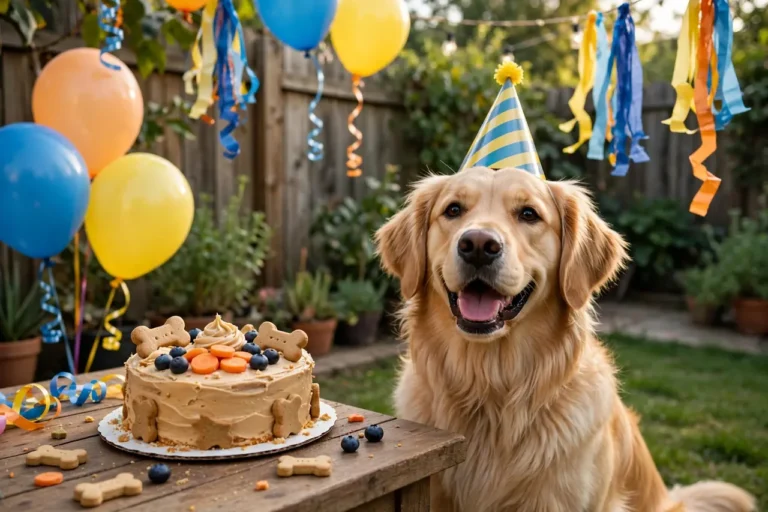
A birthday cake for your dog should feel like a celebration, not a nutritional gamble. The standard dog birthday cake recipe leans on peanut butter, banana, and honey — delicious, but also calorie-dense and rich enough to upset a sensitive stomach. A healthy dog birthday cake recipe takes a different approach: it keeps everything dogs love about cake (the ceremony, the aroma, the first glorious bite) while building the cake from genuinely wholesome ingredients — fiber-rich pumpkin, antioxidant-packed blueberries, gentle oat flour, and protein-forward Greek yogurt instead of sugary frostings.
This guide was built around how canine nutrition actually works. You will learn what “healthy” means in dog-cake terms, get a complete low-fat, low-sugar master recipe with full nutrition context, discover three targeted variations (a lighter cake for weight-watching dogs, a protein-boosted cake for active pups, and a soft-textured cake for seniors), and find honest answers to the questions owners ask most — including whether grain-free is healthier and how much cake is actually okay. Every ingredient here earns its place.
What “Healthy” Actually Means in a Dog Cake
Human “healthy” and dog “healthy” are not the same thing, and most dog cake recipes blur the line. For dogs, a healthier cake means four specific things: moderate calories so the birthday treat does not blow the 10-percent treat budget, limited fat because rich foods trigger pancreatitis in susceptible dogs, minimal added sugar because dogs do not need it and their teeth do not appreciate it, and highly digestible ingredients that will not cause a midnight digestive emergency.
Dogs are omnivores with a carnivorous lean — they thrive on animal protein and fat but handle many plant foods well. The healthiest dog cakes therefore lead with real food: eggs for complete protein, pumpkin for soluble fiber, carrots and blueberries for micronutrients, and oat flour as a gentle carbohydrate base. What they skip is just as important: no refined white sugar, no chocolate, no xylitol (the sugar substitute that is lethally toxic to dogs — always check peanut butter and yogurt labels), no grapes or raisins, no macadamia nuts, and no onion or garlic.
One honest caveat: “healthy cake” is still cake. No recipe in this guide replaces balanced dog food, and none of these cakes is appropriate as a meal. Think of the healthy cake as the difference between a sensible dessert and a triple-chocolate sundae — better choices within the treat category, not health food. If your dog has diabetes, kidney disease, pancreatitis, or diagnosed food allergies, run the recipe past your veterinarian first; most vets will gladly approve or tweak it.
Ingredient Nutrition: Why Each One Earns Its Place
Every ingredient in the master recipe below was chosen for a nutritional job. This table shows what each contributes and what to watch for, so you can substitute intelligently instead of guessing.
| Ingredient | Amount in recipe | What it contributes | Watch-outs |
|---|---|---|---|
| Oat flour | 1½ cups | Gentle complex carbs, soluble fiber, B vitamins | Use certified gluten-free oats if wheat-sensitive |
| Plain pumpkin puree | ¾ cup | Soluble fiber for digestion, vitamin A, low calorie | Must be plain puree, never pie filling |
| Unsweetened applesauce | ½ cup | Natural sweetness, moisture, vitamin C | No added sugar; check label |
| Eggs | 2 large | Complete protein, healthy fats, binding | Cook fully; rare egg allergy — sub with extra applesauce |
| Shredded carrots | ½ cup | Beta-carotene, fiber, crunch | Finely shred so they cook through |
| Coconut oil | 2 tbsp | Moisture, medium-chain fats | High calorie — measure, do not pour freely |
| Baking soda | 1 tsp | Lift and tenderness | Small amount only |
| Cinnamon | ½ tsp | Flavor, antioxidant compounds | Small amount; never nutmeg |
| Plain Greek yogurt (frosting) | ¾ cup | Protein, probiotics, creamy texture | Plain and unsweetened; xylitol-free |
| Blueberries (topping) | ½ cup | Antioxidants, vitamin C, natural color | Serve whole for large dogs; halve for tiny dogs |
The Master Healthy Dog Birthday Cake Recipe
This cake cuts roughly a third of the calories and half the fat of a typical peanut-butter dog cake while tasting — to a dog — just as exciting. The pumpkin and applesauce provide moisture and natural sweetness, the oat flour keeps the crumb tender and digestible, and the Greek yogurt frosting delivers the celebratory look with a protein bonus instead of a sugar load. One 6-inch layer cake serves 6 to 8 medium dogs as proper portions.
Yield: one 6-inch two-layer cake | Prep: 15 minutes | Bake: 28–32 minutes at 350°F (175°C) | Cool: 30 minutes
Ingredients
- 1½ cups oat flour (blend rolled oats until fine, or use store-bought)
- 1 teaspoon baking soda
- ½ teaspoon ground cinnamon
- ¾ cup plain pumpkin puree (not pie filling)
- ½ cup unsweetened applesauce
- 2 tablespoons coconut oil, melted
- 2 large eggs, lightly beaten
- ½ cup finely shredded carrots
- ¾ cup plain Greek yogurt, for frosting
- 1 tablespoon honey (optional, for frosting)
- ½ cup fresh blueberries, for decorating
Step-by-Step Instructions
Step 1: Preheat and prepare. Heat the oven to 350°F (175°C). Lightly grease two 6-inch round pans with coconut oil and line the bottoms with parchment paper. Oat-flour cakes stick more readily than wheat-flour cakes, so do not skip the parchment.
Step 2: Combine dry ingredients. Whisk the oat flour, baking soda, and cinnamon in a large bowl. Because oat flour is heavier than wheat flour, whisk thoroughly to distribute the leavening — pockets of baking soda taste soapy.
Step 3: Combine wet ingredients. In a second bowl, stir the pumpkin puree, applesauce, melted coconut oil, and beaten eggs until smooth. Fold in the shredded carrots.
Step 4: Mix gently. Pour the wet mixture into the dry and stir with a spatula just until combined. Oat flour develops very little gluten, so this batter is forgiving, but stop as soon as no dry streaks remain — the batter should be thick and spoonable.
Step 5: Bake. Divide between the pans and bake 28 to 32 minutes, until the tops spring back and a toothpick comes out with moist crumbs. Oat cakes brown less dramatically than wheat cakes, so trust the toothpick over the color.
Step 6: Cool fully. Cool 10 minutes in the pans, then turn out onto a rack for at least 30 minutes. Warm oat cake is fragile; full cooling firms the crumb for frosting.
Step 7: Frost simply. Stir the Greek yogurt with the honey (if using) and spread between the layers and over the cake. Arrange blueberries in rings on top. The frosting will be softer than buttercream — that is normal and dogs prefer it that way.

Three Targeted Healthy Variations
1. The Lightweight Cake (for weight-watching dogs)
For dogs on a vet-supervised weight plan, trim further: replace the coconut oil with an extra 2 tablespoons of applesauce, use nonfat Greek yogurt for frosting, and skip the honey entirely. Cut the finished cake into 16 thin slices instead of 8 — the birthday dog gets the ceremony of a full slice at roughly half the calories. Serve alongside a normal-length walk, not as a replacement for one; exercise does not cancel treats, but the routine keeps the day feeling normal.
2. The Protein-Boost Cake (for active and sporting dogs)
Highly active dogs — agility competitors, hiking companions, farm dogs — burn enough calories to justify a richer cake. Add ¼ cup smooth xylitol-free peanut butter to the wet ingredients and fold 2 tablespoons of ground flaxseed into the dry mix for omega-3s. Top the yogurt frosting with a crumble of freeze-dried chicken or salmon treats. This version runs about 25 percent higher in protein and makes an excellent post-adventure birthday reward. Our guide to dog friendly outdoor events has ideas for turning the birthday into an active celebration that earns the extra protein.
3. The Senior Soft Cake (for older dogs)
Senior dogs often have fewer teeth, duller senses of smell, and more delicate digestion. Make the master recipe with these tweaks: grate the carrots extra-fine (or replace with ¼ cup more pumpkin), bake in a single 8-inch layer for a softer, moister crumb, and warm each slice for 10 seconds in the microwave before serving — warmth amplifies aroma, which matters enormously to a senior dog’s appetite. Frost thinly; a heavy frosting layer can overwhelm an older dog’s palate. Cut portions small and watch for the slow, deliberate tail wag that means it was a hit.
Allergy and Sensitivity Substitutions
Food sensitivities are one of the top reasons owners seek out a healthy dog birthday cake recipe. Use this substitution table to adapt the master recipe without breaking its structure. Change only what you need to — every swap slightly alters texture, so single substitutions work better than overhauling the whole recipe at once.
| If your dog reacts to… | Replace this | With this | Notes |
|---|---|---|---|
| Wheat / gluten | Oat flour | Certified gluten-free oat flour | Standard oat flour may have wheat cross-contact |
| All grains | Oat flour (1½ cups) | ½ cup coconut flour + 1 extra egg | Coconut flour is very absorbent; do not swap 1:1 |
| Eggs | 2 eggs | ½ cup extra applesauce + 1 tsp baking powder | Denser crumb; bake 3–5 min longer |
| Dairy | Greek yogurt frosting | Whipped coconut cream or mashed banana | Coconut cream must be unsweetened, no xylitol |
| Chicken-adjacent proteins | Eggs | “Flax eggs” (1 tbsp ground flax + 3 tbsp water each, rested 5 min) | Works as a binder; slightly nuttier flavor |
| High-fat foods | Coconut oil | Equal amount applesauce | Reduces richness; best for pancreatitis-prone dogs (vet-approved) |
Is Grain-Free Healthier for Dogs?
It is a fair question, because grain-free marketing is everywhere. The honest answer: for most dogs, no. Whole grains like oats are nutritious, digestible, and provide fiber and B vitamins; there is no evidence that healthy dogs benefit from avoiding them. True grain allergies in dogs are uncommon — beef, dairy, and wheat (in that order) top the actual allergen lists, and many dogs labeled “grain-sensitive” are reacting to something else entirely.
There is also a caution worth knowing: the FDA has investigated a potential link between grain-free diets heavy in legumes (peas, lentils, chickpeas) and dilated cardiomyopathy (DCM), a serious heart condition, in dogs. The science is still evolving and the risk appears tied to long-term staple diets, not an occasional birthday cake — but it is one more reason not to assume “grain-free” automatically means “healthier.” If your dog genuinely needs grain-free baking, our grain-free dog birthday cake guide covers coconut- and almond-flour methods in detail. Otherwise, the oat flour in this recipe is a sound, vet-uncontroversial choice.
Portions, Parties, and the Birthday Walk
The healthiest cake in the world still follows the 10-percent treat rule: cake should supply no more than a tenth of the day’s calories. For this lighter recipe, that works out to roughly a 2-inch slice for a 40-pound dog — generous enough to feel like a real celebration. Reduce the regular meals by about a quarter on cake day to keep the daily total steady, and skip all other treats.
Timing matters more than people expect. Serve the cake mid-morning or early afternoon rather than late evening, so any digestive grumbling happens while you are awake to notice it. Take the birthday walk before the cake, not after — a comfortably tired dog eats more calmly and is less likely to inhale the slice whole. Keep fresh water available; even low-sodium cake increases thirst. Watch the birthday dog for the first hour after serving: normal behavior means the recipe agrees with them, while grass-eating or restlessness suggests the portion was too generous. And for multi-dog parties, pre-cut every portion before the cake appears. Dogs do not understand “wait your turn” when frosting is involved.
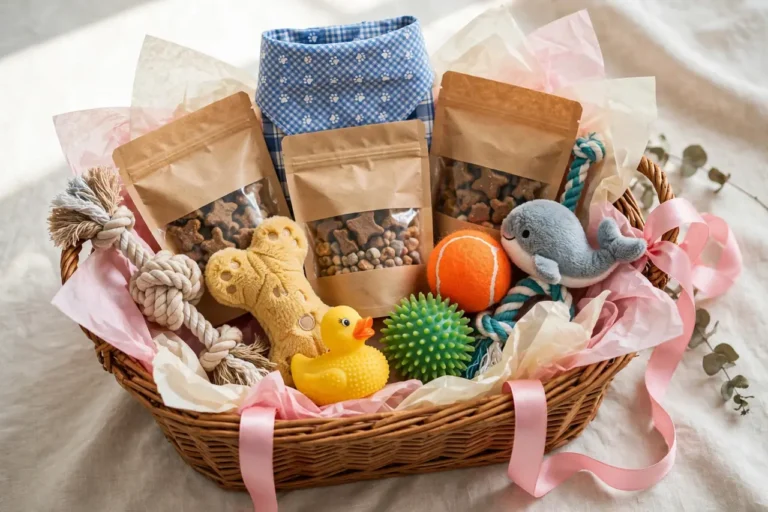
For gift ideas to round out the healthy theme, our Christmas gifts for pet lovers roundup includes puzzle feeders, slow-feeder bowls, and activity toys that pair perfectly with a wholesome birthday — useful all year, not just in December.

Storage and Make-Ahead
Bake the layers up to two days ahead: cool completely, wrap tightly, and refrigerate. The oat crumb actually improves after a night in the fridge, firming up for cleaner slicing. Frost the day of serving. Refrigerate frosted cake and serve within 3 days; the yogurt frosting means a strict 2-hour room-temperature limit. Freeze unfrosted layers up to 3 months, wrapped in plastic and then foil; thaw overnight in the refrigerator. Individual frozen slices make excellent future training-day jackpots — thaw one at a time and you have instant high-value rewards for weeks.
Baking Science: Why Healthy Dog Cakes Behave Differently
If your first healthy dog cake comes out denser than expected, it is not a failure — it is chemistry. Human cakes rely on three things this recipe deliberately reduces: sugar, which tenderizes by interfering with gluten and retains moisture; fat, which coats flour proteins for a soft crumb; and refined flour, which has the most predictable gluten structure. Remove much of the sugar and fat and swap in oat flour, and you get a sturdier, moister, less lofty cake. Understanding that trade-off helps you bake it well instead of fighting it.
Oat flour’s lower gluten content is actually an advantage here: it is nearly impossible to overmix into toughness, which makes this recipe forgiving for beginners. The pumpkin and applesauce replace the moisture that butter and sugar would normally provide, but they release that moisture as steam during baking, so the cake needs the full bake time — pull it early and the center stays gummy. Eggs do the structural heavy lifting, so beat them well before adding; their proteins set into the framework that holds the fruit purees. And because there is little sugar to caramelize, the crust browns less — judge doneness with a toothpick, not color. Once you internalize these differences, healthy dog cakes become as reliable as any human recipe, and you will stop comparing the crumb to a bakery cake and start judging it by the only metric that matters: the speed at which the birthday dog inhales it.
Watch: A Healthy Birthday Cake Build
Seeing the batter texture and the yogurt frosting technique makes the recipe click. This video builds a wholesome, dog-safe birthday cake from raw, nourishing ingredients — a great visual companion to the method above:
How to Read Labels for Cake Ingredients
The word “healthy” on a grocery package means very little for dog baking — the ingredient list is where the truth lives. When you buy peanut butter, yogurt, applesauce, or pumpkin for this recipe, flip the package over and read with a dog owner’s eyes. Ingredients are listed by weight, so the first three items tell you what the product mostly is. For peanut butter, you want to see peanuts first and ideally only peanuts and salt in the entire list. For yogurt, the list should read milk and cultures; if you see sugar, corn syrup, “natural flavors,” or any sweetener you cannot identify, put it back. For applesauce, “apples, water, ascorbic acid” is perfect and “apples, high fructose corn syrup” is not. For pumpkin, the can should contain exactly one ingredient: pumpkin.
Learn the alias game. Xylitol — the sweetener that can kill a dog — also appears on labels as “birch sugar,” “birch bark extract,” “E967,” or generically as “sugar alcohol.” “Natural flavors” is a black box that can legally hide dozens of compounds; in products marketed for dogs or used in dog baking, prefer brands that spell everything out. “Enriched flour” means refined white flour with some nutrients added back — fine occasionally, but whole oat flour is the better cake base. Marketing claims like “all natural,” “vet recommended,” or “premium” are unregulated puffery; the ingredient list is regulated, so trust the list. This five-second label habit protects your dog far beyond birthday cake — it upgrades every treat you will ever buy.
When Cake Is Not the Right Call: Healthy Alternatives
Sometimes the kindest choice is skipping cake entirely. Dogs recovering from surgery, dogs with severe allergies spanning most cake ingredients, diabetic dogs whose vets advise against any baked treats, and dogs who simply do not care about cake all deserve a celebration that fits them rather than a tradition forced on them. The good news: dogs measure celebration in novelty and attention, not in frosting.
A frozen lick mat delivers fifteen minutes of birthday bliss with a fraction of the calories: spread plain pumpkin puree or xylitol-free peanut butter thinly on a silicone lick mat, dot with blueberries, and freeze. A “birthday sniffari” — scattering high-value treats across the yard or through a snuffle mat — engages the seeking system that makes dogs happiest. A new puzzle feeder or a long-lasting chew, presented with ceremony, lands the same emotional punch as cake for most dogs. And for the social dog, nothing beats inviting their favorite dog friends for a group walk; our dog friendly outdoor events guide can help you find pack-friendly outings near you. The cake is for the photos. The alternative celebration is for the dog.
Frequently Asked Questions
These are the questions owners ask most often before baking a healthier birthday cake — covering safety, portions, special health conditions, storage, and ingredient swaps.
What makes a dog cake “healthy” versus regular?
A healthy dog cake uses whole-food ingredients with nutritional purpose — oat flour, pumpkin, eggs, yogurt — while limiting fat, added sugar, and calories. Regular dog cakes often rely heavily on peanut butter, honey, and oil, which taste great but pack far more calories per slice. Both are treats; the healthy version simply fits more comfortably inside the 10-percent daily treat budget.
Can I give my dog cake every week if it is healthy?
No. Even the healthiest cake is an occasional treat, not a dietary staple. Weekly cake shifts the diet’s balance, adds up calorically, and trains the dog to expect rich food regularly. Reserve cake for birthdays, gotcha days, and genuinely special occasions — a few times a year at most.
Is peanut butter unhealthy for dogs?
Peanut butter is not toxic (as long as it is xylitol-free), but it is very calorie-dense — about 100 calories per tablespoon. A little as flavoring is fine; a half-cup in the batter is a significant calorie load. This recipe deliberately skips peanut butter to keep things light, but the protein-boost variation adds a measured amount for active dogs.
My dog has pancreatitis. Can they have birthday cake?
Only with your veterinarian’s explicit approval. Pancreatitis-prone dogs need very low-fat food, and even the lightweight variation here contains some fat from eggs and coconut oil. Many vets will approve a custom ultra-low-fat version or suggest a non-cake celebration like a special play session. Never guess with this condition — a flare-up can mean hospitalization.
Are blueberries safe for dogs?
Yes, blueberries are one of the best fruits for dogs — low in calories, high in antioxidants and vitamin C. Serve them whole for medium and large dogs; halve or quarter them for tiny dogs to reduce any choking risk. Frozen blueberries work too and make a fun crunchy topping in summer.
Can puppies eat this healthy cake?
Puppies over 12 weeks can have a tiny taste — a teaspoon or two. Their digestive systems are still developing, and even gentle ingredients can cause loose stools in large amounts. Puppies under 12 weeks should skip cake entirely and celebrate with extra playtime instead.
How do I store leftover healthy dog cake?
Refrigerate frosted cake in an airtight container for up to 3 days, and never leave it at room temperature for more than 2 hours because of the yogurt frosting. Freeze unfrosted layers for up to 3 months; thaw overnight in the fridge. Pre-slice before freezing so you can thaw single portions.
Is cinnamon safe for dogs?
Yes, in the small amounts used in baking — the half-teaspoon in this recipe is perfectly safe. Cinnamon even has mild anti-inflammatory properties. What you must avoid is nutmeg, which is toxic to dogs beyond trace amounts, and “pumpkin spice” blends that contain nutmeg or excessive clove.
Can I use this recipe for a dog with diabetes?
Ask your veterinarian first. This recipe is lower in sugar than most, but it still contains natural sugars from applesauce, pumpkin, and honey. Many vets will approve a small portion within the dog’s meal plan or suggest removing the honey and applesauce. Never adjust a diabetic dog’s treats without veterinary guidance.
What is the healthiest frosting for a dog cake?
Plain Greek yogurt is the best all-around choice: high in protein, lower in fat than cream cheese, and easy to spread. For dairy-free dogs, whipped unsweetened coconut cream or simply mashed banana works. Avoid anything with added sugar, xylitol, or chocolate, and skip human buttercream and cream-cheese frosting entirely.
A healthy dog birthday cake recipe proves that “wholesome” and “celebratory” are not opposites — they are just good planning. Bake the master recipe, match the variation to your dog’s needs, keep the portions honest, and enjoy the particular happiness of a dog who knows, without understanding why, that today is special. The candle photo will be just as cute, the tail will wag just as hard, and you will feel good about every single bite, every single year. For the perfect words to pair with the birthday photos, browse our dog quotes collection.