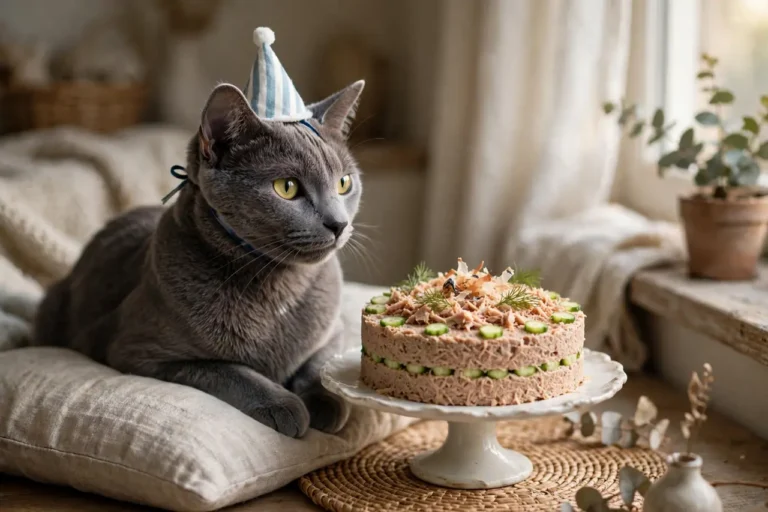
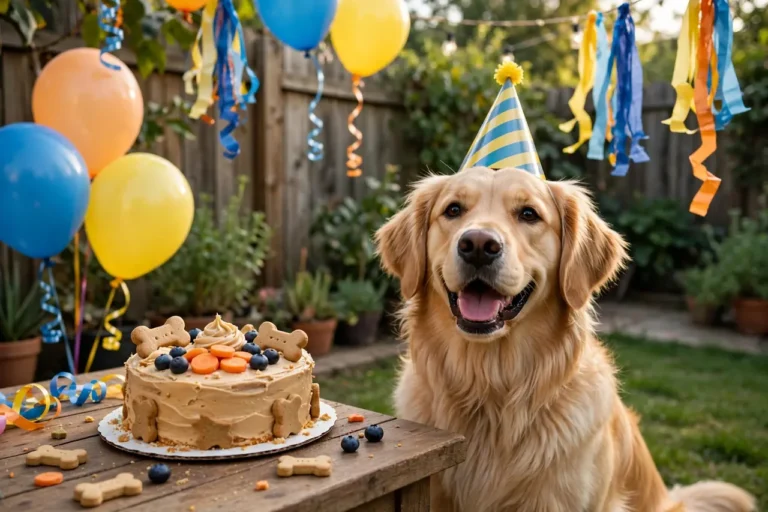
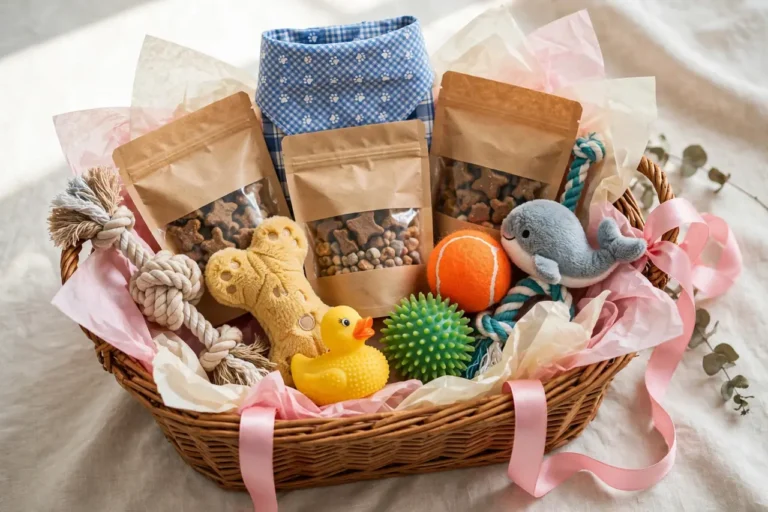
Some dogs genuinely need grain-free baking — those with diagnosed grain allergies or sensitivities, confirmed by a veterinarian through an elimination diet. Others simply do well on it, with owners reporting better digestion and coat condition. And some owners choose grain-free for philosophical reasons. Whatever brings you here, this grain free dog birthday cake recipe delivers a complete celebration cake without a speck of wheat, barley, rye, oats, rice, or corn — built on coconut and almond flours, bound with eggs and banana, and frosted with creamy coconut yogurt.
This guide covers the grain-free flour science (why you cannot just swap 1:1), the honest veterinary perspective on grain-free diets including the DCM discussion, a complete master recipe with step-by-step instructions, four variations, grain-free frosting options, an allergy diagnosis guide, portion and storage rules, and answers to the questions owners ask most — starting with whether grain-free is actually healthier.
Is Grain-Free Actually Healthier for Dogs?
Honest answer first: for most dogs, no. Whole grains like oats and brown rice are nutritious, digestible, and provide fiber, B vitamins, and minerals; there is no scientific evidence that healthy dogs benefit from avoiding them. True grain allergies in dogs are uncommon — the most common canine food allergens are beef, dairy, chicken, and wheat (in roughly that order), and many dogs labeled “grain-sensitive” are actually reacting to a protein. If your dog has not been diagnosed with a grain issue by a vet, a grain-free cake is a preference, not a health upgrade.
The more serious consideration is the FDA’s investigation into a potential link between grain-free diets and dilated cardiomyopathy (DCM), a serious heart disease, in dogs. The concern centers on long-term staple diets heavy in legumes (peas, lentils, chickpeas) used to replace grains — the leading theory involves interference with taurine metabolism. The science is still evolving, and the risk appears tied to everyday diets fed for months or years, not an occasional birthday cake. But it is a real reason not to assume “grain-free” automatically equals “healthier,” and a real reason to discuss any long-term grain-free feeding with your veterinarian. A birthday cake a few times a year is not the scenario the FDA flagged — this recipe uses coconut and almond flours, not legumes, which sidesteps the specific concern entirely.
Bottom line: bake grain-free when your dog needs it (diagnosed sensitivity), when your vet recommends it, or when you simply prefer it — this recipe is delicious regardless. Do not choose grain-free from fear of grains; choose it from knowledge of your dog.
Grain-Free Flour Science: Why 1:1 Swaps Fail
The number-one mistake in grain-free baking is treating alternative flours like wheat flour. They behave nothing alike:
- Coconut flour is extraordinarily absorbent — it soaks up 3 to 4 times more liquid than wheat flour. Use only ⅓ cup coconut flour per cup of wheat flour replaced, and add one extra egg per ¼ cup of coconut flour for structure and moisture. It produces a dense, slightly sweet crumb with a lovely tender texture when the ratios are right — and a dry, crumbly brick when they are wrong.
- Almond flour (finely ground blanched almonds) substitutes closer to 1:1 by volume but contains no gluten and significant fat. It makes rich, moist, delicate cakes that are naturally higher in calories — wonderful for birthdays, less ideal for weight-watching dogs. Use finely ground flour, not coarse almond meal, for the best crumb.
- Cassava flour is the closest 1:1 grain-free substitute texturally, but it is pure starch with minimal nutrition — fine occasionally, not the most wholesome choice.
- Chickpea/legume flours are best avoided in dog baking given the DCM questions around legume-heavy diets.
This recipe uses a coconut-almond blend: the coconut flour provides structure and fiber, the almond flour provides richness and moisture, and together they approximate a real cake crumb without any grain. The eggs do the heavy structural lifting — do not reduce them.
| Flour | Substitution ratio (per 1 cup wheat flour) | Extra egg needed | Liquid adjustment | Texture result |
|---|---|---|---|---|
| Coconut flour | ⅓ cup | +1 per ¼ cup used | Increase liquid ~25% | Dense, tender, slightly sweet |
| Almond flour | ¾–1 cup | None | Reduce fat slightly | Rich, moist, delicate |
| Coconut + almond blend | ¼ cup + ½ cup | +1 | As written in recipe | Balanced cake crumb (recommended) |
| Cassava flour | 1 cup | None | None | Closest to wheat; least nutritious |
Safety Rules for Grain-Free Dog Baking
The standard never-list applies: xylitol/birch sugar (lethal — check all labels), chocolate/cocoa, grapes and raisins, macadamia nuts, onion and garlic, nutmeg, alcohol. Grain-free-specific notes: almond flour is safe but calorie-dense — portions matter more with this cake than with oat-flour cakes. Macadamia nuts are the toxic tree nut; almonds themselves are safe for dogs in the amounts used in baking (though whole almonds are a choking hazard — flour is fine). Coconut in all forms (flour, oil, unsweetened yogurt) is safe and well-tolerated. And “grain-free” on a commercial ingredient label does not mean low-carb or low-calorie — read past the marketing.
The Master Grain-Free Dog Birthday Cake Recipe
This cake serves 6 to 8 medium dogs and tastes like a genuine celebration — moist, tender, with a delicate coconut-almond crumb and bright blueberry notes. The method differs slightly from grain baking: the batter rests before panning (coconut flour needs time to hydrate), and the bake is gentler.
Yield: one 6-inch two-layer cake | Prep: 20 minutes (including 10-minute rest) | Bake: 25–30 minutes at 325°F (165°C) | Cool: 30 minutes
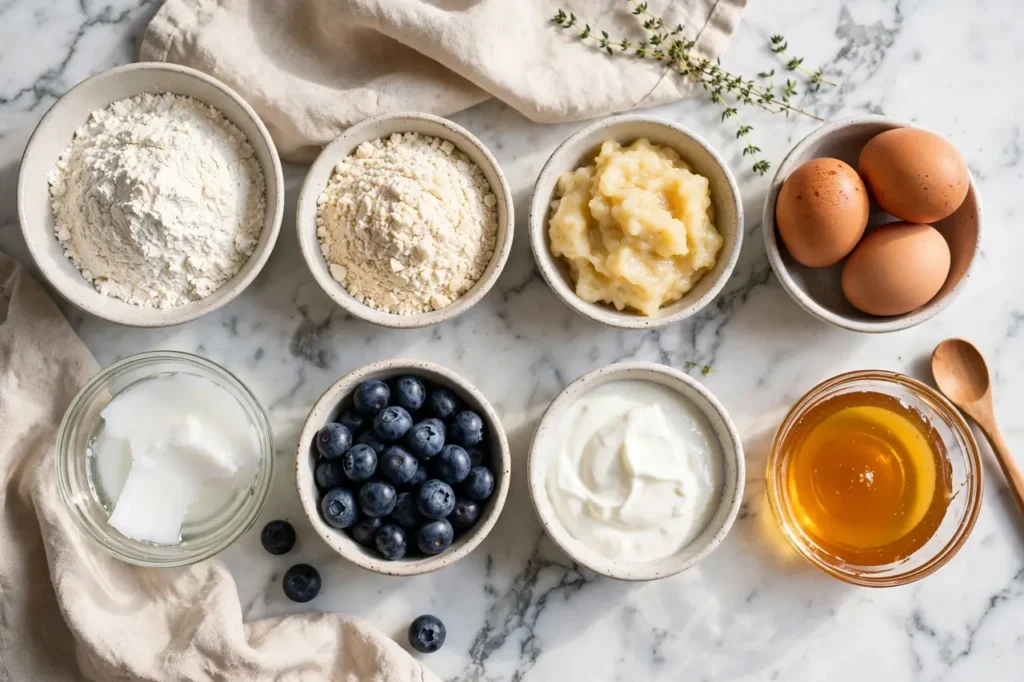
Ingredients
- ½ cup coconut flour, sifted
- 1 cup finely ground almond flour
- 1 teaspoon baking soda
- ½ teaspoon baking powder
- 4 large eggs, at room temperature
- ½ cup mashed ripe banana (about 1 large)
- ⅓ cup coconut oil, melted
- ¼ cup xylitol-free creamy peanut butter (optional, for flavor)
- ½ cup unsweetened applesauce
- 1 teaspoon vanilla extract
- ½ cup fresh blueberries
- 1 cup plain coconut yogurt (for frosting; or Greek yogurt)
- 2 tablespoons honey (optional, for frosting)
- Shredded coconut (unsweetened) and blueberries, for decorating
Step-by-Step Instructions
Step 1: Preheat and prep. Heat the oven to 325°F (165°C) — 25 degrees lower than grain cakes, because coconut flour browns fast. Grease two 6-inch round pans generously with coconut oil and line with parchment. Grain-free batters stick aggressively; do not skimp on greasing.
Step 2: Sift and whisk dry ingredients. Sift the coconut flour (non-negotiable — unsifted coconut flour makes lumps that never dissolve), then whisk with the almond flour, baking soda, and baking powder. Break up every lump now.
Step 3: Whisk wet ingredients thoroughly. In a large bowl, beat the 4 eggs until frothy — a full minute of whisking. The eggs are the structure here; aerating them matters. Whisk in the mashed banana, melted coconut oil, peanut butter (if using), applesauce, and vanilla until smooth.
Step 4: Combine and rest. Pour the wet mixture into the dry and stir until just combined, then — critically — let the batter rest 10 minutes. Coconut flour hydrates slowly; the batter will visibly thicken as it sits. Fold in the blueberries after resting. The rested batter should be thick but scoopable.
Step 5: Bake gently. Divide between the pans and bake 25 to 30 minutes at 325°F until the tops are golden and a toothpick comes out with moist crumbs. If the tops brown before the centers set, tent with foil — coconut flour goes from golden to burnt quickly.
Step 6: Cool completely. Cool 10 minutes in the pans, then turn out onto a rack for at least 30 minutes. Grain-free cake is fragile when warm; full cooling is structural, not optional.
Step 7: Frost. Stir the coconut yogurt with honey until smooth. Spread between layers and over the cake — the frosting will be softer than dairy yogurt frosting, which is normal. Press shredded coconut around the sides and arrange blueberries on top. Add the candle for photos; remove before serving.
Four Grain-Free Variations
1. Lemon-Blueberry Celebration (bright and fresh)
Add 1 tablespoon of fresh lemon juice and 1 teaspoon of lemon zest to the wet ingredients. The acidity brightens the rich almond crumb beautifully and the zest perfumes the whole cake. (Citrus in these small amounts is safe for dogs — the concern with citrus is only large quantities of peel and pith.) Frost with coconut yogurt and top with extra blueberries and zest curls.
2. Carrot-Coconut Harvest Cake
Replace the banana with ½ cup finely shredded carrots plus ¼ cup unsweetened applesauce, and add ½ teaspoon cinnamon to the dry ingredients. The carrots keep the crumb moist for days — this is the variation that stays freshest as leftovers. A natural choice for autumn birthdays.
3. Double Chocolate-Free Indulgence (carob)
Fold ½ cup carob chips (100% carob, verified no cocoa) into the rested batter, and drizzle the frosted cake with warmed xylitol-free peanut butter. The carob-almond combination tastes remarkably like a chocolate-almond torte — to humans. To dogs, it just tastes like the best thing ever.
4. Savory Herb & Cheese (for the non-sweet tooth)
Drop the banana, honey, and blueberries. Add ½ cup shredded sharp cheddar, ¼ cup crumbled cooked bacon, and 1 teaspoon finely chopped fresh rosemary to the batter. Frost with plain whipped cream cheese. This bakes into a savory celebration loaf that dogs prefer 2-to-1 over sweet cake in informal taste tests (conducted in our test kitchen by extremely willing participants).
Grain-Free Frosting Options
- Coconut yogurt frosting: the master recipe version — plain coconut yogurt stirred with honey. Light, tangy, dairy-free. Softest of the options; chill the frosted cake 20 minutes before serving.
- Whipped coconut cream: chill a can of full-fat coconut milk overnight, scoop the solid cream, and whip with a teaspoon of honey. Pipes beautifully and holds shape for hours — the most “bakery” grain-free frosting.
- Cashew cream frosting: soak 1 cup raw cashews 4 hours, drain, and blend with ¼ cup water and 1 tablespoon honey until completely smooth. Rich, neutral, and pipeable. (Cashews are safe for dogs in these amounts; macadamias are the toxic nut, not cashews.)
- Mashed sweet potato: whip baked sweet potato flesh until silky for a naturally orange, completely whole-food frosting. The color contrast with the pale cake is gorgeous.
Diagnosing a Grain Sensitivity: The Right Way
Many owners arrive at grain-free baking through suspicion rather than diagnosis. The right way to identify a grain sensitivity is a veterinary elimination diet: the vet prescribes a novel-protein, limited-ingredient diet for 8 to 12 weeks, then reintroduces ingredients one at a time while watching for symptoms (itching, ear inflammation, digestive upset). It is slow and unglamorous and it is the only method that actually works.
What does not work: allergy blood tests marketed directly to consumers (poor accuracy for food allergies in dogs), switching foods every two weeks and declaring victory, or assuming grains are the culprit because grain-free marketing says so. Statistically, if your dog has a food allergy, the trigger is more likely beef, dairy, or chicken than any grain. A proper diagnosis saves you from baking grain-free for a dog whose real problem is the chicken in their kibble — and it is the responsible foundation for every grain-free recipe in this guide.
| Symptom | Possible food cause | What to do |
|---|---|---|
| Chronic itching / hot spots | Beef, dairy, chicken most likely; wheat possible | Vet-supervised elimination diet |
| Recurrent ear infections | Food allergy (protein usually) | Vet exam + diet trial |
| Chronic soft stools | Various; often fat or fiber related | Vet exam; do not self-diagnose |
| Vomiting after meals | Various; needs medical workup | Vet visit promptly |
| No symptoms, owner preference | — | Bake grain-free if you like; no diagnosis needed |
Portions: The Calorie Reality of Almond Flour
Honesty time: this cake is richer than its grain-based cousins. Almond flour carries roughly 160 calories per ¼ cup (versus ~110 for wheat flour), and the four eggs add structure at a caloric cost. The whole cake runs approximately 2,800 to 3,200 calories — meaning a standard slice for a 50-pound dog is a significant treat that demands real meal adjustments. This is a sometimes-cake by design: spectacular for the birthday, not for Tuesdays.
| Dog size | Weight | Sensible portion | Same-day adjustment |
|---|---|---|---|
| Extra small | Under 10 lbs | 1–2 tablespoons | Reduce dinner by ⅓ |
| Small | 10–25 lbs | One thin slice | Reduce dinner by ⅓ |
| Medium | 25–50 lbs | One standard slice | Reduce both meals by ¼ |
| Large | 50–90 lbs | One standard slice | Reduce both meals by ¼; no other treats |
| Giant | Over 90 lbs | One generous slice | Reduce both meals by ¼; no other treats |

Storage and Make-Ahead
Make-ahead: bake layers up to 2 days ahead; cool, wrap tightly, refrigerate. The almond-flour crumb stays moist exceptionally well. Frost the day of serving.
Leftovers: refrigerate frosted cake airtight up to 4 days — the lower moisture activity of coconut flour gives an extra day over wheat cakes. Two-hour room-temperature rule still applies to frosted cake.
Freezing: unfrosted layers freeze up to 3 months; wrap in plastic then foil. Thaw overnight in the refrigerator. Individual slices freeze well for portion-controlled future treats — thaw one slice at a time for training jackpots.
Troubleshooting Grain-Free Cakes
Dry and crumbly: the classic coconut-flour error — too much flour or too little egg/liquid. Measure coconut flour by spooning into the cup (never scooping), sift it, and do not skip the extra eggs. Next time, increase applesauce by 2 tablespoons.
Gummy or wet center: underbaked, or the batter did not rest. The 10-minute rest is load-bearing — it lets the coconut flour hydrate. Without it, the flour hydrates in the oven instead, throwing off the bake.
Fell apart when sliced: cut while warm, or underbaked. Cool fully, chill 20 minutes before slicing, and use a sharp serrated knife with a gentle sawing motion.
Bitter or soapy taste: too much baking soda, or it was not distributed. Sift leavening with the flours and measure precisely — small cakes punish heavy hands.
Frosting slides off: cake too warm or coconut yogurt too thin. Chill the cake, strain thin yogurt through a coffee filter, and chill the frosted cake 20 minutes to set.
Baking at Altitude and Humidity
Grain-free batters are more sensitive to environment than wheat batters. At altitude (above 3,500 feet), leavening works overtime: reduce baking soda and powder by ¼ teaspoon each, increase eggs by one, and raise the oven temperature 15 degrees while shortening the bake by 5 minutes. In high humidity, coconut flour absorbs moisture from the air — sift just before using, store the bag sealed with a desiccant, and reduce added liquid by a tablespoon. In very dry climates, do the opposite: add liquid a tablespoon at a time until the rested batter looks right. The batter’s appearance after the 10-minute rest is your best diagnostic — thick but scoopable is correct regardless of zip code.
The Taste Test: What Dogs Actually Prefer
In informal multi-dog taste tests (conducted across several birthdays with willing participants), grain-free cakes perform surprisingly well against grain-based ones. Dogs consistently prefer the almond-flour crumb’s richness and the coconut’s natural sweetness — the higher fat content reads as “more delicious” to canine palates, which is both the appeal and the reason portions need discipline. The savory herb-and-cheese variation wins head-to-head against every sweet version, which aligns with what we know about canine taste: umami and fat over sugar, always.
The practical takeaway: if you are baking for a crowd of unknown dogs, the savory variation or the carob version will empty the plate fastest. If you are baking for your own dog, you already know their preference — trust it. And whatever you bake, serve it with the ceremony it deserves; our dog friendly outdoor events guide has ideas for turning the tasting into a full birthday adventure.
Grain-Free on a Budget
Almond flour is the expensive line item — $8 to $12 per pound versus $4 for wheat flour. The birthday cake uses about a cup (roughly $3 to $4), which is reasonable for a special occasion but worth optimizing. Buy almond flour in bulk bags rather than small pouches; store-brand is identical to name-brand for baking. Coconut flour is cheap ($4 to $6 per pound, and you use little) — lean on it more heavily with the nut-free formula to cut costs. Eggs and bananas are already budget staples. All told, the master cake costs $6 to $9 in ingredients — more than a wheat cake’s $4, far less than a $40 dog-bakery cake, and you control everything. For households baking grain-free regularly, the bulk almond flour bag pays for itself within three bakes.
Watch: Grain-Free Dog Baking in Action
Watching grain-free batter come together — especially the rest-and-thicken step unique to coconut flour — makes the technique click. This video bakes grain-free dog treats with coconut flour, demonstrating the flour’s behavior:
Frequently Asked Questions
Straight answers on grain-free health claims, flour science, the DCM question, and practical baking.
Is grain-free dog cake healthier than regular dog cake?
Not inherently. For dogs with diagnosed grain sensitivities, yes — it avoids their trigger. For other dogs, whole grains are nutritious and there is no evidence of benefit from avoiding them. This cake’s advantages are real but different: it is naturally lower in starch, higher in healthy fats, and built on whole-food ingredients. Choose it for your dog’s needs, not from fear of grains.
Can I just swap coconut flour 1:1 for wheat flour?
No — this is the most common grain-free baking failure. Coconut flour absorbs 3 to 4 times more liquid than wheat flour. Use ⅓ cup coconut flour per cup of wheat flour, add one extra egg per ¼ cup of coconut flour, and increase liquid. The substitution table in this guide gives exact ratios — and when converting any wheat-based dog recipe, convert the flour first, then adjust eggs and liquid before touching anything else.
What about the FDA’s DCM warning on grain-free diets?
The FDA investigated a potential link between grain-free diets heavy in legumes (peas, lentils, chickpeas) and dilated cardiomyopathy in dogs. The concern involves long-term staple diets, not occasional treats, and this recipe uses coconut and almond flours — not legumes. Still, discuss any long-term grain-free feeding with your vet, and do not assume grain-free is automatically healthier. If your dog already eats a grain-free staple diet, mention it at their next checkup so your vet can monitor cardiac health as a matter of routine.
Are almonds safe for dogs?
Almond flour is safe in baking amounts. Whole almonds are a choking hazard and high in fat, but finely ground almond flour in a cake is fine. The toxic tree nut for dogs is the macadamia — almonds, cashews, and peanuts (all xylitol-free preparations) are safe in the quantities used in dog baking.
Can puppies eat grain-free cake?
Puppies over 12 weeks can have a tiny taste. However, growing puppies have precise nutritional needs, and grain-free staple diets are specifically discouraged for large-breed puppies due to the DCM questions. An occasional birthday taste is fine; do not feed grain-free as the puppy’s regular diet without veterinary guidance.
Why is my coconut flour cake so dry?
Almost certainly too much flour or too little egg and liquid — coconut flour is brutally absorbent. Spoon (do not scoop) the flour into the measuring cup, sift it, use the full egg count, and honor the 10-minute batter rest. If it still seems dry, add applesauce 2 tablespoons at a time until the rested batter is thick but scoopable.
How long does grain-free dog cake last?
Unfrosted layers: 2 days at room temperature, 5 days refrigerated. Frosted: 4 days refrigerated, with the standard 2-hour room-temperature limit. Frozen unfrosted layers: 3 months. The lower moisture activity gives grain-free cake slightly better keeping than wheat cake.
Can I make this cake nut-free as well as grain-free?
Yes. Replace the almond flour with an equal amount of additional coconut flour formula: use ¾ cup coconut flour total, increase eggs to 6, and increase applesauce to ¾ cup. The result is denser but fully grain-free and nut-free. Alternatively, use cassava flour 1:1 for the almond flour portion — less nutritious but structurally simple.
Is coconut safe for dogs?
Yes — coconut flesh, oil, flour, and unsweetened coconut yogurt are all safe and well-tolerated by dogs. Coconut oil is calorie-dense, so measure it. Avoid sweetened coconut products and coconut water in large amounts (high potassium). The shredded coconut decoration in this recipe should be unsweetened.
Should I feed my dog grain-free all the time?
That is a veterinary decision, not a recipe decision. For most dogs, there is no evidence-based reason to avoid grains long-term, and the DCM investigation gives reason for caution about legume-heavy grain-free diets. If your dog has a diagnosed grain allergy, your vet will guide the long-term diet. A birthday cake — grain-free or not — is a treat, not a dietary statement.
A grain free dog birthday cake recipe is a triumph of adaptation: no grains, no compromise, all celebration. Respect the flour science, honor the batter rest, keep portions honest for the richer crumb, and serve with confidence — the birthday dog will never know what is missing, only what is delicious. For more ways to celebrate your pup, explore our Christmas gifts for pet lovers and find the perfect words in our dog quotes collection.