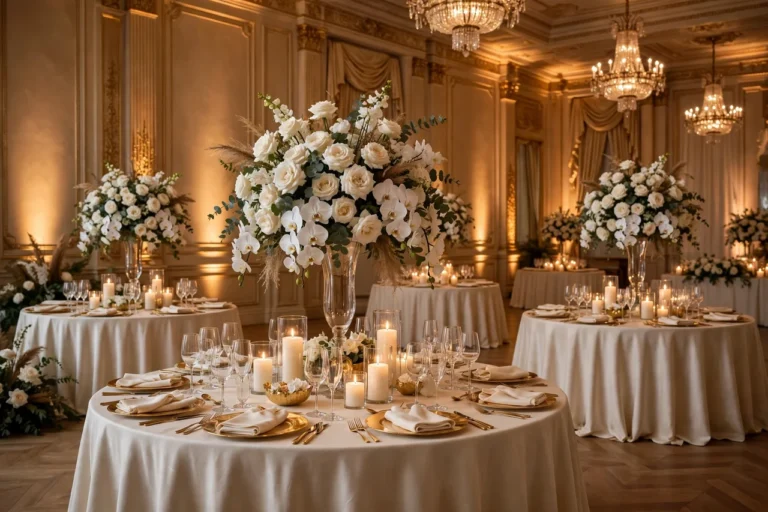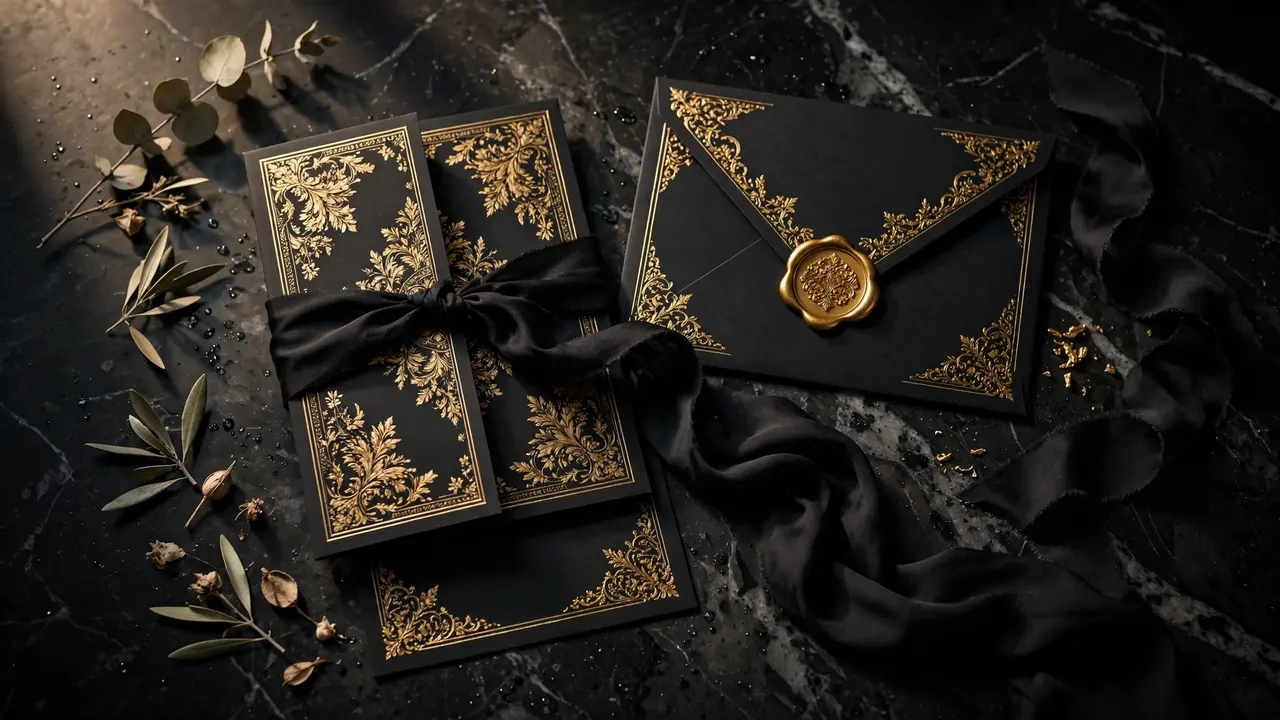
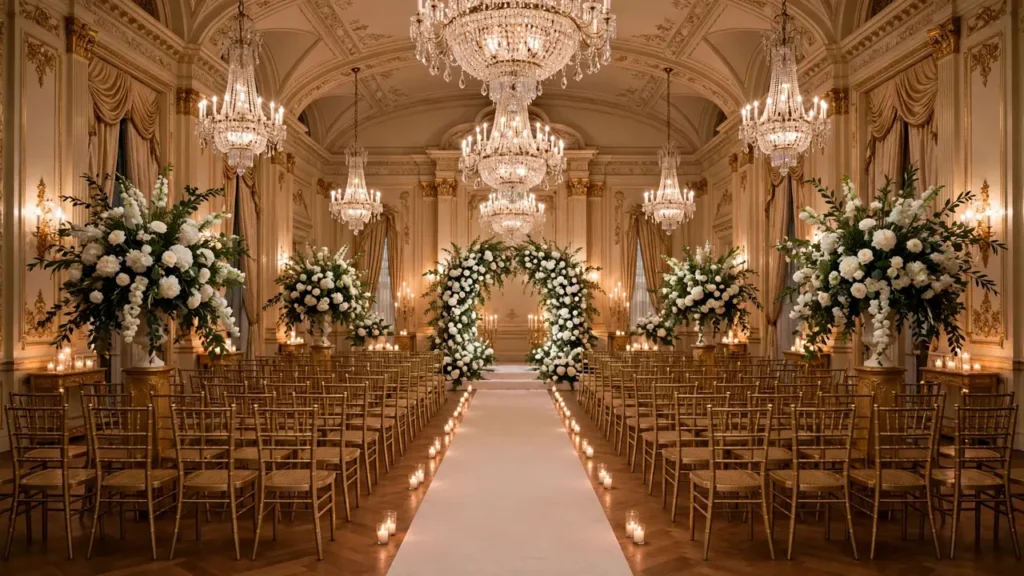
Some celebrations call for jeans; others call for engraved stationery, spelled-out dates, and the quiet grandeur of tradition. When your vow renewal involves a ballroom, a house of worship, a milestone like a 25th or 50th anniversary, or simply your love of doing things properly, formal vow renewal invitation wording sets exactly the right expectation. It tells guests, before they read a single detail, that this is an occasion to dress for and to honor.
Formal wording is a precise craft with real rules: third-person voice, fully spelled-out dates and times, correct titles and honorifics, and a particular choreography of names. Get it right and your invitation feels timeless; get it wrong and small errors — “4:30 PM” instead of “half past four o’clock,” first names where titles belong — quietly undermine the tone. This guide gives you more than thirty-five formal wordings ready to adapt, the complete etiquette rulebook, guidance on titles and name order, and advice on enclosures, dress code, and reception cards.
The Language of Formal Invitations
Formal invitation wording is built on five pillars. Third person: the invitation speaks about the couple, never as them — “request the honour of your presence,” not “we’d love you to come.” Full names with titles: “Mr. and Mrs. James Edward Whitfield,” not “Jim and Sarah.” Spelled-out everything: days, dates, years, and times are written in words — “Saturday, the twentieth of June, two thousand twenty-seven, at half past four o’clock.” No numerals, no abbreviations, no “PM.” British spellings (“honour,” “favour”) are traditional in formal stationery, though American spellings are equally acceptable if used consistently. Measured warmth: formal does not mean cold — phrases like “share in their joy” and “celebrate with them” add heart without breaking decorum.
The single most important rule is also the simplest: the wording must make clear this is a vow renewal, not a wedding. Traditional wedding language — “request the honour of your presence at the marriage of” — is incorrect here, because no marriage is occurring. The formal vocabulary for renewals is “the renewal of their wedding vows,” “the reaffirmation of their marriage vows,” or “a ceremony renewing their vows.” Pair that phrasing with the anniversary milestone (“on the occasion of their twenty-fifth wedding anniversary”) and your invitation is both correct and complete. For the sentiments guests will share on the day, our happy wedding anniversary quotes collection offers elegant lines worthy of a formal celebration.
35+ Formal Vow Renewal Wordings
Black-tie ballroom renewals
1. Mr. and Mrs. James Edward Whitfield request the honour of your presence at the renewal of their wedding vows on Saturday, the twentieth of June, two thousand twenty-seven, at half past four o’clock. The Grand Ballroom, The Charleston Hotel, Charleston, South Carolina. Black tie. Dinner and dancing to follow.
2. The honour of your presence is requested at the vow renewal ceremony of Mr. and Mrs. James Whitfield, celebrating twenty-five years of marriage, on Saturday, the twentieth of June at half past four in the afternoon, Rosewood Manor. Reception, dinner, and dancing to follow. Black tie requested.
3. Together with their families, Mr. and Mrs. Whitfield invite you to join them as they renew the vows exchanged twenty-five years ago. Saturday, the twentieth of June, two thousand twenty-seven, half past four o’clock, St. Alden’s Chapel, followed by a reception at Rosewood Manor. Kindly respond by the first of May.
4. On the occasion of their twenty-fifth wedding anniversary, Mr. and Mrs. James Whitfield request the pleasure of your company at a ceremony renewing their marriage vows, followed by cocktails, dinner, and dancing. Saturday, the twentieth of June at half past four. The Grand Ballroom, Charleston. R.S.V.P.
5. Mr. and Mrs. James Whitfield are honoured to invite you to witness the reaffirmation of their wedding vows on their twenty-fifth anniversary. Ceremony at half past four o’clock, Saturday, the twentieth of June, Rosewood Manor, Charleston, South Carolina. Dinner and dancing to follow.
Church and chapel ceremonies
6. With grateful hearts for twenty-five years of marriage, Mr. and Mrs. Whitfield request the honour of your presence as they renew their vows before God and their loved ones. Saturday, the twentieth of June at half past four o’clock, Grace Episcopal Church, Charleston. Reception to follow at Rosewood Manor.
7. In celebration of God’s faithfulness through twenty-five years of marriage, you are cordially invited to the vow renewal of Mr. and Mrs. James Whitfield. Saturday, the twentieth of June, two thousand twenty-seven, four o’clock in the afternoon, St. Mary’s Chapel. Dinner reception immediately following.
8. Mr. and Mrs. James Edward Whitfield, together with their children, invite you to a service of thanksgiving and the renewal of their wedding vows. Saturday, the twentieth of June at half past four, Grace Church. A celebratory dinner will follow at half past six.
Milestone anniversaries: 25th and 50th
9. A quarter century of marriage is no small thing. Mr. and Mrs. James Whitfield request the honour of your presence as they celebrate their twenty-fifth wedding anniversary with a renewal of vows. Saturday, the twentieth of June, two thousand twenty-seven, at half past four o’clock. Rosewood Manor, Charleston. Dinner and dancing to follow.
10. Fifty years. Through joy and sorrow, laughter and tears, their love has only deepened. Mr. and Mrs. Whitfield invite you to witness the renewal of their wedding vows on their golden anniversary. Saturday, the twentieth of June at half past four o’clock, Rosewood Manor. Reception to follow.
11. On the occasion of their fiftieth wedding anniversary, Mr. and Mrs. James Edward Whitfield request the pleasure of your company at a ceremony renewing their marriage vows, followed by a celebratory dinner. Saturday, the twentieth of June, two thousand twenty-seven, half past four o’clock. Kindly respond by the first of May.
12. Their children and grandchildren invite you to celebrate a remarkable milestone: the fiftieth wedding anniversary and vow renewal of Mr. and Mrs. Whitfield. Saturday, the twentieth of June at four o’clock in the afternoon, Rosewood Manor, Charleston, South Carolina. Dinner reception to follow. Hosted with love by the Whitfield family.
Formal destination renewals
13. Mr. and Mrs. James Whitfield request the honour of your presence at the renewal of their wedding vows on Saturday, the twentieth of June at half past four o’clock, Villa Cimbrone, Ravello, Italy. A celebratory dinner will follow on the Terrace of Infinity. Travel details enclosed.
14. In celebration of twenty-five years of marriage, you are cordially invited to join Mr. and Mrs. Whitfield in Maui, Hawaii, for a vow renewal ceremony on the eighteenth of December at half past five o’clock, followed by dinner under the stars. Kindly visit our wedding website for travel and accommodation details.
Evening and candlelight ceremonies
15. By candlelight, surrounded by those they hold dearest, Mr. and Mrs. Whitfield will renew their wedding vows. You are cordially invited to share in this luminous occasion on Saturday, the twentieth of June at seven o’clock in the evening, Rosewood Manor. Dinner and dancing to follow.
16. As the sun sets on twenty-five years of marriage, Mr. and Mrs. James Whitfield invite you to witness the dawn of their next chapter: a vow renewal ceremony at half past six o’clock, Saturday, the twentieth of June, the Gardens at Rosewood Manor, followed by dinner beneath the stars.
Titles, Honorifics, and the Order of Names
Formal invitations follow conventions that feel fussy until you know the logic — and then they feel like good manners. Married couples: “Mr. and Mrs. James Whitfield” (the husband’s full name; traditional) or “Mrs. Sarah Whitfield and Mr. James Whitfield” (modern formal, alphabetical or as preferred). Never “Mr. and Mrs. James and Sarah Whitfield” — pick one naming convention. Unmarried partners hosting together: list both full names, traditionally the woman’s first: “Ms. Sarah Cole and Mr. James Whitfield.” Same-sex couples: alphabetical by last name is the cleanest rule: “Mr. James Whitfield and Mr. David Chen.” Divorced or widowed hosts are styled by their current correct title — when in doubt, ask the person privately rather than guessing.
Professional and military titles outrank social ones: “Dr. Sarah Whitfield and Mr. James Whitfield,” “Captain James Whitfield and Mrs. Sarah Whitfield.” If both partners hold titles, use both. Children as hosts: when adult children host their parents’ renewal, the invitation may read “The children of Mr. and Mrs. Whitfield request the honour of your presence…” followed by the children’s names on a separate line or the reception card. For the gracious words guests will want on the day, our marriage anniversary wishes collection offers formal-appropriate sentiments.
Formal Etiquette Rules: The Complete Reference
| Rule | Correct | Incorrect |
|---|---|---|
| Voice | Third person: “request the honour of your presence” | First person: “we’d love you to come” |
| Dates | “Saturday, the twentieth of June, two thousand twenty-seven” | “Saturday, June 20th, 2027” |
| Times | “at half past four o’clock” | “at 4:30 PM” |
| Names | “Mr. and Mrs. James Edward Whitfield” | “Jim and Sarah” |
| Event description | “the renewal of their wedding vows” | “their wedding” / “their marriage” |
| Venue | “Rosewood Manor, Charleston, South Carolina” | “Rosewood (you know where)” |
| RSVP | “Kindly respond by the first of May” / “R.S.V.P.” | “Let us know!” |
| Abbreviations | None — “Saint Alden’s,” “Post Office Box” | “St.,” “Ave.,” “P.O. Box” |
Reception Cards, Dress Code, and Enclosure Cards
A formal invitation is often a small suite, not a single card. The reception card carries the post-ceremony details when they do not fit gracefully on the main card: “Reception, dinner, and dancing, half past six o’clock, The Grand Ballroom.” The details card holds logistics — hotel blocks, transportation, weekend schedules — and the wedding website URL. The reply card with a stamped envelope remains the gold standard for formal RSVPs, though a wedding website is now equally acceptable if the invitation says so.
Dress code on a formal invitation is stated as a simple line: “Black tie,” “Formal attire,” or “Cocktail attire.” Never apologize for it or over-explain it — guests are grateful for clarity. If the ceremony and reception have different expectations (rare), note both. Gift guidance never appears on the main invitation; it belongs on the wedding website, communicated as “Your presence is the greatest gift” for no-gift preferences. One enclosure to consider specifically for renewals: a small card with a line about the milestone — “Twenty-five years of marriage” — which gives the event its emotional frame before guests even arrive. For formal sentiments worthy of the day itself, our happy wedding anniversary quotes offer elegant lines for toasts and cards alike.
Formal Digital Invitations: Can They Work?
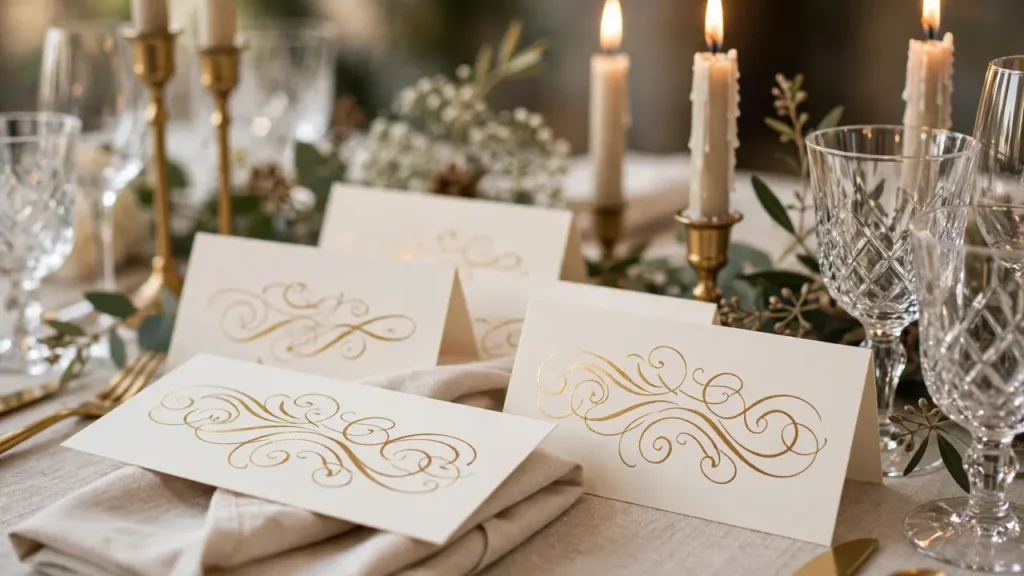
Tradition says formal means paper; reality says many formal renewals now go digital — and done right, no one feels shortchanged. The key is translating formality’s signals into digital form: a beautifully typeset design (not a default template), formal wording kept intact (third person, spelled-out dates — do not casualize the language just because the medium changed), a personal sending address, and an RSVP mechanism as dignified as a reply card (a well-designed form, not a bare link).
Where digital formal invitations shine: destination renewals (travel details update in real time), large guest lists (postage for 200 suites is real money), and tight timelines (designed tonight, delivered tomorrow). Where paper still wins: milestone anniversaries where the invitation becomes a keepsake, guest lists heavy with older relatives, and couples who simply love stationery. The prestige hybrid — a printed invitation for the inner circle, digital for the wider list, identical wording throughout — satisfies both tradition and practicality. Whichever you choose, the etiquette in this guide does not change: formality lives in the words and the care, not the postage.
Proofreading Formal Invitations: The Final Check
Formal invitations are judged more harshly for errors — precision is the point. Run this checklist before anything goes to print: dates spelled correctly (“twentieth,” not “twentyth”; “two thousand twenty-seven” — say it aloud); times in words (“half past four o’clock,” never “4:30”); titles verified with each person (Dr., Captain, Reverend — ask, do not assume); venue names exact (check against the contract — “Rosewood Manor” vs. “The Rosewood” matters); city and state complete; RSVP date logical (two to four weeks before the event, never after a holiday weekend when mail stalls); consistent spellings (“honour” throughout or “honor” throughout — never mixed). Then have two other people proofread: one for words, one for facts. Fresh eyes catch what familiarity hides. For the sentiments that will fill your celebration, our best anniversary gifts for couples guide pairs beautifully with formal milestone events.
When Children Host: Formal Wording for Milestone Renewals
For 25th and 50th anniversaries, adult children often organize and fund the celebration — and the wording should honor both the couple and their hosts. The standard formal construction: “The children of Mr. and Mrs. James Whitfield request the honour of your presence at the renewal of their parents’ wedding vows, celebrating fifty golden years of marriage.” Follow with the children’s names on a separate line: “Hosted with love by Emma, Noah, and Grace Whitfield.”
Variations for different family structures: children and grandchildren together: “The family of Mr. and Mrs. Whitfield…” one child hosting: “Emma Whitfield requests the honour of your presence…” children hosting with spouses: list couples: “Mr. and Mrs. Emma and David Chen, Mr. Noah Whitfield…” Keep the couple’s names prominent — this is their celebration; the hosts are the frame, not the portrait. A gracious line for the program or reception: “This celebration was planned with love by their children, who learned everything about love from watching these two.” For milestone-appropriate sentiments, our marriage anniversary wishes collection includes formal lines for golden anniversaries.
Formal Reply Cards and Response Wording
The reply card is a small thing that signals great care. Traditional formal wording: “Kindly respond by the first of May” followed by “M_________________” (the M begins Mr./Mrs./Ms./Miss — guests complete their title and name), then “___ Accepts with pleasure” and “___ Number attending” / “___ Declines with regret.” For events with meal choices, add elegantly: “Please indicate your entrée selection: ___ Beef ___ Fish ___ Vegetarian.” For formal digital RSVPs, mirror this language on the response page rather than defaulting to casual form fields — “Will you join us?” with “Joyfully accepts / Regretfully declines” preserves the tone. Set the reply deadline three to four weeks before the event for formal celebrations; venues and caterers need final counts, and formal events have less flexibility for late additions. When replies lag, a polite phone call — not a mass email — is the formal standard: “We’re finalizing numbers for the dinner and wanted to make sure we have you counted.”
A Complete Formal Suite: Every Piece, Worded
See how all the pieces fit together in one coherent formal suite for a 25th-anniversary ballroom renewal.
Main card: “Mr. and Mrs. James Edward Whitfield request the honour of your presence at the renewal of their wedding vows on Saturday, the twentieth of June, two thousand twenty-seven, at half past four o’clock. The Grand Ballroom, The Charleston Hotel, Charleston, South Carolina. Black tie.”
Reception card: “Dinner and dancing, half past six o’clock, The Grand Ballroom. Celebrating twenty-five years of marriage.”
Details card: “Accommodations: A block of rooms has been reserved at The Charleston Hotel. Please mention the Whitfield renewal when booking by the first of May. Transportation will be provided between the ceremony and reception venues. For the full weekend schedule, please visit whitfieldrenewal.com.”
Reply card: “Kindly respond by the first of May. M_______________. ___ Accepts with pleasure, number attending ___. ___ Declines with regret. Please indicate your entrée: ___ Beef ___ Fish ___ Vegetarian.”
Website welcome: “Welcome! We’re celebrating twenty-five years of marriage with a vow renewal, and we’d be honored to have you with us. Everything you need — schedule, travel, accommodations — is right here.”
Notice the discipline: identical names, identical date rendering, identical tone across every piece. The suite feels like one voice because it is one voice — planned as a whole, not assembled from parts. Print the suite together, proofread it together, and mail it together: coherence is the quiet luxury of formal stationery.
Formal Wording Don’ts: Ten Classic Errors
1. “At the marriage of…” — no marriage is occurring; write “at the renewal of their wedding vows.” 2. Numerals in dates — “June 20th, 2027” is semi-formal at best; formal is “Saturday, the twentieth of June, two thousand twenty-seven.” 3. “4:30 PM” — formal time is “half past four o’clock,” always in words. 4. First names only — “Sarah & James” is casual; formal requires “Mr. and Mrs. James Whitfield.” 5. Abbreviated venues — “St. Alden’s” should be “Saint Alden’s” in formal text. 6. “Please RSVP” — the “please” is built into the French; write “R.S.V.P.” or “Kindly respond.” 7. Registry on the invitation — never, in any tone; website only. 8. Mixed spellings — “honour” on the main card and “honor” on the details card is the telltale sign of an unproofread suite. 9. Inconsistent name styling — if he’s “Mr. James Edward Whitfield” on the invitation, he’s not “Jim” on the details card. 10. Apologetic language — “Sorry for the short notice” or “We know it’s a lot to ask” undermines the occasion; state facts warmly and let guests decide. Run every suite against this list before printing — formal invitations are judged by their precision, and precision is entirely a matter of checking.
Formal Paper and Printing Choices
The paper is the first thing guests touch — make it speak. Cotton stock (100% cotton, 110lb+) is the formal gold standard: soft, substantial, unmistakable. Laid or linen finishes add subtle texture that catches light beautifully. Printing methods: letterpress (ink pressed into the paper — the luxury choice), engraving (raised ink, traditional and formal), thermography (raised-ink look at lower cost), and high-quality digital (excellent for complex designs and photography). Ink colors: black or charcoal on ivory is timeless; navy, forest, or burgundy inks add personality without sacrificing formality — never more than two ink colors. Envelope linings in a complementary pattern or solid are the quiet flex of formal stationery. Whatever you choose, request a physical proof: screen colors lie, paper textures don’t photograph, and ink coverage varies. The suite should feel like an object worth keeping — because for milestone renewals, it will be.
Formal Wording for the Reception-Only Guest
When some guests are invited to the reception but not the ceremony (common for large formal renewals), the wording must be gracious and unmistakable. Their invitation reads: “Mr. and Mrs. James Whitfield request the pleasure of your company at a dinner reception celebrating the renewal of their wedding vows, Saturday, the twentieth of June at half past six o’clock, The Grand Ballroom.” Note: no ceremony time is mentioned, and “dinner reception celebrating” makes the scope clear. Never send a ceremony invitation with a handwritten “reception only” note — it reads as a demotion. Separate, complete, equally beautiful invitations for each guest tier: everyone should feel fully and intentionally invited to exactly what they’re attending.
Watch: Crafting Elegant DIY Invitations
A detailed how-to for creating refined, formal-looking invitations by hand:
Frequently Asked Questions
What is the most formal correct phrasing for a vow renewal?
“Mr. and Mrs. James Whitfield request the honour of your presence at the renewal of their wedding vows.” Third person, titles, “renewal of their wedding vows” — that is the formal gold standard. Add the spelled-out date, venue, and reception details to complete it.
Should we use “honour” or “honor”?
Both are correct; “honour” is traditional in formal stationery. Whichever you choose, use it consistently throughout the entire suite — mixing spellings is the only real error.
Do formal invitations need to be engraved or letterpressed?
No — formality comes from wording, typography, and paper quality, not the printing method. Beautiful digital printing on heavy cotton stock reads as formal; flimsy paper with engraving does not. Invest in the stock first.
How do we list divorced or remarried parents on a formal renewal invitation?
The couple hosts their own renewal, so parental listing rarely arises. If children are hosting, list them as “The children of Mr. and Mrs. Whitfield” or by name. When in doubt about titles, ask the person privately.
Is “R.S.V.P.” with periods still correct?
Yes — “R.S.V.P.” with periods is the traditional formal rendering (from the French “répondez s’il vous plaît”). “RSVP” without periods is acceptable in semi-formal contexts. Never write “please RSVP” — the “please” is already in the French.
Can children be included in a formal vow renewal?
Certainly. Name their roles elegantly: “Miss Emma Whitfield will offer a reading.” Formal does not mean adults-only unless you state it — and if the event is adults-only, state it plainly on the details card.
What time should a formal vow renewal ceremony start?
Late afternoon — 4:00 to 5:30 PM — is the classic formal slot, flowing naturally into cocktails and dinner. Morning formal ceremonies (11 AM) suit church settings followed by luncheon receptions.
Do we send thank-you notes after a formal vow renewal?
Yes — handwritten, within two weeks, mentioning the specific gift or gesture. Formal celebrations carry formal gratitude. It is one of the loveliest traditions to keep.
Formal vow renewal wording is a craft of precision and warmth in equal measure: every title correct, every date spelled out, every line radiating the quiet confidence of a love that has earned its grandeur. Master the rules, then let the warmth show through — that is what makes formal invitations timeless rather than merely correct.