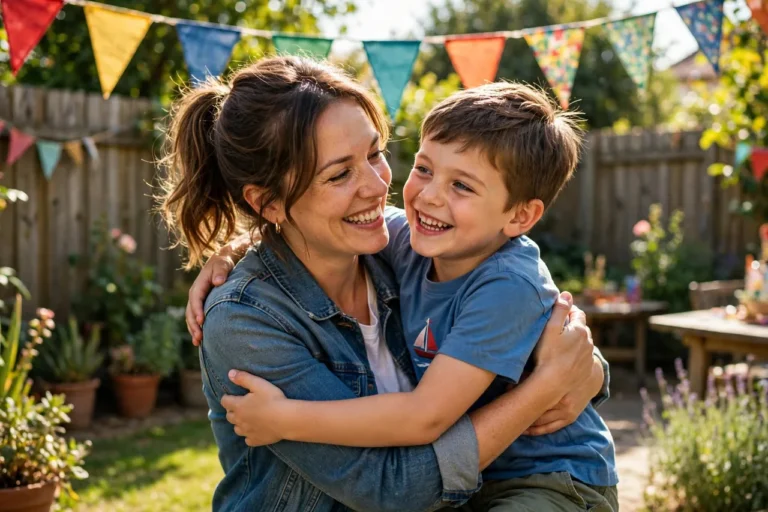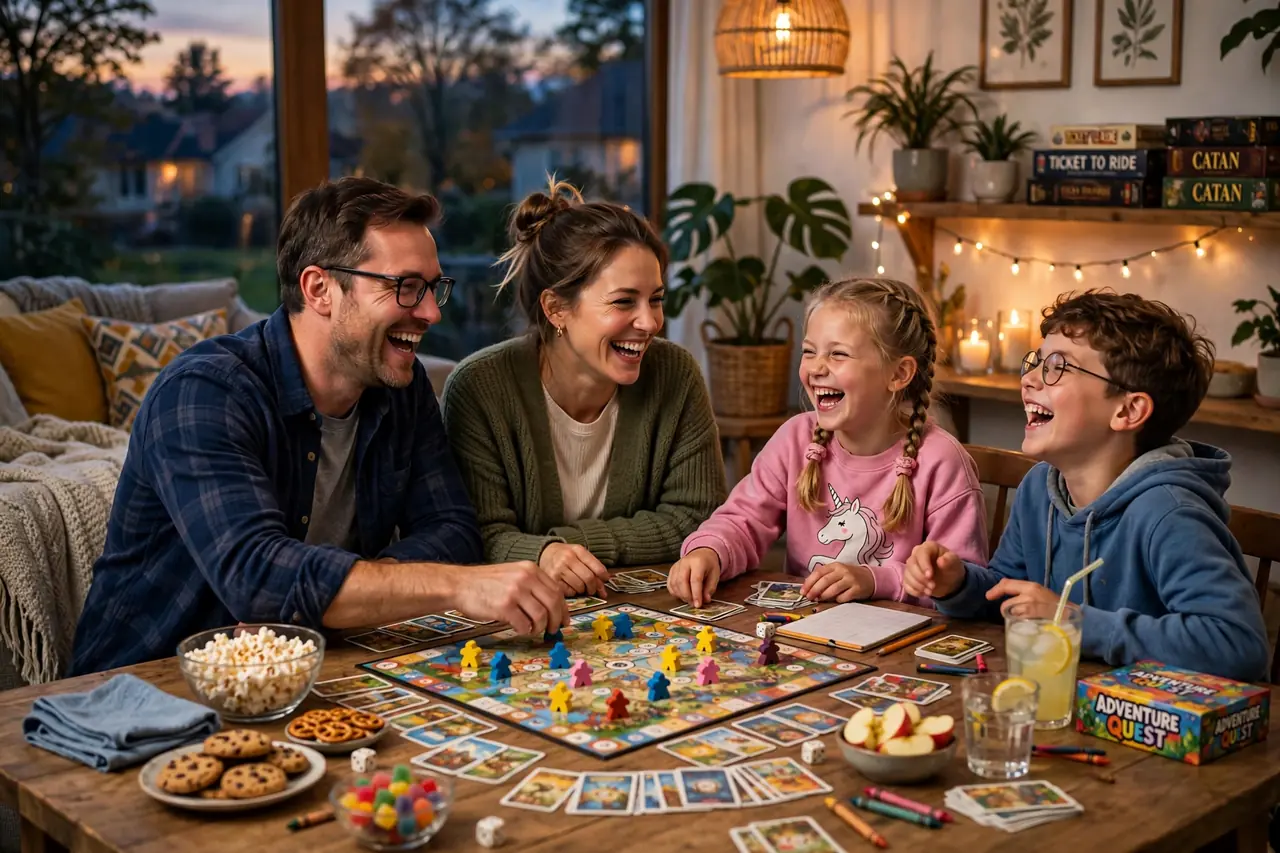
Every legendary family day has the same secret ingredient: games. Not the kind with batteries and leaderboards, but the glorious, noisy, everybody-playing kind — the card game that had Grandma bluffing like a poker pro, the backyard relay that ended with everyone in the pool (clothes and all), the guessing game that revealed Dad’s hidden talent for charades. Games turn a group of relatives into a team, rivals, and co-conspirators all in one afternoon.
This guide to family day game ideas is organized like a game library: indoor classics, outdoor adventures, water games, quiet and thinking games, and big party games for the whole crew. Each game card tells you the player count, time needed, supplies, and how to play — plus variations for different ages. You will find a master game table for quick picking, tournament formats that turn individual games into an epic competition, and answers to the questions families ask most. Game on.
How to Choose the Right Games
Match games to your crew with three questions. How old is the youngest player? Games must be playable (if not winnable) by the littlest participant, or they will check out. How much energy do you have? Alternate high-energy games with calm ones — three active games in a row exhausts everyone; three quiet games in a row bores the kids. How competitive is your family? Some families thrive on cutthroat competition; others need cooperative games where everyone wins together. Know your people and choose accordingly. When in doubt, include one of each type and let the day’s mood decide.
Indoor Game Ideas
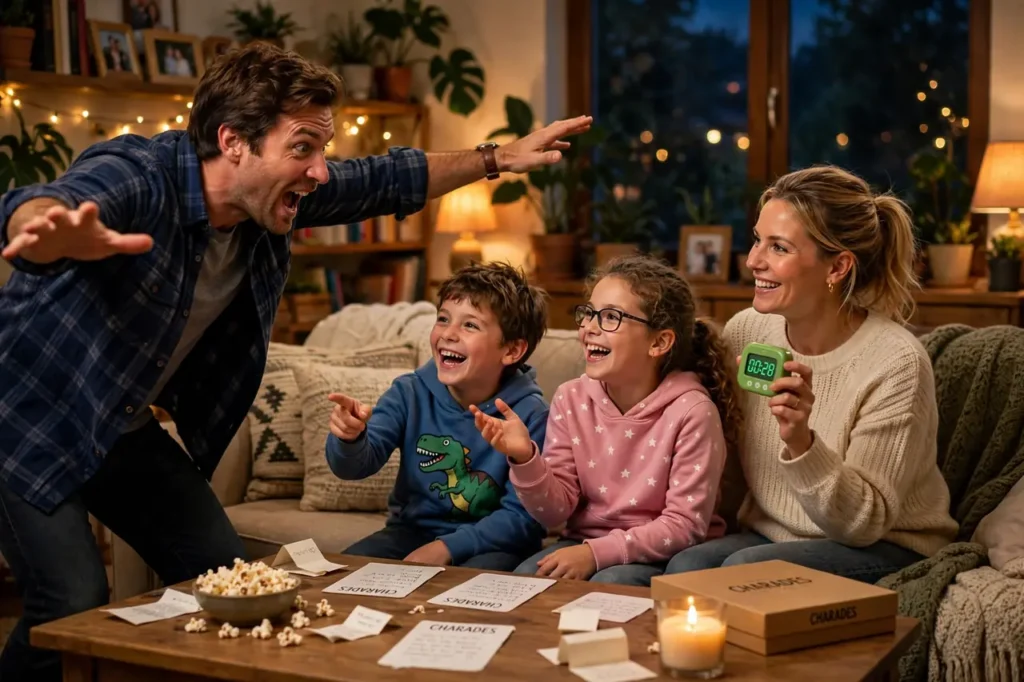
Charades: Family Edition
Players: 4+ | Time: 30–60 min | Supplies: slips of paper, bowl, timer
The timeless classic, upgraded with family-specific prompts: “Dad trying to assemble furniture,” “Mom’s morning coffee routine,” “the dog seeing a squirrel.” Write prompts together beforehand — the prompt-writing is half the fun. Split into teams, act without speaking, and award bonus points for the most dramatic performances. For a twist, try reverse charades: one team acts while a single guesser guesses.
Pictionary Relay
Players: 4+ | Time: 30 min | Supplies: whiteboard or paper, markers
Like charades but drawn: one player sketches while their team guesses against the clock. The drawings are gloriously terrible, which is the entire point. Play tournament-style with brackets, or cooperatively where everyone draws simultaneously and the family guesses together. Themed rounds — movies, family memories, “things in this house” — keep it fresh.
The Cup Game Challenge
Players: 2+ | Time: 20 min | Supplies: plastic cups
Stack cups into pyramids and unstack them against the clock, or play the classic rhythm cup game from the movies. Add challenges: stack with one hand, stack while answering trivia, relay-race style where each player stacks one level. Simple, loud, and weirdly addictive for all ages.
Board Game Tournament
Players: 2–8 | Time: 2–3 hours | Supplies: your game shelf
Turn your collection into an event: bracket-style tournament across three games of increasing length — a quick card game, a medium strategy game, a finale epic. Keep a scoreboard, award the Golden Meeple (or spoon) trophy, and include a cooperative game so the day is not all cutthroat. For fresh titles by age group, see our family game night ideas roundup.
Two Truths and a Lie
Players: 3+ | Time: 20–30 min | Supplies: none
Each player states three “facts” — two true, one false — and everyone guesses the lie. With family, the truths are wonderfully bizarre and the game doubles as storytelling. No supplies, no setup, endlessly entertaining. Perfect for car rides, waiting rooms, and winding down after active games.
Murder Mystery (Family-Friendly)
Players: 6+ | Time: 1–2 hours | Supplies: printable mystery kit
Free printable kits assign each player a character; everyone dresses up and interrogates each other to solve the “crime.” Choose a kit rated for your youngest player. It takes commitment, but families who go all-in rank it among their best days ever. The accused-uncle plot twists are legendary.
Card Game Classics Marathon
Players: 2–8 | Time: 1–2 hours | Supplies: decks of cards
Uno, Go Fish, Crazy Eights, Slap Jack, War — rotate through the classics tournament-style. Card games are portable, cheap, and infinitely replayable. Teach the kids a “grown-up” game like Rummy or Hearts for a rite-of-passage thrill. Loser deals, winner picks the next game.
Indoor Scavenger Hunt
Players: 2+ | Time: 30–45 min | Supplies: clue cards
Hide clues around the house leading to a prize — riddles for big kids, picture clues for little ones. The whole house becomes a game board. For extra excitement, make it a photo hunt: players must take a specific silly photo in each room to advance.
Watch and Steal: Homemade Game Inspiration
Some of the best family games are invented, not bought. This video shows a real family playing three homemade games — guessing challenges, cup games, and balloon-popping prize rounds — with their own zany twists. Watch it together and steal the formats: your family will invent variations within minutes.

Outdoor Game Ideas
Capture the Flag
Players: 6+ | Time: 45–60 min | Supplies: two flags (bandanas), boundary markers
The ultimate team game: two teams, two territories, one mission — steal the enemy flag without getting tagged. Add a “jail” zone and jailbreak rules for extra strategy. Works in backyards, parks, and woods. The debrief afterward (“did you SEE when…”) is half the fun.
Water Balloon Dodgeball
Players: 4+ | Time: 30 min | Supplies: water balloons (lots)
Fill balloons the night before (a rapid-fill nozzle is life-changing), divide into teams, and play dodgeball where getting hit means getting soaked. On a hot day, there is no better game. Set boundaries, ban headshots, and have towels ready. The losing team “washes” the winners’ water guns as penance.
Backyard Olympics
Players: 4+ | Time: 1–2 hours | Supplies: household items
Design 6–8 silly events: spoon-and-egg race, three-legged race, hula hoop endurance, balloon volleyball, long jump into pillows, sponge relay. Award paper-plate medals, play anthems from your phone, and take podium photos with full ceremony. The Olympics format turns random games into an epic narrative.
Flashlight Tag
Players: 4+ | Time: 30–45 min | Supplies: flashlights
After dark, one player is “it” with a flashlight; tagging means shining the light on someone. The darkness adds delicious tension, and familiar yards become mysterious territories. Set clear boundaries and remove tripping hazards first. Glow-in-the-dark accessories make it even better.
Kickball Tournament
Players: 8+ | Time: 1 hour | Supplies: rubber ball, bases
All the fun of baseball with none of the skill barrier — everyone can kick a ball. Play parents versus kids (with handicaps for fairness), keep score on a whiteboard, and do seventh-inning stretches with snacks. Kickball’s beautiful simplicity makes it the great equalizer of family sports.
Nature Bingo Hike
Players: 2+ | Time: 1–2 hours | Supplies: printed bingo cards
Combine a walk with a game: bingo cards list things to spot (pinecone, feather, animal tracks, something red). First to complete a row wins. It keeps little legs moving on trails and sharpens observation. Our family hiking trails guide has perfect bingo-hike routes.
Cornhole / Backyard Toss Tournament
Players: 2+ | Time: 30–60 min | Supplies: toss game set (or DIY)
Cornhole, ladder toss, ring toss — backyard tossing games are easy to learn, fun for all ages, and perfect for multitasking (play while the grill heats up). Run a double-elimination tournament and crown a family champion. DIY versions from cardboard work surprisingly well.
Geocaching Challenge
Players: 2+ | Time: 1–3 hours | Supplies: smartphone with app
Real-world treasure hunting via GPS: find hidden containers, sign logbooks, trade trinkets. Split into competing teams with a time limit for extra excitement. It is the rare game that makes teenagers voluntarily hike. Start with easy, highly-rated caches near home.
Water Game Ideas
Sponge Relay Race
Players: 4+ | Time: 20 min | Supplies: sponges, buckets
Teams race to transfer water from one bucket to another using only soaked sponges. Simple, soaking, hilarious. Play in swimsuits; the “winners” are whoever is wettest and happiest. Add obstacles (crawl under a table, spin three times) for extra chaos.
Pool Noodle Jousting
Players: 4+ | Time: 20 min | Supplies: pool noodles, (optional) pool or soft ground
Players balance on a curb, log, or pool edge and attempt to knock each other off using only pool noodles. It is gloriously silly and surprisingly strategic. In the pool, falling in is the reward; on land, use a soft landing zone. Crown the last one standing.
Drip, Drip, Drop
Players: 4+ | Time: 20 min | Supplies: cup of water
Duck-duck-goose with water: players sit in a circle, one walks around dripping water on heads saying “drip, drip…” until “DROP!” — then the chase begins and the chaser dumps the cup. Perfect for hot days and young kids. The anticipation giggles are the best part.
Water Gun Target Practice
Players: 2+ | Time: 30 min | Supplies: water guns, targets
Set up targets (plastic cups on a fence, chalk bullseyes) and compete for accuracy, or play free-for-all water wars with teams and bases. Water guns level the playing field between ages — a five-year-old with a super soaker is a genuine threat. Refill stations keep the battle going.
Quiet and Thinking Game Ideas
Every game day needs calm anchors — these engage brains without raising heart rates.
20 Questions: Family Edition
Players: 2+ | Time: 15–20 min | Supplies: none
One player thinks of something; others ask yes-or-no questions to guess it within twenty. Family-edition categories — “someone in this room,” “a family memory,” “something in this house” — make it personal and hilarious. It teaches logic and deduction disguised as fun.
Story Building Round-Robin
Players: 3+ | Time: 20–30 min | Supplies: none (or story dice)
Each player adds one sentence to a collaborative story. The plots go gloriously off the rails — a princess, a taco truck, a time-traveling grandma. Record it or write it down; the finished story is a keepsake. Story dice or random-word cards add delightful constraints.
Chess / Checkers Tournament
Players: 2 | Time: 30–60 min | Supplies: board
The classics endure for a reason. Run a round-robin so everyone plays everyone, with winners’ and losers’ brackets to keep it friendly. Teach younger kids with simplified rules or team up (kid + parent versus kid + parent). Slow games teach patience and strategic thinking.
Puzzle Race
Players: 2+ teams | Time: 1–2 hours | Supplies: identical puzzles
Teams race to complete identical jigsaw puzzles. It sounds calm — it is not. Puzzle races get intensely competitive, with strategy debates over edge-first versus color-sorting. Choose 300–500 pieces for a satisfying 90-minute race. The finished puzzles make nice keepsakes.
Trivia Night
Players: 3+ | Time: 45–60 min | Supplies: questions (app or homemade)
One host reads questions; teams answer on whiteboards. Theme the rounds: family history, decade pop culture, science, “guess the baby photo.” Trivia works across the widest age range of any game — everyone knows something. Keep rounds short and celebrate every correct answer like a championship.
Big Party Game Ideas (Large Groups)
Family Feud: Home Edition
Players: 6+ | Time: 45 min | Supplies: survey questions, buzzer (or bell)
Survey your extended family in advance (“name something Dad always says”), then play the classic game show format with two teams. One enthusiastic host with a microphone makes it legendary. The “survey says” reveals about your own family are comedy gold.
Minute to Win It Challenges
Players: 4+ | Time: 45–60 min | Supplies: household items
Sixty-second challenges: stack cookies on your forehead, move an Oreo from forehead to mouth without hands, bounce ping-pong balls into cups, unroll toilet paper with one hand. Players rotate through stations, earning points. The time pressure creates hilarious desperation. Endless variations exist online.
Talent Show Competition
Players: 4+ | Time: 1 hour | Supplies: stage area, judges’ scorecards
Everyone prepares an act; judges score on creativity, effort, and entertainment. The “competition” framing pushes performances to glorious heights of silliness. Award categories: funniest, most surprising, best effort, crowd favorite. Record everything.
Human Bingo / Mixer Games
Players: 8+ | Time: 20–30 min | Supplies: bingo cards
Cards list traits (“has been to another country,” “can whistle,” “is afraid of spiders”); players mingle to find someone matching each square. Perfect icebreaker when extended family or friends join family day. First to complete a row wins — but everyone wins new discoveries about relatives.
Tournament Format: The Family Game Championship
Turn individual games into an epic day-long competition:
- Pick 5–6 games across categories (2 active, 2 calm, 1 water if weather allows, 1 party).
- Assign point values: 1st place = 10 points, 2nd = 7, 3rd = 5, participation = 2. Everyone scores every round.
- Keep a visible scoreboard — a whiteboard or poster where everyone can see standings.
- Include a cooperative finale where the whole family plays together against the clock or the game — it ends the competition on a united note.
- Award ceremony: medals or ribbons for 1st/2nd/3rd, plus joke awards: best sport, most dramatic, best comeback, funniest fail.
- The trophy: a silly traveling trophy (a golden spatula, a bedazzled shoe) that the champion keeps until next family day — and must defend.
Master Game Table: Pick at a Glance
| Game | Players | Ages | Energy | Supplies Needed |
|---|---|---|---|---|
| Charades | 4+ | 6+ | Medium | Paper, bowl, timer |
| Pictionary Relay | 4+ | 6+ | Medium | Whiteboard, markers |
| Board Game Tournament | 2–8 | 5+ | Low | Board games |
| Two Truths and a Lie | 3+ | 8+ | Low | None |
| Card Game Marathon | 2–8 | 5+ | Low | Card decks |
| Capture the Flag | 6+ | 8+ | High | Flags, markers |
| Water Balloon Dodgeball | 4+ | 6+ | High | Water balloons |
| Backyard Olympics | 4+ | 5+ | High | Household items |
| Flashlight Tag | 4+ | 6+ | High | Flashlights |
| Kickball | 8+ | 6+ | High | Ball, bases |
| Sponge Relay | 4+ | 4+ | High | Sponges, buckets |
| 20 Questions | 2+ | 6+ | Low | None |
| Story Round-Robin | 3+ | 5+ | Low | None |
| Puzzle Race | 4+ (teams) | 8+ | Low | Identical puzzles |
| Trivia Night | 3+ | 8+ | Low | Questions |
| Family Feud | 6+ | 8+ | Medium | Questions, buzzer |
| Minute to Win It | 4+ | 6+ | Medium | Household items |
| Geocaching | 2+ | 6+ | Medium | Smartphone |
Game Day Tips
Teach quickly, start fast. Explain rules in under two minutes, play a practice round, then go. Long explanations kill momentum.
Handicap generously. Give younger kids advantages (head starts, extra guesses, easier prompts) so games stay competitive. Close games are fun; blowouts are not.
Rotate the chooser. Let a different person pick each game — it prevents the loudest voice from dominating and gives everyone ownership.
Include cooperative games. Especially with young kids or conflict-prone siblings, games where the family wins together (escape rooms, cooperative board games) balance competitive ones.
Quit while ahead. End each game at its peak, not when everyone is exhausted. Leaving them wanting more is the secret to “again!” instead of groans.
Document the championship. Photograph the scoreboard, the trophy ceremony, the victory dances. The tournament narrative becomes family lore.
Let kids be the referee. Putting a child in charge of rules and scoring teaches fairness, authority, and conflict resolution — and kids take the job adorably seriously. Rotate the referee role so everyone experiences both playing and officiating.
End with a group photo. Winners holding the trophy, losers making funny faces, everyone together — the championship photo belongs on the fridge until the next tournament.
DIY and Invented Games: Create Your Own
The best family game might be one you invent together. Creating games is itself a fantastic family day activity — it exercises creativity, negotiation, and systems thinking.
The remix method: take two existing games and combine them. Chess pieces but checkers movement. Charades but you can only use sound effects. Monopoly but every property is a room in your house. Remixes are instantly playable because everyone knows the base rules.
The household Olympics designer: give each family member 15 minutes to invent one event using only items from a single room. Vote on the best event, then play the full invented Olympics. Kids’ inventions — “couch cushion long jump,” “spoon catapult target shoot” — are consistently the highlights.
The legacy game: start a game that continues across family days: an ongoing tournament with a traveling trophy, a collaborative story that grows each time, a puzzle you work on for months. Legacy games give family days continuity — “we HAVE to finish the puzzle” becomes a reason to gather.
Write down your inventions in a family game journal: the name, the rules, who invented it, and the legendary moments. In a few years, you will have a custom game collection no store sells.
Rainy-Day Game Adaptations
Rain does not cancel game day — it just moves it inside. Almost every outdoor game has an indoor cousin:
- Capture the flag becomes living-room laser maze (yarn strung across a hallway) with stealth missions.
- Water balloon dodgeball becomes balloon volleyball — slower, drier, just as fun.
- Backyard Olympics becomes living-room Olympics: cup stacking, balloon keepy-uppy, cotton-ball spoon races.
- Kickball becomes hallway bowling with plastic bottles and a soft ball.
- Nature bingo becomes house bingo: find something older than Mom, something that makes music, the softest thing in the house.
Keep a “rainy day game box” stocked with balloons, cups, yarn, and dice so the pivot takes minutes, not an hour of scrambling. For more indoor inspiration, browse our rainy day family activities guide — many adapt into full game-day lineups.
Frequently Asked Questions
What are the best family day game ideas for all ages?
The most age-flexible games are trivia (everyone knows something), Pictionary (bad drawings are universal), scavenger hunts (flexible difficulty), Minute to Win It challenges (60 seconds of silliness works for all), and cooperative games where the family wins together. Games with flexible roles — where older players can lead and younger ones contribute — keep everyone engaged. The master table above flags the best age range for every game.
What games work for a family with toddlers?
For toddlers, think movement and simplicity: bubble chasing, balloon volleyball (with slow-motion rules), sponge water play, “follow the leader,” simple scavenger hunts with picture cards, and dance freeze games. Keep games to 10–15 minutes, let toddlers “win” often, and do not worry about rules — participation is the victory. Older siblings make great toddler teammates, which keeps everyone involved.
How do I handle a sore loser (or winner)?
Normalize losing before the games start: “we play for fun, and everyone loses sometimes.” Model gracious losing yourself — visibly and cheerfully. Use team formats so no one loses alone, include cooperative games, and praise effort and funny moments over winning. For chronic sore losers, choose games with luck elements (card games, dice) where losing carries no stigma, and take breaks when emotions run hot.
What are good outdoor family day games for small yards?
Small yards suit compact games: cornhole, ladder toss, water balloon toss (in place), sponge relay, cup stacking races, flashlight tag, and chalk obstacle courses. Vertical games (tossing, stacking) need less space than running games. If the yard is truly tiny, take running games to a nearby park — the change of scenery is part of the fun.
What games can we play with no supplies?
Plenty: charades (use a phone for prompts), 20 questions, two truths and a lie, story round-robin, “would you rather” debates, thumb wars tournament, Simon says, telephone (whispered messages), and categories (name animals A–Z against the clock). No-supply games are perfect for car rides, restaurants, and power outages — keep three in your back pocket at all times.
How do we include grandparents in active games?
Give grandparents roles that use their strengths: judge, scorekeeper, trivia host, storyteller, or “banker” in board games. Choose some games where age is an advantage — trivia (decades of knowledge), card games (patience and strategy), storytelling games. For active games, create grandparent-friendly positions (permanent pitcher in kickball, clue-giver in scavenger hunts). The goal is meaningful participation, not sidelining.
What is the best tournament format for family game day?
The championship format above works beautifully: 5–6 varied games, points per placement (everyone scores every round), a visible scoreboard, a cooperative finale, and an awards ceremony with joke categories. Keep it to one day, rotate who chooses games, and end with the traveling trophy presentation. The narrative arc — underdogs, comebacks, rivalries — makes it unforgettable.
How many games should we plan for one family day?
Plan 4–6 games across the day: two high-energy, two calm, one or two wildcards. That sounds like a lot, but with 30–60 minutes per game plus breaks, it fills a day perfectly. Always have two backup games ready (one active, one calm) for when energy or weather shifts. And remember: the best game days leave room for spontaneous play — the unplanned wrestling match or invented game often becomes the highlight.
So gather your players, pick your first game, and let the competition — and the laughter — begin. The scoreboard will be forgotten by next week, but the memory of Grandma’s victory dance, Dad’s dramatic charades fail, and the toddler who won everything will last for years. Game on, family.