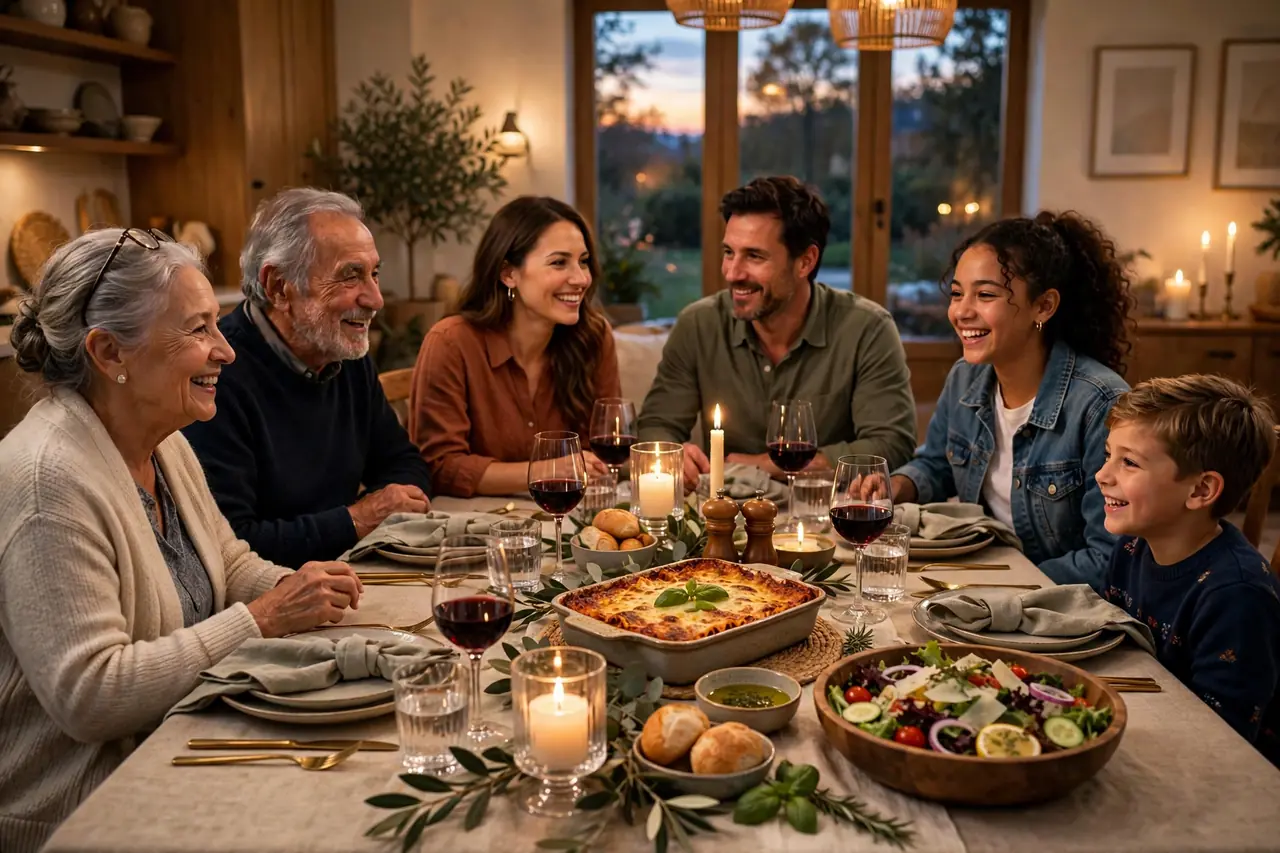
Dinner is the day’s natural finale — the meal where everyone finally lands in the same room at the same time. On Family Day, dinner carries extra weight: it is the moment the day’s memories get retold, the laughter gets a second round, and someone inevitably says, “We should do this more often.” A well-planned family day dinner menu makes that moment sing without requiring you to spend the entire day in the kitchen.
This guide gives you five complete themed dinner menus, from an Italian night to a taco bar to a cozy comfort-food spread, plus appetizers, desserts, drinks, and a planning timeline that keeps the evening relaxed. Every menu is designed for real families: picky eaters, varying cooking skills, and at least one person who claims they “don’t really cook.” For more ways to make a home celebration feel special, see our guides to celebrating at home and planning family events.
How to Build a Family Day Dinner Menu
A great dinner menu has a simple architecture: something to nibble on while people gather, a satisfying main with two supporting sides, a fresh element (salad or vegetables), bread or starch, and something sweet to finish. That is it. You do not need seven courses; you need five components that work together and can mostly be prepared ahead.
Start by choosing your main dish first, because everything else orbits around it. A rich main (like lasagna or pot roast) pairs best with lighter sides (a crisp salad, roasted vegetables). A lighter main (like grilled fish tacos) can handle heartier sides (rice and beans, cornbread). Think about color on the plate: if everything is beige, add something green or red. Think about texture: pair something creamy with something crunchy.
Next, be honest about your kitchen reality. If you have one oven and twelve guests, do not plan three dishes that all need the oven at different temperatures. Choose one oven dish, one stovetop dish, one no-cook dish, and one slow-cooker or make-ahead dish. This distribution is the quiet secret behind every relaxed dinner party. And always — always — have a plan for the picky eater: a plain portion set aside before the sauce goes on, or a simple alternative like buttered pasta.
Finally, write the menu down and shop from the list. Family Day cooking goes sideways when you improvise at the grocery store. A written menu also lets you delegate: “Can you bring the salad?” is much easier to answer than “Can you bring something?”
Menu 1: Italian Night
Italian food is the ultimate family dinner: it scales beautifully, most of it improves with resting, and there is always something for everyone, including the world’s pickiest six-year-old (buttered noodles exist in Italy too, spiritually).
The menu
- Appetizer: Bruschetta trio — classic tomato-basil, white bean and rosemary, and mushroom — on toasted crostini. Assemble the toppings ahead; toast the bread just before serving.
- Main: Lasagna (one meat, one vegetarian spinach-ricotta). Both assemble a day ahead and bake for an hour; they rest perfectly while you toss the salad.
- Sides: Caesar salad with homemade croutons, and roasted broccoli with lemon and Parmesan.
- Bread: Warm focaccia or a crusty loaf with good olive oil and balsamic for dipping.
- Dessert: Tiramisu made the night before — it genuinely needs the overnight rest — or affogato (vanilla gelato drowned in hot espresso) for a zero-effort showstopper.
Drinks
A Chianti or Montepulciano for the adults, sparkling water with lemon for the table, and Italian sodas for the kids. Keep it simple: one red, one white, and something fizzy covers every preference.
Menu 2: Taco Bar Fiesta
A taco bar is the most democratic dinner ever invented. Everyone builds exactly what they want, dietary restrictions solve themselves, and the cook’s job is mostly chopping and keeping things warm. It is also genuinely fun — there is something festive about a table covered in colorful bowls.
The menu
- Appetizer: Queso fundido with chorizo, served bubbling with tortilla chips, plus a fresh guacamole made tableside for drama.
- Mains (pick two or three proteins): Slow-cooker carnitas, chipotle chicken, seasoned ground beef, or black beans and roasted sweet potato for vegetarians.
- Tortillas and shells: Warm flour and corn tortillas (wrap in a towel in a low oven), plus hard shells for the kids who insist.
- Toppings bar: Shredded lettuce, diced tomatoes, red onion, cilantro, lime wedges, shredded cheese, sour cream, pickled red onions, jalapeños, and at least two salsas (one mild, one with real heat).
- Sides: Cilantro-lime rice and slow-cooker refried beans — both hold beautifully.
- Dessert: Churro bites with chocolate dipping sauce, or a tres leches cake made the day before.
Setup tips
Arrange toppings in the order people build: tortillas first, then proteins, then cold toppings, then salsas and lime at the end. Use small bowls and refill rather than putting out giant quantities that wilt. A slow cooker on warm keeps carnitas perfect for hours, which means the cook can actually sit down.

Menu 3: Comfort Food Classics
Some families do not want adventure; they want the food equivalent of a hug. This menu leans into nostalgia — the dishes that taste like childhood and grandmother’s kitchen — and it is engineered so nearly everything can be made ahead.
The menu
- Appetizer: Baked spinach and artichoke dip with pita chips and crudités. Assemble ahead, bake 20 minutes before dinner.
- Main: Slow-cooker pot roast with carrots, potatoes, and onions — or a classic roast chicken with herbs if you prefer. Both need minimal attention once they are going.
- Sides: Creamy mashed potatoes (keep warm in the slow cooker with a little extra butter on top), and glazed carrots or green bean casserole.
- Bread: Fluffy dinner rolls with honey butter. Store-bought rolls warmed in the oven are completely fine — warm bread is warm bread.
- Dessert: Apple crisp with vanilla ice cream, assembled ahead and baked while you eat dinner so it arrives warm.
The beauty of this menu is its rhythm: the pot roast cooks all afternoon unattended, the dip bakes while people arrive, and the apple crisp bakes while you eat. You are never juggling more than one active dish.
Menu 4: Fresh and Light Mediterranean
For families who prefer dinner that energizes rather than sedates, a Mediterranean spread delivers big flavor with a lighter touch. It is also naturally accommodating: vegetarians, gluten-free guests, and kids all find plenty to eat.
The menu
- Appetizer: Mezze platter — hummus, tzatziki, baba ganoush, olives, feta, dolmas, and warm pita. Buy the dips from a good deli and arrange them beautifully; nobody will know or care.
- Main: Lemon-herb roasted chicken thighs or grilled salmon with dill yogurt sauce. Both cook in under 30 minutes.
- Sides: Greek village salad (tomatoes, cucumber, red onion, olives, feta — no lettuce), and lemon-roasted potatoes or herbed couscous.
- Bread: Warm pita and a good olive oil with za’atar for dipping.
- Dessert: Honey-drizzled Greek yogurt with pistachios and fresh figs, or baklava from a good bakery.
Drinks
A crisp Assyrtiko or Sauvignon Blanc, sparkling water with cucumber and mint, and a pomegranate spritzer (pomegranate juice, sparkling water, lime) that looks gorgeous in a pitcher.
Menu 5: Breakfast for Dinner
Brinner — breakfast for dinner — is a guaranteed hit with kids and a secret relief for the cook, because breakfast food is fast, cheap, and universally loved. It also feels delightfully rebellious, which is exactly the energy Family Day deserves.
The menu
- Appetizer: Fruit skewers with a honey-yogurt dip while the main cooks (ten minutes, tops).
- Main: A giant frittata or breakfast casserole with sausage, peppers, and cheddar, plus a stack of pancakes or waffles kept warm in the oven.
- Sides: Crispy hash browns or tater tots (the oven does the work), and a simple green salad to keep things balanced.
- Bread: Buttermilk biscuits with jam and honey butter.
- Dessert: Cinnamon rolls with cream cheese frosting — technically breakfast, but nobody is checking.
Set up a toppings bar for the pancakes (berries, whipped cream, chocolate chips, maple syrup) and let the kids go wild. Brinner is at its best when it is a little chaotic and a lot joyful.

Dinner Menus by Cooking Time
Not every Family Day leaves you with hours to cook. Match the menu to the time you actually have — a relaxed cook makes a relaxed dinner.
| Time Available | Best Menu | Strategy | Sample Timeline |
|---|---|---|---|
| 4+ hours | Comfort Food Classics | Slow-cooker main; bake sides while it rests | Start pot roast at 1 PM; sides at 5 PM; dinner at 6:30 |
| 2–3 hours | Italian Night | Assemble lasagna ahead; bake and toss salad fresh | Lasagna in at 4:30; salad and bread at 6; dinner at 6:30 |
| 1–2 hours | Taco Bar Fiesta | Proteins in slow cooker or quick-sear; chop toppings | Start protein at 5; chop at 5:45; dinner at 6:30 |
| Under 1 hour | Breakfast for Dinner | Everything cooks fast; toppings bar does the work | Frittata in at 5:45; pancakes at 6:15; dinner at 6:30 |
| Almost no time | Mediterranean Mezze | Deli dips + one quick protein + salads | Buy dips ahead; roast chicken thighs 25 min; done |
Appetizers That Buy You Time
The appetizer’s real job is not to impress — it is to keep hungry people happy while you finish dinner. Choose appetizers that are either completely make-ahead or completely no-cook, so they never compete with the main for your attention.
The no-cook hall of fame: a cheese and charcuterie board (arrange it in the morning and cover it), marinated olives and nuts, crudités with store-bought hummus, and a simple caprese skewer. The make-ahead hall of fame: baked dips assembled in the morning, soup kept warm in the slow cooker (butternut squash or tomato), and deviled eggs made the day before.
Put appetizers somewhere other than the kitchen — the living room or patio — so guests naturally migrate out of your workspace. Set out napkins and small plates, and resist the urge to keep fussing; the appetizer hour is your buffer, so use it to finish dinner calmly rather than entertaining.
Desserts Worth Saving Room For
Family Day dessert should feel like a gift, not an obligation. The best strategy is a dessert that is made entirely ahead, so it is one less thing to think about during dinner.
Tres leches cake, tiramisu, chocolate mousse, and icebox cakes all require overnight chilling and are actually better on day two. Fruit crisps and cobblers assemble in minutes and bake while you eat dinner, arriving warm just as plates are cleared. And never underestimate the power of a great store-bought dessert presented well: a bakery pie warmed slightly and served with good vanilla ice cream beats a stressed homemade attempt every time.
For a interactive finish, set up a simple dessert bar: brownies or blondies with ice cream and toppings, or an affogato station with espresso and gelato. Kids love building their own, adults love the lack of formality, and you love that there is nothing to plate.
Watch: Easy Family Dinner Ideas
If you are still deciding what to cook, this video is full of practical inspiration — a week’s worth of quick, family-approved dinner ideas including hearty mains and easy sides. Watch it with your menu shortlist in hand and see which ideas spark something for your Family Day table.
Drinks for the Whole Table
Drinks are the most overlooked part of dinner planning, and the easiest to get right. The formula: one still option, one sparkling option, one warm option (in cold weather), and one festive option for toasting.
| Category | Adult Option | All-Ages Option | Make-Ahead? |
|---|---|---|---|
| Still | Red or white wine matched to the menu | Infused water (citrus, berry, or cucumber-mint) | Yes — infuse water 4 hours ahead |
| Sparkling | Prosecco or sparkling wine | Sparkling cider or flavored seltzer | Yes — chill bottles ahead |
| Warm | Mulled wine | Apple cider with cinnamon, or hot chocolate | Yes — keep warm in slow cooker |
| Festive toast | Champagne or a signature cocktail | Sparkling grape juice in real glasses | Partially — mix base ahead, add bubbles last |
One practical note: put water on the table in a pitcher, not in individual bottles. It looks better, costs less, and guests actually drink more water when it is right in front of them. For families marking a special occasion at dinner, our sentimental gifts for family guide has ideas for a toast-worthy surprise to pair with dessert.
Frequently Asked Questions
How many dishes should a family day dinner menu include?
Five components is the sweet spot: an appetizer, a main, two sides (or one side plus salad), bread or starch, and dessert. This feels abundant without overwhelming the cook. For very large groups, add one more main or side rather than adding courses — variety within the same structure scales better than extra courses.
What is the easiest dinner menu for a beginner cook?
The taco bar. It requires no precise technique: proteins go in the slow cooker or a hot pan, toppings are chopped raw, and rice and beans practically make themselves. There is no timing puzzle, no dish that can be ruined by resting too long, and guests assemble their own plates, which hides any imperfections beautifully.
How do I plan a dinner menu for picky eaters?
Choose a “deconstructed” menu where components are served separately — taco bars, pasta with sauce on the side, or build-your-own bowls. Always set aside a plain portion of the main protein before adding sauce or seasoning. And keep one universally safe dish on the table (buttered pasta, plain rice, or bread and cheese) so no one goes hungry while being picky.
Can I prepare a full dinner menu the day before?
Almost entirely, yes. Lasagna, enchiladas, pot roast, soups, stews, tiramisu, tres leches cake, chopped vegetables, salad dressings, and most desserts all improve or hold perfectly overnight. Leave only last-minute items for the day: searing, tossing salads, baking bread, and reheating. A day-before prep session of two hours can reduce day-of cooking to under an hour.
What main dish feeds the most people for the least money?
Slow-cooker pulled pork or carnitas — a pork shoulder is one of the cheapest cuts per pound and feeds a crowd with almost no effort. Baked ziti or lasagna is the vegetarian-friendly equivalent: pasta, sauce, and cheese stretch incredibly far. Both cost a fraction per serving of individual steaks or chicken breasts.
How do I time everything to be ready at once?
Work backward from serving time and write down when each dish goes in or comes out. Use the oven strategically: bake the dish that needs the highest temperature first, then lower the temp for the next. Keep finished dishes warm (200°F oven, slow cooker on warm, or tented with foil). And remember that most food is happy resting 15–20 minutes — use that buffer to finish last-minute items calmly.
What should I serve for dessert if I am short on time?
Affogato (gelato plus hot espresso) takes two minutes and feels luxurious. A store-bought pie warmed and served with ice cream, a fruit crisp assembled in ten minutes, or a simple dessert bar with brownies and toppings all deliver maximum impact for minimum effort. When in doubt, good vanilla ice cream with warm chocolate sauce and toasted nuts never disappoints.
How can I make dinner feel special without spending a lot?
Atmosphere is free: dim the overhead lights and use candles, put on music, use cloth napkins, and write a menu on a piece of paper at each place setting. Serve one “surprise” course — even just a special appetizer or a fancy drink — and give a short toast before eating. These small rituals make an ordinary dinner feel like an occasion, which is the whole point of Family Day.
Planning for Dietary Needs Without Cooking Five Dinners
Modern families come with modern dietary needs: vegetarian cousins, gluten-free grandparents, dairy-free toddlers, and at least one person doing something with a name you cannot pronounce. The trick is not to cook separate meals — it is to build a menu where the restrictions solve themselves.
The build-your-own format is your best friend. Taco bars, pasta bars (with gluten-free pasta as one option and sauce on the side), grain bowls, and Mediterranean mezze all let each person assemble a plate that works for them. When the main is naturally inclusive — like a vegetable-forward curry with rice, where the meat is a separate topping — nobody feels like an afterthought.
For common restrictions, keep these swaps in mind. Gluten-free: corn tortillas instead of flour, rice or quinoa instead of couscous, and a flourless chocolate dessert. Dairy-free: coconut milk in curries and soups, olive oil instead of butter for roasting, and sorbet instead of ice cream. Vegetarian: make the “side” substantial enough to be a main (a hearty lasagna, stuffed peppers, or mushroom risotto) rather than serving a sad plate of side dishes. Nut allergies: keep nuts in a separate serving bowl, never mixed into shared dishes, and mention it on the label.
The single most important step costs nothing: ask. A quick text a week before — “Any food allergies or things you don’t eat?” — prevents day-of crises and makes guests feel cared for. Label every dish with a small card noting the major allergens it contains. This takes five minutes and eliminates the anxious hovering over the buffet that guests with allergies know all too well.
Setting a Table Worth Gathering Around
The table is the stage for your dinner, and staging it well takes less effort than most people think. You do not need matching china or professional centerpieces — you need intention.
Start with a clean, clear surface. A tablecloth or runner hides a multitude of sins and instantly signals “occasion.” If you are short on seating, remember that a buffet with a few small seating clusters (couch, patio chairs, even floor cushions for kids) is more comfortable than eleven people squeezed around a table built for eight.
Build the centerpiece from what you have: a bowl of fruit, a cluster of candles at varying heights, small potted herbs guests can take home, or a simple vase of grocery-store flowers divided into a few small jars down the table’s length. Keep everything low — guests should see each other’s faces, not a tower of lilies.
Set out water glasses and a pitcher before anyone arrives, and put serving spoons in every dish (the most forgotten item in home entertaining). Cloth napkins, real plates, and actual glasses — even if they are mismatched — make dinner feel cared for in a way disposables never quite manage. If you must use disposable for a huge crowd, choose the nicest compostable ones you can find and do not apologize for them.
Finally, add one personal touch: place cards with a note about why you are glad that person is there, a printed menu, or a small favor like a bag of homemade cookies. These details take minutes and are the things guests mention weeks later. For inspiration on the words to write, our sentimental family gifts guide is full of phrasing that works year-round.
The Night-Before Checklist
Run through this list the evening before Family Day dinner and the day itself will feel almost suspiciously calm. Make or assemble every make-ahead dish on your menu. Chop all vegetables and store them in labeled containers. Make salad dressings and dessert sauces. Set the table completely — plates, glasses, cutlery, napkins, centerpiece. Lay out serving dishes with a sticky note on each saying what goes in it. Charge your phone and your Bluetooth speaker. Put the trash bags, dish soap, and dish towels where you can find them. Fill the ice trays or buy the ice. And get some sleep — a rested host is the secret ingredient no recipe lists.
On the day, follow your timeline, accept help when it is offered (give helpers specific jobs: “Can you slice the limes?” beats “Can you help?”), and remember that the goal was never a perfect dinner. The goal was everyone in one room, eating together, laughing about the day. If the rolls burn a little, serve them anyway and tell the story for years. That is what Family Day dinner is really for.
Your Dinner, Your Family, Your Rules
Here is the truth no menu guide can give you: the “right” Family Day dinner is the one your family will actually enjoy, cooked by a host who got to sit down and savor every bite alongside the people they love most in the world. If that means tacos on paper plates eaten on the living room floor during a movie, that counts. If it means the full Italian spread with candles and a toast, that counts too. The menu is just the excuse — the gathering is the point.
Pick the theme that made you smile while reading, write the shopping list tonight, and text the family the plan. Then on Family Day, light the candles, call everyone to the table with real excitement in your voice, and take the group photo before the food gets cold. Years from now, nobody will remember whether the lasagna had ricotta or bechamel. They will remember that you were all together, that the conversation stretched long past dessert, and that the food — whatever it was — was made with love. For more help gathering your people, explore our at-home celebration guide, our family event planning guide, and our sentimental gifts for family. Happy cooking — and happy Family Day.