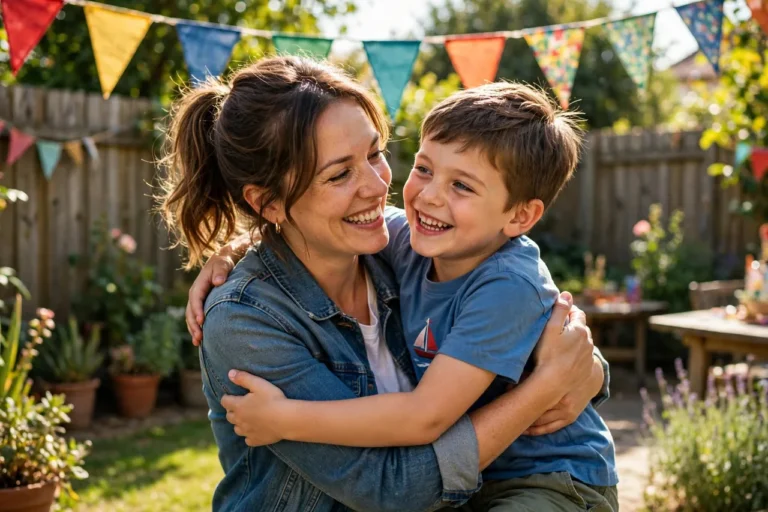
Toddlers experience the world through their senses — which makes them natural artists, even if their masterpieces look like beautiful chaos to adult eyes. A Family Day craft session for toddlers is not about the finished product. It is about squishing paint between fingers, tearing paper with glee, sticking stickers slightly off-center, and the look of total concentration on a two-year-old’s face. The process is the point, and the process is pure joy.
This guide is built specifically for the under-four crowd: fifteen genuinely easy crafts with simple steps, taste-safe options for kids who still mouth everything, a setup guide that minimizes mess and meltdowns, and safety rules every parent should know. You will also find sensory play ideas that double as crafts and a table matching each project to the right age. For more toddler-friendly fun, see our rainy day family activities and kids’ birthday party ideas.
What Makes a Good Toddler Craft
Toddler crafts follow different rules than big-kid crafts. First, they must be completable in 10–20 minutes — that is the realistic attention window for most one- to three-year-olds. Any project requiring drying time between steps needs to be structured so the toddler does step one, plays, and returns for step two, or the adult handles the in-between.
Second, they must be safe to mouth. Toddlers explore with their mouths; it is developmental, not defiance. Use non-toxic, washable materials, avoid small parts that could be choking hazards (anything that fits through a toilet paper roll is too small for under-threes), and supervise constantly. Taste-safe recipes — like yogurt paint and cloud dough — remove the worry entirely.
Third, they must be process-oriented, not product-oriented. A toddler does not care whether their handprint looks like a flower; they care about the cold squish of paint and the satisfying stamp. Choose crafts where every step is fun in itself — tearing, sticking, squishing, pouring — rather than crafts where the fun is all in the imagined finished product. If you find yourself “fixing” your toddler’s craft, the craft is too advanced. Step back, hand them the materials, and let the beautiful chaos happen.
Setting Up for Toddler Craft Time
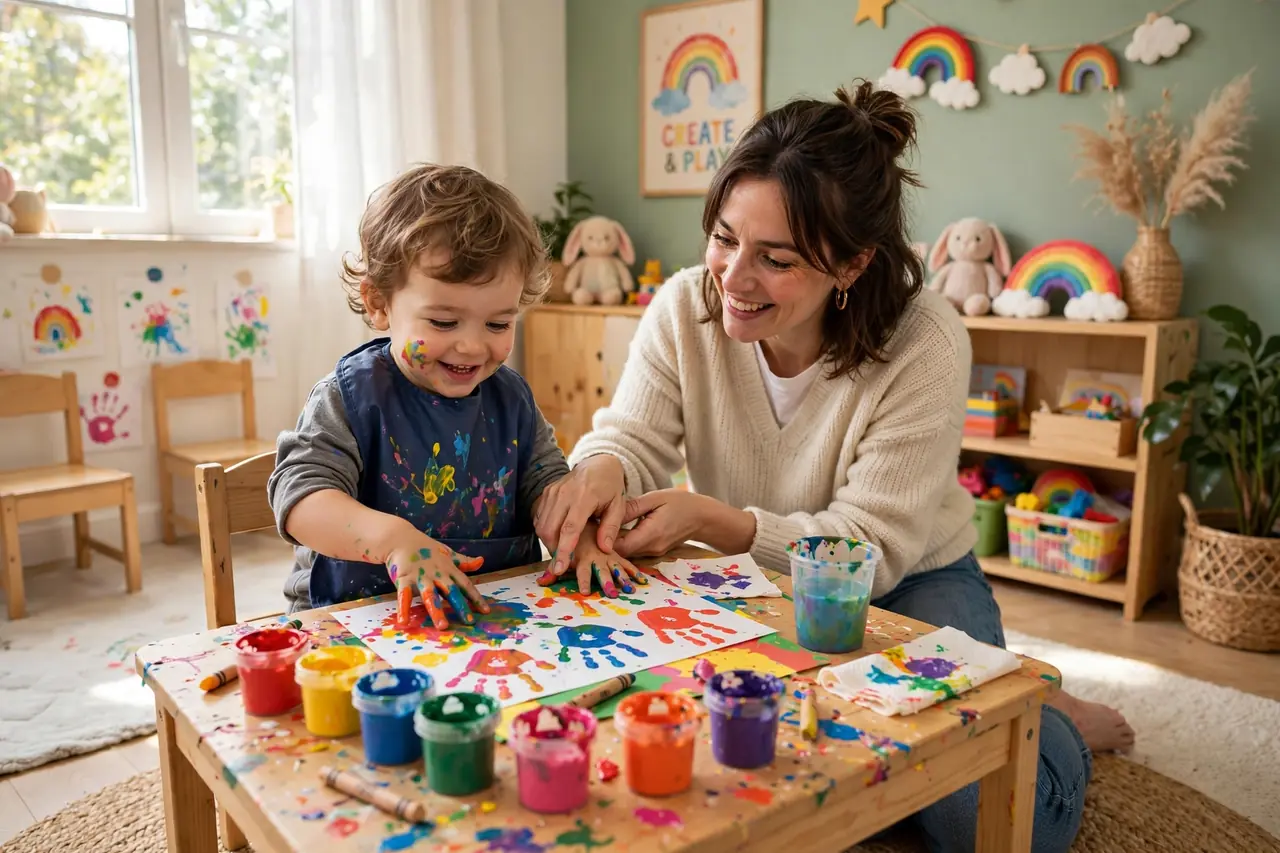
Setup determines success. Toddlers have zero patience for waiting while you hunt for supplies, so have everything ready before you call them to the table. Cover the floor under and around the table — a plastic tablecloth, an old shower curtain, or a washable mat. Dress toddlers in old clothes or just a diaper and smock; some parents swear by the “craft in the bathtub” method for maximum-mess projects like finger painting (genius: hose them down after).
Use a high chair or booster seat for one- and young two-year-olds — containment is kindness at this age. For older toddlers, a small table and chairs at their height works best. Tape paper to the table so it does not slide away mid-masterpiece, which is a top cause of toddler craft meltdowns.
Prep paint in small, spill-resistant containers — muffin tins, ice cube trays, or jars with a little paint in the bottom. Put out one color at a time for young toddlers to avoid the inevitable brown-mix catastrophe (or embrace it; brown is a color too). Keep wet wipes and a damp towel within your reach, not across the room. And always have the next activity ready — when the toddler is done, they are DONE, and a smooth transition to snack time or outdoor play prevents the post-craft crash.
15 Easy Crafts for Toddlers
1. Handprint and Footprint Art
Ages: 6 months+ | Mess: Medium
The undisputed king of toddler crafts. Paint the toddler’s hand or foot with washable paint using a brush (less ticklish than dipping), press onto paper, and lift straight up. Turn prints into animals — handprint peacocks, footprint penguins — or keep them pure and simple with the date written underneath. Tip: have the paper ready and the wipe in your other hand before you start. This is also the perfect craft for making grandparent gifts.
2. Sticker Collages
Ages: 12 months+ | Mess: None
Peel-and-stick stickers on cardstock. That is the whole craft, and toddlers adore it. Peeling stickers builds fine motor skills; placing them builds decision-making. Use dot stickers for color sorting, themed stickers for storytelling (“put the animals in the barn”), or just a glorious free-for-all. Zero cleanup, endlessly repeatable, and great for travel.
3. Yogurt Finger Painting
Ages: 9 months+ | Mess: High (but washable)
Mix plain yogurt with a few drops of food coloring in separate bowls — completely taste-safe paint. Let toddlers paint on a high-chair tray, bathtub wall, or large paper. The sensory experience (cold, smooth, squishy) is the real activity; the “painting” is a bonus. This is the perfect first painting experience because there is literally nothing to worry about if it goes in the mouth.
4. Torn Paper Collage
Ages: 12 months+ | Mess: Low
Toddlers love tearing paper — it is deeply satisfying and great for hand strength. Give them colored tissue paper or construction paper to tear into pieces, then help them glue the pieces onto cardstock with a glue stick to make a mosaic. No scissors needed, no precise anything needed. The result is genuinely pretty, especially with tissue paper layered for a stained-glass effect.
5. Pasta Necklaces
Ages: 18 months+ | Mess: Low
Thread large penne, rigatoni, or wagon wheels onto yarn or a shoelace with a taped end (easier threading). For extra fun, dye the pasta first: shake dry pasta in a bag with a squirt of hand sanitizer and food coloring, then dry on a tray. Stringing builds concentration and fine motor control. Toddlers wear their creations with enormous pride — usually for about four minutes, which is a perfect toddler eternity.

6. Sponge Painting
Ages: 12 months+ | Mess: Medium
Cut kitchen sponges into shapes — or just use them whole — and let toddlers stamp with washable paint. Sponges hold a satisfying amount of paint, make interesting textures, and are easier to grip than brushes. Try sponge roller “brayers” for big coverage, or cut sponges into stars and hearts for shape stamping. Lay out a long roll of kraft paper for a mural-scale experience.
7. Cotton Ball Clouds and Sheep
Ages: 18 months+ | Mess: Low
Draw or print a simple sheep or cloud outline; toddlers glue cotton balls all over it. Pulling cotton balls apart is a wonderful sensory activity, and sticking them on is deeply satisfying. Add googly eyes (glued by an adult for under-threes) and you have an adorable keepsake. This craft is calm, quiet, and perfect for winding down.
8. Bubble Wrap Stomp Painting
Ages: 18 months+ | Mess: Medium-High
Tape bubble wrap (bubble side up) to the floor, squirt washable paint on it, lay paper on top, and let toddlers walk, stomp, and dance. Peel back the paper to reveal a fantastic textured print. This is a full-body craft — gross motor meets art — and toddlers find it absolutely hilarious. Do it outdoors or on a fully covered floor, in clothes you do not love.
9. Nature Collection Collage
Ages: 2+ | Mess: Low
Take a walk and collect leaves, petals, small sticks, and pebbles (the walk is half the craft). Back home, arrange the treasures on contact paper (sticky side up, taped to the table) or glue them onto cardstock. Talk about colors, textures, and shapes as you work — it is a science lesson disguised as art. Seal contact-paper collages with a second sheet for a suncatcher effect.
10. Toilet Paper Roll Binoculars
Ages: 2+ | Mess: Low
Tape two cardboard tubes together, let toddlers decorate with stickers, washi tape, or paint, and attach a yarn strap. Instant binoculars for backyard birdwatching, neighborhood “safaris,” and spying on siblings. The decorating takes fifteen minutes; the playing lasts for weeks. This is a craft that becomes a toy, which is the best kind.
11. Edible Playdough Creations
Ages: 12 months+ | Mess: Medium
Mix 1 cup flour, 1/4 cup salt, 2 tablespoons cream of tartar, 1 cup water, and 1 tablespoon oil; cook over medium heat, stirring, until it forms a ball. Add food coloring. Completely taste-safe (very salty, so they will not eat much). Provide cookie cutters, rolling pins, and plastic utensils for stamping and shaping. Store in an airtight container for weeks of play.
12. Paper Plate Animals
Ages: 2+ | Mess: Low-Medium
A paper plate is a blank animal face waiting to happen. Glue on construction-paper ears, googly eyes (adult-applied for little ones), and a drawn nose and mouth to make lions, bunnies, bears, or monsters. Toddlers do the sticking and coloring; adults do the cutting. Punch holes and add a popsicle stick handle to make puppets for an impromptu show.
13. Water Painting
Ages: 12 months+ | Mess: None
The zero-mess miracle: give toddlers a brush and a cup of water, and let them “paint” the sidewalk, fence, or construction paper (it darkens when wet, then dries — magic!). Perfect for hot days, indoor winter days (paint the bathtub), and moments when you cannot face cleanup. Add ice cubes with frozen toys inside for a melting excavation project.
14. Pom-Pom Sorting and Gluing
Ages: 18 months+ | Mess: Low
Large pom-poms (not the tiny ones — choking hazard) sorted by color into muffin tins with toddler-safe tongs, then glued onto paper to make caterpillars, flowers, or abstract art. Sorting builds early math skills; gluing builds fine motor control. Use white school glue in a small dish with a brush for less squeeze-bottle frustration.
15. Family Handprint Wreath
Ages: All | Mess: Medium
Trace each family member’s hand on colored paper and cut out (adults cut; toddlers can help with safety scissors or just watch). Arrange the handprints in a circle, overlapping, glued onto a paper plate with the center cut out — a wreath made of the family’s hands. Write names and the year on each hand. Hang it on the front door every Family Day. It is simple, deeply personal, and gets more precious every year.

Toddler Crafts by Age
Toddlers change fast — what frustrates an 18-month-old delights a 3-year-old. Match the craft to the developmental stage, not just the birthday.
| Age | Best Crafts | Skills Building | Watch Out For |
|---|---|---|---|
| 12–18 months | Yogurt painting, water painting, sticker collage, handprints | Sensory exploration, cause and effect | Everything goes in the mouth; use taste-safe only |
| 18–24 months | Torn paper, sponge painting, pasta necklaces, cotton balls | Fine motor, color recognition | Short attention span; keep it under 15 min |
| 2–3 years | Bubble wrap stomp, nature collage, playdough, paper plate animals | Creativity, following simple steps | Strong opinions; offer choices, not directives |
| 3–4 years | Binoculars, handprint wreath, pom-pom art, simple weaving | Planning, scissor skills, storytelling | Perfectionism starts; praise process loudly |
Sensory Play Ideas That Double as Crafts
For toddlers, the line between “craft” and “sensory play” barely exists — and that is wonderful. These activities develop the same skills as formal crafts with even less structure.
Cloud dough: 2 cups flour mixed with 1/4 cup vegetable oil. It molds like wet sand, smells faintly delicious, and is taste-safe. Add scoops, cups, and small toys for endless play. Oobleck: 2 cups cornstarch mixed with 1 cup water. It is solid when squeezed and liquid when released — toddlers are mesmerized, and so are adults, honestly. Food coloring optional. Rainbow rice: Dye dry rice with food coloring and a splash of vinegar, dry overnight, then pour into a bin with scoops and containers. Supervise closely (rice is a choking hazard for dedicated mouthers) but the scooping and pouring play lasts ages.
Water beads: Soak water beads until expanded — squishy, bouncy, fascinating. Use with close supervision and keep away from mouths. Kinetic sand: The store-bought kind or homemade (sand, cornstarch, oil). It holds shapes like magic and cleans up more easily than regular sand. Each of these can be a standalone activity or the “free play” station alongside a more structured craft.
Toddler Craft Safety Rules
Safety is not the fun part of the guide, but it is the most important part. Internalize these rules and craft time stays joyful.
Non-toxic everything. Use only materials labeled non-toxic and washable. “Non-toxic” means safe for incidental contact, not for eating — supervise regardless. Keep the product labels until the project is done in case of a reaction.
No small parts for under-threes. Beads, buttons, googly eyes, pom-poms under 1.25 inches, and anything that fits through a toilet paper tube are choking hazards. Either do those steps yourself while the toddler watches, choose larger alternatives, or save those crafts for when they are older.
Supervise constantly. Toddler crafting is not a “set them up and check email” activity. Stay within arm’s reach, especially with paint, glue, and water. Most craft accidents — paint in eyes, glue in hair, falls from chairs — happen in the thirty seconds an adult looks away.
Protect skin and clothes, but do not stress. Washable paint washes out of skin easily; out of clothes, usually, if treated promptly with cold water. Smocks help. But if a beloved shirt gets stained, let it go — the memory is worth more than the shirt, and that is a good lesson for everyone.
Know your toddler’s limits. A tired, hungry toddler cannot craft — they can only cry near craft supplies. Schedule craft time after a nap and a snack, keep sessions short, and end on a high note before frustration sets in. There is always tomorrow, and there is always another Family Day.
Watch: Easy Craft for Toddlers
Seeing a toddler craft in action helps you gauge the pace and the mess level before you commit. This video shows a simple, colorful handprint craft designed for toddlers and preschoolers — watch how the steps are broken down, how the adult guides without taking over, and how much fun the little artist is having. It is a perfect preview of what your Family Day craft table can look like.
Frequently Asked Questions
What age can toddlers start doing crafts?
As early as 6–9 months with fully taste-safe activities like yogurt painting or water play. True “crafting” — making intentional marks, sticking things — typically emerges around 12–18 months. Follow your child’s interest rather than a calendar; some toddlers are eager creators at one, others prefer physical play until two. Both are completely normal.
How do I keep a toddler from eating craft supplies?
Use taste-safe recipes (yogurt paint, edible playdough, cloud dough) so mouthing is harmless. For non-edible supplies, stay within arm’s reach and gently redirect — “paint goes on the paper” — rather than scolding. Avoid small parts entirely for under-threes. And accept that some tasting will happen; that is why material choice matters more than vigilance alone.
What is the least messy toddler craft?
Sticker collages and water painting produce zero mess. Torn paper collage with glue sticks is nearly mess-free. Contact-paper suncatchers (stick items to sticky paper, no glue) are also wonderfully clean. Save yogurt painting and bubble-wrap stomping for days when you have energy for cleanup — or do them in the bathtub.
How long will my toddler actually craft?
Plan for 10–20 minutes of focused creating for most toddlers under two, stretching to 20–30 minutes for older toddlers who are really engaged. Do not try to extend it — ending while they are still happy beats pushing until they melt down. You can always do a second short session later in the day.
My toddler just scribbles — is that okay?
Completely okay, and developmentally perfect. Scribbling is the foundation of writing and drawing — those wild marks are your toddler learning that they can make an impact on the world. Narrate what you see (“Wow, big circles! So much blue!”) rather than asking “What is it?” Praise the effort and the joy, not the resemblance to anything.
What supplies do I need for toddler crafts?
The essentials: washable non-toxic paint, large brushes and sponges, washable markers, glue sticks, construction paper and cardstock, stickers (especially dot stickers), cotton balls, large pom-poms, and playdough. Add a plastic tablecloth, smocks, and wet wipes. That kit covers nearly every craft in this guide for under $30.
How do I include a toddler in family crafts with older kids?
Give the toddler a parallel simplified version: while older kids paint detailed rocks, the toddler finger-paints a big rock. While big kids make friendship bracelets, the toddler strings large beads. Or give the toddler the “important job” of handing out supplies, sticking stickers, or being the official artwork holder-upper for photos. Inclusion matters more than identical projects.
When should I stop a craft session?
Watch for the signs: throwing materials, wandering away repeatedly, rubbing eyes, whining, or eating supplies aggressively (beyond normal mouthing). These mean the toddler is done — tired, overstimulated, or hungry. End cheerfully (“Great creating! Let’s wash hands and have a snack!”), not punitively. A good ending preserves the positive association for next time, which is the whole game with toddlers.
For more ideas that work for the littlest family members, explore our rainy day family activities, our kids’ birthday party ideas (many adapt beautifully for toddlers), and our guide to children’s museum events for outing inspiration.
Crafting Together: Toddlers and Grandparents
Some of the sweetest Family Day moments happen when the youngest and oldest generations create side by side. Grandparents bring patience that busy parents sometimes lack, and toddlers bring a joyful chaos that reminds grandparents what it is all about. But the pairing works best with a little planning.
Choose crafts where both can genuinely participate rather than one watching the other. Handprint art is perfect: grandparent and grandchild make prints side by side, comparing sizes — the tiny hand next to the weathered one, dated and framed, becomes an heirloom. Nature collages work beautifully on a slow walk together. And simple baking — decorating sugar cookies with frosting and sprinkles — is a craft, a snack, and a memory all at once.
Set grandparents up for success: a comfortable chair at the right height, good lighting, and all supplies within reach so nobody is getting up and down. Brief them on the plan (“we’re doing sponge painting for about fifteen minutes”) so they can settle in rather than hover uncertainly. And take photos — lots of them. The pictures of paint-covered toddler hands in grandparent hands are the ones that get framed and treasured for decades.
Be mindful of energy on both ends. Toddlers are unpredictable; grandparents may tire. Keep joint craft sessions short and sweet — twenty minutes of genuine togetherness, full of laughter and paint-covered high-fives, beats an hour where someone is flagging. End with a shared snack and let the toddler run off to play while the grandparent rests with a well-earned cup of tea. The memory will be of the happy part, which is exactly as it should be.
Photographing and Preserving Toddler Art
Toddler art is ephemeral by nature — the yogurt painting gets washed off, the playdough gets squished, the torn-paper collage sheds pieces on the way to the fridge. Photographing the work preserves it without requiring you to keep every piece of paper your child ever touched, which is a losing battle.
Photograph in natural light against a plain background for the truest colors. Capture the process too: the concentrated frown, the paint-covered hands, the triumphant holding-up of the finished piece. These process photos become more precious than the art itself over time. Once a year, print the best craft photos into a small photo book — “Emma’s Art, Age 2” — which grandparents will treasure and which takes up zero shelf space.
For the few pieces worth keeping physically, designate one portfolio folder or art box per child per year. When it is full, it is full — let the child help choose what stays and photograph the rest before it goes. This teaches curation without heartbreak, and the annual “art review” becomes its own lovely ritual. Date everything; in five years, “Family Day 2026” written in your handwriting on the back of a handprint will hit differently than you expect — it becomes a time machine you can hold in one hand.
Every Scribble Counts
Here is what the parenting books sometimes forget to say plainly: you do not need to do all fifteen crafts, buy a single new supply, or produce anything remotely resembling the inspiration photo. You do not even need to do three. One yogurt-painting session that ends in giggles, one handprint ornament for Grandma, one glorious mess that you clean up together while the toddler “helps” with a single damp wipe — that is a successful Family Day craft experience for a toddler, full stop.
The bar is wonderfully low and the rewards are wonderfully high. Toddlers do not remember perfect projects; they remember that you sat on the floor with them, that you laughed when the paint went sideways, that you praised the brown blob like a masterpiece, and that their creation went on the fridge like it was the Mona Lisa. So tape down the paper, squirt the paint, and let the beautiful chaos begin. Years from now, when those tiny handprints are framed on your wall and the toddler is a teenager, you will look back on this gloriously messy afternoon and realize it was perfect exactly as it was. Happy crafting — and happy Family Day.