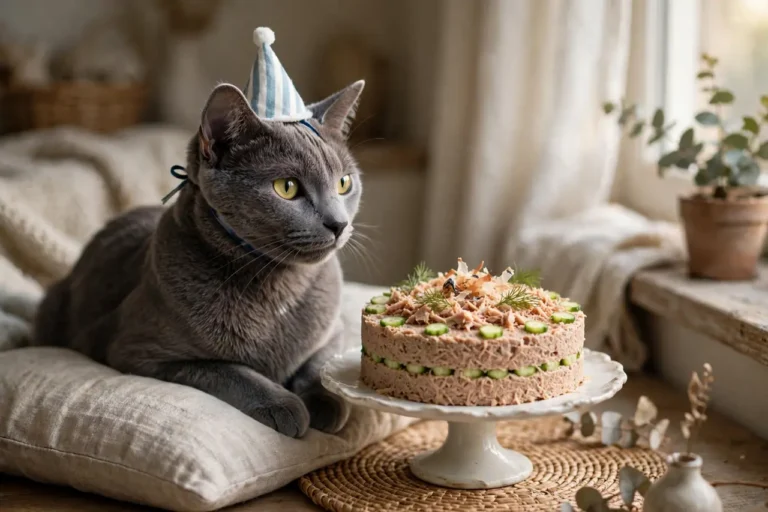
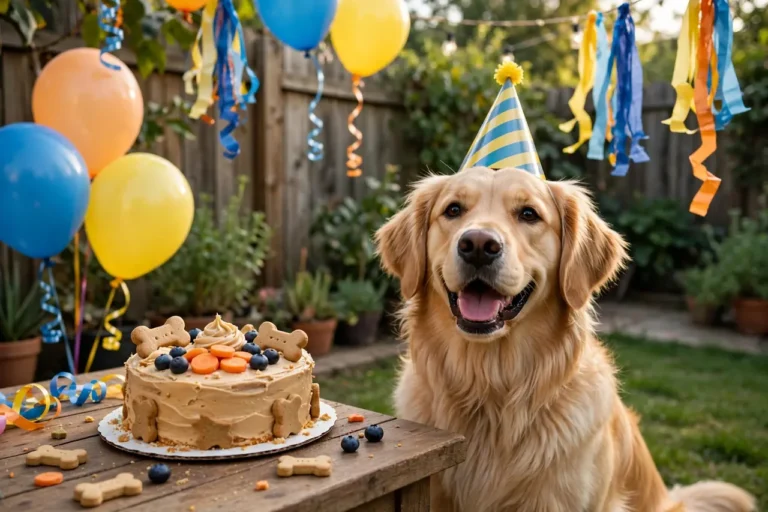
There is a particular kind of joy that only a dog’s birthday can produce. The tail starts thumping the moment the cake box opens, the nose goes into overdrive, and for about ninety seconds your dignified adult dog reverts to an eight-week-old puppy. A homemade dog birthday cake recipe lets you lean all the way into that moment — a cake baked from ingredients you chose, portioned for your dog’s size, and free of the preservatives, mystery “meat meals,” and sugar bombs hiding in many store-bought pet treats. It costs less than a boutique dog bakery cake, takes about an hour start to finish, and turns an ordinary Tuesday into the best day of your dog’s year.
This guide gives you a complete, vet-informed dog birthday cake recipe from start to finish: the master recipe that works for nearly every dog, the ingredient safety rules that matter, four tested variations for different tastes and dietary needs, frosting and decorating ideas that photograph beautifully, and honest guidance on portions, storage, and party-day logistics. Whether this is your first time baking for your dog or your fifth birthday cake, you will find something here that makes this year’s celebration better.
Why Bake a Birthday Cake for Your Dog?
Dogs do not understand birthdays, and that is exactly the point. They understand that today smells like peanut butter and warm banana, that everyone is gathered in the kitchen smiling, and that a special plate with their name on it just appeared. Baking a cake for your dog is really a gift to the relationship: it forces you to slow down, do something with your hands, and mark the passage of time with the animal who measures time only in walks, meals, and naps.
There are practical reasons too. Homemade means control. You decide how much sugar goes in (almost none), which fats are used, and whether the flour is whole wheat, oat, or coconut. You can skip the artificial colors and “natural flavors” that bulk up commercial dog cakes. For dogs with allergies, sensitivities, or weight issues, homemade is often the only way to serve a birthday treat without a vet visit the next day. And the cost difference is real: a custom dog bakery cake routinely runs $30 to $60, while the homemade version below costs roughly $4 to $6 in pantry ingredients.
If you are planning the full celebration, pair the cake with inspiration from our kids birthday party ideas — many of the games and decoration concepts scale down beautifully for a dog party — and browse dog quotes for the perfect caption when the birthday photos hit social media.
Dog Cake Safety Rules: Read This First
Before you preheat the oven, memorize the short list of ingredients that must never appear in anything you bake for your dog. This is the non-negotiable part of any dog birthday cake recipe, and it is worth reading even if you have baked for dogs before, because two of the most dangerous ingredients hide inside perfectly innocent-looking pantry staples.
Ingredients That Are Toxic to Dogs
Xylitol (birch sugar) is the number-one danger. This sugar alcohol sweetens many “sugar-free” peanut butters, sugar-free syrups, and some yogurts. In dogs, even small amounts trigger a massive insulin release that causes dangerously low blood sugar within 30 minutes, and larger amounts cause liver failure. Always read your peanut butter label and confirm xylitol (sometimes listed as “birch sugar”) is absent. When in doubt, choose peanut butter whose ingredient list is just peanuts and salt.
Chocolate contains theobromine and caffeine, both toxic to dogs, with dark and baking chocolate the worst offenders. This means no chocolate cake, no cocoa powder, no chocolate chips, and no chocolate frosting — even a “dog-safe carob” product should be verified. Grapes and raisins can cause sudden kidney failure in some dogs, and because nobody can predict which dogs are sensitive, they are simply off the menu. Macadamia nuts cause weakness, vomiting, and tremors. Onions, garlic, leeks, and chives damage red blood cells. Nutmeg in more than trace spice amounts is toxic. And alcohol — including vanilla extract in large quantities — has no place in dog baking; the teaspoon of vanilla in this recipe is negligible, but never add rum, liqueurs, or “a splash of wine.”
| Ingredient | Safe for Dogs? | Notes |
|---|---|---|
| Peanut butter (xylitol-free) | Yes | Check label for xylitol/birch sugar every time |
| Banana | Yes | Great natural sweetener; high in sugar, so moderate |
| Plain Greek yogurt | Yes | Use plain, unsweetened; avoid sweetened/flavored |
| Eggs | Yes | Cooked; excellent protein binder |
| Whole wheat / oat flour | Yes | Oat flour is gentler for sensitive stomachs |
| Carrots, pumpkin, applesauce | Yes | Use plain pumpkin puree, never pie filling |
| Honey | Yes (small amounts) | A tablespoon or two in a whole cake is fine |
| Cinnamon | Yes (small amounts) | A pinch is fine; large amounts irritate |
| Chocolate / cocoa | No | Theobromine toxicity; dark chocolate is worst |
| Xylitol / birch sugar | No | Can be fatal; check all labels |
| Grapes & raisins | No | Kidney failure risk; unpredictable sensitivity |
| Macadamia nuts | No | Causes weakness, vomiting, tremors |
| Onion & garlic | No | Damages red blood cells even when cooked |
| Nutmeg | No | Toxic beyond trace spice amounts |
The 10-Percent Treat Rule
Even a healthy homemade cake is still a treat. Veterinary nutritionists recommend that treats — including birthday cake — make up no more than 10 percent of a dog’s daily calories. For a 50-pound dog eating roughly 1,000 calories a day, that is a modest slice, not the whole cake. Plan to share: cut the cake into portions, let the birthday dog have the first and biggest slice, and send the rest home with canine guests or freeze it in portions. A cake that serves eight dogs is a party; a cake eaten by one dog is a stomachache.
The Master Dog Birthday Cake Recipe
This is the recipe to start with. It uses seven pantry ingredients, bakes in one bowl, and produces a moist, banana-peanut-butter cake that dogs reliably lose their minds over. The texture is dense and tender — sturdy enough to layer and frost, soft enough for senior dogs. Prep takes 15 minutes, baking takes 25 to 30, and cooling takes another 30. Plan for about 90 minutes door to door.
Yield: one 6-inch two-layer cake (serves 6 to 8 medium dogs, or one very lucky birthday dog across several days)
Prep: 15 minutes | Bake: 25–30 minutes at 350°F (175°C) | Cool: 30 minutes
Ingredients
- 1 cup whole wheat flour (or oat flour for sensitive stomachs)
- 1 teaspoon baking soda
- 1/4 cup creamy peanut butter, xylitol-free (plus 2 tablespoons for frosting)
- 1/4 cup coconut oil or unsweetened applesauce, melted
- 1 large ripe banana, mashed (about 1/2 cup)
- 2 large eggs
- 1/3 cup shredded carrots
- 1/2 cup plain Greek yogurt (for frosting)
- 2 tablespoons honey (optional, for frosting)
- Dog biscuits and fresh blueberries, for decorating
| Pan size | Batter fill | Bake time at 350°F | Serves |
|---|---|---|---|
| 6-inch round × 2 layers | 2/3 full each | 25–30 min | 6–8 medium dogs |
| 8-inch round × 1 layer | 1/2 full | 30–35 min | 8–10 medium dogs |
| Standard muffin tin (pupcakes) | 2/3 full each | 18–22 min | 12 pupcakes |
| 9×5 loaf pan | 1/2 full | 35–40 min | 10–12 slices |
Step-by-Step Instructions
Step 1: Preheat and prep. Heat the oven to 350°F (175°C). Grease two 6-inch round cake pans with coconut oil and line the bottoms with parchment rounds. If you only own one 6-inch pan, bake in two batches — the batter holds fine at room temperature for 30 minutes.
Step 2: Mix the dry ingredients. In a large bowl, whisk together the flour and baking soda. Breaking up the baking soda now prevents bitter pockets in the finished cake.
Step 3: Mix the wet ingredients. In a second bowl, whisk the peanut butter, melted coconut oil (or applesauce), mashed banana, and eggs until smooth. Fold in the shredded carrots. The batter should look thick and speckled — do not overmix once the wet and dry ingredients meet, or the cake turns tough.
Step 4: Combine and divide. Pour the wet mixture into the dry and stir just until no flour streaks remain. Divide evenly between the prepared pans and smooth the tops.
Step 5: Bake. Bake 25 to 30 minutes, until the tops spring back when lightly pressed and a toothpick inserted in the center comes out with moist crumbs but no wet batter. Dog cakes brown faster than human cakes because of the banana and peanut butter sugars — if the tops darken before the centers set, tent loosely with foil for the last 10 minutes.
Step 6: Cool completely. Cool in the pans for 10 minutes, then turn out onto a wire rack and cool fully — at least 30 minutes. Frosting a warm cake melts into a puddle, and dogs will not wait patiently for a re-do.
Step 7: Frost and decorate. Stir the Greek yogurt with 2 tablespoons of peanut butter and the honey until smooth. Spread between the layers and over the top and sides. Press dog biscuits around the base, dot with blueberries, and add a single candle for the birthday photo. Remove the candle before serving — dogs and open flames do not mix.
Four Tested Variations
Once you have the master recipe down, these variations keep things interesting across multiple birthdays (or multiple dogs). Each one swaps a few ingredients while keeping the same method and bake times.
1. Apple-Cinnamon Celebration Cake
Replace the banana with 1/2 cup unsweetened applesauce and the shredded carrots with 1/2 cup finely diced apple. Add 1/2 teaspoon cinnamon to the dry ingredients. The result is lighter and slightly sweeter — a good pick for dogs who turn up their noses at banana. Frost with plain Greek yogurt whipped with a tablespoon of applesauce.

2. Pumpkin Spice (Dog-Safe) Cake
Replace the banana with 1/2 cup plain pumpkin puree — not pumpkin pie filling, which is loaded with sugar and spices. Keep the carrots, add 1/2 teaspoon cinnamon, and swap the coconut oil for unsweetened applesauce to lighten it. Pumpkin is high in soluble fiber, which makes this variation the gentlest on digestion; it is the one to choose for dogs with sensitive stomachs or for puppies celebrating a first birthday.
3. Blueberry Oat Cake
Swap the whole wheat flour for oat flour (blend rolled oats in a food processor until fine) and fold 1/2 cup fresh blueberries into the batter instead of using them only as decoration. Oat flour gives a softer crumb and a slightly nutty flavor. Reduce the honey in the frosting to one tablespoon, since the berries add their own sweetness. This version freezes beautifully — wrap unfrosted layers tightly and freeze up to three months.
4. Carrot-Top Savory Cake
For dogs who prefer savory over sweet, drop the banana and honey entirely and increase the shredded carrots to 1 cup. Add 1/4 cup finely chopped fresh parsley for breath-freshening color. Frost with a thin layer of plain cream cheese (not cream cheese frosting — just the plain block, softened) instead of yogurt. It looks like a proper celebration cake and tastes like dinner, which, to a dog, is the highest compliment.
Frosting and Decorating Ideas
Dog cake frosting has one job: look festive and taste good to a dog. It does not need to be pipeable for an hour or survive a car ride in July. The yogurt-peanut-butter frosting in the master recipe is the workhorse — smooth, spreadable, and safe — but here are more options for different looks.
- Mashed sweet potato frosting: Bake a sweet potato until very soft, scoop out the flesh, and whip until smooth. It spreads like buttercream and gives a gorgeous orange color with zero food dye.
- Plain cream cheese: Softened plain cream cheese (the block kind, not the tub) spreads easily and holds simple piped borders. Use sparingly — it is rich.
- Peanut butter “ganache”: Warm 1/4 cup xylitol-free peanut butter with 2 tablespoons coconut oil until pourable, then drizzle over the chilled cake. It sets into a soft shell.
- Whipped cottage cheese: Blend full-fat cottage cheese until completely smooth for a high-protein, tangy frosting that picky dogs love.
For decoration, think texture and color rather than fondant sculptures. Press small dog biscuits around the sides like a picket fence. Arrange blueberries, banana slices, or strawberry halves in rings on top. Write the dog’s name in peanut butter with a squeeze bottle. Scatter a few crumbled bacon bits (real bacon, cooked crisp, used sparingly) for a savory confetti. One candle for the photo is traditional — use a number candle for the age, light it, take the photo, blow it out, and remove it before the cake goes anywhere near the dog.
Avoid food coloring unless it is specifically marketed as pet-safe; standard gel colors are not tested for dogs. The natural palette — orange sweet potato, purple-blue blueberries, tan peanut butter, white yogurt — is genuinely beautiful without a drop of dye.
Serving Sizes by Dog Weight
The 10-percent treat rule translates into very different slice sizes depending on the dog. Use this table as a starting point, then adjust for your dog’s actual daily food intake, age, and activity level. Senior dogs and couch-potato breeds should get the smaller end of the range; young, active dogs can handle the larger end. When in doubt, serve less — you can always give a second tiny sliver, but you cannot un-serve a giant slab.
| Dog size | Weight | Approx. daily calories | Birthday cake portion |
|---|---|---|---|
| Extra small (Chihuahua, Yorkie) | Under 10 lbs | 200–400 | 1–2 tablespoons (a taste, not a slice) |
| Small (Beagle, French Bulldog) | 10–25 lbs | 400–700 | One thin 1-inch slice |
| Medium (Border Collie, Bulldog) | 25–50 lbs | 700–1,100 | One standard slice |
| Large (Labrador, Golden Retriever) | 50–90 lbs | 1,100–1,600 | One generous slice |
| Giant (Great Dane, Mastiff) | Over 90 lbs | 1,600–2,400 | Two slices, max |
Reduce the dog’s regular meals slightly on cake day to make room in the calorie budget, and skip other treats that day. If the birthday dog has diabetes, kidney disease, pancreatitis, or a known food allergy, check with your veterinarian before baking — many vets will happily approve a modified recipe, and some will suggest specific swaps.

Storage and Make-Ahead Tips
Make-ahead: Bake the layers up to two days before the party, cool completely, wrap tightly in plastic wrap, and refrigerate. Frost the day of serving for the freshest look. Unfrosted layers freeze well for up to three months; thaw overnight in the refrigerator.
Leftovers: Store frosted cake in an airtight container in the refrigerator for up to 3 days. Because the frosting is dairy-based, do not leave the cake at room temperature for more than 2 hours — the same food-safety rule that applies to human dairy desserts. Cut leftover cake into individual portions before freezing so you can thaw exactly one treat at a time.
Transport: If the party is elsewhere, transport the cake unfrosted and frost on arrival. Carry frosting in a jar and decorations in a zip bag. A chilled cake travels better than a room-temperature one, so keep it in a cooler with an ice pack for car rides over 20 minutes.
Party-Day Tips That Actually Matter
The cake is the centerpiece, but the party around it determines whether the day is joyful or chaotic. Feed the birthday dog a light meal a few hours before cake time so the treat lands on a settled stomach, not an empty or overfull one. Serve the cake after the high-energy games and before the wind-down — a sugar-and-excitement crash at the end of the party is real, even for dogs.
For multi-dog parties, cut all portions before any dog sees the cake. Dogs do not queue politely, and a whole cake on a low table is a single-dog heist waiting to happen. Assign one adult per dog for the cake moment, keep leashes on in unfenced areas, and have water bowls ready — peanut butter makes everyone thirsty. Take the candle photo first, serve second; nobody wants to re-light a drool-covered candle.
Capture the moment for the family album, then write it up with help from our birthday quotes collection. And if the celebration continues outdoors, our guide to dog friendly outdoor events has ideas for turning the birthday into a full day out with your pup.
Troubleshooting Common Dog Cake Problems
Dog cake batter behaves differently from human cake batter because it has less sugar and fat, so a few quirks are normal. If your cake sinks in the middle, the usual culprit is underbaking — banana-heavy batters look set on top before the center firms up, so always do the toothpick test in the very center. If the cake is dry or crumbly, you likely overbaked it or overmeasured the flour; spoon flour into the measuring cup rather than scooping, and start checking five minutes before the timer. A dense, gummy layer usually means the batter was overmixed after the wet and dry ingredients met — stir just until the flour disappears. If the frosting slides off, the cake was still warm or the yogurt was too thin; chill the cake for 20 minutes and strain watery yogurt through a coffee filter first. And if the cake sticks to the pan despite greasing, run a thin knife around the edge while it is still warm and let it rest exactly ten minutes before turning out — any sooner it tears, any later it steams itself stuck.
Watch: Homemade Dog Birthday Cake in Action
Sometimes it helps to see the batter consistency and frosting technique before you start. This video walks through a complete homemade dog birthday cake from mixing to decorating, using dog-safe ingredients throughout:
Frequently Asked Questions
Can dogs eat regular birthday cake?
No. Regular birthday cake made for humans typically contains chocolate or cocoa, high amounts of sugar, and sometimes xylitol in “sugar-free” versions — all dangerous for dogs. Even plain vanilla human cake has far too much sugar and butter for a dog’s digestive system. Always bake a separate dog-safe cake using a recipe formulated for canine digestion.
How do I know my peanut butter is safe for dogs?
Read the ingredient label every time you buy a new jar. Safe peanut butter lists peanuts and possibly salt — nothing else. Avoid any product listing xylitol, birch sugar, or “sugar alcohol.” Natural and organic brands are usually safe, but verify anyway, because formulations change. If the label is unclear, choose a different jar.
Can puppies eat birthday cake?
Puppies over 12 weeks old can have a very small taste of dog-safe cake, but keep the portion tiny — a teaspoon or two. Puppies have sensitive developing digestive systems, and rich foods can cause diarrhea. For a puppy’s first birthday, the pumpkin variation in this guide is the gentlest option. Puppies under 12 weeks should skip cake entirely.
What can I use instead of flour in a dog cake?
Oat flour (blended rolled oats) is the easiest 1:1 swap and is gentler on digestion. Coconut flour also works but absorbs far more liquid — use only 1/3 cup coconut flour per cup of wheat flour and add an extra egg. Almond flour is safe in small amounts but high in fat, so it is not ideal for the whole cake. For a fully grain-free cake, see our grain-free recipe guide.
How long does homemade dog cake last?
An unfrosted cake keeps 2 days at room temperature in an airtight container or 5 days refrigerated. Once frosted with dairy-based frosting, refrigerate and serve within 3 days, and never leave it out for more than 2 hours. Unfrosted layers freeze for up to 3 months; frosted cake freezes for about 1 month.
Can I make this cake without eggs?
Yes. Replace each egg with 1/4 cup unsweetened applesauce or 1/4 cup mashed banana plus 1/2 teaspoon baking powder. The texture will be slightly denser but still sliceable. This swap is useful for dogs with egg sensitivities, though true egg allergies in dogs are uncommon.
Is honey safe for dogs in cake?
Small amounts of honey — a tablespoon or two in an entire cake — are safe for most dogs. Honey is still sugar, so it adds calories without nutrition, which is why this recipe keeps it optional and mostly in the frosting. Never feed honey to puppies under one year old, and skip it entirely for diabetic dogs.
My dog is allergic to wheat. What should I do?
Use oat flour as a direct substitute, or explore a fully grain-free recipe based on coconut flour. True wheat allergies in dogs are relatively rare — many “grain sensitivities” are actually reactions to other ingredients — so if your dog has diagnosed allergies, confirm the specific trigger with your vet before reformulating.
Can I add food coloring to make the cake festive?
Skip standard food coloring; it is not tested for dogs and some dogs react to it. Use natural color instead: mashed sweet potato for orange, blueberry puree for purple-blue, turmeric (a tiny pinch) for yellow, and plain yogurt or cream cheese for white. The result looks genuinely beautiful in photos.
What if my dog eats the whole cake?
Do not panic, but do act. A whole 6-inch dog-safe cake is a lot of rich food — expect vomiting or diarrhea within a few hours. Remove remaining cake, offer water, and feed a bland meal (plain boiled chicken and rice) next. Call your vet if vomiting persists, if the dog is lethargic, or if the cake contained anything questionable. This is why the 10-percent rule and pre-cut portions matter.
Baking your dog’s birthday cake is one of those small rituals that pays back far more than it costs — an hour in the kitchen for a memory you will talk about for years. Start with the master recipe, respect the safety rules, keep portions sensible, and let the birthday dog do what dogs do best: enjoy the moment completely, crumbs on the nose and all. For more ways to spoil the four-legged members of the family, see our Christmas gifts for pet lovers guide, which is full of dog-approved picks that work year-round.