Few places on Earth are better suited to growing Christmas trees than the lowlands around Puget Sound. The same cool, damp climate that grows the region’s legendary evergreen forests also grows the noble fir — the handsome, stiff-needled tree that anchors Christmas celebrations across the West. If you are searching for christmas tree farms near seattle 2026, you will find a deep bench of choose-and-cut farms stretching from Redmond and Issaquah in the east to Snohomish and Arlington in the north, each with its own personality, from organic hilltop farms to bustling family festivals complete with bonfires and free cider.
As with every farm guide, one rule comes first: seasons shift. Opening weekends, hours, and prices are set fresh each year, and a wet November can change plans. Use this guide to choose your farm, then check official listings or call ahead for 2026 season hours and pricing — that quick confirmation also tells you which varieties are cutting best this season.
In Pictures: Mist in the Fir Rows
There is a specific Pacific Northwest magic to walking tree rows in the morning mist, saw in hand, with the Cascades ghosting in and out of view. Our second photo captures that exact scene — the quiet, green, rain-washed beauty that makes Seattle-area tree hunting unlike anywhere else.
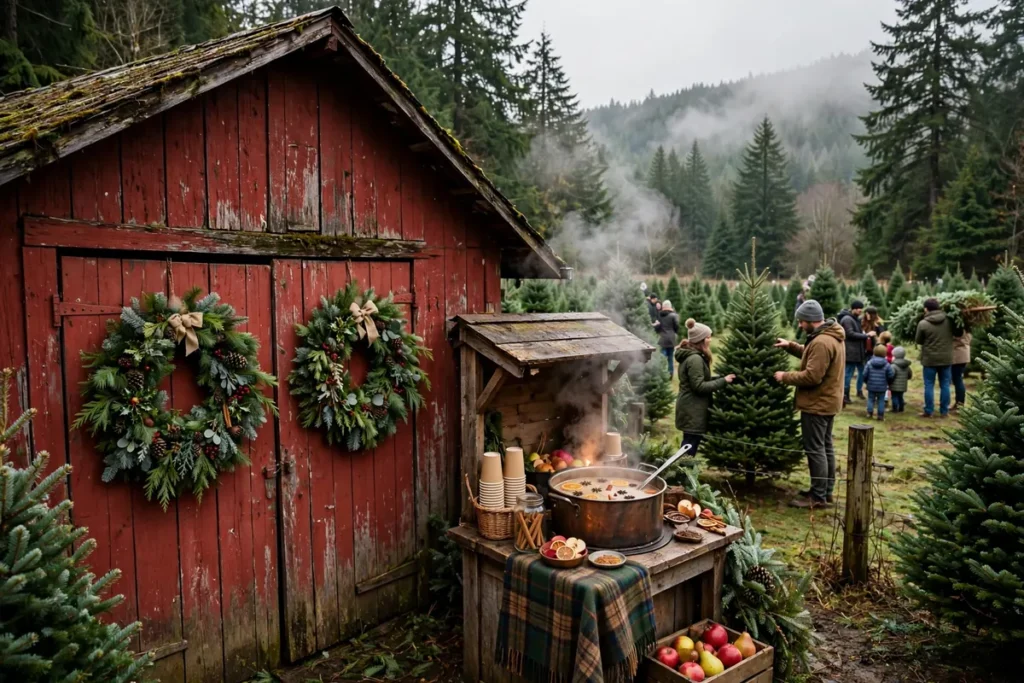
Keep that image in mind as you read on: many of the farms below sit in exactly this kind of landscape, where the line between “tree farm” and “the actual Pacific Northwest” gets pleasantly blurry.
Farm-by-Farm Guide: The Puget Sound’s Best
Serres Farm — Redmond
Tucked into Happy Valley just east of Redmond, Serres Farm is the classic close-in choose-and-cut experience: a traditional family farm growing noble, Nordmann, and Turkish firs you can cut yourself, plus pre-cut Douglas and noble firs. The farm minimizes chemical and pesticide use, which matters to a lot of Eastside families, and the experience is pure holiday comfort — free hot chocolate, homemade chocolate chip cookies on weekends, a historic red barn, and photo opportunities everywhere. Noble firs here grow impressively large, with trees up to 30 feet for those with vaulted ceilings and ambition. Weekday afternoons are blissfully quiet; weekends draw the crowds.
Trinity Tree Farm — Issaquah
Set on 40 acres east of Seattle with Mount Rainier views on clear days, Trinity Tree Farm offers choose-and-cut noble and Douglas firs in a setting that feels like the platonic ideal of a Pacific Northwest Christmas. Towering evergreens frame the fields, and the farm doubles as a beloved wedding venue in the off-season — which tells you something about how beautiful the grounds are. It is dog-friendly, family-friendly, and an easy drive from Seattle, Bellevue, and the Eastside. Confirm 2026 season dates on the farm’s official channels before visiting.
Wintergreen Tree Farm — Snohomish
North in Snohomish, Wintergreen packs an enormous amount of holiday spirit into 11 acres. The variety list is one of the longest around — balsam, blue spruce, Canaan, Douglas, Fraser, grand, noble, Nordmann, and Norway spruce plus Turkish fir for u-cut, with pre-cut nobles as well. The experience is festival-grade: free hot apple cider, a charming gift shop, fresh wreaths and garland, kettle corn, bonfires, candy canes, and free family photo opportunities by festively decorated cabins. Dogs on leash are welcome, and there is even a shoe-washing station for the muddy aftermath. This is the pick for families who want the full outing, not just a tree.
McMurtrey’s Red-Wood Christmas Tree Farm — Redmond
Another strong Eastside option, McMurtrey’s on Redmond-Woodinville Road offers you-cut and pre-cut trees with saws provided, plus wreaths, beverages, restrooms, wagon rides, and tree stands. It is a straightforward, friendly farm experience without the festival sprawl — ideal if you want to walk the rows, cut your tree, and be home by lunch. Its location makes it one of the quickest farm trips from Seattle proper.
Snow Valley Christmas Tree Farm — Duvall
Out in the Snoqualmie Valley, Snow Valley leans into the family-day-out model: you-cut and pre-cut trees, wreaths, Santa appearances, decorations, free hot beverages, a gift shop, and plenty of room for kids to roam. The valley setting is gorgeous in December, and the drive out from Seattle along the Snoqualmie River is part of the pleasure. Pair it with a stop in Duvall or Carnation for lunch and you have a full Saturday.
Carnation Tree Farm — Carnation
Just down the road in Carnation, this farm offers you-cut and pre-cut trees, wreaths, garlands, mistletoe, Santa visits, hay rides, and trees baled for the trip home, with saws provided. It is a well-rounded, traditional farm that does everything competently and cheerfully — a safe bet for first-time tree cutters who want guidance without fuss.
Still more options dot the map: Enchanted Winds in Issaquah (fire pit, hay wagon rides, crafts), Stocker Farms in Snohomish (warming fire, classic u-cut), Buttonwood Farm in Redmond (100% organic you-cut), Bowen Tree Farm in Arlington (free hot cider), and The Wreath Works across the water in Port Orchard (Noble and balsam firs, excellent gift shop). The Seattle area rewards exploration — if one farm’s fields are picked over, another is twenty minutes away.
At a Glance: Christmas Tree Farms Near Seattle
Compare the region’s top farms at a glance before you choose.
| Farm | Area | Tree Types | Standout Features |
|---|---|---|---|
| Serres Farm | Redmond | Noble, Nordmann, Turkish Fir (u-cut); Douglas, Noble (pre-cut) | Minimized chemicals; free hot chocolate; historic red barn; trees to 30 ft |
| Trinity Tree Farm | Issaquah | Noble Fir, Douglas Fir | 40 acres; Mount Rainier views; dog-friendly |
| Wintergreen Tree Farm | Snohomish | 9+ varieties u-cut; Noble (pre-cut) | Free cider, gift shop, bonfires, kettle corn, photo cabins |
| McMurtrey’s Red-Wood | Redmond | You-cut and pre-cut | Wagon rides; quick trip from Seattle; tree stands |
| Snow Valley | Duvall | You-cut and pre-cut | Santa appearances; gift shop; Snoqualmie Valley setting |
| Carnation Tree Farm | Carnation | You-cut and pre-cut | Hay rides; Santa visits; mistletoe and garlands |
Noble Fir and Friends: Know Your PNW Trees
Seattle-area farms grow a distinctive palette of trees, and knowing the lineup helps you shop smarter. Noble fir is the regional signature: stiff, evenly spaced branches that hold heavy ornaments, excellent needle retention, and a classic layered look. It is the premium choice and usually priced accordingly. Nordmann fir is noble’s elegant cousin — glossy dark-green needles, soft to the touch, superb needle retention, and increasingly popular. Grand fir has a wonderful citrusy fragrance and a lush, full shape, though its branches are softer. Douglas fir is the affordable classic: full, fragrant, and sweet-smelling, but it drops needles faster, so buy it closer to Christmas if you choose Doug fir. Turkish fir, a newer introduction on farms like Serres, combines noble-like looks with strong needle hold.
When you are in the field, test before you cut: run a branch through your hand (needles should stay put), check the trunk for straightness, and sight down the tree from a distance for symmetry. A tree that looks perfect from one angle can hide a flat side — walk the full circle. For the bigger debate about whether a real tree is even right for your household, our real vs. artificial Christmas tree guide lays out the honest trade-offs. And once you have chosen your species, our DIY Christmas wreath ideas show what to do with the trimmings most farms give you free.
Watch: Choosing the Right Tree in the Pacific Northwest
This video from a Washington tree farm walks through the four most popular regional trees — noble, grand, Douglas, and Nordmann firs — with honest notes on the strengths and drawbacks of each, plus why a fresh trunk cut matters before the tree goes in the stand. It is the perfect pre-trip briefing for Seattle-area shoppers.
Notice the tip about inner needle browning — completely natural, not a sign of a bad tree — and the emphasis on re-cutting the trunk right before setup so the tree can actually drink.
Three Perfect Tree-Day Itineraries
The Seattle area’s farm geography lends itself to themed day trips. Here are three, each built around real clusters of farms.
The Eastside Loop (half day). Start at Serres Farm in Redmond for the classic choose-and-cut experience and free hot chocolate, then hop over to McMurtrey’s Red-Wood on Redmond-Woodinville Road to compare — two farms, two vibes, fifteen minutes apart. If you still have not found “the one,” Buttonwood Farm’s organic fields are nearby. Finish with lunch in downtown Redmond. Total driving: minimal. Total trees walked past: hundreds.
The Snohomish Valley Day (full day). Head north to Wintergreen Tree Farm for the festival experience — cider, bonfires, gift shop, photo cabins — then continue to Stocker Farms or one of the Arlington-area farms like Bowen Tree Farm for a quieter second look. The valley towns along the way (Snohomish’s antique shops, Duvall’s cafés) make excellent warming-up stops. This is the itinerary for families who want the outing to be the main event.
The Issaquah–Snoqualmie Day (full day). Combine Trinity Tree Farm’s Mount Rainier-view fields with Enchanted Winds’ fire pit and hay wagon rides in Issaquah, then head east to Snow Valley or Carnation Tree Farm in the Snoqualmie Valley for Santa visits and valley scenery. Stop in historic downtown Issaquah or Snoqualmie on the way home. Best on a clear December day when the mountain is out — which, locals know, makes everything better.
Judging a Tree Like a Grower
Farmers evaluate trees on four things, and you can too. Freshness comes first: needles should be pliable and firmly attached, the outer color deep and even, the cut base (on pre-cuts) sappy rather than dried. The classic tests — running a branch through your hand, bending needles, thumping the trunk to check for needle shower — all work and take ten seconds.
Structure is second: a straight trunk, evenly spaced whorls of branches, and symmetry from every angle. Remember that trees look smaller in the field, so bring your ceiling measurement and a tape measure, and do not trust your eyes alone. Density is third: decide whether you want a tight, formal tree (noble fir) or a looser, more natural one (Douglas fir, grand fir) — and check the interior for bare zones by parting the branches. Suitability is fourth: heavy ornament collectors need stiff noble or Nordmann branches; households with cats or toddlers might prefer the softer touch of Nordmann; fragrance lovers should lean grand fir or Douglas fir.
One grower habit worth copying: choose your top three candidates, walk away, get cocoa, and come back for a second look with fresh eyes. The tree that still excites you after the break is the tree.
After Christmas: Trimmings, Recycling, and Next Year
Do not waste the trimmings. Most Seattle-area farms give you free branch cuttings with your tree — and those trimmings become fresh garlands, wreath repairs, and stovetop simmer pots that keep the house smelling like December well into January. A simple hand-tied wreath from farm trimmings takes twenty minutes and looks better than most store-bought versions.
When the season ends, recycle the tree properly. Seattle, King County, and surrounding cities typically run curbside tree collection or drop-off programs in January — check your city’s 2026 schedule for dates and preparation rules (usually: remove all ornaments, lights, tinsel, and stands; cut large trees into sections). Recycled trees become mulch and compost for parks across the region. It is the right ending for a tree that started in a local field.
Finally, think about next year while this year is fresh. Note which farm you loved, which species performed best in your home, and what size actually fit. Some families even tag a growing tree for a future season where farms allow it. The best tree-hunting strategy is a multi-year one — and in the Puget Sound, you have the farms to sustain it.
Your Tree-Day Quick-Start Checklist
Tear this out (mentally) and run it the night before your farm visit. Measure: ceiling height minus twelve inches for stand and topper — write it on your phone. Gear: waterproof boots, rain shell, warm layers, work gloves, tape measure, rope or ratchet straps, and an old blanket or tarp for the car roof. Crew: confirm the farm’s 2026 hours, pet policy if the dog is coming, and whether reservations or timed entry apply. Provisions: thermos of something hot, snacks for the kids, and a fully charged phone for photos. At the farm: walk the full circle around every candidate, run the freshness tests, saw low and level, and let the crew handle shaking, baling, and loading. At home: fresh basal cut, big water reservoir, daily watering, away from heat. Follow that list and the hardest part of your day will be choosing between two perfect trees — which is exactly the kind of problem you want.
Frequently Asked Questions
When do Christmas tree farms near Seattle open for 2026?
Most Puget Sound choose-and-cut farms open the day after Thanksgiving (Black Friday) and run through mid-December or until sold out. Hours often differ between weekends and weekdays — many farms open earlier on Saturdays and Sundays and run limited afternoon hours midweek. Confirm the current season’s schedule on each farm’s official website or social pages before you go.
How much does a you-cut tree cost near Seattle?
Pricing varies by farm, species, and height, with noble fir typically commanding a premium over Douglas fir. Some farms price by the foot, others per tree. Because 2026 prices are set as the season approaches, check official listings or call ahead for current pricing — and ask whether shaking, baling, and loading help are included in the price.
Is noble fir really worth the premium?
For most families, yes — if the budget allows. Noble fir’s stiff branches handle heavy ornaments without drooping, its needle retention is among the best of any species, and its symmetrical, layered shape looks good with minimal decorating effort. That said, a fresh-cut Douglas fir at half the price, bought in mid-December and kept watered, can look fantastic through Christmas. Match the tree to your timeline and your ornament collection.
What should I wear to a Seattle-area tree farm?
Assume rain, even if the forecast looks kind. Waterproof boots are non-negotiable — farm fields in December are muddy — and a rain shell over warm layers keeps you comfortable. Work gloves protect your hands from the saw and the sap. Several farms have shoe-washing stations, which tells you everything about typical field conditions.
Do Seattle-area farms allow dogs?
Many do, including Trinity Tree Farm and Wintergreen Tree Farm, which explicitly welcome leashed dogs. Policies vary by farm and can change, so confirm the current pet policy before bringing your four-legged family member — and keep dogs leashed around other visitors and the tree fields.
How do I keep a real tree fresh in a heated Seattle home?
Cut a fresh half-inch slice off the trunk immediately before setup, use a stand with a large water reservoir, and check the water daily — a fresh tree drinks heavily in its first week. Keep the tree away from heating vents, fireplaces, and south-facing windows. A tree cut at a local farm in late November, properly watered, should look great well past Christmas. For outdoor decorating to match, see our outdoor Christmas decoration ideas, and browse the full DayZora Christmas collection for the season.
Can I visit multiple farms in one day?
Easily — that is one of the Seattle area’s advantages. The Eastside farms (Serres, McMurtrey’s, Buttonwood) cluster within minutes of each other in Redmond, and the Snohomish valley farms pair naturally. Many families scout two or three farms, compare selection and vibe, and buy at the one that feels right. Just watch the clock: winter daylight is short, and farm fields get dark fast after 4 p.m.
Are pre-cut trees at Seattle farms still fresh?
Generally yes — farm pre-cuts were typically harvested from the farm’s own fields days (not weeks) before sale, and kept shaded and watered. They are a different product from mass-market lot trees that may have traveled far. Still, run the same freshness tests: pliable needles, minimal drop when thumped, and a sappy cut base. When in doubt, ask the staff when a particular tree was cut; farm crews know their stock.
What is the best day of the week to go?
Weekday afternoons are the quietest at most Puget Sound farms — some farms run limited midweek hours, so verify before going. If weekends are your only option, arrive at opening: selection is best, the fields are calmest, and you will be home before the afternoon rain (and crowds) roll in. Opening weekend offers peak selection; the second weekend of December offers the best balance of selection and sanity.
How tall a tree should I actually buy?
Measure your ceiling and subtract a full twelve inches — that accounts for the stand (typically 4–6 inches of clearance lost) and the topper and star (another 4–6 inches). An eight-foot ceiling means a seven-foot tree at most, and remember that trees look smaller in the field than in your living room. Bring a tape measure to the farm and trust the numbers, not your eyes. If you fall in love with a tree that is slightly too tall, most farms will trim the base for you — but they cannot add height back.
The Bottom Line
The search for christmas tree farms near seattle 2026 ends with an embarrassment of riches: organic hillside farms on the Eastside, festival-style family destinations in Snohomish, valley farms along the Snoqualmie, and the noble fir — arguably America’s finest Christmas tree — growing practically in Seattle’s backyard. Pick the experience that fits your family, confirm 2026 hours and pricing with the farm, dress for December in the Northwest, and go walk the misty rows. The tree you cut yourself will always beat the one from the lot — especially when the lot is a thousand miles from the nearest noble fir forest and yours grew twenty minutes from your house.