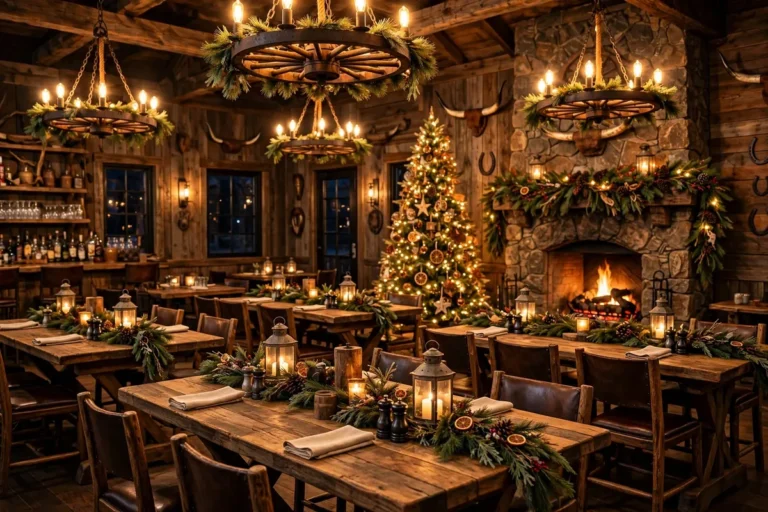
Fort Worth does Christmas big — the Stockyards all lit up, Sundance Square glowing, and somewhere west of the city, rows of Virginia pine waiting for a family with a saw. If you are searching for christmas tree farms near fort worth 2026, here is the honest lay of the land: the Metroplex has a handful of genuine choose-and-cut farms, mostly clustered in Parker, Johnson, and Ellis counties, and they punch well above their weight. Texas-grown cypress and pine, hayrides, homemade cookies, and hot cocoa are all on the table — you just need to know where to look and when to go.
Texas tree farming is a relatively young tradition compared to the century-old operations of the Northeast, but the farms west and south of Fort Worth have refined the experience into something special. Because North Texas winters are mild, the local species — Virginia pine, Leyland cypress, Arizona cypress (sold as Blue Ice), and Afghan pine — are chosen for heat tolerance and needle retention rather than the dense fir look. The result is a tree that is often fresher than anything trucked in from a thousand miles away, cut by your own family on a crisp Texas morning, with hot cocoa waiting back at the barn.
A standing reminder for every farm in this guide: 2026 season dates, hours, and prices are set by each farm in late fall. Always check official listings or call ahead for 2026 season hours and pricing before you head out — several of these farms sell out their cut-your-own fields by early December.
The Best Choose-and-Cut Farms Near Fort Worth
4D Farm — Weatherford
About 30 minutes west of Fort Worth in Parker County, 4D Farm at Upper Denton Road in Weatherford is the crown jewel of the Metroplex choose-and-cut scene — and one of the most interesting tree farms in all of Texas. The farm grows Virginia pine, Leyland cypress, and Blue Ice Arizona cypress for cut-your-own, and it was reportedly among the first Texas farms to grow and sell the Blue Ice variety, with its striking blue-green color and fresh citrus scent.
The experience is pure country Christmas: hayrides out to the fields, farm games for the kids, ornament making, homemade cookies, and hot cocoa or apple cider. The farm supplies everything — saws, tie-down string, even the muscle if you would rather they cut it for you. They also stock pre-cut Fraser firs for shoppers who want the mountain look. One critical planning note: 4D Farm’s choose-and-cut fields routinely sell out and close by early December, with the farm sometimes closing entirely by mid-December. This is a go-early-or-miss-out destination — the weekend after Thanksgiving is your best bet. Confirm 2026 dates on the farm’s official channels.
Haynie’s Green Acres — Crowley
South of Fort Worth in Crowley, Haynie’s Green Acres has been selling Texas-grown and pre-cut trees since 1998, making it one of the longest-running operations near the city. Located on Shannon Valley Drive, it is an easy drive from most Fort Worth neighborhoods — close enough for a weeknight tree run if the farm’s hours allow.
Haynie’s pairs its tree fields with a well-stocked shop of ornaments and holiday gifts, so you can knock out tree and trimmings in one stop. The farm’s longevity speaks to consistent quality and fair dealing; families who started coming as kids now bring their own children. Check official listings for 2026 hours and pricing.
Mainstay Farm — Cleburne
Down in Cleburne, Mainstay Farm offers cut-your-own Arizona cypress, Leyland cypress, and Fraser fir, plus fresh-cut trees, a gift shop, and hay and wagon rides. It is a full-service farm experience in Johnson County, about 35–40 minutes south of downtown Fort Worth depending on traffic.
Mainstay is a strong pick for families who want the farm day without the Weatherford crowds — Cleburne’s country roads make for a pleasant drive, and the farm’s mix of Texas-grown and fir options covers every taste. As always, verify 2026 season details directly with the farm.
Sunset Hill Tree Farm — Alvarado
Also in Johnson County, Sunset Hill Tree Farm near Alvarado invites families to find the perfect fresh-cut tree or choose and cut their own. The farm grows Virginia pine for u-cut alongside Fraser fir options, covering both the Texas-grown and classic-fir camps in one stop.
Alvarado sits about 30 minutes south of Fort Worth, making Sunset Hill an easy half-day trip. Pair it with a drive through Johnson County’s small towns for the full country-Christmas effect.
Radde Tannenbaum Farm — DFW Area
With a name like Tannenbaum, you know what you are getting: a German-flavored Christmas tree farm in the DFW area where a hayride carries you out to cut your own Afghan pine, or you can choose a pre-cut Fraser fir. German treats and unique ornaments round out the experience, giving it a distinctive European-market feel you will not find at the other farms on this list.
If your family loves the Christkindlmarket vibe, Radde is your farm. Confirm the 2026 schedule and location details on official channels before visiting.
The Cutting-Day Playbook: From Driveway to Decorated
A great farm day is 20 percent tree and 80 percent everything around it. Here is how experienced Texas families run the playbook:
The week before: Measure your ceiling and your available floor space. Subtract two feet from the ceiling height (stand plus topper) and write the number on your phone. Check each farm’s social media for 2026 opening announcements — Texas farms often post “fields are open” updates and, just as importantly, “choose-and-cut is sold out” updates. Have a backup farm in mind.
The morning of: Dress in layers and wear boots — Texas fields in late November can be muddy, dewy, or both. Bring work gloves, a tape measure, rope or ratchet straps, and a blanket or tarp to protect your vehicle’s roof. Pack snacks and water; farm concessions are wonderful but lines peak at midday.
At the farm: Take the hayride or walk out with a plan: split up, scout separately, then reconvene at the finalists. Walk completely around each candidate — Texas-grown pines can have a “good side,” and you want to know about the bad side before the saw comes out. Check branch strength by hanging your arm’s weight on a lower limb; if it sags dramatically, it will not hold your heavy ornaments.
The cut: Let the farm’s staff guide you if it is your first time — they do this hundreds of times a season. Saw low, saw level, and let the tree fall away from people. Then hand it over for shaking, baling, and loading; the netting makes transport dramatically easier.
At home: Fresh cut off the base, straight into water, top up daily. Keep the tree away from the fireplace and heating vents. Then comes the best part — decorating together, which is where our gingerbread house decorating tips can turn the evening into a full holiday event for the kids.
In Pictures: Hayride Season West of Fort Worth
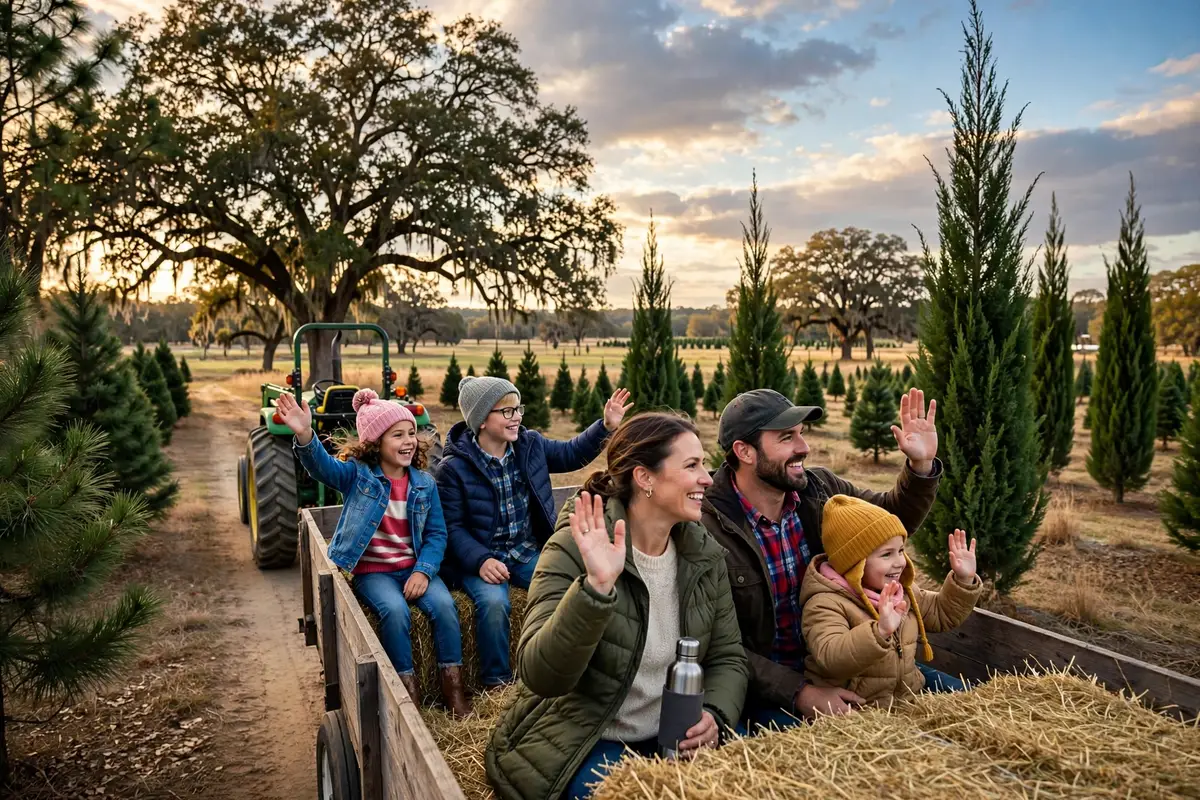
The hayride out to the cutting fields is the signature moment of a Texas tree farm visit — kids piled on hay bales, the farm rolling past, everyone scanning the rows for contenders. At farms like 4D, the ride itself is half the fun, winding past the Blue Ice cypress rows with their unmistakable blue-green tint. Bring the camera; the golden-hour light on a Texas farm in late November is something special.
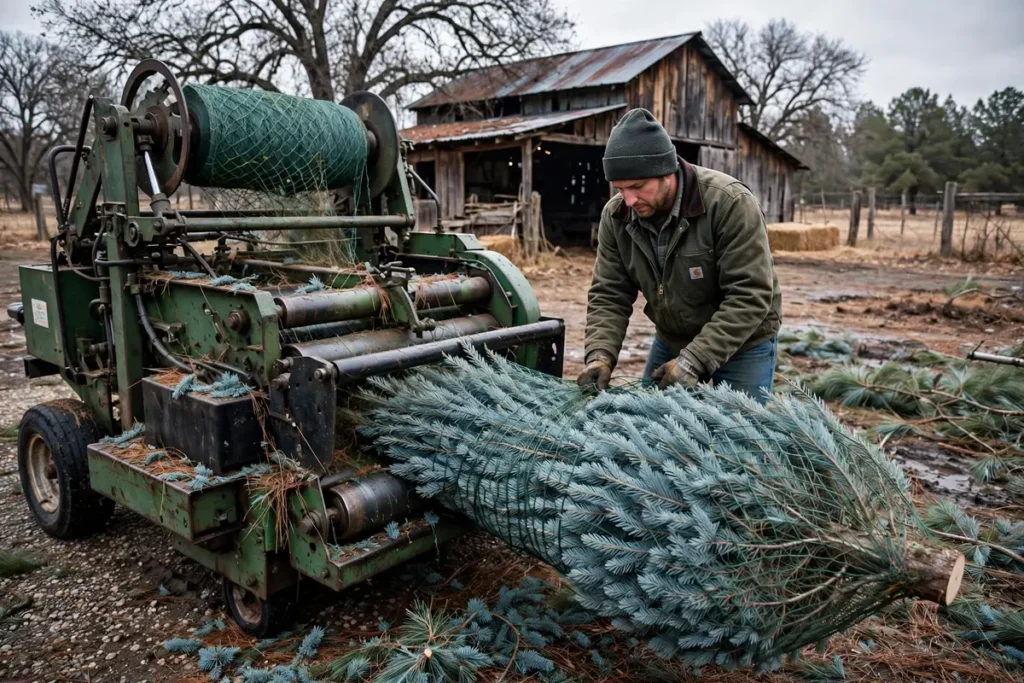
Back at the barn, the baling station is where the magic gets practical — watching your tree disappear into netting never gets old, and it makes the roof-rack Tetris at home ten times easier.
Watch: How Christmas Trees Grow, Start to Finish
Ever wondered what it takes to grow the tree in your living room? This episode from Maryland Farm & Harvest follows a real tree farmer through the years-long process — planting seedlings that won’t be ready for nearly a decade, shaping, shearing, and finally harvest. It is a perfect watch for kids who think Christmas trees just appear in December.
The takeaway that surprises most people: every tree you cut at a Texas farm represents 5 to 8 years of care — planting, mowing, shearing, and pest management. That is what you are really buying: years of someone’s work, not just wood and needles.
At a Glance: Fort Worth-Area Tree Farms Compared
| Farm | Area | Cut Your Own? | Tree Types | Drive from FW | Signature Thing |
|---|---|---|---|---|---|
| 4D Farm | Weatherford | Yes | Virginia pine, Leyland & Blue Ice Arizona cypress; pre-cut Fraser fir | ~30 min | Blue Ice cypress, sells out early |
| Haynie’s Green Acres | Crowley | Yes | Texas-grown & pre-cut varieties | ~25 min | Running since 1998, gift shop |
| Mainstay Farm | Cleburne | Yes | Arizona cypress, Leyland cypress, Fraser fir | ~35 min | Wagon rides, gift shop |
| Sunset Hill Tree Farm | Alvarado | Yes | Virginia pine, Fraser fir | ~30 min | Easy half-day trip |
| Radde Tannenbaum Farm | DFW area | Yes | Afghan pine; pre-cut Fraser fir | Varies | German treats & ornaments |
Drive times assume typical weekend traffic from central Fort Worth — add buffer for the Saturday-after-Thanksgiving rush, when every farm is at its busiest.
Texas Tree Species, Decoded
Shopping Texas farms means meeting trees you may never have heard of. Here is the quick decoder:
Virginia pine — the Texas classic. Strong scent, sturdy branches, affordable. Needles are longer and a bit prickly; great for traditional decorating.
Leyland cypress — the allergy-friendly pick. Soft foliage, almost no pollen, excellent needle retention. Milder scent; ideal for families with sensitivities or curious toddlers.
Arizona cypress / Blue Ice — the looker. Blue-green color, citrus scent, good retention. The premium Texas-grown choice and 4D Farm’s claim to fame.
Afghan (Eldarica) pine — the heat warrior. Extremely drought-tolerant with long soft needles and an open, airy form. A distinctive, natural look.
Pre-cut Fraser fir — the classic. Dense, symmetrical, strong branches, excellent retention. What most people picture when they picture a Christmas tree — just grown in the mountains, not in Texas. Many Metroplex families buy one of these as a second tree for the formal living room.
Match the species to your household: heavy ornament collectors should lean Virginia pine or Fraser fir; allergy families should go Leyland; style-first decorators will love Blue Ice. For the full holiday home transformation afterward, our DIY wreath ideas pair beautifully with a fresh Texas tree.
More Ways to Get a Real Tree in the Metroplex
The five farms above are the core of the Fort Worth choose-and-cut scene, but they are not the only paths to a real tree — and knowing the full landscape helps you pick the right approach for your family’s December.
Pre-cut lots with mountain firs. Every December, pop-up lots across Fort Worth, Arlington, and the mid-cities sell Fraser and Noble firs trucked in from the Southeast and Pacific Northwest. Quality varies enormously by lot: the best operators receive fresh shipments weekly, store trees upright in water, and will make a fresh cut on the trunk before you leave. The weaker ones let trees bake in the Texas sun for weeks. Judge every lot by the same tests you would use in a field — bend the needles, check the trunk cut, and ask when the shipment arrived. A reputable lot owner answers proudly; a vague answer is your cue to leave.
Big-box and nursery trees. Home-improvement stores and local nurseries sell real trees at attractive prices, but turnover and care are inconsistent. If you go this route, buy early in December when stock is freshest, and be extra diligent about the freshness tests. Local nurseries often do better than the big boxes because their staff actually know trees — and many will throw in a fresh cut and a bag of the trimmings for your mantel.
Living trees. A few Texas nurseries sell containerized evergreens — typically Arizona cypress or Eastern red cedar — that you decorate for the season and plant afterward. This is a genuinely sustainable option in North Texas, where both species thrive in the landscape. The constraints: keep the tree indoors for no more than 7–10 days, keep the root ball moist but not soggy, and have the planting hole ready before Christmas so you are not digging in a rush on a cold January morning.
Which is right for you? If the experience matters — and for most families reading a farm guide, it does — the choose-and-cut farm wins on memories per dollar. If you need a specific 9-foot symmetrical fir and you need it on a Tuesday night, the good pre-cut lot wins on practicality. There is no shame in either; the only mistake is a dried-out tree, whatever its origin.
Making a Day of It: Pairing Your Farm Visit
The farms west and south of Fort Worth sit in some of the prettiest country in North Texas, and the smartest families turn the tree run into a full day. Heading to Weatherford for 4D Farm? The historic downtown square is worth an hour — antique shops, the Parker County courthouse, and several solid lunch spots. It is the kind of small-town Texas that makes out-of-state relatives understand why you live here.
Cleburne and Alvarado trips pair beautifully with a drive through Johnson County’s rolling farmland, and both towns have classic Texas cafes for a chicken-fried lunch. If you are visiting Radde Tannenbaum or other DFW-area farms, you are already close to the metro’s holiday infrastructure — the Gaylord Texan’s ICE! exhibition in Grapevine, Sundance Square’s tree lighting, or the Fort Worth Stockyards’ Christmas programming all make natural add-ons.
One logistical tip that experienced families swear by: do the farm visit first, in the morning, and save the town exploring for after the tree is secured on the car. A tree strapped to the roof is fine for a lunch stop but less ideal for a three-hour shopping expedition — especially if the afternoon warms up. Get the tree home, get it in water, and then head back out for the evening’s festivities with the mission accomplished.
And when the decorating begins that night, make it an event: our Elf on the Shelf ideas give the kids something to look forward to every morning, and printable Santa letters capture the wish lists while the excitement is fresh.
FAQs About Christmas Tree Farms Near Fort Worth 2026
When do Fort Worth-area tree farms open?
Most open the weekend after Thanksgiving, though exact 2026 dates are announced by each farm in late fall. The critical thing to know: choose-and-cut fields at popular farms like 4D often sell out by early December, so the first two weekends of the season offer the best selection. Check official listings or call ahead for 2026 season hours and pricing.
How much should I expect to pay?
Pricing is set by each farm each season and varies by species and height. Texas-grown u-cut trees have historically been the budget-friendly option, with imported pre-cut firs priced higher. Farms typically post 2026 prices when they announce opening dates — confirm directly rather than relying on prior-year figures.
Can I bring my dog?
Many Texas farms welcome leashed dogs in the fields, but policies differ and some restrict pets during peak weekends or in concession areas. Check the farm’s website or social media for the current policy, and bring waste bags regardless.
What if the choose-and-cut fields are sold out?
It happens every year at the most popular farms. Your backups: the farm’s own pre-cut Fraser firs (usually excellent quality), a second farm on this list, or a reputable pre-cut lot in the Metroplex. Going earlier in the season is the real fix — put the farm visit on the calendar for the weekend after Thanksgiving.
How long will a Texas-grown tree last indoors?
With daily watering and placement away from heat, a fresh-cut Virginia pine or cypress easily lasts four to five weeks — often longer than a pre-cut fir that was harvested weeks earlier. The keys are a fresh trunk cut at home, never letting the stand go dry, and keeping the room reasonably cool.
Do I need to bring my own saw?
No — every farm on this list provides saws (and usually twine and netting). Bring work gloves, a tape measure, and straps for transport; the farm handles the rest, including shaking, baling, and loading help.
Are Texas Christmas tree farms crowded?
On the weekend after Thanksgiving, yes — expect the popular farms to be lively, with hayride lines at midday. The crowd-thinning secrets: go on opening weekend rather than the second weekend, arrive within the first hour of opening, or visit on a weekday afternoon if the farm’s hours allow. Weekday visits at farms like Haynie’s or Seiler’s can feel like a private tour. By the second week of December, the crowds thin but so does the tree selection — another reason early beats late.
Is a fresh-cut or a living balled tree better in Texas?
Texas growers are candid about this: choose-and-cut fields are limited in North Texas because few classic Christmas species thrive in the heat, so many local farms lean on pre-cut trees shipped in from cooler states or on hardy alternatives like Virginia pine and Leyland cypress. A living, balled-and-burlapped tree is a genuinely good option here — it can go back into the landscape after the holidays if you plant it promptly.
Whichever you choose, the indoor rules matter more in a warm house: keep the tree away from heating vents and fireplaces, water a cut tree daily, and keep a living tree indoors for no more than about ten days. After the season, check whether your farm or city runs a treecycling program so the tree is chipped rather than landfilled.
Conclusion: West of Fort Worth Is Where the Tradition Lives
A christmas tree farms near fort worth 2026 search might look thin compared to longer lists for other metros, but Fort Worth families know the secret: the best farms are a short drive west and south, the trees are fresher than anything in a parking lot, and the hayride-and-cocoa experience beats a big-box run every single time. Pick your farm, go early in the season, and make a day of it.
Start with 4D Farm if you want the full festival (and go opening weekend), try Haynie’s for the easy close-to-home trip, or Mainstay and Sunset Hill for Johnson County charm. Whatever you choose, water that tree daily — and when the decorating is done, keep the season rolling with our Christmas trivia, a scavenger hunt for the kids, or the full DayZora Christmas hub.