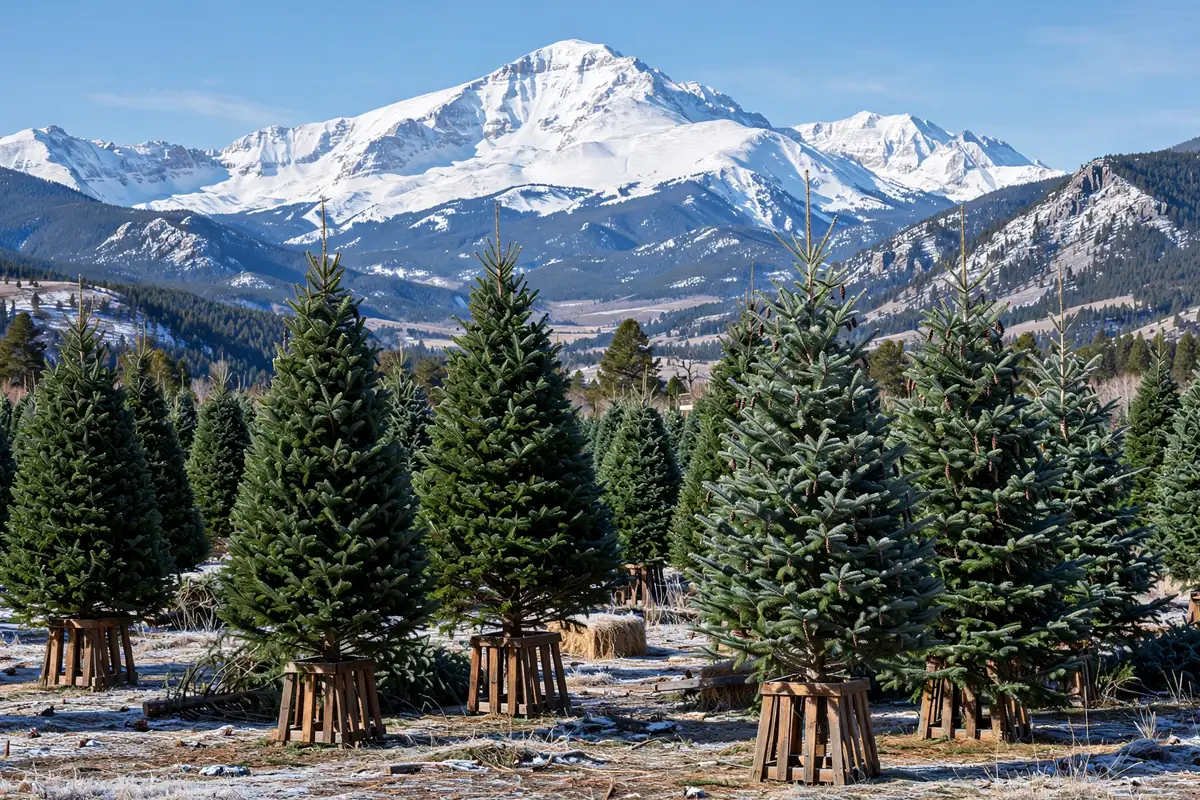
Colorado Springs sits at the foot of Pikes Peak, surrounded by some of the most beautiful evergreen forests in America — which makes it slightly ironic that true choose-and-cut Christmas tree farms are relatively scarce right in town. The high-altitude climate and short growing season make commercial tree farming tough on the Front Range, so the local tradition looks a little different here: beloved family-run tree lots, nursery-grown trees, and — for the adventurous — cutting your own tree in the national forest with a permit.
That does not mean you are short on options. Colorado Springs has excellent fresh-cut tree lots run by families who have been doing this for decades, nurseries that grow and sell trees suited to Colorado homes, and easy access to national forest cutting areas where a $10 to $20 permit gets you the most authentic tree-hunting experience of all. This guide covers the best places to get your Christmas tree near Colorado Springs for the 2026 season, with real locations, what each one offers, and honest advice on which option fits your family.
As with any seasonal business, check official listings or call ahead for 2026 season hours, opening days, and current availability before you visit.
The Colorado Springs Tree Scene: What to Expect
Unlike the Midwest or Southeast, where choose-and-cut farms dot the countryside, the Pikes Peak region’s Christmas tree market is built around premium pre-cut lots. Family-run operations bring in fresh-cut firs and pines from growing regions and sell them from well-organized lots across the city. The advantage is convenience and selection: you can compare dozens of trees side by side in minutes, and the best lots restock throughout the season.
The trade-off is that you need to shop smart for freshness, since pre-cut trees vary in how long ago they were harvested. The tips later in this guide will show you exactly how to pick a fresh one. And if you want the true cut-it-yourself experience, the national forests west of the city offer permit-based cutting that no farm can match for adventure — more on that below.
1. Jolly Christmas Trees — Colorado Springs
Jolly Christmas Trees operates a lot at 1736 South Circle Drive in Colorado Springs, part of a decade-old family-run business that serves much of the Front Range with additional locations in Aurora, Lakewood, and Denver. For Springs residents, the South Circle Drive lot is the convenient hometown stop — no I-25 trek required.
The selection focuses on the varieties Colorado families love: Balsam fir, Fraser fir, Korean fir, and Scotch pine. The lot offers cut-your-own options along with fresh-cut trees, plus a gift shop and tree stands, so you can walk out with everything you need in one trip. Being family-run shows in the service: staff help you compare trees, make the fresh cut, and get the tree secured to your vehicle.
Because Jolly runs multiple lots, they move significant volume — which means steady restocking through the season but also means the premium trees go fast after each fresh shipment arrives. Ask when the latest delivery came in, and shop early in the week if you can. Confirm 2026 season hours before heading over.
2. Heidrich’s Colorado Tree Farm Nursery — Colorado Springs
Heidrich’s Colorado Tree Farm Nursery is a Colorado Springs nursery operation offering one of the widest variety lists in the area: Balsam fir, Douglas fir, Fraser fir, Noble fir, Ponderosa pine, white fir, and white pine. As a working nursery rather than just a seasonal lot, Heidrich’s brings grower expertise to the tree-buying experience — the staff genuinely knows trees.
The nursery setting is a plus for shoppers who want more than a parking-lot transaction. You will find coffee and beverages, fresh-cut trees, tree stands, wreaths, and garlands, plus the nursery’s year-round inventory if you are also planning landscaping projects. Credit and debit cards are accepted, which is worth noting since some seasonal lots are cash-only.
Heidrich’s suits buyers who value expertise and variety, especially if you are deciding between species like Noble fir versus Nordmann-style options or wondering which pine handles Colorado’s dry indoor air best. Call ahead for 2026 season hours and current stock.
3. Holly Acres Nursery and Tree Farm — Elizabeth
Holly Acres Nursery and Tree Farm in Elizabeth, about 40 to 50 minutes northeast of Colorado Springs, is worth the drive for serious tree shoppers. The variety list is remarkable: Balsam fir, Black Hills spruce, Canaan fir, Concolor fir, Douglas fir, Fraser fir, Grand fir, Noble fir, Nordmann fir, Scotch pine, and white pine — arguably the deepest bench of any tree seller within reach of the Springs.
The nursery offers fresh-cut trees, a gift shop, and coffee and beverages, making it a comfortable outing even on a chilly December day. The drive out to Elizabeth takes you through classic Front Range ranch country, and the trip feels like a genuine excursion rather than an errand. For families who want to compare many species side by side — feeling the difference between a soft Nordmann and a fragrant Balsam, for instance — there is no better classroom.
Plan this as a half-day trip and combine it with lunch in Elizabeth or Franktown. As always, verify 2026 season hours before you go, since nursery hours shift with the season.
4. Cut Your Own in the National Forest — Pike & San Isabel
Here is Colorado’s best-kept Christmas secret: you can cut your own tree in the national forest with an inexpensive permit. The Pike & San Isabel National Forests, whose districts wrap around the Pikes Peak region west and southwest of Colorado Springs, sell personal-use Christmas tree cutting permits each season, typically in the $10 to $20 range per tree, with a small online fee when purchased through recreation.gov. Other Colorado forests — Arapaho & Roosevelt, White River, Grand Mesa-Uncompahgre-Gunnison, San Juan, and Rio Grande — run similar programs.
This is the real deal: you drive into designated cutting areas, hike through the forest with a handsaw, and pick a wild-grown Engelmann spruce, Douglas fir, or lodgepole pine. It is more adventure than shopping — there are no barns, no cocoa stands, and no staff to help you load. You will need a saw, rope or straps, warm layers, and a high-clearance vehicle for forest roads. Read the forest’s cutting rules first: each district designates specific cutting areas, sets size limits, and some popular districts sell out of permits.
For families with older kids and a sense of adventure, a permit tree becomes a legendary holiday story. For everyone else, the lots above are the saner choice. If you go the permit route, check recreation.gov for 2026 season permit sale dates and cutting area maps — permits for popular districts can sell out quickly after release.
5. Front Range Lots Worth the Drive
If you are willing to head up I-25, Denver’s tree lot scene adds more options. Nice Fresh Christmas Trees, family-run since 1965, claims Colorado’s largest tree lot and operates six metro locations with evergreens in a huge range of sizes plus delivery service. Neighborhood Christmas Tree Company runs welcoming lots with Balsam fir, Black Hills spruce, Scotch pine, and more, plus hot cocoa and a famously friendly vibe. Tree Town Christmas Tree Wonderland pairs tree shopping with Santa visits, reindeer meet-and-greets, and a nightly lights display.
These are worth knowing about if you commute to Denver or are up there for a weekend — but for most Springs families, Jolly’s local lot and Heidrich’s nursery cover the same needs without the drive. Mention them to your Denver friends, or make a day of it: tree shopping in the morning, holiday lights in the evening.
In Pictures: Tree Season at the Foot of Pikes Peak
Few Christmas tree runs in America come with a backdrop like this one. Imagine walking a lot full of fresh-cut Fraser firs while Pikes Peak rises snow-capped behind the rows, the air sharp and pine-scented, strings of lights starting to glow as the early winter dusk settles in. Colorado Springs does the holidays with mountain-town soul, and the tree lots lean into it.
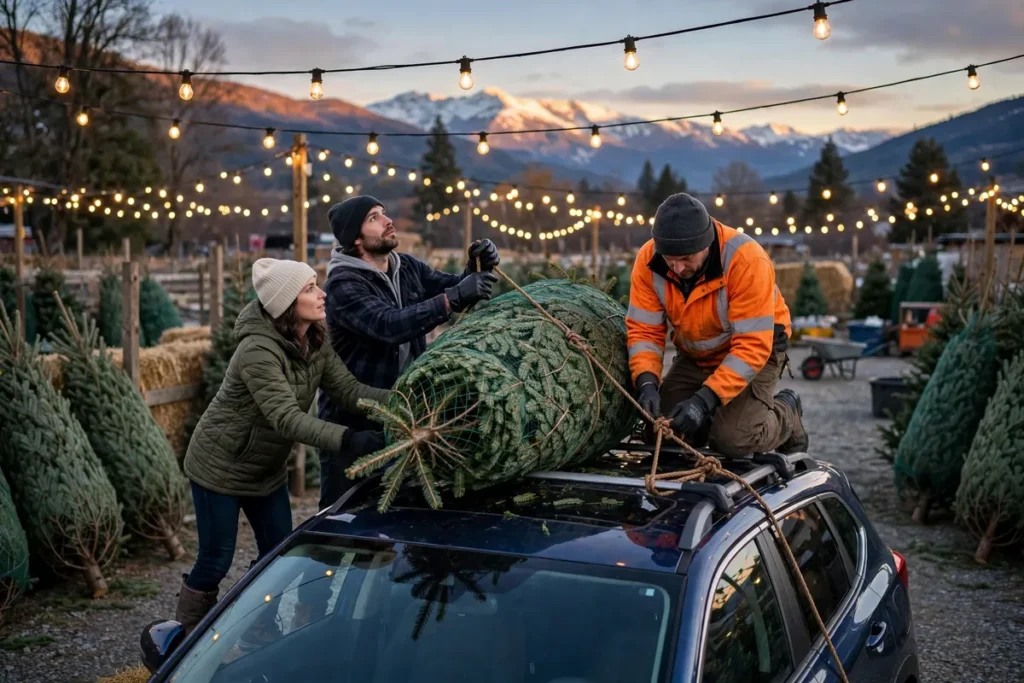
Whether you choose a family lot in town, the nursery out in Elizabeth, or a permit adventure in the national forest, the ritual is the same: find the tree with the right shape, argue good-naturedly about whether it is too tall, and drive home with evergreen strapped to the roof and the whole car smelling like December. That is a Colorado Christmas.
Watch: Pro Tips for Buying and Keeping a Real Tree
Since most Colorado Springs shoppers buy pre-cut trees, knowing how to judge freshness and keep the tree alive is especially valuable. In this video, a sixth-generation tree farmer shares his essential tips — including the lift-and-drop freshness test, how to trim the base, how much water your tree really needs, and the best stands to use.
The lift-and-drop test is the single most useful thing you will learn: lift the tree a few inches and drop it on its stump — if a shower of green needles falls, keep shopping. A fresh tree drops very few. Use it at every lot you visit.
At a Glance: Colorado Springs Tree Options Compared
| Option | Location | Tree Types | Experience | Drive from Downtown |
|---|---|---|---|---|
| Jolly Christmas Trees | 1736 S Circle Dr, Colorado Springs | Balsam, Fraser & Korean fir; Scotch pine | Family lot, gift shop, stands | In town |
| Heidrich’s Nursery | Colorado Springs | Balsam, Douglas, Fraser & Noble fir; Ponderosa & white pine | Nursery experts, wreaths & garlands | In town |
| Holly Acres Nursery & Tree Farm | Elizabeth, CO | 11 varieties incl. Nordmann, Grand & Concolor fir | Destination nursery outing | ~45 min northeast |
| National forest permit cutting | Pike & San Isabel NF districts | Wild spruce, Douglas fir, lodgepole pine | True DIY adventure | ~1 hr+ west |
| Denver-area lots | Various (I-25 corridor) | Broad selection | Big-city lots & events | ~1 hr north |
How to Pick a Fresh Pre-Cut Tree
When you cannot watch your tree get cut, freshness detective work matters. Start with the needle bend test: fresh needles flex without breaking, while dry needles snap. Run a branch through your loosely closed hand — a fresh tree loses only a few needles; a dry one sheds a handful. Look at the color: it should be rich and even, not faded or brown at the tips. Smell the tree — a fresh fir smells strongly of pine when you crush a few needles; a faint smell suggests it has been cut a long time.
Ask the lot staff when the tree was cut and when the latest shipment arrived. Good lots restock in waves through the season, and staff at family operations like Jolly will tell you straight which rows are freshest. Check the cut end of the trunk: it should look pale and feel sticky with sap, not gray and dry. Finally, lift the tree — fresh trees are surprisingly heavy with water weight.
Colorado’s famously dry winter air is hard on cut trees, so buy as close to your decorating date as practical and get the tree into water within hours of bringing it home. A humidifier in the tree’s room helps too. While you are planning the season, our advent calendar activities for kids will keep little ones busy during the December countdown, and our Christmas morning traditions guide has ideas for the big day itself.
Colorado Tree Care: Beating the Dry Air
Indoor humidity in Colorado Springs can drop into the teens in December, and a Christmas tree is essentially a giant wick losing moisture to that dry air. The fundamentals matter more here than anywhere: make a fresh half-inch cut off the trunk base before setup, use a stand with a generous water reservoir, and check the water level twice a day without fail. A tree can drink a gallon a day in dry mountain air, especially in its first week indoors.
Placement is critical. Keep the tree away from heating vents, baseboard heaters, and fireplaces — forced-air heat is the number one tree killer in Colorado homes. A cool corner away from south-facing windows will add a week or more to your tree’s life. Consider running a humidifier nearby; your skin and your tree will both thank you. Skip the water additives — plain tap water, kept constantly topped up, is what growers recommend.
Wild-cut national forest trees deserve a note: spruce and lodgepole pine from high elevations can dry faster than farm-grown firs, so get a permit tree into water the same day you cut it. And when the season ends, Colorado Springs’ curbside tree recycling turns old trees into mulch — check the city’s schedule in January. If you are looking for ways to give back this season, see our Christmas volunteering ideas, and browse more holiday inspiration in our Christmas collection.
Beyond the Tree: Holiday Fun Around the Springs
Tree shopping pairs beautifully with the Pikes Peak region’s other holiday offerings. Downtown Colorado Springs dresses up for the season with lights and events, the Broadmoor’s holiday displays are legendary, and the short drive to Old Colorado City puts you among charming shops perfect for finishing your gift list. Make your tree run the centerpiece of a full holiday Saturday: lot or nursery in the morning, lunch and shopping in the afternoon, and a drive through a light display after dark.
If you cut a permit tree in the national forest, build in even more time — forest roads are slow, the hike takes a while, and you will want daylight for the whole operation. Pack a thermos, bring lunch, and treat it like the backcountry outing it is. Many families make the permit cut an annual Thanksgiving-weekend tradition, getting the tree before the December rush.
Fresh vs. Artificial in a Dry Climate
Colorado’s dry air makes some shoppers wonder whether a real tree is worth the effort. It is — with the right expectations. A real Fraser or Noble fir, watered religiously and kept away from heat vents, will stay beautiful for four to six weeks even in mountain air. The fragrance alone transforms a house in a way no artificial tree can match, and the annual ritual of choosing the tree is the point for most families.
That said, be realistic about placement. If your ideal tree spot is directly over a floor heating vent or beside a wood stove, either rearrange the room or reconsider — no amount of watering saves a tree baking over a heat source. Choose a cooler corner, keep the humidifier running, and check water twice daily. Shoppers who travel for the holidays should buy the tree after they return or arrange for someone to water it; three unwatched days in dry heated air can end a tree’s season early.
Getting the Tree Home Safely
Colorado Springs tree transport has one extra wrinkle: wind. Gusts along I-25 and the Powers corridor can hit 60 mph on winter afternoons, so a loosely tied tree is a hazard. Always transport the tree with the trunk facing forward — this keeps wind from peeling branches back — and use real rope or ratchet straps, not twine, cinched at the trunk, middle, and top. An old blanket or moving pad under the tree protects your roof’s paint.
If you are hauling a permit tree out of the national forest, bring extra straps and a tarp; forest roads are bumpy and the drive is long. Netting or baling the tree before loading makes a huge difference — the lot or nursery will do this for you, and for forest trees a $10 tree bag from a hardware store works wonders. Drive home at moderate speed, avoid the highway if the tree looks unstable, and re-check the straps after the first few miles.
Frequently Asked Questions
Are there real choose-and-cut Christmas tree farms in Colorado Springs?
True choose-and-cut farms are scarce in the immediate Colorado Springs area due to the high-altitude climate. Most local options are excellent family-run pre-cut lots and nurseries. For a genuine cut-it-yourself experience, national forest permit cutting in the Pike & San Isabel National Forests is the most authentic option.
How does national forest Christmas tree cutting work?
You buy a personal-use permit (typically $10 to $20 per tree plus a small online fee) through recreation.gov, then cut one tree in designated cutting areas during the season window. Each forest district publishes its own rules, maps, and cutting dates. Read them before you go, bring a handsaw and rope, and check whether permits for your preferred district sell out.
When do Colorado Springs tree lots open for 2026?
Most Front Range lots open the weekend before Thanksgiving or Thanksgiving weekend and sell through mid-December. Check each lot’s official listings or call ahead for 2026 season hours, since dates shift slightly each year.
Which tree variety lasts longest in Colorado’s dry air?
Fraser fir and Nordmann-type firs hold needles best in dry indoor conditions. Noble fir is also excellent. Pines like Scotch pine do reasonably well, while spruces dry out fastest. Whatever you choose, constant watering matters more than the species.
How much should I expect to pay?
Prices vary by lot, size, and species, with premium firs costing more than pines. National forest permits are the budget champion at roughly $10 to $20 per tree. Call lots ahead for current 2026 pricing rather than relying on last year’s numbers.
Can I get my tree delivered?
Some larger Front Range operations offer delivery, and nurseries like Heidrich’s can advise on transport. For most in-town lots, staff will help secure the tree to your vehicle — bring an old blanket to protect the roof and some rope or ratchet straps.
Your Mountain Christmas Awaits
Colorado Springs may not have a choose-and-cut farm on every corner, but what it offers is arguably better: family lots with deep expertise, a nursery scene with remarkable variety, and the wildest tree-hunting option in America waiting in the national forest. Pick your approach, check the 2026 season details, and go find the tree that will anchor your holiday. With Pikes Peak watching over the whole proceedings, it is hard to go wrong.