Christmas traditions in Switzerland are the stuff of storybooks: candlelit Advent windows glowing in medieval old towns, Christmas markets steaming with mulled wine beneath snow-dusted peaks, and the smell of freshly baked Guetzli cookies drifting from every kitchen. In this multilingual Alpine nation — where German, French, Italian, and Romansh traditions mingle — Christmas is celebrated four ways at once, and every region adds its own flavor.
This guide to a Swiss Christmas covers the Advent season and its famous calendars, Samichlaus (the Swiss Santa), the great Christmas markets from Montreux to Zurich, traditional foods from fondue to Guetzli, and the mountain customs that make Switzerland one of the world’s most magical Christmas destinations.
Advent in Switzerland: Four Weeks of Light
Christmas traditions in Switzerland begin with Advent, the four weeks before Christmas, and the Swiss do Advent with characteristic thoroughness. The Advent calendar — invented in its modern form in Germany but embraced passionately in Switzerland — counts down the days in nearly every household with children. Swiss chocolatiers produce some of the world’s finest Advent calendars, and opening a new chocolate each morning is a beloved December ritual.
On the first Sunday of Advent, families light the first candle of the Advent wreath (Adventskranz), adding one each Sunday until all four burn on the Sunday before Christmas. The wreath — evergreen branches with four candles, often decorated with ribbons, pinecones, and dried oranges — sits at the center of the family table through December.
Many Swiss towns practice the Advent window tradition: each evening in December, a different house or shop unveils a decorated, illuminated window, and neighbors gather with mulled wine to admire it. In villages across German-speaking Switzerland, these nightly gatherings turn Advent into a month-long community celebration.
Samichlaus: The Swiss Santa Claus
Switzerland’s gift-bringer is Samichlaus (in French-speaking regions, Saint-Nicolas; in Ticino, Babbo Natale). Samichlaus visits on December 6 — St. Nicholas Day — dressed as a bishop in red robes with a white beard, carrying a big sack and a golden book in which children’s deeds are recorded.
He doesn’t come alone: Samichlaus is accompanied by Schmutzli, a dark-clad helper who carries a switch for naughty children (these days purely symbolic) and a bag of treats. Children recite poems or sing songs for Samichlaus, who rewards them with mandarins, peanuts, gingerbread, and chocolate from his sack — the classic Samichlaus sack treats that every Swiss adult remembers from childhood.
On Christmas Eve or Christmas Day itself, it’s the Christkind (Christ Child) who brings gifts in most German-speaking families — often while the children wait in another room, hearing a bell ring to signal that the tree is lit and the presents are under it. For gift ideas in the Swiss spirit of quality over quantity, see our best Christmas gifts guide.
Switzerland’s Great Christmas Markets
Swiss Christmas markets (Weihnachtsmärkte) are among Europe’s most beautiful, set against backdrops of lakes, old towns, and Alps. The season typically runs from late November through December 23 or 24 — check official dates for 2026 as schedules vary by city.
Montreux Noël, on the shores of Lake Geneva with the Alps rising behind it, is Switzerland’s most famous market — over 150 chalets, a medieval-château setting, and even a Santa who “flies” across the lake. Zurich’s markets include the spectacular Christkindlimarkt at the main train station, home to one of Europe’s tallest indoor Christmas trees, glittering with thousands of Swarovski crystals. Basel’s Barfüsserplatz market, in one of Switzerland’s best-preserved old towns, is regularly voted among Europe’s finest. Bern’s markets glow beneath the medieval arcades of the UNESCO-listed old town, and Lucerne’s market fills the lakeside with crafts and lights.
Market staples include Glühwein (mulled wine), raclette scraped from half-wheels of cheese, roasted chestnuts, magenbrot (spiced chocolate-glazed bread), and handcrafted ornaments. If markets are your love language, compare notes with our best Christmas markets in the USA.
Swiss Christmas Food: Guetzli, Fondue, and Festive Tables
Swiss Christmas baking is legendary, and its crown jewel is Guetzli — the Christmas cookies baked in enormous quantities through December. The classics: Mailänderli (buttery lemon-vanilla cookies), Zimtsterne (cinnamon stars with meringue glaze), Brunsli (dark chocolate-almond cookies), Spitzbuben (jam-filled sandwich cookies), and Chräbeli (anise-flavored). Families bake dozens of varieties and exchange plates with neighbors — a delicious social currency.
The Christmas Eve or Christmas Day meal varies by region and family, but beloved options include fondue chinoise (thinly sliced meat cooked in broth at the table — a Swiss Christmas Eve favorite), filet im Teig (beef tenderloin in puff pastry), roast goose or turkey, and — for the convivial — a bubbling cheese fondue on a snowy evening. Grittibänz (sweet dough men) appear on St. Nicholas Day, and Christstollen-style fruit breads round out the baking.
Drinks include Glühwein at the markets, hot chocolate worthy of the world’s chocolate capital, and Swiss wines. And the chocolate — Swiss chocolate is the default Christmas gift, stocking stuffer, and dessert. For more holiday menu inspiration, see our Christmas dinner ideas.
Christmas in the Mountains: Skiing, Spas, and Silence
For many visitors, Christmas traditions in Switzerland mean the mountains. Resorts like Zermatt (beneath the Matterhorn), St. Moritz, Gstaad, and Wengen offer the storybook white Christmas: skiing on Christmas morning, torch-lit descents on Christmas Eve, and fondue in mountain huts. Many hotels lay on special Christmas programs — carol singing, visits from Samichlaus, and gala dinners.
But there’s another, quieter mountain tradition: the Swiss love of the “stille Nacht” (silent night). Christmas Eve in a mountain village — the snow muffling every sound, the church bells, the candles in every window — is an experience of profound peace. If a snowy Christmas is your dream, compare options in our best places to spend Christmas.
A uniquely Swiss custom is the Christmas Eve torchlight procession in some Alpine villages, and the tradition of trychlen — processions with enormous cowbells — around the New Year in central Switzerland, driving out evil spirits with noise.
Regional Differences: Four Languages, Four Christmases
Switzerland’s linguistic regions celebrate distinctly. German-speaking Switzerland follows the Samichlaus/Christkind model with Advent calendars, Guetzli, and Weihnachtsmärkte. French-speaking Romandie honors Saint-Nicolas on December 6 and celebrates Noël with bûche de Noël and oysters at the Christmas table — closer to Christmas traditions in France.
Italian-speaking Ticino celebrates Natale with panettone, Babbo Natale, and the Feast of the Seven Fishes’ echoes — closer to Christmas traditions in Italy. Romansh-speaking Graubünden keeps Alpine customs like the Chalandamarz bell processions (technically a March tradition, but part of the winter custom cycle). This multiplicity is Switzerland’s gift: four Christmases in one small country.
New Year’s in Switzerland: Fireworks and Good Fortune
The Swiss festive season extends through New Year’s Eve (Silvester), celebrated with fireworks, fondue, and parties. A charming tradition: touching the New Year — in some regions, children go door to door on New Year’s Eve or New Year’s Day wishing neighbors well and receiving treats.
In Appenzell, the Silvesterkläuse — men in elaborate costumes of bells, mirrors, and natural materials — parade on December 31 and again on January 13 (Old New Year’s Eve, per the Julian calendar), one of Switzerland’s most spectacular folk customs. And in many homes, a final plate of Guetzli and a toast close the season on Epiphany (January 6), when the Three Kings Cake (Dreikönigskuchen) is shared — whoever finds the hidden king figurine in their slice is crowned king for the day.
Swiss Christmas Decorations: Candles, Pines, and Real Flame
Swiss Christmas décor is famously warm and natural: evergreen branches, pinecones, dried oranges, cinnamon sticks, and real candles — many Swiss families still light real candles on the Christmas tree (with proper care and fire extinguishers handy), a tradition that gives Swiss living rooms an unmatched glow. The tree (Weihnachtsbaum / sapin de Noël) goes up on December 24 in most households, decorated in secret while children wait.
Advent wreaths, window candles (electric candles in every window are a beloved sight in Swiss villages), and hand-carved nativity scenes complete the picture. Swiss paper stars (Weihnachtssterne) hang in windows, glowing from within. For styling ideas, see our Christmas decoration ideas.
How to Host a Swiss-Style Christmas
Borrow the best of Christmas traditions in Switzerland for your own celebration: 1. Bake Guetzli — make at least three varieties (Zimtsterne, Mailänderli, Brunsli) and exchange plates with neighbors. 2. Light an Advent wreath — four candles, one per Sunday. 3. Serve fondue chinoise on Christmas Eve — the communal, slow, conversational meal is the point. 4. Give great chocolate — quality over quantity, the Swiss way (see our best Christmas gifts for ideas). 5. Take a night walk — on Christmas Eve, walk the neighborhood to see the lights; the Swiss Weihnachtsspaziergang is a tradition of quiet togetherness. 6. Keep it calm — the Swiss Christmas virtue is Gemütlichkeit: coziness, unhurried warmth, and presence.
In Pictures: Christmas in Switzerland
Switzerland’s Christmas arrives early — Samichlaus on 6 December, turnip lanterns in November, and guetzli baking all through Advent.
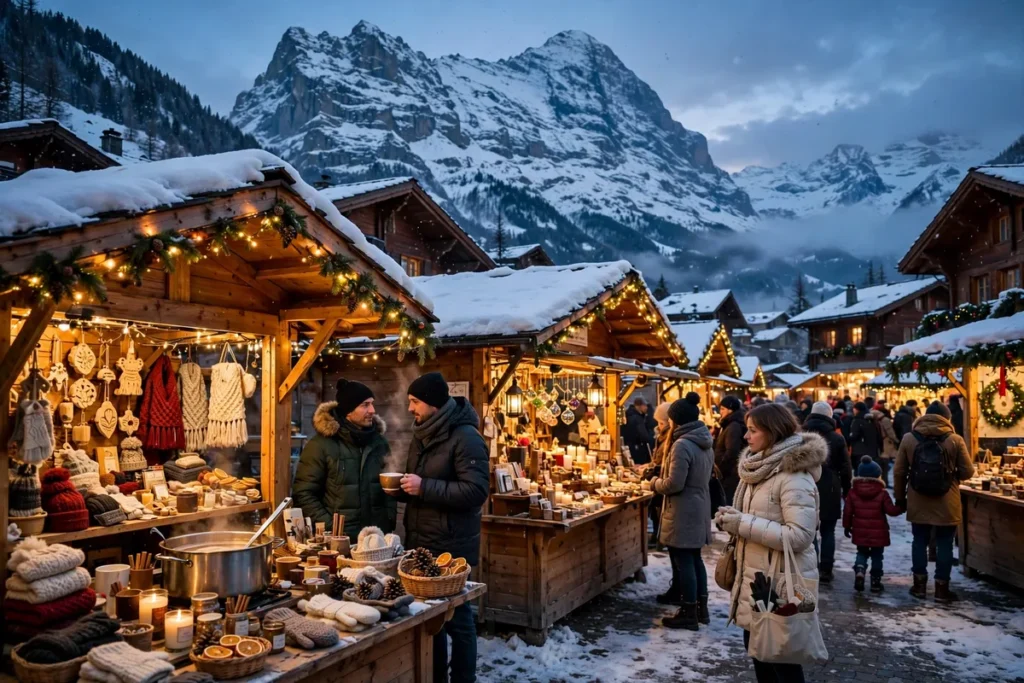
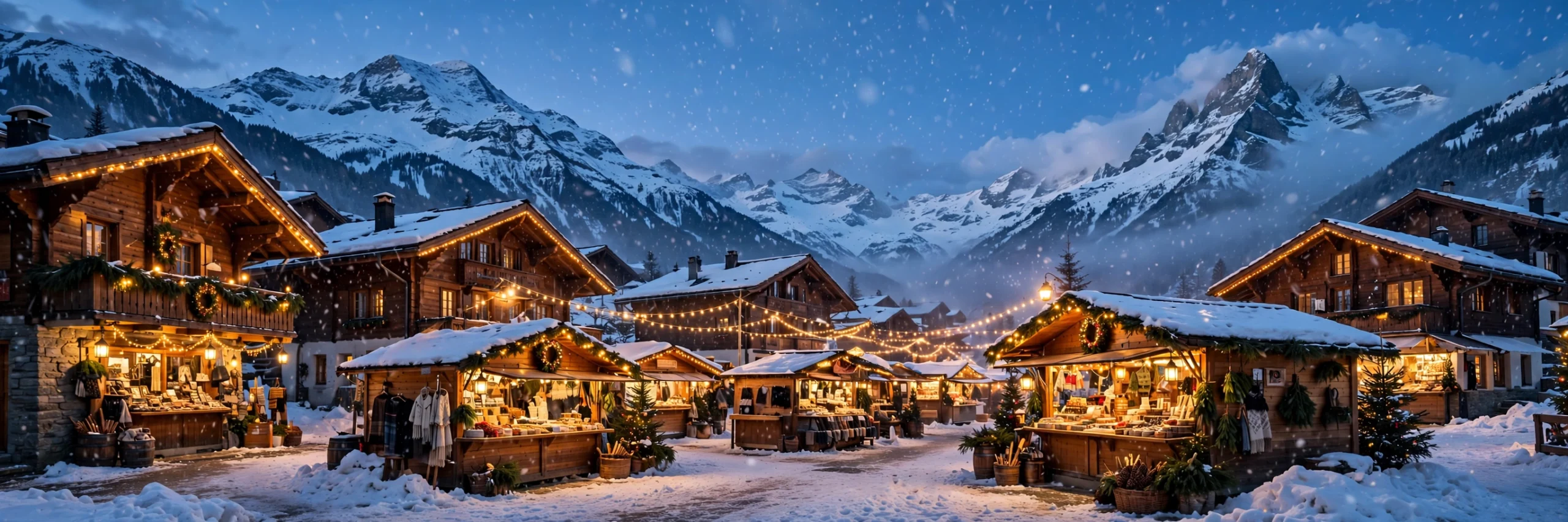
A Swiss Christmas market at night: wooden chalets strung with lights, snow-dusted stalls selling glühwein, the Alps looming behind.
Watch: Christmas in Switzerland
Christmas in Lucerne — festive lights, the Samichlaus visit, whip-crackers chasing winter away, and a fondue to end the night.
At a Glance: Christmas in Switzerland
The Swiss season in four languages.
| Tradition | Date | Key detail |
|---|---|---|
| Samichlaus | 6 December | Swiss Santa visits early — with Schmutzli — handing out nuts, mandarins and gingerbread |
| Räbeliechtli | November | Turnip lantern parades light up November nights — Zurich’s is the most famous |
| Klausjagen | 6 December | Küssnacht’s whip-cracking St Nicholas procession with giant illuminated mitres |
| Guetzli baking | Advent | Families bake batches of Christmas cookies — Zimtsterne, Mailänderli, Brunsli |
| Christmas markets | Nov – Dec | From Zurich’s grand market to Montreux’s lakeside stalls with the flying Santa |
| Fondue & festive meals | 24–25 December | Many families celebrate Christmas Eve with cheese fondue or a grand raclette |
| Christchindli & Père Noël | 24–25 December | Gift-bringers vary by region — the Christ child in some cantons, Father Christmas in French ones |
Frequently Asked Questions
How does Switzerland celebrate Christmas?
Switzerland celebrates with Advent calendars and wreaths, Samichlaus visiting children on December 6, spectacular Christmas markets (Montreux, Zurich, Basel, Bern), Guetzli Christmas cookies baked by the dozen variety, and family celebrations on December 24–25 — often with fondue chinoise on Christmas Eve and the Christkind (Christ Child) bringing gifts. The multilingual country blends German, French, Italian, and Romansh customs, and many families head to Alpine resorts for skiing Christmases.
Who brings gifts at Christmas in Switzerland?
It depends on the region: in German-speaking Switzerland, the Christkind (Christ Child) brings gifts on Christmas Eve — announced by a ringing bell while children wait in another room. Samichlaus (St. Nicholas) visits earlier, on December 6, with treats. In French-speaking regions, Saint-Nicolas (Dec 6) and Père Noël (Christmas) share duties; in Ticino, it’s Babbo Natale.
What do the Swiss eat for Christmas?
Popular Christmas Eve meals include fondue chinoise (meat cooked in broth at the table), filet im Teig (beef in puff pastry), and cheese fondue. Christmas Day brings roasts — goose, turkey, or game. The baking is legendary: Guetzli cookies (Zimtsterne, Mailänderli, Brunsli, Spitzbuben), Grittibänz dough men, and Christstollen. Glühwein, hot chocolate, and Swiss chocolate in all forms complete the picture.
What are the best Christmas markets in Switzerland?
Montreux Noël (lakeside, 150+ chalets, Santa flying over the lake), Zurich’s Christkindlimarkt (main station, giant Swarovski tree), Basel’s Barfüsserplatz (regularly voted among Europe’s best), Bern’s markets under medieval arcades, and Lucerne’s lakeside market. Markets typically run late November to December 23/24 — check official dates for 2026.
Is Switzerland a good place to spend Christmas?
It’s one of the world’s best: snow-dusted Alpine villages, great Christmas markets, skiing on Christmas morning in Zermatt or St. Moritz, torch-lit descents, and profound silent-night peace in mountain villages. It’s also expensive — book accommodation months ahead, budget generously, and consider smaller villages for authenticity at lower cost. See our best places to spend Christmas for comparisons.
What is Samichlaus?
Samichlaus is the Swiss-German St. Nicholas, who visits children on December 6 dressed as a bishop with a white beard, big sack, and golden book of deeds. He’s accompanied by Schmutzli, a dark-clad helper. Children recite poems or sing songs and receive mandarins, peanuts, gingerbread, and chocolate — the classic treats every Swiss adult remembers from childhood.
Christmas Traditions in Switzerland for Families with Kids
Swiss children experience a December full of ritual. It starts with the Advent calendar — and Swiss chocolatiers make the world’s best, so the countdown is delicious. Samichlaus Day (December 6) is the first peak: children polish their boots, recite poems, and receive the Samichlaus sack of mandarins, nuts, and chocolate.
Grittibänz — the sweet dough man — is baked and decorated in kindergartens; Guetzli baking with grandparents is a core memory for every Swiss adult; and Christmas crafts (paper stars, beeswax candles, pinecone ornaments) fill Advent weekends. On Christmas Eve, children are sent out of the living room while the Christkind decorates the tree — the ringing bell, the rush inside, the glowing tree: it’s the year’s most magical moment.
Swiss kids also love the Christmas markets (carousel rides, roasted chestnuts, meeting Samichlaus), torch-lit walks, sledding, and ice skating on village rinks. New Year’s Eve brings fireworks and fondue, and Epiphany’s Three Kings Cake — with its hidden figurine — is the season’s final game. For family activities, see our 75 Christmas activities for families.
Swiss Christmas Music and Midnight Mass
Switzerland’s Christmas soundscape blends the solemn and the joyful. Midnight mass (Mitternachtsmesse / messe de minuit) fills churches on Christmas Eve — from Zurich’s Fraumünster (with its Chagall windows) to mountain chapels — with choirs, organ, and the inevitable, beloved “Stille Nacht” (Silent Night) by candlelight.
Alphorn performances at Christmas markets and mountain resorts add a uniquely Swiss voice — the long, mellow tones echoing across snow are unforgettable. Brass bands play carols in village squares; yodeling choirs perform Christmas programs; and children’s choirs sing at school concerts through December. Swiss Christmas pop — from traditional Weihnachtslieder to modern Swiss-German hits — soundtracks the season on the radio.
The Christmas Eve bells — ringing out across valleys and old towns as midnight approaches — are Switzerland’s most atmospheric tradition: standing in falling snow, hearing bells from three villages at once, is the sound of Christmas traditions in Switzerland at their purest.
New Year’s and Epiphany: The Season’s End
Switzerland closes the festive season in style. Silvester (New Year’s Eve) brings fireworks over Lake Zurich, Lake Geneva, and the mountain resorts; fondue parties; and the charming custom of pouring lead (Bleigiessen) to read the new year’s fortune — shared with Germany (see our Christmas traditions in Germany).
In Appenzell, the Silvesterkläuse parade in their spectacular costumes on both December 31 and January 13 (Old New Year) — one of Europe’s great folk spectacles. Epiphany (January 6) brings the Dreikönigskuchen (Three Kings Cake): a crown-shaped sweet bread with a hidden king figurine (and sometimes a joker) — whoever finds the king wears the paper crown all day. Then the tree comes down, the Guetzli tin is finally empty, and Switzerland settles into deep winter — until the Fasnacht (carnival) season begins.
Swiss Christmas Markets Shopping Guide: What to Buy
Swiss Christmas markets are shopping destinations in their own right — and knowing what to buy elevates the trip. Top picks: hand-carved wooden toys and nativity figures (Brienz woodcarving is world-famous); Swiss chocolate — artisanal bars, truffles, and hot-chocolate mixes from market chocolatiers; cheese — aged Gruyère, Vacherin, and raclette wheels to take home; Glühwein mugs — each market’s collectible annual mug; beeswax candles and Advent wreaths; Swiss army knives in Christmas editions; woolens — hats, scarves, and socks; and paper stars (Weihnachtssterne).
Shopping tips: markets typically run late November to December 23/24 — go on weekday evenings to avoid crowds; bargaining isn’t customary, but artisans love to talk about their craft; food stalls take cards widely, but carry some francs for small purchases; and Montreux and Zurich have the widest selection while Basel and Bern offer the most atmospheric settings. VAT refunds are available for non-residents on larger purchases — ask vendors for the forms.
Swiss Christmas Superstitions and Old Customs
Beneath Switzerland’s polished surface run old Alpine customs. In Appenzell and central Switzerland, trychlen — processions of men swinging enormous cowbells — drive out evil spirits around New Year. Christmas Eve weather lore predicts the coming year; lead pouring (Bleigiessen) on New Year’s Eve reads fortunes in molten shapes.
Farm customs persist: in some villages, animals are given special Christmas Eve feed; bread baked on Christmas Eve is said to stay fresh for weeks; and midnight on Christmas Eve is when animals speak (an old folk belief shared across the Alps). Twelve Nights (Rauhnächte) between Christmas and Epiphany are traditionally a time of smoke cleansing — burning incense through house and stable to bless the new year. These customs connect Swiss Christmas to pre-Christian Alpine winter rites — the old magic under the new faith.
Christmas Day in Switzerland: The Quiet Heart
After the markets, the baking, and the Christmas Eve excitement, Christmas Day (December 25) in Switzerland is deliberately quiet — and that’s the point. Shops are closed; streets are empty; families sleep in, eat leftovers (cold cuts, cheese, Guetzli), take winter walks (Weihnachtsspaziergang), and visit grandparents.
December 26 (Stephanstag, St. Stephen’s Day) is a public holiday in most cantons — another quiet day of family visiting and sledding. The Swiss understand something essential: after a month of beautiful busyness, Christmas itself should be still. Snow falling, candles burning, nowhere to be. It’s the silent night made real — and the perfect end to the Swiss Christmas season before Silvester’s fireworks begin.
Why a Swiss Christmas Stays With You
Christmas traditions in Switzerland endure in memory because they engage every sense: the smell of Guetzli and Glühwein, the sound of bells across snow, the sight of candlelit windows in medieval streets, the taste of fondue shared slowly, the touch of cold air on a night walk. It’s Christmas as craft — carefully made, unhurried, and built to last. Whether you visit the markets of Montreux, ski Zermatt on Christmas morning, or simply bake Zimtsterne and light an Advent wreath at home, the Swiss teach the same lesson: slow down, savor, and let the light in. Four languages, four Christmases, one unforgettable season. Fröhliche Weihnachten! Joyeux Noël! Buon Natale!
Start your own Swiss-inspired traditions this December: bake a batch of Zimtsterne, light the Advent wreath each Sunday, plan a fondue night with friends, and take a candlelit evening walk to see the neighborhood lights. The Swiss Christmas isn’t about perfection — it’s about presence: being fully, warmly, deliciously in the moment with the people you love.