Events / Seasonal Events
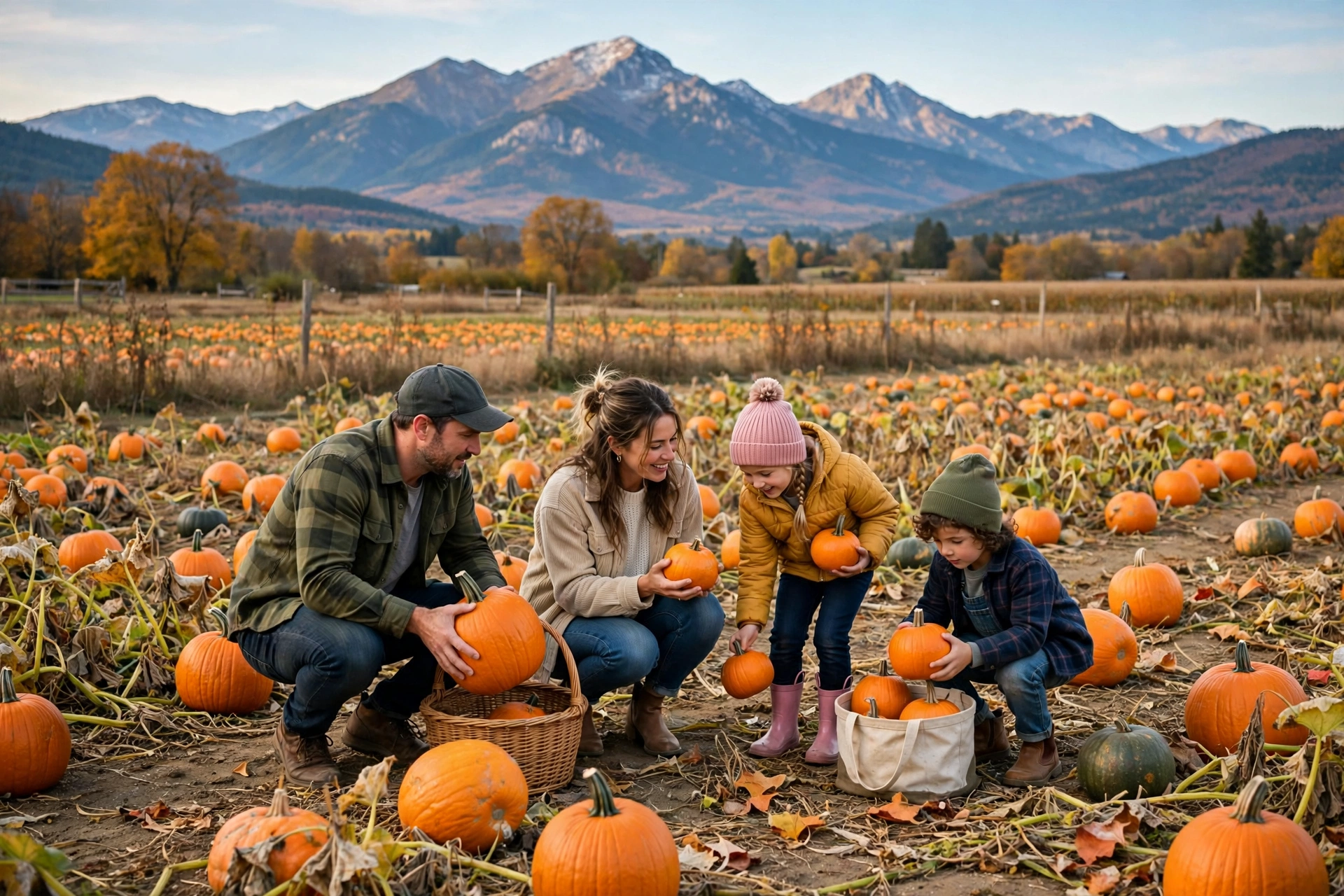
Choose a pumpkin outing by the experience your family wants, not just a photograph of a large field. Compare the actual location, activity mix and full visit cost before selecting a date.
Check the venue address, timed admission, pumpkin costs, terrain and age suitability.
Decide whether pumpkins or activities are the priority
Some families want a short visit to choose a pumpkin; others want a full afternoon of games, a maze or entertainment. Write down your main reason for going. A larger festival may add variety while also bringing more queues and a longer visit.
Look for the organizer’s current list of inclusions. Photographs may show activities that require extra payment or operate only on certain dates. Compare the options for the ages in your group instead of assuming every attraction is suitable for every child.
Use Chatfield Farms as a concrete example
Denver Botanic Gardens lists its Pumpkin Festival at Chatfield Farms, a separate location from York Street. Confirm the address before planning your drive. The Gardens’ fall information page says timed tickets must be booked in advance and are limited; its event page provides the current admission details.
Those details illustrate why the exact event matters. General garden admission, a corn maze visit and a special festival can have different arrangements. Read the specific Pumpkin Festival page rather than assuming membership or a normal entry ticket covers the event you want.
Compare the total cost for your household
Add admission for everyone who needs a ticket, pumpkins, food and any optional activities. Check whether a pumpkin is included or bought separately, and whether pricing depends on size or another measure. Avoid treating the advertised adult ticket as the total family cost.
If two outings look similar, compare the activity your children will actually use. Paying for a large attraction bundle makes less sense if your group mainly wants a brief patch visit. Conversely, a higher admission charge may suit a family that wants to spend several hours on included activities.
Ask about terrain and practical access
Check walking surfaces, stroller suitability, accessible routes, restrooms and the distance from parking to the main activity. A field setting can require different preparation from a paved garden. Ask the organizer about the specific access need rather than relying on a general family-friendly description.
Plan how you will carry purchases back to your vehicle and confirm whether carts or wagons are permitted or available. Check food and bag policies before packing. Make the pumpkin purchase near the end if carrying it would complicate the rest of the outing.
Keep the day flexible
Review the forecast, event updates and change policies before leaving. Choose comfortable clothing for the actual conditions and leave time for a break. Avoid adding a second tightly timed reservation after an outing whose queues and walking time you cannot predict.
This is a comparison guide, not a ranking of every patch around Denver. Once you shortlist a venue, confirm its current season’s dates, prices and inclusions directly. That final check is more useful than relying on a previous year’s roundup.
Explore more
Browse Events and Seasonal Events for related planning guides.
Sources
Named Denver-Area Patches: What Each One Is Known For
Beyond Chatfield Farms, these established Denver-metro patches each suit a different kind of outing. Confirm each season’s dates and prices on the venue’s own site before going:
- Anderson Farms (Erie, ~35 miles north of Denver). The region’s biggest fall festival operation — a large corn maze, pumpkin patch, farm animals, and the evening “Terror in the Corn” haunted attraction (separate ticket). Best for families who want a full day; budget half a day minimum. Timed tickets sell out on October weekends.
- Rock Creek Farm (Broomfield). A classic choose-and-cut style patch with a well-known fall festival: corn maze, hayrides, pedal karts, and farm activities. Strong pick for families with elementary-age kids; typically runs late September through October.
- Cottonwood Farms (Boulder). Smaller and calmer than the festival-style farms — a real working-farm feel with a pumpkin patch, corn maze, and animals. Good choice if big crowds and long lines would ruin the day for your group.
- Mile High Farms (Bennett, east of Denver). Known for its corn maze designs and fall festival activities; a solid option for the eastern suburbs with usually easier parking than the north-metro farms.
- Maize in the City (Thornton). A compact, close-in option for north-metro families who want the maze-and-patch experience without a long drive.
The pattern to notice: farms north of Denver (Erie, Broomfield, Boulder) cluster the biggest operations, while smaller patches serve the south and east suburbs. If you live in Highlands Ranch or Parker, weigh a 45-minute drive against a smaller local patch — with toddlers, the shorter trip usually wins.
Pricing Patterns: What a Family Actually Pays
Pumpkin patch pricing follows a predictable structure across the Denver area. Recent seasons show these typical ranges (always verify the current year’s numbers):
| Cost item | Typical range | Notes |
|---|---|---|
| Adult admission (festival farms) | $10–$18 | Often includes maze and basic activities; weekend pricing higher |
| Child admission (ages 3–12) | $6–$14 | Under 3 usually free |
| Pumpkins | $5–$25 by size | Small pie pumpkins cheapest; giant carving pumpkins priced individually |
| Add-on activities | $3–$10 each | Pony rides, gem mining, paintball, haunted attractions |
| Food on site | $8–$15 per person | Kettle corn and cider donuts add up fast with kids |
| Parking | Free–$10 | Some festival farms charge on peak weekends |
Work the math for a family of four (two adults, two kids ages 5 and 8) at a festival farm: roughly $45–$60 in admission, $20–$40 in pumpkins, $15–$30 in add-ons, and $30–$50 for food — a realistic $110–$180 total before you count gas. A smaller choose-and-cut patch with free admission and pay-per-pumpkin pricing can cost half that if your main goal is pumpkins, not activities.
Two cost traps: timed-ticket service fees (online booking adds $2–$4 per ticket at many farms — buy together in one transaction) and the “included pumpkin” fine print (some admission packages include one small pumpkin per child; oversized pumpkins are always extra).
Timing Strategy: When to Go and When to Book
Denver’s patch season runs roughly late September through October 31, and when you go matters as much as where:
- Best pumpkin selection: the last weekend of September and first weekend of October. Fields are fully stocked and crowds are thinner than mid-October.
- Best weather odds: early October. Late October brings real cold snaps and occasional snow at 5,280 feet — check the forecast and bring layers regardless.
- Smallest crowds: weekday afternoons (many farms open select weekdays) or weekend opening hour. Arrive at opening on Saturdays; by noon the corn maze lines can hit 30–45 minutes.
- Best deals: the final weekend sometimes discounts remaining pumpkins, but selection is picked over and popular activities may be closed.
- Book ahead: for Anderson Farms and Chatfield Farms’ festival events, buy timed tickets 2–3 weeks ahead for October weekends. Smaller patches usually accept walk-ups.
- Skip the rainy-day gamble: most farms operate rain or shine with no refunds. A muddy field with toddlers is a different outing than you planned — check the farm’s weather policy before buying nonrefundable tickets.
Mistakes Denver Families Make Every Year
- Going at midday on the second-to-last October Saturday — the single most crowded slot of the season. Go early, go late, or go on a weekday.
- Forgetting altitude and sun. Denver’s UV is intense even in October, and kids dehydrate faster at elevation. Bring water, sunscreen, and hats even on cool days.
- Buying the giant pumpkin first. Hauling a 25-pound pumpkin through a corn maze ruins the maze. Pick pumpkins last, near the exit or your car.
- Assuming the corn maze suits every age. Large mazes take 45–90 minutes; kids under 6 often lose interest (and adults lose patience). Check whether the farm offers a mini-maze for small children.
- Not confirming the address. Several farms have similar names and some operate multiple locations. Put the exact address in your navigation app the night before.
Can I bring my dog to a pumpkin patch?
Most Denver-area festival farms do not allow pets because of food operations, farm animals, and crowds — service animals excepted. A few smaller patches are dog-friendly on leash; check the farm’s FAQ page before assuming. Leaving a dog in a car is never acceptable, especially since October afternoons in Denver can still reach the 70s.
Are pumpkin patches stroller-friendly?
Partially. Festival areas with gravel or paved paths work fine with strollers, but actual pumpkin fields are usually dirt, mud, or uneven ground — a jogging stroller or wagon handles them far better than an umbrella stroller. Many farms rent wagons on site, which also solves the pumpkin-hauling problem.
What happens if it rains on our ticketed day?
Most farms operate rain or shine and do not refund timed tickets, though some allow date changes if you contact them before your slot. Check the farm’s weather and refund policy at purchase time, not on the morning of the visit. Light rain with proper boots can actually mean smaller crowds.
How much should I budget per pumpkin?
Expect $5–$8 for small pie or decoration pumpkins, $10–$18 for medium carving pumpkins, and $20+ for oversized ones, with pricing usually by size or weight. If you want several large carving pumpkins, the pumpkin line item alone can reach $50 — set that budget before the kids start choosing.