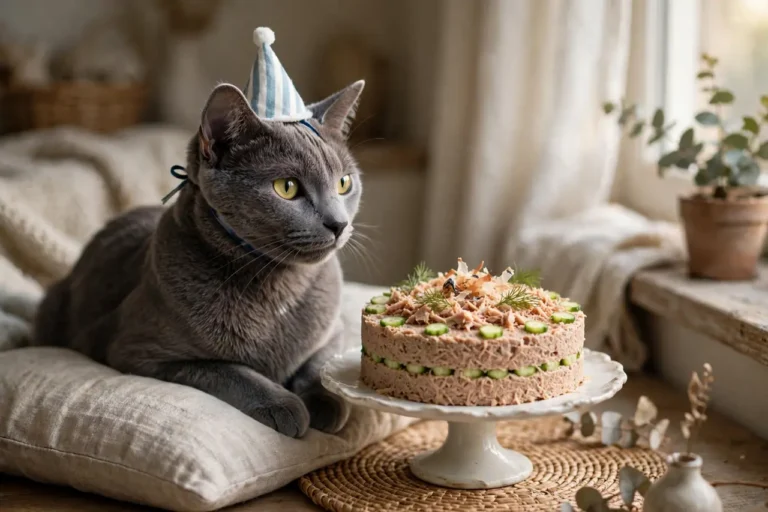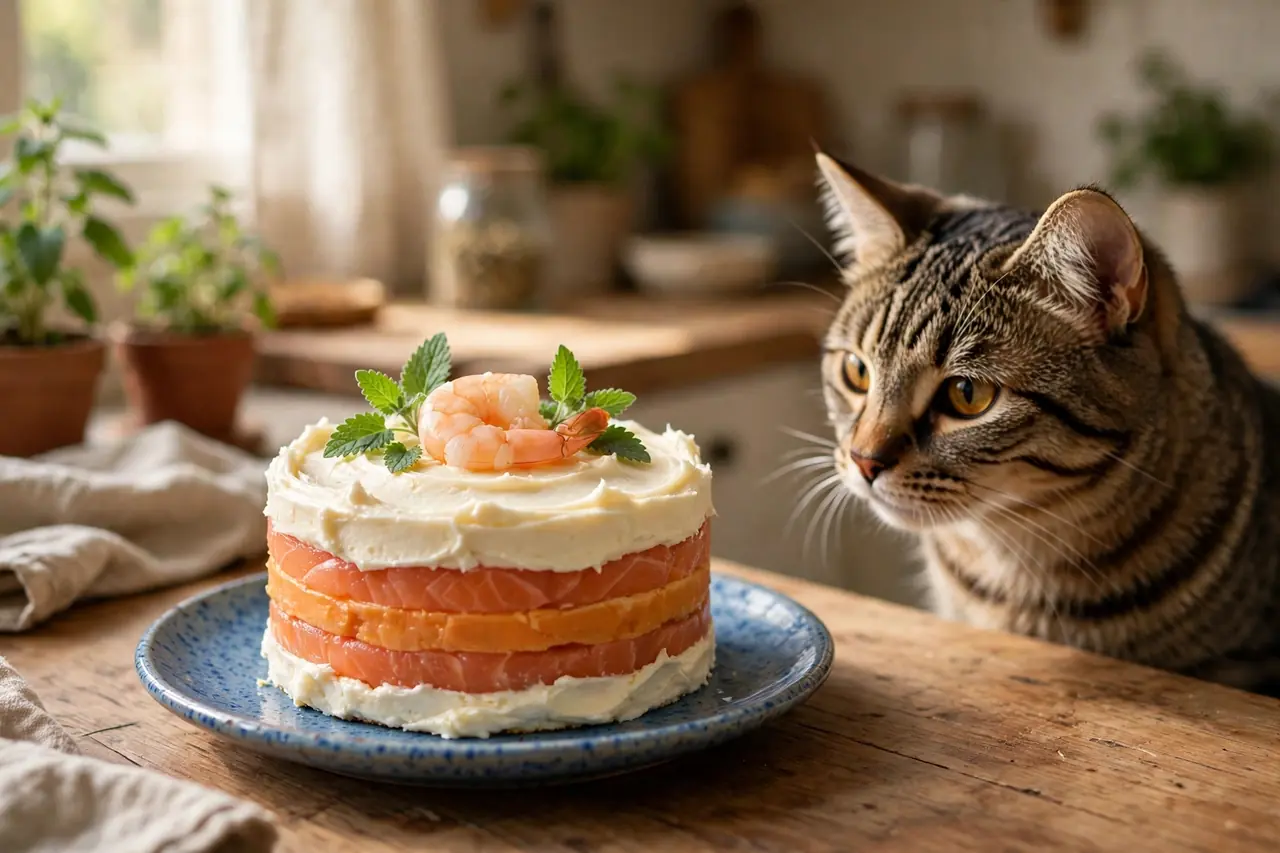
Cats may pretend birthdays are beneath them, but present a tiny cake that smells like tuna and watch the act crumble. A cat birthday cake recipe is a different beast from a dog cake — literally. Cats are obligate carnivores with specific nutritional needs, smaller stomachs, stronger opinions, and a well-documented suspicion of anything new on their plate. The good news: a homemade cat cake is simpler than a dog cake, takes about 30 minutes, and the “baking” often involves no oven at all.
This guide covers everything feline: how cat nutrition differs from dog nutrition and why it changes the recipe, the complete cat-safe ingredient list (plus the foods that must never appear), a master tuna birthday cake recipe with step-by-step instructions, three more recipes for different feline palates, decorating ideas scaled to cat size, serving guidance for notoriously picky eaters, party tips, and answers to the questions cat owners actually ask — including whether cats can eat cake at all.
Cats Are Not Small Dogs: The Nutrition Difference
The single most important fact for cat baking: cats are obligate carnivores, meaning they must eat meat to survive. Unlike dogs, cats cannot efficiently convert plant compounds into key nutrients — they need preformed vitamin A (not beta-carotene from carrots), arachidonic acid (an animal fat), and above all taurine, an amino acid essential for heart function, vision, and reproduction. A taurine-deficient cat develops dilated cardiomyopathy and retinal degeneration. This is why cat cakes are built on fish, poultry, or meat first, with everything else as supporting cast.
Practically, this means a cat birthday cake looks less like “cake” and more like an elegant savory terrine: layers of tuna or salmon bound with egg, “frosted” with whipped goat cheese or plain yogurt, and decorated with a shrimp or a sprinkle of catnip. Cats also have fewer taste buds than dogs (about 473 versus 1,700) and cannot taste sweetness at all — so sugary frosting is wasted on them, while umami-rich fish flavor is everything. Portion size matters enormously: an average 10-pound cat eats roughly 200–250 calories per day, so the entire “cake” should be modest, and the birthday serving should be a few tablespoons at most.
Cats are also neophobic — suspicious of new foods. If your cat has never eaten homemade fish cake, introduce a pea-sized taste a day or two before the birthday. A cat who meets the cake for the first time at the party, surrounded by guests and a lit candle, may well walk away from it on principle. The pre-taste is the difference between a celebrated cake and an ignored one.
Cat-Safe vs. Toxic Ingredients
| Ingredient | Safe? | Notes for cat cake |
|---|---|---|
| Canned tuna in water | Yes | Drained; the classic cat cake base — use in moderation, not as a staple |
| Canned salmon | Yes | Excellent; rich in omega-3s — check for bones |
| Cooked chicken/turkey | Yes | Plain, boneless, skinless; shred finely |
| Shrimp (cooked) | Yes | Great topper; remove shell and tail |
| Eggs (cooked) | Yes | Binds the cake; excellent protein |
| Plain goat cheese / yogurt | Yes (small amounts) | Frosting; many cats tolerate goat dairy better |
| Sweet potato (cooked, plain) | Yes | Binder and natural color; small amounts |
| Catnip (dried) | Yes | Sprinkle as “confetti” — about half of cats respond |
| Pumpkin puree (plain) | Yes | Fiber; small amounts only |
| Oat flour | Yes (small amounts) | Binder; cats need far less starch than dogs |
| Chocolate / cocoa | No | Theobromine toxicity, as in dogs |
| Onion & garlic | No | Damages red blood cells; more dangerous to cats than dogs |
| Grapes & raisins | No | Toxicity risk; keep away |
| Xylitol | No | Toxic; check all labels |
| Raw fish (large amounts) | Avoid | Contains thiaminase, which destroys vitamin B1 |
| Cow’s milk (bowlfuls) | Avoid | Most adult cats are lactose intolerant; tiny tastes okay |
| Dog food as cake base | Avoid | Lacks taurine levels cats require |
The Master Cat Birthday Cake Recipe: Tuna Celebration Cake
This is the classic cat birthday cake: a small, savory, protein-packed cake that takes 10 minutes to assemble and 20 minutes to bake. It serves one birthday cat across two to three days, or two cats at a party. The texture is firm enough to slice and “frost,” and the aroma — to a cat — is irresistible.
Yield: one 4-inch cake (one birthday cat, 2–3 servings) | Prep: 10 minutes | Bake: 20 minutes at 350°F (175°C) | Cool: 20 minutes
Ingredients
- 1 can (5 oz) tuna in water, drained well
- 1 large egg
- 2 tablespoons oat flour
- 2 tablespoons plain sweet potato puree (cooked, no seasoning)
- ¼ cup plain goat cheese, softened (for frosting)
- 1 cooked shrimp, for topping
- Pinch of dried catnip, for decorating
Step-by-Step Instructions
Step 1: Preheat and prep. Heat the oven to 350°F (175°C). Grease a 4-inch ramekin or small oven-safe dish generously — cat cakes are small and stick easily. If you do not own a 4-inch dish, a standard muffin tin works: fill two cups ¾ full for mini cat cakes.
Step 2: Blend the base. In a food processor, combine the drained tuna, egg, oat flour, and sweet potato puree. Pulse until smooth and thick like pâté. No food processor? Mash the tuna very finely with a fork, then stir in the beaten egg, flour, and sweet potato until uniform. Texture matters: chunky batter bakes into a crumbly cake that falls apart when sliced.
Step 3: Bake. Spoon into the prepared dish, smooth the top, and bake 18 to 22 minutes until firm to the touch and lightly golden at the edges. The center should not jiggle. Cat cakes overbake quickly because they are small — start checking at 15 minutes.
Step 4: Cool completely. Cool in the dish 10 minutes, then turn out onto a plate and cool another 10 to 20 minutes. Frosting a warm cat cake melts into the crumb.
Step 5: Frost and decorate. Spread the softened goat cheese over the top and sides in a thin layer — cats prefer a thin coating to a thick one. Place the cooked shrimp in the center like a jewel on a crown, and sprinkle the tiniest pinch of dried catnip around it. Add a birthday candle for the photo, then remove it before serving. Slice a small wedge for the birthday cat and refrigerate the rest.

Three More Cat Cake Recipes
1. Salmon & Sweet Potato Layer Cake
For the salmon-obsessed cat: replace the tuna with 5 oz canned salmon (check carefully for bones — run it through your fingers), keep the egg and sweet potato, and swap the oat flour for 2 tablespoons of coconut flour. Layer the baked cake with thin spreads of goat cheese between two thinner layers (bake in two 4-inch dishes or slice one layer horizontally). Frost with whipped plain cream cheese thinned with a teaspoon of water. Top with flaked salmon and a mint leaf (not catnip — the green contrast photographs beautifully and most cats ignore it, which keeps the decoration intact for photos).
2. No-Bake Chicken “Cheesecake”
For cats who prefer poultry and for owners who prefer no oven: blend 5 oz finely shredded plain cooked chicken breast with 2 tablespoons plain Greek yogurt and 1 beaten egg, press firmly into a greased 4-inch springform pan or ramekin, and refrigerate 4 hours or overnight until set. Unmold, “frost” with a thin layer of plain goat cheese, and top with a tiny fan of shredded chicken and a sprinkle of bonito flakes (the paper-thin dried fish flakes used in Japanese cooking — cats go insane for them, and they look like elegant petals). No baking, no waiting, and the chilled texture is refreshing in summer.
3. Sardine Party Cake (for the bold feline)
Sardines are nutritional powerhouses — omega-3s, vitamin D, calcium from the soft bones — and their strong aroma converts even skeptical cats. Use one 4-oz can of sardines in water (drained), 1 egg, and 2 tablespoons oat flour, baked as in the master recipe. The smell during baking is… assertive. Open a window. Frost with plain yogurt, top with a single sardine arranged artfully, and serve. This is the cake for the cat who turns up their nose at tuna — the feline equivalent of a Michelin-starred acquired taste.
Decorating for a Cat Audience
Decorate for the camera, not the cat — the cat cares about smell, not aesthetics. That said, cat cakes photograph best with restraint: a thin white frosting layer, one dramatic topper (the shrimp, a sardine, a tiny cluster of bonito flakes), and a clean plate. Write the cat’s name on the plate rim with a food-safe marker rather than on the cake itself. A single candle is traditional; use a short one, photograph quickly, and remove it — cats and flames are a worse combination than dogs and flames, because cats jump.
Scale everything down. A 4-inch cake looks generous next to a cat and lost next to a dinner plate — serve it on a salad plate or a small wooden board. Scatter a few whole dried shrimp or freeze-dried minnows around the base as “confetti” the birthday cat can actually eat. If the party has a theme, a tiny paper crown placed beside (never on) the cake reads clearly in photos without stressing the cat. And keep the decorations edible or removable: cats chew things out of curiosity, and ribbon, plastic toppers, and glitter have no place near a cat’s mouth. A sprig of fresh catnip in a tiny vase beside the plate adds color and doubles as entertainment.
Serving a Picky Eater: The Cat Strategy Guide
Serving cake to a cat is a negotiation, and the cat holds all the cards. These strategies come from cat behaviorists and experienced multi-cat households:
- Serve at the right temperature. Room temperature or slightly warm — never fridge-cold. Warmth releases aroma, and aroma is what convinces a cat to taste. Ten seconds in the microwave per slice is enough.
- Serve at the right time. Offer the cake when the cat is naturally hungry — before the regular meal, not after. A full cat will not even sniff it.
- Start tiny. Place a pea-sized crumb near the cat, not a full slice in front of them. Let curiosity do the work. Increase to a tablespoon-sized serving once they taste and approve.
- Respect the walk-away. If the cat sniffs and leaves, do not chase them with the plate. Leave the small serving where they can find it privately — many cats eat new foods only when unobserved.
- Use the social proof trick. In multi-cat homes, let the boldest cat taste first. Cats are more willing to try food they have seen another cat eat safely.
- Keep the regular food available. Cake is a treat, not a meal replacement. Serve the birthday portion alongside the normal dinner so the cat’s routine stays intact.
| Cat size | Weight | Birthday cake serving | Frequency |
|---|---|---|---|
| Small (Siamese, Devon Rex) | 6–9 lbs | 1–2 tablespoons | Occasional treat only |
| Medium (Domestic shorthair) | 9–12 lbs | 2–3 tablespoons | Occasional treat only |
| Large (Maine Coon, Ragdoll) | 12–18 lbs | 3–4 tablespoons | Occasional treat only |
A note on tuna specifically: tuna is wonderful as an occasional treat but should not become a dietary staple. Tuna lacks sufficient vitamin E and contains mercury that accumulates with heavy, frequent feeding. A birthday cake a few times a year is perfectly fine; daily tuna is not. Rotate the recipes in this guide across celebrations.

Feline Flavor Science: Cooking for a Nose with Opinions
Understanding how cats taste food explains every quirk of cat cake design. Cats cannot taste sweetness — they lack the taste receptor for it — so sugar and honey in a cat cake are pointless; the cat literally cannot perceive them. What cats taste exquisitely is umami: the savory depth of meat, fish, and aged cheese. They are also fat-tasters, drawn to the mouthfeel of rich foods, which is why the goat cheese frosting works — not for sweetness, but for fat. Temperature matters more than seasoning: cats prefer food at “mouse temperature,” roughly 100°F (38°C), because in the wild that signals fresh prey. A fridge-cold cake reads as “dead too long” to feline instincts, which is the entire reason for the 10-second microwave rule.
Texture preferences are individual but lean toward soft and moist — most cats reject dry, crumbly food, which is why the egg-bound, sweet-potato-moistened crumb in the master recipe outperforms a dry biscuit-style cake. And aroma is the gatekeeper: a cat decides whether to taste based almost entirely on smell, which is why sardine cake converts skeptics and why warming the slice is the single highest-impact serving trick. Bake for the nose, serve warm, keep it savory, and the famously picky eater becomes a willing participant.
Throwing a Cat Birthday Party That Works
Cat parties succeed when they are designed around cat psychology: short, calm, and on the cat’s terms. Keep the guest list tiny — the immediate household plus maybe one calm human friend. Loud groups, squealing children, and unfamiliar dogs will send the birthday cat under the bed, cake uneaten. Schedule the party during the cat’s active window (early morning or evening for most cats) rather than mid-afternoon nap time.
Structure the “party” as a sequence of the cat’s favorite things: an interactive play session with a wand toy, then the cake unveiling, then a new toy or a cardboard box (the box will upstage the cake — accept this), then quiet wind-down. Decorate the human spaces, not the cat’s: a banner and balloons at human eye level, the cake staged for photos, and the cat free to participate or supervise from a perch. The best cat party photos are candid — the slow blink at the cake, the first cautious lick — not posed.
For party-theme inspiration that translates across species, our party theme ideas collection has concepts worth stealing, and kids birthday party ideas offers games the human guests will enjoy while the cat does cat things.
Storage and Food Safety
Fish-based cakes are perishable — treat them like the seafood they are. Refrigerate the cake within 1 hour of baking (30 minutes on a warm day). Store covered in the refrigerator for up to 2 days; the egg-and-fish base does not keep as long as a flour cake. Do not leave servings out for grazing — put the birthday portion down for 20 to 30 minutes, then refrigerate the remainder. You can freeze individual slices for up to 1 month; thaw overnight in the refrigerator and warm slightly before serving. When in doubt, throw it out: fish spoils faster than you think, and a cat’s digestive upset is a miserable birthday gift.
Baking for Cats with Health Conditions
Many birthday cats are seniors, and many seniors have medical conditions that change what “safe treat” means. The most common is chronic kidney disease (CKD), which affects roughly a third of cats over 12. Cats with CKD need restricted phosphorus and moderate, high-quality protein — which complicates fish-based cakes, since fish is naturally high in phosphorus. If your cat has CKD, do not use the master tuna recipe as written. Instead, ask your veterinarian about a modified version: a smaller cake based on egg white (lower phosphorus than whole egg or fish) with a tiny amount of chicken for flavor, served in a teaspoon-sized portion. Many vets will approve a one-time micro-treat; some will suggest skipping food treats entirely in favor of a new heated bed or a brushing session, which the cat may honestly prefer.
Diabetic cats need strict carbohydrate control, which actually makes the savory cat cakes in this guide more suitable than any flour-based recipe — but portion size still matters, and the meal-time insulin schedule should not shift for cake. Offer the birthday taste as part of the regular meal rather than between meals. Cats with food allergies need the trigger ingredient identified before baking: fish allergies are less common than people assume (beef, dairy, and fish top the feline allergen list in varying order depending on the study), so a cat with a diagnosed fish allergy should get the chicken “cheesecake” variation instead. Cats with hyperthyroidism, heart disease, or liver conditions should get veterinary clearance for any dietary novelty, however small.
The broader principle: a birthday treat is never worth a medical setback. A two-minute call or portal message to your vet — “Can Biscuit have a tablespoon of baked tuna-egg cake for his birthday?” — gets you a confident yes or a useful alternative. Vets answer this question happily; it beats the alternative call, which is the emergency visit after a well-meaning owner guessed wrong. Healthy adult cats can enjoy this guide freely. Cats with conditions can still celebrate — it just takes a professional co-pilot.
Watch: A Cat Birthday Party with Cake
Seeing a real cat birthday party — the cake, the decorations, the feline reaction — helps you set expectations (and laugh). This video walks through throwing a cat birthday party complete with a homemade cake recipe:
Frequently Asked Questions
Real questions from cat owners — covering safety, picky eaters, portions, storage, and health conditions.
Can cats eat birthday cake?
Cats can eat a small amount of cake made specifically for them — fish or poultry based, with no chocolate, xylitol, onion, garlic, grapes, or excessive sugar. They should never eat human birthday cake, which contains too much sugar and often chocolate. Even cat-safe cake is an occasional treat: a few tablespoons on the birthday, not a regular menu item.
Why can’t I just give my cat dog birthday cake?
Dog cakes are built on grains, peanut butter, and fruit — ingredients cats tolerate but do not need. More importantly, dog food and dog treats lack the taurine levels cats require, and a cake designed for a dog’s palate (sweet, peanut-buttery) holds little appeal for a cat. Bake the cat their own fish-based cake; it takes less time anyway.
How much tuna is safe for cats?
As an occasional treat — a few tablespoons a few times a month — tuna is perfectly safe. The concern is only with heavy, frequent feeding: tuna is low in vitamin E and contains mercury that accumulates over time. A tuna birthday cake two or three times a year is well within safe limits. Rotate with the salmon, chicken, and sardine recipes for variety.
My cat won’t eat the cake. What should I do?
First, do not panic — this is normal cat behavior. Warm a small piece for 10 seconds to release aroma, offer a pea-sized taste, and leave the rest where the cat can investigate privately. Try the pre-taste trick a day before next time. If the cat consistently rejects fish cakes, try the chicken “cheesecake” variation — some cats are poultry loyalists. And remember: the party is for you; the cat is fine with extra chin scratches.
Is catnip safe in a birthday cake?
Yes, a small sprinkle of dried catnip as decoration is safe. About 50 to 70 percent of cats respond to catnip with playful behavior; the rest are genetically immune and will simply ignore it. Do not bake catnip into the cake — heat destroys the active compound (nepetalactone). Use it only as a fresh garnish, and keep the amount tiny.
Can kittens have birthday cake?
Kittens over 6 months can have a tiny taste — a teaspoon of the baked cake. Kittens under 6 months have developing digestive systems and specific nutritional needs; skip the cake and celebrate with an extra play session. Never give cake to a nursing kitten.
What frosting is safe for cats?
Plain goat cheese, plain Greek yogurt, or plain cream cheese in thin layers. Many cats digest goat dairy more easily than cow dairy. Keep frosting thin — cats dislike thick coatings — and avoid anything sweetened. Mashed sardine or tuna “frosting” (fish blended smooth) is the most species-appropriate option of all.
How do I store leftover cat cake?
Refrigerate covered for up to 2 days — fish-based cake spoils faster than flour cakes. Freeze individual slices up to 1 month; thaw overnight in the fridge. Discard anything left at room temperature over 2 hours (1 hour in warm weather). When in doubt, throw it out.
Can I use raw fish in a cat cake?
No. Raw fish contains thiaminase, an enzyme that destroys thiamine (vitamin B1), and may harbor parasites. Always cook fish for cat recipes — baking the cake handles this automatically. The “raw food” trend for cats requires careful formulation with supplements; a birthday cake is not the place to experiment.
What if my cat eats the candle or decorations?
Remove candles before the cat gets near the cake — this is rule one. If the cat chews a paper decoration, monitor for vomiting but do not panic; small amounts of paper usually pass. Ribbon, string, plastic, and glitter are genuine hazards (linear foreign bodies can require surgery), so keep them away from the cake zone entirely. When in doubt, call your vet.
A cat birthday cake recipe is a small, savory labor of love — ten minutes of joyful assembly for a moment of feline majesty that you will photograph from seventeen angles. Respect the cat’s carnivore biology, keep portions modest, warm it before serving, and accept whatever level of enthusiasm the birthday cat deigns to offer, from rapturous to regal indifference. For feline gift ideas to complete the celebration, see our Christmas gifts for pet lovers guide — the cat-approved picks work all year.