The best wine bars in the USA have quietly become one of the country’s most rewarding forms of nightlife. Somewhere between the cocktail den and the restaurant, the modern American wine bar offers what neither can: dozens of wines by the glass, flights that turn tasting into education, small plates designed for sharing, and a room built for conversation rather than shouting. Whether you’re a collector or someone who just knows they like red, wine bars are the most civilized way to spend an evening out.
This guide covers what makes a great wine bar, how to order like a confident regular (flights, BTG lists, talking to the sommelier), a coast-to-coast tour of standout wine bars, wine bar etiquette, and how to plan the perfect wine bar night — one of the most rewarding nightlife spots formats for a grown-up evening out. Here’s everything you need, including pairings, budgeting, and what to do when you love a bottle enough to take it home.
What Makes a Great Wine Bar?
Wine bars live or die on four things. The by-the-glass program is the soul of the place — the best wine bars in the USA pour 20, 40, even 70 wines by the glass, with real variety across regions, styles, and price points. Preservation systems (Coravin, nitrogen, keg wine) keep open bottles fresh, so adventurous pours don’t go stale. The staff’s knowledge matters more here than anywhere else in nightlife: a good sommelier or wine-savvy bartender reads your taste in two questions and pours you something you’ll love. The food should be simple and excellent — charcuterie, cheeses, flatbreads, small plates — designed to pair, not to compete. And the room should invite lingering: warm lighting, comfortable seating, noise levels that allow actual conversation.
The wine bar’s great advantage over the restaurant is focus. Without a full kitchen’s demands, the wine program gets the attention — and the BTG list becomes a curated tasting menu you navigate at your own pace.
How to Order at a Wine Bar: Flights, Glasses, and Talking to the Sommelier
Walking into a serious wine bar can feel intimidating. It shouldn’t be. Here’s the playbook:
Start with a flight
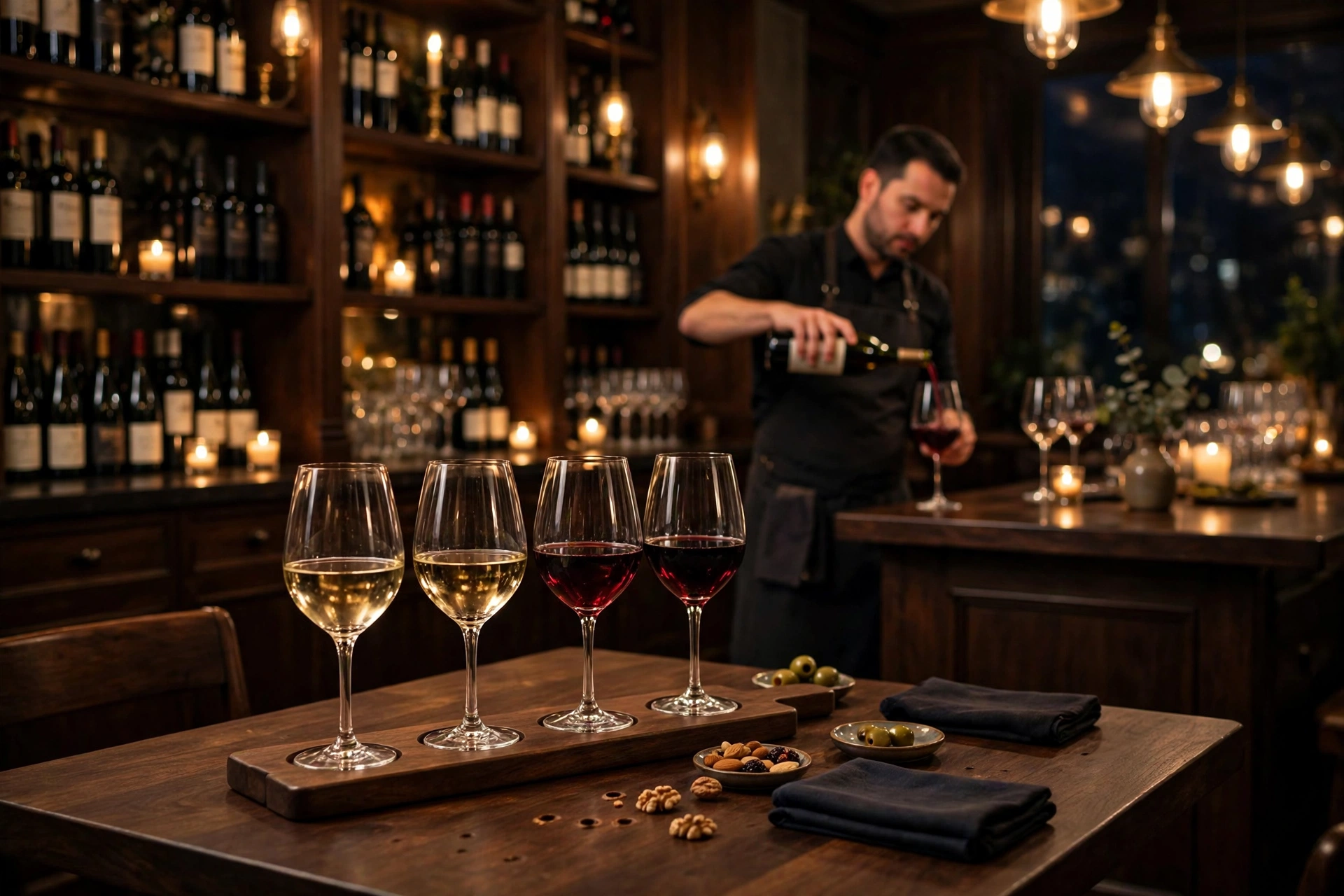
A flight — three to five small pours around a theme — is the single best way to experience a wine bar. Themes might be “Old World vs. New World pinot noir,” “wines of Sicily,” or “natural wines 101.” Flights turn the evening into a guided tasting at a fraction of the cost of full glasses, and they give you and the staff a shared vocabulary for what you like.
Learn the magic sentence
“I usually like [X], what would you recommend?” — where X is anything (“big reds,” “crisp whites,” “that pinot grigio I had in Italy”) — unlocks the sommelier’s expertise. Wine professionals live for this question. Give them a price range if you have one (“around fifteen a glass”) and let them pour. Bartender’s choice, wine edition, is always the move.
Understand the list
BTG (by the glass) lists are organized by style: sparkling, light whites, full whites, rosé, light reds, bold reds, dessert. Prices typically run 12 to 22 dollars a glass at good American wine bars, with premium pours higher. Don’t ignore the cheapest glasses — wine bars often hide their best values there. And check for Coravin pours: these are tastes of expensive bottles (30-plus dollars a glass) made possible by a device that pours without pulling the cork.
Taste before you commit
Any decent wine bar will pour you a small taste of a by-the-glass wine before you order the full glass. Use this freely — it’s expected, not rude. One ounce tells you everything about whether the wine suits your mood.
The Best Wine Bars in the USA: Standouts Coast to Coast
New York City
New York’s wine bar scene is the deepest in the country. Terroir (multiple locations) built its reputation on an all-Riesling-friendly, sommelier-driven list and a punk-rock attitude toward wine snobbery. Racines NY in Tribeca is a temple of natural wine with a serious kitchen. The Four Horsemen in Brooklyn pairs a James Beard-recognized wine program with one of the city’s best restaurants. Cherry Point in Greenpoint and Bar Jamon in Gramercy prove that tiny rooms with sharp lists beat big rooms with dull ones.
San Francisco and Wine Country
The Bay Area drinks well by geography. The Snug and Birba carry the natural-wine torch; Hotel Biron in Hayes Valley is a longtime local favorite with an excellent BTG rotation. Across the bridge, Napa and Sonoma’s tasting rooms are the daytime version — but the city wine bars are where locals actually drink. Compline in Napa, from Master Sommelier Matt Stamp, pairs a wine shop with a serious bar program.
Los Angeles
LA’s wine bar scene has matured beautifully — see our Los Angeles nightlife guide for the full after-dark picture. Bar Bandini in Echo Park, Tabula Rasa (multiple locations) with its deep, fairly priced list, and Lou Wine Shop & Tastings in Los Feliz — a shop that pours — anchor the Eastside. Esters Wine Shop & Bar in Santa Monica brings the wine-bar-as-neighborhood-hub model to the Westside. The city’s best wine bars share a trait: unpretentious rooms, serious lists, and food worth ordering.
Chicago
Chicago drinks wine with Midwestern warmth. Webster’s Wine Bar in Logan Square, City Winery on the Riverwalk (live music plus BTG), and Rootstock in Humboldt Park — a natural-leaning pioneer — lead the pack. The California Clipper isn’t a wine bar, but its existence proves the city’s bars take their craft seriously across categories.
Other cities worth sipping
Portland: Bar Norman and Dame — natural wine in unpretentious rooms. Seattle: Bar Ferdinand and The Dane. Austin: Apt 115 and Aviary Wine + Kitchen. New Orleans: Bacchanal — a legendary Bywater wine garden with live music under string lights. Charleston: Bin 152 and Uncork. Denver: Barcelona Wine Bar’s Denver outpost and Noble Riot. Washington, D.C.: Barcelona Wine Bar’s original and Maxwell Park. Boston: Haley.Henry and The Hawthorne’s wine program.
Natural Wine Bars: What the Hype Is About
No discussion of the best wine bars in the USA is complete without natural wine — the movement that reshaped American wine bars in the 2010s. Natural wines are made with minimal intervention: organic or biodynamic farming, native yeasts, little to no added sulfites, unfined and unfiltered. They taste different — funkier, cloudier, more alive — and they polarized the wine world.
Whether you love the style or not, natural wine bars changed wine-bar culture for the better: lower prices, friendlier service, less intimidation, and lists organized by vibe rather than appellation. If you’re curious, visit a natural wine bar and order a flight — it’s the most accessible entry point in wine, and the staff at these rooms are famously happy to guide beginners. If funky isn’t your thing, classic wine bars aren’t going anywhere.
Wine Bar Etiquette: 10 Rules
- It’s fine to ask for tastes. A one-ounce taste before committing to a glass is standard practice, not an imposition.
- Don’t fake knowledge. “I like fruity reds, what do you suggest?” beats mispronounced grape names every time.
- Order food. Wine bars are built around pairing; the charcuterie board isn’t optional ambiance, it’s the point.
- Pace yourself. Five-ounce pours add up fast. Alternate with water — good wine bars keep it flowing.
- Tip on the full amount. Twenty percent, same as any bar. Wine service is skilled labor.
- Don’t bring your own bottle opinions. Criticizing the list to the sommelier is the wine-bar equivalent of telling the chef how to cook.
- Share and compare. Order different glasses from your companions and taste each other’s — it’s the cheapest education in wine.
- Ask about retail. Many wine bars sell bottles to go, often at shop prices. Loved a pour? Take the bottle home.
- Respect the last pour. Kitchens close, and so do BTG bottles. Don’t order a fresh bottle at 11:55 p.m.
- Join the list. Email lists and wine clubs get first access to rare bottles, tasting events, and winemaker dinners.
Planning the Perfect Wine Bar Night
The ideal wine bar evening has a rhythm — and if you want to keep the night going afterward, the country’s best rooftop bars make a natural second stop. Start early — 6 or 7 p.m. — when the room is calm and the staff has time to talk. Open with a flight to calibrate your palate and discover what you’re in the mood for. Order the cheese and charcuterie board immediately; it should arrive before your second pour. Move from light to heavy through the evening: sparkling or crisp white first, then richer whites or rosé, then reds, then something sweet if the mood strikes. This progression keeps your palate fresh and mirrors how sommeliers structure tastings.
Budget realistically: plan on 50 to 90 dollars per person for a full evening — two to three glasses plus shared food — at a good American wine bar. Flights (typically 18 to 30 dollars for three to five pours) are the best value on the menu. End with a decision: the bottle you loved most is probably available retail. Buying it extends the night’s best moment into next week — and gives you a story for the next dinner party.
Wine Bar vs. Wine Tasting Room: What’s the Difference?
Visitors to wine country often confuse the two. A tasting room belongs to a winery and pours only that producer’s wines, usually in a structured tasting during daytime hours — it’s retail with education. A wine bar is an independent business pouring dozens of producers’ wines by the glass at night, with food and a social atmosphere — it’s nightlife with education. Tasting rooms are for discovering producers; wine bars are for discovering what you like. Do both: tasting rooms by day in wine country, wine bars by night everywhere else.
Pairing Basics: What to Eat With What
You don’t need a sommelier certification — a few principles cover 90 percent of wine bar ordering:
- Match weight with weight: light wines with light food, bold wines with rich food. Delicate white fish wants crisp white, not cabernet.
- Acidity loves fat: high-acid wines (sauvignon blanc, Champagne, Chianti) cut through cheese, fried food, and charcuterie beautifully.
- Sweet tames heat: off-dry riesling or gewürztraminer with spicy food is one of wine’s great partnerships.
- Tannin needs protein: big tannic reds (cabernet, Barolo) want red meat or aged hard cheese — tannin without fat tastes harsh.
- When in doubt, sparkling works: Champagne and its cousins pair with almost everything, from fried chicken to popcorn. It’s the most versatile wine on any list.
- Regional pairings rarely fail: Italian wine with Italian food, Spanish wine with tapas — centuries of coexistence figured this out.
Wine Regions Crash Course: What to Know Before You Order
You don’t need a geography degree, but knowing the world’s key wine regions makes every wine bar list readable. Here’s the cheat sheet:
- Bordeaux, France: The benchmark for structured reds — cabernet sauvignon and merlot blends built to age. When a list offers “left bank” vs. “right bank,” that’s Bordeaux’s two sides of the Gironde river.
- Burgundy, France: Pinot noir and chardonnay at their most expressive — and most expensive. Village-level Burgundy offers the flavor without the grand-cru prices.
- Tuscany, Italy: Sangiovese country — Chianti, Brunello di Montalcino. Food-friendly reds with bright acidity that love tomato-based dishes.
- Rioja, Spain: Tempranillo aged in American oak — vanilla, leather, cherry. One of the world’s great wine values; gran reservas drink like wines triple the price.
- Napa Valley, California: Big, opulent cabernet sauvignon. The prestige region of American wine — and priced like it. Look to Sonoma and Paso Robles for similar styles at lower prices.
- Willamette Valley, Oregon: America’s answer to Burgundy — elegant pinot noir in a cooler climate. Consistently excellent and relatively fairly priced.
- Mendoza, Argentina: Malbec’s adopted home — dark, plush, affordable reds that converted a generation of American drinkers.
- Marlborough, New Zealand: The sauvignon blanc that reset the world’s expectations — pungent, grapefruity, unmistakable.
- Champagne, France: Only sparkling wine from this region earns the name. Everything else is “sparkling wine” — including excellent values from Spain (Cava), Italy (Prosecco, Franciacorta), and California.
- Mosel, Germany: Riesling’s spiritual home — electric acidity, low alcohol, and an ability to age for decades. The best value in fine wine, full stop.
Memorize even half of this list and you’ll navigate any BTG menu with confidence — and you’ll know exactly what to ask the sommelier to surprise you with next.
Wine Bar Events Worth Seeking Out
The best wine bars are community hubs with calendars worth following. Winemaker dinners and tastings bring producers to pour their own wines and tell their stories — often the year’s best wine nights in any city. Blind tasting nights strip the labels away and let your palate judge; they’re humbling, hilarious, and the fastest way to learn what you actually like versus what you think you like. Wine classes (many bars run weekly “wine 101” series) compress months of learning into a few guided evenings. Industry nights — usually Mondays — offer discounts to hospitality workers and, at many bars, to everyone. Holiday events like Beaujolais Nouveau day (third Thursday of November) and Champagne-focused New Year’s Eve tastings turn the calendar into an excuse to gather. Follow your favorite wine bars on Instagram and join their email lists — the best events sell out to regulars first.
Becoming a Regular: Why It Pays
Wine bars reward loyalty more than any other nightlife venue. Regulars get the quiet heads-up when a rare bottle is opened by the glass, first invitations to winemaker dinners, and the occasional off-menu pour “to try something.” You don’t earn this with money — you earn it with curiosity. Ask questions, remember your bartender’s name, bring friends, and come back. Within a few months, your neighborhood wine bar becomes what the best ones always were: your living room with a better cellar.
Frequently Asked Questions
How much does a night at a wine bar cost?
Plan on 50 to 90 dollars per person for two to three glasses plus shared food at a good American wine bar. Flights (18 to 30 dollars for three to five pours) are the best value.
Do you need to know about wine to go to a wine bar?
No — that’s what the staff is for. “I usually like fruity reds, what do you recommend?” is all the expertise you need. Good wine bars are built for the curious, not just the knowledgeable.
What is a wine flight?
Three to five small pours served together around a theme — a grape variety, a region, or a style. Flights are the best way to taste broadly and learn what you like at a reasonable price.
Should you tip at a wine bar?
Yes — 20 percent, same as any bar or restaurant. Wine service involves real expertise, from storage and temperature to pairing advice.
Can you buy bottles to take home from a wine bar?
Often, yes. Many wine bars operate as bottle shops too, selling retail at shop prices. If you love a pour, ask — taking the bottle home is one of the wine bar’s great pleasures.
What is natural wine?
Wine made with minimal intervention: organic or biodynamic grapes, native yeasts, little or no added sulfites, usually unfined and unfiltered. It tastes funkier and more alive than conventional wine, and natural wine bars are among the friendliest entry points for beginners.