

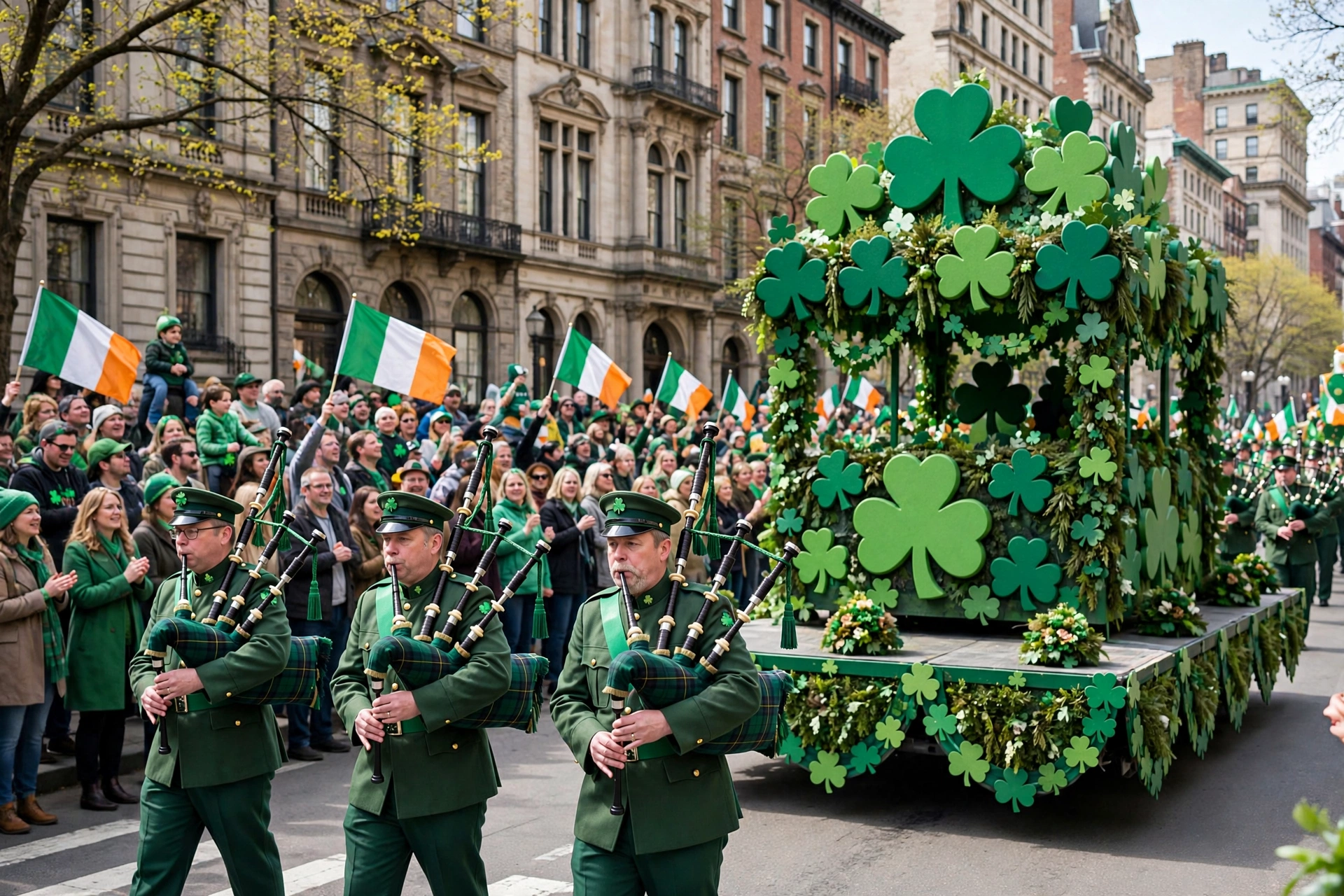
Every March, the best St. Patrick’s Day parades turn American downtowns into rivers of green — marching bands, bagpipers, Irish dancers, and crowds that number in the hundreds of thousands. But not all parades are equal: some are historic spectacles worth planning a trip around, others are beloved local traditions with a completely different flavor. This guide ranks the 10 best St. Patrick’s Day parades in the USA, with practical details for each — when it typically steps off, where the best viewing spots are, what makes it unique, and who it suits best. Whether you want the biggest, the oldest, the quirkiest, or the most family-friendly, you will find your parade here, plus a planning section covering travel, viewing strategy, and what to pack.
A quick note on dates: most parades happen on the Saturday before March 17 or on the day itself, and schedules shift slightly each year — always confirm the current year’s date with the parade’s official site before booking travel. For the cultural story behind what you will be watching, our St. Patrick’s Day traditions guide explains the symbols and history in plain language.
The 10 Best St. Patrick’s Day Parades in the USA
1. New York City, New York — The Biggest and Oldest
Why it is the best: Dating to 1762, the NYC St. Patrick’s Day Parade is the oldest and largest in the world — some 150,000 marchers and up to two million spectators along Fifth Avenue. It is less a parade than a civic institution: no floats or cars allowed, just marchers, which gives it a stately, traditional feel unlike any other.
Route: North up Fifth Avenue from 44th Street to 79th Street, passing St. Patrick’s Cathedral, where the Archbishop reviews the march.
Typical timing: March 17 at 11 a.m. (moves to the preceding Saturday if the 17th falls on a Sunday).
Best viewing: The 50s and 60s along Fifth Avenue offer great sightlines with slightly thinner crowds than the 40s. Arrive by 9:30 a.m. for a front-row curb spot.
Best for: History lovers, first-timers who want the iconic experience, families (daytime, no alcohol focus).
Insider tip: The parade runs until about 4:30–5 p.m. — you do not need to watch all of it. Catch the first hour (the best bands march early), then walk to a pub lunch while the crowds thin.
2. Chicago, Illinois — The Green River Spectacle
Why it is famous: Chicago dyes its river an impossible emerald green — a tradition since 1962 — and the downtown parade that follows is one of the country’s biggest, with bagpipers, step dancers, and floats along Columbus Drive.
Typical timing: The Saturday before March 17; river dyeing in the morning, parade at noon.
Best for: Anyone who wants the single most photographed St. Patrick’s Day moment in America.
Chicago deserves — and has — its own deep guide: our Chicago St. Patrick’s Day celebrations planner covers the river dyeing, parade routes, viewing spots, and the South Side Irish parade in full detail.
3. Boston, Massachusetts — The Heritage Heavyweight
Why it is the best: With roughly a fifth of the city claiming Irish roots, Boston’s South Boston parade draws well over half a million viewers. It doubles as an Evacuation Day commemoration (honoring the British departure in 1776), which gives it a uniquely Boston layer of history.
Route: The traditional Southie route starting near Broadway Station and winding through the neighborhood.
Typical timing: The Sunday before March 17, stepping off midday.
Best viewing: Broadway Station area for the start’s energy; the residential stretches for a more relaxed, neighborhood feel with room for kids.
Best for: Irish-American heritage travelers, history buffs, anyone who wants authenticity over spectacle.
Insider tip: South Boston pubs fill by early afternoon — eat lunch before the parade or make peace with a wait.
4. Savannah, Georgia — The South’s Biggest Party
Why it is the best: The third-largest St. Patrick’s Day parade in the world, in a city of under 200,000 people — the whole town transforms. Spanish moss, historic squares, River Street open-air parties, and a famously festive atmosphere that runs for days, not hours.
Route: Through the historic district, with the city’s squares as natural viewing amphitheaters.
Typical timing: March 17, mid-morning step-off.
Best viewing: The squares along the route offer shade and space; River Street afterward for the party.
Best for: Adults seeking the liveliest atmosphere, groups of friends, anyone combining the parade with a long weekend trip.
Insider tip: Book hotels months ahead — Savannah sells out. The celebration spans the full weekend, so arrive Friday.
5. Philadelphia, Pennsylvania — The Historic Contender
Why it is the best: First marched in 1771 — older than the republic itself — with 200+ groups and 20,000 participants. It is one of the grand old parades that takes the tradition seriously, with deep community roots.
Typical timing: The Sunday before March 17.
Best viewing: The Benjamin Franklin Parkway stretch offers wide sidewalks and good sightlines.
Best for: Families, tradition-minded viewers, anyone within driving distance of the mid-Atlantic.
6. Pittsburgh, Pennsylvania — The Underrated Giant
Why it is the best: A tradition since 1869 and one of the largest parades in the country, with a fiercely loyal local crowd and a downtown route that is easy to navigate. It flies under the national radar, which means thinner crowds for a parade of genuine scale.
Typical timing: The Saturday before March 17, 10 a.m. step-off.
Best viewing: Downtown Grant Street and Boulevard of the Allies.
Best for: Families who want big-parade energy without big-city hassle, budget travelers.
7. New Orleans, Louisiana — The Party Parade
Why it is the best: Only New Orleans throws beads at a St. Patrick’s Day parade — and cabbages, carrots, and potatoes too, in a nod to the holiday’s food traditions. Multiple neighborhood parades (the Irish Channel parade is the main event) give it a grassroots, joyful chaos.
Typical timing: Weekends around March 17; the Irish Channel parade is usually the Saturday before.
Best viewing: Magazine Street for the Irish Channel parade — arrive early, bring a bag for the produce.
Best for: Adults, Mardi Gras lovers, anyone who wants their parade with a side of street party.
Insider tip: Wear shoes you don’t love — the streets get messy, gloriously so.
8. Kansas City, Missouri — The Community Classic
Why it is the best: Families, businesses, and individuals all build their own floats, and the community votes on the best — a homemade, heartfelt parade that feels like the holiday’s small-town soul. The Snake Saturday tradition in North Kansas City adds a second, quirkier parade to the weekend.
Typical timing: March 17 or the surrounding weekend.
Best for: Families, anyone tired of corporate-sponsored spectacles, Midwest travelers.
9. Hot Springs, Arkansas — The World’s Shortest Parade
Why it is the best: Ninety-eight feet long, on Bridge Street — the self-proclaimed World’s Shortest St. Patrick’s Day Parade is pure whimsy: Elvis impersonators, green-clad marchers, and Southern eccentricity in a historic spa town. It is the anti-mega-parade, and completely charming.
Typical timing: March 17.
Best for: Road-trippers, quirk seekers, anyone who has done the big parades and wants a story.
Insider tip: Combine it with the town’s historic bathhouses for a genuinely unique March weekend.
10. San Francisco, California — The West Coast Celebration
Why it is the best: The largest St. Patrick’s Day parade west of the Mississippi, with decorated trolleys, a festival at Civic Center Plaza, and reliably pleasant March weather — a real advantage over East Coast parades that gamble on late-winter cold.
Typical timing: The Saturday before March 17.
Best for: West Coast families, weather-worriers, anyone combining the parade with a San Francisco weekend.
Parade Comparison at a Glance
| City | Scale | First held | Signature feature | Crowd vibe |
|---|---|---|---|---|
| New York City | 2M spectators | 1762 | Oldest, largest; no floats | Grand, traditional |
| Chicago | Large | 1843 (parade); river since 1962 | Green river dyeing | Festive, iconic |
| Boston | 500K+ spectators | 1901 (Southie) | Heritage + Evacuation Day | Authentic, neighborhood |
| Savannah | 300K+ spectators | 1824 | 3rd largest in world | Party atmosphere |
| Philadelphia | 20K marchers | 1771 | Pre-revolution roots | Traditional, family |
| Pittsburgh | Large | 1869 | Underrated giant | Loyal, local |
| New Orleans | Medium-large | Varies by krewe | Beads + vegetable throws | Joyful chaos |
| Kansas City | Medium | 1873 | Community-built floats | Homemade, heartfelt |
| Hot Springs | Tiny (98 feet) | Modern tradition | World’s shortest parade | Whimsical |
| San Francisco | Large | 1852 | West coast’s biggest | Sunny, relaxed |
How to Choose the Right Parade for You
- Want the bucket-list experience? New York City or Chicago. They are famous for good reason.
- Traveling with kids? Pittsburgh, Kansas City, or San Francisco — big enough to impress, manageable enough to navigate with small children.
- Want heritage and history? Boston or Philadelphia. These parades wear their history openly.
- Want a party? Savannah or New Orleans. Book early, pace yourself.
- Want a story nobody else has? Hot Springs. Ninety-eight feet of pure joy.
- On a budget? Pick the closest big parade and make it a day trip — Pittsburgh and Kansas City are especially wallet-friendly.
Parade Day Strategy: Viewing, Timing, and Survival
Arrive early, leave strategically
For major parades, claim your curb spot 60–90 minutes before step-off. Bring a blanket or chairs to mark your territory — this is standard parade etiquette, not rudeness. Watch the first 60–90 minutes (the best units march early), then leave before the crowds disperse all at once.
Where to stand
The start of the route has the freshest marchers and the most energy; the middle has the thinnest crowds; the end has tired marchers but easy exits. For families with kids, the middle is the sweet spot — room to move, shorter waits for restrooms, easier escape routes.
What to pack
- Layers — March weather flips fast; dress for 15 degrees colder than the forecast suggests
- Portable chairs or a blanket for waits
- Snacks and water — parade concessions are expensive and lines are long
- Cash in small bills for vendors
- A fully charged phone plus a portable charger (cold drains batteries)
- Sunscreen — spring sun surprises people every year
- Ear protection for toddlers — bagpipes are glorious and extremely loud
Getting there and home
Public transit beats driving for every major parade — downtown streets close, parking vanishes, and surge pricing hits rideshares. Check the transit agency’s holiday schedule the night before; many cities add parade-day service. If you must drive, park far from the route and walk in.
Travel Planning: Making a Weekend of It
Book early
Savannah, Boston, and New York hotels sell out or spike in price for parade weekend — book two to three months ahead. Pittsburgh, Kansas City, and Hot Springs are more forgiving but still busier than a normal March weekend.
Build the weekend around the parade
- New York: parade Saturday or Tuesday + Irish cultural sites (museums, historic pubs) + a Broadway show evening.
- Chicago: river dyeing morning + parade + deep-dish pizza + an architecture river cruise (a different river experience).
- Boston: parade Sunday + Freedom Trail + North End Italian dinner — the city’s two heritages in one trip.
- Savannah: arrive Friday, parade day, then a slow Sunday in the squares and on River Street.
- New Orleans: parade + French Quarter + live music — the city does the rest.
Traveling with kids
Daytime parades (NYC, Philadelphia, Pittsburgh, Kansas City) suit kids best. Bring the ear protection, pack twice the snacks you think you need, and plan a post-parade activity — playground, museum, or hotel pool — because kids’ parade attention lasts about 90 minutes. Our best family events in the USA guide has more trip-worthy ideas if you are building a family travel calendar.
Parade Etiquette: Be a Good Spectator
- Don’t cross the barriers. Ever. Not for a photo, not for a dropped hat.
- Keep kids on your side of the curb. Marchers need the street; excited children dart — hold hands.
- Share the front row. If kids can’t see, lift them or let them stand in front of you — then move back. Everyone remembers who blocked the small children.
- Tip the street vendors and tip well. They are part of the parade economy.
- Clean up after yourself. Bring a trash bag; leave your spot cleaner than you found it.
Honorable Mentions: More Parades Worth Knowing
Ten parades can’t cover a country this enthusiastic. These five didn’t make the top list but deserve a look if you’re nearby:
- St. Louis, Missouri — one of the largest in the Midwest, with a deep Irish-American community and a parade-plus-festival format in the Dogtown neighborhood.
- Dublin, Ohio — yes, there’s a Dublin in Ohio, and it leans all the way in: a full weekend festival around its parade with Irish music, dance, and food.
- Denver, Colorado — the West’s other big parade, with mountain-city energy and reliably enthusiastic crowds along Blake Street.
- New London, Wisconsin — famously renames itself “New Dublin” for the week, complete with a ceremonial renaming by costumed leprechauns. Peak small-town charm.
- Scranton, Pennsylvania — one of the nation’s largest parades per capita, with a fiercely proud local Irish community and a fantastic downtown route.
Can’t Travel? Parade Day at Home
Not everyone can road-trip to Savannah. Here’s how to make parade day special from the couch:
- Watch a livestream. New York and Chicago parades stream live — put it on the big screen, dress in green, and make it an event, not background noise.
- Host a viewing party. Irish breakfast spread, parade on TV, bingo cards for parade bingo (spot a bagpiper, a giant shamrock float, someone in full costume). Our kids’ birthday party ideas guide includes group game formats that work for viewing parties.
- Cook the parade food. Corned beef and cabbage in the slow cooker, soda bread in the oven — the house smells like the holiday by the time the parade ends.
- Walk your own parade. A neighborhood stroll in full green with the family, ending at a local pub or park. Kids love “being the parade” more than watching one.
Best St. Patrick’s Day Parades: FAQ
What is the biggest St. Patrick’s Day parade in the USA?
New York City’s — dating to 1762, with around 150,000 marchers and up to two million spectators along Fifth Avenue. It is the largest and oldest St. Patrick’s Day parade in the world.
What is the oldest St. Patrick’s Day parade in the USA?
Also New York City (1762). Philadelphia’s parade, first marched in 1771, is the next oldest among the major parades.
Which city dyes its river green for St. Patrick’s Day?
Chicago, every year since 1962. The dyeing happens the morning of the downtown parade and draws enormous crowds on its own.
When are St. Patrick’s Day parades usually held?
Most happen on March 17 itself or the Saturday (sometimes Sunday) before. Schedules shift slightly each year, so confirm the current year’s date with the parade’s official site before traveling.
Are St. Patrick’s Day parades free?
Nearly all of them — viewing from the sidewalk is free. Some cities sell reserved bleacher seats (Savannah does), which are worth it if you want a guaranteed view without arriving hours early.
What should I bring to a St. Patrick’s Day parade?
Layers for unpredictable March weather, portable chairs or a blanket, snacks and water, cash, a charged phone with a portable charger, sunscreen, and ear protection for small children.
Which St. Patrick’s Day parade is best for families?
Pittsburgh, Kansas City, Philadelphia, and San Francisco offer big-parade excitement with manageable crowds. New York’s daytime, alcohol-free format also works well for families who arrive early and position mid-route.
How far in advance should I book travel for a St. Patrick’s Day parade?
Two to three months for Savannah, Boston, and New York — hotels sell out. Six to eight weeks is usually enough for Pittsburgh, Kansas City, Hot Springs, and New Orleans.
Pick one parade, commit early, and build the weekend around it — the cities on this list reward the travelers who plan ahead. Dress for the weather in warm, removable layers, and if Chicago’s green river calls your name, our Chicago celebrations planner has every detail.


