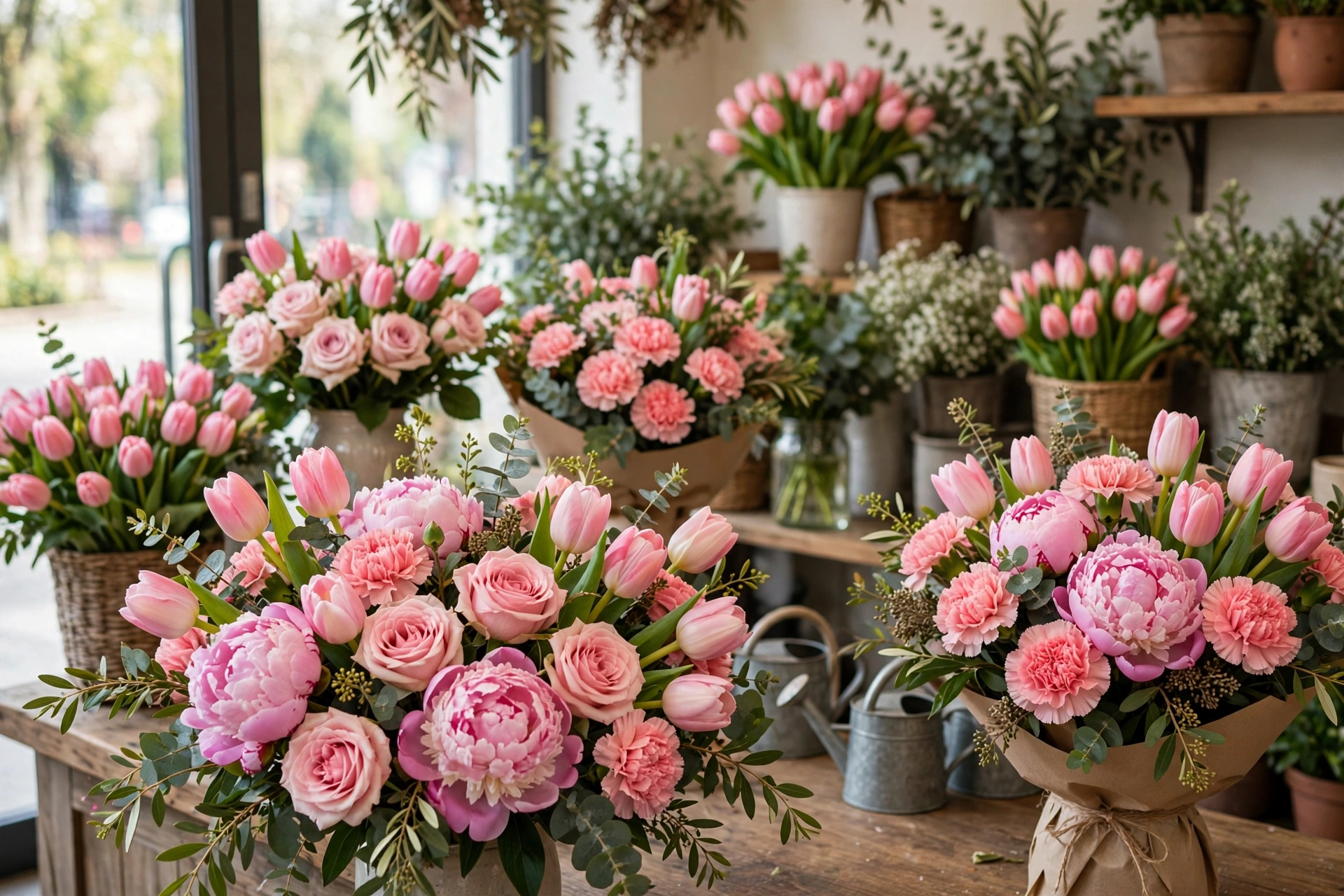
Flowers are the quintessential Mother’s Day gift — given by roughly two-thirds of celebrants every year — but not all blooms are equal. The best mother’s day flowers match your mom’s personality, last long enough to enjoy, and carry a meaning that makes the gesture feel intentional rather than default. This guide covers the best mother’s day flowers by type and meaning, when to choose a bouquet versus a living plant, how to order for peak freshness, and the care tricks that keep arrangements beautiful for two weeks instead of five days.
Best Mother’s Day Flowers and What They Mean
Every flower carries a traditional meaning. Choosing with meaning in mind is what elevates flowers from “nice” to “she tells her friends about it.”
| Flower | Meaning | Vase Life | Best For |
|---|---|---|---|
| Pink carnations | A mother’s undying love (the original Mother’s Day flower) | 2–3 weeks | Traditional moms; the historically meaningful choice |
| Peonies | Prosperity, honor, happy life | 5–7 days | Luxury lovers; May is peak peony season |
| Roses (pink/peach) | Gratitude, admiration, appreciation | 7–10 days | The safe classic — avoid red (romantic) for mom |
| Tulips | Perfect love, comfort, spring renewal | 5–7 days | Cheerful moms; elegant and affordable |
| Lilies (Oriental/Asiatic) | Purity, devotion, motherhood | 10–14 days | Dramatic, fragrant arrangements (see pet warning below) |
| Orchids (potted) | Strength, beauty, refinement | Months (as a plant) | Plant lovers; the gift that keeps living |
| Gerbera daisies | Cheerfulness, warmth | 7–10 days | Fun, vibrant moms; bright color lovers |
| Hydrangeas | Gratitude, heartfelt emotion | 5–7 days | Lush, full arrangements; gardeners |
| Freesias | Trust, friendship, sweetness | 7–10 days | Fragrance lovers; delicate and charming |
| Sunflowers | Adoration, happiness, longevity | 7–10 days | Bold, joyful moms; rustic farmhouse style |
The Carnation: Mother’s Day’s Original Flower
No flower is more authentically tied to Mother’s Day than the carnation. Anna Jarvis chose the white carnation as the holiday’s emblem because it was her mother’s favorite flower, and she taught that its long-lasting bloom symbolized the endurance of a mother’s love. Her color code — white for mothers who have passed, pink or red for mothers living — is still observed by traditionalists.
Carnations have an unfair reputation as “cheap filler,” but that is a failure of imagination, not of the flower. A monochromatic bouquet of 20–30 pink carnations is stunning — lush, fragrant, architectural — and it lasts two to three weeks, outliving nearly every other cut flower. Florists are rediscovering them, and a thoughtfully designed carnation arrangement now reads as intentional and vintage-chic rather than budget. If your mom appreciates history and meaning, the carnation is the most Mother’s Day-correct flower you can give.
Peonies: The May Showstopper
Mother’s Day falls squarely in peony season, which is no accident of the calendar gods — it is the flower’s natural peak. Peonies are the luxury pick: enormous, ruffled, intoxicatingly fragrant blooms that photograph beautifully and feel unabashedly celebratory. Their downsides are real: they are expensive (often $5–$8 per stem), their vase life is short (5–7 days), and they are only available for a few precious weeks each spring.
The pro move: buy peonies slightly closed (in “marshmallow” stage — soft but not open) and they will bloom over 2–3 days, extending your enjoyment. If the price stings, mix a few peonies as the stars among affordable garden roses or carnations — three peonies plus filler looks like a $150 arrangement for half the cost. For the mom who loves luxury and lives for spring, nothing beats peonies in May.
Best Mother’s Day Flowers by Mom Personality
The traditional mom: Pink carnations or a classic rose-and-lily bouquet in soft pinks and whites. She values meaning and timelessness over trendiness.
The modern minimalist: White tulips or a single-variety arrangement — 15 white tulips in a simple glass vase, or a sculptural white orchid plant. Clean lines, no filler.
The maximalist: A lush garden-style arrangement with peonies, garden roses, ranunculus, and trailing greenery. More is more, and she knows it.
The gardener: Skip cut flowers entirely — give living plants. A potted hydrangea, rose bush, or herb garden kit gives her months of enjoyment and a project. May is planting season, so nurseries are at their best.
The eco-conscious mom: Locally grown, seasonal flowers from a farmers’ market or local flower farm. Ask what is in season nearby — it is fresher, supports local growers, and has a fraction of the carbon footprint of flown-in blooms.
The fragrance lover: Oriental lilies, freesias, gardenias, or stock. Warn her the lilies are potent — one stem scents a whole room. (And check the pet warning below before choosing lilies.)
Bouquet vs. Potted Plant vs. Flower Subscription
Cut bouquet: The classic. Instant impact, endless variety, but temporary — even with perfect care, 1–2 weeks. Best when you want the Mother’s Day-morning “wow.”
Potted plant: Orchids, hydrangeas, miniature rose bushes, or flowering kalanchoe last for months with basic care and cost about the same as a mid-range bouquet. Best for plant lovers and anyone who dislikes watching flowers die. Include a simple care card — “bright indirect light, water weekly” — so it thrives.
Flower subscription: A monthly delivery for 3, 6, or 12 months. The per-delivery cost is reasonable, and it turns one day of flowers into a year of surprises. Best for long-distance gifting — she thinks of you every month. Many services now offer farm-direct subscriptions with seasonal varieties.
Garden plants: For the gardener, a flat of annuals (geraniums, impatiens, petunias), a hydrangea bush, or a gift card to her favorite nursery timed to planting season. This is a gift plus a project — double value.
How to Order Mother’s Day Flowers Like a Pro
- Order early. For the best selection and delivery slots, order by the Monday before Mother’s Day. Prices rise and options shrink in the final days.
- Choose a local florist over a wire service when possible. Local florists design with fresher stock and their arrangements look like the photos. Wire-service orders are often fulfilled by whoever is available, with variable quality.
- Specify colors, not just “Mother’s Day arrangement.” “Soft pinks and whites, garden style, no red roses” gets you a better result than leaving it entirely open.
- Consider pickup. If you are local, picking up the arrangement yourself lets you inspect it and keeps it out of a hot delivery van. Transport it upright, with the stems in water if the drive is long.
- Always include a card with real words. The flowers are the gesture; the message is the gift. Two heartfelt sentences minimum.
Keep Them Alive: Flower Care That Actually Works
Most bouquets die early from neglect, not age. These steps double vase life:
- Recut stems at a 45-degree angle under running water before arranging — this prevents air bubbles from blocking water uptake.
- Strip leaves below the waterline. Submerged leaves rot and breed bacteria, the number-one bouquet killer.
- Use the flower food packet — it is not a gimmick; it contains sugar (food), acid (improves uptake), and biocide (kills bacteria). Change the water and add fresh food every 2–3 days.
- Keep arrangements cool and away from direct sun, heating vents, and — critically — fruit bowls. Ripening fruit emits ethylene gas that ages flowers rapidly.
- For tulips: they keep growing in the vase and will stretch toward light. Wrap them in paper for the first few hours to keep stems straight, and expect charming droop — it is their nature.
- For lilies: remove the pollen-laden anthers as buds open (they stain everything orange and the pollen shortens bloom life). This also helps allergy sufferers.
- For hydrangeas: they drink through their petals too — mist the blooms and recut stems every couple of days; a wilted hydrangea head often revives after a 30-minute soak in cool water.
Important: Flower Safety for Pets
This matters enormously and is often overlooked: lilies are extremely toxic to cats — every part of the plant, including pollen and vase water, can cause fatal kidney failure. If your mom has a cat, do not send lilies, period. Other flowers to avoid in pet households include tulips and daffodils (toxic to both cats and dogs if ingested) and chrysanthemums. Pet-safe choices include roses, gerbera daisies, orchids, sunflowers, and snapdragons. When in doubt, tell the florist about the pets — a good florist will steer you to safe options.
Mother’s Day Flowers by Budget
| Budget | What You Get |
|---|---|
| Under $25 | Grocery-store bouquet, upgraded at home (recut, arranged in your own vase, filler removed); single potted orchid or kalanchoe |
| $25–$50 | Florist-designed seasonal bouquet; farmers’ market bundle; nice potted hydrangea |
| $50–$100 | Premium florist arrangement (peonies in season); large orchid plant; 3-month flower subscription |
| $100+ | Luxury garden-style arrangement; 6–12 month flower subscription; orchid collection or rose bush for the garden |
Frequently Asked Questions
What are the best flowers for Mother’s Day?
The most popular and meaningful choices are pink carnations (the original Mother’s Day flower), peonies (peak season in May), pink roses (gratitude), tulips, and lilies. The “best” flower is the one that matches your mom’s taste — when in doubt, ask her favorite color and build around it.
What color roses should I give my mom for Mother’s Day?
Pink roses (admiration, gratitude) or peach roses (sincerity, appreciation) are perfect. Avoid red roses, which carry romantic connotations, and consider white for elegance or yellow for friendship and joy.
How far in advance should I order Mother’s Day flowers?
Order by the Monday before Mother’s Day for the best selection, prices, and delivery slots. Same-day delivery is often available up to the holiday itself, but choices narrow and prices peak.
How long do Mother’s Day flowers last?
With proper care (recut stems, fresh water every 2–3 days, flower food, cool location), most bouquets last 7–14 days; carnations can reach 3 weeks. Potted plants last months with basic care.
Are lilies safe for Mother’s Day if mom has cats?
No — lilies are lethally toxic to cats, including pollen and vase water. Choose roses, orchids, gerbera daisies, or sunflowers instead for cat households.
More Mother’s Day Guides
- Mother’s Day Ideas for Different Interests and Budgets — the complete celebration planner
- Valentine’s Day Gifts for Her — gift ideas beyond flowers
- Father’s Day Card Messages — pair your bouquet with the perfect words
- Last Minute Valentine’s Day Gifts — fast gifting strategies for any holiday
DIY Bouquet: Arrange Grocery Flowers Like a Florist
A $20 grocery-store bouquet can look like a $75 florist arrangement with 15 minutes of work. Here is the florist’s method:
- Buy in odd numbers and one color story. Choose 2–3 flower types in a tight palette (all pinks, or white + green, or sunset oranges). One color story always looks more expensive than a rainbow mix.
- Strip and recut everything. Remove all packaging, strip lower leaves, and recut every stem at an angle.
- Build in your hand, spiral-style. Hold one focal flower, then add stems one at a time at an angle, rotating the bunch as you go. Place larger blooms low and in the center, smaller ones higher and at the edges. Tuck greenery last, around the outside.
- Cut to vase height. Hold the bunch against your vase and trim so blooms sit about 1.5 times the vase height above the rim. Tie with twine or ribbon before placing in water.
- Finish with water and food. Fill the vase two-thirds with lukewarm water plus flower food, place the bouquet, and adjust any stray stems. Done — it genuinely looks professional.
Dried and Preserved Flowers: The Everlasting Option
For the mom who dislikes watching flowers fade — or for a gift that arrives early and still looks perfect on the day — consider dried and preserved options. Dried lavender, pampas grass, preserved roses (which last a year or more), and dried wildflower bundles have moved from craft-store territory to genuinely stylish décor. They need no water, no care, and no guilt. A preserved-rose box or an artful dried arrangement in a beautiful vase is a legitimate luxury gift now, not a compromise — and it is ideal for shipping, since nothing wilts in transit.
Mother’s Day Flower Traditions Around the World
Flower-giving customs vary beautifully across cultures. In Japan, red carnations (kaneshon) are the traditional Haha no Hi gift, and children often draw portraits of their mothers to accompany them. In Mexico’s Día de las Madres, families present elaborate arrangements and serenade mothers with mariachi bands. In Thailand, jasmine garlands — not bouquets — are given on Mother’s Day, and the delicate white blossoms symbolize maternal love. In Ethiopia’s Antrosht festival, daughters bring vegetables and grasses while sons bring meat, and the whole family feasts together. Knowing these traditions is a lovely touch if your family has multicultural roots — honoring her heritage’s flower custom alongside the American bouquet makes the gift doubly meaningful.
Mother’s Day Flower Pairing Guide
Flowers rarely travel alone on Mother’s Day — and the right pairing turns a bouquet into a complete gift. Match the pairing to the flowers:
- Peonies + a handwritten card and a French bakery box. The luxury-flower, luxury-morning combination.
- Carnations + a framed family photo. History meets heart — the traditional flower with the personal keepsake.
- Potted orchid + a beautiful ceramic pot or planter. She will see it daily for months; make the vessel worthy.
- Garden plants + quality gardening gloves or hand tools. A gift plus the means to enjoy it immediately.
- Wildflower bundle + a picnic plan. The flowers set the tone; the outing makes the memory.
- Flower subscription + the first delivery presented in person with a card explaining the months to come. Anticipation is part of the gift.
The through-line: flowers are the opening gesture, not the whole gift. Pair them with words (always the card), with time (the outing, the breakfast, the call), or with something lasting (the plant, the photo, the subscription). That combination — beauty plus meaning plus presence — is what makes the best mother’s day flowers unforgettable rather than merely nice.
Where to Buy: Getting the Freshest Flowers
Source matters as much as variety. Farmers’ markets in May offer the freshest local stems — often cut that morning — at prices well below florists, and talking to the grower tells you exactly what is in peak season. Wholesale clubs sell bulk roses and mixed bouquets at unbeatable per-stem prices if you are arranging yourself or decorating an event. Grocery stores have quietly become excellent: their floral departments now stock peonies, ranunculus, and garden roses in season, and a $25 grocery bouquet plus 15 minutes of rearranging (see the DIY section above) rivals florist work. For delivery, local florist shops remain the quality kings — their designers work with the day’s best stock and their arrangements photograph like the website. Whatever the source, buy flowers the day before or morning-of when possible; every day in a cooler is a day off the vase life.
One last tip: photograph the bouquet when it is at its peak — day two or three, when everything has opened. Send the photo to whoever helped you choose, and keep one for yourself. Years from now, that photo will bring back the whole morning: her smile, the smell of the blooms, and the feeling of getting it exactly right.