

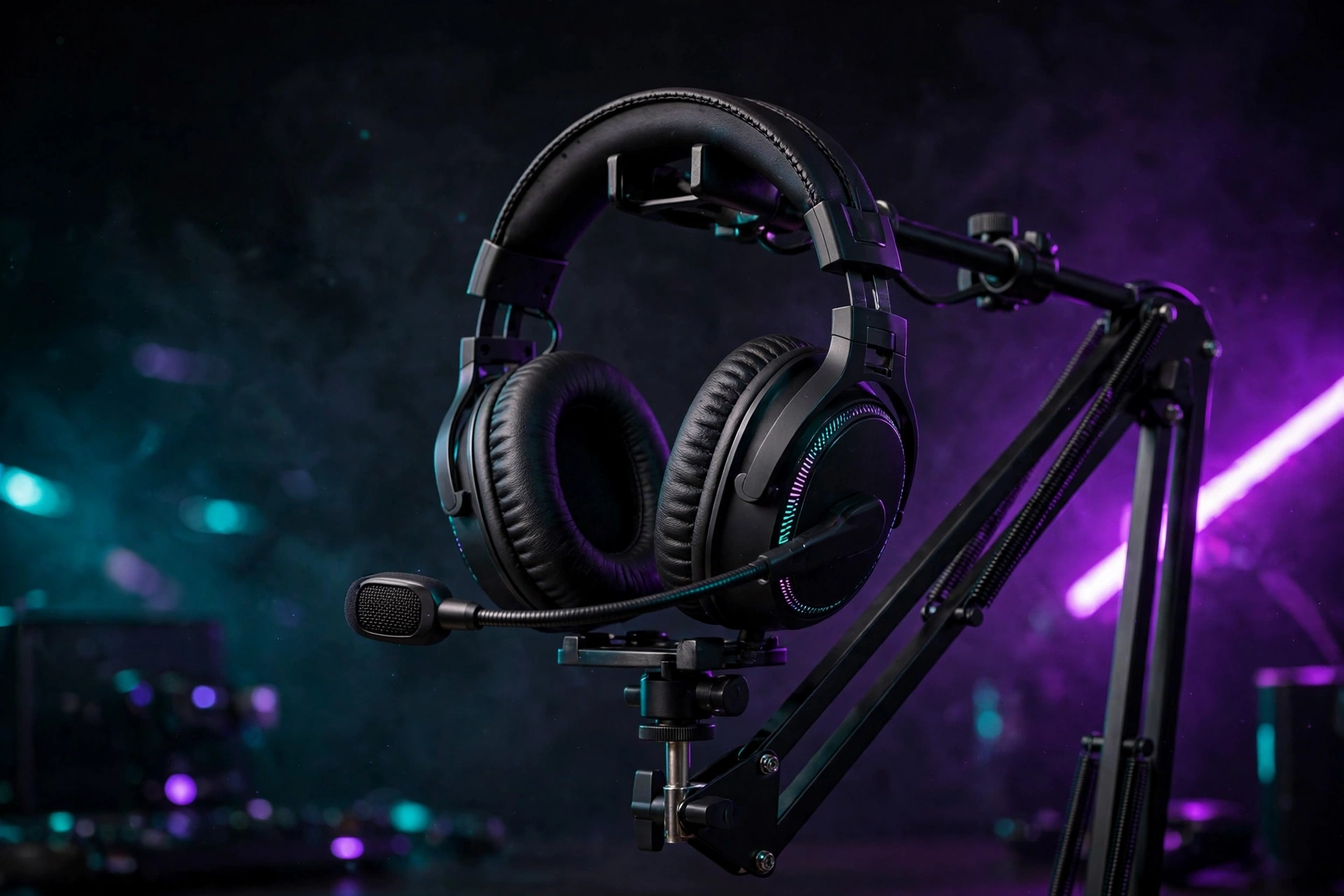
Searching for the best Black Friday gaming headset deals 2026? Good call — gaming audio is one of the most underrated upgrades in all of gaming, and Black Friday is when premium headsets become affordable. The right headset transforms competitive play (hearing footsteps before you see enemies), makes story-driven games cinematic, and keeps your voice crystal clear to teammates. This guide covers everything: wired versus wireless, the platform compatibility maze, microphone quality (the most underrated spec), comfort for long sessions, and a complete shopping strategy. Black Friday 2026 is Friday, November 27, with early deals from late October through Cyber Monday on November 30.
Inside: the headset categories and who each suits, features that genuinely affect gaming versus marketing fluff, a tier-by-tier value breakdown, platform-specific buying advice for PlayStation, Xbox, Nintendo Switch, and PC, and worldwide shopping tactics with deal verification. No invented prices, no fake discount claims — headset pricing moves constantly, so this guide teaches you to evaluate any deal on its merits. Pair this with our video game deals guide for the software side, and see the best Black Friday deals hub for the full sale.
Why Gaming Headsets Are a Black Friday Sweet Spot
Gaming headsets sit in a pricing sweet spot that makes them ideal Black Friday targets. They are premium enough to discount meaningfully (unlike small accessories where the savings are trivial), but not so expensive that the good ones stay out of reach. The market is fiercely competitive — dozens of brands from audio specialists to gaming peripherals companies fight across every tier — and that competition converts directly into genuine discounts rather than manufactured ones.
The product cycle helps too. Flagship gaming headsets refresh every couple of years, often in late summer ahead of the holiday season, which pushes previous-generation models into Black Friday clearance. And unlike with general headphones, “last year’s” gaming headset is not meaningfully worse — the core technologies (drivers, wireless protocols, microphone design) evolve slowly, so a discounted previous flagship is usually 95 percent of the current one at a much lower price.
There is also the bundle dynamic: headsets pair naturally with console and PC purchases, so retailers use them as basket-builders with real discounts. And because headsets are among the most gifted gaming items, November is when retailers stock deepest and compete hardest. The result is a category where Black Friday reliably delivers the year’s lowest prices on genuinely good products — with the usual caveat that you must verify, because inflated reference prices exist here too.
Wired vs Wireless: The Foundational Choice
This is the first decision, and it shapes everything else. Both are legitimate — the right choice depends on your setup and priorities.
Wired Headsets
The reliability choice: zero latency, zero charging, zero wireless interference, and typically better sound quality per dollar since no budget goes to batteries and radios. A wired headset never dies mid-match, never needs a firmware update to fix a connection, and works with everything that has the right jack or USB port. The trade-off is the cable — it tangles, it snags, it limits movement, and on consoles it tethers you to the controller or the console itself. For competitive players where every millisecond matters, wired remains the rational choice. For everyone else, it is the value choice: the same money buys better drivers and a better microphone in wired form.
Wireless Headsets (2.4GHz)
The freedom choice: a USB dongle delivers near-wired latency with full freedom of movement — get up mid-game, pace during loading screens, lean back on the couch. Modern 2.4GHz wireless is excellent: latency is imperceptible for all but the most latency-sensitive competitive play, and battery life routinely exceeds 20–30 hours. The trade-offs: higher prices, charging discipline (a dead headset mid-session is infuriating — develop the habit of docking it after every session), and occasional wireless interference in crowded signal environments. For living-room console gaming and general PC play, wireless is the quality-of-life upgrade most buyers never regret.
Bluetooth and Multi-Platform Wireless
Bluetooth adds phone and Switch handheld connectivity — great for a headset that doubles as daily headphones — but Bluetooth latency is too high for serious gaming, so gaming-grade wireless headsets use Bluetooth as a secondary connection alongside 2.4GHz. The headsets that do both well (2.4GHz for gaming, Bluetooth for phone simultaneously) are the versatility kings: game on the console while staying connected to calls. If your headset will serve double duty for music, work calls, and gaming, this dual-wireless capability is worth paying for. If it is purely for gaming at one desk or couch, save the money.
Platform Compatibility: The Maze, Mapped
Gaming headset compatibility is genuinely confusing, and buying the wrong version is the most common headset regret. Here is the map.
PlayStation
The most headset-friendly console: standard USB and 3.5mm connections work broadly, and most wireless headsets support PlayStation via dongle or wired connection. Tempest 3D audio (the platform’s spatial sound) works with any decent stereo headset — you do not need a licensed “3D audio” headset, despite what marketing implies. The main decision is wired versus wireless and whether you want simultaneous Bluetooth for phone connectivity. Compatibility pitfalls are rare here, which makes PlayStation the easiest platform to shop for.
Xbox
The tricky one. Xbox uses a proprietary wireless protocol, so many wireless headsets that work everywhere else need an Xbox-specific version — the standard version will not connect wirelessly to an Xbox. This is the single most important compatibility fact in this guide: if you game on Xbox and want wireless, you must buy the Xbox-licensed version of the headset. Wired headsets via the controller’s 3.5mm jack work universally and sidestep the issue entirely. Always verify the exact variant — “works with Xbox” via wire is not the same as an Xbox wireless version, and listings bury this distinction in fine print.
Nintendo Switch
Flexible but with quirks: wired via the 3.5mm jack works in handheld and docked modes; USB wireless dongles work when docked; Bluetooth audio is supported natively but with notable latency and a two-controller limit quirk in some configurations. For most Switch players, a wired headset or a dual-wireless headset (2.4GHz dongle for docked play, Bluetooth for handheld) covers everything. Do not overthink it — the Switch is not a competitive-audio platform, so prioritize comfort and versatility over latency specs.
PC
The promised land: everything works. USB, 3.5mm, 2.4GHz dongles, Bluetooth — PC accepts all of it, and software equalizers let you tune any headset precisely. PC is also where the “gaming headset versus studio headphones plus microphone” debate lives: audiophiles argue (correctly) that quality headphones with a separate microphone beat gaming headsets on sound per dollar. The counter is convenience — one device, one cable, designed for the use case. If you are deep into audio quality, consider the separates route; if you want simplicity, a good gaming headset is the pragmatic choice. Either way, Black Friday discounts both paths.
Features That Actually Matter for Gaming
Microphone Quality: The Underrated King
In multiplayer gaming, your microphone matters more than your drivers — your teammates hear your mic, not your ears. Yet microphone quality is the least marketed and most variable spec in headsets. Detachable boom mics generally beat built-in ones; flip-to-mute booms are the gold standard for convenience. What to look for in reviews: clarity in noisy environments, plosive handling (p-pops), and sidetone (hearing your own voice, which prevents shouting). A headset with great sound and a terrible mic is a bad gaming headset, full stop — weight microphone reviews heavily, especially if you play team games.
Comfort for Long Sessions
Gaming sessions run for hours, so comfort is a primary feature. The signals: clamping force (too tight causes headaches; too loose slips), earcup depth (shallow cups press drivers against ears), weight (lighter is better for long sessions — wireless adds battery weight), and headband padding distribution. Glasses wearers should check reviews specifically — temple arms change everything. Cooling matters too: sealed leatherette cups get hot; fabric or hybrid materials breathe better. When in doubt, favor lighter headsets with deep cups, and buy from a retailer with a real return window so you can test a full session.
Sound: What Gamers Actually Need
Gaming audio priorities differ from music: positional accuracy (locating sounds in space) and clarity (distinguishing footsteps from ambient noise) matter more than bass warmth. A “fun” bass-heavy tuning that flatters music can actually hurt competitive awareness by masking subtle cues. Virtual surround sound is largely marketing — modern games output excellent spatial audio to any stereo headset, and the platform-level 3D audio (on PlayStation and Xbox) outperforms headset-level processing. Prioritize a clear, detailed stereo tuning over surround badges. If the headset will double for music, look for models with EQ presets or app-based tuning so you can switch profiles.
Battery, Build, and Daily Details
For wireless: 20+ hours is the modern baseline; anything above 30 is excellent. Fast charging rescues the forgetful. For build: the headband and yokes are the failure points — metal reinforcement matters for longevity, and Black Friday’s cheapest headsets often cut exactly here. Detachable cables (on wired models) turn a cable failure from a headset replacement into a cable replacement. And check earcup replacement availability — pads wear out in 1–2 years of heavy use, and replaceable pads extend a good headset’s life enormously.
Tier Breakdown: Where the Value Lives
| Tier | Strengths | Compromises | Best for |
|---|---|---|---|
| Budget | Great value, fine for casual play | Basic mics, plasticky build, comfort limits | Kids, casual gamers, first headsets |
| Mid-range | The sweet spot: good mic, comfort, wireless | Not the best at anything | Regular gamers — most buyers |
| Premium | Best mics, best comfort, dual wireless | High cost; diminishing returns | Streamers, competitors, daily long sessions |
The budget tier is honest value: decent drivers, acceptable microphones, and prices where Black Friday makes them stocking-stuffer territory. For kids and casual players, budget is genuinely enough — the use case does not demand more. The limits show up in microphone quality (teammates will notice) and long-session comfort. Buy budget when the gaming is casual; the headset will serve fine within those bounds.
The mid-range is the sweet spot and the tier where Black Friday creates the best decisions. Previous-generation premium headsets land here when discounted — better microphones, better comfort, better build than current mid-range models at the same price. Our standing rule applies: a discounted last-gen flagship beats a current mid-range model. This is the tier most regular gamers should target, and it is where the year’s best headset value lives.
Premium is for streamers (microphone quality is your product), competitive players (every comfort and latency edge), and anyone gaming for hours daily. The discounts are real but proportionally modest — the win is the year’s lowest price on the best. Do not buy premium for casual play; the mid-range delivers 90 percent of the experience. And verify Xbox wireless licensing with extra care at this tier — premium prices demand exact compatibility.
Shopping Strategy: Timing, Retailers, and Verification
When to Buy
Headset deals start with the early wave in late October — popular models appear in preview sales because they are gift-friendly. Black Friday week (November 23–27; Black Friday is November 27, 2026) brings the widest selection and deepest cuts, especially on previous-generation flagships. Cyber Monday (November 30) is strong for headsets, particularly online-first brands. Timing insight: unlike consoles, headset inventory is deep and restocks are common — but popular models in specific platform versions (remember the Xbox wireless variants) can sell out. If you need the Xbox version specifically, buy when it hits its historical low rather than waiting for Friday.
Where to Shop Worldwide
We never claim specific retailers have specific deals. The landscape: in the US, Amazon, Best Buy, Walmart, and Target drive headset pricing, with manufacturer and brand stores running parallel sales. In the UK: Currys, Argos, Amazon UK. In Europe: MediaMarkt/Saturn, Fnac, and Amazon’s country stores. In Australia: JB Hi-Fi, Kogan, Amazon AU. In Canada: Best Buy Canada and Amazon Canada. Gaming-specialist retailers (in each region) deserve a look — they often bundle headsets with games or run deeper cuts on gaming peripherals than generalists. For gifts, favor extended holiday return windows; fit and comfort are personal, and exchange-ability matters.
Verify Every Deal in Two Minutes
Check price history on CamelCamelCamel or Keepa (Amazon) or Honey’s cross-retailer history. If the Black Friday price matches recent months’ pricing, it is marketing. Compare across two other sellers — genuine deals beat the market everywhere. Then verify the exact variant: platform version (especially Xbox wireless licensing), wired versus wireless, and model generation. Listings frequently show the cheapest variant’s price in search results while defaulting to a pricier one — confirm the configuration matches the price. Finally, beware of “gaming” branding on generic headphones: a standard headphone with a microphone slapped on is not a gaming headset, no matter the RGB lighting. Buy from established gaming-audio and peripheral brands with real reviews.
Mistakes to Avoid
Buying the wrong platform version. The Xbox wireless licensing trap catches buyers every year. Verify the exact variant against your platform before buying — “compatible with Xbox” via cable is not an Xbox wireless headset.
Prioritizing drivers over the microphone. For multiplayer gaming, mic quality outranks sound quality. A headset with superb drivers and a terrible mic is a bad gaming headset. Weight microphone reviews heavily.
Trusting “7.1 surround” marketing. Modern games and platform-level 3D audio outperform headset virtual surround. Prioritize clear stereo tuning and positional accuracy over surround badges.
Ignoring comfort. Spec sheets do not capture clamping force, heat, or glasses compatibility. Read comfort-specific review mentions, and buy from a retailer with a real return window so you can test a full session.
Buying no-name “gaming” headsets. RGB lighting and aggressive styling do not make a headset. Unknown brands cut microphone quality, build, and comfort — the three things that matter. Stick to established brands with professional reviews.
The Alternative: Quality Headphones Plus a Separate Mic
Before you commit, consider the path audiophiles swear by: a pair of quality regular headphones plus a separate microphone. On pure sound-per-dollar, good stereo headphones beat gaming headsets at the same price — the money goes into drivers and comfort instead of gaming branding. Pair them with a clip-on or desk microphone and you get better audio in both directions than most gaming headsets deliver.
The trade-off is convenience: two devices, two cables (or a wireless dance), no single flip-to-mute boom, and a setup that looks less sleek on stream. For PC gamers with a fixed desk, the separates route is genuinely superior and Black Friday discounts both halves — our headphone deals guide covers the headphone side. For console and living-room gaming, the single-device simplicity of a gaming headset usually wins. Choose on your setup: desk-bound PC players should at least consider separates; everyone else should buy the headset and enjoy the simplicity.
In Pictures: Black Friday Gaming Headset Deals 2026
Gaming headsets are a Black Friday sweet spot — premium audio tech that discounts hard every November. A closer look at what your money buys.
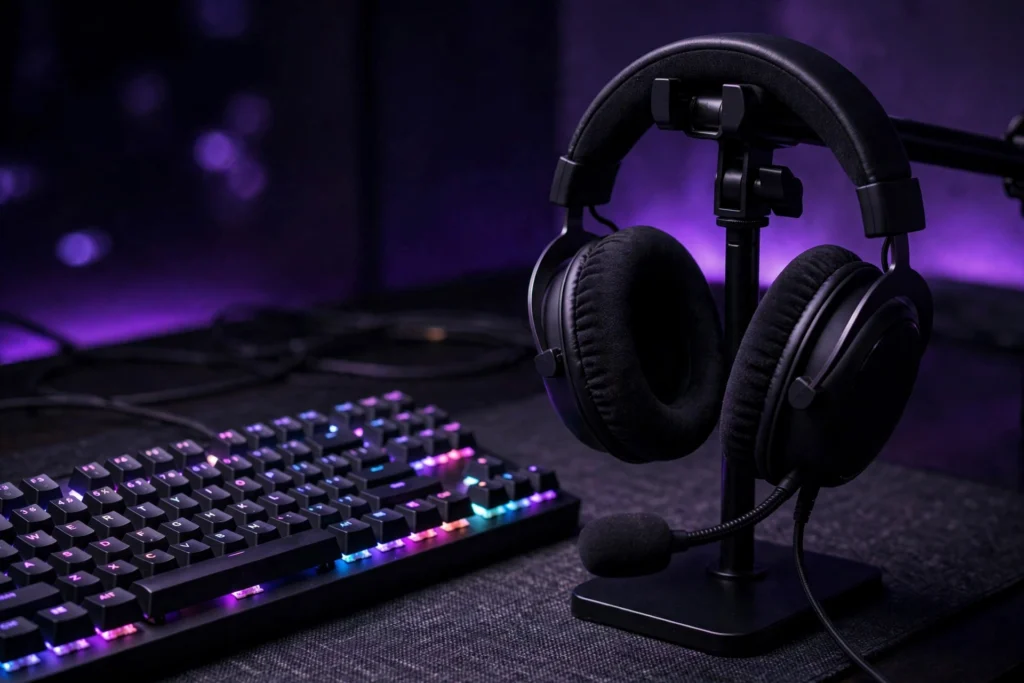
A gaming headset with a boom microphone on a stand beside an RGB-backlit keyboard, purple ambient glow in a dark gaming room. Wireless latency and mic clarity decide competitive matches — comfort decides whether you'll still be wearing it in hour four.
Watch: Black Friday Gaming Headset Deals 2026
A buyer-focused 2026 comparison that matches five headsets to five different setups — budget, Xbox, PC team chat, multi-source desks and audio-first buyers — covering comfort, connection switching and isolation.
At a Glance: Black Friday Gaming Headset Deals 2026
Wired vs wireless, platform traps, and the features worth paying for.
| What to check | What to expect | Why it matters |
|---|---|---|
| Wired vs wireless | Wired is cheaper with zero latency; wireless adds convenience at a premium | Competitive players should favour 2.4GHz wireless or wired — Bluetooth alone adds noticeable lag |
| Platform compatibility | Many headsets are PlayStation- or Xbox-specific; 'universal' claims need checking | Xbox requires licensed wireless chips — a PS5 headset often won't work wirelessly on Xbox |
| Microphone quality | Detachable boom mics usually beat built-in ones | Your teammates hear the mic, not the drivers — a great-sounding headset with a bad mic helps no one |
| Battery life | Wireless models typically claim 20–70 hours | Long claims assume moderate volume without lighting effects; charge habits matter more than the headline number |
| Surround sound | Often virtual/software-based rather than true multi-driver | Don't pay extra for '7.1' branding — good stereo imaging beats gimmicky virtual surround |
| Comfort for long sessions | Clamping force and earcup depth vary widely | Glasses wearers should prioritise low clamp force — pain at hour two ruins any discount |
| Electronics peak discount (Adobe, 2025 season) | 30.9% measured peak — gaming headsets routinely hit 25–40% off, with last-gen flagships discounted deepest | |
Frequently Asked Questions
When do the best Black Friday gaming headset deals appear in 2026?
Early deals start in late October, with the widest selection and deepest cuts during Black Friday week (November 23–27; Black Friday is November 27, 2026) and continuing through Cyber Monday on November 30. Previous-generation flagships discounted into mid-range pricing are the standout value — if your pick hits its historical low early, buy it rather than risking the specific platform version selling out.
Wired or wireless gaming headset — which is better?
Wired for competitive play (zero latency, never dies, better value per dollar) and wireless 2.4GHz for freedom and convenience (imperceptible latency for most play, 20–30+ hour batteries). Dual-wireless models (2.4GHz plus Bluetooth) are the versatility kings for headsets doubling as daily headphones. Choose on your setup and priorities, not on hype.
Will any wireless headset work with Xbox?
No — this is the critical compatibility fact. Xbox uses a proprietary wireless protocol, so you must buy the Xbox-licensed version for wireless Xbox play; the standard version will not connect wirelessly. Wired headsets via the controller’s 3.5mm jack work universally. Always verify the exact variant before buying.
How important is microphone quality in a gaming headset?
More important than most buyers think — your teammates hear your mic, not your ears. Detachable boom mics with flip-to-mute are the gold standard. Weight microphone reviews heavily, especially for team games; a headset with great sound and a bad mic is a bad gaming headset.
Should I buy last year’s flagship headset on Black Friday?
Usually yes. Gaming headset technology evolves slowly, so a discounted previous-generation flagship typically beats a current mid-range model on microphone, comfort, and build at the same price. Verify it is only one generation back and that replacement earpads remain available.
Do I need “7.1 surround sound” in a gaming headset?
No. Modern games output excellent spatial audio to any stereo headset, and platform-level 3D audio outperforms headset virtual surround. Prioritize clear, detailed stereo tuning with good positional accuracy over surround-sound badges, which are largely marketing.
Conclusion: Platform First, Microphone Second, Price Last
The best Black Friday gaming headset deals 2026 reward shoppers who decide in the right order: verify platform compatibility (especially Xbox wireless licensing), prioritize microphone quality and comfort for your actual play style, choose wired versus wireless on your setup, and only then hunt the discount — with the discounted previous-generation flagship as the value king. Verify every price against history, confirm the exact variant, and buy from retailers with real return windows.
Start watching in late October, pounce when your pick hits its historical low, and enjoy the upgrade. Then complete the battlestation with our video game deals guide for the software library — and if you are still choosing a platform, the PS5 deals guide and Xbox deals guide have you covered. Game on.


