In Hungary, February 14 answers to two names: Valentin-nap and Bálint-nap — Bálint being the Hungarian form of Valentine. The double name hints at the holiday’s double nature in Hungary. On the surface, it is the familiar modern Valentine’s Day: flowers, chocolates, romantic dinners, all of which gained prominence only around 1990. But underneath lies an older stratum of folk belief — love magic involving nine apple seeds, water drawn from nine wells, matches and wind direction, birds returning as omens of spring — traditions that treated February 14 as a day of agricultural fortune-telling and love divination long before it was a day for greeting cards.
Bálint-nap is thus a holiday with a split personality, and Hungarians relate to it with characteristic ambivalence. Surveys have found that only about a third of Hungarians celebrate Valentine’s Day at all; the rest opt out. Yet among those who do, the celebration is enthusiastic and increasingly elaborate — premium chocolates, fresh strawberries, champagne, and heart-shaped everything, with Budapest’s restaurants and confectioners doing some of their best business of the winter.
This guide explores both faces of the Hungarian Valentine’s Day: Saint Bálint and the folk traditions that preceded the modern holiday, the love magic of apples and wells, how the country celebrates today (and why two-thirds don’t), and how to do Bálint-nap properly whether you are in Budapest or celebrating from afar. For the region’s other distinctive love days, see our guides to Dragobete in Romania and the Czech Day of Love on May 1.
Bálint-nap in Hungary: Key Facts
| Fact | Detail |
|---|---|
| Local names | Bálint-nap and Valentin-nap (February 14) |
| Patron | Saint Bálint (Valentine) — patron of lovers, engaged and married couples |
| Modern customs since | Around 1990 (flowers, chocolates, gifts) |
| Who celebrates | About one-third of Hungarians, per surveys |
| Classic folk love magic | Nine apple seeds hidden in a boy’s pocket; water from nine wells |
| Old folk meaning | Weather omens for the spring harvest; birds returning as signs of spring |
| Top gifts today | Chocolates, fresh strawberries, champagne, flowers, premium gastronomy |
| Most romantic city | Budapest — Danube promenades, Chain Bridge, Gellért Hill |
Who Was Saint Bálint?
Saint Bálint is the Hungarian name for Saint Valentine, the 3rd-century Roman martyr behind the global holiday. According to tradition, Valentine was a priest (in some accounts a bishop) who defied Emperor Claudius II — legend says the emperor had banned marriages for young soldiers, believing single men made better warriors — by secretly marrying Christian couples. Discovered and imprisoned, he was executed on February 14. The romantic mythology grew in the Middle Ages, when the date became associated with the beginning of birds’ mating season and poets like Chaucer wove it into the literature of courtly love.
In Hungarian tradition, Saint Bálint is regarded as the patron saint of lovers, married couples, and engaged couples — and, in a curious detail preserved by Hungarian sources, also of “neurotics and epileptics,” reflecting the saint’s broader patronage in Central European folk Catholicism. (Historians dispute some of these associations, but they are part of the received tradition.) The Hungarian name Bálint gives the day its distinctive local title, Bálint-nap, used interchangeably with the more international Valentin-nap.
What matters for the Hungarian story is that the saint’s day existed on the folk calendar long before the modern Valentine’s Day arrived — and the folk calendar had its own ideas about what February 14 was for.
The Old Bálint-nap: Folk Traditions Before the Greeting Card
Before flowers and chocolates (which only became prominent around 1990), February 14 in Hungarian villages was a day of omens, agricultural fortune-telling, and love magic. The modern holiday sits atop these older customs like new paint on an old house — and in the countryside, traces of the old paint still show.
Weather Omens and the Coming Spring
On Bálint-nap, the weather was read as a forecast of the spring to come — and of the year’s agricultural fortunes. Dry weather on February 14 was taken to promise a good harvest; other conditions carried their own interpretations. The day belonged, in the folk imagination, to the turning of the season: February 14 was believed to mark the return of wild pigeons and the renewed singing of sparrows, the first audible signals that spring was approaching.
Villagers responded with rituals of welcome. Following guidance attributed to the Hungarian ethnographer Sándor Bálint, people cleaned roads and streets and scattered cereals and dried fruits for the returning birds. In some regions, farmers rose before dawn to walk their fields and deter the birds that might threaten crops. Women performed symbolic acts like setting hens on eggs; men pruned fruit trees and tended livestock. The day was, in essence, a hinge between winter and spring — and love, in the folk mind, belonged to spring’s side of the hinge.
The Nine Apple Seeds: Hungary’s Love Spell
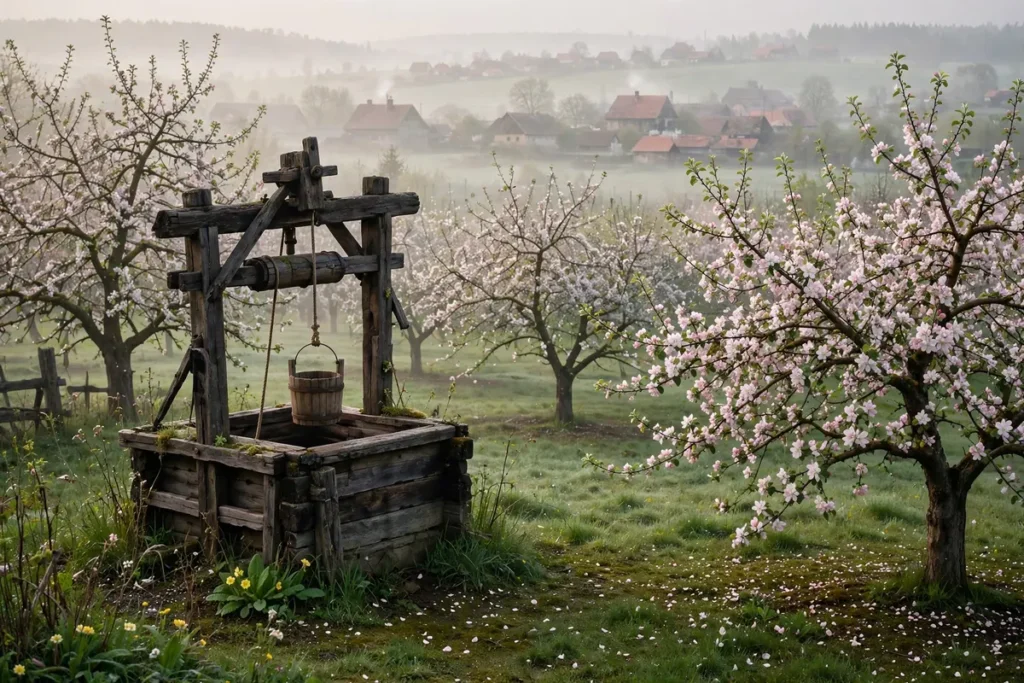
The most charming of the old Bálint-nap love customs involves an apple and the number nine. According to tradition, a young girl would eat an apple containing nine seeds — and then secretly hide those nine seeds in the pocket of the boy she fancied. Legend maintained that the recipient of the nine seeds would inevitably fall in love with her. The number nine recurs throughout Hungarian love magic as a number of completeness and power.
A related custom: if a girl drew water from nine different wells and gave it to her chosen boy (or girl) to drink, true love was sure to follow. Another: lighting a match and watching the wind — the direction from which the breeze came that extinguished the flame indicated the direction from which a new romantic interest would approach. These are divination rituals, half-game and half-earnest, of exactly the kind that rural young people have practiced on love’s eves across Europe for centuries. They remind us that before Valentine’s Day was about buying things, it was about knowing things — who loves you, who will come, what the spring will bring.
What the Old Customs Tell Us
Taken together, the folk Bálint-nap traditions reveal a coherent worldview: February 14 as a day when the natural and human orders turn together. Birds return, weather speaks, seeds and water carry intention. Love is not separate from the agricultural year but part of it — another spring crop, to be divined, planted, and hoped for. The modern Valentine’s Day, with its hothouse roses in the Hungarian February, is in some ways the industrial version of the same impulse: love, out of season, made to bloom on demand.
The Modern Bálint-nap: Flowers, Chocolate, and Ambivalence
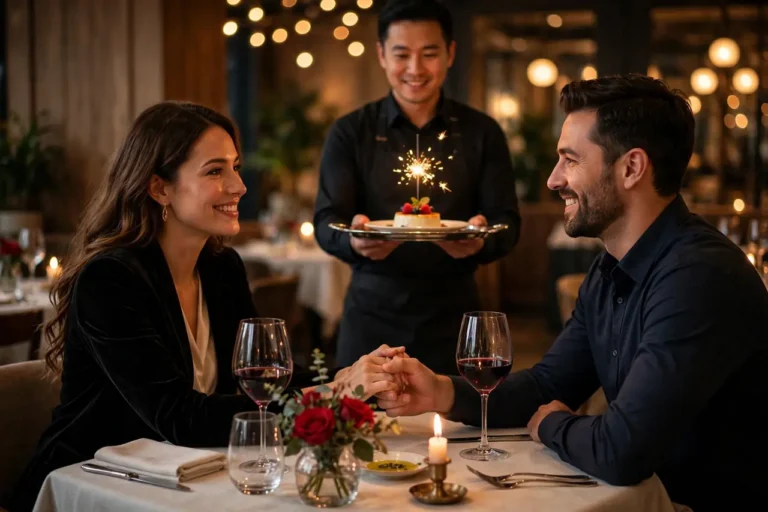
Modern Valentine’s Day customs — the exchange of flowers and chocolates, the romantic dinner, the carefully chosen gift — gained prominence in Hungary around 1990, with the post-communist opening to Western consumer culture. Before that, February 14 was a folk date, not a retail event. The transformation was swift: within a few years, Hungarian florists, confectioners, and restaurants had built the full Valentine’s infrastructure, and Bálint-nap became one of the winter’s peak commercial occasions.
But Hungary never embraced the holiday wholesale. Surveys have consistently found that only about a third of Hungarians celebrate Valentine’s Day; roughly two-thirds do not. Among celebrants, men report spending somewhat more than women on average (one widely cited survey put men’s average gift spending noticeably above women’s). The non-celebrants aren’t necessarily romantics’ enemies — many simply don’t feel the day is theirs, or prefer to express affection without a calendar mandate.
Among those who do celebrate, the trends mirror Western Europe with Hungarian accents. Recent retail data shows strong demand for premium gastronomic products in the run-up to February 14: chocolates, fresh strawberries, champagne, quality wines, artisanal cheeses, and gourmet meats. Last-minute buyers default to the classic flower-and-chocolate combination; planners buy exclusive gifts days ahead. Heart-shaped designs and red, pink, gold, or black-gold packaging dominate. Notably, the Hungarian celebration is broadening beyond couples: families and groups of friends increasingly exchange gifts, and shared dinners and breakfasts are a growing part of the day. Love, in the Hungarian Valentine’s, radiates outward — a little like the Ukrainian pattern we describe in our guide to Valentine’s Day in Ukraine.
Romantic Budapest: Where to Celebrate Bálint-nap
Budapest is one of Europe’s great romantic cities, and Bálint-nap shows it at its winter best. The essential experiences:
The Danube Promenade and Chain Bridge
An evening walk along the Danube — from the Parliament building to the Chain Bridge, with Buda Castle lit above — is the classic Budapest romantic outing, and on February 14 the promenade fills with couples. The bridge itself, strung with lights, is the city’s great symbolic crossing: lovers’ tradition says nothing official, but every Budapest couple has their bridge photograph.
Gellért Hill and the Citadel
For the panoramic view, climb Gellért Hill at dusk. The city spreads below in winter lights, the Danube bends silver, and the cold gives you an excuse to hold each other close. It is the local equivalent of Prague’s Petřín Hill — the high place where the city goes to feel romantic.
Wine Bars, Coffee Houses, and the Gerbeaud Tradition
Budapest’s historic coffee houses — Gerbeaud, New York Café, Central — do a roaring Bálint-nap trade: candlelit tables, elaborate desserts, the full Austro-Hungarian romance package. Hungarian Valentine’s retail data consistently shows artisanal chocolate makers like Gerbeaud, Harrer, Valrhona, and chocoME among the season’s favorites. A box from one of these names is the Budapest equivalent of a love letter.
Love in Hungarian Culture: Weddings, Poetry, and the Long View
Bálint-nap is one day; Hungarian love culture is the whole landscape. Understanding the broader traditions gives February 14 its proper context — and offers celebrants a deeper well to draw from.
Petőfi: Hungary’s Poet of Love
If Mácha gave the Czechs their May, Sándor Petőfi gave the Hungarians their love poetry. The national poet of 1848 — revolutionary, folk-voiced, dead at 26 — wrote some of Hungarian literature’s most beloved love poems to his wife Júlia Szendrey, including the famous “Szeptember végén” (“At the End of September”), a meditation on love and mortality that Hungarian schoolchildren learn by heart. Quoting Petőfi on Bálint-nap is the Hungarian equivalent of quoting Shakespeare on Valentine’s Day: it places your affection inside the national story. A line of Petőfi in a handwritten card will impress a Hungarian sweetheart far more than any imported sentiment.
The Hungarian Wedding: A Love Marathon
Hungarian weddings are famously elaborate multi-stage affairs, and their customs illuminate what Hungarians value in love: community, ritual, endurance, and food. The traditional sequence begins with the kikérés — the formal “asking out” of the bride from her parents, a ceremonial negotiation (now largely symbolic) that honors the families. Then comes the church or civil ceremony, and then the celebration proper: the lakodalom, the wedding feast, which traditionally ran until dawn.
Signature moments include the menyasszonytánc — the bride’s dance, where guests pay to dance with the bride, the proceeds going to the couple — and the midnight costume change, when the bride exchanges her white gown for the red menyecske ruha (new-wife’s dress), symbolizing her transition to married life. The feast is a serious undertaking: multiple courses, folk music, dancing, and the vőfély (master of ceremonies) keeping the night’s rituals on track. For Bálint-nap celebrants thinking long-term, the Hungarian wedding is the horizon: love, in this culture, is something you celebrate with a village.
Music and the Hungarian Heart
Hungarian romantic culture runs on music — from the fiery csárdás to the sentimental nóta (popular art songs) that are the soundtrack of Hungarian romance. The nóta tradition, with its themes of love, longing, and wine, is essentially Hungary’s indigenous love-song repertoire, and a Bálint-nap dinner with a live cigányzene (gypsy band) playing love songs is the Budapest romantic ideal. If you want to understand what moves the Hungarian heart, listen before you buy: the right song at dinner outperforms the most expensive gift.
Bálint-nap Beyond Budapest: The Regions
Budapest dominates the Hungarian Valentine’s, but the country’s regions offer their own romance. Debrecen, the “Calvinist Rome” of the east, does Bálint-nap with small-city warmth — the illuminated Great Church and Déri Square make a fine evening walk. Szeged, the “city of sunshine” on the Tisza, offers riverside promenades and the famous Szeged confectioners’ Valentine’s creations. Pécs, with its Mediterranean feel and Zsolnay ceramics, is quietly one of Hungary’s most romantic cities — the love locks on its fences (a local tradition on Janus Pannonius Street) make it a year-round Valentine’s destination.
And then there is Lake Balaton — Hungary’s “sea.” In February it is frozen, misty, and almost empty: a stark, beautiful romantic landscape for couples who prefer solitude to candlelight. A winter walk on the frozen shore, then refuge in a lakeside restaurant with hot wine, is the anti-Budapest Bálint-nap — and some couples swear it’s better. The Hungarian regions prove the day’s flexibility: grand in the capital, gentle everywhere else.
Watch: A Valentine’s Date in Hungarian
Planning romance in Budapest? This English-language video teaches the essential Hungarian phrases for a Valentine’s date — compliments, ordering together, and sweet conversation. Even a few words of Hungarian will delight your szerelmem (my love):
Hungarian Valentine’s Etiquette: Dos and Don’ts
A few cultural notes for celebrating Bálint-nap without missteps. Do bring flowers in odd numbers — as across Central Europe, even numbers are for funerals. Do expect the day to be low-key in offices and among older relatives; a small gesture beats a grand one with the non-celebrating two-thirds. Don’t assume your Hungarian partner celebrates — ask, lightly, in advance; many will be delighted, some genuinely indifferent, and both answers deserve grace.
Do try the folk customs as games — Hungarians love it when foreigners know the apple-seed trick. Don’t confuse Bálint-nap with name days: in Hungary, name days (névnap) are a bigger deal than birthdays for many, and Bálint is also a common Hungarian first name — men named Bálint celebrate their name day on February 14 too, a charming collision of the personal and the romantic. If your sweetheart is a Bálint, you owe him double.
How to Celebrate Bálint-nap: A Practical Guide
1. Try the Old Magic (Playfully)
You don’t need to believe in the nine apple seeds to enjoy them. Recreate the folk custom as a game: share an apple, count the seeds, and dare each other to plant them in a pocket. It is a better story than any greeting card — and it connects your celebration to centuries of Hungarian February 14ths.
2. Buy Hungarian Chocolate
Skip the generic heart-shaped box. Gerbeaud, Harrer, or chocoME — Budapest’s artisanal chocolatiers — make Valentine’s gifts that are unmistakably Hungarian. Pair with fresh strawberries and champagne, the current celebrants’ favorites.
3. Walk the Danube
The single most romantic free activity in Budapest: the riverside walk at dusk, from Parliament to the Chain Bridge. In February it is cold — dress warmly, stop for hot chocolate, and let the city do the work. For more walkable romance ideas, see our Valentine’s Day date ideas.
4. Include Friends and Family
The Hungarian trend is toward a broader Valentine’s — gifts for friends, shared meals with family. If the couples-only script feels narrow, Bálint-nap gives you permission to widen it. Our Galentine’s Day ideas fit the Hungarian mood perfectly.
5. Learn Three Words
Szeretlek (I love you), szerelmem (my love), boldog Bálint-napot (happy Valentine’s Day). Three phrases, enormous returns.
Myth vs Fact: Bálint-nap Edition
Myth: Bálint-nap is an ancient Hungarian Valentine’s tradition.
Fact: The folk customs attached to February 14 (omens, love magic) are old; the modern Valentine’s Day of flowers and chocolates dates only to around 1990. The saint’s day is old, the greeting card is new.
Myth: All Hungarians celebrate Valentine’s Day.
Fact: Only about a third do, per surveys. The majority opt out — which makes the celebration, where it happens, feel chosen rather than obligatory.
Myth: The nine apple seeds really make someone fall in love.
Fact: It is folk magic, not pharmacology — but as a romantic game, its success rate is surprisingly high.
Frequently Asked Questions
What is Bálint-nap?
Bálint-nap (Bálint’s Day) is the Hungarian name for Valentine’s Day on February 14 — Bálint being the Hungarian form of Valentine. It is used interchangeably with Valentin-nap.
Do Hungarians celebrate Valentine’s Day?
About one-third do. Modern customs (flowers, chocolates, romantic dinners) became prominent around 1990. Older folk traditions — weather omens, love divination with apple seeds and well water — predate the modern holiday.
What are the traditional Hungarian Bálint-nap customs?
Folk customs include eating an apple with nine seeds and hiding the seeds in a loved one’s pocket, drawing water from nine wells for the beloved to drink, reading wind direction from an extinguished match, and scattering grain for returning birds as spring omens.
What gifts do Hungarians give on Valentine’s Day?
Chocolates (especially artisanal Hungarian makers like Gerbeaud and Harrer), fresh strawberries, champagne, quality wines, flowers, and premium gastronomic products. Heart-shaped and red/gold packaging is popular.
Where is the most romantic place in Hungary for Valentine’s Day?
Budapest — the Danube promenade, Chain Bridge, Gellért Hill at dusk, and the historic coffee houses (Gerbeaud, New York Café). The city’s winter lights make February 14 genuinely magical.
What does “Boldog Bálint-napot” mean?
“Happy Valentine’s Day” in Hungarian — the greeting for February 14. Szeretlek means “I love you.”
Bálint-nap is Hungary in miniature: a modern holiday with ancient roots, celebrated by a enthusiastic minority and ignored by a contented majority, layering French champagne over folk magic. Whether you mark it with nine apple seeds or a box of Gerbeaud, with a Danube walk or a quiet dinner, the day’s old logic still holds — February 14 is when winter starts listening for spring, and love, like the sparrows, begins to sing again. Boldog Bálint-napot. And if the apple seeds don’t work, the champagne will. See you under the Danube lights — bring an apple, just in case.