Events / Arts & Culture Events
An art fair is useful for seeing many presentations in one outing; a gallery opening usually focuses attention on a particular exhibition. Both can welcome curious visitors, but their admission and atmosphere depend on the organizer.
Choose a fair for breadth and an exhibition opening for a focused visit; verify public access in either case.
Understand the difference in scale
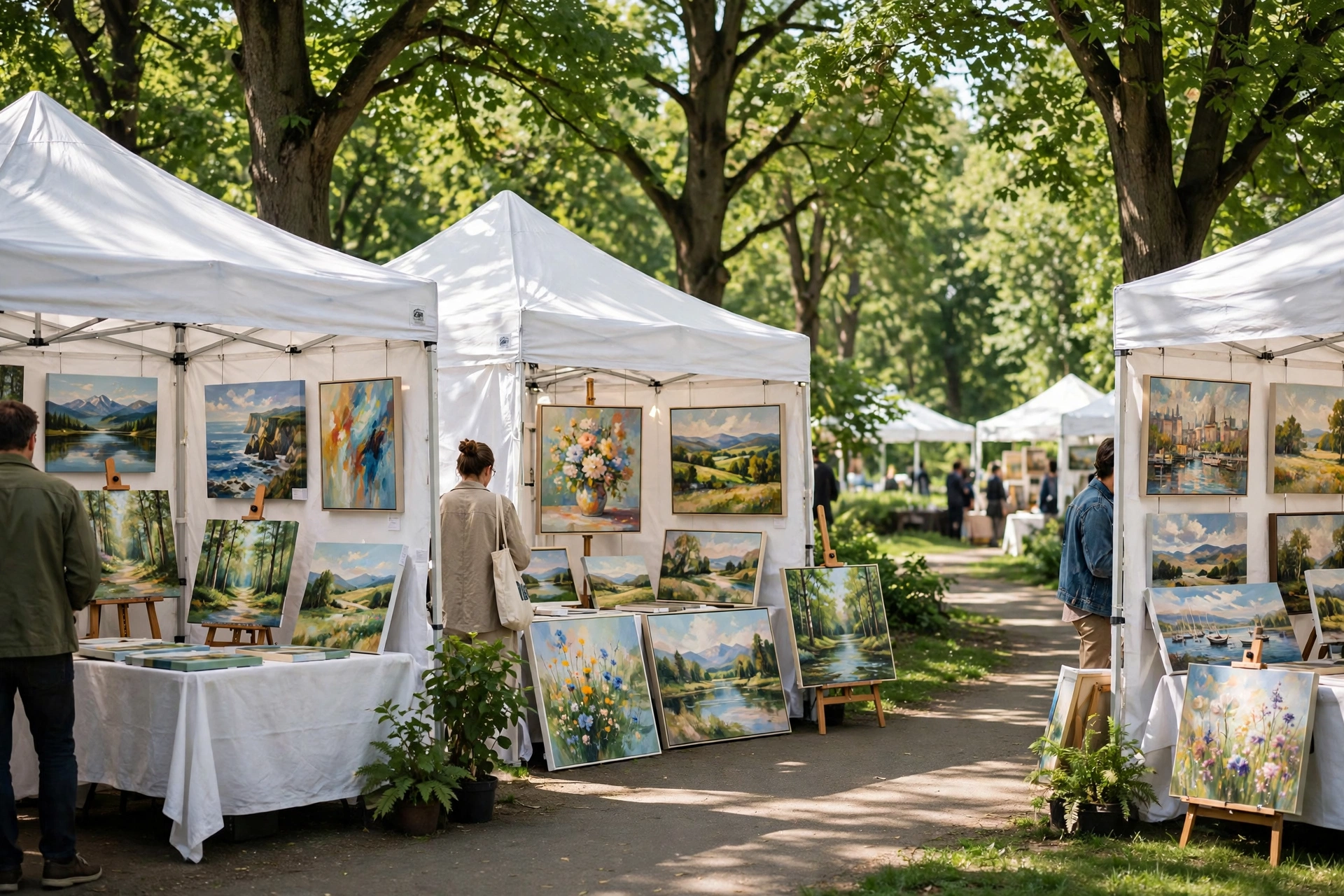
An art fair brings multiple exhibitors or presentations together for a limited period. You may move between booths or sections and encounter very different artists in a single visit. A gallery opening marks the beginning of an exhibition at a particular space and may revolve around one artist, a group or a curatorial theme.
These are common formats rather than rigid rules. Read the organizer’s description to see what the event actually includes. As a real example of a gallery participating in a fair, moniquemeloche published a presentation page for Art Basel Miami Beach in 2025. That historical listing illustrates the exhibitor relationship, not a current invitation.
Check whether the session is public
Look for the exact date, opening hours and admission instructions. Fairs can separate public access from previews or invitation-only sessions. A gallery reception may ask for an RSVP or have limited capacity even if the exhibition can be visited later.
Do not assume an opening reception is the only chance to see the work. If your goal is a quieter look, check the exhibition’s regular hours. Conversely, if you hope to hear a scheduled artist conversation, confirm that the talk is part of the session you are attending.
Choose a viewing strategy
At a fair, start with a small number of priorities and allow time to wander. Trying to study every work equally can make a large venue tiring. Take breaks and note artists or galleries you want to revisit.
At a gallery, read the exhibition introduction and spend time with a few works before moving on. You do not need specialized vocabulary to ask a thoughtful question. Mention what you notice and ask about materials, process or the connection between pieces.
Use considerate visitor etiquette
Follow photography instructions and avoid blocking narrow passages while taking pictures. Keep an appropriate distance from the work and ask before touching anything, including objects that look interactive. If staff are speaking with another visitor, wait for a natural pause.
You can be interested without intending to purchase. Be clear if you are asking an educational question rather than making a buying inquiry. If you do want to discuss a purchase, request the gallery’s details and take time to review them away from the crowd.
Plan the practical side
Check bag rules, accessibility, seating and the expected duration. A short reception can become uncomfortable if the space is crowded and there is nowhere to rest. For a fair, account for the time between the entrance, cloakroom and the presentation you want.
Choose the format that matches your energy and curiosity. A focused gallery visit can make a good introduction; a fair can help you discover a wider range. Neither requires pretending to like every work or understand everything immediately.
Explore more
Browse Events and Arts & Culture Events for related planning guides.
Sources
Etiquette Depth: The Unwritten Rules That Matter
The basics — don’t touch the art, don’t block the view — get you through the door. These subtler points determine whether staff and artists remember you fondly or wince:
- Arrival timing. At a gallery opening, the first 30 minutes are for the inner circle; arriving 45–60 minutes after the posted start puts you in the comfortable middle — the crowd has thinned from the initial rush but the energy is still up. At an art fair, arrive at opening on preview days if you want first look, or mid-afternoon on public days for the calmest browsing.
- The RSVP actually matters. Gallery openings with RSVPs use the count for catering, capacity, and fire code. RSVP “yes” only if you intend to go, and don’t bring three unannounced guests to a 60-person reception.
- Food and drink near the art. If wine is served, hold the glass away from the walls and never set it on a pedestal. One spilled glass near a $20,000 painting ends conversations fast.
- Kids are welcome — with a plan. Many openings and fairs welcome children, but brief yours beforehand: indoor voices, hands behind backs near work, no running. Bring them during daytime fair hours rather than a crowded evening reception.
- Talking to the artist. If the artist is present, it’s fine to approach — but read the room. A short, specific comment (“the way you layered the glaze in the corner pieces stopped me”) beats generic praise, and don’t monopolize them when others are waiting.
- Dress code. There isn’t one, but “deliberate” beats “formal.” Clean, put-together casual works everywhere; the people who look out of place are the ones who clearly didn’t consider it at all.
- Leaving gracefully. You don’t need to announce your departure or thank the host at a public opening. A nod to the desk staff on your way out is plenty.
How Buying Art Actually Works: Step by Step
Most first-time buyers imagine a high-pressure negotiation. The reality at reputable galleries and fairs is closer to buying from a knowledgeable specialty shop:
- Ask for the price list. At a fair booth or gallery desk, simply say, “Could I see the price list?” Prices are often not on wall labels. Asking is normal, expected, and commits you to nothing.
- Ask about the edition. For prints and photographs, ask the edition size (“how many were made?”) and your number. Smaller editions and lower numbers generally hold value better.
- Discuss the details that matter later. Ask about the medium and materials, the work’s condition, whether framing is included, and delivery or shipping arrangements and costs. For work over a few hundred dollars, get the answers in writing.
- Payment terms. Galleries commonly accept payment plans — often 2–3 installments — especially for works over $1,000. Asking “do you offer payment plans?” is completely standard and not a sign of weak interest.
- Take the information home. Reputable galleries will hold a work for 24–48 hours while you decide. Never let anyone pressure you into deciding on the spot; urgency is a sales tactic, not a market reality.
- Get documentation. For any meaningful purchase, expect a receipt with the artist’s name, title, date, medium, dimensions, edition information, and the gallery’s details — plus a certificate of authenticity for editioned work.
- Plan the wall before you buy. Measure your space, note the lighting, and photograph the spot. The most common buyer’s regret isn’t the price — it’s a beautiful work with nowhere to hang it.
Questions to Ask a Gallerist
Gallerists expect questions — answering them is literally the job. These separate the curious from the serious, and the answers genuinely help you decide:
- “Can you tell me about the artist’s background and how this body of work developed?”
- “What materials and process are involved in this piece?”
- “Is this from a larger series? Are there related works I could see?”
- “How should this be cared for — light exposure, humidity, cleaning?”
- “Does the price include framing, and what are the delivery options?”
- “Do you work with first-time collectors? What would you suggest at my budget?”
- “If I need to resell years from now, how does that typically work with this artist?”
- “Are there upcoming shows or a catalogue where this work will appear?”
Two green flags: the gallerist answers directly without deflecting to “investment potential,” and they volunteer practical information (care, framing, delivery) without being asked twice. One red flag: pressure to decide immediately because “another buyer is interested.” Walk away from that sentence every time.
Fair vs. Opening: Which Should You Choose When?
| Your goal | Better choice | Why |
|---|---|---|
| Discover new artists efficiently | Art fair | Dozens of galleries in one venue; breadth beats depth |
| Understand one artist deeply | Gallery opening | Focused exhibition with context and often the artist present |
| Buy your first piece under $500 | Gallery opening | Lower price points, calmer conversation, payment plans common |
| Compare prices across the market | Art fair | Side-by-side comparison of similar work from multiple dealers |
| A quiet, contemplative visit | Gallery on a non-opening day | Openings are social events; visit during regular hours instead |
| Meet artists and dealers | Art fair | Highest concentration of art-world people in one place |
Do I have to buy anything at a gallery opening?
No. Galleries expect the large majority of opening-night visitors to be there to look, learn, and socialize — buying is the exception, not the norm. Nobody is tracking who purchases. Be upfront that you’re browsing and learning; staff genuinely prefer an honest browser to someone performing interest they don’t feel.
Can I take photos at an art fair or gallery?
Usually yes for personal use, but always check the posted policy first — some artists and galleries prohibit photography of specific works, and flash is almost universally banned. Never photograph price lists or other visitors without permission. When in doubt, ask the desk; it takes five seconds and avoids an awkward correction.
What does “opening reception” vs. “preview” mean?
An opening reception is the public celebration marking an exhibition’s start — typically free with RSVP. A preview (sometimes called a VIP preview at fairs) is an earlier, often invitation-only session for collectors, press, and patrons, sometimes with first purchase rights. If an event lists both, the preview is not the session for a casual first visit.
How do I follow up after meeting a gallerist?
Take a card or photograph the gallery’s contact details, then send a brief email within a week: which works you liked, your budget range, and what you’re looking for. Gallerists keep client notes and will contact you when matching work arrives — that single email is how casual visitors become the collectors who get first calls.