
City information last reviewed: September 26, 2026.
San Francisco can feel compact on a map and surprisingly demanding on foot. Hills, the bay, the ocean and neighborhood-level weather changes shape a visit that might move from a sunny café to a windy waterfront within one afternoon. The city is most rewarding when you group nearby areas, reserve the experiences that need it and leave room to adjust an outdoor plan.
This San Francisco travel guide is for first-time visitors who want more than a bridge photograph and a quick stop at Fisherman's Wharf. It explains the neighborhoods, practical hotel bases, transit and airport access, with ten major experiences, food ideas and a concise three-day itinerary. Start with the area comparison and map, decide whether Alcatraz belongs in your trip, and choose one major museum rather than trying to visit every institution. The coastal and park portions can move between days as conditions change. For a longer journey through the state, the linked California guides cover the road-trip decisions while this page keeps the focus on enjoying the city itself.
San Francisco at a Glance
On mobile, swipe the table sideways to see every column.
| Planning question | DayZora recommendation |
|---|---|
| Best for | Neighborhood walks, museums, bay views, food and distinctive urban geography |
| Ideal stay | 3–4 full days; longer when adding regional excursions |
| Best time to visit | Fall can be attractive for outdoor plans; every season needs weather flexibility |
| Main airports | San Francisco International (SFO); Oakland (OAK) can be useful for suitable flights |
| Getting around | Muni, walking in selected areas, BART for regional/airport journeys, occasional rideshare |
| Car needed | Usually no for the city portion |
| Budget level | Generally high, especially lodging and parking |
| First-time bases | Union Square for transport/shopping; Embarcadero for waterfront; Wharf for specific family plans |
City Map and Geographic Planning
Swipe within the map or open the full-size map. Numbers identify locations, not a visit sequence.
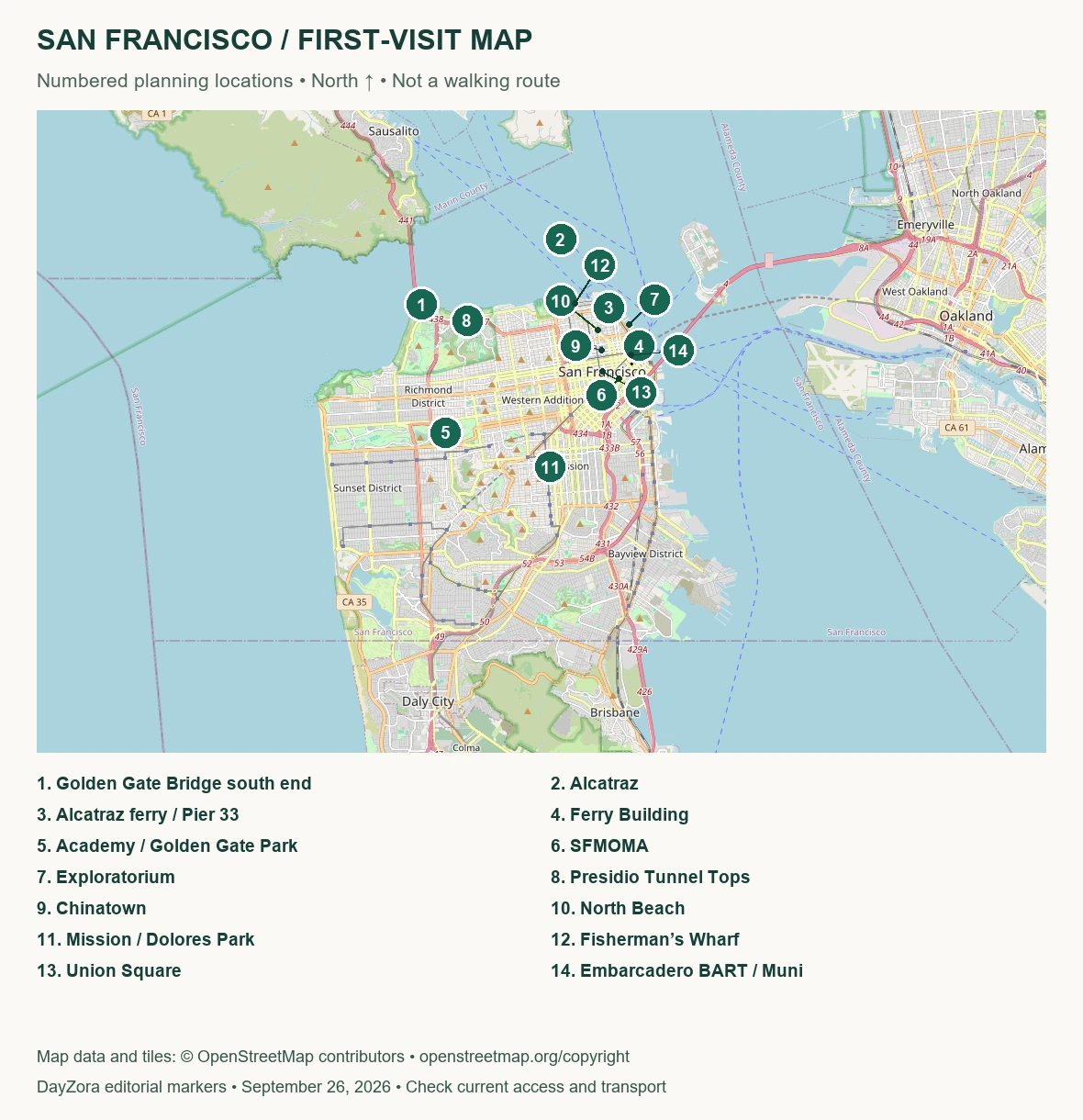
Golden Gate Park and the Golden Gate Bridge are different destinations, separated by city neighborhoods and parkland. The Ferry Building, Alcatraz departure pier and Fisherman's Wharf also occupy different points along the waterfront. Use the map to group stops, then check the actual route and gradients. Straight-line distance can conceal a steep climb or a less convenient transit connection.
Best Things to Do in San Francisco
1. Experience the Golden Gate Bridge from the south side
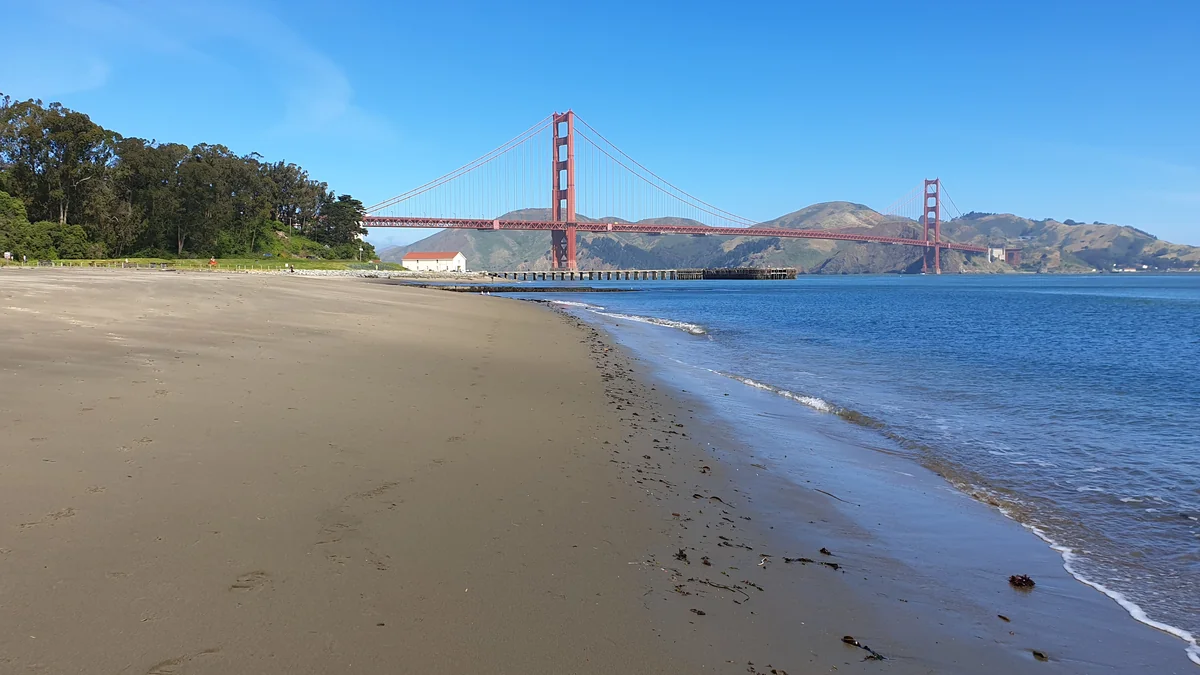
A bridge visit can be a short viewpoint stop or a much longer walk. Decide which you want before traveling. The southern visitor area provides orientation, while nearby waterfront and Presidio viewpoints offer different perspectives. Fog can obscure the structure and wind can make an exposed walk uncomfortable; neither a postcard nor a clear morning elsewhere in the city guarantees conditions at the bridge.
Best for: First-time landmarks, photography and outdoor time. Time: 1–2 hours for a selective visit, longer for an extended crossing. Area: Northern waterfront/Presidio edge. Tickets: Pedestrian bridge access is free during permitted hours; parking and some transport cost extra. Check Golden Gate Bridge visitor information and current sidewalk rules.
2. Reserve Alcatraz Island
Alcatraz combines prison history, broader island stories and a bay journey. It deserves a substantial block of time rather than a narrow gap between lunch and a museum. Choose the actual experience offered on your date, and distinguish a cruise past the island from a ticket that lands there. Bring layers and plan for slopes; visitors with access needs should review the available assistance before booking.
Best for: History and travelers wanting a distinctive bay excursion. Time: At least a few hours; allow roughly half a day with arrival and return logistics. Area: Departure from Pier 33. Tickets: Paid ferry access through the official Alcatraz City Cruises concessioner linked by NPS. Reserve ahead for a must-do visit. General bay cruises do not automatically include island entry.
3. Eat and browse at the Ferry Building
The Ferry Building makes a useful waterfront starting point, with food businesses and a setting that connects the city to the bay. It works well for breakfast or lunch before a neighborhood walk, rather than as another large attraction requiring a whole morning. Farmers-market activity depends on the day, and individual merchants keep their own hours. Choose what you want to eat before assuming every stall will be open.
Best for: Food, waterfront orientation and a relaxed arrival-day stop. Time: 1–2 hours with a meal. Area: Embarcadero. Tickets: General marketplace browsing is free; food, purchases and ferry trips cost extra. Verify the official marketplace and market calendar.
4. Spend a focused day in Golden Gate Park
The park is large enough that trying to “see the park” without a destination often creates unnecessary walking. Pick one section, a garden or a museum, then leave time to enjoy the surrounding paths. A park visit can be a low-cost outing, but institutions within it have their own admission rules. The western side may feel cooler or foggier than the neighborhood where you started the morning.
Best for: Outdoor breaks, families and combining culture with park time. Time: 2–4 hours for a selected area. Area: Western San Francisco. Tickets: General park access is free; individual attractions may charge. Consult San Francisco Recreation and Parks for facilities and current park information before choosing a route.
5. Visit the California Academy of Sciences
The Academy brings several science-focused environments into one institution in Golden Gate Park. It is a strong family anchor and can also appeal to adults who want a substantial museum day. Check the program and access rules for special spaces before arrival. A long visit here does not leave unlimited time for another large museum, so use the adjacent park as a flexible break rather than adding more timed tickets.
Best for: Families, natural science and a partly indoor day. Time: 3–4 hours. Area: Golden Gate Park. Tickets: Paid admission; special experiences and age-specific programs can differ. The Academy currently lists a September 29, 2026 private-event closure. Planetarium passes are first-come on arrival; children under four are not admitted to planetarium shows. Check official visitor information for current inclusions, hours and reservations.
6. Choose a selective visit to SFMOMA
SFMOMA offers a major modern-and-contemporary-art experience close to Downtown transport. Look at the current exhibitions before choosing how long to stay, and avoid treating the building as something to complete floor by floor. It fits an indoor-focused day and pairs better with a nearby meal than with another distant museum immediately afterward.
Best for: Art-focused travelers and a wet-weather alternative. Time: 2–3 hours, longer for a particular interest. Area: SoMa. Tickets: General admission is paid, with age-based and other programs that have conditions. Verify official admission and opening information rather than assuming a promotional free day applies to your visit.
7. Get hands-on at the Exploratorium
The Exploratorium rewards curiosity and time spent experimenting. It is especially useful for a group that would rather interact than follow a traditional gallery sequence. Adults can enjoy it as much as children, but the best plan depends on attention span and interests. A few deeply explored exhibits can be more satisfying than racing to touch everything.
Best for: Families, science interests and interactive learning. Time: 3–4 hours. Area: Pier 15 on the Embarcadero. Tickets: Paid admission; evening programs may have age restrictions and different terms. Use the official visit planner. Its waterfront location does not make it a quick add-on after a full Alcatraz outing.
8. Ride a cable car for the experience
A cable-car ride is a distinctive way to experience the city's slopes, but it should not be treated as the fastest or cheapest transport for every journey. Queues can be part of the outing. Pick a route that fits the day and have an ordinary Muni alternative if the wait is too long. Riders with mobility needs should inspect vehicle access information before assuming all transit modes are equally suitable.
Best for: First-time visitors and transport enthusiasts. Time: Allow about an hour including a variable wait, more at busy periods. Area: Specific cable-car routes. Tickets: Paid fare; ordinary Muni tickets and visitor products have different cable-car inclusions. Check SFMTA's cable-car guidance.
9. Explore Chinatown and North Beach together
These adjacent neighborhoods make a geographically logical walking pair, with streets, food businesses and cultural context that reward more than a quick pass through. Choose a meal or café stop and allow the visit to develop around it. The areas are living neighborhoods, not just visual backdrops; respect shops, residents and places of worship. Hilly detours should be a choice, not an accidental addition.
Best for: Food, neighborhood exploration and a half day on foot. Time: 2–4 hours with a meal. Area: Northeastern San Francisco. Tickets: Public street access is free; tours and individual venues may charge. Use San Francisco Travel for current neighborhood orientation and check selected venues directly.
10. Relax at Presidio Tunnel Tops
Tunnel Tops provides a park setting above the roadway, with waterfront and bridge-area views when conditions allow. It can be a particularly useful family stop or a calmer counterpoint to a museum-heavy visit. Combine it with a selected Presidio or Crissy Field outing rather than assuming the entire surrounding park is a short walk. Wind and fog can make layers useful even when the rest of the city feels warm.
Best for: Families, outdoor breaks and views. Time: 1–2 hours, longer with a picnic or nearby walk. Area: Presidio. Tickets: General park access is free; parking, food and individual nearby attractions are separate. Verify the official Tunnel Tops visitor information.
Best Neighborhoods to Explore
On mobile, swipe the table sideways to see every column.
| Area | Main reason to choose it | Practical tradeoff |
|---|---|---|
| Union Square | Shopping, hotels and useful transport access | Exact block and room noise matter |
| Embarcadero | Waterfront, Ferry Building and regional transport | Not every waterfront attraction is adjacent |
| Fisherman's Wharf | Selected family attractions and bay-oriented sightseeing | Tourist concentration; farther from some inland neighborhoods |
| Chinatown / North Beach | Food, street life and cultural exploration | Hills and busy sidewalks on some routes |
| Mission | Dining, murals and Dolores Park area | Spread-out points; plan a respectful, specific route |
| Golden Gate Park / Inner Sunset | Museums, park time and neighborhood meals | Often cooler; longer journey from northeastern hotels |
| Presidio / Marina edge | Outdoor space and bridge-area access | Large distances within the park; transport planning still matters |
Union Square is useful for a first base when transit access, shopping and a wide hotel choice matter. It is not a promise that every nearby block feels identical or that every attraction is walkable. Inspect the actual route from the station and the location of evening plans. A room away from street noise may be worth comparing.
The Embarcadero works well for waterfront interests and convenient access to regional transport. It also provides a relatively straightforward walking corridor, although the Ferry Building, Exploratorium and Alcatraz landing are separate destinations. Families can use a waterfront day to avoid unnecessary hill climbing, while art-focused visitors may prefer a base closer to their chosen museum.
Fisherman's Wharf can be convenient for certain family and bay activities. It is also a concentrated visitor district with many paid options, so decide what genuinely interests the group before committing the whole trip there. It is not the same as Pier 33, and you should verify the actual Alcatraz departure location before leaving the hotel.
Chinatown and North Beach are a useful paired outing for food and neighborhood exploration. Follow a route that matches your walking comfort, leaving room for a meal instead of climbing every nearby hill. Evening dining can work well here, but check the return transport rather than assuming a cable car is the only option.
The Mission offers a different food and street-art focus, with Dolores Park providing an outdoor pause. Choose specific public mural areas and dining streets, respect people and private property, and avoid reducing a diverse neighborhood to a single label. A current route check is more useful than sweeping claims that an entire district is either ideal or unsuitable.
Golden Gate Park, the Inner Sunset and the Presidio suit travelers who want more time outside the northeastern sightseeing core. They are distinct areas, each with its own distances and transport. A day at the Academy can finish with a neighborhood meal; a bridge visit can connect to Presidio park time. Neither needs to include a hurried return to every downtown landmark.
Where to Stay in San Francisco
For first-time convenience, compare Union Square and the Embarcadero by the exact station, hotel entrance and activities you will use. For families, Fisherman's Wharf can simplify selected waterfront plans, while a well-connected hotel elsewhere may fit museums better. For nightlife and dining, choose a base according to specific evening destinations rather than a citywide ranking.
For luxury, compare established central and waterfront properties by service, room size and the exact view included. For budget-conscious travelers, a more modest room near useful Muni can work better than an apparently cheap distant hotel. Staying outside San Francisco may add regional fares, transfer time and less flexibility for returning to rest.
Relative price categories $ through $$$$ mean budget-oriented through luxury, not current nightly averages. Compare full room totals, taxes, mandatory property fees, breakfast, deposits and parking. If you are arriving with a road-trip car, consider returning it before the city stay and collecting another only when needed. Confirm luggage storage if the arrival/departure schedule does not match check-in times.
What to Eat in San Francisco
Use the neighborhoods to build variety into a short trip. The Ferry Building is a useful starting point for regional food businesses; Chinatown and North Beach support a combined food-and-walking day; the Mission offers another substantial dining focus. Sourdough bread, seafood dishes and Mission-style burritos are recognizable starting points, but they do not define the whole city's food.
Choose one meal around a particular interest and keep the others near the day's activities. A famous waterfront setting can be worth paying for when the view is part of the experience; it should not be mistaken for a guarantee of lower prices or better food. Current menus, operating days and reservation availability matter more than a static “best restaurant” label.
For a market visit, check whether you are visiting during the farmers market or only the permanent shops. For a special dinner, leave travel time and avoid scheduling a long museum visit immediately before it. Casual food can help balance the budget, but compare the full bill, including any clearly disclosed charges, rather than assuming a short menu means a low total.
Getting Around and Airport Arrivals
Muni is the local network of buses, light rail, historic streetcars and cable cars, with different fare/product rules for certain services. BART is a regional rail system that is useful for airport and cross-bay journeys; it is not a complete replacement for Muni within the city. Check SFMTA visitor information and your exact route before buying a pass. A product that includes ordinary buses may not include cable cars.
BART's airport guidance explains SFO and OAK connections. From SFO, verify terminal access to the station and the onward station nearest your hotel. From OAK, the airport connector and onward BART journey require their own planning. Neither system necessarily operates at the time of a very early or late flight. Compare the whole door-to-door route, especially with luggage or mobility needs.
Walking works well in chosen areas, but the shortest route may be steep. Read gradients and consider a bus for the uphill portion. The waterfront can provide a gentler alternative, but it still involves distance. Rideshare can help for specific gaps, although traffic and pickup locations can slow the journey. Cycling toward or across the bridge should account for wind, slopes, permitted sidewalks and the return plan.
A car is usually unnecessary for this city itinerary and adds parking costs. If you have one, follow parking signs and leave no luggage or valuables visible; arrange hotel storage rather than sightseeing with travel bags in the vehicle. For regional trips, rent selectively and compare parking or reservation requirements at the destination. Ferries are useful for some bay destinations and are separate from an Alcatraz ticket or a general city-transit pass.
Best Time to Visit and Microclimates
On mobile, swipe the table sideways to see every column.
| Season | Weather pattern | Crowd/cost considerations | Best use |
|---|---|---|---|
| Spring | Variable sun, wind and cool periods | Weekend/event demand varies | Neighborhoods and flexible outdoor plans |
| Summer | Coastal fog and cool wind can contrast with warmer inland conditions | Busy visitor period | Museums plus condition-dependent bridge/park visits |
| Fall | Often favorable outdoor windows, without a guarantee | Events and popular dates affect hotels | A balanced first visit |
| Winter | Cooler, with a greater chance of rain and storms | Holidays differ from quieter periods | Food and art with indoor alternatives |
Carry a layer that can handle wind, even when the hotel neighborhood looks sunny. A morning in the Mission and an afternoon near the bridge can feel very different. Avoid reserving every outdoor highlight for one supposedly perfect day; shift them as conditions permit. Use San Francisco Travel for visitor context and the National Weather Service Bay Area office for actual forecasts and alerts.
For autumn planning, our San Francisco Halloween guide provides seasonal starting points. Check each organizer's current dates and ticket rules rather than treating a city guide as a live events calendar.
3-Day San Francisco Itinerary
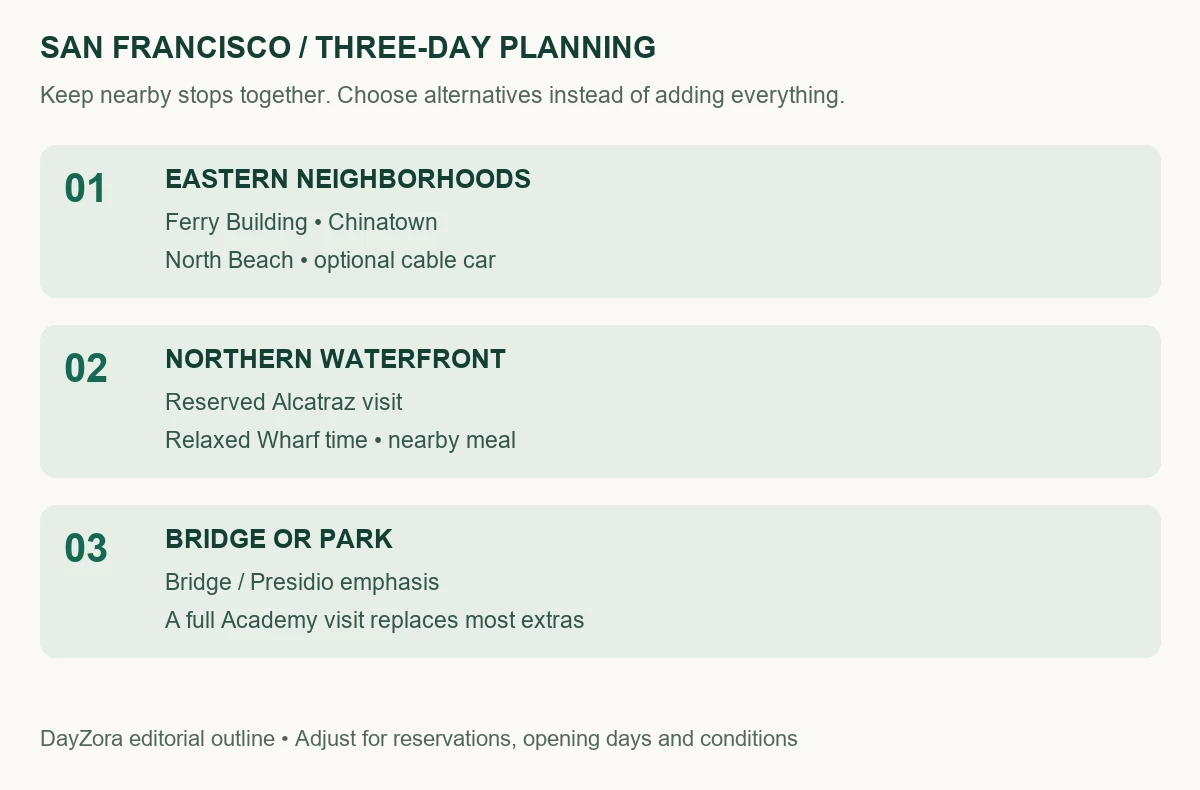
Day 1 — Embarcadero, Chinatown and North Beach
Morning: Breakfast or browsing at the Ferry Building. Afternoon: Chinatown and North Beach with a planned meal and a manageable walking route. Evening: Dinner nearby or a cable-car experience if the route and wait suit. Add the Exploratorium only by replacing a substantial portion of this day.
Day 2 — Alcatraz and the northern waterfront
Morning: Reserved Alcatraz visit from Pier 33. Afternoon: A relaxed waterfront meal and selected Wharf time. Evening: Keep plans flexible after the island excursion. If Alcatraz is not your priority, replace it with the Exploratorium rather than treating both as short stops.
Day 3 — Bridge or park emphasis
Morning: Golden Gate Bridge's southern visitor area and a selected Presidio stop if conditions suit. Afternoon: Either continue outdoor time or travel to a chosen part of Golden Gate Park. Evening: A neighborhood meal. A full Academy visit should replace most of the day's other activities; do not compress it into the gap between bridge and dinner.
For a longer trip, use the 7-day California itinerary and California road-trip guide. They cover the wider route without turning distant California destinations into rushed city day trips.
Trip Budget: Spend on the Experiences You Want
On mobile, swipe the table sideways to see every column.
| Expense | Budget-oriented | Mid-range | Higher-end |
|---|---|---|---|
| Accommodation | Modest room near useful transit | Central base with flexible booking | Premium room, view or service |
| Food | Casual neighborhood meals and simple breakfast | Casual days plus a reserved dinner | Destination dining and tastings |
| Transport | Muni and selected walking | Transit with occasional rideshare | Private transport, still with city traffic |
| Attractions | Parks and public streets plus one paid priority | Alcatraz and one major museum | Additional tours or premium experiences |
This framework avoids invented daily averages. Add real room quotes, official admission prices and the transport your schedule requires. If considering a sightseeing pass, compare the included attractions with a realistic itinerary; paying for more than you can comfortably visit is not a saving. Parking can make keeping an unused rental car a significant extra cost.
Best Free Things to Do
- Walk permitted Golden Gate Bridge pedestrian areas during open hours.
- Explore Presidio Tunnel Tops and selected public park spaces.
- Visit general public areas of Golden Gate Park; institutions inside may charge.
- Walk the Embarcadero and browse the Ferry Building marketplace.
- Explore Chinatown and North Beach on public streets.
- Spend time in Dolores Park and view public street art respectfully.
Official bridge, park and marketplace sources are linked above. Food, transport, organized tours and paid institutions remain separate. Do not confuse free access to a neighborhood with free entry to every attraction in it.
Visiting San Francisco With Kids
Choose between a substantial Exploratorium visit and a substantial Academy visit if time is short. Tunnel Tops and park breaks can balance indoor concentration. Check Alcatraz access needs and the length of the outing before promising a full island-and-museum day. With a stroller, route gradients and vehicle access are more useful planning details than a simple distance estimate. For other possibilities, compare our family vacation destinations and family road trips.
San Francisco for Couples
Build a day around a neighborhood meal, art or a bay view, keeping weather-dependent portions flexible. A ferry outing and dinner can be enough without adding a private tour and multiple museums. Choose a premium hotel for the benefit you will actually use, whether that is location, room space or service. Our romantic weekend getaways guide provides alternatives for a quieter or more outdoors-focused break.
Best Day Trips from San Francisco
These are broad one-way planning allowances from central San Francisco, before waiting, parking or activities. Confirm current schedules and road conditions.
On mobile, swipe the table sideways to see every column.
| Destination | Approximate allowance | Best for | Car needed? |
|---|---|---|---|
| Sausalito | A ferry journey is often roughly 30 minutes once aboard; allow additional terminal time | Waterfront browsing and a relaxed bay outing | No for a compact visit; check Golden Gate Ferry schedules |
| Muir Woods | Roughly 15–20 miles; allow 45–75 minutes by road, plus entry logistics | Coast redwoods and a focused nature visit | Car with parking reservation or a booked shuttle/tour; check NPS fees and reservations |
| Berkeley | Roughly 10–15 miles; allow 30–60 minutes by rail/road plus final access | University-area streets, food and a different city perspective | No for a compact BART-linked plan; consult Visit Berkeley |
Muir Woods requires a parking or shuttle reservation under the applicable system; paying the park entrance fee does not replace that booking. Do not rely on a spontaneous rideshare pickup in a place with limited service. Napa/Sonoma can be worthwhile with a deliberately arranged transport plan, but they are not a quick add-on to a full city day. Yosemite is better given an overnight stay or a separate portion of the trip.
Practical San Francisco Travel Tips
- Reserve Alcatraz before committing the rest of the day around it.
- Confirm that a cruise ticket actually includes island landing if that is your intention.
- Distinguish Golden Gate Park from the bridge when planning transport.
- Check hills and the last walk from a stop, especially with luggage or a stroller.
- Verify whether your chosen transit product includes cable cars.
- Keep a wind layer available for the waterfront and bridge.
- Shift outdoor plans when fog, wind or rain makes another day more suitable.
- Choose one large science/art institution per half day rather than rushing several.
- Store luggage before sightseeing if arriving by car.
- Book Muir Woods parking/shuttle separately from any entrance-fee arrangement.
Frequently Asked Questions
Do I need a rental car in San Francisco?
Usually not for this guide. Transit, grouped walking and occasional rides can cover the city, while a car adds parking. Rent for a regional journey when the benefits justify it.
Is summer always warm?
No. Fog, wind and neighborhood differences can make coastal areas feel cool. Check the forecast for the places you will visit and carry a useful layer.
How far ahead should I book Alcatraz?
Book as soon as your dates are firm if it is a must-do activity. Availability varies; this guide does not promise a fixed booking window or last-minute tickets.
Should I stay at Fisherman's Wharf or Union Square?
Choose according to the actual activities and transport you will use. Wharf can suit selected waterfront family plans; Union Square can suit a more transit-centered trip. Compare exact addresses and rooms.
Can I see Yosemite on a relaxed day trip?
The journey is too substantial for the relaxed city plan here. Give Yosemite an overnight or separate trip component instead of using most of a San Francisco day in transit.
More DayZora planning resources
Compare other city guides or use our travel planning tips for the practical steps around a U.S. trip.
How this guide was researched
DayZora reviewed official attraction, transit, airport, tourism and government information and added editorial neighborhood comparisons, suggested visit durations and a selective itinerary. Recommendations are research-based, not claims of firsthand visits. Approximate travel allowances are planning estimates, not live schedules or traffic predictions. Linked operator pages provide current prices and conditions; recheck them before booking and before travel.
Pingback: 20 Best Places to Visit in California | DayZora