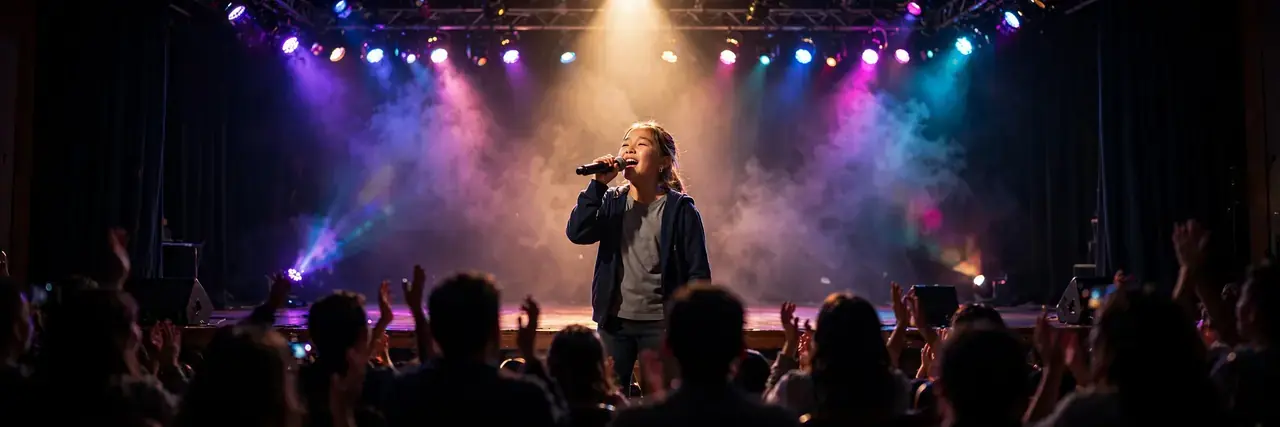
Every school has a hidden inventory of talent: the quiet girl who sings like an angel in the bathroom, the boy who can solve a Rubik’s cube blindfolded, the class clown whose impressions deserve an audience. A Children’s Day talent show is how that inventory gets discovered — and for many students, it is the single most confidence-building experience of their school year.
This guide gives organizers everything needed to run a spectacular show: thirty children’s day talent show ideas across music, dance, comedy, drama, and wonderfully weird novelty acts; a fair audition process; a judging rubric that rewards more than polish; stage and sound guidance; tips for calming nervous performers; and answers to the questions every talent-show coordinator asks. Whether your show fills an auditorium or a classroom, these ideas will help every performer shine.
Why a Talent Show Is the Perfect Children’s Day Centerpiece
Unlike rehearsed assembly items chosen by teachers, a talent show belongs to the students. They choose what to perform, they own the stage, and the applause is theirs in a way no assigned role can match. That ownership is transformative: psychologists have long noted that self-chosen public performance builds self-efficacy — the belief “I can do hard things in front of people” — more effectively than almost any other school experience. Ask any adult about their school memories, and the talent show story surfaces within minutes.
Talent shows are also radically inclusive in a way competitions often are not. A traditional contest has one kind of winner; a talent show can celebrate the singer, the magician, the poet, the beatboxer, and the kid who does extraordinary impressions of the teachers — all in one evening. When the categories are broad and the judging kind, the show becomes a celebration of human variety rather than a ranking.
And practically? Talent shows are cheap to produce. The performers bring their own talents; the school provides a stage, a microphone, and an audience. Add a simple voting or judging system and you have an event families will attend in droves and talk about for years.
Running Fair, Encouraging Auditions
The audition process shapes the entire show — get it right and performers arrive confident; get it wrong and the show feels like an exam.
- Announce broadly, audition kindly: Post sign-up sheets in every classroom, not just with the “talented” kids’ teachers. Auditions should feel like a preview, not a trial — smile, applaud every audition, and thank each student sincerely.
- Judge with a rubric, not a gut feeling: Score preparation, stage presence, originality, and audience appeal separately (see the rubric table below). Rubrics protect against favoritism and give rejected students useful feedback.
- Select for variety first: A show with two singers, a dancer, a magician, and a poet beats a show with six singers, even if the sixth singer is technically better. Variety is the audience’s delight.
- Cap act lengths: Ninety seconds to three minutes per act, no exceptions. Short acts keep the show snappy and let more students perform.
- Give feedback to everyone: Every auditioning student deserves two sentences of specific, kind feedback. The students who don’t make it this year are next year’s stars — treat them accordingly.
- Hold a technical rehearsal: Every selected act gets one run on the actual stage with sound and lights. Most stage fright is really fear of the unknown; familiarity dissolves it.
Music Acts: Voices and Instruments
Music is the backbone of most talent shows. These children’s day talent show ideas cover the full musical spectrum.
Solo Singing Showcase
The classic talent show act — and still the most moving when done well. Encourage singers to choose songs that suit their voice rather than the hardest song they know. A simple song sung with feeling beats a difficult song sung with strain, every time.
Instrumental Solos
Guitar, keyboard, violin, tabla, flute — instrumental acts add class and variety. Keep them short (ninety seconds of the best part of a piece) and make sure the instrument is properly amplified or positioned; a beautiful performance lost to bad sound helps nobody.
Student Band Performance
If your school has a garage band — even an informal one — give them a slot. Bands bring an energy no solo act can match, and the audience response is electric. One song, well-rehearsed, with a proper sound check.
Beatboxing and Vocal Percussion
The human beatbox is a guaranteed crowd-pleaser: no instruments, no setup, just astonishing sounds from one mouth. It also gives the rhythm-obsessed kids — who might never pick up a violin — a legitimate musical stage.
Choir Flash Performance
A surprise choir item mid-show — perhaps the school choir appearing in the aisles to surround the audience with song — creates one of those spine-tingling moments people describe for years. Rehearse the surprise carefully; the logistics are the hard part.
Young singers often discover their confidence through playful performance first — the warm-up games in our family karaoke night guide are perfect low-pressure practice for nervous vocalists.
Dance Acts: Movement That Mesmerizes
Classical and Folk Solos
A trained classical or folk dancer performing a short piece brings artistry and cultural depth to the show. Costume and expression matter as much as technique — encourage dancers to perform the storytelling, not just the steps.
Hip-Hop and Street Dance Crews
Self-taught street dancers often skip formal auditions, assuming the show is “not for them.” Actively recruit them — a sharp crew routine is frequently the audience’s favorite act of the night, and it diversifies the show’s dance vocabulary.
Comedy Dance Act
Choreographed clumsiness — a “terrible” dancer whose routine is secretly precise — is comedy gold. It takes real skill to dance badly on purpose, and the reveal (a sudden burst of genuine skill at the end) brings the house down.
Fusion Medley
One dancer or group flowing through multiple styles — classical to contemporary to hip-hop — in a single track. The contrast showcases versatility and keeps the audience guessing what comes next.
Shadow Dance
Performers dance behind a backlit screen, visible only as silhouettes. It is visually stunning, hides nervous faces (a blessing for shy dancers), and needs minimal choreography to look professional.

Comedy and Drama Acts
Laughter is a talent, and these children’s day talent show ideas give the funny ones their stage.
Stand-Up Comedy Set
A five-minute clean set about school life — teachers (affectionately), homework, canteen food, exam season. Vet the material with a teacher first; one ill-judged joke can sour the evening. The best school comedians observe sharply and punch up, never down.
Impressions Medley
The student who does the principal’s walk, the sports teacher’s whistle, and three teachers’ catchphrases deserves five minutes of glory. Impressions are pure crowd-pleasers — but brief the performer on affection versus mockery, and get a teacher’s sign-off on the target list.
One-Act Comedy Skit
A short original skit with two to four performers — a funny take on a day in the staff room, a fairy tale with modern problems, a news broadcast from the school. Original writing scores highly on any rubric and gives young playwrights their debut.
Magic Show
Close-up magic or stage illusions, properly rehearsed. Magic acts are audience catnip — gasps, applause, and instant legend status. The key is rehearsal: a trick performed confidently amazes; the same trick fumbled embarrasses. YouTube tutorials make learning impressive tricks accessible to any dedicated student.
Ventriloquism or Puppet Act
A rare and delightful skill — a student with a puppet doing a comedy dialogue stands out in any lineup. Even a simple sock-puppet routine, well-written, charms audiences completely.
Novelty and Variety Acts: The Wonderfully Weird
These are the acts audiences remember longest — proof that talent comes in infinite forms.
Speed Cubing (Rubik’s Cube)
A student solving cubes at speed — blindfolded, one-handed, or multiple cubes — projected on a screen so the audience can follow. It is mesmerizing, and the “how is that possible” factor is off the charts.
Gymnastics and Acrobatics
Cartwheels, flips, contortion, juggling — physical novelty acts bring gasps. Safety first: only rehearsed routines on proper mats with a spotter, approved by the PE teacher. No improvising aerials on stage.
Sand Art or Speed Painting
An artist creating a glowing sand animation or a speed painting, projected live, while music plays. The audience watches an image emerge from nothing — it is spellbinding and utterly unique in a school lineup.
Poetry Slam Performance
Spoken-word poetry — funny, moving, or fierce — delivered with passion. It gives the writers and deep thinkers a stage that honors words as performance, and a powerful piece can silence a restless hall completely.
Beatbox-Dance or Multi-Talent Mashup
The student who sings while solving a cube, or dances while playing violin — multi-talent acts defy categories and delight judges. Encourage these glorious hybrids; they are the future headliners of the show.
Novelty acts often inspire families to explore new interests together — our best children’s museums roundup is full of places where curious kids can dive deeper into science, art, and performance.
Themes That Elevate the Whole Show
A theme gives the MC material, unifies the decor, and helps indecisive students choose acts. Announce it with the sign-up sheets:
- Around the World in 80 Minutes: Acts represent different countries — a folk dance, a song in another language, a magic style from a particular tradition. Educational and spectacular.
- Decades Night: Each act channels a different era, from retro classics to current hits, with costume cues. The audience loves guessing the decade.
- Movie Magic: Acts inspired by films — songs from musicals, scenes reenacted, a “trailer” parody of school life as the opener.
- Superheroes and Legends: Performers introduce their act as their hero persona. Capes optional but encouraged.
- The Future Stage: Acts imagining tomorrow — robot dances, futuristic fashion, songs about dreams. Forward-looking and fun.
The theme should inspire, never restrict — any great act is welcome regardless of theme fit. Think of it as seasoning, not the main dish.
Group Acts and Class Showcases
Not every student wants a solo, and group acts solve the confidence problem elegantly — courage shared is courage multiplied.
Class Choir Items
Each class prepares one song — the rehearsals build class spirit for weeks, and the performance is guaranteed applause. Let classes choose their own songs (with teacher veto for appropriateness) to maximize buy-in.
Teacher-Student Duets
A teacher and student performing together — a duet, a comedy dialogue, a dance — melts hearts. It symbolizes the day’s spirit: adults and children celebrating side by side. Recruit willing teachers early; these slots are precious.
Flash Mob Finale
Plant “audience members” who rush the stage for a choreographed finale involving as many students as possible. The surprise eruption of music and movement is the euphoric peak every great show needs. Rehearse it secretly — the secrecy is half the fun.
Sibling Acts
Brothers and sisters performing together — a duet, a skit, a dance — add a heartwarming family dimension. Younger siblings beam with pride; older ones show unexpected tenderness. The audience response is always disproportionately warm.
Judging Rubric: Fair Scores, Happy Performers
Publish this rubric before auditions so every performer knows how they will be judged. Score each criterion out of 10; the transparency eliminates most complaints.
| Criterion | What It Measures | Weight | Tips for Judges |
|---|---|---|---|
| Preparation | Rehearsal evident, polished delivery | 25% | Reward visible effort, not just talent |
| Stage presence | Confidence, eye contact, energy | 25% | Nerves are normal — score the recovery, not the wobble |
| Originality | Freshness of act or interpretation | 20% | A novel act well done beats a perfect cliché |
| Audience appeal | Crowd response, entertainment value | 20% | Measure the room’s energy honestly |
| Difficulty | Technical challenge of the act | 10% | Don’t over-reward difficulty over delight |
Add special awards beyond 1st/2nd/3rd: Most Original, Best Stage Presence, Crowd Favorite (audience vote), and the Rising Star award for the youngest impressive performer. More awards mean more winners, and more winners mean more happy children — which is the entire point of Children’s Day.
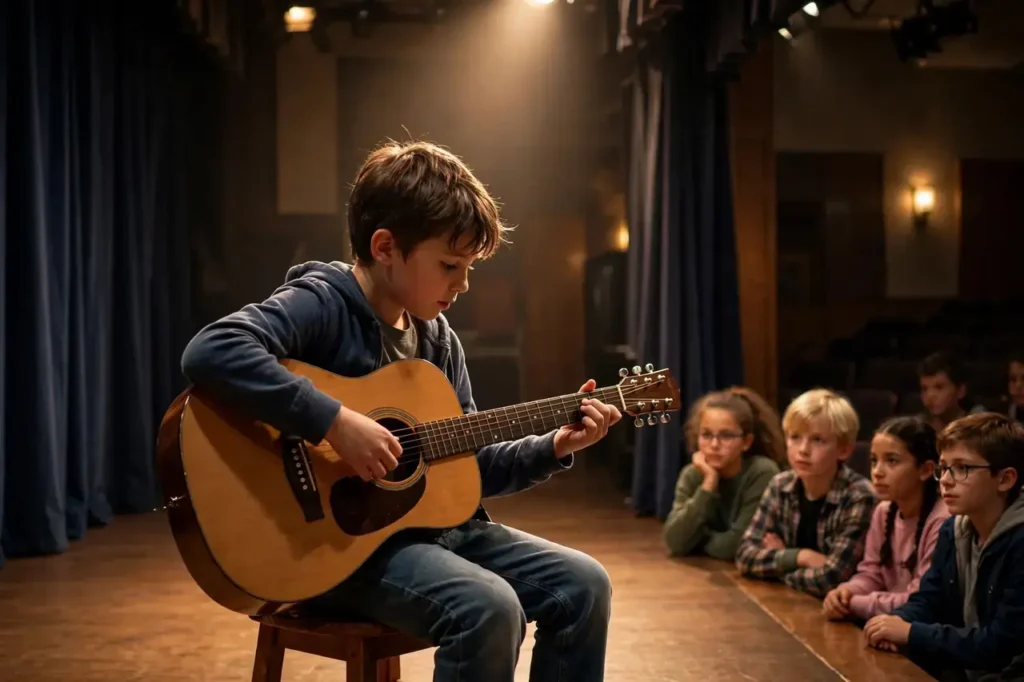
Watch: Kids Talent Show Inspiration
Show this to prospective performers to spark ideas — sometimes seeing other children perform bravely is the push a nervous student needs. This joyful talent-show song celebrates young performers taking the stage with confidence and creativity.
Use it in the audition announcement assembly: “This could be you on our stage.”
Stage, Sound, and Show Flow
- Sound check everything: Every act with audio gets a sound check at the technical rehearsal. Label tracks clearly (“Act 7 – Dance – START AT 0:00”) and keep backups on two devices.
- MCs carry the show: Two student hosts with a rehearsed script, prepared filler lines for delays, and strict timekeeping. The MCs’ energy sets the room’s energy.
- Backstage order: A backstage manager with a run-sheet lines up the next three acts at all times. Performers waiting in the wings are calm performers; performers scrambling from the audience are not.
- Lighting basics: You don’t need a rig — a spotlight (even a strong torch) on the performer and dimmed house lights creates instant theater. Test sight lines from the back row.
- Keep it moving: Ninety seconds between acts maximum. The MC fills gaps; dead air kills momentum faster than a weak act.
- Record it: A fixed camera on a tripod captures the whole show. Parents will treasure it, and next year’s organizers will study it.
Calming Nerves: Helping Performers Shine
Stage fright is normal, healthy, and manageable. Share these techniques with every performer:
- Rehearse the scary parts: The entrance, the first ten seconds, and the ending — rehearse these specifically, because beginnings and endings carry the most anxiety.
- Breathe like a performer: Four counts in, six counts out, three rounds, right before going on. It physiologically calms the nervous system.
- Buddy system: Pair first-time performers with experienced ones backstage. A calm buddy is better than any pep talk.
- Reframe the audience: “They’re here because they want you to succeed” is true and transformative. Audiences at school shows are the kindest on earth.
- Have a recovery plan: Agree in advance: if you freeze, smile, take a breath, and restart from the last confident point. Knowing the plan exists makes freezing less likely.
- Normalize it: Tell performers that even professionals get nervous — the trick isn’t eliminating nerves, it’s performing with them.
After the show, celebrate every performer equally at the cast gathering — pizza, photos, and a round of applause for the backstage crew too. The after-party cements the memory.
After the Show: Making the Magic Last
The curtain falls, but the show’s impact shouldn’t. Smart organizers extend the glow:
- Cast celebration: Gather every performer and crew member for photos, snacks, and a standing ovation from the organizers. Being thanked specifically, by name, cements the memory.
- Highlight reel: Edit a three-minute highlights video (even phone-shot) and share it with the school community. Performers rewatch their moments for weeks.
- Feedback and growth: Share the judges’ written comments privately with each act — specific praise plus one kind suggestion. This turns a single show into a developmental experience.
- Hall of fame: Post photos of the winners and special-award recipients on a notice board “Talent Wall.” Next year’s sign-ups will surge when students see the glory.
- Encore opportunities: Invite standout acts to perform at the next school event. A talent show should be a beginning, not a one-off — several school bands and dance crews were born this way.
Organizer’s Do’s and Don’ts
Hard-won wisdom from years of school shows:
- Do start and end on time — punctuality is the sincerest form of respect for families’ evenings.
- Do have an emcee script with every pronunciation checked — mispronouncing a performer’s name on stage is a wound that lasts.
- Do keep water and a quiet corner backstage — nervous performers need both.
- Do brief the audience (especially younger siblings) on show etiquette: applause for everyone, phones on silent.
- Don’t let any act run over its slot — one overrunner cascades into a late, restless night.
- Don’t compare acts aloud (“even better than the last one!”) — every performer deserves to feel like the highlight.
- Don’t skip the technical rehearsal to save time — it never saves time; it spends it, with interest, on show night.
- Don’t forget the crew in the thank-yous — the show literally cannot happen without them.
Frequently Asked Questions
How long should a school talent show run?
Ninety minutes to two hours including an interval. With 15–20 acts at two to three minutes each plus MC links, that timing works beautifully. Longer shows exhaust both performers and audience; if you have more talent than time, run junior and senior shows separately rather than one marathon.
How do we select judges for the talent show?
Use a panel of three to five: two teachers (ideally from music/drama/PE), one senior student, and one guest (an alumnus, a parent with performance background, or a local artist). Brief judges on the rubric before the show and ask them to score independently, then average. Avoid judging panels of only teachers — student and guest voices add credibility.
What if a performer’s act fails on stage?
Have the MC ready with a warm recovery line and genuine applause — the audience will follow the host’s lead. If it’s a technical failure (music won’t play), offer the performer the choice to go acoustic, restart, or take a later slot. Never let a child leave the stage feeling humiliated; the show’s kindness in failure is what students remember most.
Should talent shows be competitive or non-competitive?
A gentle competitive frame (1st/2nd/3rd plus special awards) adds excitement for older students, but keep it warm: many awards, kind judging commentary, and applause for every act. For primary school shows, consider a fully non-competitive “showcase” format where every performer receives a star performer certificate — at that age, the courage to perform IS the achievement.
How do we include shy students who won’t audition?
Create low-exposure on-ramps: group acts (choir, dance crew) where individuals blend in, backstage roles with real status (sound, lighting, MC assistant), and a “first-timers” showcase with a supportive small audience before the main event. Often, watching friends perform bravely is the nudge shy students need — invite them to the technical rehearsal as audience.
What equipment is absolutely essential?
One reliable microphone (two is better), a speaker loud enough for the room, a music playback device with backups, basic stage lighting or strong spotlights, and a first-aid kit backstage. Everything else — decorations, projectors, fancy lights — is enhancement. Test every item at the technical rehearsal, not on show night.
Can we charge admission or raise funds with the talent show?
Many schools sell nominal tickets or accept donations, using proceeds for the music department or charity. Keep prices token (the goal is full seats, not revenue), offer free entry to performers’ families if charging, and announce the cause in advance — audiences give more generously to a stated purpose. Alternatively, keep it free and pass a voluntary donation box at the exit.
How far in advance should planning start?
Six weeks for a full production: two weeks for sign-ups and auditions, three weeks of rehearsals, one week of technical preparation. A simpler classroom-level show can come together in two weeks. Whatever the scale, lock the running order one week before show night and change nothing after the technical rehearsal.
How do we prevent the same students from dominating every year?
Rotate categories and create newcomer-friendly slots: a “debut acts” segment reserved for first-time performers, judged separately with its own Rising Star award. Cap solo entries at one per student so stars must choose, leaving room for others. And actively scout — ask teachers to nominate one quiet student each who has an unshown talent. The show stays fresh when new faces appear every year.
What about students whose talents don’t fit a stage (art, writing, coding)?
Expand the definition of the show: run a parallel “talent gallery” in the foyer with visual art, creative writing displays, and coding demos on laptops, all labeled as official talent show exhibits. Invite gallery artists on stage for a group bow during the interval. Every talent deserves its spotlight — some spotlights are just quieter than others.
Every talent show is really a mirror held up to a school: look at the variety of acts and you see the variety of children you are raising. Run the auditions kindly, judge fairly, celebrate widely, and give every performer — from the opera singer to the speed-cuber — their moment in the light. Break a leg, and happy Children’s Day! And when the applause fades, remember the quieter victory: somewhere in your school tonight, a child who was afraid to be seen has discovered they love being watched — and that discovery will outlast every trophy, every certificate, and every round of applause.
For families whose young stars want to keep performing at home, our family movie night guide includes musical films that inspire living-room encore performances long after the school show ends.