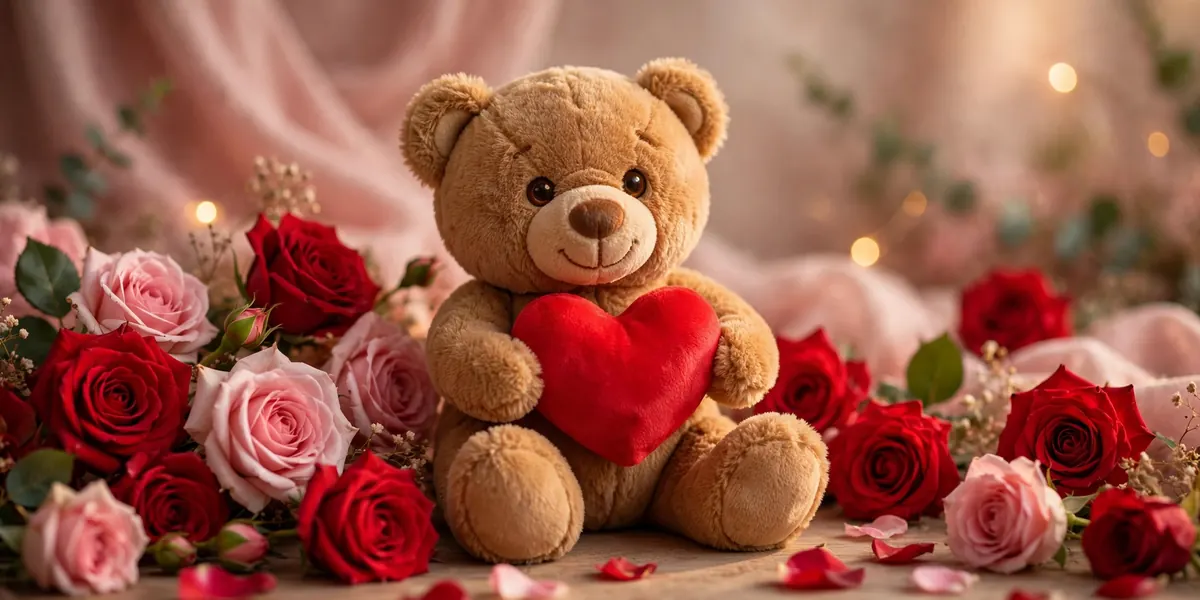
Every February, store aisles fill with the same familiar sight: rows of plush teddy bears clutching red hearts, wearing “Be Mine” sashes, staring hopefully at shoppers. And every year, gift-givers face the same question — Valentine’s Day Teddy Bear Gifts: Still Worth Giving? Is the teddy bear a dated cliché that belongs in a bargain bin of Valentine’s past, or does it still earn its place? The honest answer is more nuanced than either camp admits. This guide puts the classic plush bear on trial, hears both sides, and then shows you exactly when a teddy bear is the perfect gift — and how to choose one that feels thoughtful rather than generic.
The Case Against: Why Critics Call Teddy Bears a Cliché
Let’s start with the prosecution, because the criticism is not without merit. The teddy bear has become shorthand for a last-minute, low-effort Valentine’s purchase — the thing grabbed from a drugstore shelf on February 13th alongside a generic card. When a gift feels interchangeable with what anyone could buy for anyone, it loses the personal meaning that makes Valentine’s gifts work.
Critics raise three fair points. First, dust and clutter: for adults who have spent years curating their homes, a large plush bear can feel like an obligation object — something you display out of guilt rather than love. Second, the age question: some partners, particularly in newer relationships, may read a teddy bear as juvenile rather than romantic, the kind of gift more suited to a first teenage Valentine’s than a grown-up partnership. Third, the effort signal: a bear off a shelf communicates less thought than almost any alternative — a hand-written letter, a planned experience, or even a well-chosen book. If your partner values originality, the classic drugstore bear can land flat.
There is also the environmental angle: cheap plush toys are made from synthetic materials and are among the most-donated items at charity shops, which suggests many of them are not treasured for long. If sustainability matters to you or your partner, a mass-produced bear is a questionable choice. So yes — the prosecution has a case. A generic bear, bought without thought, is a weak gift. But notice the pattern: every criticism is really about generic bears, bought without thought. The defense will argue that is a failure of execution, not of the concept.
The Case For: Why Teddy Bears Still Work
Now the defense. The teddy bear is one of the most emotionally durable objects humans own — and that is not sentimentality talking, it is psychology. Plush toys are transitional objects: psychologists have long noted that soft, huggable items provide genuine comfort and stress relief, not just for children but for adults too. A weighted plush or a particularly soft bear genuinely lowers the heart rate when hugged. In an era of digital everything, a physical object that offers comfort has a quiet power.
Then there is nostalgia. The teddy bear carries more than a century of cultural meaning — it was named after U.S. President Theodore “Teddy” Roosevelt in 1902, when toymaker Morris Michtom created a stuffed bear after a famous cartoon of Roosevelt sparing a bear cub on a hunting trip (around the same time, the Steiff company in Germany began producing its own plush bears). Few gifts arrive pre-loaded with that much warmth. A teddy bear says comfort, affection, and playfulness in a single object — and for long-term couples, it can carry private meaning: the bear from your first Valentine’s together, the one that sat on the bed through apartment moves and milestones.
The market agrees the bear is not dying. Giant teddy bears — three, five, even six feet tall — remain one of the most-searched Valentine’s gifts every February, and personalized bears with embroidered names, dates, or recorded voice messages sell strongly. If you are shopping for Valentine’s Day gifts for her and she has ever lit up at a plush toy, the bear is not cliché — it is a proven winner. The verdict so far: the teddy bear is not the problem; the thoughtlessness is.
When a Teddy Bear Is the Wrong Gift
Intellectual honesty requires admitting the bear is not for everyone. Use this quick guide to decide:
| Situation | Verdict | What to do instead |
|---|---|---|
| New relationship (dating under 3 months) | Risky | A large romantic gesture can feel premature; choose something lighter and experience-based. |
| Partner has said they dislike clutter or plush toys | Skip it | Respect stated preferences — a consumable gift like chocolate or a shared experience wins. |
| You are buying it February 13th with zero personalization | Weak | Either add meaning (a note, an inside joke) or pivot to last-minute Valentine’s gifts that feel intentional. |
| Long-term partner who collects or loves plush | Great choice | Go premium — quality, size, or personalization makes it special. |
| Long-distance relationship | Excellent | A bear to hug when you are apart carries real emotional weight; add a recorded message. |
| Partner is going through stress, illness, or grief | Excellent | Comfort objects genuinely help; pair with a heartfelt letter. |
| Milestone Valentine’s (engagement, anniversary year) | Good as a companion gift | Let the bear accompany the main gift — jewelry, a trip, a letter — not replace it. |
The pattern is clear: teddy bears work best when they carry meaning beyond the object — a memory, a message, comfort during distance, or a shared joke. They fail when they are the entire effort. A $12 bear with a two-page letter outperforms a $60 bear with a signed card every time.
Watch: Valentine’s Teddy Bear Gift Ideas and Store Picks
Before you buy, it helps to see what is actually on shelves this season — sizes, styles, and price points. This walkthrough of a Valentine’s display shows the range of teddy bear gift options available, from classic heart-holding bears to giant plush picks, so you know what to expect before you shop.
How to Pick a Teddy Bear Worth Giving
If you have decided a bear is right, execution is everything. A thoughtful bear and a thoughtless bear can cost the same — the difference is in the choosing.
Size matters — strategically. Standard gift bears run 12–18 inches; large statement bears run 24–36 inches; giant bears run 3 feet and up. Bigger is not automatically better: a giant bear is a fantastic surprise for someone with space and a sense of humor, but it is a burden for a small apartment. Match the size to their living situation and personality.
Feel the fur. In the store, squeeze the bear. Premium plush uses dense, soft fill and silky fur; cheap bears feel lumpy, thin, or scratchy. Check the stitching around the seams and the eyes — embroidered or securely fastened safety eyes, not glued plastic that a pet could chew off. A bear meant to be kept for years should feel like it will survive years.
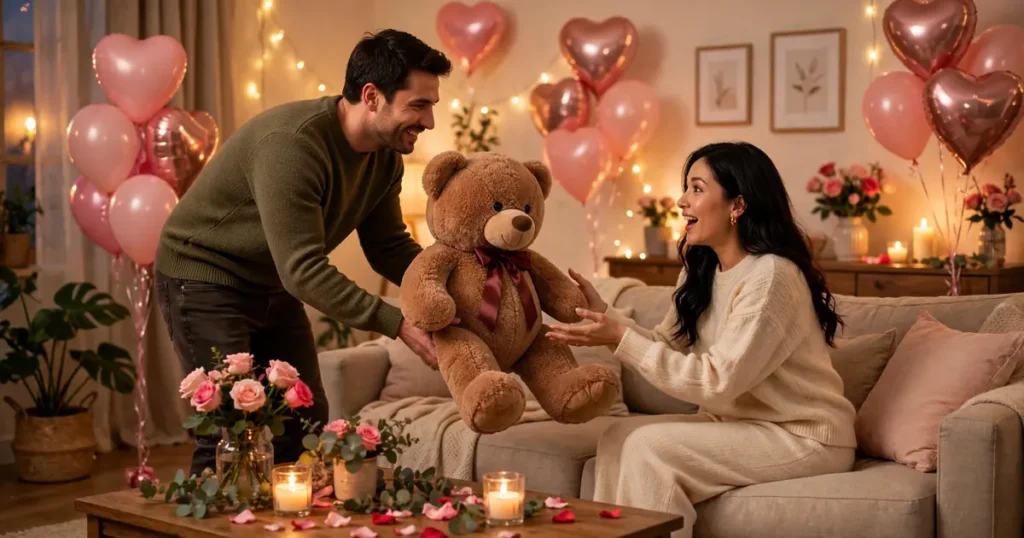
Personalize it. This is the single biggest upgrade you can make. Options include embroidered names or dates on the paw or a ribbon, a custom t-shirt or hoodie on the bear with an inside joke, or a recordable voice module tucked inside so the bear plays your message when squeezed. A bear that says your partner’s name in your voice is not a generic gift anymore — it is a keepsake.
Consider the alternatives to the classic brown bear. Luxury plush brands make beautifully crafted bears in unusual colors and materials; weighted plush bears (typically 3–5 pounds) are marketed for anxiety relief and make genuinely comforting gifts; and handmade crochet or knit bears support artisans while looking distinctive. Around the world, the “plush with a heart” concept adapts — in Japan, character plushies often replace the traditional bear, while in Latin America, oversized bears are a beloved grand-gesture gift.
| Bear type | Typical price range | Best for |
|---|---|---|
| Classic heart-holding bear (12–18″) | $10–$30 | Sweet, simple gestures; pairing with another gift. |
| Large premium plush bear (24–36″) | $40–$100 | Main-gift territory; long-distance partners. |
| Giant bear (3–6 ft) | $60–$200+ | Grand surprises; partners with space and humor. |
| Personalized / recordable bear | $25–$80 | Maximum emotional impact per dollar. |
| Weighted plush bear (3–5 lbs) | $40–$90 | Comfort gifting; stress, anxiety, or tough times. |
| Handmade / artisan bear | $30–$120 | Unique, sustainable-leaning choice; collectors. |
Modern Teddy Bear Gift Ideas That Don’t Feel Dated
The classic brown bear holding a satin heart is the baseline — here is how to make the concept feel fresh in 2026.
- The memory bear: Some services and skilled crafters create bears from meaningful fabric — a favorite old shirt, a baby blanket, even wedding dress fabric for anniversary gifts. A bear made from something with history is the opposite of generic.
- The voice-message bear: Recordable plush modules (usually 10–30 seconds of audio) turn a bear into a talking keepsake. Record the three words, an inside joke, or a snippet of “your song.” For long-distance couples, hearing a partner’s voice on demand is genuinely moving.
- The giant surprise: A five-foot bear waiting in the living room after work is a story your partner will tell for years. Pro tip: giant bears ship vacuum-compressed — open the box a day early so it fully fluffs before the reveal.
- The weighted comfort bear: Weighted plush (3–5 pounds, filled with glass microbeads) combines the teddy bear concept with the science of deep-pressure comfort. Market it as what it is: “for the nights I’m not there.”
- The collector’s bear: Limited-edition bears from heritage plush makers appreciate in perceived value and look distinguished on a shelf rather than childish. This is the bear for the partner who “doesn’t do stuffed animals” — quality changes the conversation.
- The DIY dressed bear: Buy a quality plain bear and dress it yourself — a tiny scarf in their favorite color, a miniature version of something meaningful (a tiny graduation cap, a tiny chef’s hat). The customization is the gift.
- The bear-plus experience: Present the bear holding an envelope containing the real gift: concert tickets, a weekend trip, a spa booking. The bear becomes the charming delivery mechanism for the main event — and a souvenir of it afterward.
Pairing Ideas: What Goes With a Teddy Bear
A teddy bear rarely needs to stand alone. Smart pairings elevate it from “a bear” to “a curated gift”:
- Bear + flowers: The timeless combo. A bear nestled in or beside a bouquet looks abundant and celebratory.
- Bear + chocolate: A box of good chocolates tucked into the bear’s arms is the classic Valentine’s trio in two objects.
- Bear + letter: The highest-impact, lowest-cost pairing. A handwritten letter explaining why you chose this bear transforms it completely.
- Bear + jewelry: Tie a bracelet or necklace box to the bear’s paw or ribbon. The bear becomes the world’s cutest gift box.
- Bear + cozy night in: Pair with a soft blanket and their favorite movie for a “comfort kit” — especially good if you are keeping Valentine’s low-key and planning a thoughtful Valentine’s Day on a budget.
- Bear + framed photo: A photo of the two of you tucked into a small frame beside the bear anchors it to your actual relationship.
If you are shopping for him and unsure whether a bear fits, browse our Valentine’s Day gifts for him guide — some men love a plush gift with a funny twist, while others would prefer the wallet-and-watch lane. Know your audience.
Teddy Bears Around the World
The Valentine’s teddy bear is a global phenomenon with local flavors. In the United States, giant bears from big-box stores dominate February displays. In the United Kingdom, heritage brands like Merrythought (making bears in Shropshire since 1930) give the plush bear a collector’s pedigree. In Japan, Valentine’s gifting skews toward chocolate, but character plushies serve the same emotional role. In Latin America, oversized bears are a beloved grand gesture, often paired with elaborate balloon and flower arrangements. And the largest teddy bear ever built — a 19.41-meter (63 ft 8 in) giant constructed in Xonacatlán, Mexico, in 2019 — holds a Guinness World Records title, proving the world’s affection for the bear is not fading anytime soon.
The History of the Teddy Bear: From 1902 to Valentine’s Icon
Understanding where the teddy bear comes from makes it a better gift — it gives you a story to tell when you hand it over. The tale begins in November 1902, when U.S. President Theodore Roosevelt went bear hunting in Mississippi. When his guides cornered a black bear and tied it to a tree for him to shoot, Roosevelt refused, calling it unsportsmanlike. A political cartoon of the incident by Clifford Berryman ran in The Washington Post, and Brooklyn candy-shop owner Morris Michtom — who made stuffed toys with his wife Rose — saw an opportunity. He created a stuffed bear cub, placed it in his shop window with a sign reading “Teddy’s Bear,” and reportedly wrote to Roosevelt asking permission to use his name. The bear sold out; Michtom founded the Ideal Novelty and Toy Company, and an icon was born.
Across the Atlantic, the story unfolded in parallel. In Germany, Margarete Steiff’s company — already making stuffed animals — had her nephew Richard design a jointed plush bear in 1902. At the 1903 Leipzig Toy Fair, an American buyer ordered 3,000 of them. Within a few years, “teddy bears” were a transatlantic craze, complete with teddy bear picnics, songs, and children’s books. A.A. Milne’s Winnie-the-Pooh (1926), based on his son Christopher Robin’s real teddy, cemented the bear’s place in the cultural imagination.
The Valentine’s association grew through the 20th century as plush became the default “soft” romantic gift — non-threatening, affordable, and universally understood. The 2000s brought the giant-bear era, when oversized plush (three to six feet) became a grand-gesture staple. In 1997, the build-your-own plush retail concept added personalization to the mainstream, letting givers stuff, dress, and voice-record their bears. And the record books confirm the obsession: the largest teddy bear ever built measured 19.41 meters (63 ft 8 in), constructed in Xonacatlán, Mexico, in 2019. When you give a teddy bear this Valentine’s Day, you are handing over 120+ years of comfort, nostalgia, and affection in a single object — which is exactly why, chosen thoughtfully, it still works.
Beyond Valentine’s Day: When Bears Become Keepsakes
The Valentine’s bear often begins its life on February 14th — but the bears people treasure longest are the ones that accumulate meaning over time. Think of the bear given during a deployment, hugged through months of separation and then kept as a symbol of reunion. The bear bought after a difficult year, representing comfort freely given. The bear from a first Valentine’s together that ends up on the bed through every apartment move for a decade, slightly worn, completely beloved.
This is the psychology of the “keeper” object: humans attach meaning to things through association, and a soft, present object absorbs more association than almost anything else. A bear sits on the bed or the couch — in the intimate spaces of daily life — quietly collecting memories. Years later, it is not “a stuffed animal”; it is the bear, shorthand for a chapter of the relationship. That is why the quality advice earlier in this guide matters so much: a keeper bear needs to survive years of hugs, which means dense fill, strong seams, and washable fur. Buy the bear as if it will be kept for a decade, because the best ones are.
Bears also shine in the hardest moments — illness, grief, anxiety, long-distance loneliness — when words fail and presence is impossible. A weighted or simply very soft bear given with “for the nights I’m not there” is one of the most emotionally intelligent gifts in existence. It does not try to fix anything; it just offers comfort, on demand, without needing anything back. If your Valentine’s this year coincides with a tough season, skip the grand gesture and give comfort. It will be remembered far longer than anything flashier.
Frequently Asked Questions
Are teddy bears still a good Valentine’s Day gift in 2026?
Yes — with a caveat. A thoughtfully chosen bear (right size, good quality, personalized or paired with something meaningful) remains a genuinely loved gift, especially for long-distance couples, plush lovers, and milestone occasions. A generic last-minute bear with no personal touch is the version that feels dated. The bear is not the cliché; thoughtlessness is.
What size teddy bear should I get for Valentine’s Day?
For most situations, 16–24 inches is the sweet spot — substantial enough to feel like a real gift without dominating a room. Go giant (3+ feet) only as a deliberate grand gesture for someone with the space and the sense of humor to enjoy it. When in doubt, medium and personalized beats large and generic.
Is a teddy bear too childish for an adult partner?
Not inherently — it depends on the bear and the framing. A premium, weighted, personalized, or collector’s bear reads as a thoughtful comfort gift, not a child’s toy. If your partner has expressed that they find plush toys juvenile, respect that and choose differently. But many adults treasure a bear from their partner precisely because it is soft in a hard world.
How can I make a teddy bear gift more personal?
Add an embroidered name or date, record a voice message inside it, dress it in something meaningful, pair it with a handwritten letter, or use it to present the “real” gift (tickets, jewelry, a trip). Any one of these transforms a shelf-bought bear into a one-of-a-kind keepsake.
What is a good alternative if my partner doesn’t like stuffed animals?
Consider what the bear represents — comfort and affection — and translate it: a luxurious throw blanket, a high-quality pillow, a soft robe, or a weighted blanket all deliver the same “cozy comfort” message in adult packaging. Or go experiential: a planned date night or weekend getaway says “I love you” without adding clutter.
How much should I spend on a Valentine’s teddy bear?
Price ranges vary widely: $10–$30 for a classic small bear, $40–$100 for a large premium or personalized bear, and $60–$200+ for giant bears. Spend in line with the bear’s role — a companion to another gift can be modest; a personalized main gift justifies more. Remember that a $25 bear with a heartfelt letter beats a $100 bear with a signed card.
So: are Valentine’s Day teddy bear gifts still worth giving? The jury returns a qualified yes. The generic drugstore bear, bought in a panic, deserves its reputation. But a bear chosen with care — the right size, real quality, a personal touch — remains one of the most emotionally intelligent gifts you can give. It is soft when life is hard, it lasts for years, and unlike flowers or chocolate, it is still there on February 15th, holding its heart, reminding your person that you were thinking of them.