Roses get all the attention on February 14th — but some of the most memorable Valentine’s bouquets ever given contained not a single rose. Valentine’s Day flowers beyond roses: bouquets she’ll remember is your guide to the tulips, peonies, lilies, orchids, and garden-style arrangements that stand out precisely because everyone else is carrying the same red dozen. If you want flowers that feel personal rather than perfunctory, this is where to start.
There’s a practical case for looking past roses, too. Rose prices spike dramatically in the week before Valentine’s Day — growers, wholesalers, and florists all price for peak demand — while many other beautiful blooms stay closer to their normal prices. A generous, interesting bouquet of tulips or mixed seasonal flowers often costs less than a standard dozen long-stem reds and looks far more thoughtful. Thoughtfulness, after all, is the whole point of the gesture.
Below you’ll find a bloom-by-bloom guide with the meaning of each flower, a comparison table to match flowers to budget and recipient, ordering and timing advice, a video tutorial for arranging your own bouquet, and answers to the most common questions about giving flowers on Valentine’s Day.
Why Go Beyond Roses This Valentine’s Day
Roses are the classic Valentine’s flower for a reason: they’re beautiful, they’re available everywhere in February, and their meaning — romantic love — is unmistakable. But classics have a cost. When millions of people buy the same flower on the same day, the gesture can start to feel like a default setting rather than a choice. A bouquet that reflects actual thought about the recipient — her favorite color, a flower tied to a memory you share, an arrangement with texture and personality — communicates more than any dozen reds.
There’s also the meaning factor. The Victorian-era “language of flowers” assigned sentiments to dozens of blooms, and many of those associations survive in florist tradition today. Tulips speak of perfect love. Peonies suggest romance and prosperity. Lilies convey devotion. Choosing a flower for its meaning adds a layer of intention that a generic rose bouquet can’t match — and it gives you something lovely to write in the card.
Finally, there’s availability and freshness. Mid-February is peak season for tulips, which are at their absolute best right around Valentine’s Day in the Northern Hemisphere. Anemones, ranunculus, and sweet peas are also in season. Buying what’s naturally abundant means fresher stems, better vase life, and often better value than roses flown in under peak-demand pricing.
Valentine’s Day Flowers by Bloom: A Field Guide
Here are the strongest alternatives to roses, each with what it says, what it costs, and who it suits best.
Tulips: Perfect Love, Peak Season
Tulips are arguably the smartest Valentine’s flower after roses — and in some ways smarter. They’re in peak season in February, they come in nearly every color, and in the language of flowers, red tulips declare “perfect love” while pink tulips express affection and caring. A generous bunch of 20–30 tulips, wrapped simply in paper, looks abundant and modern.
Tulips are also forgiving: they continue to grow in the vase, they don’t have thorns, and they’re one of the few cut flowers that look good in a tall, simple cylinder vase with no arranging skill required. Just trim the stems, give them fresh water, and let them do their thing. Budget-wise, tulip bouquets typically range from about $25–$60 depending on stem count and whether you buy from a grocery store, market, or florist. One note: tulips are mildly toxic to cats and dogs if chewed, so they’re not the pick for a household with curious pets.
Peonies: The Romance Showstopper
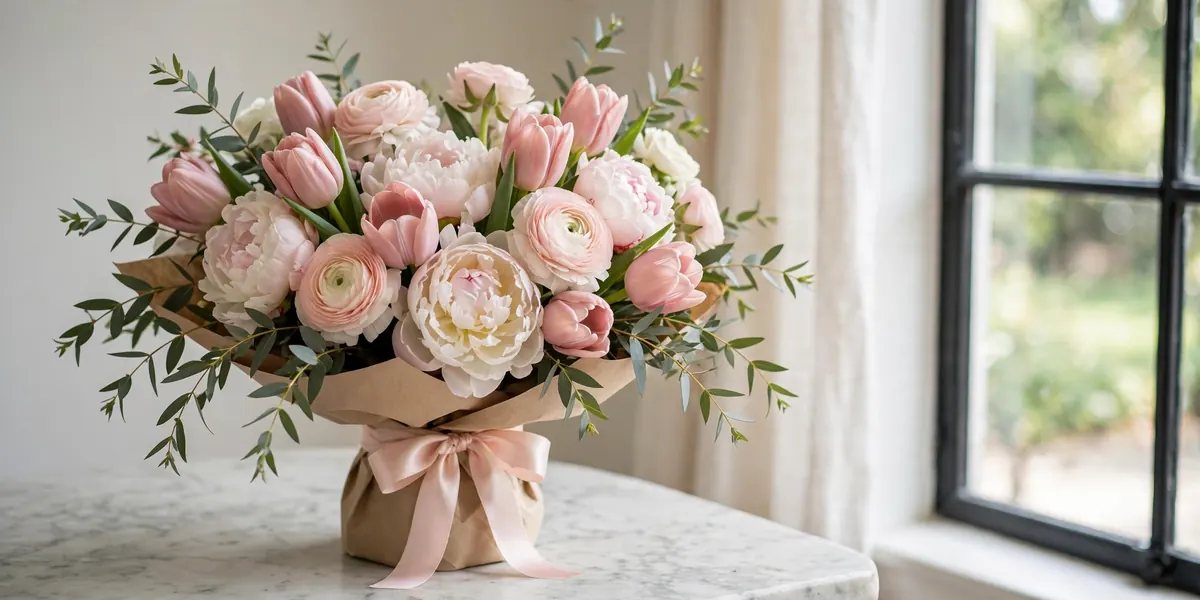
Few flowers photograph as beautifully as peonies, with their lush, layered petals and soft fragrance. They symbolize romance, prosperity, and a happy marriage — about as on-theme as it gets. The catch: peonies are a late-spring flower. In February, they’re imported, expensive, and sometimes less impressive than their May counterparts.
If peonies are her absolute favorite, a small, exquisite bunch (5–7 stems) can still be worth the splurge — expect roughly $50–$100+ for a florist-quality Valentine’s peony bouquet. But if budget matters, ranunculus offers a similar lush, layered look at a fraction of the February price, and it’s actually in season. Consider peonies a special-request flower rather than a default.
Lilies: Bold, Fragrant, Unforgettable
Oriental and Asiatic lilies make a dramatic statement: large blooms, powerful fragrance, and an architectural presence that fills a room. White lilies symbolize purity and devotion; pink “Stargazer” lilies are unabashedly romantic. A bouquet of 6–10 lilies looks luxurious and typically costs about $30–$65.
Two cautions: lily pollen stains — florists usually remove the pollen-covered anthers, but if yours haven’t, snip them off with scissors before bringing the bouquet indoors. And lilies are extremely toxic to cats — even small ingestions can cause kidney failure. In a cat household, skip lilies entirely. This is a genuine safety issue, not a preference.
Carnations: The Underrated Classic
Carnations suffer from an unfair reputation as “cheap filler,” but modern carnation varieties — with ruffled petals in blush, coral, and deep wine tones — are genuinely gorgeous and last longer in the vase than almost any other cut flower, often two weeks or more. They symbolize fascination and love, and a dense, monochromatic bouquet of 20+ carnations looks chic and intentional, not budget.
At roughly $20–$45 for a generous bunch, carnations are the value champion of Valentine’s flowers. If you’re pairing flowers with another gift — say, jewelry or a dinner reservation — carnations keep the floral portion beautiful without cannibalizing the budget. Our Valentine’s Day gifts for her guide has companion ideas that pair well with a flower delivery.
Orchids: Exotic and Long-Lasting
For a gift that lasts beyond the week, a potted phalaenopsis orchid is hard to beat. Orchids symbolize luxury, beauty, and strength; a healthy plant can bloom for months and rebloom year after year with minimal care. A quality potted orchid typically costs $25–$60 — comparable to a mid-range cut bouquet but with dramatically more longevity.
Orchids suit the recipient who loves plants, dislikes waste, or has “everything.” Presentation matters: choose a plant with unopened buds (more blooms to come), firm green leaves, and a clean, attractive pot. Skip the dyed-blue novelty orchids unless you know she loves that look — purists find them gimmicky.
Ranunculus and Anemones: The Florist’s Secret Weapons
If you want a bouquet that looks like it came from an expensive floral studio, ask for ranunculus and anemones. Ranunculus blooms look like miniature peonies — layers of tissue-thin petals in vivid pinks, corals, oranges, and whites. Anemones add drama with their dark centers. Both are in season in late winter, both photograph beautifully, and both signal genuine floral knowledge.
A mixed ranunculus-anemone bouquet from a good florist runs about $40–$75. These flowers have a shorter vase life than carnations (roughly 5–7 days), so buy them as close to the 14th as practical and keep them cool.
Mixed Garden-Style Bouquets
The most reliably impressive option: let a good local florist design a mixed, garden-style bouquet in a romantic palette. Mixed bouquets offer texture, color variation, and a “just gathered” feel that single-variety bunches can’t match. They also let the florist use the freshest seasonal stems available that week.
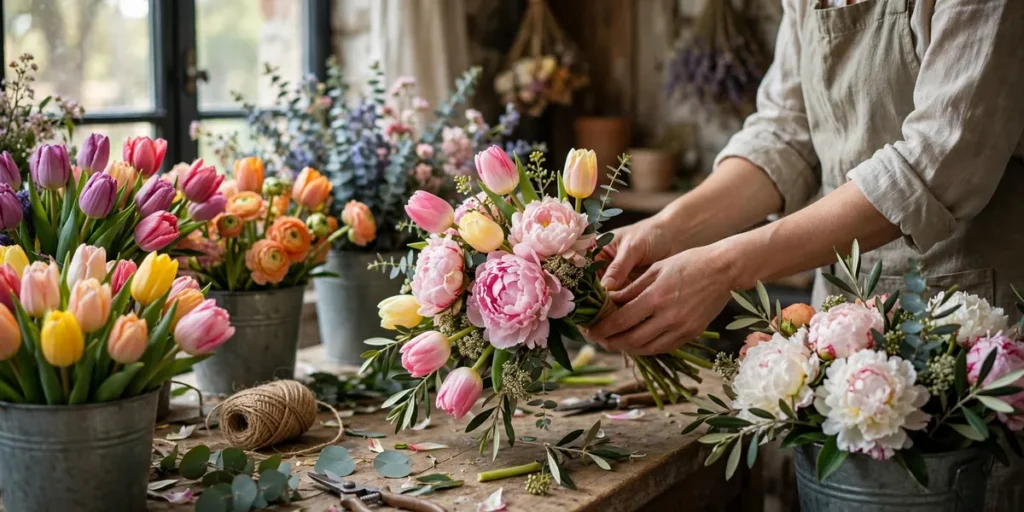
When ordering, give the florist two pieces of information: your budget and the vibe (“romantic, soft pinks and creams” or “bold and dramatic”). A good florist will do the rest. Expect $50–$100+ for a florist-designed Valentine’s bouquet — more than grocery-store flowers, but the design expertise is visible in every stem.
Compare: Valentine’s Flowers at a Glance
| Flower | Traditional meaning | Budget range | Best for |
|---|---|---|---|
| Tulips | Perfect love | $25–$60 | Modern, unfussy recipients; peak February season |
| Peonies | Romance, happy marriage | $50–$100+ | Splurge gestures; her known favorite |
| Lilies | Devotion | $30–$65 | Dramatic statements; NOT for cat households |
| Carnations | Fascination, love | $20–$45 | Long vase life; pairing with a bigger gift |
| Orchids (potted) | Luxury, beauty | $25–$60 | Plant lovers; gifts that last for months |
| Ranunculus & anemones | Radiant charm | $40–$75 | Design-forward bouquets; floral enthusiasts |
| Mixed garden-style | Varies | $50–$100+ | Maximum impact; let the florist design |
How to Order Flowers Like a Pro
Order early. For Valentine’s delivery, place florist orders at least 5–7 days ahead; the best local florists cap their Valentine’s orders and sell out. Grocery and market flowers can be bought 1–2 days before — even the morning of the 14th — since you’ll select the stems yourself.
Choose local when you can. A neighborhood florist’s Valentine’s bouquet almost always beats a wire-service arrangement in freshness and design, often at a similar price. If you’re ordering from afar, look for florists that describe themselves as “farm to vase” or show photos of their actual arrangements rather than stock images.
Specify delivery timing. Morning delivery means she enjoys the flowers all day; workplace delivery is traditional but check that her office accepts them. Include a card message — even a single sincere line elevates the whole gift. And if you’re running late on every front, our last minute Valentine’s Day gifts guide covers same-day rescue options.
Ask about substitutions. Around Valentine’s Day, specific stems sell out. Tell the florist which flowers matter most and authorize “designer’s choice” substitutions in the same palette — you’ll get a fresher bouquet than if they scramble to source your exact list.
Watch: Arrange a Valentine’s Bouquet Yourself
Want to skip the florist markup and arrange grocery-store or market flowers like a professional? This step-by-step floristry tutorial walks through building a Valentine’s arrangement — stem prep, structure, and finishing touches included:
DIY arranging is also a lovely date activity: pick up flowers together at a market, arrange side by side, and you’ve built both a bouquet and a memory. For more ways to spend the day together, browse our Valentine’s Day date ideas — over 60 romantic ways to celebrate.
Keeping the Bouquet Fresh: Care Tips That Actually Work
Most cut flowers die early from neglect, not old age. These basics add days to any bouquet’s life:
- Trim stems at an angle under running water before placing them in the vase — this maximizes water uptake and prevents air bubbles from blocking the stem.
- Use the flower food packet that comes with florist bouquets. It’s formulated with sugar (energy), acidifier (water uptake), and biocide (bacteria control). Homemade alternatives like soda or bleach are unreliable by comparison.
- Change the water every 2–3 days, re-trimming stems each time. Cloudy water is the number-one bouquet killer.
- Keep flowers cool and away from fruit. Ripening fruit emits ethylene gas, which accelerates wilting. A cool room — not next to a radiator or in direct sun — extends vase life significantly.
- Remove spent blooms promptly. Dying flowers release ethylene too, hastening the decline of their neighbors.
With proper care, tulips last 5–7 days, carnations up to two weeks, and lilies about a week — plenty of time to enjoy them well past the holiday itself.
Pairing Flowers With the Rest of the Day
Flowers rarely travel alone on Valentine’s Day. The classic trio — flowers, chocolate, and a card — works because each element plays a role: flowers for beauty, chocolate for indulgence, the card for meaning. A small box of excellent truffles alongside your bouquet is a combination that never misses; see our guide to the best Valentine’s Day chocolate gift boxes for picks worth giving.
Beyond the classics, consider pairing flowers with an experience rather than another object: breakfast in bed with the bouquet on the tray, or the flowers waiting at the table when you return from a day trip. Flowers mark the occasion; the experience makes it memorable. And if the bouquet is a surprise delivery, a quick text beforehand — “something’s coming for you today, no need to wait by the door” — prevents the all-day anxiety of a missed doorbell.
The Language of Flowers: Let Your Bouquet Say It for You
The Victorians took flower meanings seriously enough to publish entire dictionaries of “floriography,” and while nobody expects you to memorize one, a few meanings are worth knowing — both for what to choose and what to avoid:
- Red tulips: a declaration of perfect love — arguably the most Valentine’s-appropriate meaning of any bloom.
- Pink roses (if you do include a few): admiration and sweetness; a softer message than red.
- White lilies: devotion and purity — beautiful, but in some cultures associated with funerals, so know your audience.
- Orchids: rare beauty and strength — a compliment in flower form.
- Sunflowers: adoration and loyalty — cheerful rather than romantic, great for friendships.
- Yellow roses: traditionally friendship — which is exactly why they can send a confusing signal on a romantic Valentine’s date. Save them for Galentine’s.
You don’t need to lecture anyone on floriography — but weaving the meaning into your card (“tulips for perfect love”) turns a pretty gift into a thoughtful one. It’s the kind of detail that gets remembered long after the petals fall.
Where to Buy: Local Florist vs. Grocery Store vs. Online Delivery
Where you buy matters almost as much as what you buy. Each channel has real strengths — and real pitfalls — especially around Valentine’s Day.
Local florists are the quality pick. Their designers handle flowers daily, they buy from wholesalers multiple times a week (so stems are fresh), and they can customize colors, size, and style to your budget. The trade-off is price — expect $50–$120 for a Valentine’s arrangement — and limited capacity: the best shops stop taking Valentine’s orders days before the 14th. If you go this route, order early and be specific about palette and budget rather than demanding exact varieties that may sell out.
Grocery stores and markets are the value pick, and they’re better than their reputation suggests. Supermarkets move enormous flower volume, which means high turnover and often surprisingly fresh stems — especially for in-season flowers like tulips. A $25 market bunch, re-trimmed and arranged in your own vase with some greenery, can look genuinely beautiful. The downsides: limited variety, no design service, and picked-over selection if you shop late on the 13th or 14th. Shop in the morning, choose the freshest bunches (tight buds, firm stems, clean water in the buckets), and avoid anything already wilting.
Online flower delivery services offer convenience, particularly for long-distance gifting. Quality varies widely: some ship farm-direct boxes that arrive impressively fresh; others route through relay networks where a local florist you’ve never vetted fulfills the order. Read recent reviews, check whether the company shows photos of actual arrangements (not just stock), and confirm the delivery date guarantee in writing — “delivery on February 14th” should mean the 14th, not “around the 14th.” Budget $40–$90 plus delivery fees, and order at least a week ahead for the best selection and pricing.
Flower subscriptions and farm boxes deserve a mention as the dark-horse option. Several services now ship seasonal stems directly from growers, and a Valentine’s delivery paired with a note explaining the subscription continues monthly turns a one-day gift into an ongoing one. It’s a distinctive choice for someone who truly loves flowers.
Whichever channel you choose, inspect on arrival: stems should feel firm, buds should be at the right stage (not fully blown open, not rock-hard), and foliage should be green, not yellowing. A reputable seller replaces subpar product — don’t hesitate to ask.
One last florist’s trick worth knowing: order for delivery two to three days before February 14th rather than on the day itself. You’ll dodge the holiday price surge, get the freshest stems of the week, and the arrangement will be at peak bloom right on Valentine’s morning. Pair the bouquet with a handwritten card that names one specific memory — the flowers get the smile, but the words are what she’ll keep.
Frequently Asked Questions
How much should I spend on Valentine’s Day flowers?
A thoughtful bouquet typically costs $35–$75. Under $35, grocery-store tulips or carnations arranged with care look wonderful. Over $75 buys florist-designed arrangements and premium stems like peonies. Spending more doesn’t automatically mean a better reaction — freshness and personal relevance matter more than stem count.
When should I order flowers for Valentine’s Day?
Order from a florist 5–7 days ahead, since the best shops cap Valentine’s orders. Grocery or market flowers can be bought 1–2 days before, or even the morning of the 14th — just shop early in the day for the best selection.
Are roses really more expensive on Valentine’s Day?
Yes — rose prices typically rise significantly in the week before Valentine’s Day due to surging demand across the supply chain. Many other flowers (tulips, carnations, lilies) see much smaller increases, which is one more reason alternatives offer better value on the holiday itself.
What flowers are safe for homes with cats or dogs?
Roses, orchids, and sunflowers are generally considered pet-safer choices. Avoid lilies entirely around cats (highly toxic), and keep tulips away from pets that chew plants. When in doubt, a potted orchid displayed out of reach is one of the safest floral gifts for pet households.
Is it okay to give flowers to a friend on Valentine’s Day?
Absolutely. Bright, cheerful bouquets — tulips, daisies, mixed spring flowers — make wonderful friendship gifts without romantic overtones. Keep the palette fun rather than deep red, and the gesture reads as warm and platonic. See our Valentine’s Day gifts for best friends for more platonic ideas.
How long do Valentine’s bouquets typically last?
With proper care (fresh water every 2–3 days, stem trims, cool location), most bouquets last 5–10 days. Carnations can reach two weeks; delicate blooms like anemones last closer to five days. A potted orchid, of course, can bloom for months.
The bouquet she’ll remember isn’t the most expensive one — it’s the one that shows you were thinking of her: her taste, her favorite colors, the flowers that mean something to the two of you. Whether you choose tulips at their February peak, a dramatic armful of lilies, or a florist-designed garden mix, the formula is the same: buy fresh, order with time to spare, write a card that says something real, and present the flowers as part of a day — not the whole of it. Do that, and no one will miss the roses. Freshness, intention, and good timing beat extravagance every time.