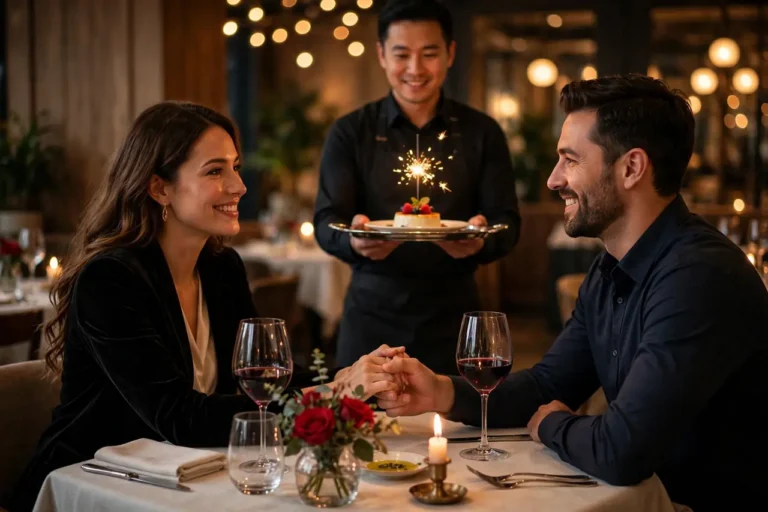
Here’s a uniquely modern anxiety: you’ve been dating someone for a few weeks or a couple of months, things are going well, and suddenly it’s February — and with it, the minefield of Valentine’s Day gifts for new couples. Give too much and you look intense; give too little and you look indifferent; give the wrong thing and you’ve accidentally defined the relationship before either of you is ready. Take a breath. This guide is built for exactly this moment: what to give when it’s early, with clear spending guidelines by dating length, low-pressure gift ideas that can’t misfire, card wording for new relationships, and honest answers to the questions everyone’s afraid to ask.
The core insight: early Valentine’s Day isn’t a test you pass with the perfect gift. It’s a moment you navigate with good calibration. The couples who handle it well aren’t the ones who spend the most or find the most creative present — they’re the ones who match the gesture to the relationship’s actual stage and communicate like adults about expectations. Everything below is in service of that calibration.
This is Valentine’s Day Gifts for New Couples: What to Give When It’s Early — the calm, practical guide to getting it exactly right.
The New-Couple Valentine’s Dilemma (and Why It’s Normal)
If Valentine’s Day feels disproportionately stressful right now, that’s because it is — structurally. The holiday arrives with heavy cultural scripts (grand romance, big declarations, expensive jewelry) that were designed for established couples, and you’re being asked to perform them with someone whose coffee order you might still be learning. Add the asymmetry risk (what if they go big and you go small, or vice versa?) and it’s genuinely one of dating’s trickiest moments.
Here’s the reframe: Valentine’s Day when it’s early is actually an opportunity. Handled well, it’s a chance to show you’re thoughtful, fun, and emotionally intelligent — qualities that matter far more than any gift. The bar is “shows I pay attention and I’m enjoying this,” not “proves eternal devotion.” Once you internalize that, the whole thing gets easier.
Have the conversation (yes, really)
The single most effective move available to new couples is also the simplest: talk about it. A light, breezy check-in — “hey, are we doing Valentine’s Day? I was thinking something small and fun” — eliminates 90% of the anxiety in one exchange. It feels unromantic to discuss, but it’s actually deeply considerate: it prevents the mismatched-effort disaster and lets you both relax. Couples who communicate about expectations report better holidays at every stage, and it’s especially true when it’s early. If the conversation feels awkward, that’s fine — awkward and aligned beats smooth and mismatched.
The Golden Rules of Early Valentine’s Gifting
Rule 1: Match the energy, not the holiday
Forget what Valentine’s Day “should” look like. Look at your actual relationship: how often you see each other, how you’ve been communicating, what you’ve both said about where things are headed. A couple dating intensely for two months can handle more than a couple that’s had four casual dates — even though the calendar says the same thing. Match the gift to the energy, and you’ll never go wrong.
Rule 2: Follow the spending curve
As a rough guide: under a month of dating, keep it under ~$25–$30 (a great card plus a small thoughtful thing); 1–3 months, the $25–$75 range; 3–6 months, $40–$100. These aren’t rules — they’re guardrails against the two failure modes: spending so little it looks careless, or so much it creates pressure. And remember: at every point on this curve, thoughtfulness outperforms price. A $20 gift that references an inside joke beats a $100 generic gift without contest. For more on stretching a small budget, see our thoughtful Valentine’s on a budget guide.
Rule 3: Experiences over objects (early on)
In new relationships, shared experiences are almost always safer and more effective than objects. A fun date is the gift — it creates a memory, shows your personality, and avoids the “what does this object mean?” overthinking that physical gifts trigger early on. Plan something enjoyable, handle the details, and bring a small gift or a great card to mark the occasion. Our Valentine’s Day date ideas guide has options from free to fancy.
Rule 4: Funny is a superpower when it’s early
Humor defuses the intensity that Valentine’s Day injects into new relationships. A funny card, a playful small gift, a date with a built-in laugh (comedy show, ridiculous cooking class, arcade showdown) — these all say “I’m into you and I’m fun” without the weight of grand romance. Our funny Valentine’s Day gifts guide is essentially a new-couple playbook.

What to Give When It’s Early: Ideas by Dating Length
| How long you’ve been dating | Comfortable budget | Gift ideas that work | Avoid |
|---|---|---|---|
| A few dates / under a month | Under $25–$30 | Great card + favorite treats, a book they’d like, a fun planned date | Anything engraved, jewelry, “love” language |
| 1–3 months | $25–$75 | Hobby-adjacent gifts, nice bottle, tickets, funny + sweet combo | Rings, matching items, expensive gifts |
| 3–6 months | $40–$100 | Thoughtful keepsakes, quality everyday items, weekend plans | Overly intense declarations, presumptive gifts |
| 6+ months (getting serious) | $50–$150 | Personalized gifts, experiences, first significant jewelry | Generic gifts that ignore your history |
Can’t-miss low-pressure ideas
These work at virtually any early stage: their favorite treats, elevated — the candy, snacks, or drinks they love, arranged nicely with a good card. A book — chosen for them specifically (fiction they mentioned, a beautiful edition, a funny memoir). Tickets — to something they’d enjoy, which doubles as your next date. Something for their hobby — small, specific, and right. A “favorites” box — a small collection of their favorite things (snacks, mini products, a playlist) that shows you’ve been paying attention. And the great card — which, early on, might genuinely be the main gift. Our guide to what to write in a Valentine’s Day card has new-relationship-appropriate wording.
Card Wording for New Relationships
The card is where new couples most often freeze. Too gushy feels premature; too casual feels cold. Here’s how to calibrate.
What to write
Aim for warm, specific, and honest about where you are: “I’m really enjoying getting to know you,” plus one concrete detail — something you admire, a favorite memory so far, something you’re looking forward to. Specificity is what makes it feel real rather than performed. A touch of humor helps if that’s your dynamic. And handwriting it (even briefly) signals effort that a typed message can’t.
What not to write
Avoid: “I love you” if you haven’t said it in person (a card is a terrible place for a first); future-presumptive language (“can’t wait to spend every Valentine’s with you” at six weeks); anything copied verbatim from the internet that doesn’t sound like you; and apologetic hedging (“sorry this is small/lame”) — it undercuts the gift. Also avoid the pre-printed verse with just a signature when you’ve been dating more than a month; by then, a few real sentences are expected.
Example lines by tone
Warm and simple: “Happy Valentine’s Day — I’m glad our paths crossed.” Playful: “You’re my favorite notification.” Sincere: “These past few months have been the best part of my year.” Forward-looking (light): “Excited to see where this goes.” Pick the tone that matches your actual dynamic — the card should sound like you on your best day, not like a greeting-card company. For more options, our Valentine’s card message ideas and messages for a new relationship guides go deeper.
Watch: Affordable Valentine’s Gifts That Feel Thoughtful
This video focuses on budget-friendly Valentine’s gifts that feel genuinely thoughtful — exactly the right energy for a new relationship, where thought matters more than price:
Signs You’re Overthinking It (and When to Actually Worry)
Most new-couple Valentine’s anxiety is overthinking. Signs you’re overthinking: you’ve spent more time worrying about the gift than enjoying the relationship; you’re trying to decode what their gift “means”; you’re considering not celebrating to avoid the stress (which creates its own message). The cure is the conversation recommended above — align, then relax.
When should you actually worry? Only about genuine mismatches: if they refuse to discuss it at all, if their effort is consistently zero while expecting a lot, or if the gift conversation reveals fundamentally different expectations about the relationship. Valentine’s Day doesn’t create these problems — it reveals them. And that’s useful information, however uncomfortable.
The morning-after perspective
Here’s what actually happens after most new-couple Valentine’s Days: whatever small awkwardness existed evaporates, and you’re left with a shared memory and a slightly deeper connection. The couples who look back fondly aren’t the ones who nailed the gift — they’re the ones who were kind, present, and honest. Keep your eyes on that prize and the details take care of themselves.
Navigating the Exclusivity Question
Valentine’s Day has a way of forcing the “what are we?” conversation before either person planned to have it. If you’re dating but haven’t defined things, the holiday can feel like a referendum. Here’s how to handle it with grace.
Don’t let the calendar decide for you
Valentine’s Day is not a deadline. You don’t owe anyone a label by February 14th, and a thoughtful small gift doesn’t constitute a commitment — it’s just kindness between people who enjoy each other. If you’re not exclusive, keep gifts clearly in the “enjoying getting to know you” register (fun date, small thoughtful gift, warm card) and don’t read more into their gift than that either. The healthiest approach: enjoy the day for what it is rather than treating it as a verdict on what you’re becoming.
If the day brings it up naturally
Sometimes a lovely Valentine’s evening leads to the conversation on its own — and that’s fine, even beautiful. But don’t engineer the day around forcing it. No grand gesture designed to extract a label; no gift so intense it demands reciprocation in the form of commitment. If you want to talk about where things are headed, do it separately from the gift exchange — a quiet moment, honest words, no props. And if they raise it and you’re not ready, honesty is kinder than a panicked yes: “I’m really enjoying this and I want to keep seeing where it goes” is a complete and respectful answer.
When you’re on different pages
If Valentine’s planning reveals mismatched expectations — they want grand romance, you want casual; they’re ready to define things, you’re not — treat it as useful information, not a crisis. A kind, direct conversation now prevents far more pain than avoidance. And remember: someone wanting more than you do isn’t an accusation, and you wanting less isn’t a crime. The goal is clarity with kindness, whatever the outcome.
Valentine’s Gift Ideas by Personality Type
When stage guidance isn’t enough, shop the personality. The foodie: a reservation at the talked-about spot, a gourmet ingredient box, or a cooking class for two — more in our gifts for foodies guide. The adventurer: a day-trip plan, hiking or kayaking date, or tickets to something thrilling. The homebody: a cozy date-night kit (great film, their favorite takeout, a plush throw), a beautiful candle, or a book they’ll love. The creative: an art-class date, quality sketchbooks or supplies, or tickets to a gallery or show. The music lover: concert tickets, vinyl, or a curated playlist with liner notes. The sentimental: a handwritten letter (the main gift), a small photo print from a favorite date, or a “favorites” box of things they’ve mentioned loving. The jokester: lean all the way into funny — the gag gift, the ridiculous date, the card that makes them snort-laugh. Matching the gift to the personality is the fastest route to “how did you know?” — which is the reaction you’re after.
The First Valentine’s Together: A Step-by-Step Plan
Advice is nice; a plan is better. Here’s a concrete timeline for navigating your first Valentine’s Day together without stress:
Two weeks out: align
Have the light conversation about expectations. Decide together: are you exchanging gifts? What’s the rough budget? Big date or low-key? This single conversation eliminates most of what makes early Valentine’s stressful. Then start your notes file — every hint they drop from here on goes in it.
One week out: decide and acquire
Choose the gift (using the stage and personality guidance above), order or buy it, and plan the date — make the reservation, buy the tickets, or plan the night in. Write a first draft of the card now, while you’re calm; you’ll revise it closer to the day. If you’re ordering anything, this is the deadline for standard shipping.
Day before: prepare
Wrap the gift properly (presentation signals effort at every stage), finalize the card (handwrite the final version), confirm the plan, and handle logistics — charge your phone, lay out what you’ll wear, set any alarms. The goal: Valentine’s Day itself should feel effortless, which means tonight does the work.
Valentine’s Day: be present
Give the gift with your full attention — pause, look at them, let the moment land. Then put the day’s success where it belongs: on being together, not on the gift’s reception. Laugh if something goes sideways (something always does — the restaurant is late, the dessert collapses, the movie is terrible). The couples who laugh about it have a better story than the couples whose evening went flawlessly.
Day after: the debrief that isn’t
Don’t analyze the gift exchange to death — no scorekeeping, no “did they like it” interrogation. A simple “I had a great time yesterday” is the whole debrief. Then file away what you learned (their taste, their reactions, what delighted them) in that notes file. Next Valentine’s Day, you’ll be dangerous.
After Valentine’s Day: Building on What You Learned
Your first Valentine’s together is also reconnaissance for every occasion after it. Pay attention and you’ll learn more in one evening than in weeks of guessing.
What to notice
What delighted them: the specific reaction tells you their gift language — did the funny card get the biggest laugh, or the sincere line in it? Did they light up at the experience or the object? File it away. What fell flat: without dwelling on it, note what didn’t land — it’s data, not failure. How they give: their gift to you reveals how they think about gifting — generous with experiences? Thoughtful with words? Grand with objects? People tend to give in the language they most want to receive. The meta-lesson: the couples who get better at this every year aren’t better shoppers — they’re better noticers. Keep that notes file going year-round: the book they mention in April, the thing they linger over in September, the experience they say “we should do” in November. By next February, you’ll have a shortlist built from a year of attention — and that’s an unbeatable advantage no gift guide can give you.
Finally, give yourself permission to enjoy it. New-relationship Valentine’s anxiety is so common it’s practically a rite of passage — but on the other side of it is usually a lovely evening and a good story. You’re not being graded; you’re getting to know someone, and thoughtfulness is attractive at every stage. Have the conversation, pick the gift that fits, write the card, and be present. The rest takes care of itself.
Trust the process, trust your instincts, and trust that thoughtfulness is never the wrong move. Your first Valentine’s together is just the beginning — make it a good one, and let every year after build on what you learn.
Enjoy every minute of it — first Valentine’s Days only happen once, and done right, they’re the start of a great tradition.
Frequently Asked Questions
Should new couples even celebrate Valentine’s Day?
Yes — but on your own terms. You don’t have to do the full cultural production. A nice date, a small thoughtful gift, and a good card is a complete Valentine’s Day. Skipping it entirely to avoid awkwardness usually creates more awkwardness, not less. Celebrate lightly and honestly.
How much should I spend if we’ve only been dating a month?
Keep it under ~$25–$30: a great card plus a small thoughtful item (their favorite treats, a book, flowers). At this stage, the gesture matters and the price tag doesn’t — spending more risks creating pressure or an uncomfortable imbalance.
What if they get me something big and I got something small?
Don’t panic — mismatches happen and they’re rarely the disaster you fear. Thank them warmly and genuinely, enjoy the moment, and don’t over-apologize for your gift (which only makes it awkward). If anything, it’s useful information about their feelings and expectations, worth a kind conversation later.
Is it too soon for jewelry after two months of dating?
For anything significant, yes — jewelry carries weight that can feel intense early on. A small, simple, inexpensive piece is fine if it suits their style, but save meaningful jewelry for later. When in doubt, experiences and thoughtful small gifts are safer.
How do I bring up Valentine’s Day without making it weird?
Keep it light and practical: “Hey, are we doing anything for Valentine’s Day? I was thinking [dinner / something low-key].” Framing it around plans rather than gifts keeps it casual, and suggesting something specific makes it easy for them to agree or counter-propose. The weirdness is almost entirely in your head — most people are relieved someone brought it up.
What are the biggest mistakes new couples make on Valentine’s Day?
The top three: overspending to impress (creates pressure), going completely generic (signals low effort), and not communicating (creates mismatched expectations). Avoid those three and you’re already ahead of most. Everything else is details.
Valentine’s Day when it’s early doesn’t have to be a minefield — it’s just a date on the calendar that asks you to be thoughtful, honest, and calibrated. Have the light conversation, match the gift to the relationship you actually have, write a card that sounds like you, and plan something you’ll both enjoy. Do that, and you’ll look back on your first Valentine’s together as the start of something good — which is exactly what it should be.