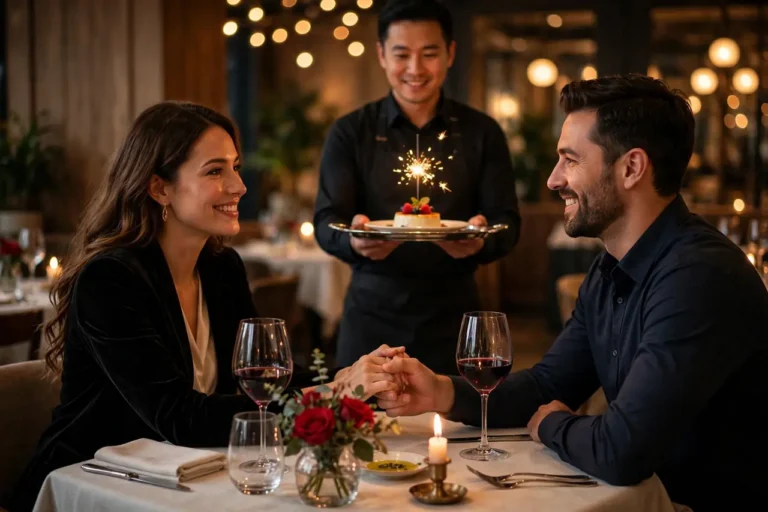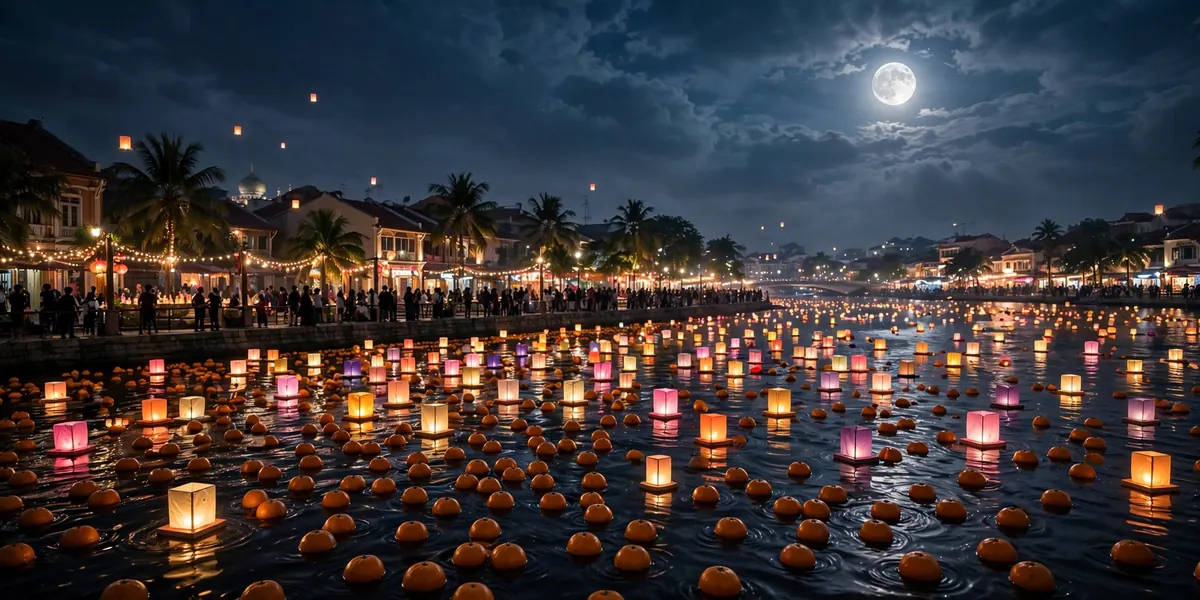
Valentine’s Day in Malaysia is a tale of two celebrations. On February 14, the country’s cities mark the global day of romance much like anywhere else — flowers, dinners, gifts. But Malaysia holds a second, older, and in many ways more magical card: Chap Goh Mei, the 15th night of Lunar New Year, when single women toss mandarin oranges inscribed with their contact details into rivers and the sea, hoping to find love. Known as the Chinese Valentine’s Day, it’s a tradition found almost nowhere else on earth. This guide covers both Malaysian Valentines’s — the February 14 customs across the country’s Malay, Chinese, and Indian communities, and the luminous romance of Chap Goh Mei.
February 14 in Multicultural Malaysia
Malaysia’s Valentine’s Day reflects its three great cultures. In the cities — Kuala Lumpur, Penang, Johor Bahru — February 14 is widely celebrated, especially among the Chinese and Indian communities and urban Malays. Malls mount displays, florists do roaring trade, and restaurants from mamak stalls to fine dining run Valentine’s specials. The day is not a public holiday, but in KL’s shopping districts it can feel like one.
Cultural nuances matter. Malaysia is a Muslim-majority country, and attitudes toward Valentine’s Day vary: many Malay Muslims celebrate it as a secular day of affection, while religious authorities have at times discouraged it as a Western import — a tension worth being aware of rather than alarmed by. In practice, urban Malaysia celebrates much like its neighbours, with couples of all backgrounds exchanging gifts and dinners. Public displays of affection are generally kept modest, in line with local norms.
The Indian Malaysian community often blends Valentine’s with its own rich romantic traditions — the aesthetics of Bollywood romance, temple visits for blessings, and family-involved courtship. Chinese Malaysian celebrations lean toward the gift-and-dinner model, with an added layer: many couples also observe Chap Goh Mei two weeks earlier (when the dates align), effectively getting two Valentines’s a year.
Chap Goh Mei: Malaysia’s Own Valentine’s Day
Chap Goh Mei (Hokkien for “15th night”) marks the end of Lunar New Year — the year’s first full moon, and traditionally the one night when sheltered young women could leave the house to be seen. The legend: maidens would gather at rivers and temples, and the night became an unofficial matchmaking festival. Over generations, this evolved into the mandarin-orange tradition: single women write their names and phone numbers (today, sometimes Instagram or WeChat handles) on mandarin oranges and toss them into rivers or the sea. Single men fish the oranges out, hoping to meet the woman who threw them.
The custom is sometimes called “traditional Tinder,” and the comparison is apt — it’s playful, public, and genuinely social. What was once a furtive hope for a good husband is now a festive, often hilarious community event, with emcees, music, and crowds. Organized orange-tossing events draw thousands at hotspots like Penang’s Esplanade, Taman Jaya lake in Petaling Jaya, and rivers in Klang.
Beyond the oranges, Chap Goh Mei is the Lantern Festival: elaborate lantern displays, lion and dragon dances, tangyuan (glutinous rice balls symbolizing togetherness), and family reunion dinners. The whole night glows — literally and romantically.
Where to Experience Chap Goh Mei
Penang’s Esplanade: The grandest celebration — thousands gather on the waterfront in George Town for the state-level event: cultural performances, lantern displays, and the mass orange toss into the sea. Men in boats scoop up the oranges as they’re thrown. It’s spectacular and unmissable if you’re in Malaysia for Lunar New Year.
Taman Jaya, Petaling Jaya: The Klang Valley’s hotspot — the lake fills with floating oranges and the park with families, food stalls, and lanterns.
Klang rivers: Traditional tossing spots along the river, with a more local, less touristy feel.
Temples nationwide: Thean Hou Temple in KL and Kek Lok Si in Penang mount extraordinary lantern displays for the festival — among the most photographed nights of the Malaysian year.
How to Do the Orange Toss: A Participant’s Guide
Want to try it yourself? Here’s how Chap Goh Mei’s famous ritual works in practice:
- Get your orange: Buy mandarin oranges (the small, loose-skinned type) from any market — they’re everywhere during Lunar New Year.
- Write your details: Traditionally name and phone number, written in marker. Modern versions add social media handles. Keep it legible and waterproof-ish.
- Make your wish: Hold the orange, think your wish for love (or fortune — married and older participants toss for blessings too), and throw it high and far into the water.
- The men’s side: Men wade or boat out to collect oranges. It’s all good-natured — think of it as the world’s most charming icebreaker.
- Etiquette: It’s festive and flirtatious but public and family-friendly. Keep it playful and respectful; the crowds include grandparents and children.
Note the date moves with the lunar calendar — Chap Goh Mei falls on the 15th day of Lunar New Year, usually in February, sometimes just days from Valentine’s Day itself. Check the lunar calendar each year.

Gift Customs: What Malaysians Exchange
February 14 gifting in Malaysia follows the regional pattern with local flavour. Flowers — roses and orchids — dominate, with florists in KL and Penang offering elaborate bouquets. Chocolates, jewellery, watches, and perfume are standard. A distinctly Malaysian note: hampers. Beautifully arranged gift hampers (food, wine where appropriate, luxury goods) are a major Valentine’s category, reflecting the broader Malaysian gift culture.
For Chap Goh Mei, the “gifts” are symbolic: mandarin oranges (which symbolize gold and good fortune), ang pow (red packets, though more a New Year than Valentine’s item), and tangyuan shared with family. The real currency of the night is participation — showing up, tossing the orange, joining the crowd.
For curated ideas, see our gifts for her and gifts for him guides.
Romantic Malaysia: Date Ideas Beyond the Day
- KL by night: Dinner with a view — the city’s rooftop restaurants overlook the Petronas Towers; the KL Tower’s revolving restaurant is the classic romantic splurge.
- Penang heritage: George Town’s shophouses, street art, and legendary food make a perfect romantic weekend — stay in a restored heritage hotel.
- Langkawi: The island’s beaches, the Sky Bridge, and sunset cruises are Malaysia’s ready-made romantic escape.
- Cameron Highlands: Tea plantations, cool air, and strawberry farms — a highland Valentine’s weekend.
- Temple evenings: Thean Hou Temple or Kek Lok Si illuminated at night during festival season — spiritual and stunning.
For more inspiration, browse our Valentine’s Day date ideas and romantic getaways planning guide.
Dining: A Multicultural Feast
Malaysian Valentine’s dining is a journey through the country’s food cultures. Fine-dining restaurants in KL run Valentine’s tasting menus (Malay, Chinese, Indian, and Western cuisines all represented). But the soul of Malaysian romance is the late-night mamak: roti canai and teh tarik at 11pm, eaten at a plastic table under the fans, is a date that costs almost nothing and feels completely local.
Penang’s hawker food is a romantic draw in its own right — char kuey teow, laksa, and cendol on a heritage street at night. For home cooks, our romantic dinner ideas can be adapted with Malaysian flavours.
A Brief History of Valentine’s Day in Malaysia
Valentine’s Day arrived in Malaysia via British colonial schools and the English-language press, and for decades it was a niche, urban, largely Chinese- and Indian-Malaysian observance. The country’s economic boom from the 1980s onward mainstreamed it: shopping malls made February 14 a retail season, and the growing middle class embraced the gift-and-dinner model. By the 2000s, Valentine’s was firmly part of urban Malaysian life — with the interesting twist that many celebrants were already observing Chap Goh Mei, giving them two romantic festivals in quick succession.
The relationship between the imported Valentine’s and the indigenous Chap Goh Mei is worth noting: rather than competing, they’ve settled into complementary roles. February 14 is the couples’ day — private, gift-focused, dinner-oriented. Chap Goh Mei is the community’s night — public, festive, and open to everyone including singles and families. Together they give Malaysia one of the world’s richest February romance calendars.
East Malaysia: Sabah and Sarawak
Malaysian Borneo celebrates with its own flavour. In Kota Kinabalu (Sabah), Valentine’s means waterfront dinners at the Signal Hill Observatory or the Tanjung Aru beach sunset — one of Southeast Asia’s great sunset spots — plus island-hopping to the Tunku Abdul Rahman marine park islands. Kundasang, in the cool highlands beneath Mount Kinabalu, offers a highland Valentine’s weekend of strawberry farms, tea plantations, and mountain air.
Sarawak’s Kuching brings riverside romance: the Kuching Waterfront at night, with the illuminated State Assembly building across the river, and river cruises at sunset. The region’s indigenous communities — Iban, Bidayuh, Orang Ulu — have their own courtship traditions, and Valentine’s in the longhouses blends modern celebration with deep-rooted custom. East Malaysia is generally more relaxed about the day’s “Western import” debates than the peninsula.
Proposals, Malaysian Style
Malaysian proposals blend the spectacular with the familial. Popular approaches: a KL rooftop at sunset with the Petronas Towers behind, a Penang beach proposal at Batu Ferringhi, a Chap Goh Mei orange-toss proposal (write “marry me?” on the orange — it happens), and the increasingly popular “family-involved” proposal where both families are present or informed first.
The family dimension is significant: in Malay, Chinese, and Indian Malaysian cultures alike, marriage is a family affair, and many couples seek parental blessing before or alongside the romantic proposal. Photographers specialising in proposals work in KL and Penang; for Chap Goh Mei proposals, coordinate with event organisers at the big public celebrations.
Valentine’s Day for Families and Friends
Malaysian families celebrate inclusively: it’s common for Valentine’s dinners to span generations, and for parents to give small gifts to children. Schools run card exchanges and fundraisers. The friendship celebration is lively — “Galentine’s” outings to spas, high teas, and shopping trips are popular among urban women, and mamak sessions with friends are the male equivalent.
Chap Goh Mei is the great equalizer: it’s explicitly for everyone — single, attached, young, old. The orange toss welcomes all, and the lantern festivals are family nights out. Our Galentine’s Day ideas adapt well to a Malaysian friends’ celebration.
Budget Romance, Malaysian Style
Malaysia is one of the world’s best-value romantic destinations. The free tier: temple lantern displays during Chap Goh Mei season, waterfront walks in Penang and KK, and the Batu Caves at festival time. The cheap-and-great tier: mamak feasts, hawker pilgrimages, and night markets — a spectacular Valentine’s dinner for two can cost less than a movie ticket in London.
The smart splurge: a heritage hotel in George Town or a beach resort in Langkawi for the weekend — Malaysian hospitality delivers luxury at mid-range prices. For universal budget strategies, see our budget Valentine’s guide.
The Perfect Malaysian Valentine’s Week
With two romantic festivals in play, Malaysia rewards the couple who plans a full week. Chap Goh Mei night: head to Penang’s Esplanade (or Taman Jaya if you’re in KL) for the lantern displays, performances, and the orange toss — arrive early for a good spot, bring oranges and a marker, and stay for the full-moon atmosphere. The days between: explore — George Town’s heritage streets, KL’s rooftop restaurants, or a Cameron Highlands escape. February 14: the classic Valentine’s — flowers, a nice dinner (book ahead in KL and Penang), and a night walk. Two festivals, one trip, zero repetition.
If Chap Goh Mei and Valentine’s Day fall close together in a given year (check the lunar calendar), the week between them is one of the most romantic stretches on the Malaysian calendar — plan accordingly.
Malaysia’s Two Valentines at a Glance: Key Facts
| Valentine’s Day (Feb 14) | Chap Goh Mei (15th of Lunar New Year) | |
|---|---|---|
| Date | February 14 (fixed; not a public holiday) | Lunar calendar — usually February; check yearly |
| Origin | Global/Western import | Chinese Lantern Festival; Hokkien “15th night” |
| Key ritual | Gifts, cards, dinners | Tossing mandarin oranges with contact details into water |
| Signature food | Restaurant dinners; chocolates | Tangyuan (glutinous rice balls); reunion dinner |
| Best location | KL rooftops; Penang heritage streets | Penang Esplanade; Taman Jaya lake; Klang rivers |
| Who celebrates | Couples, especially urban | Everyone — singles toss for love, families for blessings |
| Vibe | Romantic, commercial | Festive, communal, magical |
Watch: Chap Goh Mei at Penang’s Esplanade
This news report captures the state-level Chap Goh Mei celebration at George Town’s historic Esplanade — the drumbeats, the cultural performances, and thousands of mandarin oranges arcing into the sea. Watch it to understand why Malaysians call this night their own Valentine’s Day.
Chap Goh Mei Beyond Malaysia
While Malaysia’s celebration is the most famous, Chap Goh Mei is observed wherever Hokkien and Chinese diaspora communities gather — including Singapore, Indonesia’s Medan, and Taiwan. Each has its own flavour: Singapore’s tends toward organized waterfront events, while Taiwan’s Pingxi sky-lantern release (though a separate festival) shares the luminous DNA. But Penang’s Esplanade remains the definitive experience — the scale, the sea, and the sheer joy of thousands of oranges in flight are unmatched. If you can only experience Chap Goh Mei once, do it in Penang.
Frequently Asked Questions
What is Chap Goh Mei?
Chap Goh Mei (Hokkien for “15th night”) is the final night of Lunar New Year — the Lantern Festival. In Malaysia it’s known as the Chinese Valentine’s Day because of the mandarin-orange tossing tradition, in which single women throw oranges inscribed with their contact details into rivers or the sea, hoping to find love.
When is Chap Goh Mei?
It follows the lunar calendar, falling on the 15th day of Lunar New Year — usually in February, sometimes within days of Valentine’s Day. Check the lunar calendar each year for the exact date.
Do Malaysians celebrate Valentine’s Day on February 14?
Yes, especially in the cities — with flowers, dinners, and gifts much like elsewhere. Malaysia is Muslim-majority and attitudes vary, but urban celebration is widespread across the Chinese, Indian, and many Malay communities. Public affection is generally kept modest.
Where is the best place to experience Chap Goh Mei?
Penang’s Esplanade in George Town hosts the grandest celebration — thousands gather for performances and the mass orange toss. Taman Jaya lake in Petaling Jaya and rivers in Klang are the Klang Valley’s hotspots. Temples like Kek Lok Si (Penang) and Thean Hou (KL) mount spectacular lantern displays.
Can tourists participate in the orange toss?
Absolutely — it’s public, festive, and welcoming. Buy mandarin oranges at any market, write your details on them, and join the crowd. It’s good-natured and family-friendly.
How does Malaysia’s celebration compare to Singapore’s?
The two are cousins: both mark February 14 enthusiastically, and both Chinese communities observe Chap Goh Mei. Malaysia’s Chap Goh Mei traditions (especially Penang’s) are the grander and more famous. See how Singapore celebrates Valentine’s Day for comparison, and our global traditions guide for the wider picture.
What should visitors know about cultural sensitivities?
Malaysia is multicultural and welcoming. Keep public affection modest, dress respectfully at temples and mosques, and be aware that some conservative voices discourage Valentine’s Day — in practice, urban celebration is widespread and uncontroversial. During Ramadan (dates vary yearly), be mindful of daytime dining norms.
Is Chap Goh Mei only for Chinese Malaysians?
The tradition is Chinese in origin, but the public celebrations welcome everyone — Malaysians of all backgrounds attend the lantern festivals and waterfront events. The orange toss is participated in by anyone who shows up with an orange and a wish.
What is tangyuan, and why is it eaten at Chap Goh Mei?
Tangyuan are glutinous rice balls, often filled with black sesame or peanut, served in sweet soup. Their round shape symbolizes togetherness and family unity — eating them expresses the wish that the family stays complete and harmonious in the new year. They’re a Lunar New Year staple, not just a Chap Goh Mei one.
Is Valentine’s Day controversial in Malaysia?
It has been at times — religious authorities have occasionally discouraged it as a Western import inconsistent with Islamic values. In practice, urban Malaysians of all backgrounds celebrate widely, and the day is a major commercial and social event in the cities. Visitors should simply be respectful of local norms: modest public affection, appropriate dress at religious sites.
What’s the weather like in Malaysia in February?
Hot and tropical year-round — around 32°C days, 24°C nights, with afternoon showers possible. The highlands (Cameron, Kundasang) are cooler and make popular Valentine’s escapes. Chap Goh Mei’s full-moon night is usually warm and clear — perfect for waterfront celebrations.
How do I get to Penang’s Esplanade for Chap Goh Mei?
The Esplanade (Padang Kota Lama) is on the George Town waterfront, walkable from most heritage-area hotels. For the state-level Chap Goh Mei celebration, arrive by late afternoon — roads close and crowds build early. If you’re staying in KL, it’s a 4-hour drive or 1-hour flight to Penang; many Malaysians make it a Lunar New Year holiday trip.
Can I combine Chap Goh Mei and Valentine’s Day in one trip?
Yes — and it’s one of Malaysia’s best travel plays. The two festivals usually fall within about two weeks of each other (check the lunar calendar yearly). Base yourself in Penang for Chap Goh Mei’s Esplanade celebration, then stay on for heritage-street romance and a classic February 14 dinner. Two festivals, one flight.
Malaysia offers something almost no other country can: two Valentine’s Days, two weeks apart — one global and one gloriously local. Whether your February involves roses in Kuala Lumpur or a mandarin orange arcing into the Penang Strait under a full moon, the Malaysian celebration of love is generous, luminous, and utterly its own. Come for Valentine’s Day; stay for Chap Goh Mei — or better yet, plan the trip that catches both. In a world of interchangeable February 14ths, Malaysia’s luminous double celebration is something you’ll remember for the rest of your lives. Two moons, two festivals, one unforgettable February. Selamat Hari Valentine — and happy Chap Goh Mei. May your oranges fly far and your wishes land well.