Teachers make New Year resolutions twice a year — once in January, and once in August when the “real” new year begins. But January resolutions hit teachers at the hardest possible moment: mid-year fatigue, the long stretch to spring break, short days and long grading piles. New Year resolutions for teachers need to honor that reality: goals that lift your classroom and protect the person standing in front of it, designed for the actual rhythm of a school year rather than a generic January fantasy.
This guide is organized the way your year actually works: a month-by-month plan from January to December that pairs classroom goals (engagement, differentiation, assessment, culture) with self-care goals (boundaries, rest, professional growth, summer recovery). Each month has one classroom focus and one personal focus — small enough to survive report-card season, meaningful enough to compound. Whether you teach kindergarteners or college freshmen, in a big city or a rural district, the structure adapts to your context.
The Teacher’s January Problem (and the Fix)
Here’s what usually happens: January arrives, you’re exhausted from the fall term, and the internet suggests you overhaul your teaching, start a fitness program, and “romanticize your life” simultaneously. By February, the resolutions are dead and the guilt is thriving. The problem isn’t you — it’s timing. January for teachers isn’t a fresh start; it’s the middle of the marathon.
The fix is a mid-year mindset: January resolutions for teachers should be about finishing the year strong and sustainably, not reinventing everything. Think “one meaningful classroom upgrade per term” and “one boundary that protects my evenings” — not twelve life overhauls. The school-year calendar below is built on that principle: lighter lifts in the heavy months, bigger projects when energy returns.
A second principle: classroom goals and self-care goals are the same project. A teacher running on fumes can’t be present, creative, or patient — the qualities every classroom goal depends on. Self-care isn’t selfish or separate from good teaching; it’s the infrastructure good teaching runs on. This plan treats both with equal seriousness, every single month. If you’re also working on personal habits outside school, our guide to small-win resolutions for busy professionals adapts well to a teacher’s schedule.
January: Reset and Reconnect
Classroom focus — the mid-year reset ritual. The first week back is a natural fresh start for students too. Run a class reset: revisit norms together (what’s working? what should we change?), set one shared class goal for the term (“we’ll all improve at giving kind, specific feedback”), and rearrange something physical — seating, a display wall, the reading corner. Small environmental changes signal “new chapter” to young brains remarkably well. For older students, a one-page mid-year reflection (“one thing I’m proud of, one thing I’ll improve”) builds the metacognition that drives the spring term.
Self-care focus — reclaim one evening. Pick one weeknight as a hard stop: no grading, no planning after dinner. Put it on the calendar and tell someone. January’s gift is early darkness — use it as permission to rest. If you’re carrying holiday exhaustion into the term, our 30-day reset guide works as a gentle January relaunch for teachers too, not just for students.
February: Deepen Engagement
Classroom focus — one engagement upgrade. Pick a single engagement strategy and commit to it for the month: cold-calling with care (equitable participation), think-pair-share as a daily ritual, exit tickets that actually inform tomorrow’s lesson, or a weekly “genius hour” for student-driven inquiry. One strategy, done consistently, beats five tried once. Observe the effects in a simple log — engagement strategies compound when you can see what’s working.
Self-care focus — the colleague connection. February isolation is real. Schedule one lunch or coffee with a colleague you like, weekly if possible. Teaching can be lonely even in crowded buildings; deliberate collegial connection is a proven buffer against mid-year burnout. If your school culture makes this hard, one trusted teacher-friend outside your building counts just as much.
March: Differentiate and Declutter
Classroom focus — differentiation, one layer at a time. “Differentiate everything” is paralyzing; “add one scaffold and one extension to each week’s main lesson” is doable. Build a small toolkit: sentence starters for struggling writers, choice boards for fast finishers, visual supports for complex instructions. By month’s end you’ll have a reusable set that serves you for years.
Self-care focus — the paper declutter. March is a good month to purge: the filing cabinet of doom, the 400 unread emails, the tote bag of ungraded work you’re avoiding. Set a timer for 30 minutes, three times this month. Physical clutter and mental clutter feed each other; teachers consistently report that a cleared desk measurably lowers Sunday-night dread. Pair this with our room-by-room decluttering guide if home needs the same treatment.
April: Assess Smarter, Not Harder
Classroom focus — the assessment audit. Before testing season, audit your assessments: which ones actually tell you what students learned? Replace one low-information assessment (the worksheet nobody reviews) with a high-information one (a 5-minute conference, an exit ticket, a student self-assessment). Teach students to self-assess against clear criteria — it halves your feedback load while doubling their learning. If grading is eating your life, this is the highest-leverage month of the year.
Self-care focus — move daily. Spring weather returns; use it. A 20-minute walk after school — no grading bag, no podcasts about pedagogy, just air — is one of the most effective stress interventions teachers have. The research on walking and rumination is striking: movement measurably quiets the mental replay of difficult classroom moments.
May: Finish Strong and Celebrate
Classroom focus — the celebration portfolio. End-of-year chaos tempts everyone to just survive May. Instead, design one meaningful closing ritual: student portfolios with a reflection letter, a class “museum” of the year’s work for families, or letters students write to their future selves (you mail them in September — a beloved tradition). Endings shape memories; a deliberate good ending lifts the whole year’s meaning for you and them.
Self-care focus — plan summer recovery first. Before the last bell, block the first two weeks of summer as genuinely off — no PD, no classroom setup, no curriculum writing. Teachers who rest first and work later report better summers than those who “get a head start” and never stop. Write the rest weeks on the calendar now, in ink.
June: Rest, Then Reflect
Classroom focus — the honest debrief. While the year is fresh, spend one afternoon writing a brutally honest debrief: what units soared, which flopped, what you’d change, what systems to keep. File it where August-you will find it. This single document is worth more than any summer PD for next year’s planning.
Self-care focus — real rest. Sleep in. See friends. Do things with no learning objective. The first two weeks of summer belong to recovery, full stop. Teacher burnout research is unambiguous: genuine detachment from work — not just physical absence but mental disengagement — is what restores the emotional resources teaching consumes. If you can only protect one thing this summer, protect this.
July: Grow on Purpose
Classroom focus — one professional growth project. Choose exactly one: a book study with colleagues, an online course in an area you want to strengthen, a curriculum project for a unit that needs rebuilding, or observing a master teacher (even via video). One deep project beats five skimmed ones. Tie it to something your debrief flagged — growth aimed at a real problem sticks.
Self-care focus — the joy project. July is for the thing teaching crowds out: the hobby, the trip, the long visit, the creative project with no rubric. Schedule it with the same seriousness as a work deadline. Teachers who maintain an identity beyond “teacher” bring more energy — and more interesting selves — back to the classroom. If travel is the dream, our travel resolutions guide can help you plan it well.
August: Launch Clean
Classroom focus — systems before content. The highest-leverage August work isn’t lesson plans — it’s systems: how students enter, how materials move, how attention is regained, how the day ends. Script the first week’s procedures explicitly; the classrooms that run smoothly in October were designed in August. Set up one organizational system (digital or physical) for the year’s paperwork before the paper starts flowing.
Self-care focus — protect September you. Front-load rest into late August: consistent sleep schedule, meal routines, exercise habit restarted before students arrive. The teachers who start the year rested aren’t lucky — they’re the ones who treated late August as preseason training, not an extension of summer.
September: Culture First
Classroom focus — build the culture deliberately. The first month sets the year’s social DNA. Invest heavily in community: class agreements co-created with students, daily connection rituals (morning meeting, closing circle), and explicit teaching of the social skills your class needs. Content can wait a week; culture can’t. A strong September culture prevents a thousand October behavior problems.
Self-care focus — the boundary audit. New year, new boundaries — set them in week one, when expectations are forming. Decide your leaving time and keep it twice a week minimum. Decide which communications you’ll answer after hours (emergencies only, defined narrowly). Boundaries set in September hold; boundaries attempted in November fight entrenched expectations.
October: Sustain and Sharpen
Classroom focus — formative feedback loops. By October you know your students. Sharpen the feedback loop: more frequent, smaller, more specific feedback; student goal-setting conferences; peer feedback structures. This is also the month to identify struggling students early and intervene while there’s time — the October investment prevents January crises.
Self-care focus — the energy audit. Run a one-week audit: what drains you most? (Usually: grading volume, a difficult class period, meetings, or Sunday planning.) Pick the single biggest drain and redesign it — batch grading differently, restructure the hard period, or protect Sunday mornings. One fix per month; the year improves by iteration. If sleep is suffering, the sleep resolution plan is built for people whose minds replay the day at midnight.
November: Gratitude and Guardrails
Classroom focus — gratitude as pedagogy. November’s theme practically writes itself: gratitude journals, thank-you letters (students writing to staff members is a school-culture superpower), and a class reflection on growth since September. Gratitude practices measurably improve classroom climate — and they’re a genuine pleasure to teach.
Self-care focus — holiday guardrails. Decide now, before December chaos: which school events you’ll attend, how much you’ll spend on classroom gifts, and when grading stops for the break. Pre-decided guardrails beat in-the-moment guilt every time. Teachers who plan their December boundaries in November actually keep them.
December: Close the Loop
Classroom focus — reflection over coverage. Resist the urge to cram content into the holiday weeks. Use December for synthesis: student reflections on the term, portfolio curation, goal-setting for January. A calm, reflective December sends students into the break — and you into your own rest — in the right state.
Self-care focus — real break, real boundaries. The winter break is recovery time, not catch-up time. Set an out-of-office, leave the grading bag at school (radical, effective), and give yourself the same advice you’d give an exhausted student: rest is productive. January-you will inherit whatever December-you protects.
The Five Standing Resolutions: Your Year-Long Backbone
Beneath the monthly plan, five standing resolutions run all year:
- Leave on time twice a week. Pick the days; keep them sacred. The work expands to fill all available time — so don’t make all your time available.
- One growth edge per term. A single teaching skill to deliberately improve each term (questioning, feedback, differentiation). Deliberate practice beats diffuse “do better.”
- Protect sleep like a lesson plan. A consistent sleep window, defended against grading. Exhausted teachers can’t do the job well; rested ones can. Non-negotiable.
- Maintain one non-teacher identity. The hobby, the friendship circle, the side project that has nothing to do with school. It’s burnout insurance with compound interest.
- Ask for help early. Mentor teachers, counselors, colleagues, administrators — support sought in October prevents crises in March. Needing help is data about the job’s difficulty, not your competence.
The Classroom Goal Bank: 24 Ideas by Category
Use this bank when choosing your monthly classroom focus. Pick goals that solve your actual problems, not someone else’s highlight reel.
Engagement: (1) Start every lesson with a 3-minute hook — a question, image, or puzzle. (2) Build in daily turn-and-talk so every student speaks daily. (3) End each week with a student-choice activity. (4) Gamify one routine — a class points system for transitions or homework return. (5) Invite one guest (in person or video call) per term — a parent with an interesting job, a community member, an author.
Differentiation: (6) Create choice boards for one unit per term. (7) Build a “challenge corner” with extension tasks fast finishers can access independently. (8) Record key instructions as short videos students can replay. (9) Pre-teach vocabulary to struggling learners in 10-minute small groups. (10) Offer two product options for one major assessment per term (essay or presentation, test or project).
Assessment & feedback: (11) Replace one graded worksheet per week with an ungraded exit ticket. (12) Run student-led conferences once per term. (13) Teach students to use a simple rubric to self-assess before submitting. (14) Give feedback as voice notes — faster for you, richer for students. (15) Keep a one-line log per student per week; review monthly for patterns.
Classroom culture: (16) Start a daily or weekly class meeting ritual. (17) Create a “brag board” where students post each other’s kindnesses. (18) Write one positive note home per week — rotate through the roster. (19) Co-create class agreements in September and revisit them monthly. (20) End each term with student reflections on their own growth, kept in a portfolio.
Your craft: (21) Video one lesson per term and watch it — uncomfortable, transformative. (22) Observe a colleague’s classroom once per term. (23) Read one teaching book per year and implement exactly three ideas from it. (24) Join one professional community (online or local) and participate monthly.
The Sunday Reset: A Teacher’s 30-Minute Weekly Ritual
Sunday dread shrinks when Sunday has a plan. This 30-minute ritual, done the same way each week, keeps the term running smoothly: minutes 1–10 — scan the week: glance at the calendar, note assessments, meetings, and deadlines; identify the week’s hardest day and plan around it. Minutes 11–20 — prep the edges: lay out Monday’s materials, queue copies, set out clothes — decision fatigue is lowest when decisions are pre-made. Minutes 21–25 — the gratitude line: write one sentence about something good from last week — a student’s breakthrough, a colleague’s kindness. This tiny practice measurably shifts Monday-morning mindset. Minutes 26–30 — the boundary check: confirm your leaving-time days and your no-work evening are still on the calendar; if the week ate them, rebook immediately. Thirty minutes on Sunday buys back hours of weekday calm — and it’s a resolution that protects every other resolution on your list.
In Pictures: Resolutions for Teachers
Teachers’ January arrives mid-school-year — so the best resolutions reset the classroom and protect the person teaching it.

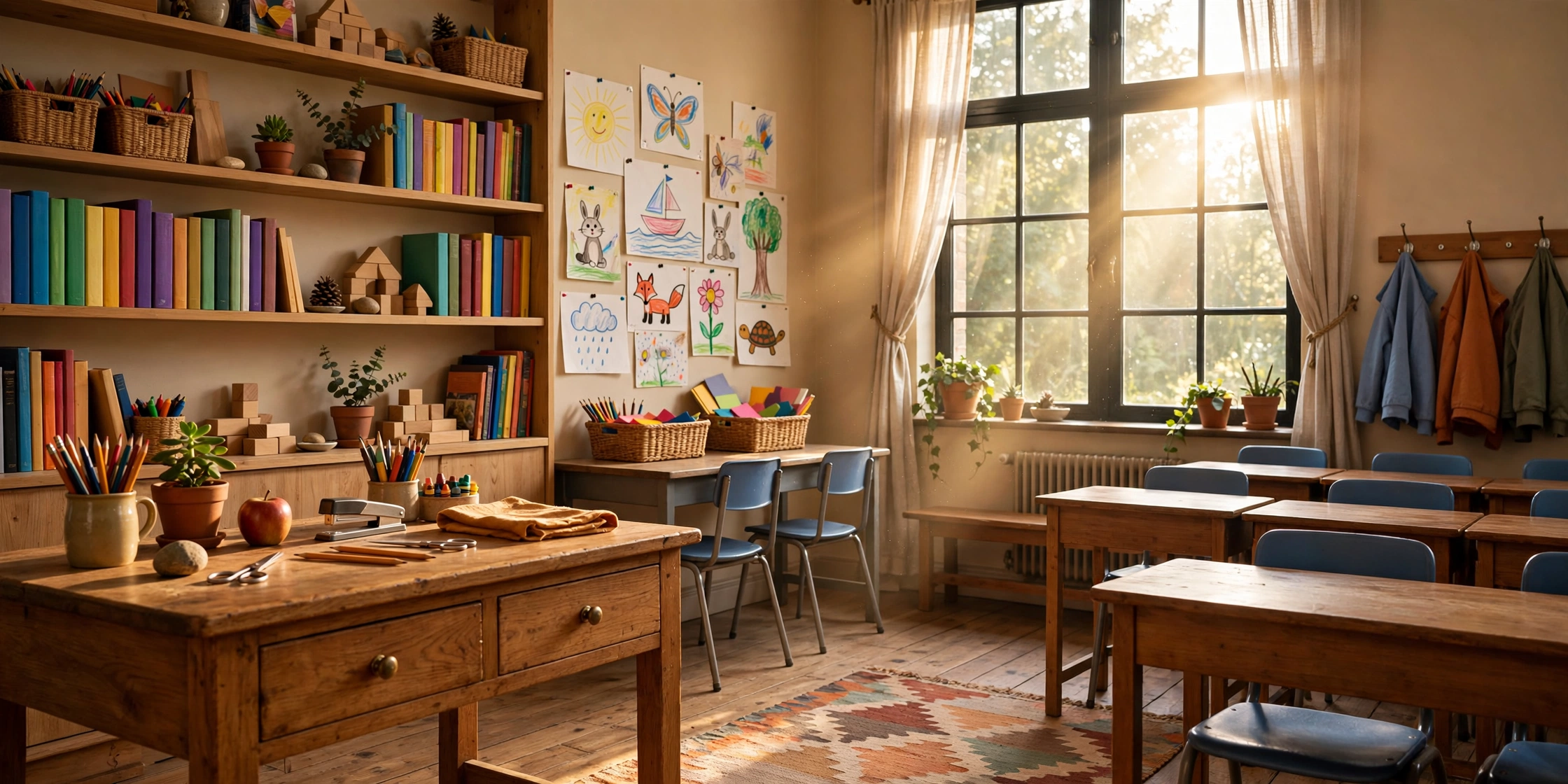
A teacher’s fresh start: an organized classroom, a calm desk, and self-care goals alongside student goals.
Watch: Resolutions for Teachers
A whole-educator approach to setting goals without burning out — made for the people who give the most.
At a Glance: Resolutions for Teachers
A month-by-month map for the teacher’s January-through-spring stretch.
| Month | Focus | Rationale |
|---|---|---|
| January | Reset and reconnect | Mid-year reset: restore routines and relationships after the winter break |
| February | Deepen engagement | Build on restored routines with deeper learning strategies |
| March | Differentiate and declutter | Tidy classroom systems; tailor instruction to students |
| Spring | Sustain and finish strong | The post’s arc: protect energy through testing season |
| All year | One non-negotiable daily self-care ritual | The post’s throughline: classroom goals fail without teacher recovery |
Frequently Asked Questions
What are good New Year resolutions for teachers?
The best teacher resolutions pair one classroom goal with one self-care goal per term or month: an engagement strategy plus an evening boundary, a differentiation toolkit plus a movement habit. Avoid January overhauls — mid-year resolutions should focus on finishing sustainably. The month-by-month plan above gives you twelve paired goals designed for the real school calendar.
How can teachers avoid burnout in the new year?
Burnout prevention is structural, not motivational: leave on time twice a week, protect sleep, take real breaks (including mental detachment in summer), maintain relationships and identities outside school, and ask for help early. If exhaustion persists despite real rest — cynicism, dread, physical symptoms — consider talking to a counselor or your doctor; burnout can overlap with health conditions that deserve professional support.
Should teachers make resolutions in January or at the start of the school year?
Both, differently. Use January for mid-year adjustments — one classroom upgrade, one boundary, finishing strong. Use August/September for the bigger launches: culture-building, systems, new initiatives. Trying to launch everything in January ignores the reality that you’re mid-marathon; the school-year rhythm in this guide respects both fresh starts.
How do I balance classroom goals with personal life?
By treating self-care goals as equal line items, not leftovers: the monthly plan above gives each equal weight. Practically, this means scheduled boundaries (leaving times, no-grading evenings), a protected summer recovery, and the standing rule that no classroom goal gets added without naming what it replaces. For general habit mechanics that survive busy schedules, see how to make resolutions stick.
What professional development goals make sense for a year?
One deep project per year beats five shallow ones: pick the skill your honest June debrief flagged, and pursue it through a book study, course, or peer observation cycle. Tie growth to a real classroom problem so the learning transfers. Document what you try — a simple teaching journal becomes an invaluable professional asset over the years.
How can teachers actually disconnect during breaks?
Decide before the break: set an out-of-office message, leave work materials at school, and pre-plan the first two days of the break with non-work activities so rest has a shape. Tell colleagues your boundaries plainly. True disconnection — mental as well as physical — is what restores the emotional resources teaching consumes; “working from the couch” doesn’t count as a break.
Teaching is one of the few jobs where your resolutions directly shape other people’s years. That’s a heavy responsibility — and exactly why your own sustainability belongs at the top of the list, not the bottom. One classroom upgrade per term, one boundary per month, real rest in summer: that’s not a modest plan. That’s a career-preserving one. And remember that the goal bank above is a multi-year resource — you don’t need to use all 24 ideas this year. Pick the three that solve your biggest current frustrations, master them, and let next year’s debrief choose the next three. Start this January with the mid-year reset, protect one evening a week, and let the months compound. Your students get the best version of you when you plan for the whole human doing the teaching.