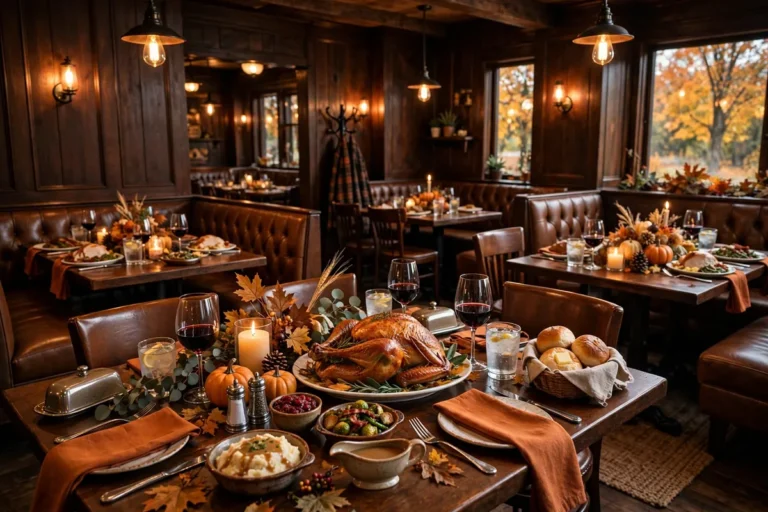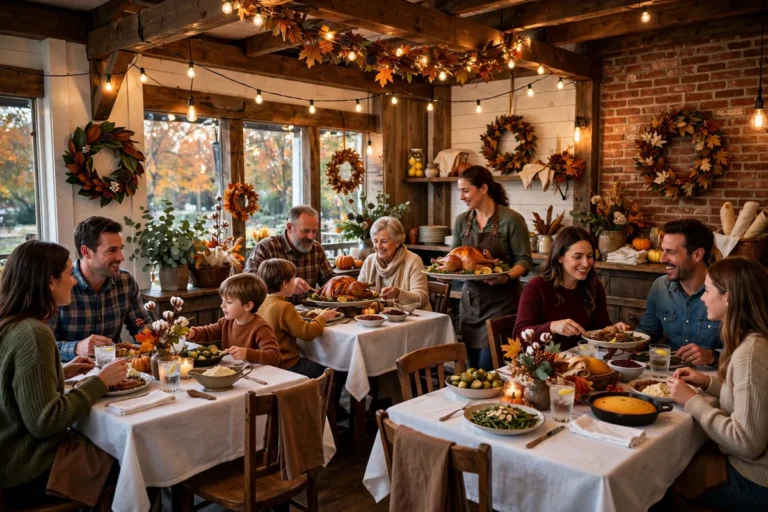
Being invited to someone’s Thanksgiving dinner is one of the warmest honors of the holiday season — and it comes with a question that stumps even seasoned guests every single year: exactly what to bring to Thanksgiving dinner as a guest? Show up empty-handed and you feel rude. Bring the wrong thing and you’ve added stress to an already overloaded host. Bring the right thing and you’re remembered fondly for years. The good news is that great Thanksgiving guest etiquette isn’t mysterious — it’s a short list of thoughtful principles, a few reliable gift categories, and clear guidance on what to ask, what to offer, and what to leave at home. This guide covers all of it: the golden rule of asking the host first, the best dishes to contribute (and how to transport them), host gifts that never miss, wine and drink etiquette, what to do about dietary restrictions and kids, day-of behavior, and the thank-you follow-up that separates good guests from great ones. Whether it’s your first Thanksgiving at someone else’s table or your thirtieth, you’ll arrive confident and leave welcome back.
The Golden Rule: Always Ask the Host First
Before you buy, bake, or brainstorm, ask the host one simple question: “What can I bring?” This single sentence solves more Thanksgiving guest dilemmas than any gift guide ever will. Hosts who are running a tightly choreographed kitchen may say “just yourselves” — and mean it. Others will light up and assign you the salad, the rolls, or a dessert. Either way, you’ve shown respect for their plan instead of freelancing a surprise casserole that needs oven time they don’t have.
How to ask (and when)
Ask early — at least a week before Thanksgiving, ideally when you accept the invitation. A quick message works: “We’re so excited for Thursday! I’d love to contribute — is there a dish I can bring, or would you prefer a host gift?” This gives the host time to think and to coordinate with other guests. Asking the morning of Thanksgiving puts the host on the spot and usually earns you a polite “oh, don’t worry about it” that leaves you guessing anyway.
If the host says “just bring yourself”
Believe them about the food — but still bring a small host gift. “Just bring yourself” means “please don’t add a dish to my oven schedule,” not “arrive with literally nothing.” A bottle of wine, flowers, a candle, or a box of good chocolates acknowledges the enormous effort behind the meal without disrupting it. The gift is presented to the host, not added to the table, unless they choose otherwise.
If the host assigns you a dish
Take the assignment seriously. Ask about quantities (“how many people?”), oven or fridge space (“should I bring it ready to serve?”), and timing (“what time should it arrive?”). Then deliver exactly what was asked, on time, in a container that doesn’t need to come back. Bringing the assigned dish plus an unrequested extra is fine only if the extra requires zero host effort — a bag of good coffee, not a soufflé that needs the oven.
The Best Dishes to Bring as a Guest
When the host welcomes a contribution, aim for dishes that travel well, serve at room temperature or reheat easily, and don’t compete with the classics. Here’s what works, category by category.
Appetizers: the host’s favorite gift
An appetizer spread is the single most useful thing a guest can bring, because it solves the host’s hardest window: the hour before dinner when guests are arriving, the kitchen is chaos, and hungry people are circling. A Thanksgiving charcuterie board — cheeses, cured meats, crackers, nuts, dried fruit, cornichons — arrives ready to set out and buys the host a full hour of breathing room. Other winners: a baked brie with cranberry (reheats in 10 minutes), deviled eggs (served cold, universally loved), or a simple cheese ball with crackers. Browse Thanksgiving appetizer ideas for options that travel in one container.
Side dishes that travel well
The best guest sides are sturdy: roasted vegetables (Brussels sprouts, carrots, butternut squash) that survive a car ride and a quick reheat; a grain salad (wild rice, farro, or quinoa with cranberries and nuts) that’s actually better at room temperature; or cranberry sauce, which keeps for days and needs zero oven time. Avoid anything with a crisp topping that goes soggy in transit, and avoid dishes that need the host’s oven for more than 15 minutes — their oven schedule is already booked solid. If you’re unsure about oven logistics, our Thanksgiving Day cooking schedule shows just how tightly a host’s oven is choreographed.
Desserts: always welcome, rarely refused
Dessert is the safest dish category because it’s served after the kitchen pressure lifts. A pie (pumpkin, pecan, apple), a batch of mini Thanksgiving desserts for easy grazing, or an icebox cake that slices straight from the fridge — all excellent. One rule: check what the host is already making so you don’t duplicate their signature pie. And bring dessert in a disposable or clearly-labeled container; nobody wants to chase down their pie plate in December.
Bread and rolls
A basket of good bakery rolls, a loaf of crusty bread, or homemade dinner rolls is humble, useful, and almost never duplicated. Bread fills the table, requires no reheating decisions (room temperature is fine), and pairs with everything. It’s the perfect assignment for a guest who doesn’t love cooking — buy the best bakery loaf in town and present it well.
Drinks: wine, cider, and beyond
Drinks are a contribution category of their own. A bottle of wine is classic (more on choosing it below). A gallon of fresh apple cider, a batch of Thanksgiving mocktails, or a growler from a local brewery all work. If you bring a cocktail, bring everything needed to serve it — the batch, the garnish, and ideally the pitcher. Never bring a drink that requires the host to play bartender during the dinner rush.
Host Gifts That Never Miss
Separate from food contributions, a host gift is a personal thank-you for the invitation. It should be consumable, beautiful, or useful — never a project.
Wine and spirits, chosen well
Wine remains the default host gift for good reason. For Thanksgiving specifically, versatile bottles win: a dry Riesling, an unoaked Chardonnay, a Pinot Noir, or a sparkling wine all pair with turkey and sides. Our guide to the best wine with Thanksgiving dinner breaks down pairings by course. One etiquette note: if you bring wine hoping it will be served with dinner, say so — otherwise the host may reasonably save it, and you shouldn’t be offended. If it’s a gift for the host’s cellar, say “this is for you to enjoy later” so there’s no awkwardness.
Flowers, thoughtfully delivered
Flowers are lovely but come with a catch: a host mid-cooking doesn’t have time to find a vase, trim stems, and arrange. Solve this by bringing flowers already arranged in a vase, or sending them the day before so they’re displayed when you arrive. A small potted herb (rosemary, thyme) doubles as décor and a cooking ingredient — charming and zero-effort.
Food gifts for after the party
Some of the most appreciated guest gifts are for the host’s Friday, not Thursday: a box of excellent chocolates, a bag of specialty coffee beans, good olive oil, a jar of local honey, or a cheese selection for the weekend. These say “I know the real work starts after everyone leaves” and they never compete with the meal.
What not to bring as a gift
Skip anything that creates work: unarranged flowers needing a vase, a dish that needs oven time, a complicated gadget, or a “fun” ingredient the host must now figure out how to use. Skip strongly scented candles (they compete with food aromas at the table). And skip bringing a plus-one the host didn’t invite — that conversation happens weeks in advance, not at the door.
Navigating Dietary Restrictions — Yours and Theirs
Dietary needs are one of the most common sources of Thanksgiving guest anxiety, and they’re entirely manageable with early communication.
If you have dietary restrictions
Tell the host when you accept the invitation — not the day before. Be specific and solution-oriented: “I’m vegetarian — I’d love to bring a hearty main dish to share so you don’t have to cook separately.” Offering to bring your own solution is the gold standard; it removes burden while keeping you fed. For plant-based guests, our vegetarian Thanksgiving recipes and vegan Thanksgiving dinner menu offer crowd-pleasing dishes that omnivores enjoy too. Never announce a restriction at the table and expect the host to improvise.
If you’re cooking for a host with restrictions
If the host mentioned a restriction and assigned you a dish, honor it exactly — read labels, ask about hidden ingredients (chicken stock in the “vegetable” stuffing is the classic trap). When in doubt, bring an ingredient card listing what’s in your dish. Guests with allergies will trust you more, and the host will notice the care.
Kids, picky eaters, and the “just in case” dish
If you’re bringing children, it’s perfectly acceptable to bring a small kid-friendly backup (mac and cheese, chicken nuggets) without making it a statement — just mention it quietly to the host in advance. Most hosts would rather have fed kids than a mealtime standoff. Keep the backup dish self-contained and low-profile.
Thanksgiving Day: Guest Behavior That Hosts Love
What you bring matters less than how you behave. The best guests follow a simple playbook.
Arrive on time (not early, not very late)
“Dinner at 4” means arrive between 3:30 and 4:00 — not 2:00 (the host is mid-chaos) and not 5:00 (dinner is congealing). If you’re delayed, text. If you offered to help with setup, then arriving 30–45 minutes early is a kindness — but only if you offered and they accepted.
Offer help — specifically
“Can I help?” is polite but puts the burden on the host to invent a task. Instead, offer specifics: “Can I set out the appetizers?” “Want me to open the wine?” “I’ll clear the salad plates.” Specific offers get accepted; vague ones get waved off. And once dinner is served, the best help is clearing and dish duty without being asked — many hands make the post-dinner mountain disappear in twenty minutes.
Table manners and the flow of the meal
Wait for the host’s cue before starting (a toast, a blessing, or a simple “dig in”). Pass dishes to the right, or as directed. Compliment the food genuinely and specifically — “this gravy is incredible” beats generic praise and the cook will remember it. Pace yourself: Thanksgiving is a marathon with dessert still to come. And keep phones away from the table; nothing deflates a host faster than guests scrolling through the meal they spent two days cooking.
Handling the “seconds” and leftovers question
Take seconds enthusiastically — a host’s joy is an empty platter. But don’t pack yourself a to-go plate unless the host offers. Many hosts plan leftovers carefully (or dream about them). If they insist you take food home, accept graciously; if they don’t offer, don’t ask. The exception: if you brought a dish, it’s polite to leave the remainder unless the host presses it on you.
After the Meal: The Thank-You That Seals It
The evening doesn’t end when you leave. A short thank-you message within 24–48 hours — text, card, or email — is the final ingredient of great guest etiquette. Mention something specific: the turkey, the pie, a moment at the table. Hosts remember who noticed. If you took photos together, share them. And if the friendship runs deep, a small follow-up gesture (returning a borrowed container filled with cookies, an invitation to your own table next year) turns a lovely evening into a tradition.
What to Bring to Different Kinds of Thanksgiving Gatherings
Not every Thanksgiving looks like the classic sit-down dinner. The right contribution depends on the format — here’s how to calibrate.
The formal sit-down dinner
At a formal dinner with a set menu, restraint is the virtue. The host has planned every course, so your best move is a polished host gift and, at most, one assigned dish executed flawlessly. Wine in the $20–30 range, a beautiful candle, or a box of artisan chocolates fits the tone. Don’t improvise a centerpiece or rearrange the table — formal hosts have a vision. Arrive dressed to match the invitation, offer specific help, and let the evening unfold as planned.
The casual family gathering
Big, loud, multi-generational Thanksgivings run on abundance and flexibility. Here, bringing a generous dish is expected — think a full 9×13 pan of mac and cheese, a double batch of rolls, or two pies. Disposable foil pans are your friend; nobody wants to track containers across three households. This is also the setting where a potluck-style sign-up shines, so volunteer early for a category before it fills up.
Friendsgiving
Friendsgiving is inherently collaborative — everyone cooks, everyone cleans, and the menu is usually built by group chat. Bring your A-game dish (the one your friends request by name), plus something drinkable to share. Because Friendsgivings often happen the weekend before or after the actual holiday, check the date carefully: Thanksgiving 2026 falls on November 26, but your Friendsgiving might be the Saturday prior. Confirm the headcount, the oven situation (apartment ovens are small), and whether anyone has dietary restrictions before you commit to a dish.
Dinner at the in-laws’ (first time)
First Thanksgiving with a partner’s family deserves extra thought. Ask your partner — not the host directly — what would land well: some families treasure a homemade dish, others prefer you simply show up gracious and unobtrusive. A safe universal play: a beautiful host gift (flowers already in a vase, excellent wine) plus an offer to bring one low-risk item like a bakery pie or artisan bread. Learn the family’s traditions before suggesting changes — “we always do it this way at my house” is a sentence to retire for the day.
Thanksgiving while traveling or far from home
If you’re a guest in someone’s home while traveling — an Airbnb host’s dinner, a new friend’s table in a new city — portability matters more than ever. You can’t cook much, so lean into excellent store-bought contributions: a top-tier bakery pie, a wedge of great cheese with crackers, a bottle of local wine from your hometown (a lovely conversation piece), or a bag of specialty coffee for the morning after. The gesture counts double when you’ve traveled to be there.
When you’re asked to bring “a side” with no further direction
This wonderfully vague assignment is actually a compliment — the host trusts your judgment. Pick something that (a) serves at room temperature or reheats in 15 minutes, (b) doesn’t duplicate the classics, and (c) feeds a crowd from one container. Strong choices: a wild rice and cranberry salad, roasted balsamic Brussels sprouts, maple-glazed carrots, or a big green salad with apples and candied pecans. Text the host your plan (“I’m bringing a wild rice salad — does that work?”) to avoid collisions.
Budget Guide: Thoughtful Contributions at Every Price
Being a great Thanksgiving guest isn’t about spending money — it’s about thoughtfulness. Here’s how to nail it at any budget.
Under $15
A bag of excellent coffee beans, a jar of local honey, a bunch of seasonal flowers from the grocery store (arranged in a mason jar you already own), a handwritten card with a heartfelt note, or a homemade loaf of bread. Any of these outshines a thoughtless $40 bottle.
$15–$30
A solid bottle of Pinot Noir or dry Riesling, a box of artisan chocolates, a bakery pie, a good candle in an autumn scent, or the ingredients for a standout homemade dish (a from-scratch cranberry sauce costs under $10 and tastes like you tried much harder).
$30+
A premium bottle of sparkling wine, a curated cheese selection, a beautiful serving piece (a wooden board, a linen runner) the host keeps, or a gift card to a favorite restaurant for a post-holiday date night. At this level, you’re giving the host something for after the chaos — which is when they’ll appreciate it most.
In Pictures: What to Bring to Thanksgiving Dinner
Showing up with the right dish earns you a permanent invitation. Here is how guests get it right.

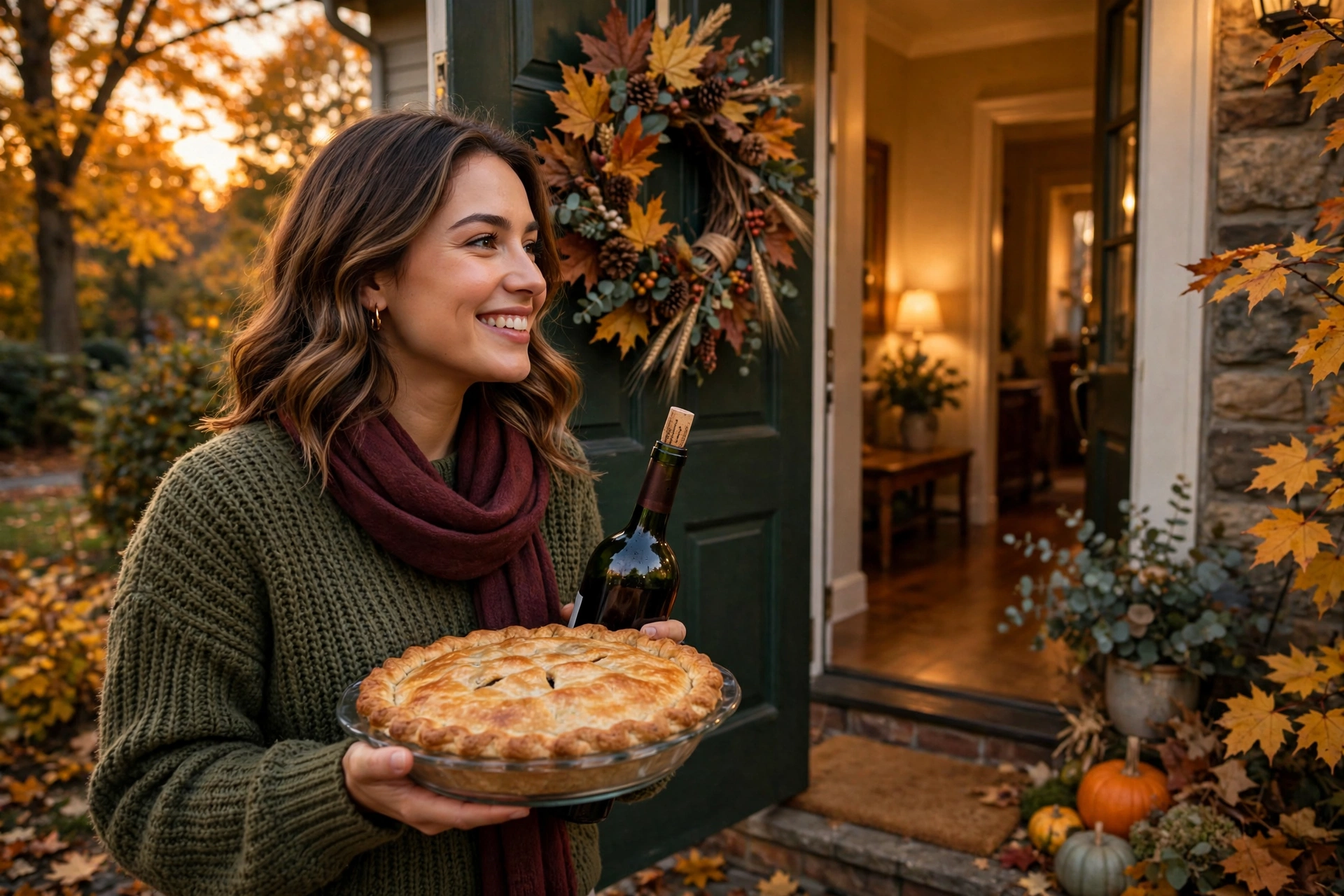
A guest arriving with a gift basket of wine, homemade pie and flowers at a door with a fall wreath.
Watch: What to Bring to Thanksgiving Dinner
Food Wishes' Chef John makes five classic Thanksgiving side dishes — ideal dishes for a guest to bring.
At a Glance: What to Bring to Thanksgiving Dinner
Guest etiquette for what to bring, what to ask and what to skip.
| Detail | Guidance |
|---|---|
| Ask the host | Always ask what is needed before choosing a dish |
| Travel-friendly | Pick dishes that hold well: pies, rolls, sturdy sides |
| Wine | A bottle of red or white is rarely wrong |
| Dessert | A bakery pie or homemade tart is a safe crowd-pleaser |
| Host gift | Flowers, candles or quality olive oil are thoughtful extras |
| Avoid | Skip dishes that need the host's oven at the last minute |
Frequently Asked Questions
Is it rude to show up to Thanksgiving dinner empty-handed?
Yes, generally — even when the host says “just bring yourself,” a small host gift (wine, flowers in a vase, chocolates) is expected. The only exception is a truly casual, family-style gathering where your presence was explicitly framed as the contribution. When in doubt, bring something small; it’s never wrong.
How much food should I bring as a guest?
Bring enough of your assigned dish to serve the full guest count with a little extra — ask the host for the headcount. A good rule of thumb: an appetizer or side for 10–12 people, a dessert that yields 10–12 servings. It’s better to bring slightly too much of one thing than small amounts of several things.
Should I bring wine if I don’t know what the host is serving?
Absolutely — wine is nearly always welcome. Choose versatile, food-friendly bottles: Pinot Noir, dry Riesling, unoaked Chardonnay, or sparkling wine all pair beautifully with Thanksgiving flavors. Bring one bottle as a gift; bring two if you’d like one opened with dinner (and mention it). Our Thanksgiving wine pairing guide has course-by-course suggestions.
What should I do if I have a food allergy?
Inform the host when you accept the invitation, be specific about the allergy’s severity, and offer to bring a safe dish to share. Bring an ingredient card for anything you contribute. Never assume a dish is safe — ask about ingredients, especially stock, butter, and flour, which hide in many Thanksgiving recipes.
Can I bring my kids’ favorite dish even if it wasn’t assigned?
Yes, with a quiet heads-up to the host in advance. Frame it as a kid backup, not a menu addition: “I’m bringing a small tray of mac and cheese for the kids so you don’t have to worry about them.” Keep it self-contained, served at room temperature or easily reheated, and low-profile on the table.
How do I thank the host after Thanksgiving dinner?
Send a thank-you message within 24–48 hours mentioning something specific you enjoyed. A handwritten note stands out; a thoughtful text is perfectly fine. Sharing photos you took together is a lovely touch. If you borrowed anything (a container, a coat hanger’s worth of leftovers), return it promptly — ideally with a small treat inside.
Conclusion
Knowing what to bring to Thanksgiving dinner as a guest comes down to one principle: make the host’s day easier, not more interesting. Ask early, deliver exactly what you promised, bring a thoughtful host gift, help without being asked, and follow up with thanks. Do those five things and you’ll be the guest every host hopes to see walk through the door — this Thanksgiving, on November 26, 2026, and every year after.