Veterans Day facts reveal a holiday far more interesting than most Americans realize. Did you know Veterans Day was once moved to October — and that half the country refused to go along? That there is a legal reason the name has no apostrophe? That the 11 a.m. timing traces to a railroad car in a French forest? Whether you are a student, a teacher, a proud military family member, or simply someone who wants to understand the holiday better, these facts about Veterans Day will change how you see November 11.
Below you will find the most surprising and meaningful veterans day facts — covering the holiday’s origins, its name, its traditions, the numbers behind America’s veteran population, and how the rest of the world marks the same date. And if you want to put this knowledge into action, check out Veterans Day events and parades happening near you, or browse the freebies businesses offer veterans each November.
Veterans Day Facts About the Holiday’s Origins
1. The 11/11/11 Timing Is Not a Coincidence
The armistice that ended World War I took effect at the eleventh hour of the eleventh day of the eleventh month — 11 a.m. on November 11, 1918. The triple-eleven timing was deliberately chosen for its memorability, and it is why the date of Veterans Day never changes. Unlike holidays tied to a weekday, November 11 is fixed because the symbolism of the date is the whole point.
2. The Armistice Was Signed Hours Before It Took Effect
The agreement itself was signed around 5 a.m. that morning in Marshal Ferdinand Foch’s railroad car in the Compiègne Forest — roughly six hours before the ceasefire began. In those final hours, thousands of soldiers on both sides were killed or wounded in fighting that everyone knew was about to end, a tragic footnote that makes the 11 a.m. silence even more poignant.
3. President Wilson Created the First Armistice Day in 1919
On the first anniversary of the armistice, President Woodrow Wilson proclaimed November 11, 1919, as Armistice Day. His proclamation asked Americans to suspend business for two minutes at 11 a.m. and fill the day with parades, public gatherings, and “solemn pride in the heroism of those who died in the country’s service.”
4. It Became a Federal Holiday in 1938 — Dedicated to World Peace
Congress made November 11 a legal federal holiday in 1938, but the original law dedicated the day “to the cause of world peace” and honored primarily World War I veterans. At the time, the idea was that the Great War had been “the war to end all wars” — a hope that World War II would shatter within a few years.
5. A WWII Veteran From Alabama Changed Everything
Raymond Weeks, a Navy veteran of World War II from Birmingham, Alabama, organized the first national celebration called “Veterans Day” in 1947, arguing that Armistice Day should honor veterans of all wars, not just World War I. President Eisenhower later proclaimed him the “Father of Veterans Day.”
6. Eisenhower Signed the Renaming in 1954
After World War II and the Korean War massively expanded the ranks of American veterans, Congress replaced the word “Armistice” with “Veterans” in the 1938 law. President Dwight D. Eisenhower — the former five-star general who commanded Allied forces in Europe — signed the bill on June 1, 1954, making the holiday honor veterans of all wars.
7. Veterans Day Once Moved to October — and the Country Rebelled
The 1968 Uniform Monday Holiday Act shifted Veterans Day to the fourth Monday in October to create three-day weekends. From 1971 to 1977, the federal holiday fell in October — but so many states refused to comply and kept observing November 11 that America effectively had two Veterans Days. President Gerald Ford restored November 11 in 1975, effective 1978.
Veterans Day Facts About the Name and Spelling
8. There Is No Apostrophe — and That’s Official
It is “Veterans Day,” not “Veteran’s Day” or “Veterans’ Day.” The Department of Veterans Affairs explains that the apostrophe is unnecessary because the day does not “belong” to veterans — it is a day for honoring all veterans. “Veterans” works as an attributive noun, the same way we say “teachers conference” or “farmers market.”
9. Many Businesses Still Spell It Wrong
Every November, advertisements for “Veteran’s Day Sales” pop up across the country. Retailers mean well, but the official spelling has no apostrophe. Spotting the error is a fun way to test your own knowledge — and now you can explain the grammar behind it.
10. It Is Not “Happy Veterans Day” for Everyone
Etiquette experts note that while “Happy Veterans Day” is common, some veterans prefer a simple “Thank you for your service,” since not all veterans associate their service with celebration. When in doubt, sincere gratitude beats a cheerful greeting.
Veterans Day Facts About Traditions and Ceremonies
11. The National Ceremony Happens at 11 a.m. Sharp
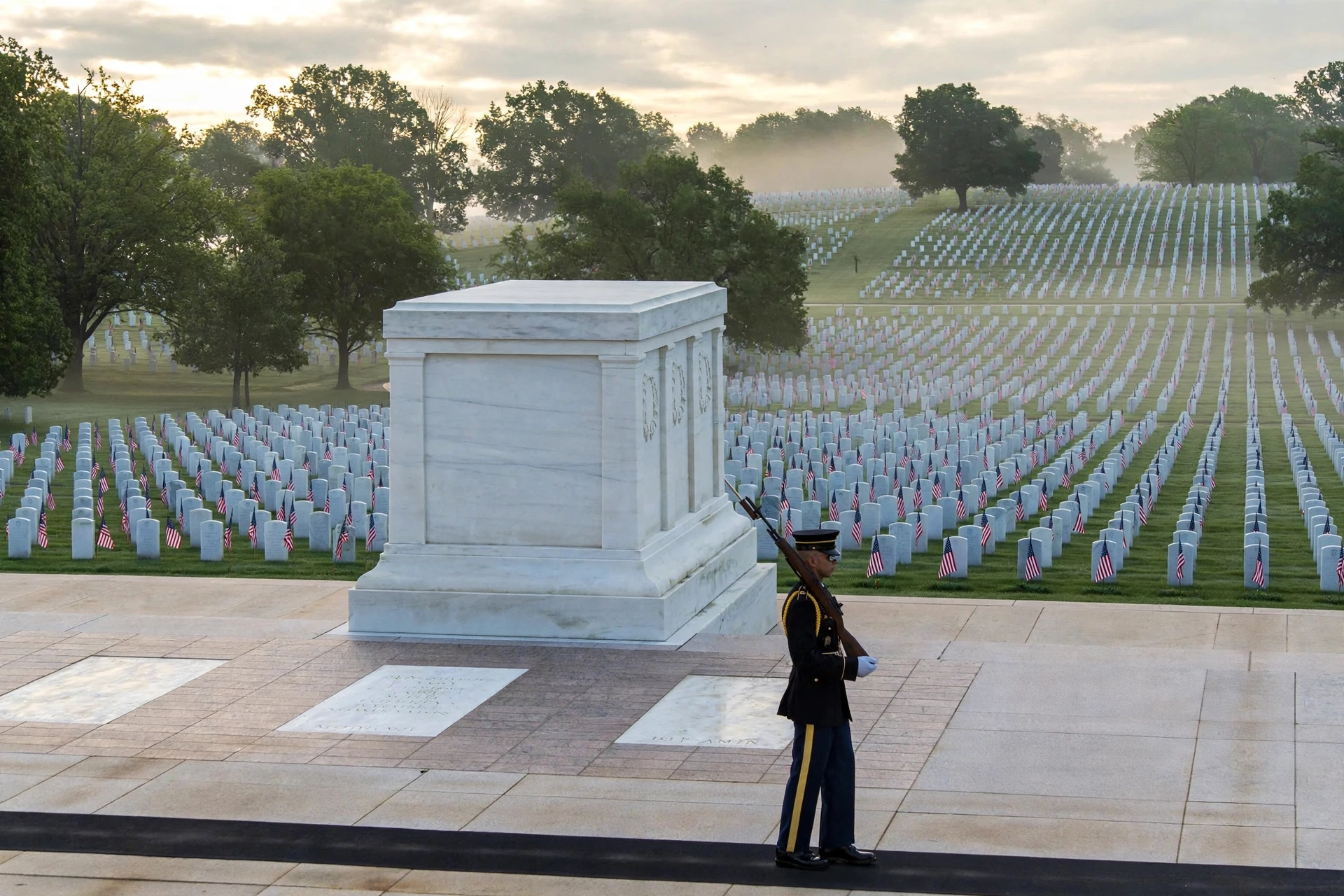
Every year, the official national Veterans Day ceremony takes place at the Tomb of the Unknown Soldier in Arlington National Cemetery. The President or a designated representative lays a wreath at precisely 11 a.m. — the exact hour the 1918 armistice took effect — followed by a parade of colors.
12. The Two-Minute Silence Is Over a Century Old
The moment of silence traces directly to President Wilson’s 1919 proclamation suspending business for two minutes at 11 a.m. In 2016, Congress passed the Veterans Day Moment of Silence Act, formally encouraging all Americans to observe two minutes of silence at 11:11 a.m. local time each November 11.
13. The Flag Flies at Full Staff on Veterans Day
Unlike Memorial Day — when the flag flies at half-staff until noon — the flag is flown at full staff all day on Veterans Day. The distinction is symbolic: Memorial Day mourns the fallen, while Veterans Day honors the living with the flag at its highest.
14. The Missing Man Table Honors POWs and MIAs
At many Veterans Day ceremonies, a small table is set with an empty chair, an inverted glass, a lemon slice, salt, and a single red rose. Each element symbolizes something: the empty chair for the missing, the inverted glass for those who cannot toast, the lemon’s bitterness, the salt’s tears, and the rose for the families still waiting. The tradition honors prisoners of war and those missing in action.
15. New York Hosts the Nation’s Largest Parade
The New York City Veterans Day Parade, organized by the United War Veterans Council, is the largest in the country, drawing tens of thousands of marchers and hundreds of thousands of spectators along Fifth Avenue each November 11.
16. Birmingham’s Parade Is Among the Oldest
Birmingham, Alabama — home of Raymond Weeks’ 1947 celebration — hosts one of the nation’s oldest continuous Veterans Day parades, a direct living link to the holiday’s creation.
Veterans Day Facts by the Numbers
| Statistic | Figure | Context |
|---|---|---|
| U.S. veterans alive today | ~16–18 million | Veterans make up roughly 6–7% of the adult U.S. population, according to the Department of Veterans Affairs and Census Bureau estimates. |
| Americans who served in WWII | ~16 million | The largest mobilization in U.S. history; fewer than 1% of WWII veterans are still living today. |
| Americans who served in Korea | ~5.7 million | Their service helped drive the 1954 renaming from Armistice Day to Veterans Day. |
| Americans who served in Vietnam | ~8.7 million | Vietnam-era veterans form one of the largest living veteran cohorts. |
| Post-9/11 (Gulf War era) veterans | ~5+ million | The youngest large cohort of American veterans, many still in early or mid-career. |
| Women veterans | ~2 million | The fastest-growing segment of the veteran population; about 1 in 10 veterans is a woman. |
| Years the date was moved | 7 (1971–1977) | Veterans Day fell on the fourth Monday in October before returning to November 11 in 1978. |
| States that refused the October date | ~46 | The overwhelming state-level resistance is what forced Congress to restore November 11. |
Veterans Day Facts From Around the World
17. Canada Calls It Remembrance Day
Canadians observe November 11 as Remembrance Day, a federal statutory holiday marked by ceremonies, two minutes of silence, and the wearing of red poppies. Its emphasis leans closer to America’s Memorial Day, focusing on those who died in service.
18. Britain Observes Remembrance Sunday
The United Kingdom holds its national ceremony on Remembrance Sunday — the Sunday closest to November 11 — at the Cenotaph in London, where the monarch and leaders lay wreaths. November 11 itself is still marked with a two-minute silence at 11 a.m.
19. France Still Says “Armistice Day”
France never renamed the holiday. November 11 remains “Jour de l’Armistice,” a national holiday with ceremonies at the Tomb of the Unknown Soldier beneath the Arc de Triomphe in Paris.
20. The Poppy Comes From a Battlefield Poem
The red poppy symbol was inspired by “In Flanders Fields,” written in 1915 by Canadian Lieutenant Colonel John McCrae after he noticed poppies blooming across the graves of fallen soldiers in Belgium. Today it is the defining emblem of November 11 across the Commonwealth.
21. Australia Observes One Minute, Not Two
While Britain and Canada traditionally observe two minutes of silence, Australia’s Remembrance Day ceremony centers on one minute of silence at 11 a.m. — a small but distinctive national variation.
Veterans Day Facts Most People Get Wrong
22. Veterans Day Does Not Honor Only Wartime Veterans
A common misconception is that you must have served in combat or during wartime to be honored. In reality, Veterans Day honors everyone who served in the U.S. Armed Forces — in wartime or peacetime, in combat or in support roles. Service is service.
23. It Is Different From Memorial Day — Here’s How
Perhaps the most important of all veterans day facts: Veterans Day honors all who served, with an emphasis on thanking the living. Memorial Day honors those who died while serving. Mixing them up is the single most common November-vs-May mistake Americans make.
24. Not Every Veteran Wants to Be Thanked the Same Way
While most veterans appreciate gratitude, some feel uncomfortable with effusive thanks, and others carry complicated feelings about their service. The most respectful approach is simple and sincere — and to listen if a veteran wants to share their story, or to give them space if they don’t.
25. The Holiday Almost Became Just Another Long Weekend
Had the 1968 Uniform Monday Holiday Act stuck, Veterans Day would be an October Monday most Americans barely noticed. The fact that public outcry restored November 11 shows how deeply the date’s meaning is embedded in American culture — one of the most remarkable veterans day facts of all.
Frequently Asked Questions About Veterans Day Facts
Why is Veterans Day on November 11?
November 11 marks the anniversary of the armistice that ended World War I, which took effect at 11 a.m. on November 11, 1918. The date’s symbolism — the eleventh hour of the eleventh day of the eleventh month — is why it has never permanently changed.
How many veterans are there in the United States?
There are roughly 16 to 18 million living U.S. veterans, about 6 to 7 percent of the adult population. The number declines each year as the World War II and Korean War generations pass, while post-9/11 veterans form a growing share.
What’s the difference between Veterans Day and Memorial Day?
Veterans Day honors everyone who has served in the U.S. military, with an emphasis on thanking living veterans. Memorial Day specifically honors those who died while serving. Veterans Day is November 11; Memorial Day is the last Monday in May.
Why do some countries wear poppies on November 11?
The red poppy comes from the World War I poem “In Flanders Fields” by Canadian officer John McCrae, who observed poppies growing over soldiers’ graves in Belgium. It became the international symbol of remembrance for the war’s dead and is worn widely across Canada, Britain, and Australia.
Is the flag at half-staff on Veterans Day?
No. On Veterans Day the American flag flies at full staff all day. Half-staff observance until noon is reserved for Memorial Day. Flying the flag at half-staff on Veterans Day is a common mistake.
Who was the first person to propose Veterans Day?
Raymond Weeks, a World War II Navy veteran from Birmingham, Alabama, organized the first national “Veterans Day” celebration in 1947 and campaigned for years to expand Armistice Day to all veterans. He is officially recognized as the Father of Veterans Day.
Put These Veterans Day Facts Into Action
Knowing these veterans day facts is only half the story — the other half is showing up. Every November 11, you can attend a local ceremony, observe the two minutes of silence at 11:11 a.m., fly your flag at full staff, or simply thank a veteran in your life. If you are looking for concrete ways to participate, explore the complete Veterans Day guide for dates and meaning, find parades and ceremonies near you, and see the restaurant deals honoring veterans this November.
The most surprising of all veterans day facts might be this: the holiday survived an attempt to erase its meaning, when bureaucrats moved it to October for the sake of long weekends — and ordinary Americans, veterans, and nearly every state pushed back until the date was restored. November 11 endures because the story behind it matters. Now you know the story. Share it.
Veterans Day Facts About Famous American Veterans
Some of the most surprising veterans day facts involve people you already know — many famous Americans served in the military before finding fame elsewhere:
- Presidents: 31 of 46 U.S. presidents served in the military, from George Washington to George H.W. Bush (a Navy pilot in WWII). Dwight D. Eisenhower, who signed Veterans Day into law, was a five-star general.
- Elvis Presley was drafted into the Army in 1958 at the height of his fame and served two years in Germany, earning the rank of sergeant. His service is one of the most famous veteran stories in pop culture.
- Bea Arthur — beloved star of television — served in the Marine Corps Women’s Reserve during World War II as a truck driver and typist before her acting career.
- Mr. Rogers (Fred Rogers) is often rumored to have been a Navy SEAL or Marine sniper — one of the most persistent myths in veterans day facts lore. In reality, Rogers never served in the military; he has said the rumor embarrassed him because he so admired those who did.
- Dr. Seuss (Theodor Geisel) served in the Army during WWII, making training films — a far cry from Whoville, but real service.
- Clint Eastwood was drafted during the Korean War era and served as a swimming instructor at Fort Ord, California.
- Harriet Tubman served as a scout, spy, and nurse for the Union Army during the Civil War — and in 2024, she was posthumously awarded the rank of general, a remarkable late recognition.
- Pat Tillman walked away from a multimillion-dollar NFL career after 9/11 to enlist in the Army Rangers. He was killed in Afghanistan in 2004. His story remains one of the most powerful modern examples of service and sacrifice.
- Jimmy Stewart — the beloved actor — was already a star when he enlisted after Pearl Harbor, flew 20 combat missions as a bomber pilot, and retired from the Air Force Reserve as a brigadier general.
- Tuskegee Airmen: the first Black military aviators in U.S. history flew with extraordinary distinction in WWII, and surviving members are honored at Veterans Day events to this day.
More Veterans Day Facts Worth Knowing
26. Veterans Day Was Almost Called Something Else
Before “Veterans Day” won out, some advocates proposed keeping “Armistice Day” and simply expanding its meaning. Congressman Ed Rees of Kansas, whose bill renamed the holiday, argued that “Veterans” better captured the day’s broadened purpose. The name stuck — and the apostrophe-free spelling became official.
27. The Original 1919 Celebration Included a Two-Minute Business Shutdown
President Wilson’s 1919 proclamation didn’t just suggest parades — it asked the entire country to suspend business for two minutes at 11 a.m. Imagine the whole nation going quiet at once: factories, shops, and offices pausing together. That collective silence is the ancestor of today’s moment of silence.
28. November 11 Is a Federal Holiday — But Not Everyone Gets It Off
As a federal holiday, Veterans Day closes federal offices, banks, and the postal service, and most schools observe it. But private employers aren’t required to give the day off — only about 20% of private businesses close. If you have November 11 off, consider spending part of it honoring the reason.
29. The VA Was Elevated to a Cabinet Department Because of Veterans’ Growing Needs
The Department of Veterans Affairs became a Cabinet-level department in 1989, reflecting the scale of America’s commitment to those who served. Today the VA is the second-largest federal department, serving millions of veterans through health care, benefits, and memorial services — including the national cemeteries where Veterans Day ceremonies are held.
30. “Thank You for Your Service” Is Younger Than You Think
The now-ubiquitous phrase “thank you for your service” only became widespread in American culture in the early 2000s, after 9/11. Before that, Veterans Day greetings were less standardized. The phrase’s rise reflects a conscious cultural shift toward visibly honoring service members — a shift Veterans Day helped drive.
31. Some Towns Have Celebrated Every Single Year Since 1919
A handful of American communities claim unbroken Armistice Day/Veterans Day observances stretching back to 1919 — more than a century of continuous remembrance. These living traditions, passed down through generations of local organizers, are among the most heartwarming veterans day facts of all.
32. The Holiday Honors Peacetime Service Too
You don’t need to have seen combat — or served during wartime — to be honored on Veterans Day. Millions of veterans served honorably during peacetime, keeping the nation ready and strong. Their service counts fully, and the holiday explicitly includes them.