This Farmers Market Food Guide is your complete playbook for America’s best free food entertainment. Farmers markets are where the country’s food culture is most visible: the produce at its peak, the prepared-food vendors testing tomorrow’s restaurant concepts, the ranchers and cheesemakers selling direct. The Farmers Market Food Guide below covers the great markets worth traveling for, what to buy and eat in every season, the shopping strategy that gets you the best stuff, and how to turn a market trip into the week’s best meals.
The farmers market is also the most honest food shopping in America. You can ask the person who grew the tomato when it was picked. You can taste the cheese before you buy it. And the prepared-food rows — pupusas, dumplings, tamales, wood-fired pizza — increasingly rival the restaurant scene around them. Whether you cook or just graze, the market rewards the visit.
America’s Greatest Farmers Markets
Santa Monica Farmers Market (California)
The most famous in America, and the one chefs plan around. Wednesday is the chef’s market (quieter, more serious); Saturday is the big public market. The produce — stone fruit in summer, citrus in winter, everything in between — sets the national standard. The prepared-food stalls do excellent breakfast. Arrive before 9 a.m. for the best selection and the chef sightings.
Union Square Greenmarket (New York City)
NYC’s flagship market, running four days a week year-round in the middle of Manhattan. The regional scope — Hudson Valley produce, Catskills dairy, Long Island seafood, upstate maple and cider — makes it a tour of the Northeast’s foodshed. The mushroom foragers, the heirloom apple growers with 20 varieties, and the cheese stalls are the highlights. Our NYC food guide pairs market mornings with the city’s restaurant scene.
Ferry Plaza Farmers Market (San Francisco)
Saturday at the Ferry Building: the Bay Area’s agricultural wealth on display under the clock tower, with the city’s best prepared-food vendors in the building itself. The mushroom vendors, the oyster shuckers, and the stone-fruit growers in summer are legendary. The Thursday market is the locals’ quieter version.
Pike Place Market (Seattle)
Part farmers market, part historic institution. The produce stalls, the fish throwers, the flower vendors selling $10 bouquets that would cost $40 elsewhere. The prepared-food counters in the lower levels — piroshky, chowder, dim sum — make it a full eating destination, not just a shopping trip.
Eastern Market (Detroit)
America’s largest historic public market district, operating since 1891. Saturday is the main event: produce at Detroit prices (a fraction of coastal costs), excellent meat and cheese vendors, and a prepared-food scene reflecting the city’s communities. The flower market on summer Saturdays is a spectacle.
Soulard Market (St. Louis)
Operating since 1779 — one of America’s oldest. The produce, the meat vendors, the spice shops, and the St. Louis specialties (gooey butter cake ingredients, provel cheese debates) make it a delicious history lesson.
Portland Farmers Market at PSU (Oregon)
Saturday at Portland State: the Pacific Northwest’s bounty — berries, mushrooms, hazelnuts, pinot-country produce — with the city’s best prepared-food carts in attendance. The mushroom foragers in fall are worth the trip alone.
Charleston Farmers Market (South Carolina)
Saturday in Marion Square: Lowcountry produce (okra, butterbeans, Sea Island specialties), Gullah-Geechee food vendors, and prepared foods reflecting the city’s culinary renaissance. The benne wafers and stone-ground grits are the edible souvenirs.
Minneapolis Farmers Market (Minnesota)
The summer market on the edge of downtown: sweet corn in August that ruins all other corn, Hmong flower and produce vendors (the market’s backbone), and wild rice, maple syrup, and cheese curds. Seasonal and proud of it.
Austin’s SFC Farmers Market (Texas)
Saturday downtown: Texas produce (peaches in summer, citrus in winter), local ranchers, excellent prepared-food vendors, and breakfast tacos from the market’s own stands. The Texas two-step: market in the morning, barbecue in the afternoon.
What to Buy: The Seasonal Calendar
| Season | Peak Produce | Prepared Foods to Seek | Pro Move |
|---|---|---|---|
| Spring | Asparagus, peas, strawberries, ramps, morels | Green garlic pesto, spring dumplings | Buy ramps and morels early — they sell out |
| Summer | Tomatoes, stone fruit, corn, berries, peppers | Elote, peach everything, tomato sandwiches | Taste before buying tomatoes; buy seconds for sauce |
| Fall | Apples, squash, pumpkins, mushrooms, Brussels sprouts | Apple cider doughnuts, roasted squash | Heirloom apples: buy mixed bags |
| Winter | Citrus, root vegetables, greens, stored apples | Tamales, hot soup, mulled cider | Citrus season is peak — stock up |
The Prepared-Food Revolution
The modern farmers market’s secret is that half of it is now a food court — and a great one. The typical 2026 market hosts:
- The breakfast vendors: breakfast burritos, egg sandwiches, and pastries that draw their own lines.
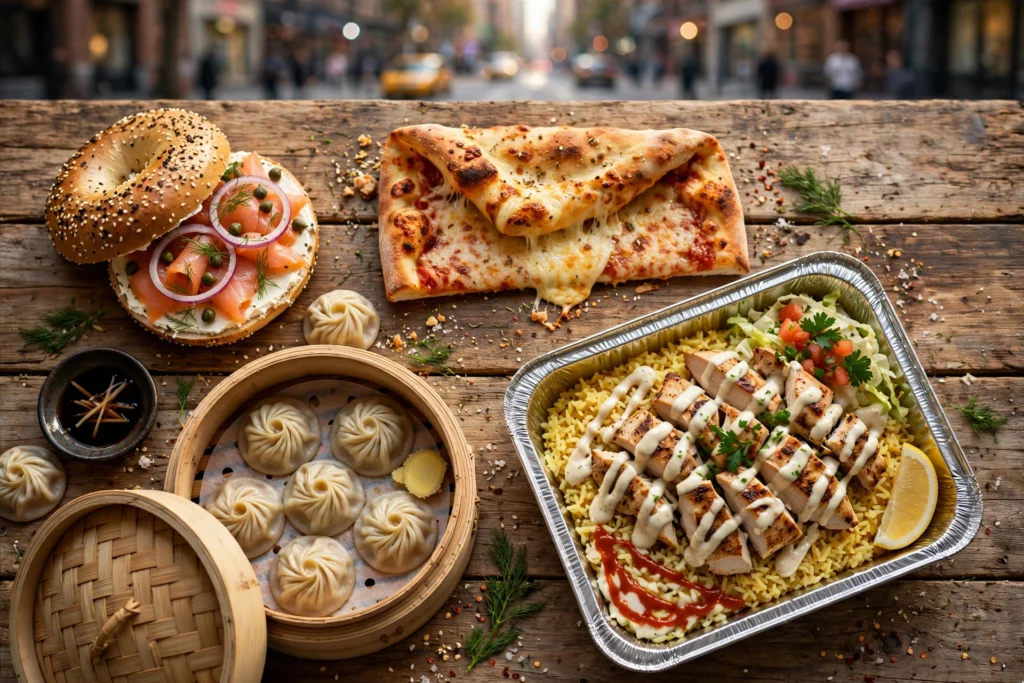
- The dumpling/tamale/pupusa stalls: often run by the same families who sell produce — the market’s best value eating.
- The wood-fired pizza oven: increasingly common, using market produce as toppings.
- The specialty bakers: sourdough, croissants, and regional specialties (kolaches in Texas, fry bread in the Southwest).
- The beverage carts: fresh-pressed juices, aguas frescas, cold brew, and kombucha.
- The future restaurants: many beloved restaurants started as market stalls. Eat at the stall with the longest line of chefs.
Eat breakfast at the market, shop with a full stomach (the golden rule), and plan one meal around your purchases.
The Shopping Strategy: How to Market Like a Chef
- Go early for selection, late for deals. The best produce sells out by 10 a.m.; the last hour brings discounts on perishables.
- Bring cash and bags. Many vendors are cash-preferred; bring your own bags and a cooler for dairy and meat.
- Taste everything offered. Samples are the market’s currency — taste, then buy from the vendor whose sample won.
- Ask “what’s best today?” The growers know. The answer is often something you have never heard of.
- Buy the ugly produce. Seconds (cosmetically imperfect) sell at steep discounts and taste identical — perfect for sauces, roasting, and jam.
- Talk to the ranchers. The meat vendors will tell you exactly how to cook the cut — free expertise with every purchase.
- Learn the market’s rhythm. Every market has its stars (the berry farm, the mushroom forager, the cheese maker). Find yours in the first visit.
- Preserve the peak: buy extra berries for freezing, tomatoes for sauce, peppers for drying. The market’s abundance is seasonal; your freezer is forever.
Beyond Produce: What Else to Buy
- Cheese: farmstead cheeses at market prices, with samples — the cheese stalls are the market’s luxury department.
- Meat and eggs: pasture-raised everything, often cheaper than the boutique grocery equivalent.
- Honey, maple, and preserves: single-origin honeys, real maple syrup, and small-batch jams — the pantry upgrades.
- Flowers: the $10 market bouquet that would cost $40 at a florist — buy them every time.
- Plants and seeds: many markets sell starts and seeds from the same growers — the garden-to-market loop.
- Prepared pantry: hot sauces, spice blends, pickles, and fermented everything from market vendors.
Cooking from the Market: The Week’s Plan
The market shopper’s week practically plans itself:
- Saturday: market breakfast at the stalls; shop for the week; cook the most perishable finds (greens, berries, fish) for dinner.
- Sunday: roast the vegetables, make the big sauce or soup from the seconds, prep grains.
- Midweek: the sturdy stuff — root vegetables, squash, apples, cheese, preserved items — carries you through.
- The market meal: one dinner a week built entirely from market purchases, cooked simply. This is the cook’s reward and the best argument for the whole ritual.
Farmers Market Food Guide: FAQs
Are farmers markets cheaper than grocery stores?
For peak-season produce, often yes — and the quality is higher. For out-of-season items, no. The value play: buy what is abundant (it is priced to move) and preserve the surplus. This Farmers Market Food Guide’s seasonal calendar shows what is abundant when.
What is the best day to go to a farmers market?
Saturday for the biggest selection and the prepared-food vendors; weekday markets for shorter lines and more grower attention. Go early for selection, late for deals.
Can you eat a full meal at a farmers market?
Absolutely — the prepared-food vendors at major markets now constitute a full food court. Breakfast through lunch is easily covered; many visitors graze their way through the market as the meal.
How do I know the produce is actually local?
Ask. Real growers love talking about their farms; resellers deflect. The best markets enforce producer-only rules — check the market’s website for its vendor policies.
What should I bring to a farmers market?
Cash, reusable bags, a cooler (for dairy/meat/flowers in warm weather), and an appetite. Leave the rigid shopping list at home — the market rewards flexibility.
Do farmers markets run in winter?
Many do, year-round — with citrus, root vegetables, greens, meats, cheeses, and preserved goods. The winter markets are quieter, cheaper, and beloved by regulars. Check our best food festivals guide for the harvest festivals that mark the market year’s peaks.
The farmers market is America’s most democratic food institution — no reservation, no dress code, just the season’s best with the people who grew it. Go this weekend. Taste everything. Buy the seconds. Eat breakfast there.
The Market as Community: Why It Matters
The farmers market is economic infrastructure disguised as a pleasant Saturday. The numbers: vendors at top markets keep roughly 90 cents of every dollar (versus pennies through wholesale), which keeps small farms viable near cities. The markets preserve agricultural land at the urban edge, maintain crop diversity (the heirloom tomato exists because markets created demand for it), and provide entry points for immigrant farmers and food entrepreneurs who cannot afford restaurant buildouts.
For shoppers, the market builds food literacy you cannot get elsewhere. Kids who taste a sun-warm strawberry at the market understand produce differently. Adults who talk to ranchers cook meat differently. The market is the shortest distance between eater and agriculture — and in 2026, with supply-chain awareness at an all-time high, that connection matters more than ever.
Farmers Market Tourism: Planning Food Trips Around Markets
Serious food travelers plan itineraries around market days:
- The market morning + restaurant night combo: shop the market in the morning, eat the city’s restaurants at night. Santa Monica (Wednesday/Saturday), Union Square (multiple days), and Ferry Plaza (Saturday) anchor great food-city days.
- Harvest festival weekends: the apple festivals, garlic festivals, and harvest celebrations that orbit the market calendar — our best food festivals in the USA guide covers the major ones.
- The multi-market city: cities like Portland, Seattle, and Austin run multiple weekly markets — a three-day visit can hit three different markets, each with its own character.
- The roadside stand circuit: in agricultural regions (Hudson Valley, Willamette Valley, Hill Country), the farm stands between cities are markets in miniature — pull over for all of them.
Bringing Kids to the Market
The farmers market is the best free children’s food education in America:
- The taste-everything game: let kids sample widely — the market’s sample culture makes it easy and welcome.
- The $5 challenge: give each kid $5 to spend on anything. The decision-making is the lesson.
- Meet the animals: many markets host 4-H displays, beekeepers with observation hives, and occasionally the actual chickens behind the eggs.
- The cooking connection: kids who pick the vegetables cook (and eat) the vegetables. Market-to-table is the picky-eater antidote.
- Timing: go early with small kids (shorter lines, better parking, fresher everyone).
How Markets Work: The Vendor’s Perspective
Understanding the vendor’s economics makes you a better customer:
- The 4 a.m. harvest: most produce vendors harvest the morning of the market — the freshness has a human cost. Buy accordingly.
- Producer-only vs. resellers: the best markets require vendors to grow what they sell. Resellers (buying wholesale, selling retail) undercut real farmers — support the growers.
- The prepared-food vendors: many are testing restaurant concepts or supplementing catering businesses. Your purchase is a vote for their future.
- Weather is everything: rain kills market days. Vendors remember the customers who show up in bad weather — and reward them with the best picks.
- EBT/SNAP: most major markets accept benefits, many with matching programs that double purchasing power. The market is for everyone — spread the word.
The Edible Souvenir Strategy
Farmers markets are the best souvenir shops in America:
- Travels well: hot sauces, spice blends, dried mushrooms, honey, maple syrup, preserves, and hard cheeses.
- Eat immediately: the peach you will never taste again, the cheese with three days of life, the pastry still warm.
- Ship it: many vendors ship — the cheese maker, the jam producer, the hot sauce bottler. Buy at the market, ship to yourself, skip the luggage.
- The market tote: buy the market’s own tote bag. It is the cheapest souvenir and the most useful.
Starting Your Market Habit: The First-Timer’s Plan
- Pick the big Saturday market nearest you — the flagship, not the tiny weekday one.
- Arrive at 9 a.m. with cash, bags, and an empty stomach.
- Walk the full loop first. Scout everything before buying anything.
- Eat breakfast from a vendor. This is non-negotiable.
- Buy three things: one fruit, one vegetable, one surprise (the thing the grower recommended).
- Cook one market meal that weekend. Taste the difference.
- Repeat weekly. By week four, vendors will know you — and save you the good stuff.
The farmers market habit compounds: better produce leads to better cooking, which leads to more market visits, which leads to knowing your farmers by name. This Farmers Market Food Guide’s final advice is the simplest: just go. The market will do the rest.
Market Etiquette: The Unwritten Rules
- Do not haggle. Prices reflect the true cost of small-scale farming. The supermarket is for bargaining; the market is for supporting.
- Do not squeeze the peaches. Look, smell, ask — but manhandling the produce damages what others will buy. The growers will pick the ripe one for you if you ask.
- Dogs: check the market’s policy — many prohibit dogs near food stalls for health-code reasons. When in doubt, leave the pup home.
- Keep the aisles moving. Step to the side to taste, chat, or decide. Saturday crowds are real.
- Return the favor: vendors who give you cooking advice, extra samples, or the pick of the flat deserve your loyalty — and your word-of-mouth.
Markets run on relationships. Be the customer vendors look forward to seeing, and the market will feed you better every week. That is the real secret of this Farmers Market Food Guide — the food is the excuse; the community is the point.
If this Farmers Market Food Guide convinces you of one thing, let it be this: the market is the cheapest upgrade in American food. No new kitchen, no expensive ingredients — just showing up on Saturday morning and buying what is ripe. The tomato will ruin supermarket tomatoes for you, and you will be grateful.
Go this Saturday — the season waits for no one.
Taste everything. Buy the seconds. Thank your farmers.
See you Saturday morning.
Bring a friend next time — markets are better shared.