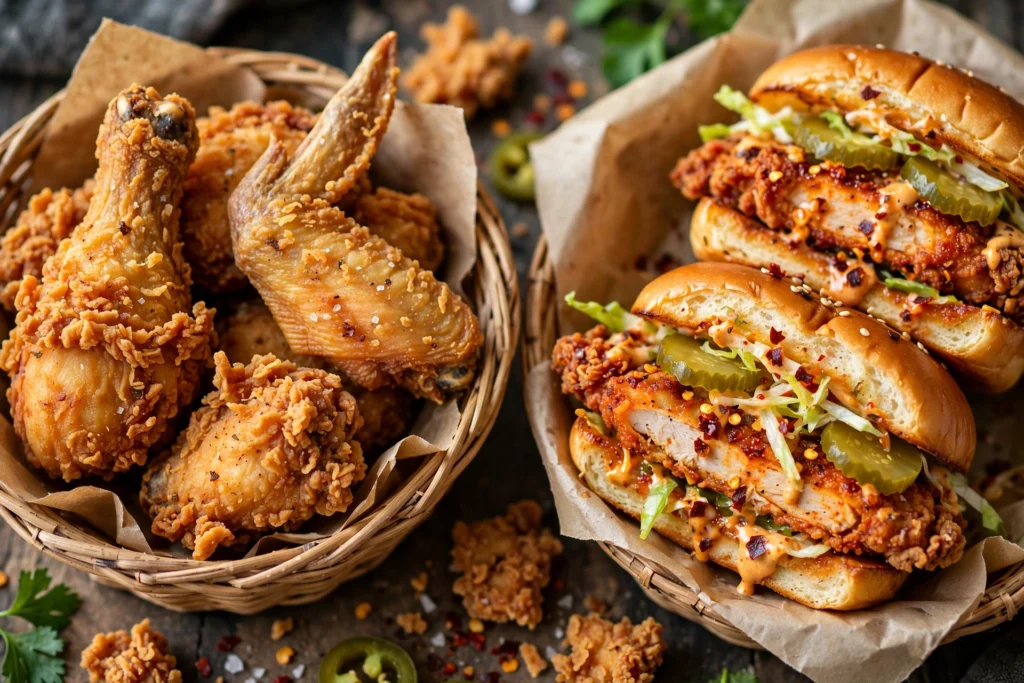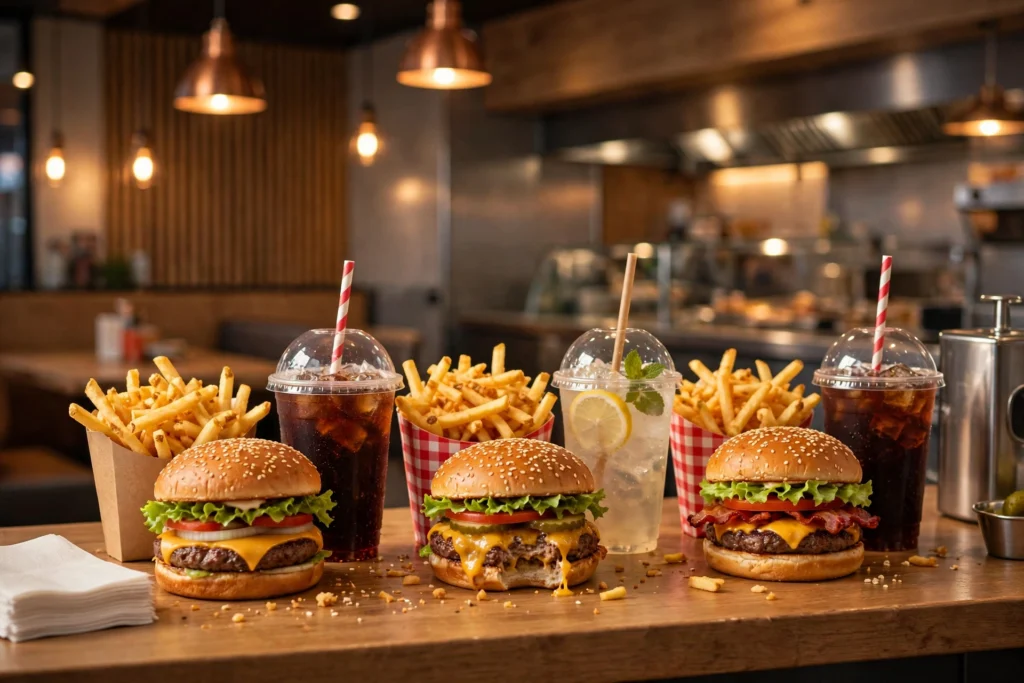
The line between fast food vs fast casual used to be obvious: one had a drive-thru and a dollar menu, the other had a dining room and a $14 burrito bowl. In 2026, that line is blurrier than ever. Fast food chains are upgrading ingredients and dining rooms; fast casual chains are adding drive-thrus and value menus. Shake Shack started as a hot dog cart and now anchors malls. Chipotle has a drive-thru lane. McDonald’s sells fresh beef. So what actually separates the two — and which should you pick?
This guide breaks down the real differences across the dimensions that matter: price, speed, food quality, nutrition, customization, and experience. We compare head-to-head with data tables, run through the pros and cons of each, and give you a verdict for every common situation — the family dinner, the work lunch, the road trip, the health-conscious order, the tight budget. By the end, you will know exactly which door to walk through.
What the Terms Actually Mean
Fast food is defined by speed and price: counter or drive-thru ordering, food in minutes, meals typically under $12. Think McDonald’s, Taco Bell, Wendy’s, KFC, Burger King. The model optimizes for throughput — standardized menus, limited customization, maximum efficiency.
Fast casual sits between fast food and casual dining: counter ordering but higher-quality ingredients, more customization, meals typically $12–$18. Think Chipotle, Panera, Shake Shack, Sweetgreen, Cava. The model optimizes for perceived quality — fresh prep, open kitchens, ingredient stories.
The blur: the categories are converging. Fast food chains now offer fresh-never-frozen beef, real ingredients marketing, and app-based customization. Fast casual chains now offer drive-thru lanes (“Chipotlanes”), loyalty programs, and value bundles. The distinction that remains is mostly about price point and preparation style — and even that is narrowing.
Head-to-Head Comparison
| Dimension | Fast food | Fast casual | Winner |
|---|---|---|---|
| Average meal price | $8–$12 | $13–$18 | Fast food (price) |
| Speed (order to food) | 3–5 min | 5–10 min | Fast food |
| Ingredient quality | Standardized | Fresher, less processed | Fast casual |
| Customization | Moderate | Extensive | Fast casual |
| Nutrition transparency | Good (labeled) | Excellent (detailed) | Fast casual |
| Healthy options | Limited but growing | Abundant | Fast casual |
| Consistency | Very high | High | Fast food |
| Dining experience | Functional | Pleasant | Fast casual |
| Drive-thru availability | Ubiquitous | Growing | Fast food |
| Value for money | Excellent | Good | Fast food |
Price: The Real Math
The price gap is real but smaller than it looks. A fast food combo runs $9–$12; a fast casual bowl runs $13–$16. But the fast casual meal is often more filling and more nutritious — the per-satiety and per-nutrient cost can actually favor fast casual. Meanwhile, fast food’s app deals and value menus can cut the effective price dramatically — a $6 app-deal meal has no fast casual equivalent.
Sample 2026 prices:
- McDonald’s Quarter Pounder combo: ~$10–$12
- Chipotle chicken bowl: ~$13–$15
- Wendy’s Dave’s Double combo: ~$11–$13
- Panera You Pick Two: ~$13–$15
- Taco Bell cravings box: ~$6–$8 (app)
- Sweetgreen salad: ~$14–$16
- Chick-fil-A sandwich combo: ~$10–$12
- Shake Shack ShackBurger + fries: ~$15–$17
The verdict on price: fast food wins on absolute dollars, especially with app deals. Fast casual wins on value-per-quality. If the budget is the constraint, fast food. If the meal is the point, the extra $4 for fast casual is usually worth it.
Speed: Minutes Matter
Fast food is engineered for speed: the drive-thru, the assembly line, the limited menu. Three to five minutes from order to food is standard, and the drive-thru means you never leave your car. Fast casual is slower by design — food assembled to order, more complex builds, dining-room focus. Five to ten minutes is typical, and the Chipotlane-style drive-thrus are pickup-only, not full-service.
The verdict on speed: fast food, decisively. When time is the constraint — the road trip, the between-meetings lunch, the hangry kids — fast food’s speed is a feature, not a compromise.
Quality: Ingredients and Preparation
This is fast casual’s home turf. Fresher vegetables, meats cooked in smaller batches, dressings made in-house, bread baked daily — the quality difference is real and tasteable. Chipotle’s barbacoa, Sweetgreen’s seasonal salads, Panera’s bread: these are meaningfully better ingredients than standard fast food.
But the gap is narrowing. Wendy’s fresh beef, Chick-fil-A’s pressure-cooked chicken, Culver’s fresh custard, In-N-Out’s never-frozen everything — the best fast food chains are quality operations. The difference is now more about preparation style (assembly-line vs. made-to-order) than about some absolute quality chasm.
The verdict on quality: fast casual wins, but the best fast food is closer than the price gap suggests.
Nutrition: Eating Well at Each
Fast casual was built for the nutrition-conscious: calorie counts on menu boards, macro-friendly bowls, whole grains, fresh vegetables as the default. It is simply easier to eat well at Sweetgreen or Cava than at Burger King.
Fast food is catching up — grilled options, salads, fruit sides, transparent nutrition info — but the core menu is still engineered for indulgence, and the healthy options require more deliberate ordering. Our healthy fast food guide covers the strategies; they work, but they take effort.
The verdict on nutrition: fast casual, clearly. If health is the priority, the extra dollars buy genuinely better defaults.
Customization: Your Food, Your Way
Fast casual pioneered the assembly-line customization model — Chipotle’s “build your bowl” is the template the industry copied. Every ingredient is visible, every combination is possible, dietary restrictions are accommodated by design.
Fast food customization exists but is more constrained — the app and kiosk systems have expanded it dramatically, but you are still working within a fixed menu architecture. “Have it your way” is real, but it is not “build it from scratch.”
The verdict on customization: fast casual, by design.
Experience: Where You Eat Matters
Fast casual dining rooms are nicer — real plates sometimes, better lighting, music you might actually like, spaces designed for lingering. Fast food dining rooms are functional — designed for turnover, cleaned for speed. The drive-thru, though, is fast food’s experiential trump card: eating in your car is sometimes exactly right.
The verdict on experience: fast casual for dining in, fast food for the drive-thru.
Pros and Cons
Fast food pros: cheapest option, fastest service, ubiquitous locations, drive-thru convenience, best app deals, most consistent, kid-friendly menus.
Fast food cons: lower ingredient quality on average, fewer healthy defaults, less customization, dining rooms are purely functional, nutritional minefields require navigation.
Fast casual pros: better ingredients, extensive customization, healthier defaults, nicer dining rooms, transparent nutrition, food that feels like a real meal.
Fast casual cons: 30–60% more expensive, slower, fewer locations, limited drive-thru, fewer deep-discount deals, portion sizes can be inconsistent.
The Verdict by Situation
| Situation | Pick | Why |
|---|---|---|
| Tight budget | Fast food | App deals and value menus win |
| Work lunch, 30 min | Fast food | Speed is everything |
| Health-conscious meal | Fast casual | Better defaults, easier ordering |
| Family dinner out | Either | Fast food for kids, fast casual for adults |
| Road trip | Fast food | Drive-thru and ubiquity |
| Date night (casual) | Fast casual | Nicer room, better food |
| Feeding a crowd cheaply | Fast food | Bundles and deals scale |
| Dietary restrictions | Fast casual | Customization by design |
| Late night | Fast food | Hours and availability |
| Impressing a foodie friend | Fast casual | Ingredient stories win |
The Chains That Blur the Line
Shake Shack — fast casual prices, fast food format, quality that justifies both. The blurriest line in the industry.
Chipotle — fast casual soul with drive-thru lanes and a rewards program. The template everyone copies.
Chick-fil-A — fast food prices and speed with fast casual-level service and quality. The best of both worlds argument.
Culver’s — table service and fresh custard at fast food prices. The Midwest knew first.
In-N-Out — fast food prices, cult quality, no drive-thru pretense about what it is.
The Economics: Why Fast Casual Costs More
The price gap is not arbitrary — it reflects genuinely different cost structures:
Ingredient costs: fresh, never-frozen proteins, produce delivered more frequently, and fewer preservatives cost 20–40% more than fast food’s optimized supply chain. Fast food’s scale — billions of patties — buys purchasing power fast casual can not match.
Labor: fast casual preparation is more labor-intensive — chopping vegetables to order, grilling in smaller batches, assembling complex bowls. Labor is the largest cost in restaurants, and fast casual uses more of it per meal.
Real estate and design: fast casual dining rooms cost more to build and maintain — the reclaimed wood, the open kitchen, the lighting design. Fast food’s functional dining rooms are cheaper by design.
Throughput: a fast food location serves dramatically more customers per hour. Fixed costs spread over more transactions means lower prices. Fast casual’s slower, more deliberate service means fewer transactions per hour.
The value question: you are not paying more for nothing — you are paying for fresher ingredients, more labor, nicer rooms, and more customization. Whether that is worth 40% more is personal, but the costs are real.
Case Study: $15 at McDonald’s vs. $15 at Chipotle
What does the same money buy?
$15 at McDonald’s (with app deals): a Quarter Pounder combo, a McChicken, and a drink — or a 20-piece nuggets, large fries, and a drink with change. Roughly 1,500–1,800 calories, high satisfaction, low nutritional virtue.
$15 at Chipotle: a chicken burrito bowl with guac — roughly 900–1,000 calories, 40g+ protein, fresh vegetables, whole grains. One meal, but a genuinely balanced one.
The comparison is not apples to apples — McDonald’s $15 feeds more people (or one person twice), while Chipotle’s $15 feeds one person better. Volume vs. quality is the fundamental trade-off.
The Rise of “Fast Fine” and Other Hybrids
The categories keep splintering:
Fast fine: the emerging tier above fast casual — think Sweetgreen-level quality with full-service touches, $18–$25 meals. Still counter-ordered, but with ingredient sourcing stories and chef pedigrees.
Fast food premium: Shake Shack, Culver’s, In-N-Out — fast food formats with fast casual quality aspirations. The quality-per-dollar champions.
Ghost kitchen hybrids: delivery-only brands operating from shared kitchens, blurring every category line. The food arrives fast and casual; the “restaurant” does not exist.
Grocery fast casual: Whole Foods hot bars, Wegmans cafes — the sleeper competitors eating both categories’ lunch (literally).
The trend: categories are a spectrum now, not boxes. The smart question is not “fast food or fast casual” but “what do I want from this specific meal?”
Drive-Thru Innovation: The New Battleground
The drive-thru was fast food’s moat — now everyone wants one:
- Chipotlanes: pickup-only drive-thru lanes for mobile orders. Faster than going inside, no menu board, no speaker.
- Taco Bell’s Defy: multi-lane futuristic drive-thrus with food delivered via vertical lift. The most ambitious redesign in decades.
- McDonald’s Order Ahead lanes: dedicated lanes for app orders, separating the planners from the deciders.
- Double drive-thrus: now standard at new builds — the single lane is dying.
Fast casual’s drive-thru adoption is the clearest sign of convergence: when Chipotle builds a drive-thru, the categories have officially merged at the edges.
2026 Trends Shaping Both Categories
Value engineering: both categories are fighting inflation with value menus, bundles, and app deals. The $5 meal deal is back in various forms across the industry.
Beverage as destination: dirty sodas, refreshers, and specialty lemonades are driving traffic — drinks are now a reason to visit, not an add-on.
AI and automation: kiosks are standard, AI drive-thru ordering is expanding, and kitchen automation is creeping in. The labor model is shifting under both categories.
Health transparency: calorie counts, macro filters in apps, and “lifestyle” menu sections are now table stakes. The healthier category wins by default less often — fast food is closing the information gap.
Sustainability: packaging, sourcing claims, and food waste programs matter more to younger customers. Fast casual leads here; fast food is catching up.
More Situations, More Verdicts
| Situation | Pick | Why |
|---|---|---|
| Business lunch | Fast casual | Professional setting, better food |
| Road trip with kids | Fast food | Speed, ubiquity, kid menus |
| Kids’ birthday | Fast food | Playgrounds, nuggets, price |
| Vegetarian friend | Fast casual | Better default options |
| Trying to impress | Fast casual | Ingredient quality shows |
| Solo lunch, reading | Fast casual | Nicer room for lingering |
| Pre-movie rush | Fast food | In and out in 10 minutes |
| Post-workout meal | Fast casual | Protein-forward bowls win |
The Environmental Angle
The categories differ here too — and it matters to a growing share of customers:
Packaging: fast casual leads with compostable bowls, paper-based packaging, and minimal plastic. Fast food is catching up — paper straws, recyclable packaging pledges — but the scale of single-use packaging remains enormous.
Food waste: fast food’s made-to-hold model wastes more than fast casual’s made-to-order approach, though both have donation and composting programs. The app-based ordering both use actually reduces waste by improving demand forecasting.
Sourcing: fast casual’s ingredient stories (humanely raised, organic, local) are often substantive; fast food’s scale makes equivalent sourcing harder but not impossible — the cage-free egg pledges and antibiotic policies are real progress.
The verdict: if environmental impact influences your choice, fast casual’s model is structurally lighter. But the biggest lever is personal: eating what you order (no waste) matters more than which category you pick.
The Final Word: Stop Choosing Sides
The fast food vs fast casual debate has a secret: the best operators in each category are learning from the other. Fast food is getting fresher, more customizable, and more transparent. Fast casual is getting faster, more affordable, and more convenient. The convergence benefits everyone — the $10 meal keeps getting better, and the $15 meal keeps getting more justifiable.
So stop choosing sides. Use fast food for what it does best — speed, value, the drive-thru, the 2 a.m. craving. Use fast casual for what it does best — quality ingredients, real customization, the lunch you actually enjoy. The informed eater carries both playbooks and picks the right one for the moment. That is the whole game.
Frequently Asked Questions
Is fast casual healthier than fast food?
Generally yes — healthier defaults, fresher ingredients, and more customization make it easier to eat well. But a loaded fast casual burrito can out-calorie a fast food burger, so the specific order matters more than the category.
Why is fast casual more expensive?
Fresher ingredients, more labor-intensive preparation, nicer dining rooms, and smaller scale all cost more. You are paying for quality and customization, not just food.
Is Chipotle fast food or fast casual?
Fast casual — it is the defining chain of the category. The Chipotlane drive-thrus blur the line, but the price point, customization, and ingredient focus are fast casual.
Is Shake Shack fast food?
It is the industry’s favorite debate. By price and quality it reads fast casual; by format (burgers, fries, counter service) it reads fast food. We call it the blurriest line in the business.
Which is cheaper: fast food or fast casual?
Fast food, by 30–60% per meal — especially with app deals and value menus. A fast food meal runs $8–$12; fast casual runs $13–$18. The gap narrows when you compare nutrition per dollar.
Is fast casual actually faster?
No — despite the name, fast casual is slower than fast food by design. Expect 5–10 minutes vs. 3–5 minutes. The “fast” in fast casual means faster than a sit-down restaurant, not faster than a drive-thru.
Which is better for families?
Fast food for young kids (nuggets, playgrounds, price), fast casual for older kids and adults (better food, nicer rooms). Chick-fil-A splits the difference brilliantly.
The Bottom Line
Fast food vs fast casual is not a war with a winner — it is a toolkit with two tools. Fast food wins on price, speed, and convenience; fast casual wins on quality, nutrition, and experience. The smart eater uses both: fast food for the road trip and the tight week, fast casual for the lunch that matters and the meal you want to feel good about. The line between them will keep blurring, and that is good news — it means both sides are getting better.