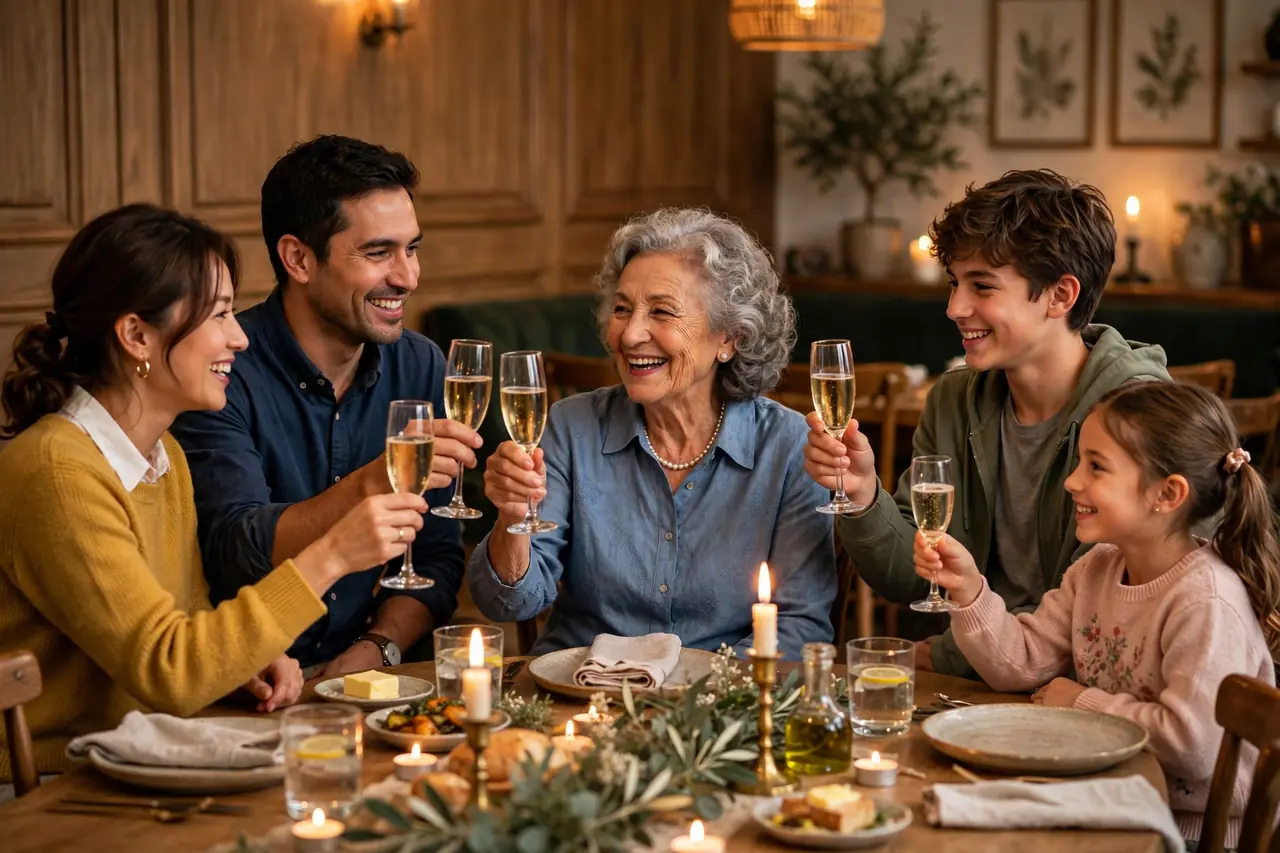
There comes a moment at every great celebration when the room falls quiet, glasses rise, and someone has to find the right words for an extraordinary life. When that life spans an entire century, the pressure feels enormous — how do you sum up 100 years in sixty seconds? The good news is that the best 100th birthday toast ideas are not the longest or the most poetic. They are the ones that sound like they could only be about this person, told with warmth, honesty, and just enough humor to make everyone smile through their tears.
This guide gives you everything you need to raise that glass with confidence: the structure of a great toast, dozens of ready-to-use examples organized by tone and relationship, full sample scripts, delivery tips for nervous speakers, and the etiquette rules that keep a milestone toast graceful. Whether you are a grandchild, a lifelong friend, or the designated emcee, you will find words here that fit — and the confidence to deliver them well.
What Makes a 100th Birthday Toast Different
A toast at a 30th birthday celebrates what is ahead. A toast at a 100th birthday honors what has already been lived — and that changes everything about how you write it. You are not cheering on potential; you are bearing witness to a completed arc of history that most of us will never see firsthand.
The audience is different too. A centenarian’s celebration typically gathers four or five generations, from great-grandchildren to contemporaries in their nineties. Your words need to land for a seven-year-old and a ninety-seven-year-old at the same time. That means plain, vivid language over clever abstraction, and stories over adjectives. “She taught three generations to make her Sunday sauce” will always beat “she is an amazing woman.”
There is also an emotional weight to acknowledge without letting it crush the mood. Everyone in the room knows, quietly, that this may be the last big gathering with the guest of honor. The best toasts honor that truth gently — with gratitude rather than grief, celebration rather than farewell. You are not saying goodbye; you are saying thank you, out loud, while it still matters.
The Anatomy of a Perfect Toast
Every memorable toast, from a two-line gem to a three-minute tribute, follows the same invisible skeleton. Learn it once and you can build any toast on demand.
The hook (one line). Open with something that earns attention: a surprising fact, a vivid image, or a direct address. “One hundred years ago today, a nurse in a small-town hospital held a baby girl and had no idea she was holding history.” A strong hook buys you the room’s full attention for the next minute.
The heart (two to four lines). This is the substance — one specific story, one defining quality, one thing this person taught you. Specificity is everything. Name the kitchen, the car, the phrase they always say. General praise evaporates; details stick.
The lift (one line). End by turning the toast outward, toward the future or toward the room. A wish, a blessing, or a call to action: “May we all live with half her courage.” Then the ritual close: “To Rosa!”
Time it: a great toast runs 45 seconds to two minutes. Shorter feels like a greeting-card reading; longer risks losing the room — especially with elderly guests who tire easily. If you have more to say, save it for a letter or a one-on-one conversation later.
Short and Sweet Toast Ideas
Sometimes the most powerful toasts are the briefest. These one- and two-liners work as openers, as contributions in a round of toasts, or as the entire toast when brevity is a virtue:
- “To 100 years of showing us how it is done — may the next hundred be just as remarkable. To Rosa!”
- “They say age is just a number. At 100, Rosa has made it look like the best number of all. Cheers!”
- “One hundred candles, one extraordinary woman, one family lucky enough to call her ours. To Grandma!”
- “To the woman who has seen a century change and never stopped changing with it. Happy 100th!”
- “A century of wisdom, a lifetime of love, and still the best storyteller in the room. To Joe!”
- “Here is to 100 years of Sunday dinners, hard-won wisdom, and unconditional love. Cheers to you!”
- “Most people count their years. Rosa made her years count. To 100 magnificent ones!”
- “To the matriarch, the legend, the heart of this family — 100 years young today!”
- “One hundred years ago, the world got a gift. We have been unwrapping it ever since. To Rosa!”
- “To health, to happiness, and to the century that made you who you are. Happy 100th birthday!”
- “They broke the mold after making you — 100 years of proof. Cheers!”
- “To a century of courage, kindness, and really good pie. Happy birthday!”
- “One hundred years, four generations, countless memories — and every one of us is better for knowing you.”
- “Here is to the first 100 years. Knowing you, the best stories are still to come. To Joe!”
- “To Rosa: proof that the best things in life really do take time. One hundred years of time, to be exact.”
Heartfelt Toasts About Love and Legacy
When the room is full of family, heartfelt toasts about what the guest of honor built — the family itself — resonate deepest. These lean into love, legacy, and gratitude:
- “Rosa did not just live 100 years — she built the family sitting in this room. Every one of us is a chapter in her story. To the author of us all!”
- “I have been trying for weeks to sum up what Grandma means to me, and I finally realized it is simple: she is the reason we know how to love. To 100 years of teaching us.”
- “A century from now, nobody will remember the gifts on this table. But they will remember that a woman named Rosa loved her family fiercely for 100 years — and they will still be talking about her. To a living legacy!”
- “Grandpa, you gave us more than a name. You gave us a standard — for hard work, for honesty, for showing up. We have spent our lives trying to measure up, and we are grateful for the trying. Happy 100th.”
- “One hundred years of mornings she woke up and chose kindness. That is not luck, that is character. To Rosa — may we all choose half as well.”
- “They say you can measure a life by the people who show up to celebrate it. Look around, Grandma. This room is your life’s work. To 100 years of love, multiplied.”
- “To the hands that held us, the kitchen that fed us, and the heart that never once gave up on us. One hundred years of Rosa — and we would not trade a single day.”
- “Grandpa Joe lived through a century of history, but his greatest achievement is not in any history book. It is sitting at these tables. To family — his masterpiece.”
Heartfelt toasts work best when you connect the personal to the universal: one specific memory that reveals a larger truth about who this person is. If you are writing for a grandmother specifically, our birthday wishes for the women we love can offer phrasing inspiration for the tender lines.
Funny Toasts That Keep It Light
Humor is a gift at a 100th birthday — it keeps the mood celebratory and shows the guest of honor’s playful side. The rule: punch up at age with affection, never down at frailty.
- “Rosa has been giving advice for 100 years, and for 100 years nobody has listened. To another century of excellent, ignored advice!”
- “Scientists say laughter adds years to your life. Rosa, you have clearly been laughing for a century straight. Keep it up!”
- “To Joe — who has outlived every diet fad, every fashion trend, and three different sets of in-laws’ expectations. The secret to 100? Stubbornness. Cheers!”
- “Grandma is 100 years old and still corrects my grammar. Some things never change. To a century of being right!”
- “They say with age comes wisdom. Rosa got the wisdom at 30 and spent the next 70 years wondering when the rest of us would catch up. To 100!”
- “Happy 100th to the only person I know who remembers when ‘the cloud’ meant rain and ‘streaming’ meant a creek. And honestly, she had it right.”
- “To Grandpa: 100 years old, still tells the same five stories — and we still laugh at all five. That is not repetition, that is tradition.”
- “Rosa survived the Great Depression, disco, and dial-up internet. If she can survive all that, she can survive our toasts. Happy 100th!”
Funny toasts land best when the guest of honor is in on the joke. If Grandma has been teasing the family about her age for decades, lean in. If she is sensitive about it, steer the humor toward her legendary stubbornness, her cooking, or her opinions — affectionate targets that celebrate rather than sting.
Faith-Based and Blessing Toasts
For families of faith, a toast can double as a blessing — acknowledging the spiritual dimension of a century-long life:
- “We thank God for 100 years of Rosa — for every prayer she prayed over this family and every grace she said at this table. May her next years be as blessed as she has made ours.”
- “The good Lord gave Grandpa 100 years, and Grandpa spent every one of them giving back. To a life well-lived in faith — cheers.”
- “One hundred years is a gift few receive and fewer still use so well. We raise our glasses in gratitude — to Rosa, and to the God who lent her to us.”
- “May the God who carried you through a century carry you gently still. Happy 100th birthday, Grandma.”
- “To 100 years of faith, family, and answered prayers. We are the living proof of every one of them.”
- “Blessed are the years, blessed is this day, blessed are we to celebrate it with you. To 100!”
Toasts by Relationship
The best toast sounds like it could only come from you. Tailor your angle to your relationship with the guest of honor.
From a child. You have the longest view — speak to the parent behind the grandparent. “Mom, before you were Grandma to all of us, you were the woman who worked two jobs and still made it to every school play. We saw it. We remember. Happy 100th.” The power move for a child of the centenarian is gratitude for the sacrifices only you witnessed.
From a grandchild. You bridge the generations — speak to what they mean to the young. “Grandma, you taught me to make your famous cookies, to stand up for myself, and that it is never too late to learn something new — you took up email at 95! To 100 years of firsts.” Grandchildren can be playful and tender in the same toast; the audience expects both.
From a great-grandchild. Even a few sincere lines from the youngest generation will bring the house down. Keep it simple and concrete: “Great-Grandma, thank you for the stories, the hugs, and for being 100. I love you.” Have an adult help them practice, and keep a backup plan in case stage fright wins — a waved glass counts as a toast at age six.
From a friend or contemporary. You share history nobody else in the room has. “Rosa and I met in 1952, and she has been keeping me honest ever since. To 73 years of friendship — and to the century that made it possible.” Old friends give the toast historical texture; lean into the shared past.
From the emcee or host. Your job is framing, not stealing the show. Open the toast segment with warmth and brevity: “We are here because one remarkable woman lived 100 remarkable years — and because she spent them gathering all of us. Please raise your glasses.” Then hand off to the family speakers quickly.
Three Complete Sample Toast Scripts
Sometimes you need more than a line — you need a full script to adapt. Here are three, each about a minute long when spoken.
Sample 1: The Granddaughter’s Tribute. “When I was seven, Grandma taught me to roll out pie dough, and she told me the secret was patience — ‘the dough knows when you’re rushing,’ she said. I have thought about that sentence at every hard moment of my adult life: the dough knows when you’re rushing. Grandma, you have spent 100 years refusing to rush — through raising four kids, through losing Grandpa, through every change this century threw at you. You just kept rolling, steady and sure. So today we are not just celebrating your 100 years. We are celebrating the patience, the steadiness, and the love you rolled into every one of us. To Grandma — the dough never stood a chance, and neither did we. We love you!”
Sample 2: The Old Friend’s Remembrance. “Joe and I met in the army in 1946. He was the kid who shared his rations, who wrote letters home for the guys who couldn’t spell, who laughed louder than anyone in the barracks. Eighty years later, not much has changed — except now he shares his stories, writes letters to his great-grandkids, and laughs louder than anyone in this room. Joe, you have been my friend for longer than most people get to live. That is not friendship, that is a blessing with a 80-year track record. To Joe — and to the next chapter!”
Sample 3: The Short, Elegant Host Toast. “One hundred years ago, the world was a very different place — but I suspect it was already a better place, because Rosa was in it. She has spent a century proving that kindness is not weakness, that family is everything, and that it is never too late to dance. Please join me in raising our glasses to 100 years of Rosa — and to all of us, lucky enough to be part of her story. To Rosa!”

Comparing Toast Styles: Which Fits Your Party?
| Toast Style | Best For | Tone | Ideal Length | Watch Out For |
|---|---|---|---|---|
| One-liner | Round-robin toasts, large parties | Warm, witty | 10–20 seconds | Can feel impersonal if too generic |
| Story toast | Family-centered celebrations | Heartfelt | 1–2 minutes | Keep the story tight; one anecdote max |
| Roast (gentle) | Playful families, close friends | Funny | 1–2 minutes | Never target health, memory, or frailty |
| Blessing | Faith-centered gatherings | Reverent | 30–60 seconds | Keep inclusive of all guests present |
| Group toast | Grandchildren or siblings together | Joyful | 2–3 minutes | Rehearse handoffs so it flows |
| Written tribute read aloud | Shy speakers, emotional moments | Sincere | 1–2 minutes | Look up often; do not just read to the page |
Delivery Tips for Nervous Speakers
Almost everyone is nervous before a milestone toast — that is normal, and the audience is entirely on your side. A few practical techniques make all the difference.
Write it down, then mostly memorize it. Bring a small card with bullet points, not a full script. Reading word-for-word sounds stiff; speaking from bullets sounds human. Glance down when you need to, but spend most of the toast looking at the guest of honor — that eye contact is what makes it land.
Slow down. Nerves speed everyone up. Deliberately speak at about 80 percent of your normal pace, and pause after your best lines to let the room react. Silence feels eternal to the speaker and perfect to the audience.
Hold your glass low until the end. Raising it early is a common mistake that leaves your arm tired and the gesture flat. Keep the glass at waist height while you speak, then lift it high for the final “To Rosa!” — the physical lift punctuates the emotional one.
Stand if you can, sit if you need to. Standing commands the room, but a heartfelt toast delivered seated beside the guest of honor — hand on their shoulder — can be even more moving. Choose whatever lets you be present rather than performing.
Have water nearby and breathe. Emotion may ambush you mid-toast; that is okay. Pause, sip water, smile, and continue. A speaker who tears up while honoring someone they love is not failing — they are proving the words are true. If you need a moment, take it; the room will wait.
Toast Etiquette: The Do’s and Don’ts
Do keep it under two minutes. Do mention the guest of honor by name. Do end with a clear invitation to drink (“To Rosa!”). Do coordinate with other speakers so stories do not repeat. Do include a non-alcoholic option in the toast — sparkling cider for the guest of honor and any non-drinkers keeps everyone included.
Don’t joke about death, dying, or “not being around much longer” — even affectionately. Don’t mention health struggles, hospital stays, or memory issues. Don’t use the toast to settle family scores or air grievances. Don’t ramble about yourself; the spotlight belongs to the centenarian. Don’t clink glasses aggressively — a raised glass and eye contact is the modern, hearing-aid-friendly approach.
One final etiquette note: decide the speaking order in advance and share it with every speaker. A natural flow runs from the host’s welcome, to the eldest family member, to friends and grandchildren, closing with the most emotional tribute last. Knowing when you are “on” removes the awkward hovering and the dreaded moment when two people stand up at once. A simple printed order of events, shared in the family group chat the night before, keeps the whole toast segment graceful from first glass to last.
Frequently Asked Questions
How long should a 100th birthday toast be?
Aim for 45 seconds to two minutes. That is long enough for one good story and a heartfelt close, but short enough to hold a multi-generational room. If several people are toasting, keep each one closer to a minute so the segment does not drag.
Who should give the toast at a 100th birthday?
There is no single rule. Common choices include the eldest child, a grandchild, a lifelong friend, or the party host. Many families do a round of short toasts so several voices are heard. The key qualification is genuine connection — the speaker should actually know and love the guest of honor.
What should I avoid saying in a 100th birthday toast?
Avoid jokes about death or dying, references to health problems or memory loss, family conflicts, and anything that could embarrass the guest of honor. Keep the focus on celebration, gratitude, and love. When in doubt, ask a close family member to review your draft.
Is it okay to be funny in a 100th birthday toast?
Absolutely — humor is welcome as long as it is affectionate. Joke about their legendary stubbornness, their cooking, their opinions, or their quotable sayings. Avoid humor about frailty, confusion, or mortality. The test: would the guest of honor laugh, or just smile politely? Aim for the laugh.
Should the guest of honor respond to the toast?
They can, but should not feel obligated. Some centenarians love saying a few words; others prefer to simply smile and sip. The host can invite a response gently (“Rosa, would you like to say something?”) and move on gracefully if they decline. Never put them on the spot.
What do we drink for the toast if the guest of honor does not drink alcohol?
Sparkling cider, sparkling water with a garnish, or even juice — whatever they enjoy. Provide the same for all non-drinkers so no one feels singled out. The symbolism of raising a glass together matters far more than what is in it.
Can I read my toast from my phone?
A small printed card is better — phones invite distraction and look less prepared. But if the phone is what you have, it is fine; just put it on Do Not Disturb first. Better yet, use bullet points rather than a full script so you look up at the guest of honor often.
How do I handle getting emotional during the toast?
Pause, breathe, sip water, and continue. Audiences find genuine emotion moving, not awkward. If you are worried, keep a trusted person nearby who can step in, and keep your toast on the shorter side. Practicing aloud twice beforehand also takes the edge off.

Watch: Family Speeches at a Real 100th Birthday
See how one family honored Muriel and Dudley with heartfelt speeches at their 100th birthday celebration — a wonderful example of toasts done with love:
The perfect toast is not about perfect words — it is about a true story, told with love, in under two minutes. Pick the style that fits your relationship, practice it once out loud, and raise your glass with confidence. For more inspiration, browse our birthday quotes for husbands, birthday wishes for girlfriends, and birthday quotes for friends to find lines worth borrowing.