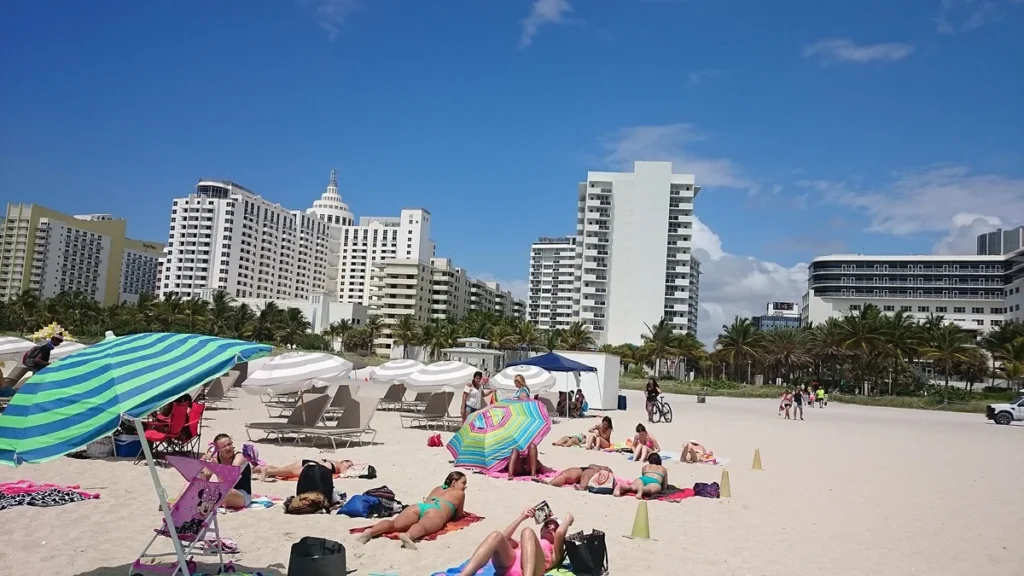
The best tropical vacation destinations offer very different kinds of holiday. A Caribbean town-and-beach stay, an Indian Ocean resort island and a Southeast Asian lagoon trip can all look appealing in photographs, yet their seasons, transfer costs and daily rhythms are far apart. This guide selects 25 places across the Caribbean, Central America, Hawaii, the South Pacific, Indian Ocean and Southeast Asia, with options beyond luxury resorts.
For larger countries, the entry focuses on a specific area that can support a coherent vacation: Manuel Antonio in Costa Rica, Bocas del Toro in Panama or El Nido in the Philippines, for example. Compare the map, stay lengths and seasonal windows before choosing flights. Each entry covers experiences, a sensible base and the transport detail most likely to affect the trip. These are editorial selections for variety and practical value, not an objective ranking, and “drier season” never means a guarantee of sunshine or calm water.
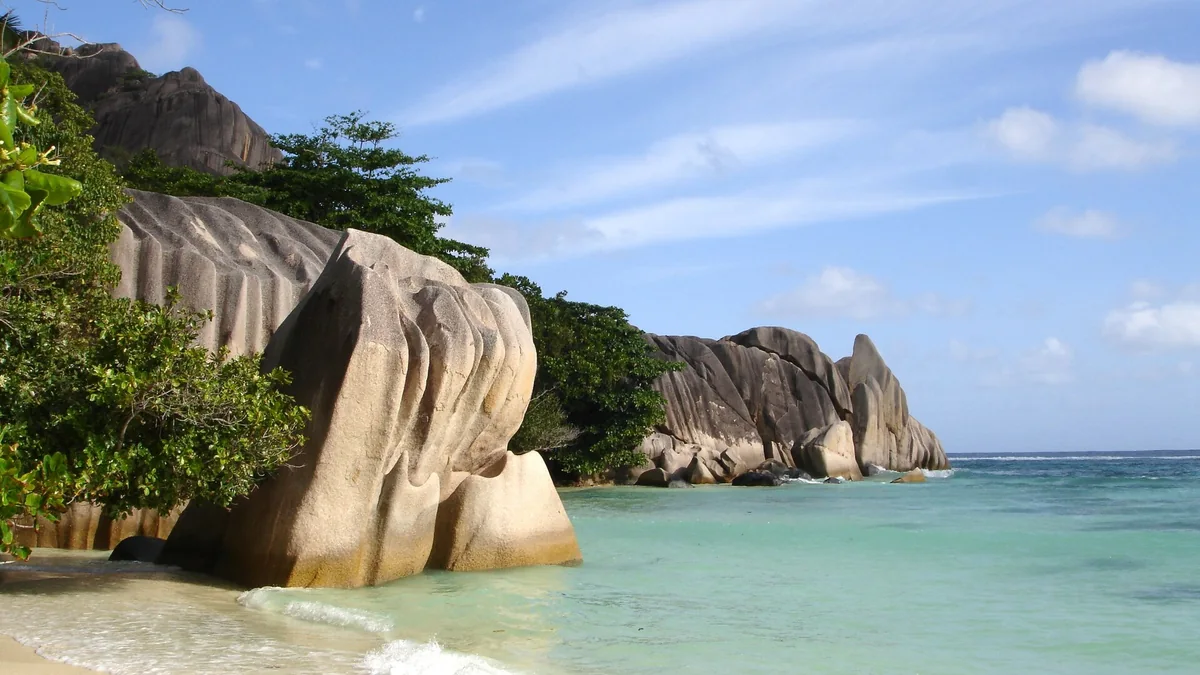
Featured image: Granite boulders and turquoise water at Anse Source d’Argent on La Digue, Seychelles. Martin120 · Wikimedia Commons source · CC BY-SA 3.0. Cropped/resized; WebP conversion.
Planning review: September 26, 2026. Confirm live access, tickets and transport before booking.
Which Destination Is Right for You?
- Beach plus culture: Puerto Rico, Barbados, Curaçao and Zanzibar offer meaningful time away from the resort.
- Resort-focused romance: Maldives or a carefully chosen Seychelles island stay; compare transfers and meal plans before room categories.
- More flexible daily spending: Langkawi, Krabi, Bali and Caye Caulker offer independent lodging and meal choices, although international airfare may dominate the budget.
- Families needing developed services: Oahu, Aruba or a suitable Riviera Maya base can reduce the number of separate transfers.
- Wildlife and green landscapes: Manuel Antonio, Kauai and St. Lucia suit travelers who want substantial land-based experiences.
- Lagoon and boat excursions: El Nido, Moorea and the Mamanucas reward time and weather flexibility rather than a tightly packed schedule.
- Northern winter travel: Consider the Caribbean, Maldives, Krabi or Langkawi using each entry’s local seasonal advice.
- Northern summer travel: Consider Fiji, Samoa, Mauritius or Bali, while checking local wind, rainfall and sea conditions.
Quick Comparison: Destinations, Seasons and Stays
Stays are suggested nights at the destination. Seasonal windows are general planning guidance, not weather guarantees. Budget symbols compare typical on-the-ground costs for an independent leisure trip: $ lower-cost, $$ moderate, $$$ expensive, $$$$ very expensive. They exclude your long-haul airfare and are not quoted prices; dates, rooms, transfers and activity choices can change the result.
On a small screen, swipe the table sideways. Select a destination name to jump to its details.
| Destination | Region / country | Best for | Ideal stay | Best time | Budget |
|---|---|---|---|---|---|
| 1. Puerto Rico: San Juan and the northeast | Caribbean · US territory | Culture plus rainforest | 5–7 nights | December–April | $$$ |
| 2. US Virgin Islands: St. Thomas and St. John | Caribbean · US territory | Beach days with national-park scenery | 6–8 nights | December–April | $$$$ |
| 3. St. Lucia | Eastern Caribbean | Romance and dramatic landscapes | 6–8 nights | December–April | $$$$ |
| 4. Barbados | Eastern Caribbean | Beach life with food and history | 6–7 nights | December–April | $$$ |
| 5. Aruba | Southern Caribbean | A developed beach-hotel vacation | 5–7 nights | January–April; other months possible | $$$ |
| 6. Curaçao | Southern Caribbean | Colorful city streets and cove beaches | 6–8 nights | February–September generally drier | $$$ |
| 7. Jamaica: Negril and the west coast | Caribbean | A relaxed beach stay with Jamaican food | 6–7 nights | December–April, subject to recovery checks | $$$ |
| 8. Dominican Republic: Samaná | Caribbean | Green coastal scenery and independent stays | 6–8 nights | December–March | $$ |
| 9. Belize: Caye Caulker | Caribbean coast of Central America | Small-island life and guided snorkeling | 5–7 nights | December–April generally drier | $$ |
| 10. Costa Rica: Manuel Antonio | Central Pacific coast | Wildlife and beach time in one base | 5–6 nights | Mid-December–April | $$$ |
| 11. Panama: Bocas del Toro | Caribbean coast of Central America | Island-hopping with a casual base | 5–7 nights | March; September–October often drier | $$ |
| 12. Mexico: Playa del Carmen and the Riviera Maya | Mexican Caribbean | Beach hotels with varied day trips | 6–8 nights | December–April | $$$ |
| 13. Oahu, Hawaii | Central Pacific · United States | An urban beach holiday with island excursions | 6–8 nights | April–May; September–October | $$$$ |
| 14. Kauai, Hawaii | Central Pacific · United States | Green scenery and an active island stay | 6–8 nights | April–May; September–October | $$$$ |
| 15. Maldives | Indian Ocean | A resort-focused romantic escape | 6–8 nights | January–March; December–April popular | $$$$ |
| 16. Seychelles: Mahé, Praslin and La Digue | Indian Ocean | Granite beaches and varied island stays | 8–10 nights | April–May; October–November for lighter winds | $$$$ |
| 17. Mauritius | Southwest Indian Ocean | Resort comfort with independent sightseeing | 7–10 nights | May–October cooler and generally drier | $$$ |
| 18. Fiji: Nadi and the Mamanuca Islands | South Pacific | An island resort with a manageable gateway | 7–9 nights | May–October | $$$ |
| 19. French Polynesia: Tahiti and Moorea | South Pacific | Lagoon scenery without a long island circuit | 7–9 nights | May–October generally drier | $$$$ |
| 20. Samoa: Upolu | South Pacific | A slower island stay with cultural context | 7–9 nights | May–October | $$$ |
| 21. Thailand: Krabi and Railay | Andaman coast of Southeast Asia | Limestone coastlines and boat excursions | 5–7 nights | December–March | $$ |
| 22. Indonesia: Bali | Southeast Asia | Culture, food and a two-base holiday | 8–10 nights | May–September generally drier | $$ |
| 23. Philippines: El Nido, Palawan | Southeast Asia | Lagoons and guided island-hopping | 5–7 nights | December–April generally drier | $$ |
| 24. Malaysia: Langkawi | Andaman Sea · Southeast Asia | Beach value and easy land-based outings | 5–7 nights | January–February driest; December–March popular | $$ |
| 25. Tanzania: Zanzibar | Indian Ocean · East Africa | A historic town plus a beach stay | 7–9 nights | June–October | $$$ |
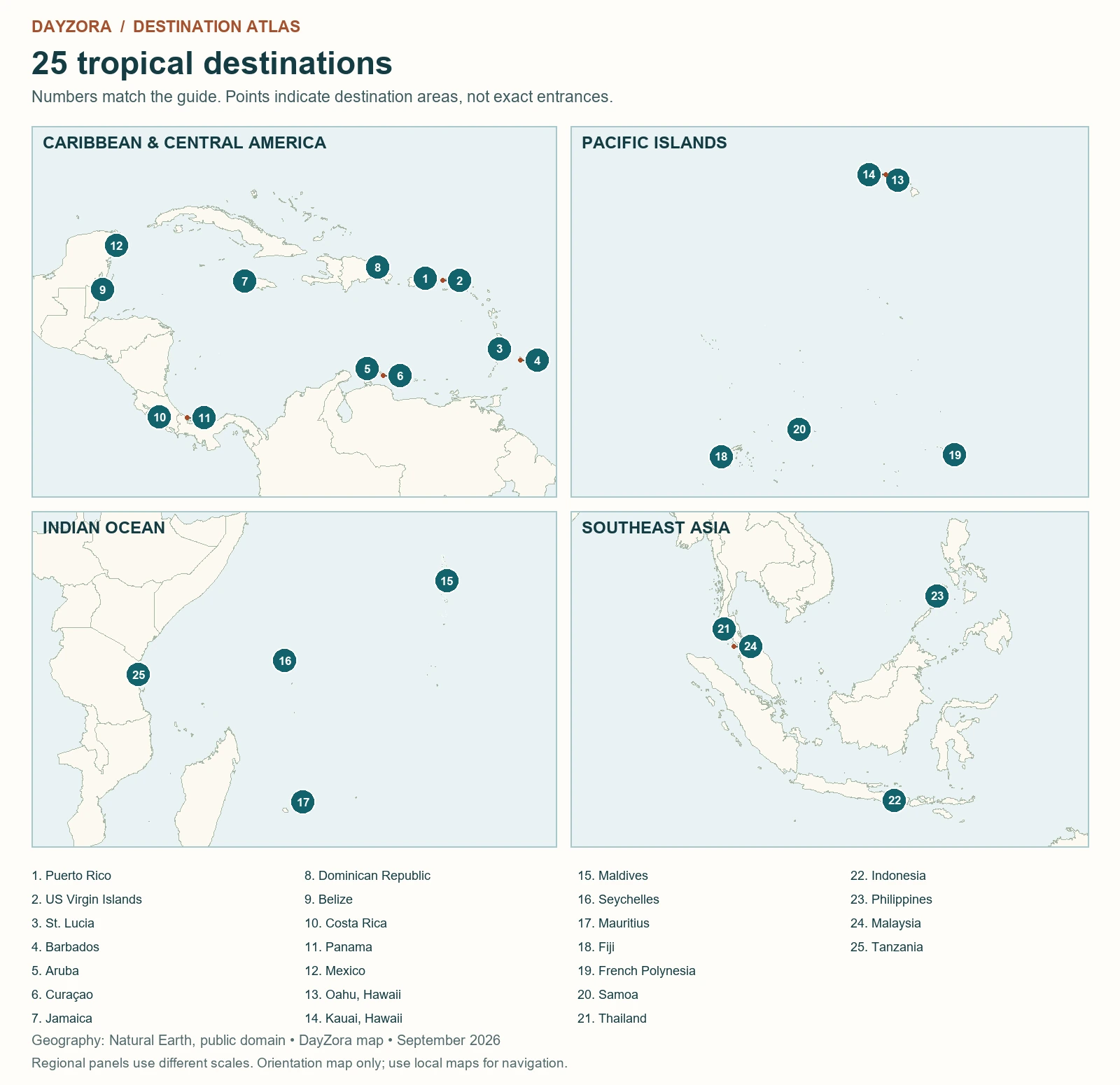
Map of the Featured Destinations
25 Destinations to Consider
1. Puerto Rico: San Juan and the northeast
Puerto Rico makes sense when beach time is only part of the vacation. A San Juan base puts colorful historic streets, Puerto Rican cooking and Atlantic beaches within the same trip, with the northeast rainforest as a separate excursion rather than a rushed stop between flights.
Region: Caribbean · US territory · Best for: Culture plus rainforest
Suggested stay: 5–7 nights · Season: December–April · Budget: $$$
Airport access: Luis Muñoz Marín International, San Juan · Car / transport: Optional in San Juan; useful outside
What to do: Walk Old San Juan and its waterfront fortifications, spend time at Condado or Isla Verde, visit El Portal in El Yunque and plan a Luquillo beach-and-food outing. Choose forest trails from the current open list; a waterfall photograph is not evidence that its trail is accessible.
When to go and how long: December through April is a useful first choice for relatively drier weather, with holiday demand raising costs. Rain still belongs in a rainforest plan. Summer and autumn require closer attention to tropical-weather forecasts and flexible excursion arrangements.
Where to stay and get around: Old San Juan favors atmosphere and sightseeing; Condado and Isla Verde favor beach hotels. A car is unnecessary for a city-only stay but helpful for the northeast, where parking and forest road access need planning.
Planning tip: Give the rainforest its own day and verify Forest Service access updates. Do not rely on old articles about a universal timed-entry reservation: corridor rules and individual visitor facilities differ.
Official planning sources: discoverpuertorico.com — seasons puerto rico · fs.usda.gov — recarea
2. US Virgin Islands: St. Thomas and St. John
This is a practical pairing for travelers who want a developed arrival island and a quieter park-focused stay. St. Thomas provides the main flight gateway, while St. John offers a smaller-scale rhythm built around bays, trails and stretches of protected landscape.
Region: Caribbean · US territory · Best for: Beach days with national-park scenery
Suggested stay: 6–8 nights · Season: December–April · Budget: $$$$
Airport access: Cyril E. King Airport, St. Thomas; ferry to St. John · Car / transport: Useful on St. John; taxis possible
What to do: Explore Charlotte Amalie, take a beach day on St. Thomas, then cross to St. John for Trunk Bay, Cinnamon Bay and a suitable Virgin Islands National Park trail. Treat snorkeling as a conditions-dependent activity, especially when northern swells affect beaches.
When to go and how long: Winter and early spring are popular for comparatively drier weather and busy holiday travel. Summer can offer different room prices but overlaps the Atlantic hurricane season. Leave at least three nights on St. John if changing islands.
Where to stay and get around: Stay near Red Hook for convenient St. Thomas ferry access or Cruz Bay for St. John restaurants and transport. A rental vehicle expands access to trailheads and bays; confirm ferry arrangements if taking a car across.
Planning tip: St. John has no airport. Build the land transfer, ferry and onward ride into both arrival and departure days instead of booking a tight same-day connection from a distant beach.
Official planning sources: visitusvi.com — st john · nps.gov
3. St. Lucia
St. Lucia suits couples who want a distinctive landscape as much as a beach resort. The Pitons and the green southwest give the island a strong sense of place, but winding roads make it important to choose between a Soufrière-focused trip and a northern beach-and-restaurant base.
Region: Eastern Caribbean · Best for: Romance and dramatic landscapes
Suggested stay: 6–8 nights · Season: December–April · Budget: $$$$
Airport access: Hewanorra International, Vieux Fort · Car / transport: Driver or rental car for excursions
What to do: Combine a Tet Paul walk, the Sulphur Springs area, Diamond Falls and a coast excursion. A demanding Piton climb should be a separately assessed guided activity, not an automatic addition to a relaxed honeymoon schedule.
When to go and how long: December through April is generally the drier window, with higher demand around holidays. Wetter months bring lush scenery and the possibility of disrupted outdoor days; tropical-weather monitoring matters through the Atlantic storm season.
Where to stay and get around: Soufrière puts the southwest sights close at hand; Rodney Bay offers a different concentration of dining and beach hotels. Hewanorra is in the south, so compare the complete airport-transfer cost and duration before selecting a northern property.
Planning tip: Check whether the hotel beach is walkable from your room or reached by a shuttle and steps. Hillside views can be excellent while everyday beach access is less convenient for young children or limited mobility.
Official planning sources: stlucia.org — weather · stlucia.org — sulphur springs · stlucia.org — west coast soufriere to canaries
4. Barbados
Barbados works well for travelers who enjoy leaving the resort for meals and short excursions. Its south and west coasts provide the conventional beach-holiday base, while the Atlantic east coast delivers a more rugged, wind-and-wave-shaped landscape.
Region: Eastern Caribbean · Best for: Beach life with food and history
Suggested stay: 6–7 nights · Season: December–April · Budget: $$$
Airport access: Grantley Adams International · Car / transport: Optional; useful for east-coast outings
What to do: Explore historic Bridgetown, spend a beach morning around Carlisle Bay, seek out Bajan cooking and visit Bathsheba for its scenery. A rum-distillery visit can add another perspective, with transport arranged so nobody needs to drive afterward.
When to go and how long: The northern winter and early spring are generally drier and busier. Summer and autumn bring more humidity, rain and tropical-weather uncertainty. Allow a week if you want unhurried coastal days alongside the inland and east-coast excursions.
Where to stay and get around: The south coast suits travelers who want dining choices and a lively base; the west coast offers many quieter and more expensive hotel options. Buses and taxis can work for a beach-based visit, while a car makes dispersed sightseeing easier.
Planning tip: Do not choose Bathsheba expecting the same swimming conditions as a sheltered west-coast beach. Its surf scenery is the attraction; select swimming locations according to local advice, flags and conditions on the day.
Official planning sources: visitbarbados.org — weather · visitbarbados.org — bathsheba beach · visitbarbados.org — barbados beach lovers
5. Aruba
Aruba is a strong fit for travelers who value straightforward resort infrastructure and broad sandy beaches. Its dry, cactus-dotted interior is a different tropical landscape from a rainforest island, making a short inland outing a worthwhile counterpoint to the hotel coast.
Region: Southern Caribbean · Best for: A developed beach-hotel vacation
Suggested stay: 5–7 nights · Season: January–April; other months possible · Budget: $$$
Airport access: Queen Beatrix International, Aruba · Car / transport: Optional on hotel strip; useful elsewhere
What to do: Spend time at Eagle Beach, walk the Palm Beach area, explore Oranjestad and arrange an appropriate Arikok National Park outing. Choose an operator and route that match your comfort with rough terrain rather than assuming every mapped coastal road suits a standard rental car.
When to go and how long: The early part of the year is a popular beach window. Aruba is relatively dry, but rain, wind and disruptive regional weather remain possible; a southern Caribbean location is not a storm guarantee. Trade winds can affect how comfortable individual beaches feel.
Where to stay and get around: Palm Beach concentrates large hotels, restaurants and activities; Eagle Beach favors a somewhat less crowded layout. Staying within one beach area can reduce car needs, while a short rental or organized excursion opens up the rest of the island.
Planning tip: Compare room location, meal costs and transport together. A cheaper inland property can be a good choice for independent drivers but less convenient if you expect to walk to the sea several times daily.
Official planning sources: aruba.com · airportaruba.com · meteo.aw — CLIM SUM Aua
6. Curaçao
Curaçao suits travelers who want to divide their time between a lived-in city and smaller beach coves. Willemstad provides the architectural and food interest, while the west of the island rewards a more independent style of beach exploration.
Region: Southern Caribbean · Best for: Colorful city streets and cove beaches
Suggested stay: 6–8 nights · Season: February–September generally drier · Budget: $$$
Airport access: Curaçao International, Hato · Car / transport: Helpful for western beaches
What to do: Walk Punda and Otrobanda, watch the waterfront around the Queen Emma Bridge, choose a western cove such as Playa Kalki and consider a suitable outing in the Christoffel area. Match snorkeling plans to sea conditions and your ability to enter and leave the water.
When to go and how long: February through September is generally the drier stretch; October through January receives more rain. Temperatures stay warm, and wind or showers can occur in any month. Six nights allows several beach days without turning every morning into a long drive.
Where to stay and get around: Willemstad works for evening dining and city walks. A western base trades that convenience for proximity to coves. Renting a car is useful for repeated beach visits; check parking and access arrangements rather than expecting every beach to be a public resort-style facility.
Planning tip: Choose the base around your evening habits. Driving across the island for dinner every night is a poor trade if your main goal is a relaxed vacation with a short walk home.
Official planning sources: curacao.com — weather in curacao what to expect year round · curacao.com — what caribbean island should i visit · curacao-airport.com
7. Jamaica: Negril and the west coast
Negril is the choice here for a slower Jamaican beach trip, with time for local cooking and sunsets instead of a cross-island checklist. The key planning issue in 2026 is property-level recovery: the destination should be booked around confirmed operating services.
Region: Caribbean · Best for: A relaxed beach stay with Jamaican food
Suggested stay: 6–7 nights · Season: December–April, subject to recovery checks · Budget: $$$
Airport access: Sangster International, Montego Bay · Car / transport: Prearranged transfers and local excursions
What to do: Build the visit around Seven Mile Beach, a West End sunset, Jamaican meals away from the hotel when practical and an excursion that the operator confirms is running. Do not assume a tour or restaurant listed in an older guide has reopened.
When to go and how long: Winter and early spring are popular for beach travel. Summer and autumn require hurricane-season flexibility. A week gives room to settle into one base and reschedule an outing if weather or operational changes intervene.
Where to stay and get around: Seven Mile Beach suits travelers who want sand close to their room; the West End has a different cliffside setting and may require transport to a conventional beach. Montego Bay is the main flight gateway for this western itinerary.
Planning tip: Before paying, obtain written confirmation of the hotel’s opening date, usable beach or pool areas, meal service and airport transfer. Jamaica’s official travel-alert pages list reopening information; an operating airport does not mean every resort is ready.
Official planning sources: visitjamaica.com — airports in jamaica · visitjamaica.com — travel alerts · visitjamaica.com — hotel reopenings
8. Dominican Republic: Samaná
Samaná is a good alternative to a vacation built entirely around a large all-inclusive resort. The peninsula combines beach towns, greener inland scenery and boat excursions, with enough variety for a week based in one area rather than daily hotel changes.
Region: Caribbean · Best for: Green coastal scenery and independent stays
Suggested stay: 6–8 nights · Season: December–March · Budget: $$
Airport access: Samaná El Catey; Santo Domingo alternative · Car / transport: Useful, or use arranged drivers
What to do: Choose Las Terrenas or Las Galeras beach days, arrange a responsible El Limón waterfall visit, take a Los Haitises excursion and consider seasonal whale watching with a regulated operator. These outings involve different departure points and should not all be squeezed into two days.
When to go and how long: December through March is a useful first choice; whale watching is seasonal, generally January through March, rather than a year-round promise. Rain is possible even in the preferred months, so keep a spare day around a major boat trip.
Where to stay and get around: Las Terrenas has a broader restaurant and lodging choice, while Las Galeras suits a quieter base. El Catey is the closer airport for the peninsula; Santo Domingo can offer more flight options but adds a substantial road transfer.
Planning tip: Compare the final arrival time and ground journey before choosing the cheapest airfare. A late landing followed by a long transfer may justify an arrival-night stop instead of starting the holiday tired.
Official planning sources: godominicanrepublic.com — samana · godominicanrepublic.com — travel tips
9. Belize: Caye Caulker
Caye Caulker is better suited to travelers who want a small island and water excursions than those expecting miles of broad resort beach. Its appeal is the easy rhythm between guesthouse, seafood meal, a shaded break and a carefully chosen reef trip.
Region: Caribbean coast of Central America · Best for: Small-island life and guided snorkeling
Suggested stay: 5–7 nights · Season: December–April generally drier · Budget: $$
Airport access: Philip S. W. Goldson International, then boat or local flight · Car / transport: No standard rental car needed on the caye
What to do: Explore the village on foot or by bicycle, spend time around the Split, browse local shops and arrange snorkeling with a licensed operator. Ask about the exact reef stops and time on the boat; an ambitious offshore dive itinerary is a different holiday from a casual shallow-water outing.
When to go and how long: The generally drier winter and early spring are a sensible starting point. Rainier months and Atlantic tropical weather can disrupt boats. Five nights gives several chances for an excursion without making the whole trip depend on one forecast.
Where to stay and get around: Stay in the main village if you want restaurants within a short walk. International arrivals usually connect through the Belize City area by local flight or a transfer to a water-taxi terminal; confirm which airport and pier the ticket uses.
Planning tip: Do not add inland ruins and cave excursions as casual caye day trips. If those are priorities, extend the vacation and give the mainland its own nights instead of repeatedly paying for island transfers.
Official planning sources: travelbelize.org — caye caulker · travelbelize.org — PDF Itineraries Diving LO 0
10. Costa Rica: Manuel Antonio
Manuel Antonio gives a first Costa Rica trip a manageable focus: coastal forest, wildlife observation and beach time without a long circuit through the country. It is especially useful when your vacation is short enough that multiple mountain and coast transfers would consume too much of it.
Region: Central Pacific coast · Best for: Wildlife and beach time in one base
Suggested stay: 5–6 nights · Season: Mid-December–April · Budget: $$$
Airport access: Juan Santamaría International, San José; Quepos domestic alternative · Car / transport: Optional with transfers and local buses
What to do: Reserve a national-park visit, consider a qualified wildlife guide, spend another day at the public beach and explore Quepos for a change of pace. Keep wildlife observation separate from feeding or touching animals, even when they approach busy visitor areas.
When to go and how long: The Pacific dry season generally runs from mid-December through April. Green-season visits can work with flexible mornings and rain plans, but do not apply this timetable to Costa Rica’s Caribbean coast. The national park is closed on Tuesdays.
Where to stay and get around: The road between Quepos and the park has many hotels, but steep hills mean a short map distance may not be a comfortable walk. A hotel near a bus stop can reduce car needs; a private transfer is another option from San José.
Planning tip: Buy park entry through SINAC’s official reservation system. A guide booking is not automatically your admission, and an available hotel room says nothing about remaining park capacity.
Official planning sources: visitcostarica.com — when to visit · sinac.go.cr
11. Panama: Bocas del Toro
Bocas del Toro suits travelers comfortable with small-island logistics and a less polished beach-holiday format. The archipelago offers a mix of lively town accommodation and quieter waterfront stays, but the transfer pattern matters as much as the room photograph.
Region: Caribbean coast of Central America · Best for: Island-hopping with a casual base
Suggested stay: 5–7 nights · Season: March; September–October often drier · Budget: $$
Airport access: Bocas del Toro airport; domestic connections from Panama City Albrook · Car / transport: Water taxis and local road transport
What to do: Explore Bocas Town, take a beach outing on Isla Colón, arrange a Bastimentos visit and choose a guided snorkeling or mangrove excursion. Ask whether a property’s beach is suitable for swimming and whether its advertised activities require a separate boat.
When to go and how long: Rain can occur all year. March and September–October are often relatively drier windows here, a different pattern from Panama’s Pacific dry season. Keep a flexible day around boat activities and allow for sea conditions to change the planned destination.
Where to stay and get around: Bocas Town is convenient for dining and water taxis; a remote lodge offers quiet at the cost of repeated paid transfers. Domestic flights commonly use Albrook in Panama City, while most international flights arrive at Tocumen.
Planning tip: Treat Tocumen and Albrook as different airports. Build a realistic cross-city connection or overnight stop rather than booking a short international-to-domestic transfer as if it were within one terminal.
Official planning sources: tourismpanama.com — bocas del toro · tourismpanama.com — beaches · tourismpanama.com — getting here
12. Mexico: Playa del Carmen and the Riviera Maya
The Riviera Maya fits travelers who want a wide choice of hotels and a mixture of coast, Maya heritage and inland swimming experiences. Playa del Carmen is a practical focal point, with a more concentrated town setting than a secluded resort far along the highway.
Region: Mexican Caribbean · Best for: Beach hotels with varied day trips
Suggested stay: 6–8 nights · Season: December–April · Budget: $$$
Airport access: Cancún International; compare Tulum for southern stays · Car / transport: Optional; transfers and tours work
What to do: Combine a town-and-beach day, a carefully chosen cenote, a Tulum archaeological visit and a Cozumel excursion if ferry conditions and timing suit. Select a few of these rather than buying a different full-day package for every morning.
When to go and how long: December through April is a common starting point for drier weather, with peak holiday crowds. Summer and autumn are hotter, wetter and within Atlantic hurricane season. Seaweed conditions vary by beach and week and cannot be guaranteed by a seasonal label.
Where to stay and get around: Central Playa del Carmen suits travelers who want restaurants outside the hotel. Highway resorts may provide extensive facilities but require transfers for almost everything. Compare the complete airport-to-property journey before selecting Cancún or Tulum flights.
Planning tip: Ask a cenote operator about entry steps, water depth, life-jacket rules and included transport. At archaeological sites, verify current ticket components and access rules directly instead of assuming every advertised tour includes all admission charges.
Official planning sources: visitmexico.com — playa del carmen · inah.gob.mx
13. Oahu, Hawaii
Oahu is a good tropical choice when different travelers want different things from the same holiday. Honolulu brings museums, food and city services; Waikiki provides a beach base; and separate island days can add a different coastal landscape.
Region: Central Pacific · United States · Best for: An urban beach holiday with island excursions
Suggested stay: 6–8 nights · Season: April–May; September–October · Budget: $$$$
Airport access: Daniel K. Inouye International, Honolulu · Car / transport: No in Waikiki; helpful for island excursions
What to do: Spend time on Waikiki Beach, reserve a Diamond Head visit if its stairs suit your group, explore Honolulu’s cultural sites and plan a North Shore outing. Keep Pearl Harbor as a deliberately scheduled visit with its own ticket and access checks.
When to go and how long: Spring and early autumn can balance weather and visitor demand, although rain and heat remain possible. Winter North Shore surf is a spectacle but can make swimming dangerous. A week allows room for both city days and slower beach mornings.
Where to stay and get around: Waikiki is the easiest car-light base. Rent a vehicle only for the days that need it, comparing hotel parking with tour or transit costs. Staying elsewhere on the island trades city convenience for a different atmosphere and more driving.
Planning tip: Non-Hawaii residents need advance Diamond Head entry reservations, and parking is a separate consideration if driving. The trail is steep and stair-heavy; choose a different viewpoint if that does not fit your mobility.
Official planning sources: gohawaii.com — oahu · dlnr.hawaii.gov — diamond head state monument
14. Kauai, Hawaii
Kauai favors travelers who want landscape to set the pace: canyon viewpoints, green valleys and coastlines that are not connected by a complete island ring road. It is a better fit for an unhurried week than a two-night addition between other Hawaiian islands.
Region: Central Pacific · United States · Best for: Green scenery and an active island stay
Suggested stay: 6–8 nights · Season: April–May; September–October · Budget: $$$$
Airport access: Līhuʻe Airport · Car / transport: Recommended for independent exploration
What to do: Explore Waimea Canyon viewpoints, spend time around Hanalei, choose a suitable beach near your base and arrange a Nā Pali coast excursion when conditions allow. Hiking, helicopter and boat experiences have very different physical demands and weather limitations.
When to go and how long: Spring and early autumn are useful shoulder-season choices. North-shore winter surf can be powerful, and rain can affect trails in any season. Leave flexibility around your most important outdoor experience instead of placing it on the final afternoon.
Where to stay and get around: Poʻipū works for a south-shore base, Kapaʻa for a more central road position and Princeville for the north. A rental car helps with dispersed sights, but driving from one end of the island to the other repeatedly quickly uses up a vacation.
Planning tip: Reserve Hāʻena access through the official system if visiting. A park entry or parking reservation is not permission for every section of the Kalalau Trail; longer hikes can require different permits.
Official planning sources: gohawaii.com — travel info · dlnr.hawaii.gov — haena state park · dlnr.hawaii.gov — haena napali access
15. Maldives
The Maldives is best approached as a choice of island and transfer system, not just a choice of room. A small resort island can make an excellent low-effort escape, while an inhabited-island guesthouse offers a different setting, price structure and set of local customs.
Region: Indian Ocean · Best for: A resort-focused romantic escape
Suggested stay: 6–8 nights · Season: January–March; December–April popular · Budget: $$$$
Airport access: Velana International, then resort-specific transfer · Car / transport: No; boat, seaplane or domestic flight
What to do: Choose a resort with suitable lagoon access, arrange guided snorkeling, consider a beginner or qualified dive outing appropriate to your experience and leave unscheduled time for the beach. A house reef and a shallow sandy swimming lagoon are different advantages; ask which the property actually has.
When to go and how long: January through March is the core dry-season window identified by the meteorological service, within the wider popular December–April period. The southwest monsoon brings more rain and wind, with variation across the long island chain. No month guarantees clear skies.
Where to stay and get around: For a shorter stay, compare islands reached by speedboat from Velana. More remote resorts can require seaplanes or domestic flights plus a boat, adding cost and connection constraints. Obtain the complete transfer arrangement before purchasing international flights.
Planning tip: Price meals, mandatory transfers and baggage allowances alongside the room. Confirm the latest arrival time for onward travel and whether a late flight requires an airport-area overnight stay.
Official planning sources: meteorology.gov.mv — climate · velana.macl.aero · visitmaldives.s3.amazonaws.com
16. Seychelles: Mahé, Praslin and La Digue
Seychelles rewards a slightly longer holiday because its main islands offer different experiences. Mahé gives the broadest services and road network; Praslin mixes beaches with a forest reserve; La Digue encourages a slower rhythm that does not require a full sightseeing schedule.
Region: Indian Ocean · Best for: Granite beaches and varied island stays
Suggested stay: 8–10 nights · Season: April–May; October–November for lighter winds · Budget: $$$$
Airport access: Seychelles International on Mahé · Car / transport: Island-specific: car, ferry, bicycle and transfers
What to do: Explore Victoria and a Mahé beach, visit Vallée de Mai on Praslin, and give La Digue time for coastal scenery and cycling where appropriate. Do not treat every famous beach as an all-season swimming beach; exposure and currents vary.
When to go and how long: The transition months around April–May and October–November can offer lighter winds. The southeast trade-wind period is often drier but rougher on exposed coasts, while the wetter northwest season has its own beach conditions. Choose the coast as well as the month.
Where to stay and get around: With a week, use one or two islands rather than all three. Mahé’s Beau Vallon area suits a beach-and-services base; Praslin and La Digue add onward ferry or flight logistics. Check seasickness tolerance before relying on repeated ferry crossings.
Planning tip: Keep the final night or a generous connection buffer near your international departure route. An island hop that looks short on a map still includes checkout, pier or airport arrival, waiting and another ground transfer.
Official planning sources: seychelles.com — overview · meteo.sc — seychelles climate guide
17. Mauritius
Mauritius suits travelers who want a beach hotel without spending every day inside it. The island supports a varied week of coastal stays, gardens, markets and inland scenery, with the choice of coast influencing both travel time and exposure to wind.
Region: Southwest Indian Ocean · Best for: Resort comfort with independent sightseeing
Suggested stay: 7–10 nights · Season: May–October cooler and generally drier · Budget: $$$
Airport access: Sir Seewoosagur Ramgoolam International · Car / transport: Helpful, or use arranged drivers
What to do: Combine beach mornings with Port Louis, the Pamplemousses botanical garden, Chamarel scenery and a suitable Black River Gorges outing. Group nearby sights into a day rather than making repeated cross-island trips from a distant resort.
When to go and how long: May through October is generally cooler and drier. The warmer November–April period is wetter and carries tropical-cyclone disruption risk. The east and southeast are more exposed to trade winds; west-coast stays can appeal when a sheltered base is a priority.
Where to stay and get around: Grand Baie offers restaurants and services in the north; Flic en Flac works for a west-coast stay; the southwest suits scenery-focused trips. The international airport is in the southeast, so a northern hotel comes with a substantial arrival transfer.
Planning tip: Check the full beach setting rather than choosing solely by room photographs: lagoon depth, wind exposure and boat traffic affect swimming. A rental car or a few prearranged driver days can make the inland portion much easier.
Official planning sources: mru.airport.aero · ode.govmu.org — climate profile mauritius · environment.govmu.org — c4exenv
18. Fiji: Nadi and the Mamanuca Islands
Fiji is a strong choice for travelers who want a Pacific island resort but need to keep the arrival route understandable. Focusing on Nadi and the Mamanucas avoids making a short holiday depend on several domestic flights to widely separated islands.
Region: South Pacific · Best for: An island resort with a manageable gateway
Suggested stay: 7–9 nights · Season: May–October · Budget: $$$
Airport access: Nadi International; boat or other resort transfer · Car / transport: Transfers usually sufficient
What to do: Spend some time in the Nadi area, choose a Mamanuca island stay or day trip, arrange reef activities matched to your ability and join a cultural visit offered with clear local permission. A respectful village visit needs different clothing and behavior from a resort beach afternoon.
When to go and how long: May through October is generally cooler and drier; school holidays can make popular resorts busy. November through April is wetter, warmer and the main cyclone season. Keep the itinerary flexible and understand transfer cancellation arrangements.
Where to stay and get around: Denarau is convenient for organized departures but is not the same experience as sleeping on a smaller island. For a week, consider one arrival or departure night near Nadi and the remaining nights at a single island property.
Planning tip: Ask which boat departure matches your international flight and whether the fare includes luggage and land transport. The last transfer of the day can turn a late arrival into an unplanned mainland overnight.
Official planning sources: fiji.travel — climate in fiji · fiji.travel — best island day trips nadi · fiji.travel
19. French Polynesia: Tahiti and Moorea
Tahiti and Moorea make a coherent first French Polynesia trip. Tahiti provides the international gateway and a chance to experience Papeete, while Moorea supplies mountainous island scenery and lagoon time without requiring a flight to every part of the itinerary.
Region: South Pacific · Best for: Lagoon scenery without a long island circuit
Suggested stay: 7–9 nights · Season: May–October generally drier · Budget: $$$$
Airport access: Tahiti Faaʻa International, then Moorea ferry or flight · Car / transport: Helpful on Moorea; transfers also possible
What to do: Explore Papeete’s market area, take a Moorea lagoon excursion, visit a suitable viewpoint and spend an unhurried beach day around Temae or your accommodation. Choose activities that let you appreciate both the island interior and the water.
When to go and how long: May through October is generally the drier, cooler part of the year. The warmer wet season can bring heavier rain and disturbed seas. A week is enough for this two-island focus; adding Bora Bora needs more time and a separate flight-and-transfer budget.
Where to stay and get around: Use Tahiti for arrival logistics and most nights on Moorea if relaxation is the priority. A car for a day or two can open up Moorea’s road-based sights, while prearranged excursions reduce the need to drive daily.
Planning tip: Compare a beachfront bungalow with an overwater room on actual access and inclusions. The more expensive room category does not automatically provide the best swimming, and an early flight home may require a final Tahiti night.
Official planning sources: tahititourisme.com — when to visit the islands of tahiti · tahititourisme.pf — what to do in moorea
20. Samoa: Upolu
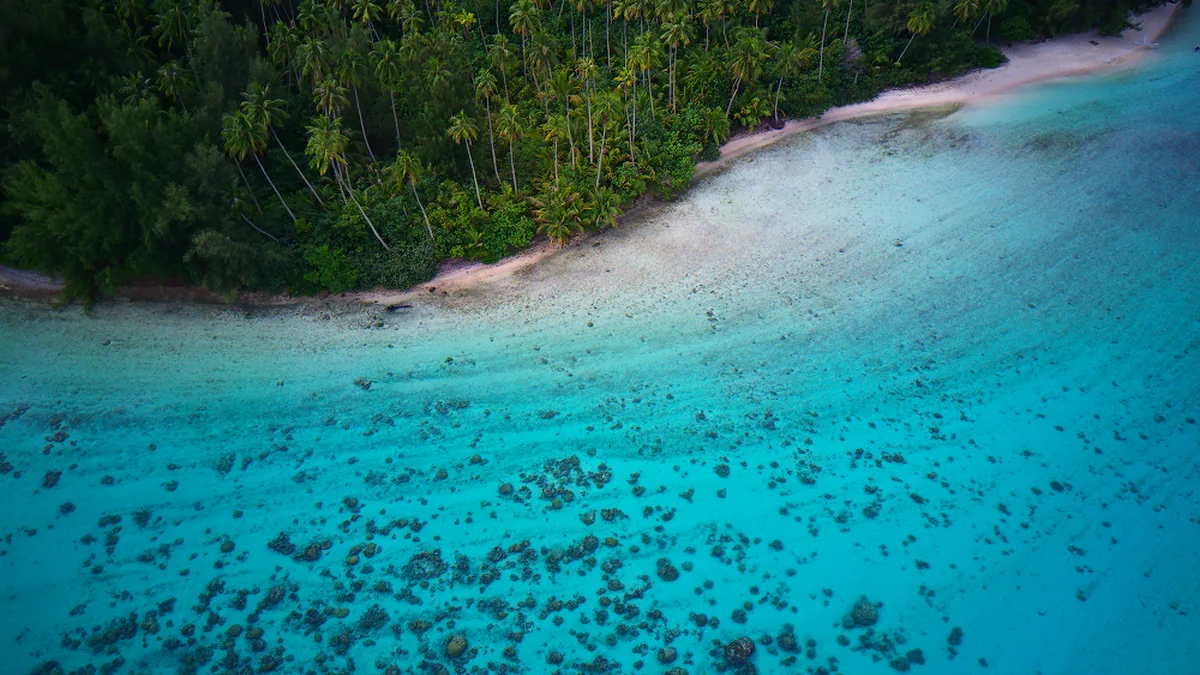
Upolu suits travelers who want a quieter Pacific holiday and are willing to plan around village life rather than a dense resort strip. Apia offers a useful urban introduction, while the south coast gives the trip a beach-centered rhythm.
Region: South Pacific · Best for: A slower island stay with cultural context
Suggested stay: 7–9 nights · Season: May–October · Budget: $$$
Airport access: Faleolo International on Upolu · Car / transport: Helpful, or arrange a driver
What to do: Explore Apia’s markets, visit a museum or cultural attraction, choose a waterfall outing and arrange beach time on the south coast. To Sua is a distinctive swimming site, but its steep ladder and deep water require an honest assessment of ability and comfort.
When to go and how long: May through October is generally the drier season. November through April is wetter, with the heaviest rain often in the middle of that period and a need to monitor tropical-weather warnings. A week allows several days in one coastal base.
Where to stay and get around: Split a short stay between Apia and the south coast only if the city activities matter to you. Faleolo is outside Apia, so compare transfer costs for your actual hotel. A driver or rental car makes dispersed sights easier to combine.
Planning tip: Ask before entering village land or using a beach, and follow local requests about clothing, payments and Sunday activity. These are community places as well as visitor attractions; hotel staff can explain expectations for the specific outing.
Official planning sources: samoa.travel — climate weather · samoa.travel — upolu island · samoa.travel — when you arrive in samoa
21. Thailand: Krabi and Railay
Krabi suits travelers who want dramatic coastal scenery with plenty of accommodation choices. Ao Nang provides practical services and excursion departures, while Railay offers a different atmosphere reached by boat, even though it is attached to the mainland.
Region: Andaman coast of Southeast Asia · Best for: Limestone coastlines and boat excursions
Suggested stay: 5–7 nights · Season: December–March · Budget: $$
Airport access: Krabi International · Car / transport: No for a beach base; boats and transfers
What to do: Take a Railay outing, choose one island excursion, spend a quieter beach afternoon near your base and explore Krabi Town for food. A climbing session should use a qualified operator and an appropriate route rather than becoming an improvised activity.
When to go and how long: December through March is a useful first choice on the Andaman coast. The southwest monsoon brings wetter conditions and can affect boats, especially during the broader May–October period. Clear weather inland does not guarantee a comfortable sea crossing.
Where to stay and get around: Ao Nang is convenient for restaurants and transport; Railay suits travelers happy to organize arrivals around boats. More isolated beach hotels can be relaxing but may make inexpensive evening meals or spontaneous outings harder to reach.
Planning tip: Confirm the exact arrival pier, transfer method and luggage handling for a Railay stay. A late flight or rough sea can change the connection, so do not treat the final boat leg like a guaranteed taxi ride.
Official planning sources: tourismthailand.org
22. Indonesia: Bali
Bali works best when you choose a limited number of areas and give each time. A short inland stay around Ubud and a separate coastal base can offer more variety with less daily traffic than one hotel used for long excursions in every direction.
Region: Southeast Asia · Best for: Culture, food and a two-base holiday
Suggested stay: 8–10 nights · Season: May–September generally drier · Budget: $$
Airport access: I Gusti Ngurah Rai International · Car / transport: Driver usually simpler than self-driving
What to do: Explore Ubud’s arts and food scene, visit a temple with appropriate dress, choose a rice-landscape walk and spend several days by your selected coast. Sanur, the Bukit Peninsula and the busy southwest beach towns offer different settings; they are not interchangeable.
When to go and how long: The generally drier May–September period is popular, especially school holidays. The wetter season can still support a trip, but heavy rain affects roads and outdoor plans. Eight nights is a sensible minimum for two bases once arrival and transfer time are included.
Where to stay and get around: Sanur can suit a calmer coastal base; Ubud serves inland cultural outings. Arrange drivers for the days that need them and compare real travel time with map distance. Congestion can make an apparently short cross-island excursion consume much of the day.
Planning tip: Check Bali’s official visitor rules and levy, plus Indonesia’s entry requirements for your passport. Nyepi affects movement and airport operations; verify its dates and arrangements if your trip falls near the observance.
Official planning sources: indonesia.travel — bali · indonesia.travel — bali rainy season · lovebali.baliprov.go.id
23. Philippines: El Nido, Palawan
El Nido is a focused choice for travelers whose main priority is limestone-island scenery and lagoon excursions. It is not a good place to schedule every night around onward travel: the most memorable activities depend on boats and conditions.
Region: Southeast Asia · Best for: Lagoons and guided island-hopping
Suggested stay: 5–7 nights · Season: December–April generally drier · Budget: $$
Airport access: El Nido Lio Airport; Puerto Princesa with long road transfer · Car / transport: No; local rides and organized boats
What to do: Choose an authorized Bacuit Bay island-hopping itinerary, kayak where permitted, spend a land-based beach day and leave time for the town’s restaurants. Ask which lagoon is actually included and whether permits, equipment and environmental charges are covered.
When to go and how long: December through April is generally the drier window, but boat departures can still be cancelled. Wetter-season savings come with a greater risk of losing excursion days. Five or six nights provides more resilience than a two-night dash built around one tour.
Where to stay and get around: El Nido town is convenient for departures and meals; Corong Corong offers another nearby base. Lio is the closer airport. Puerto Princesa may offer different flight choices but requires a long overland journey that should count as a transfer day.
Planning tip: Avoid a same-day boat tour followed by a tightly timed flight. Keep the final day on land or allow a generous buffer, and check luggage limits on the actual airline booking rather than assuming a standard international allowance.
Official planning sources: tourismphilippines.com.au — palawan · philippines.travel
24. Malaysia: Langkawi
Langkawi is a useful choice for travelers who want a beach holiday with several activities that do not depend on a long boat journey. The main island has a broad range of hotels and enough road-accessible sights to create alternatives when sea conditions change.
Region: Andaman Sea · Southeast Asia · Best for: Beach value and easy land-based outings
Suggested stay: 5–7 nights · Season: January–February driest; December–March popular · Budget: $$
Airport access: Langkawi International · Car / transport: Helpful; taxis and arranged outings possible
What to do: Spend time around Pantai Cenang, take the cable-car area as a weather-dependent outing, arrange a responsible Kilim mangrove visit and seek out local Malay food. Avoid wildlife tours that encourage feeding animals for photographs.
When to go and how long: January and February are typically among the driest months in this northwestern part of Malaysia, within the popular December–March period. Rain occurs year-round, with a wetter peak around autumn. Do not apply Malaysia’s east-coast monsoon schedule to this island.
Where to stay and get around: Pantai Cenang offers the most straightforward combination of beach, dining and transport. Pantai Tengah can provide a quieter nearby setting, while remote resorts require more planning for meals and excursions. A short car rental can be useful for independent sightseeing.
Planning tip: Check cable-car operating notices and visibility before making it the centerpiece of your only full day. A clear forecast improves the chance of views but does not override wind-related operating decisions.
Official planning sources: malaysia.travel — langkawi · ebrochures.malaysia.travel — langkawi kedah · met.gov.my — iklim malaysia
25. Tanzania: Zanzibar
Zanzibar suits travelers who want a historic town and a coastal holiday in the same trip. Most first visits focus on Unguja, with a short Stone Town stay followed by a beach base selected for its tides, atmosphere and access to activities.
Region: Indian Ocean · East Africa · Best for: A historic town plus a beach stay
Suggested stay: 7–9 nights · Season: June–October · Budget: $$$
Airport access: Abeid Amani Karume International, Unguja · Car / transport: Prearranged transfers usually sufficient
What to do: Walk Stone Town with a knowledgeable local guide, arrange a spice-farm visit, choose a responsible snorkeling outing and spend several days at the coast. Beach conditions differ significantly between locations; the view at high tide may not resemble the same shore at low tide.
When to go and how long: June through October is a useful dry-season starting point. The long-rain period around March–May can disrupt outdoor plans; shorter rains may occur later in the year. A week allows two nights in town and a more relaxed beach stay.
Where to stay and get around: Nungwi or Kendwa may suit travelers prioritizing a northern beach base; the east coast has a different tidal landscape and wide accommodation choice. Arrange airport and hotel transfers in advance when arriving late, rather than relying on a vague island-wide transfer estimate.
Planning tip: Check Tanzania’s passport-specific entry rules and Zanzibar’s mandatory inbound-insurance requirement through official channels. These are separate checks from an existing travel-insurance policy; confirm current exemptions and purchase arrangements before departure.
Official planning sources: zanzibartourism.go.tz · gov.uk — entry requirements
How to Plan the Trip
Price the journey from runway to room
For Maldives, Seychelles, Fiji and French Polynesia, the final boat or flight can be a substantial part of the cost. Get the complete transfer price, operating window, baggage allowance and missed-connection policy before buying international tickets. For Bocas del Toro, distinguish Panama City’s international and domestic airports; for El Nido, distinguish a local arrival from a long Puerto Princesa road transfer.
Use regional seasons, not one tropical calendar
The Atlantic hurricane season is June 1–November 30. Fiji and Samoa have a different southern-hemisphere wet-season pattern, and Indian Ocean destinations have their own monsoons and cyclone exposure. Bocas del Toro does not follow a simple Pacific Panama dry-season rule. Keep a land-based alternative and leave room to move the main boat excursion.
Compare the full holiday budget
A modest room on a remote island can become expensive once every meal and boat ride is added. A resort meal plan may be worthwhile when outside dining is impractical, while a walkable town base provides more choice. Our budget travel guide and flight-search guide help compare total costs rather than headline rates.
Check entry and health requirements early
Requirements depend on nationality, passport type, residence, transit countries and trip length. Confirm with the destination’s immigration authority or embassy and your airline. Use your government’s destination advice, such as GOV.UK’s country guides, with attention to which travelers the advice covers. Zanzibar’s inbound insurance and Bali’s visitor levy are examples of checks separate from a visa. The first international trip guide provides a preparation sequence.
Choose a beach for the activity
A surf beach, a shallow lagoon, a rocky snorkeling entry and a tidal shore meet different needs. Ask about lifeguards, entry steps, currents and boat traffic at the exact beach. Do not walk on coral, feed marine life or assume a sheltered-looking cove is suitable for every swimmer. Pack according to the activities using our travel packing checklist.
Once you have chosen the island or coast, compare specific luxury beach resorts or all-inclusive family resorts. Those guides address property-level inclusions and suitability that a destination shortlist cannot settle.
How DayZora Selected These Destinations
We balanced distinctive attractions, variety of experiences, practical airport or onward access, accommodation areas and suitability for different trip styles. We also considered whether a destination could support the suggested stay without an unrealistic schedule. Official tourism, park, attraction, airport and transport sources informed access and planning details; the recommendations and budget categories are editorial judgments, not a survey score or a paid ranking.
The numbers organize the selections and match the map. They do not imply that destination 1 is objectively better than destination 2. This guide does not claim firsthand visits to every place. Conditions and operating arrangements can change after the review date; follow the official links within each entry for the details that affect your dates.
Frequently Asked Questions
What is the cheapest tropical destination?
There is no universal answer once flights are included. Langkawi, Krabi and some Bali or Belize stays can offer flexible daily spending, but a nearby destination with a direct flight may cost less overall. Compare the complete trip from your departure city.
How long should a tropical vacation be?
Five to seven nights can suit a single base with straightforward access. Long-haul travel or several island transfers usually deserves more time. The listed stays do not include extra nights needed for distant international connections.
Can I travel during the rainy season?
Sometimes, if you accept flexible plans and the actual disruption risk. Rain may arrive as showers or prolonged weather, and sea conditions can cancel boats even when the beach is sunny. Read cancellation terms and local forecasts rather than assuming a discounted room guarantees good value.