The best places to visit in Europe are not all capitals, and they do not all belong in the same itinerary. This selection combines landmark cities with Adriatic and Mediterranean coastlines, Central European cultural centers, Nordic gateways, Alpine scenery and Portuguese Madeira. It is designed for travelers choosing a first European trip or looking for a different focus after visiting the most familiar cities.
The entries explain what makes each place distinctive, which experiences deserve time, where to base yourself and whether a car helps. A comparison table and numbered map make it easier to judge distance, cost and season before committing to a route. Stay lengths are recommendations for the destination itself, not a promise that arrival and departure days will be full sightseeing days. DayZora selected these places for their range of experiences and practical trip value; the numbers organize the guide rather than rank one culture or city above another.
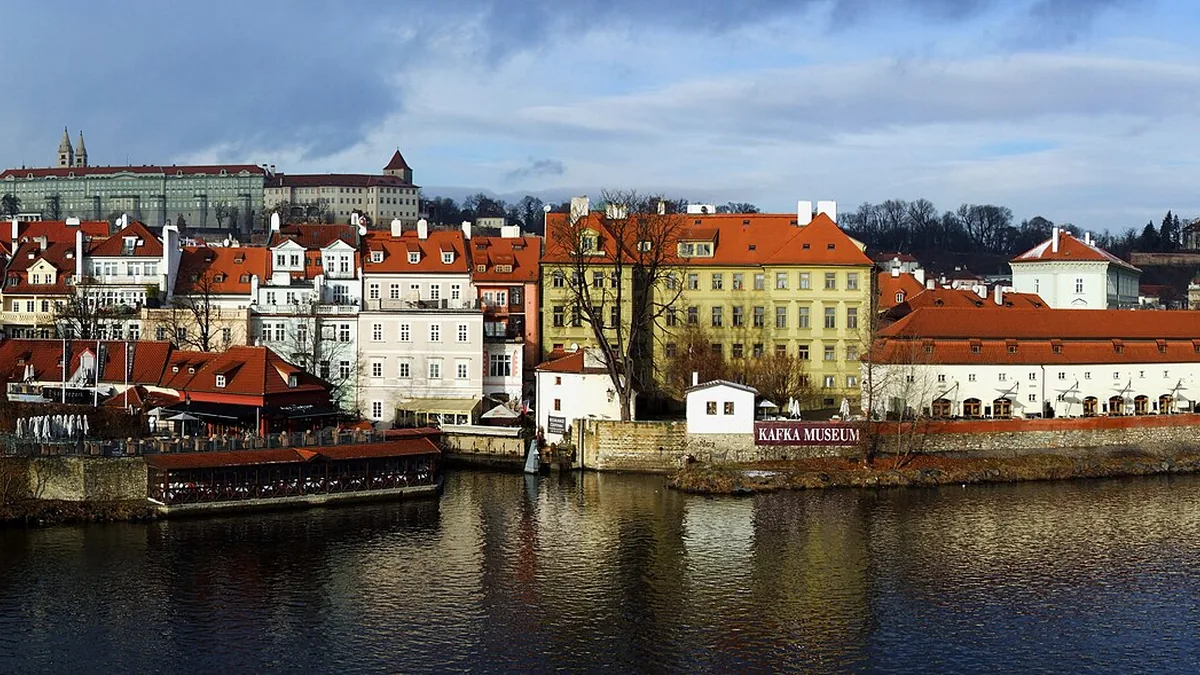
Featured image: Prague rooftops and the Vltava River viewed from Charles Bridge. Pudelek (Marcin Szala) · Wikimedia Commons source · CC BY-SA 3.0. Cropped/resized; WebP conversion.
Planning review: September 26, 2026. Confirm live access, tickets and transport before booking.
Which Destination Is Right for You?
- A first European city trip: London or Paris offers depth for a week; Rome suits travelers whose priority is ancient history and Italian food.
- History: Athens, Rome and Kraków offer different periods and contexts; choose one rather than treating them as interchangeable museum stops.
- Food: Florence for Tuscan cooking, Porto for a riverside food-and-wine stay, and Seville for tapas-focused evenings.
- Beaches: Crete deserves a longer island stay; Dubrovnik combines coastal scenery with a compact historic city.
- Evening life: Barcelona and Budapest suit travelers who want a lively city base, with accommodation chosen away from late-night noise when needed.
- Mountain and island scenery: The Jungfrau Region for Alpine landscapes; Madeira for Atlantic terrain and walking.
- Northern summer: Stockholm, Tallinn and Bergen offer long-day itineraries with very different waterfronts and landscapes.
- Relative value: Compare Kraków, Budapest and Porto with the higher daily costs of Switzerland, Iceland and Scandinavia.
Quick Comparison: Destinations, Seasons and Stays
Stays are suggested nights at the destination. Seasonal windows are general planning guidance, not weather guarantees. Budget symbols compare typical on-the-ground costs for an independent leisure trip: $ lower-cost, $$ moderate, $$$ expensive, $$$$ very expensive. They exclude your long-haul airfare and are not quoted prices; dates, rooms, transfers and activity choices can change the result.
On a small screen, swipe the table sideways. Select a destination name to jump to its details.
| Destination | Region / country | Best for | Ideal stay | Best time | Budget |
|---|---|---|---|---|---|
| 1. London | United Kingdom · Western Europe | A first Europe trip, theater and museums | 5–6 nights | May–June; September | $$$$ |
| 2. Paris | France · Western Europe | Art, architecture and a longer couples’ city break | 4–5 nights | April–June; September–October | $$$$ |
| 3. Amsterdam | Netherlands · Western Europe | Art, canals and a compact car-free break | 3–4 nights | April–May; September | $$$ |
| 4. Lisbon | Portugal · Southern Europe | Hillside neighborhoods, food and Atlantic light | 4 nights | April–June; September–October | $$ |
| 5. Porto | Portugal · Southern Europe | Riverside character and a food-and-wine city break | 3 nights | May–June; September–October | $$ |
| 6. Barcelona | Spain · Southern Europe | Architecture, food and a city-coast combination | 4 nights | April–May; September–October | $$$ |
| 7. Seville | Spain · Southern Europe | Andalusian history, food and evening culture | 3–4 nights | March–May; October–November | $$ |
| 8. Rome | Italy · Southern Europe | Ancient history and an extended first Italy stay | 4–5 nights | April–May; October–November | $$$ |
| 9. Florence | Italy · Southern Europe | Renaissance art and a compact city stay | 3–4 nights | April–May; September–October | $$$ |
| 10. Venice | Italy · Southern Europe | A distinctive waterborne city and slower evenings | 3 nights | April–May; September–October | $$$ |
| 11. Athens | Greece · Southeastern Europe | Ancient history with a lively modern city | 3–4 nights | April–May; October | $$ |
| 12. Crete | Greece · Mediterranean island | A longer beach, food and history holiday | 7–10 nights | May–June; September–October | $$ |
| 13. Dubrovnik | Croatia · Adriatic coast | Coastal history and an atmospheric short stay | 3–4 nights | May–June; September–October | $$$ |
| 14. Ljubljana | Slovenia · Central/Southeastern Europe | A compact green city and relaxed first Slovenia visit | 3 nights | May–June; September | $$ |
| 15. Vienna | Austria · Central Europe | Art, music and an elegant car-free stay | 4 nights | April–June; September–October | $$$ |
| 16. Prague | Czechia · Central Europe | Architecture and a compact historic city | 3–4 nights | April–May; September–October | $$ |
| 17. Budapest | Hungary · Central Europe | Architecture, thermal bathing and city value | 4 nights | April–May; September–October | $$ |
| 18. Kraków | Poland · Central Europe | History, food and a longer-value city break | 3–4 nights | May–June; September | $$ |
| 19. Tallinn | Estonia · Northern/Baltic Europe | Medieval streets with contemporary culture | 3 nights | May–September | $$ |
| 20. Copenhagen | Denmark · Northern Europe | Design, food and an easy car-free trip | 4 nights | May–September | $$$$ |
| 21. Stockholm | Sweden · Northern Europe | Museums, islands and a summer waterfront trip | 4 nights | June–August; September for a quieter visit | $$$ |
| 22. Bergen | Norway · Northern Europe | Harbor history and a manageable fjord gateway | 3–4 nights | May–September | $$$$ |
| 23. Reykjavík | Iceland · North Atlantic | Nordic culture with carefully chosen nature outings | 4–5 nights | June–August; winter for a different trip | $$$$ |
| 24. Jungfrau Region | Switzerland · Alps | Mountain scenery using trains and lifts | 4–5 nights | June–September; winter for snow sports | $$$$ |
| 25. Madeira | Portugal · Atlantic island | Walking, gardens and an island nature holiday | 6–7 nights | April–June; September–October | $$$ |
Map of the Featured Destinations
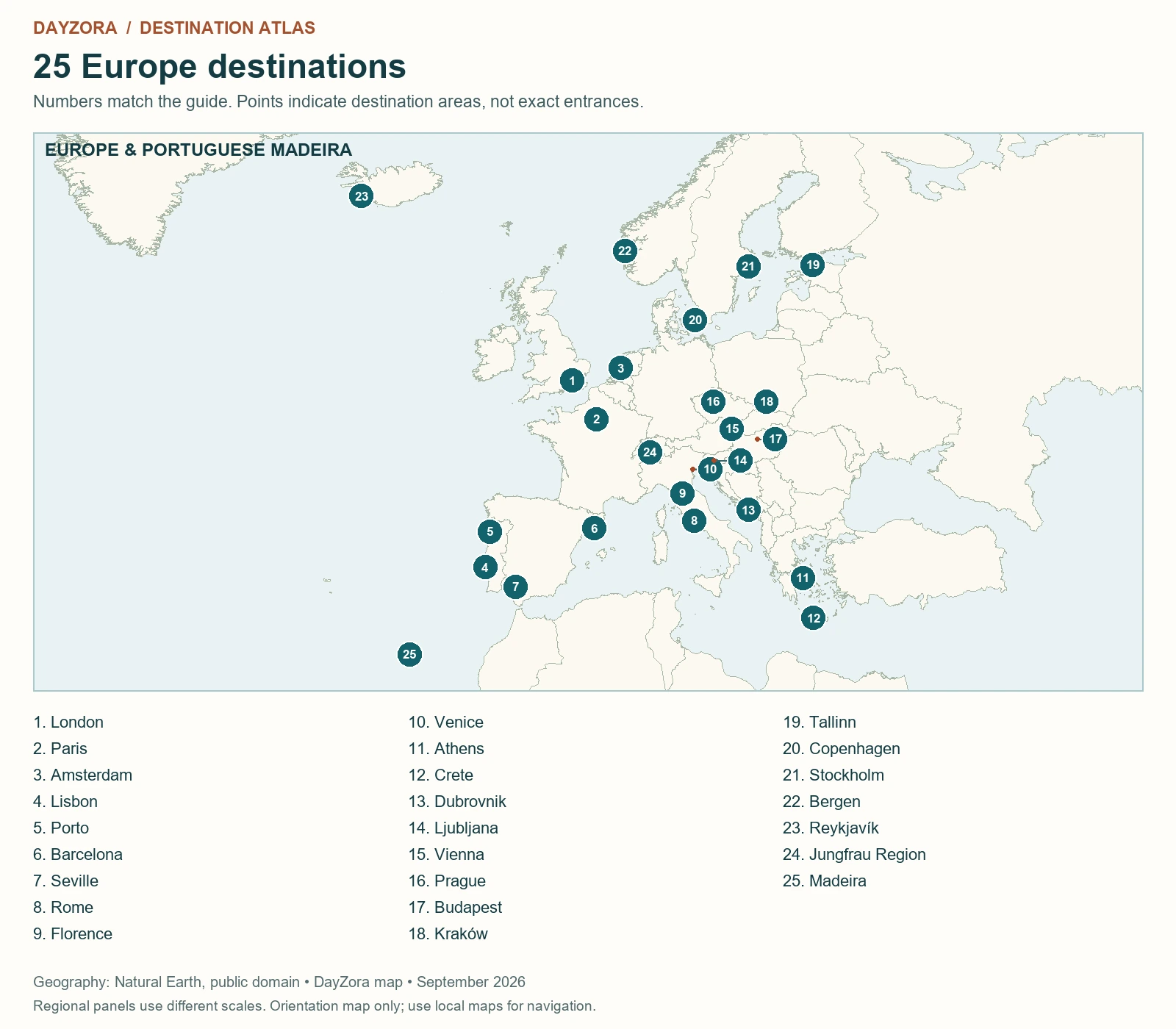
25 Destinations to Consider
1. London
London is a practical first European city when you want major museums, live theater and historic sites with extensive public transport. Its scale rewards a longer stay: a few well-chosen neighborhoods are more satisfying than a daily race across the capital.
Region: United Kingdom · Western Europe · Best for: A first Europe trip, theater and museums
Suggested stay: 5–6 nights · Season: May–June; September · Budget: $$$$
Airport access: Heathrow or Gatwick; check the actual London airport · Car / transport: No
What to do: Visit the Tower of London, choose a major museum, walk the South Bank and book a West End performance. Add time in a neighborhood such as Bloomsbury or Greenwich rather than filling every day with royal landmarks.
When to go and how long: Five or six nights leaves room for museums and evenings without rushing. Late spring and early autumn suit walking; rain is possible year-round. Winter offers theater and indoor culture with much shorter daylight.
Where to stay and get around: Bloomsbury works for museums, South Bank for riverside access and Paddington for some airport connections. Use rail, Underground, buses and walking. Heathrow and Gatwick are distinct gateways with different transfers; other airports marketed for London can be much farther out.
Planning tip: Match the hotel to both your arrival airport and main activities. Check the UK government’s entry rules for your nationality, including any visa or electronic travel authorization requirement, before buying a nonrefundable trip.
Official planning sources: visitlondon.com — firsttime visitors itinerary · visitlondon.com — airport · gov.uk — check uk visa
2. Paris
Paris is a strong choice for travelers who want art and everyday neighborhood life in the same trip. Its major sights are substantial visits, so a successful first stay leaves room for a café, a market street and an unplanned riverside walk.
Region: France · Western Europe · Best for: Art, architecture and a longer couples’ city break
Suggested stay: 4–5 nights · Season: April–June; September–October · Budget: $$$$
Airport access: Paris Charles de Gaulle or Orly · Car / transport: No
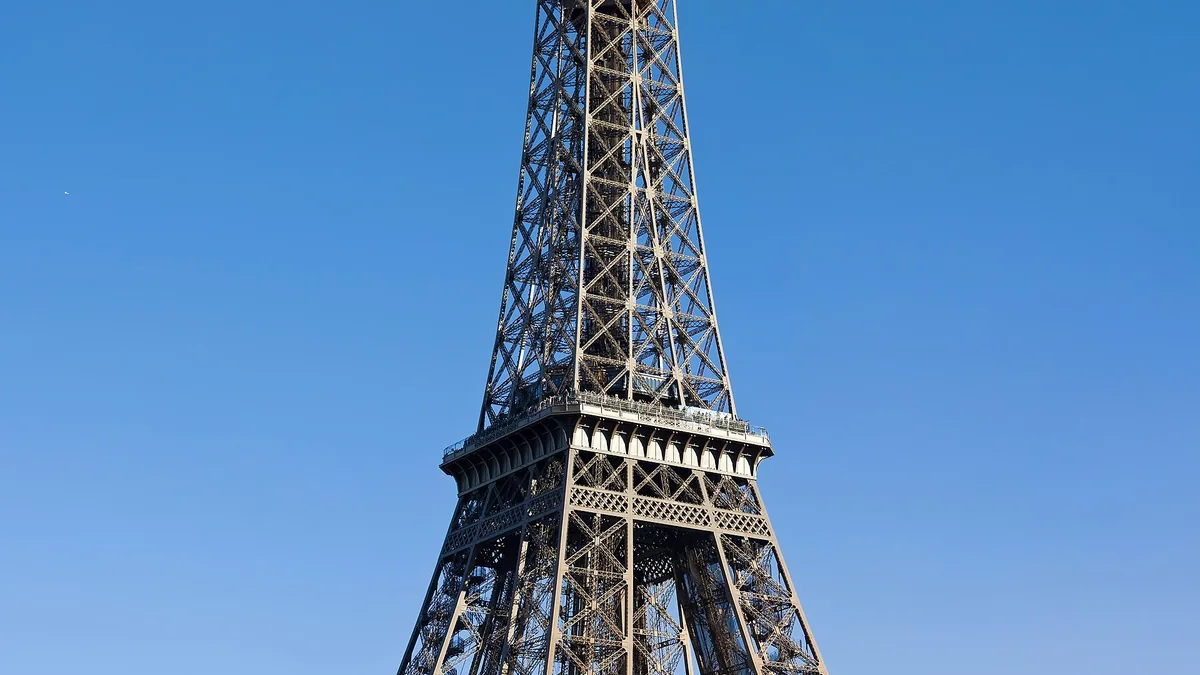
What to do: Choose the Louvre or Musée d’Orsay for a focused museum visit, reserve the Eiffel Tower if ascending matters, walk the Seine and explore Montmartre. Seeing both large museums is possible, but they need separate blocks of time.
When to go and how long: Four or five nights gives a sensible first introduction. Spring and autumn are appealing for walking; summer can bring heat and crowds, while winter suits museums with fewer daylight hours.
Where to stay and get around: The Latin Quarter and Saint-Germain offer useful central bases; the Marais suits neighborhood wandering. Charles de Gaulle and Orly connect to the city through different transport routes. Metro, regional rail and walking make a car unnecessary.
Planning tip: Reserve the specific museum time or tower level you want through the operator. A general city pass may not remove the need for a timed reservation, and a nearby attraction should not be scheduled immediately after a large museum.
Official planning sources: parisjetaime.com · louvre.fr · toureiffel.paris · parisaeroport.fr — access
3. Amsterdam
Amsterdam works well for a shorter European trip because major art collections and canal neighborhoods fit into a compact area. It is best enjoyed at walking pace, with awareness that many streets are also busy everyday cycling routes.
Region: Netherlands · Western Europe · Best for: Art, canals and a compact car-free break
Suggested stay: 3–4 nights · Season: April–May; September · Budget: $$$
Airport access: Amsterdam Schiphol · Car / transport: No
What to do: Visit the Rijksmuseum, reserve the Anne Frank House if available, take a canal cruise and explore the Jordaan. Choose one major museum per half-day so the collections do not become a blur.
When to go and how long: Three or four nights is a useful first stay. Spring brings flower-season demand, although the famous bulb fields are outside the city. Early autumn can be attractive; winter offers indoor culture with short, often wet days.
Where to stay and get around: The canal belt is central but expensive; Museumplein is useful for art, and a hotel near a tram route can widen your choices. Schiphol has rail connections. Walking and public transport are sufficient for most first visits.
Planning tip: Anne Frank House tickets follow the museum’s own release process and are not included in the standard city card. Book the priority visit first, and avoid stopping in cycle lanes to read a map or take a photograph.
Official planning sources: iamsterdam.com — top 20 things to do in amsterdam · annefrank.org — tickets · schiphol.nl — transportation from schiphol
4. Lisbon
Lisbon combines a large riverfront with steep historic neighborhoods and a distinctive café-and-food culture. It suits travelers who enjoy wandering, provided they account for hills, slippery paving and the time needed to reach outlying sights.
Region: Portugal · Southern Europe · Best for: Hillside neighborhoods, food and Atlantic light
Suggested stay: 4 nights · Season: April–June; September–October · Budget: $$
Airport access: Lisbon Humberto Delgado · Car / transport: No
What to do: Explore Alfama, visit the Jerónimos Monastery area in Belém, choose a miradouro viewpoint and spend time along the Tagus waterfront. A tram ride can be enjoyable, but it need not dominate the day if the queue is long.
When to go and how long: Four nights leaves enough time for Belém and central neighborhoods without adding every nearby town. Spring and autumn are useful walking seasons; summer can be hot, while winter brings more rain.
Where to stay and get around: Baixa is comparatively level and convenient; Chiado is central but hillier. Alfama offers atmosphere with more luggage and stair challenges. Lisbon’s airport connects by Metro; walking, buses and trams cover the city.
Planning tip: Check the current opening status of individual Belém monuments. A familiar exterior in a photograph is not proof that its interior is open, and the monastery, church and tower have separate access arrangements.
Official planning sources: visitportugal.com · visitlisboa.com · aeroportolisboa.pt — public transportation
5. Porto
Porto is a good choice when you want a smaller city with a strong sense of place and time for a relaxed meal. The Douro riverfront, tiled buildings and wine-cellar district across the river give a short trip a clear shape.
Region: Portugal · Southern Europe · Best for: Riverside character and a food-and-wine city break
Suggested stay: 3 nights · Season: May–June; September–October · Budget: $$
Airport access: Francisco Sá Carneiro, Porto · Car / transport: No
What to do: Explore Ribeira, see São Bento station’s tiled hall, visit a port lodge in Vila Nova de Gaia and choose the Palácio da Bolsa or Serralves for a deeper cultural stop. The steep slopes are part of the experience and the planning.
When to go and how long: Three nights is enough for a first city visit. Late spring and early autumn are useful compromises; winter can be wet. A Douro Valley excursion needs an extra day and should not replace all your time in Porto.
Where to stay and get around: Baixa provides a central base; Ribeira puts the river close but can mean stairs and crowds. The airport connects by Metro. Walking and transit are more useful than a rental car in the historic center.
Planning tip: Reserve cellar visits by language and start time. Port lodges are across the river in Gaia, while Douro vineyard visits are a different excursion requiring much more travel.
Official planning sources: visitportugal.com · visitportugal.com
6. Barcelona
Barcelona is strongest as an architectural and cultural city with a beach option, rather than a beach resort with sightseeing added. Its neighborhoods and major Gaudí sites deserve time, especially when timed entry shapes the day.
Region: Spain · Southern Europe · Best for: Architecture, food and a city-coast combination
Suggested stay: 4 nights · Season: April–May; September–October · Budget: $$$
Airport access: Barcelona–El Prat · Car / transport: No
What to do: Reserve Sagrada Família, explore Park Güell, walk the Gothic Quarter and spend an afternoon around Montjuïc or the waterfront. Pick experiences based on your interests rather than assuming every Gaudí building needs an interior visit.
When to go and how long: Four nights supports a first visit with one slower afternoon. Spring and autumn can be more comfortable than hot, crowded summer dates. Winter remains viable for architecture and food, with less emphasis on swimming.
Where to stay and get around: Eixample is a useful base for transit and restaurants; the Gothic Quarter is atmospheric but can be noisy and awkward with luggage. Barcelona–El Prat has public-transport connections. Use Metro, buses and walking.
Planning tip: Buy timed tickets through the attraction’s official site and allow travel between them. Park Güell is on a hillside; its map distance from other sights does not describe the effort of walking there.
Official planning sources: barcelonaturisme.com — gaudi beyond the sagrada familia · sagradafamilia.org — tickets · parkguell.barcelona · aena.es — josep tarradellas barcelona el prat
7. Seville
Seville is a compelling choice for a slower southern Spanish city trip. Its palace, cathedral and neighborhoods support several days of cultural exploration, with evenings well suited to tapas and a carefully chosen flamenco performance.
Region: Spain · Southern Europe · Best for: Andalusian history, food and evening culture
Suggested stay: 3–4 nights · Season: March–May; October–November · Budget: $$
Airport access: Seville Airport · Car / transport: No
What to do: Visit the Real Alcázar, explore the cathedral and Giralda, walk Plaza de España and spend time across the river in Triana. Give the palace gardens time instead of treating the Alcázar as a short stop.
When to go and how long: Three or four nights lets you explore without rushing. Spring is attractive but major religious and fair dates bring intense demand. Summer heat can be extreme, making early starts and substantial midday breaks essential.
Where to stay and get around: Santa Cruz is convenient for major sights but can be busy; El Arenal offers another central base, and Triana suits a neighborhood emphasis. Seville Airport requires a bus or road transfer. Central sightseeing is mainly walking with local transit as needed.
Planning tip: Reserve the Alcázar directly and verify the visitor-name or identification requirements on the ticket. If spring festival atmosphere is not your priority, compare dates outside the major event periods.
Official planning sources: spain.info — seville · alcazarsevilla.org
8. Rome
Rome rewards a longer stay because its ancient sites, churches, museums and neighborhoods are substantial experiences in their own right. The best trip combines a few reserved highlights with time to walk, eat and absorb the city between them.
Region: Italy · Southern Europe · Best for: Ancient history and an extended first Italy stay
Suggested stay: 4–5 nights · Season: April–May; October–November · Budget: $$$
Airport access: Rome Fiumicino; Ciampino alternative · Car / transport: No
What to do: Visit the Colosseum and Roman Forum, see the Pantheon, explore a neighborhood such as Monti or Trastevere and reserve the Vatican Museums if they are a priority. The Vatican is a separate sovereign state within the urban area.
When to go and how long: Four or five nights gives breathing room around major visits. Spring and autumn are useful walking seasons; summer heat and crowding can make exposed archaeological sites tiring. Winter offers a different balance with shorter days.
Where to stay and get around: Monti is practical for ancient Rome; the historic center reduces some walks, while Prati suits Vatican visits. Fiumicino and Ciampino have different transfers. Walking, Metro, buses and occasional taxis are preferable to driving in the center.
Planning tip: The Colosseum uses named, timed tickets with product-specific access. Read what the ticket includes and carry the required identification; a Forum visit does not automatically include every special Colosseum area.
Official planning sources: turismoroma.it — pantheon · colosseo.it — opening times and tickets · museivaticani.va · adr.it — aeroporti di roma en
9. Florence
Florence is a strong choice when art is the main reason for traveling. Its center is compact, but the collections are demanding: fewer major museum visits, with proper time to look, often make a better holiday than a checklist of masterpieces.
Region: Italy · Southern Europe · Best for: Renaissance art and a compact city stay
Suggested stay: 3–4 nights · Season: April–May; September–October · Budget: $$$
Airport access: Florence Amerigo Vespucci; Pisa alternative · Car / transport: No
What to do: Reserve the Uffizi, choose the Accademia if seeing David matters, explore the cathedral complex and walk into the Oltrarno for workshops and dining. A riverfront walk provides a useful break between interiors.
When to go and how long: Three or four nights allows several major visits without turning every day into a museum marathon. Spring and autumn are popular; summer can be hot and crowded. Winter works well for art with shorter outdoor days.
Where to stay and get around: Santa Maria Novella is practical for rail arrivals; the historic center keeps sights close, and Oltrarno offers a different neighborhood base. Florence’s airport is the local gateway; Pisa requires a longer transfer. Walk and use local transit rather than renting a car.
Planning tip: The cathedral, dome climb and museum are not one undifferentiated ticket. Check the exact pass and reservation conditions, especially if stairs, confined spaces or timed climbs affect your group.
Official planning sources: uffizi.it — the uffizi · galleriaaccademiafirenze.it · duomo.firenze.it · aeroporto.firenze.it
10. Venice
Venice is worth staying in overnight because its atmosphere changes outside the busiest day-trip hours. Its waterways, small lanes and repeated bridges make it unlike a conventional city break, with practical consequences for luggage and mobility.
Region: Italy · Southern Europe · Best for: A distinctive waterborne city and slower evenings
Suggested stay: 3 nights · Season: April–May; September–October · Budget: $$$
Airport access: Venice Marco Polo · Car / transport: No
What to do: Visit the Doge’s Palace, explore the San Marco area, walk quieter parts of Cannaregio or Dorsoduro and take a vaporetto journey along the Grand Canal. A lagoon-island excursion is optional rather than compulsory on a short stay.
When to go and how long: Three nights gives two full days and several quieter evenings. Spring and autumn are appealing but can still be busy; winter brings shorter days and possible high-water disruption. Summer adds heat and heavy visitor pressure.
Where to stay and get around: Cannaregio and Dorsoduro are useful alternatives to the busiest San Marco streets. Marco Polo Airport has land and water transfer options. In the historic city, walking and boats replace cars; check how many bridges separate your stop from the hotel.
Planning tip: The municipality says the 2026 access-fee trial ended July 26, with no payment or exemption request from July 27. Future-year rules require a fresh check; do not assume the 2026 calendar continues automatically.
Official planning sources: veneziaunica.it · cda.veneziaunica.it — access fee · palazzoducale.visitmuve.it · veneziaairport.it
11. Athens
Athens deserves more than a night between flights and ferries. Ancient monuments sit within a working modern city, and a longer stay allows you to combine archaeology with neighborhood food, markets and everyday street life.
Region: Greece · Southeastern Europe · Best for: Ancient history with a lively modern city
Suggested stay: 3–4 nights · Season: April–May; October · Budget: $$
Airport access: Athens International · Car / transport: No
What to do: Reserve the Acropolis, visit the Acropolis Museum, explore the Ancient Agora and walk through Plaka into a neighborhood such as Koukaki. Use museum time to put the ruins into context rather than seeing both as quick photograph stops.
When to go and how long: Three or four nights is a useful first visit. Spring and autumn are better starting points for exposed sites than midsummer, when heat can be severe and access may be temporarily adjusted.
Where to stay and get around: Koukaki is convenient for the Acropolis side; Syntagma is useful for transport, and Plaka places you close to historic streets. Athens International connects by rail and bus. Walking and public transport cover the central trip.
Planning tip: Check the Acropolis’ current timed-entry system and heat-related notices. Reserve an early slot if available and leave the museum or another indoor activity for the hotter part of the day.
Official planning sources: thisisathens.org — plaka guide · hhticket.gr · theacropolismuseum.gr — plan your visit · aia.gr — transportation airport
12. Crete
Crete is large enough to reward a holiday of its own. It combines Minoan history, lively towns, mountain landscapes and beaches, but trying to cover both ends in a few days turns that variety into a driving problem.
Region: Greece · Mediterranean island · Best for: A longer beach, food and history holiday
Suggested stay: 7–10 nights · Season: May–June; September–October · Budget: $$
Airport access: Chania or Heraklion, matched to your base · Car / transport: Helpful
What to do: Choose Chania’s old harbor or Heraklion’s museums as a starting point, visit Knossos if based within sensible reach, explore a traditional village and spend time on a beach suited to current conditions. A longer trip can use two bases.
When to go and how long: Seven to ten nights supports a balanced visit. Late spring and early autumn are useful for combining coast and inland travel; midsummer can be hot and crowded, while winter has reduced seasonal services.
Where to stay and get around: Chania works for western Crete; Heraklion is practical for central archaeology, and Rethymno offers another north-coast base. Choose Chania or Heraklion airport accordingly. A car helps beyond town; buses and arranged tours can support a more limited plan.
Planning tip: Do not add Samaria Gorge simply because it is famous. It is a demanding, seasonal excursion with weather-dependent access and return logistics; choose it only after checking the official opening and your group’s ability.
Official planning sources: visitgreece.gr — irakleio · heraklion.gr — knossos · samaria.gr · chq-airport.gr · hcaa.gr — kratikos aerolimenas hrakleioy n kazantzakhs
13. Dubrovnik
Dubrovnik is most rewarding when you stay long enough to enjoy its historic center outside the busiest daytime hours. The stone streets and fortifications are the main draw, with water-based outings adding variety when conditions permit.
Region: Croatia · Adriatic coast · Best for: Coastal history and an atmospheric short stay
Suggested stay: 3–4 nights · Season: May–June; September–October · Budget: $$$
Airport access: Dubrovnik Ruđer Bošković · Car / transport: No for the city
What to do: Walk the city walls if the stairs and exposure suit you, explore the Rector’s Palace, wander the old harbor and take a seasonal boat to Lokrum. A slower neighborhood or seaside afternoon helps balance the concentrated sightseeing.
When to go and how long: Three or four nights works well. Late spring and early autumn can be more comfortable than peak summer, although cruise schedules still affect crowds. Winter is quieter with fewer boat and seasonal services.
Where to stay and get around: Old Town is atmospheric but can involve stairs and luggage walks; Ploče offers views, while Lapad suits a broader hotel-and-coast stay. The airport is outside town. Buses, walking and boats are more useful than a car for the core visit.
Planning tip: The walls are exposed and have many steps. Carry water, choose a cooler part of the day and confirm the current entrance arrangement. Check Lokrum’s return departure before leaving the mainland.
Official planning sources: citywallsdubrovnik.hr — the city walls · lokrum.hr · airport-dubrovnik.hr
14. Ljubljana
Ljubljana offers a smaller-scale European city break with a riverfront center, market culture and easy access to green space. It is especially appealing when you want fewer transfers and a slower pace between larger cities.
Region: Slovenia · Central/Southeastern Europe · Best for: A compact green city and relaxed first Slovenia visit
Suggested stay: 3 nights · Season: May–June; September · Budget: $$
Airport access: Ljubljana Jože Pučnik · Car / transport: No for the city
What to do: Visit Ljubljana Castle, browse the Central Market during its operating hours, walk the riverfront around the Triple Bridge and spend time in Tivoli Park. The compact center leaves room for a leisurely meal rather than another timed attraction.
When to go and how long: Three nights is enough for a first city stay. Spring and early autumn suit walking; summer brings lively outdoor evenings with possible storms. Winter has a different atmosphere and shorter daylight.
Where to stay and get around: Stay near the pedestrian center or just beyond it for easier luggage access. Ljubljana’s airport requires a road or bus transfer. Walking and local buses cover the city; rent a car only if the wider Slovenia itinerary calls for one.
Planning tip: Lake Bled is a realistic full-day addition, but allow a separate day and check transport. Do not combine it with several distant caves or mountain valleys simply because Slovenia looks small on a European map.
Official planning sources: visitljubljana.com — gardens and parks · visitljubljana.com — plan your visit · lju-airport.si
15. Vienna
Vienna is a strong choice for travelers who want substantial art collections, imperial history and live performance without difficult local transport. Its café culture also gives the trip a welcome rhythm between large interiors.
Region: Austria · Central Europe · Best for: Art, music and an elegant car-free stay
Suggested stay: 4 nights · Season: April–June; September–October · Budget: $$$
Airport access: Vienna International · Car / transport: No
What to do: Visit Schönbrunn, choose the Kunsthistorisches Museum or Belvedere, walk the historic center and book a concert or opera performance that genuinely interests you. Give each major collection a proper visit rather than combining several in one afternoon.
When to go and how long: Four nights allows variety and a slower day. Spring and autumn suit gardens and walks; winter is attractive for indoor culture and seasonal markets, with cold weather and short days.
Where to stay and get around: The Innere Stadt is central and expensive; Neubau or areas near a useful U-Bahn station offer alternatives. Vienna International has rail connections. Metro, trams and walking make a rental car unnecessary.
Planning tip: Compare a concert by venue, repertoire and performers, not just a promise of a classical Vienna evening. For palace visits, check the specific tour or ticket rather than assuming all rooms and grounds are included.
Official planning sources: wien.info — imperial sights · schoenbrunn.at · belvedere.at · viennaairport.com — arrival parking
16. Prague
Prague is a good fit for travelers who enjoy architectural layers and walking between distinctive neighborhoods. The famous central route is busy, but a longer stay gives you time beyond the castle-to-Old-Town corridor.
Region: Czechia · Central Europe · Best for: Architecture and a compact historic city
Suggested stay: 3–4 nights · Season: April–May; September–October · Budget: $$
Airport access: Václav Havel Prague · Car / transport: No
What to do: Explore Prague Castle’s visitor areas, cross Charles Bridge, visit the Old Town Square and spend time in a neighborhood such as Vinohrady. A museum or performance adds depth beyond the city’s photogenic streets.
When to go and how long: Three or four nights supports an unhurried first visit. Spring and autumn can be comfortable but still crowded; winter offers atmosphere with cold weather and short daylight. Summer calls for early starts at exposed or popular sites.
Where to stay and get around: Malá Strana is convenient for the castle side; Old Town is central, and Vinohrady offers a more residential base with transit access. The airport connects by bus-based routes to the city’s transport system. Walking, trams and Metro are sufficient.
Planning tip: The castle is a complex with different buildings, routes and opening arrangements. Check what your ticket covers and allow time for the uphill approach rather than treating it as one quick indoor attraction.
Official planning sources: prague.eu — one day in prague you wont want to leave · hrad.cz — prague castle for visitors · prg.aero — public transport buses
17. Budapest
Budapest combines a grand river setting with distinct experiences on the Buda and Pest sides. It suits travelers who want architecture, neighborhood dining and a thermal-bath visit, with a generally broader range of moderate-cost choices than many western capitals.
Region: Hungary · Central Europe · Best for: Architecture, thermal bathing and city value
Suggested stay: 4 nights · Season: April–May; September–October · Budget: $$
Airport access: Budapest Ferenc Liszt · Car / transport: No
What to do: Explore the Buda Castle District, reserve a Parliament tour if available, walk the Danube embankment and choose a visit to Széchenyi Thermal Bath that meets its current rules. A neighborhood food walk adds a different view of the city.
When to go and how long: Four nights gives time for both sides of the river without rushing. Spring and autumn are useful for walking; summer can be hot, while winter shifts more of the trip indoors.
Where to stay and get around: District V is convenient for central sights; parts of District VII suit dining and nightlife but can be noisy. The airport has bus connections. Metro, trams and walking make a car unnecessary.
Planning tip: Gellért Baths are closed for renovation, with reopening only planned for 2028. Széchenyi’s operator currently excludes children under 14, so do not present every thermal bath as a family swimming-pool option.
Official planning sources: gellertbath.hu · szechenyibath.hu — faq · bkk.hu
18. Kraków
Kraków offers a compact historic center alongside neighborhoods that reward more thoughtful exploration. It is a strong choice for travelers who want several days of culture and food without relying on a succession of costly headline attractions.
Region: Poland · Central Europe · Best for: History, food and a longer-value city break
Suggested stay: 3–4 nights · Season: May–June; September · Budget: $$
Airport access: Kraków John Paul II International · Car / transport: No
What to do: Explore the Main Market Square, visit a selected Wawel Royal Castle exhibition, learn about Jewish history in Kazimierz and walk the Planty park or Vistula riverfront. Treat the historical layers as more than attractive backgrounds for a restaurant trip.
When to go and how long: Three or four nights works for the city itself. Late spring and early autumn are useful walking seasons; winter can be cold and has shorter days. Major holidays and events still affect lodging demand.
Where to stay and get around: Old Town gives easy access to the central sights; Kazimierz offers a distinct dining-and-history base. The airport has a rail connection. Walking and trams cover a first visit well.
Planning tip: If visiting Auschwitz-Birkenau, give it a separate, carefully planned day and book through the memorial’s official system. It is a place of remembrance, not a casual extra between city attractions.
Official planning sources: krakow.travel · wawel.krakow.pl · auschwitz.org — visiting · krakowairport.pl — transport en
19. Tallinn
Tallinn balances a compact medieval center with contemporary neighborhoods and maritime culture. It is a useful choice for a shorter Baltic trip when you want varied experiences without moving accommodation every night.
Region: Estonia · Northern/Baltic Europe · Best for: Medieval streets with contemporary culture
Suggested stay: 3 nights · Season: May–September · Budget: $$
Airport access: Tallinn Airport · Car / transport: No
What to do: Walk the Old Town and Toompea viewpoints, explore Kadriorg Park, visit the Seaplane Harbour museum and spend time in Telliskivi’s creative district. The contrast prevents the visit from becoming only a tour of medieval façades.
When to go and how long: Three nights provides two full days. Summer offers long daylight and outdoor activity; winter can be atmospheric but icy, with short days. Spring and autumn need flexibility for wind and rain.
Where to stay and get around: Old Town is central but cobbles and stairs complicate luggage; areas near the edge can make arrival easier. Tallinn Airport is close to the city with public-transport options. Walking and buses or trams cover the main visit.
Planning tip: Check the current airport transit route instead of relying on an old tram number. If combining with Helsinki, allow ferry check-in and port transfers; the crossing is a journey, not an instant city-to-city hop.
Official planning sources: visittallinn.ee — arrival · visittallinn.ee — visitor · meremuuseum.ee
20. Copenhagen
Copenhagen suits travelers who value design, food and comfortable city-scale exploration. It also works for families, provided the budget accounts for accommodation and meals and the attraction plan matches the seasonal calendar.
Region: Denmark · Northern Europe · Best for: Design, food and an easy car-free trip
Suggested stay: 4 nights · Season: May–September · Budget: $$$$
Airport access: Copenhagen Airport, Kastrup · Car / transport: No
What to do: Walk Nyhavn, visit Rosenborg Castle, browse Torvehallerne and choose a Tivoli Gardens visit during an operating season. Explore Nørrebro or Vesterbro for a different neighborhood perspective beyond the postcard waterfront.
When to go and how long: Four nights gives time for central sights and neighborhoods. Late spring and summer bring longer evenings; winter can work for museums and seasonal events but has limited daylight. Tivoli does not operate on an identical calendar all year.
Where to stay and get around: The city center is convenient; Vesterbro and Nørrebro offer alternatives near transit. Kastrup connects by Metro and rail. Walking and public transport are easy choices, while cycling is best for visitors comfortable with busy local cycle traffic.
Planning tip: Price a city card against the attractions you will actually visit. A card is useful only if the included admissions and transport match your pace, not because a long list of possible savings looks impressive.
Official planning sources: visitcopenhagen.com · tivoli.dk · cph.dk — parking transport
21. Stockholm
Stockholm’s islands and waterways give a museum-rich city break a strong outdoor dimension. It is particularly appealing when you want to alternate cultural visits with ferries, waterfront walks and time in green space.
Region: Sweden · Northern Europe · Best for: Museums, islands and a summer waterfront trip
Suggested stay: 4 nights · Season: June–August; September for a quieter visit · Budget: $$$
Airport access: Stockholm Arlanda · Car / transport: No
What to do: Explore Gamla Stan, visit the Vasa Museum, spend time on Djurgården and choose a scheduled archipelago or harbor boat outing. Pick one substantial Djurgården museum at a time rather than treating the island as a quick attraction cluster.
When to go and how long: Four nights works for a first city stay. Summer offers long daylight and broader boat schedules; autumn is quieter but cooler. Winter needs a more indoor-focused plan and careful attention to limited daylight.
Where to stay and get around: Norrmalm is practical for transport; Södermalm offers a different neighborhood feel, and Gamla Stan places historic streets close. Arlanda is the main international gateway with rail and bus choices. Local transit and ferries make a car unnecessary.
Planning tip: Confirm whether a boat is a sightseeing cruise or a scheduled island service, and check the return timetable. A distant archipelago island can consume most of the day even when it appears close on a regional map.
Official planning sources: visitstockholm.com — district guide djurgarden · visitstockholm.com — gamla stan · swedavia.com — arlanda
22. Bergen
Bergen is a useful choice when you want a Norwegian city with a clear connection to the coast and surrounding landscape. It is not a shortcut to seeing every fjord, but it supports a satisfying city stay with one well-chosen excursion.
Region: Norway · Northern Europe · Best for: Harbor history and a manageable fjord gateway
Suggested stay: 3–4 nights · Season: May–September · Budget: $$$$
Airport access: Bergen Flesland · Car / transport: No for the city
What to do: Explore Bryggen’s historic lanes, take the Fløibanen funicular when operating, visit the fish-market area and choose a museum or guided harbor walk. Add a fjord outing only after checking its actual route and total duration.
When to go and how long: Three or four nights leaves room for weather changes. May through September offers the broadest outdoor and tour choice, but rain is common in every season. Winter has shorter days and fewer seasonal departures.
Where to stay and get around: Stay near the harbor or central rail station for easy walking and transport. Flesland Airport connects by light rail and buses. The center is car-free in practical terms for a visitor, with organized transport useful for selected excursions.
Planning tip: Keep the clearest weather window flexible for a viewpoint or fjord trip. Buying every outdoor activity for fixed consecutive days can leave no room to respond to low cloud or rough conditions.
Official planning sources: en.visitbergen.com — bryggen in bergen p878553 · en.visitbergen.com — fish market in bergen p822253 · floyen.no · en.visitbergen.com — getting here
23. Reykjavík
Reykjavík makes a practical base for a short Iceland trip when you want culture and a few day excursions rather than a rushed drive around the whole island. The city itself deserves time between weather-dependent outings.
Region: Iceland · North Atlantic · Best for: Nordic culture with carefully chosen nature outings
Suggested stay: 4–5 nights · Season: June–August; winter for a different trip · Budget: $$$$
Airport access: Keflavík International; not the central domestic airport · Car / transport: No for the city; helpful for independent excursions
What to do: Visit Hallgrímskirkja, explore the harbor and central streets, choose a city museum and experience a public geothermal swimming pool while following its hygiene rules. Add a guided nature excursion suited to the season and current conditions.
When to go and how long: Four or five nights gives you weather flexibility. Summer has long daylight; winter has short days, difficult driving possibilities and no guarantee of northern lights. The two seasons require different expectations and budgets.
Where to stay and get around: Stay centrally for restaurants and easy tour pickups, while checking whether vehicles stop at your hotel or an assigned bus stop. Keflavík is the international gateway with a substantial transfer to town. Walking covers the center.
Planning tip: Check SafeTravel and official road information before excursions. Reykjanes volcanic activity can affect access, so do not assume a Blue Lagoon or peninsula visit is available merely because it appears in an older itinerary.
Official planning sources: visiticeland.com — reykjavik the capital · visitreykjavik.is · safetravel.is · kefairport.com
24. Jungfrau Region
The Jungfrau Region is a strong mountain choice for travelers who prefer trains and lifts to a driving holiday. Villages such as Wengen, Lauterbrunnen and Grindelwald offer different bases within one connected alpine region.
Region: Switzerland · Alps · Best for: Mountain scenery using trains and lifts
Suggested stay: 4–5 nights · Season: June–September; winter for snow sports · Budget: $$$$
Airport access: Zürich or Geneva; onward rail via Interlaken · Car / transport: No
What to do: Walk an open route in the Lauterbrunnen valley, visit Wengen, choose a suitable lift-served viewpoint and consider Jungfraujoch only if weather, cost and altitude suit your group. A lower-elevation day can be as rewarding as the highest excursion.
When to go and how long: Four or five nights provides a chance to use a clear-weather window. Summer hiking access depends on snowmelt; winter is a separate snow-sport trip. Shoulder-season lift maintenance can reduce options.
Where to stay and get around: Lauterbrunnen suits valley access; Wengen is a car-free village reached by rail, while Grindelwald offers another mountain base. Zürich and Geneva are practical international gateways with onward rail journeys. You do not need a car for this plan.
Planning tip: Check the operating calendar for each lift and railway. Jungfraujoch seat reservations are mandatory during the operator’s specified 2026 summer period; a regional travel pass does not necessarily include every supplement or reservation.
Official planning sources: jungfrau.ch — lauterbrunnen · jungfrau.ch — wengen · jungfrau.ch — unlimited jungfrau summer pass · myswitzerland.com — by plane
25. Madeira
Madeira broadens this European shortlist beyond continental cities. This Portuguese Atlantic island lies off northwest Africa and is chosen for mountain scenery, gardens and walking, rather than a conventional sandy-beach resort holiday.
Region: Portugal · Atlantic island · Best for: Walking, gardens and an island nature holiday
Suggested stay: 6–7 nights · Season: April–June; September–October · Budget: $$$
Airport access: Madeira Cristiano Ronaldo International · Car / transport: Helpful; tours can replace driving
What to do: Explore Funchal’s old town, visit a garden in the Funchal or Monte area, choose an open levada walk and spend time at a coastal viewpoint or village. Match walking routes to ability and conditions; the island’s mountains create sharp weather differences.
When to go and how long: Six or seven nights gives outdoor plans flexibility. Spring and early autumn are useful starting points, but rain, wind and cloud can affect trails year-round. A sunny Funchal morning does not establish conditions at altitude.
Where to stay and get around: Funchal offers the broadest range of lodging and services; a rural base suits a more self-contained stay. Fly into Madeira’s airport and continue by bus, transfer or rental car. Organized walking trips can remove the need to drive steep roads.
Planning tip: All classified PR walking trails now require an advance time reservation through the regional government’s SIMplifica system. Check the trail’s open, restricted or closed status and applicable fee before booking transport.
Official planning sources: visitmadeira.com — faq · visitmadeira.com · aeroportomadeira.pt
How to Plan the Trip
Build around two or three compatible bases
For roughly ten nights, London–Paris, Rome–Florence, Lisbon–Porto or Vienna–Prague can form a coherent trip. Check the actual train or flight schedule before booking rooms. A short flight still consumes time getting to the airport, clearing formalities and reaching the next hotel; a map with nearby dots does not establish a convenient connection.
Choose seasons by activity
Spring and autumn often suit southern city walking. Northern cities benefit from long summer days, while Alpine hiking depends on snow, lifts and trail openings rather than the calendar alone. Crete’s beach season and Reykjavík’s winter-light experience solve different travel goals. Avoid assuming that one “best month for Europe” applies everywhere.
Check entry rules for your passport and route
Nationality, passport type, residence status, trip length and transit route affect requirements. The UK has its own ETA and visa rules; check the official EU travel portal for Schengen-related systems and current implementation dates. Do not buy an authorization solely because a commercial site says every traveler needs one. Our first international trip guide helps organize the checks.
Compare total costs, not just airfare
A cheaper arrival airport may be far from the city, and late arrivals can remove low-cost public transport options. Price luggage, airport transfers, timed-entry tickets and hotel location together. Use the flight-search guide and budget travel guide to compare the complete trip.
For a couples’ trip where privacy and accommodation matter as much as the destination, compare the honeymoon destinations guide. For a different coast-and-island shortlist, explore our tropical destination guide.
How DayZora Selected These Destinations
We balanced distinctive attractions, variety of experiences, practical airport or onward access, accommodation areas and suitability for different trip styles. We also considered whether a destination could support the suggested stay without an unrealistic schedule. Official tourism, park, attraction, airport and transport sources informed access and planning details; the recommendations and budget categories are editorial judgments, not a survey score or a paid ranking.
The numbers organize the selections and match the map. They do not imply that destination 1 is objectively better than destination 2. This guide does not claim firsthand visits to every place. Conditions and operating arrangements can change after the review date; follow the official links within each entry for the details that affect your dates.
Frequently Asked Questions
How many countries should I visit in two weeks?
Two or three compatible bases often work better than maximizing country count. A city such as London or Paris can support several days, while island and mountain stays need weather flexibility. Decide what you want to do before deciding how many borders to cross.
Is a rental car necessary in Europe?
Not for most city entries here. Trains, local transit and walking are usually more convenient. A car can help in Crete or Madeira, but parking, road conditions and your accommodation location still need consideration.
Is Madeira geographically in continental Europe?
No. Madeira is a Portuguese Atlantic archipelago off northwest Africa. It is included here as a Portuguese travel destination and is shown at its actual location on the map, not moved beside mainland Portugal.