There is a reason so many naming ceremonies are migrating outdoors: nothing a decorator can build competes with late-afternoon light moving through trees, or the sound of a breeze arriving exactly as the baby’s name is spoken. An outdoor naming ceremony trades walls for sky, and in return it gives you atmosphere money cannot buy, space for children to be children, and photographs with a kind of glow that indoor venues simply cannot manufacture.
But celebrating outside also means negotiating with the one vendor you cannot control: the weather. This guide covers both sides honestly — 22 outdoor naming ceremony ideas spanning ten venue types, a complete weather-proofing playbook, the unglamorous logistics (permits, sound, seating, insects) that make or break an open-air event, decor that partners with nature instead of fighting it, and rituals that feel even more powerful under an open sky. Plan it right, and your baby’s naming day will have the thing every host wants most: a setting guests talk about for years.
Why Take the Ceremony Outside?
Beyond the obvious beauty, outdoor ceremonies solve several problems that plague indoor naming days. Space is the first: babies come with gear, toddlers come with energy, and grandparents come with a need for comfortable seating — outdoors, nobody is negotiating a cramped room. A garden, park, or backyard absorbs all of it gracefully, and the ambient noise of nature forgives a crying baby in a way that a silent chapel never will.
Cost is the second. Many of the loveliest outdoor venues — your own backyard, a family farm, a public park pavilion — cost little or nothing, and nature provides the decor baseline for free. Couples routinely report spending half of what an indoor venue would have cost while guests perceived the event as more special, not less. When the setting is a sunset over water, nobody misses the chair sashes.
The third advantage is emotional. There is something primally right about welcoming a new life under an open sky — it echoes the oldest human celebrations, which all happened outdoors because there was no alternative. Psychologists note that natural settings lower cortisol and increase feelings of awe and connectedness, which is precisely the emotional register you want when a community gathers to promise love to a child. The setting does half the ceremony’s emotional work before anyone speaks a word.
The trade-off, of course, is control. Wind rearranges programs, sun repositions itself, and rain has opinions. The rest of this guide is essentially about keeping the magic while managing the variables — because an outdoor ceremony with a solid backup plan is not a gamble. It is simply the best kind of party.
10 Outdoor Venues for a Naming Ceremony
Each venue below includes what makes it sing for a naming day and the one thing to watch out for. All ten work for guest counts from 15 to 100 with minor adjustments.
1. Your Own Backyard
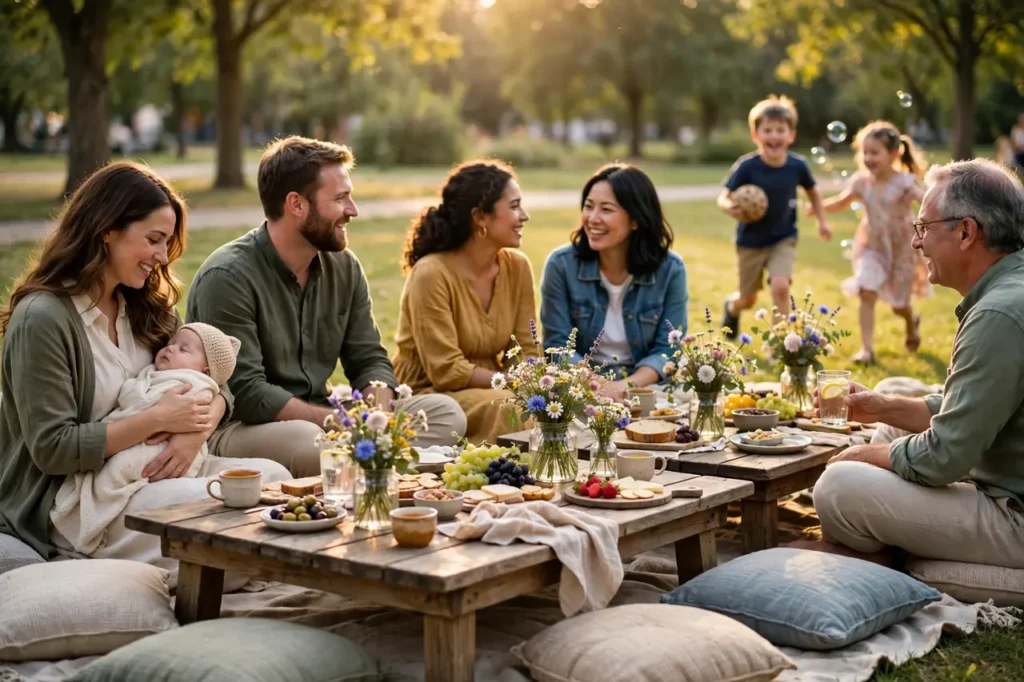
The undefeated champion of outdoor venues: free, private, with bathrooms and a kitchen steps away and the baby’s nursery available for emergency naps. Dress it up with string lights, a ceremony arch, and rented chairs if needed — or keep it gloriously casual with blankets on the lawn. Watch out for: neighbor noise and the temptation to deep-clean the entire house. Guests will be outside; close the bedroom doors and relax.
2. A Botanical Garden
Many botanical gardens rent lawns or terraces for private events, giving you world-class landscaping as your backdrop for a modest fee. The built-in beauty means minimal decor — a ceremony arch and chairs may be all you need. Watch out for: strict rules about amplified sound, confetti, and end times. Book the earliest consultation you can and read the regulations like a contract, because they are one.
3. A Public Park Pavilion
Reserved pavilions in city and county parks offer shelter, picnic tables, electrical outlets, and adjacent playgrounds for a reservation fee that is often under $100. They are the practical family’s secret weapon. Watch out for: shared-park realities — joggers, off-leash dogs, and another party’s music. Visit at your planned time on a comparable day to scout the vibe before committing.
4. A Family Farm or Orchard
If you are lucky enough to have access to one, a farm delivers atmosphere in bulk: old barns, orchards in blossom, fields at golden hour. The rustic setting flatters simple decor and forgiving dress codes. Watch out for: terrain — uneven ground, mud after rain, and distances that challenge elderly guests. Rent proper flooring for the ceremony area and arrange golf-cart or shuttle transport from parking.
5. A Beach or Lakeshore
Water adds a ceremonial gravity that nothing else matches — the symbolism of new life beside living water practically writes your readings for you. Early morning or late afternoon avoids both crowds and harsh sun. Watch out for: wind, which will defeat microphones, programs, and hairstyles with equal enthusiasm. Use a windscreen on the mic, weight everything, and embrace the tousled aesthetic.
6. A Vineyard or Winery
Rows of vines, a tasting room for the reception, and an events team that has done this a hundred times — vineyards are the closest thing to a turnkey outdoor ceremony. Many offer all-inclusive packages with catering and coordination. Watch out for: cost (the premium is real) and the need to book six to twelve months ahead for peak season. Off-season or Friday events can cut the price dramatically.
7. A Rooftop Garden or Terrace
Urban families get skyline views, sunset light, and a naturally contained space that feels exclusive without being remote. Rooftop venues often include furniture, lighting, and weather contingency in the rental. Watch out for: wind at elevation (worse than ground level), elevator logistics for strollers and elderly guests, and strict noise curfews. Confirm the rain plan in writing.
8. A Forest Clearing or Woodland
For the nature-worshipping family, few settings rival tall trees and dappled light — the cathedral comparison writes itself. Woodland ceremonies feel ancient and sacred with almost no decoration. Watch out for: accessibility and insects. Scout the path for strollers and wheelchairs, treat the area for mosquitoes ahead of time, and have a firm plan for getting everyone (and everything) in and out.
9. A Historic Estate or Manor Garden
Manicured parterres, stone terraces, fountains — historic estates offer grandeur without you lifting a finger. The formality suits families who want the outdoor feeling with an elegant frame. Watch out for: the rulebook. Heritage properties often restrict staking, open flame, amplified music, and even the type of confetti. Your coordinator (or you, meticulously) must clear every detail in advance.
10. A Community Garden or Urban Farm
Charming, affordable, and rich with meaning for families who value community and sustainability — some even let you plant something in the baby’s honor as part of the rental. The setting photographs as joyful and alive. Watch out for: limited infrastructure. Confirm bathroom access, power for music, and parking, and bring everything else yourself, down to the last extension cord.
The Weather-Proofing Playbook
Every outdoor ceremony needs a Plan B that you would genuinely enjoy — not a grim fallback that casts a shadow over the planning. Decide your rain plan when you book the venue, communicate it on the invitation, and then stop worrying. Here is how to handle each scenario:
| Forecast | Your move | Pro tip |
|---|---|---|
| Light rain | Charming clear umbrellas for all | Buy a bulk pack in advance; they photograph beautifully and guests keep them as favors |
| Heavy rain / storms | Execute Plan B (tent, pavilion, or indoor space) | Make the call 24 hours out — decisiveness beats dithering |
| Extreme heat | Shift to morning, add shade + hydration station | Hand fans as favors, iced towels in a cooler, ceremony under 15 minutes |
| High wind | Lower everything; skip tall arrangements | Weighted bud vases, no loose programs (print on cardstock or go digital) |
| Unseasonable cold | Blankets, warm drinks, fire pits if allowed | A basket of pashminas at the entrance is both decor and mercy |
| Perfect weather | Enjoy it — and still have the tent on standby | “Perfect” forecasts change; keep the backup until the day |
Two non-negotiables: designate one person (not you) as the weather decision-maker, and put the rain plan in writing on the invitation or event page. “In case of rain, we celebrate in the garden room at [address]” eliminates the morning-of text-message chaos that ruins more outdoor events than actual rain does.
Outdoor Logistics Nobody Warns You About
The difference between a magical outdoor ceremony and a stressful one is almost entirely logistics. Handle these five areas and the day takes care of itself.
Sound. Outdoors, voices vanish. A celebrant speaking to 40 people across a lawn without amplification will be heard by roughly the first two rows. Rent a simple PA system with a wireless lapel mic — it is the highest-impact rental dollar you will spend. Test it at the venue at the same time of day, because wind and ambient noise vary enormously.
Seating and sight lines. Arrange seating in a gentle arc rather than straight rows so everyone can see the baby without craning. Reserve the first row for grandparents and anyone with limited mobility, and keep a few chairs — not just blankets — available for elderly guests even at casual events. Nothing sours a celebration like a grandmother struggling to stand up from the grass.
Sun management. Map the sun’s position for your exact date and time (free apps do this precisely). Seat guests with the sun behind or beside them, never in their eyes, and position the ceremony’s focal point so the photographer shoots with the light, not into it. Provide sunscreen and a water station; sunburned guests remember the discomfort longer than the ceremony.
Insects. Treat the area 24–48 hours ahead if mosquitoes are a concern, place citronella or fans around the perimeter (moving air deters them remarkably well), and keep food covered until serving time. For evening events, avoid sweet floral scents in decor near the food. A small basket of insect wipes at the welcome table is a thoughtful touch nobody will mock.
The baby’s comfort. This is the logistics item that matters most. Create a shaded, calm home base for the baby — a pop-up tent, a bassinet under a canopy, a quiet room nearby — and protect the nap schedule ruthlessly by timing the ceremony around it. A comfortable baby means relaxed parents, and relaxed parents are the entire atmosphere of the day.
The video above walks through how celebrants structure outdoor naming ceremonies — the flow, the readings, and the symbolic gestures that work especially well without walls. It is worth sharing with whoever is leading your ceremony, particularly if they have never officiated outdoors before.
Decor That Partners with Nature
The golden rule of outdoor decor: enhance, don’t compete. The landscape is already doing the heavy lifting; your job is to frame it, add human warmth, and mark the ceremonial space clearly so guests know where to look.
The ceremony arch or backdrop. One strong focal point anchors the entire event: a wooden or bamboo arch dressed with local greenery and seasonal blooms, a macramé hanging between two trees, or a simple fabric drape that moves in the breeze. Keep it proportional to the landscape — a delicate arch disappears against a mountain view, while a massive installation overwhelms a small garden.
Aisle and seating markers. Define the ceremony space with shepherd’s hooks and lanterns, small potted plants at the end of each row (which guests can take home), or a simple petal or greenery aisle runner. These markers do double duty: they look beautiful and they silently choreograph where people sit and stand, eliminating the awkward milling that delays outdoor ceremonies.
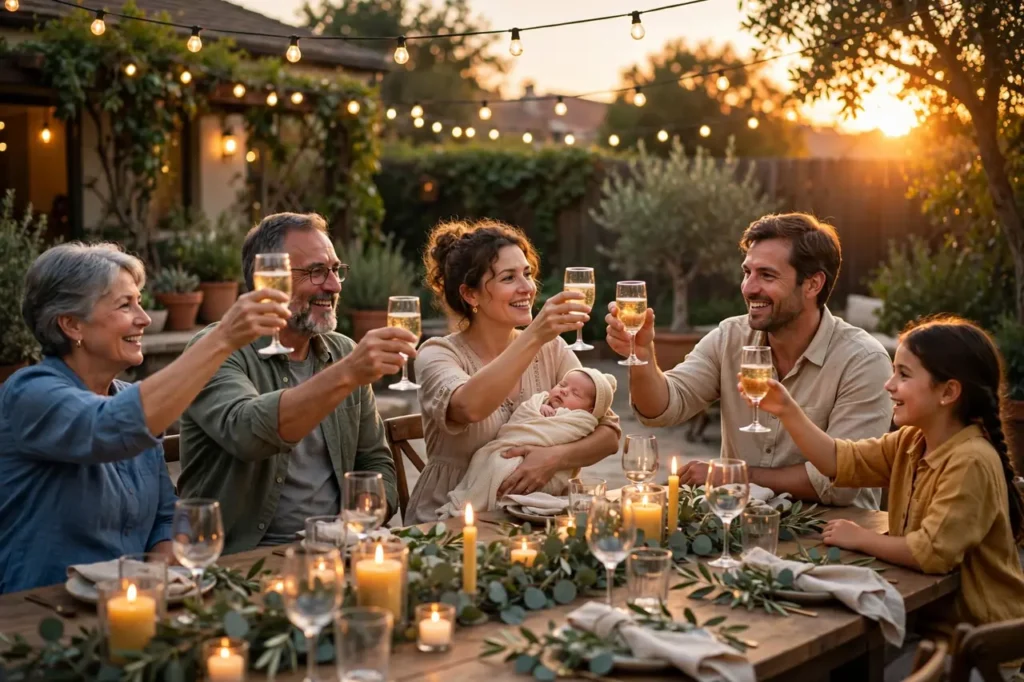
Tables that belong outside. Wooden farm tables need almost no dressing — a linen runner, low wildflower arrangements, candles in hurricane holders (non-negotiable outdoors; open flames in wind are a menace). For food safety in heat, use chafing covers, keep cold items on ice, and plan the menu around dishes that tolerate warmth gracefully. A lemonade and iced-tea station in big glass dispensers is both decor and necessity.
Lighting for the golden hour and beyond. If your event runs into evening, lighting becomes the decor: string lights overhead, lanterns along paths, candles on every surface. Solar options have improved enormously and eliminate the extension-cord spaghetti. Light the paths first (safety), the food second (appetite), and the dance or mingling area third (atmosphere) — in that order of priority.
Rituals That Feel Even Better Under Open Sky
Some naming rituals gain power outdoors, where the elements themselves participate. Consider these open-air favorites:
Tree planting. The classic outdoor naming ritual for good reason: the family plants a tree together during the ceremony, each generation adding soil or water. Choose a native species suited to the site, and the tree becomes a living, growing monument to the day — one the child can visit, climb, and eventually show their own children. If the venue isn’t yours, plant in a large container to take home.
The wishing tree. Hang a sturdy branch or small tree with ribbons and tags; each guest writes a wish for the baby and ties it on. By ceremony’s end the bare branches bloom with color and words — a stunning visual and a keepsake you can photograph, transcribe into a book, and hang in the nursery.
Water blessing. Each guest pours a small cup of water into a shared bowl while speaking (or silently holding) a blessing, and the parents use the mingled water to bless the baby — a drop on the forehead, or water for the newly planted tree. Outdoors, beside a lake or stream, the symbolism of many streams joining one river lands with particular force.
Butterfly or dove release. Handle with care: only use reputable suppliers, native species, and venues where release is ecologically appropriate — and check local regulations first. Done responsibly, the moment the creatures rise as the baby’s name is spoken is pure cinema. Done carelessly, it is a cruelty. If in doubt, substitute bubbles or flower petals, which photograph just as beautifully.
The circle of song. End the ceremony with everyone standing in a circle around the family, singing or humming together as the sun does whatever it is doing. No microphones, no performance — just human voices under the sky. It is the oldest ritual technology we have, and outdoors, with the sound carrying and returning, it never fails to raise goosebumps.
Season-by-Season Outdoor Planning Notes
Each season gives an outdoor naming ceremony a different personality — and a different set of demands. Here is how to play to each season’s strengths.
Spring is the classic choice: blossoms, mild temperatures, and that feeling of new life echoing the occasion. The risks are rain and pollen. Choose late spring over early when you can, have the tent on standby regardless of the forecast, and warn allergy-prone guests so they medicate ahead. Spring’s payoff — flowering trees in the background of every photo — is worth the vigilance.
Summer offers long evenings and reliable warmth, but heat is the adversary. Morning ceremonies (before 11 a.m.) or true golden-hour events (after 5 p.m.) dodge the worst of it. Provide shade sails, iced drinks on arrival, and a menu that won’t wilt. Summer’s secret weapon is the evening: as the temperature drops and the string lights come on, the party transforms into something magical without you doing a thing.
Fall may be the finest season of all for outdoor ceremonies: stable weather, golden light, natural decor in every tree. Lean into the palette — amber, rust, sage — and serve warm cider alongside the champagne. The main risk is an early cold snap, so have the pashmina basket and a hot-drink station ready even if the forecast looks kind. Fall ceremonies photograph so well that photographers quietly call October their favorite month.
Winter is the bold choice, and bold can be beautiful. A brief midday ceremony — ten minutes, everyone in their best coats — followed by a warm indoor celebration gives you the drama of the season without the suffering. Evergreen arrangements, warm lighting against early dusk, and visible breath in the cold air make for striking photos. Just be honest on the invitation (“brief outdoor ceremony — dress warmly!”) and have hot drinks waiting the moment it’s over.
Frequently Asked Questions
What time of day is best for an outdoor naming ceremony?
Late morning (10–11 a.m.) or late afternoon (4–5 p.m.) are the sweet spots: flattering light, moderate temperatures, and alignment with most babies’ happiest awake windows. Midday brings harsh sun and heat; early evening is beautiful but pushes into dinner and bedtime territory. Match the time to your baby’s schedule first and the light second — a happy baby at noon beats a melting one at golden hour.
Do we need a permit for a park ceremony?
Almost certainly yes if you’re bringing decor, chairs, or more than a casual-picnic-sized group. Most parks require a reservation or event permit for structured gatherings, with fees typically ranging from $50 to a few hundred dollars. Apply early — popular parks book months ahead for spring and fall weekends — and confirm exactly what’s allowed: amplified sound, staking into grass, confetti, and alcohol are the most commonly restricted items.
How do we handle bathrooms for an outdoor event?
At home, open the house bathrooms and add a basket of supplies. At venues without facilities, rent luxury restroom trailers — not construction porta-potties — for guest counts over 30 or events longer than three hours. Place them discreetly but not remotely; nobody should hike for a bathroom. This is the least glamorous line item and one of the most appreciated.
What should we tell guests to wear?
Be specific on the invitation: “Garden party attire — the ceremony is on grass, so block heels will sink; flats or wedges recommended.” Mention sun and temperature realities (“afternoon sun — hats welcome”) so guests arrive comfortable rather than surprised. When guests know what to expect, they relax — and relaxed guests make better celebrations.
How do we keep the ceremony short outdoors?
The same discipline as indoors, with more reason: aim for 15–20 minutes of formal ceremony. Sun, wind, insects, and standing guests all argue for brevity. Put the detailed program in the celebration afterward — toasts, performances, and long stories belong at the party, where people can sit, sip, and listen comfortably.
What about photographs in harsh sunlight?
Share your timeline with your photographer in advance; a good one will steer you toward shade for portraits and position the ceremony to flatter. The family portraits that matter most take ten minutes — schedule them in open shade (the shadow side of a building or under a tree canopy), where light is soft and nobody squints. Some of the dreamiest naming photos ever taken are backlit golden-hour shots; trust your photographer’s eye.
Can we have an outdoor ceremony in winter?
Yes, with intention: a crisp winter ceremony can be magical — think evergreen decor, warm drinks, blankets, and a fire pit. Keep the formal portion under ten minutes, move the celebration indoors or under a heated tent immediately after, and warn guests honestly so they dress for it. The photos, with rosy cheeks and visible breath in the cold air, are unforgettable.
What’s the single most important outdoor planning tip?
Visit the venue at the exact time of day and day of week as your event, before you commit. Online photos lie by omission: they don’t show the 5 p.m. sun blasting the ceremony spot, the neighboring construction, the wind tunnel between buildings, or the ant colony under the oak. One scouting visit at the right hour reveals everything a brochure hides.
Under the Sky, Among Your People
An outdoor naming ceremony asks a little more of you in planning and gives back far more in atmosphere. The breeze that ruffles the programs, the light that turns everything gold, the sheer spaciousness of sky above a gathering of people who love your child — these are not decorations. They are the oldest celebration setting in human history, and they still work.
So pick your patch of earth, make your backup plan, and then let the day be what it will be: a little windswept, a little sun-warmed, completely alive. Your child’s naming story will forever begin with “it was a beautiful day, and we were outside, and everyone we loved was there.” There is no better opening line. And when your child is old enough to ask, you will be able to say you named them where the sky could hear it — which, when you think about it, is exactly as it should be. For more celebration planning, browse our Baby & Children collection, and when the seasons turn, these baby’s first Halloween ideas will help you keep the celebrations coming. And when you’re ready to travel with your little one, our tips for flying with a baby make family adventures far less daunting.