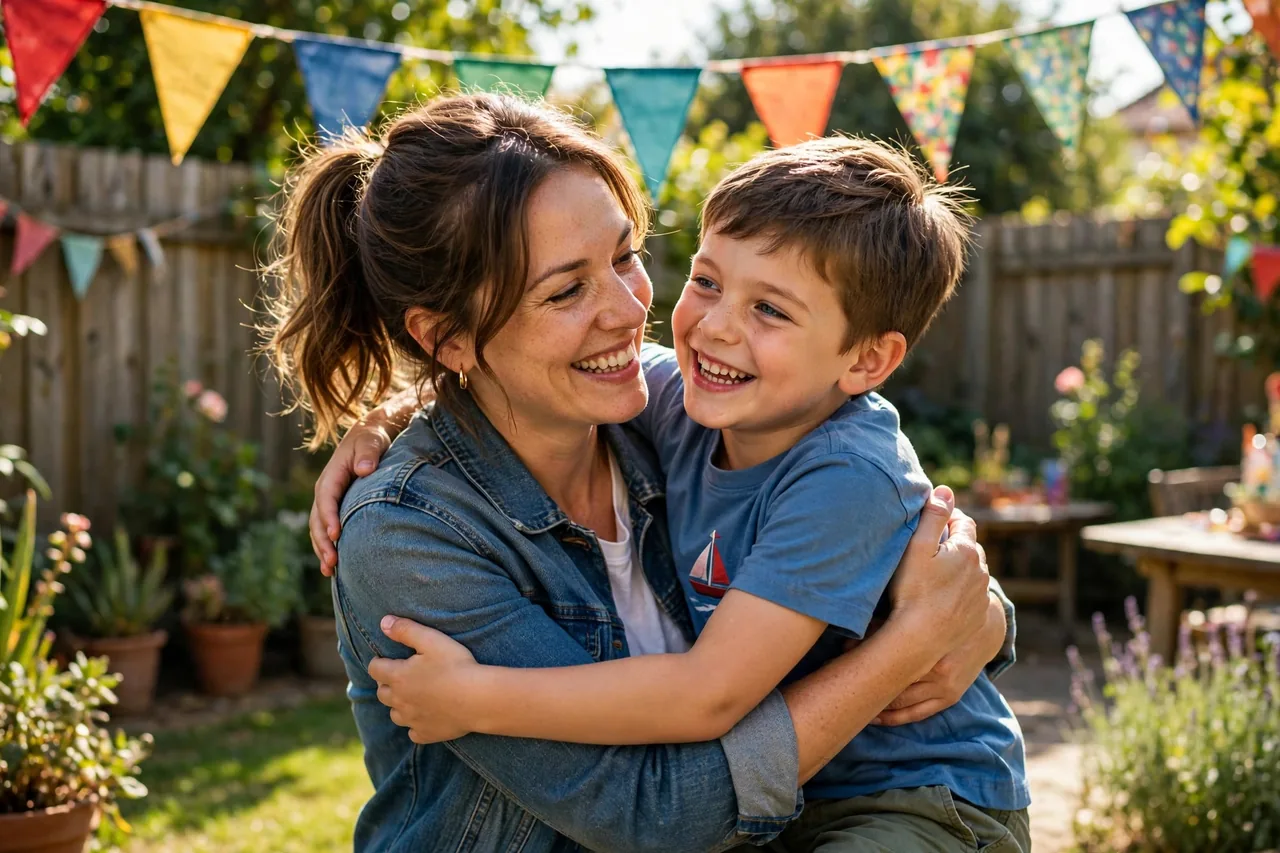
“Why do we celebrate Son’s Day?” It’s a fair question — and one worth answering properly, because the answer is better than most people expect. This isn’t a Hallmark invention or a hashtag looking for a meaning. Son’s Day exists for concrete, human reasons: because sons need celebrating, because parents need reminding, and because the parent-son relationship does something specific and irreplaceable in a family.
This article makes the full case: the history in brief, seven real reasons we celebrate, what the day does for sons at every age, what it does for parents, and honest answers to the skeptics. By the end, you’ll know exactly why the day matters — and why your family should observe it.
The Short Answer
We celebrate Son’s Day to recognize sons and strengthen the parent-son bond — deliberately, out loud, once a year. The day was founded (in its official 2018 form by Jill Nico) to encourage healthy, open conversation between parents and sons, including about topics boys are often discouraged from discussing: emotions, mental health, vulnerability, and what it means to grow into a good man.
But the short answer undersells it. The real answer has layers — and they’re worth unfolding.
Reason 1: Sons Are Celebrated Less (and It Shows)
Let’s start with the uncomfortable data point behind the holiday. For decades, cultural attention to children’s emotional lives skewed heavily toward daughters — more books, more conversations, more explicit celebration of the parent-daughter bond. Sons got the “tough it out” curriculum: sports, stoicism, and the message that needing attention was weakness.
The result? Boys who struggle to name their feelings, teenagers who can’t ask for help, and adult men who show up to therapy (if they show up at all) decades late. Son’s Day is a small, annual corrective: a day that says boys’ inner lives matter, that sons deserve tenderness and toughness, and that celebrating a boy doesn’t make him soft — it makes him secure.
A son who is celebrated learns that he is worth celebrating. That lesson, absorbed young, becomes the foundation everything else is built on.
Reason 2: It Gives Parents Permission
Here’s a secret many parents carry: they want to be effusive with their sons, but something holds them back. Maybe it’s how they were raised — the dad who never said “I love you,” the mom who showed love through packed lunches but never words. Maybe it’s the fear of embarrassing a teenage boy, or the awkwardness of sentimentality.
Son’s Day functions as a permission slip. On this one day, the effusiveness is scheduled — the letter, the toast, the “I’m proud of you” said out loud. And here’s what parents discover: once you’ve said it on Son’s Day, it gets easier to say it on random Tuesdays too. The holiday trains the muscle.
Reason 3: Rituals Compound
A single celebration is nice. A repeated celebration is transformative. The annual letter, the same-spot photo, the special meal — done once, they’re sweet; done ten times, they’re identity-forming.
Psychologists call these “family rituals,” and the research is striking: kids from families with strong rituals report higher self-esteem, better emotional regulation, and stronger family bonds. The ritual doesn’t have to be elaborate — it has to be repeated. Son’s Day provides the annual container; your family’s traditions provide the contents. Year after year, the day quietly builds a son’s sense of belonging: I am part of something that celebrates me.

Reason 4: It Interrupts the Autopilot of Parenting
Modern parenting is 90% logistics: schedules, homework, meals, laundry, repeat. The relationship itself — the actual knowing of your son — gets squeezed into the margins. Most parents can go weeks without a real conversation with their teenager that isn’t about logistics.
Son’s Day is a circuit breaker. It forces a pause: Who is my son right now? What is he into? What is he struggling with? What do I want him to know? The day’s activities — the outing, the letter, the long talk — are just mechanisms for asking those questions. Without the holiday, many parents wouldn’t ask them at all. That’s not neglect; it’s the reality of busy lives. The celebration is the remedy.
Reason 5: Boys Need to Hear It Out Loud
There’s a particular hunger in sons for their parents’ explicit pride — and it’s rarely satisfied. Ask grown men when their father last said “I’m proud of you,” and you’ll hear a lot of long pauses. It’s not that fathers aren’t proud; it’s that the pride stays internal, expressed through provision and presence but never words.
Son’s Day corrects this with structure: the toast, the letter, the gratitude circle. These aren’t just nice moments — they’re delivery mechanisms for the words sons are starving to hear. “I’m proud of who you’re becoming.” “You handled that well.” “I like the man you’re turning into.” Said out loud, once a year, with ceremony, these sentences land with the force of scripture.
Reason 6: It Honors the Work of Raising Sons
Raising a son is work — joyful, exhausting, bewildering work. The scraped knees and broken windows, the 2 a.m. fevers and the teenage silences, the pride and the terror of watching him walk into the world. Son’s Day honors that labor, for everyone who does it: mothers, fathers, stepparents, grandparents, guardians.
It’s also one of the few days that says to parents: what you’re doing matters. In a culture that often treats parenting as a background task, a day of deliberate celebration is a vote for its importance.
Reason 7: It Builds Better Men
The boldest claim, saved for last: celebrating sons — with tenderness, intention, and open conversation — helps raise better men. Boys who feel seen become men who can see others. Boys who are told their feelings matter become men who can handle theirs. Boys who watch their parents celebrate them learn that love is something you express, not just feel.
The day’s founder explicitly linked it to topics like mental health and emotional well-being — the things boys are least likely to discuss and most likely to need. Every Son’s Day that includes a real conversation is a small deposit against the crises of later years: the depression that goes unspoken, the help that’s never asked for, the isolation that festers. Celebration is prevention, wearing a party hat.
What the Day Does for Sons at Every Age
| Age | What Son’s Day Gives Him |
|---|---|
| 2–6 | The felt sense of being adored — the foundation of secure attachment. He won’t remember the details, but his nervous system will remember the warmth. |
| 7–12 | Proof that he’s seen as an individual, not just a kid to be managed. The letter and the one-on-one time tell him: you matter specifically. |
| 13–17 | Counter-evidence to the world’s cool indifference. When peers are brutal and self-doubt is loud, a parent’s deliberate celebration is an anchor. |
| 18–25 | Continuity — the message that leaving home didn’t end his place at the center of the family. The call, the box, the letter bridge the distance. |
| 26+ | Perspective. Adult sons often report that Son’s Day hits harder with age — especially once they have children and understand what the celebration cost. |
Answering the Skeptics
Every young holiday attracts doubters. Here are the common objections — and honest answers:
“Isn’t every day Son’s Day?”
In the same way every day is Mother’s Day — which is to say, no. The “every day” argument is how celebrations die: if every day is special, no day is. Dedicated observances work because they’re set apart. The ritual, the anticipation, the “today is different” feeling — that’s the mechanism, and it requires a date.
“It’s just a social media thing.”
It spread through social media, but that’s not all it is. The September date gained traction online, yes — but the underlying need (celebrating sons, opening dialogue) predates Instagram by decades, back to the 1990s advocacy. Dismissing it as “just hashtags” confuses the distribution channel with the message. Millions of families now have real traditions attached to the day; the hashtag was just the invitation.
“Why do sons need a day? They already have every advantage.”
This confuses structural advantage with emotional attention. Boys may benefit from certain societal defaults, but they simultaneously receive less emotional attunement, fewer conversations about feelings, and less explicit celebration of their inner lives. Son’s Day doesn’t claim sons are oppressed — it claims they’re under-celebrated as sons, and that the parent-son bond deserves its own spotlight. Both things can be true.
“We already do birthdays. Isn’t that enough?”
Birthdays celebrate the individual; Son’s Day celebrates the relationship. A birthday says “we’re glad you were born.” Son’s Day says “we’re glad you’re ours — and here’s what we see in you.” Different messages, both worth sending. Besides: does anyone argue that one celebration a year is the maximum?
“It feels forced.”
All rituals feel forced the first time — the first Thanksgiving you hosted, the first time you said a toast. Forced is just “unfamiliar” wearing a scary mask. By year three, it’s tradition, and traditions feel like home. Start awkward; the meaning catches up.

Watch: A Son’s Day Tribute
Sometimes the “why” is best felt, not explained. This heartfelt musical tribute captures what the day means to the parents who observe it — the pride, the nostalgia, the love that doesn’t need a reason but gets a day anyway:
How to Celebrate With Intention
Convinced? Here’s the minimal meaningful version — four elements, no elaborate planning required:
1. Say it. Tell him you’re proud — specifically, out loud, looking at him. This is the non-negotiable core.
2. Write it. The annual letter. Even three sentences, on paper, kept somewhere. Future generations will fight over these.
3. Do something. His choice: a meal, an outing, a game, a drive. Time together, phones away.
4. Mark it. One photo, same spot every year. The series becomes the tradition.
That’s it. Ninety minutes and a piece of paper, and you’ve observed Son’s Day more meaningfully than most. For fuller planning — schedules, budgets, party formats — our family event planning guide has you covered, and these at-home celebration ideas adapt beautifully.
Frequently Asked Questions: Why We Celebrate Son’s Day
When did Son’s Day start?
The officially recognized National Son’s Day was founded by Jill Nico in 2018. Earlier roots trace to 1990s parent advocacy and the 1998 “Take Your Sons to Work Day.” The September 28 observance grew organically through social media.
Why are there two Son’s Days?
March 4 is the officially founded date; September 28 became popular on social media near National Daughter’s Day (September 25). Families observe one or both — there’s no wrong answer.
Is Son’s Day celebrated worldwide?
It’s primarily American in origin, but September 28 posts now come from many countries. The impulse — celebrating sons — is universal, and several cultures have their own traditions honoring sons and brothers.
What’s the main purpose of Son’s Day?
To celebrate sons and strengthen the parent-son bond through intentional recognition and open conversation — including about emotions and well-being, topics boys are often discouraged from discussing.
Do I need to buy gifts?
No. The day’s core is recognition, not presents. A letter, a special meal, dedicated time, and spoken pride are the traditional elements — all free. Gifts are optional garnish.
How is Son’s Day different from a birthday?
Birthdays honor the individual; Son’s Day honors the son and the parent-son relationship. It’s less about cake and presents, more about reflection, pride, and connection.
Can single parents, grandparents, or guardians observe it?
Absolutely. Son’s Day belongs to everyone raising or loving a son — single moms and dads, stepparents, grandparents, aunts, uncles, mentors. The day is about the bond, not the family structure.
What if my son is an adult?
Adult sons often appreciate it more — a call, a letter, a dinner, or a visit. The message evolves from “we adore our little boy” to “we’re proud of the man you’ve become,” and it lands deeply.
Will celebrating Son’s Day really make a difference?
One day won’t transform a relationship — but annual rituals compound. The letter becomes a collection; the photo becomes a timeline; the conversation becomes a habit. Small, repeated, intentional: that’s how the difference gets made.
The Real Reason, in One Sentence
We celebrate Son’s Day because our sons deserve to know — not just feel, but know, because we said it out loud — that they are seen, they are prized, and they are loved exactly as they are.
Everything else — the dates, the history, the hashtags — is scaffolding. The day itself is simple: look at your son, tell him what you see, and mean it. Do that once a year with intention, and you’ll have given him something no birthday present can match: the certainty that he matters, to you, specifically, on purpose.
For words to borrow when your own run short, our collection of heartfelt family wishes shows how specific language lands — and if budget is a concern, free family events prove celebration doesn’t require spending. The day is yours to define. Define it well.
The History: How We Got Here
Understanding why we celebrate requires knowing how the celebration came to be. The story has three acts:
Act 1: The advocacy years (1990s). Parent groups, watching the success of Take Our Daughters to Work Day, began asking: what about sons? The concern wasn’t competitive — it was developmental. Advocates pointed to boys’ rising struggles: disengagement from school, emotional shutdown, the “boys don’t cry” culture. The 1998 “Take Your Sons to Work Day” gave sons a foothold — a day of mentorship and visibility.
Act 2: The merge and the gap (2003). The sons’ and daughters’ work days merged into one, and sons lost their standalone observance. For fifteen years, there was no dedicated day — a gap that parents felt every September when Daughter’s Day posts filled their feeds and no equivalent existed for their boys.
Act 3: The founding and the viral takeoff (2018–present). Jill Nico founded National Son’s Day on March 4, 2018, explicitly framing it around parent-son dialogue — including mental health and emotional well-being. Then social media did what social media does: parents embraced the idea, clustered around September 28 (near Daughter’s Day), and generated hundreds of thousands of posts. The holiday now has two dates, millions of observers, and a growing body of family traditions.
The arc matters because it reveals the day’s DNA: it was never imposed from above. It bubbled up from parents who felt a gap and filled it. That’s why it feels authentic in a way manufactured holidays don’t — and why its meaning is still being written by the families who observe it.
Son’s Day by the Numbers
| Fact | Detail |
|---|---|
| Official founding | 2018, by Jill Nico (March 4) |
| Social-media date | September 28 (near Daughter’s Day, Sep 25) |
| Social posts | Hundreds of thousands annually under #NationalSonsDay |
| Core purpose | Celebrating sons + encouraging open parent-son dialogue |
| Signature traditions | Annual letter, same-spot photo, special meal, family toast |
| Who observes | Parents, stepparents, grandparents, guardians — anyone raising a son |
| Cost of observing | $0 and up — the core rituals are free |
How Communities Observe Son’s Day
It’s not just families. The day’s growth has pulled in wider circles:
Schools — Some elementary schools mark the September date with “celebrate your son” notes home, encouraging parents to write their boys a letter. Teachers report the letters become treasured keepsakes — and the assignment costs nothing.
Youth organizations — Scouts, sports leagues, and mentorship programs use the day for recognition ceremonies: not just MVP awards, but “character” awards — kindness, perseverance, teamwork. It reframes what gets celebrated in boy culture.
Faith communities — Many churches, mosques, and temples incorporate blessings for sons into services near the date, often paired with father-son or mother-son events. The spiritual framing — gratitude for children as gifts — resonates deeply.
Businesses — Restaurants run “Son’s Day specials,” photographers offer mini-sessions, and retailers promote gifts. Commercial? Sure. But it also normalizes the observance — every “Happy Son’s Day” sign is a reminder to call your boy.
Making the Case to Your Family
Convinced, but your partner shrugs? Your teenager groans? Here’s how to bring them along:
Start small and specific. Don’t propose “a whole new holiday.” Propose one thing: “Let’s write him a letter this year.” Small asks get yeses; yeses build traditions.
Let the skeptic pick the activity. The eye-rolling teen who gets to choose the restaurant, the movie, and the playlist will participate — and probably enjoy it. Agency dissolves resistance.
Show, don’t argue. Write the letter. Take the photo. Cook the meal. When the family sees how it feels — the toast that makes everyone quiet, the letter that makes him hug you — the case makes itself.
Invoke the future. “In ten years, we’ll have ten letters and ten photos” is a powerful pitch. People commit to traditions when they can see the compounding.
Make it opt-in, not mandatory. “We’re doing a Son’s Day dinner — join if you want” beats a summons. Celebration can’t be compulsory; invitation works better than obligation.
And if your son himself is skeptical? Tell him the truth: it’s not about the holiday, it’s about him. “I wanted a day to tell you I’m proud of you, so I picked this one.” No teenager on earth is immune to that — even if he’d never admit it.
A Letter to the Unconvinced Parent
Dear fellow parent,
I know what you’re thinking. Another day? Another thing to plan? The calendar is already full, the kids are already celebrated, and this feels like one more obligation in an exhausting year.
But here’s what I’ve learned: Son’s Day isn’t another obligation. It’s the opposite — it’s permission to drop the logistics for one evening and just be with your boy. No party to plan, no gifts required, no performance. Just a letter, a meal, and the words.
You know the words. The ones you think in the car when he’s asleep in the back seat. The ones that catch in your throat at his games, his concerts, his graduations. “I’m so proud of you.” “You’re becoming such a good person.” “I love watching you grow up, even though it breaks my heart a little.”
Son’s Day is just the day you say them out loud. That’s it. That’s the whole holiday.
And here’s the thing nobody tells you: he’ll remember. Not the meal, not the photo — the words. Twenty years from now, when he’s holding his own son, he’ll hear your voice saying them. That’s why we celebrate. Not for the hashtag. For the echo.
So pick a date. Write the letter. Say the words. The rest is details.
— A parent who’s been where you are
Begin This Year
We’ve covered the history, the reasons, the skeptics, the science, and the strategies. But all of it converges on one action: this year, celebrate your son on purpose.
Not perfectly. Not elaborately. Just deliberately. Write the letter tonight — it takes twenty minutes. Put the date on the calendar with a two-week reminder. Tell your son it’s coming, or don’t. Cook his favorite meal. Take the photo. Raise the glass and say the words.
Years from now, you won’t remember what you were worried about — the “is this a real holiday” debate, the “do we have time” arithmetic, the awkwardness of starting something new. You’ll remember his face when you read the letter. You’ll have the stack of photos, the bundle of letters, the tradition your family owns.
That’s why we celebrate Son’s Day. Not because the calendar says so, but because he deserves a day — and because you deserve the reminder to give it to him. Start this year. He’ll thank you for decades.
Your Son’s Day Quick-Start Checklist
Tear this off and stick it on the fridge:
☐ Pick your date: March 4, September 28, or both — add a yearly calendar reminder.
☐ Two weeks before: plan one activity and one meal; order anything that ships.
☐ One week before: write the letter (20 minutes, specific memories, seal it).
☐ Day before: charge the camera, confirm the plan, hide any surprises.
☐ Son’s Day morning: special breakfast, his choice.
☐ Afternoon: the activity — his pick, your full attention.
☐ Evening: favorite dinner, the toast, the letter, the photo.
☐ After: file the photo, store the letter copy, note what worked for next year.
Eight boxes. One day. A lifetime of echoes. That’s the whole case for Son’s Day — and it’s more than enough.
One day a year, on purpose, out loud: that’s the celebration. Your son is worth it — and deep down, you’ve always known why.
Start tonight: write the first line of the letter. Everything else follows from there.
Happy Son’s Day.
Celebrate him well.
He deserves it.