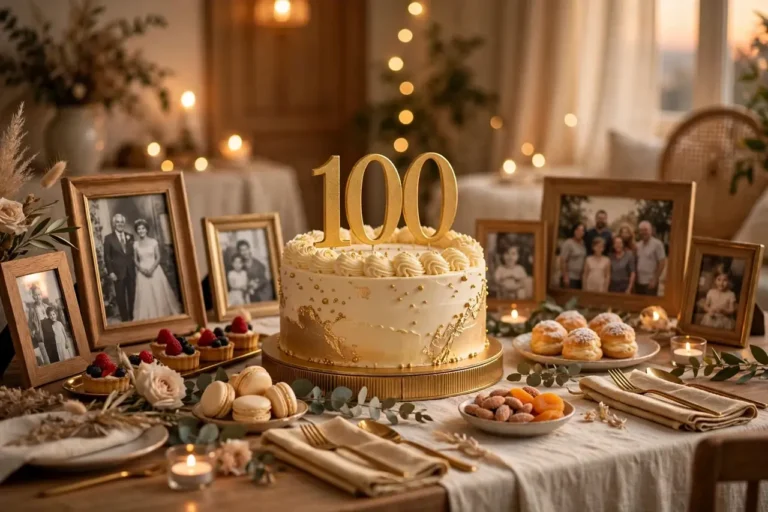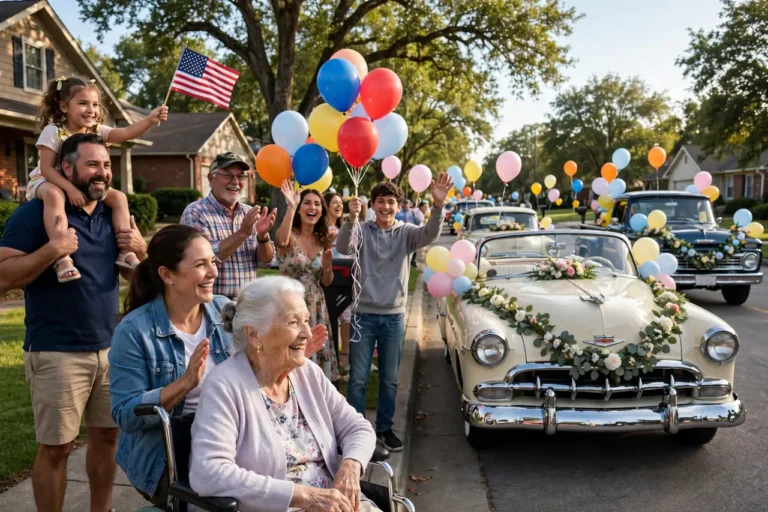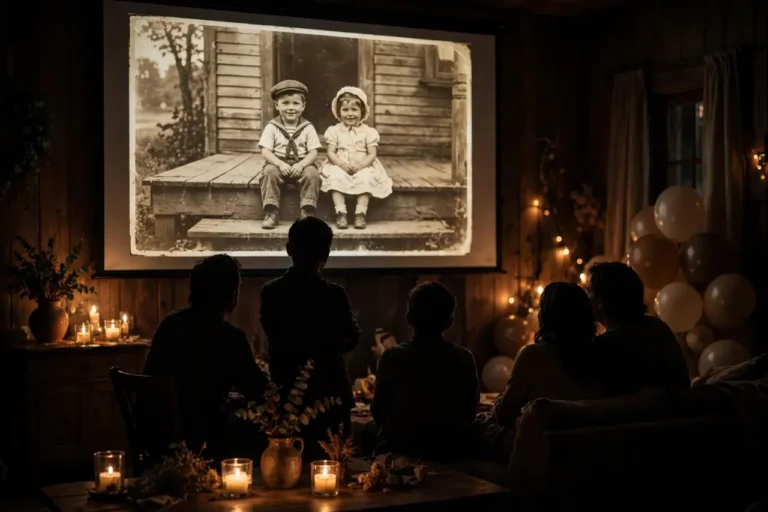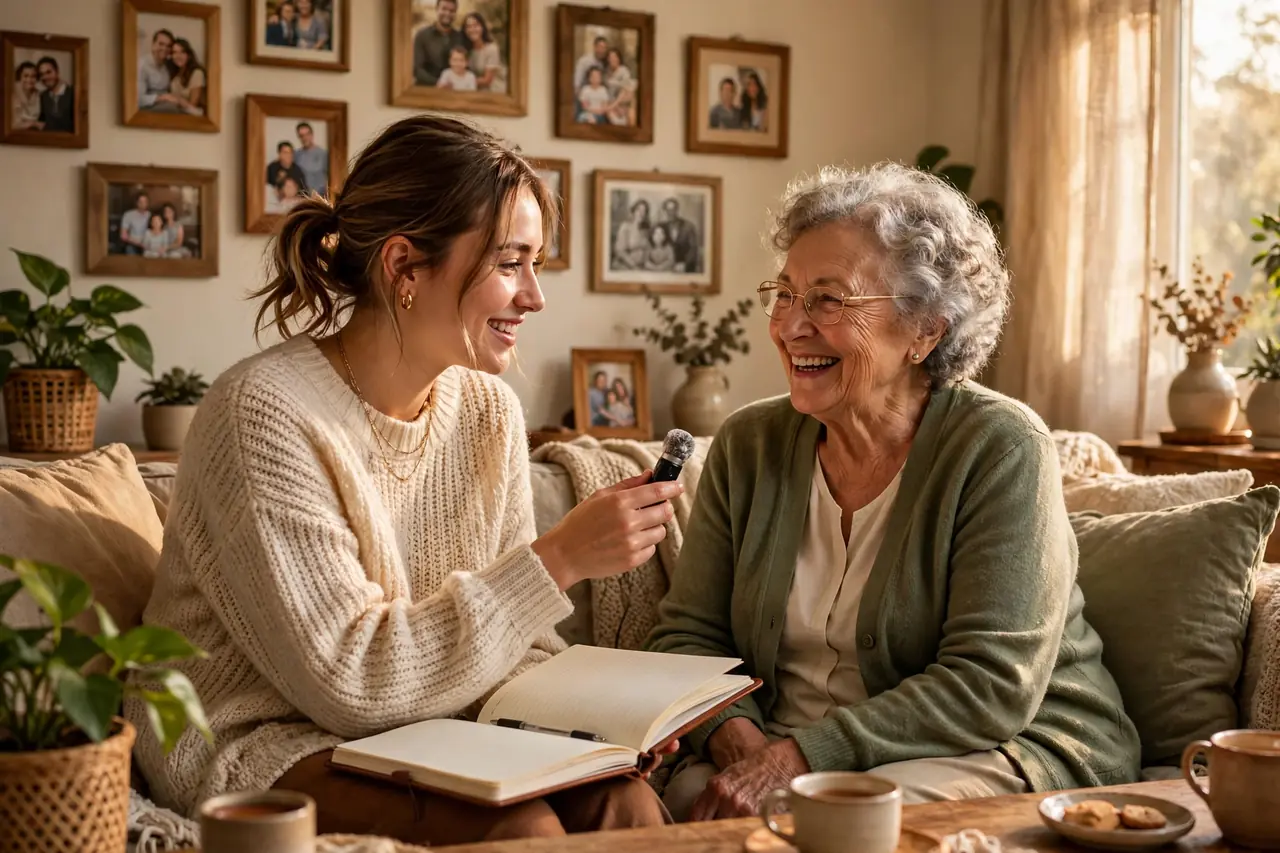
She has lived through the Great Depression and the smartphone, through world wars and moon landings, through a century of ordinary Tuesdays that added up to an extraordinary life. And one day, the stories only she remembers will be gone — unless someone asks. These 100th birthday interview questions for grandma are your key to unlocking a century: 120+ thoughtful questions organized by life era and theme, plus a complete guide to conducting the interview, recording it well, and preserving her answers as a family treasure.
Whether you film it as a birthday gift, record audio for the grandkids, or simply sit with a notebook and listen, this guide shows you how to turn a conversation into an heirloom — what to ask, how to ask it, when to stay quiet and let her talk, and what to do with her answers afterward.
Why Interview Grandma at 100
Every family has a historian, and it is almost always grandma. She remembers the maiden names, the family feuds, the recipes, the reasons behind traditions nobody else can explain. An interview at 100 is not just a birthday activity — it is an act of preservation, capturing firsthand testimony of a century before it is lost.
The timing matters. At 100, memory is precious and sometimes fragile; stories she tells easily today may be harder to reach next year. But there is also a beautiful urgency that makes the conversation itself a gift — to her as much as to you. Being asked about her life, genuinely and attentively, tells a 100-year-old that her century mattered, that someone wants to carry it forward. Many families report the interview was the most meaningful part of the entire birthday celebration.
And the output is irreplaceable. Photographs show what she looked like; an interview captures how she thinks — her humor, her values, her way of explaining the world. Great-grandchildren not yet born will one day hear her voice answering these questions. That is a kind of immortality no photo album provides.
How to Conduct the Interview
Set the scene. Choose a quiet, comfortable, familiar place — her living room, her kitchen table. Mid-morning is often best, when energy is highest. Keep it to 30–45 minutes per session; you can always do a second sitting. Have water nearby and do not rush.
Record everything. Use your phone’s voice recorder at minimum; video is better. Place the phone close (within a few feet), test the audio first, and then forget about the device — your job is listening, not operating equipment. Take a few handwritten notes too, as backup and to mark moments you want to revisit.
Ask one question at a time, then wait. The golden rule of interviewing elders: embrace silence. After you ask, count to ten in your head. The best stories surface after a pause, when she has had time to travel back. Never interrupt a tangent — tangents are where the gold lives.
Follow the energy. If a question lights her up, stay there — ask follow-ups, dig deeper. If a question falls flat, move on cheerfully. The list below is a menu, not a script; the interview belongs to her.
Bring props. Old photos, letters, objects from the memory table — physical prompts unlock memories that abstract questions cannot. “Tell me about this photo” consistently outperforms any clever question you can devise.
Childhood Questions: The Early Years
- What is your very earliest memory?
- What was your childhood home like? Describe it room by room.
- What did your parents do for a living?
- How many siblings did you have, and what were they like?
- What was your favorite game or toy as a child?
- What did you eat for a typical dinner growing up?
- Did your family have any special traditions or rituals?
- What was school like? Who was your favorite teacher?
- What did you want to be when you grew up?
- What is your funniest childhood memory?
- What scared you as a child?
- How did your family celebrate holidays?
- What was the neighborhood like where you grew up?
- Did you have a best friend? What happened to them?
- What is something children today would not believe about your childhood?
Questions About Family and Roots
- Where did our family originally come from?
- What do you remember about your grandparents?
- What was your mother like? Your father?
- Are there family stories that get told over and over? Tell me your version.
- What family heirlooms matter most to you, and why?
- Was there a family member everyone admired? What made them special?
- What is the biggest family argument you remember, and how was it resolved?
- How did the family stay in touch before phones were common?
- What values did your parents try to teach you?
- Which of those values did you try to pass to your own children?
- What do you hope our family never forgets?
- Is there a family secret you are finally willing to share?
- Who in the family most resembles you, and in what way?
- What was the happiest family gathering you remember?
- If you could bring back one family member for one dinner, who would it be?
Love, Marriage, and Partnership Questions
- How did you meet Grandpa?
- What was your first impression of him?
- Describe your wedding day from morning to night.
- What was the hardest year of your marriage, and how did you get through it?
- What was the happiest year?
- What is the secret to a marriage that lasts decades?
- What did you argue about most?
- What is your favorite memory of Grandpa?
- What would you want young couples today to know about love?
- How did you know he was the one?
- What is something Grandpa did that always made you laugh?
- What did you learn about yourself through marriage?
- If you could relive one day with Grandpa, which would it be?
- What advice would you give someone about choosing a partner?
- What does love mean to you now, at 100?
Questions About Work and Purpose
- What was your first job, and how old were you?
- What work are you proudest of?
- What did a typical workday look like in your prime?
- Who was the best boss or colleague you ever had?
- What is the hardest you ever worked at something?
- Did you ever want a different career? What stopped you — or what made you leap?
- How did you balance work and family?
- What skill took you the longest to learn?
- What would you do differently, career-wise, if you could start over?
- What does “a job well done” mean to you?
- How did you feel on your first day versus your last day of work?
- What did retirement teach you?
- What kept you going on the hardest workdays?
- Who mentored you, and what did they teach you?
- What work would you recommend to a young person today?
Living Through History: Questions for a Century Witness
Someone born 100 years ago has lived through extraordinary history. These questions turn her into the history teacher no classroom can provide:
- What is the first big world event you remember?
- What do you remember about the Great Depression?
- Where were you during World War II, and how did it touch your life?
- Do you remember when the war ended? What was that day like?
- What was it like watching the moon landing in 1969?
- How did your daily life change when television arrived?
- What invention surprised you the most in your lifetime?
- What historical figure did you most admire?
- How did women’s lives change over your century?
- What was the most frightening time you lived through?
- What was the most hopeful?
- How did your community change over 100 years?
- What do young people not understand about “the old days”?
- What history book gets it wrong, in your experience?
- If you could send one message to people 100 years from now, what would it be?
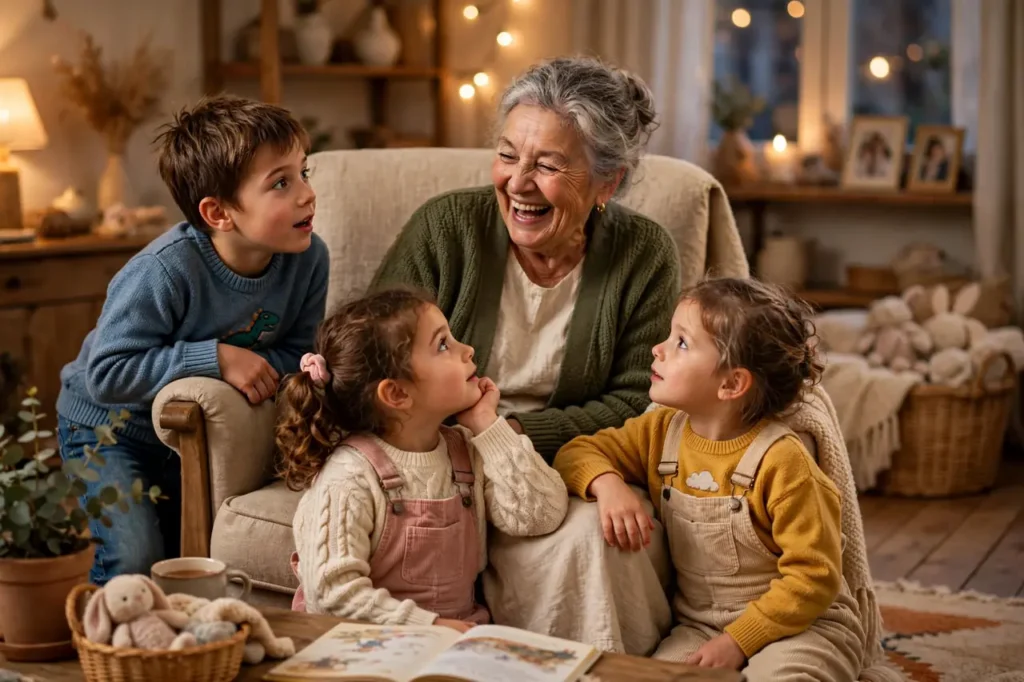
Wisdom, Values, and Life Lessons
- What is the most important lesson life taught you?
- What do you know now that you wish you knew at 20?
- What is your definition of a good life?
- What matters more: happiness or meaning?
- How do you forgive someone who hurt you?
- What is the bravest thing you ever did?
- What is the kindest thing anyone ever did for you?
- What is the kindest thing you ever did for someone else?
- How do you handle worry?
- What role has faith played in your life?
- What are you most grateful for?
- What are you proudest of — not what others would say, but what you say?
- What is your biggest regret, and what did it teach you?
- What does it feel like to be 100?
- What is the secret to a long life — really?
Fun and Lighthearted Questions
Not every question needs to be profound. These keep the interview joyful and often produce the best stories:
- What was your most embarrassing moment?
- What is the silliest thing you ever did?
- Did you ever get in serious trouble? Tell me everything.
- What was your first car, and what happened to it?
- What fashion trend do you wish would come back — or never return?
- What is the best meal you ever ate?
- Have you ever met anyone famous?
- What is your guilty pleasure?
- What song always makes you dance?
- What is the funniest thing a grandchild ever said to you?
- Did you ever have a nickname? How did you get it?
- What would your 20-year-old self think of you now?
- What is something you have never told anyone until now?
- If you could have dinner with anyone in history, who would it be?
- What still makes you laugh like a kid?
Questions About Motherhood and Grandmotherhood
- What do you remember about the day your first child was born?
- What surprised you most about becoming a mother?
- What was the hardest part of raising children?
- What was the most joyful?
- How is being a grandmother different from being a mother?
- What is your favorite thing about each grandchild? (Ask about each by name.)
- What do you want your great-grandchildren to know about you?
- What tradition do you hope the family keeps after you?
- What did your children teach you?
- What is the best parenting advice you ever received — or gave?
Rapid-Fire Favorites: The Fun Finish
End the interview on a high note with quick either-or favorites. They are easy to answer, fun to hear, and great for short video clips:
- Favorite food of all time?
- Favorite movie?
- Favorite song?
- Favorite holiday?
- Favorite place you ever visited?
- Favorite season?
- Morning person or night owl?
- Coffee or tea?
- City or countryside?
- Beach or mountains?
- Favorite decade to have lived through?
- Best invention of your lifetime?
- Favorite thing about being 100?
- One word to describe your life?
- What should we have for dinner tonight?
That is 120 questions — more than any single interview needs. Choose 20–30 that fit your grandma, print them large, and let the conversation wander. The list is a safety net, not a script.
Recording and Preserving the Interview
Recording Tips: Capturing Her Voice Well
Audio is everything. A beautiful video with bad audio is unwatchable; a plain audio recording with clear sound is priceless. Get the microphone close — within three to four feet — and test levels before you start. A $20 lapel mic plugged into a phone is the single best investment you can make.
Video framing. If filming, shoot at eye level in soft natural light (facing a window, never with a window behind her). Frame from the chest up, keep the background simple and meaningful — her living room, not a blank wall. Do not worry about cinematic quality; authenticity beats production value.
Backup as you go. After each session, immediately copy the files to two places (cloud + computer). Label files with date and topic. Phones get lost, storage fills up, and a 45-minute interview is irreplaceable.
What to Do With the Interview Afterward
An unedited 45-minute recording helps no one — curate it. Transcribe the best stories (free transcription tools do the heavy lifting; you just clean up). Pull 10–15 “greatest hits” clips of 1–3 minutes each for easy sharing. Write up the full Q&A as a printed booklet — “100 Years in Her Own Words” — and give copies to every household at the holidays.
Consider the long game: donate a copy to a local historical society or library oral-history collection. Firsthand accounts of a century are genuinely historically valuable, and archivists welcome them. Your grandmother’s memories of the Depression, the war years, or the moon landing belong to history as well as to your family.
And play it back for her. Many grandmothers are deeply moved hearing their own stories played back — it validates a lifetime. Sit with her, listen together, and watch her face as she hears herself at her most eloquent. If you are building a video tribute for the party, the interview’s best moments belong in it.
| Question Category | Count | Best For | Tip |
|---|---|---|---|
| Childhood | 15 | Opening the interview warmly | Start here — early memories flow easily |
| Family and roots | 15 | Preserving genealogy | Record names and spellings carefully |
| Love and marriage | 15 | Emotional centerpiece | Save for when she is comfortable |
| Work and purpose | 15 | Understanding her drive | Ask about pride, not just facts |
| Living through history | 15 | Historical record | Let her correct the textbooks |
| Wisdom and values | 15 | The legacy questions | Ask “why” after each answer |
| Fun and lighthearted | 15 | Energy and laughter | Sprinkle throughout, not just at the end |
| Motherhood | 10 | Family-specific gold | Name each child and grandchild |
| Rapid-fire favorites | 15 | Closing on a high | Great for shareable clips |
Running a Great Interview Session
Sample Flow: A 30-Minute Session Plan
Here is a minute-by-minute plan for a first session that feels like a conversation, not an interrogation:
Minutes 0–5: Warm up. Start with easy rapid-fire favorites — favorite food, favorite season, morning or night person. These require no deep recall, get her talking, and let her get comfortable with the recording device. Laugh together; the goal is relaxation.
Minutes 5–15: Childhood. Move to early memories while energy is high: earliest memory, childhood home, parents, siblings. These are often the most vivid recollections and the most historically valuable. Use a childhood photo as a prompt if conversation stalls.
Minutes 15–25: The heart of it. Now go to love and family — how she met grandpa, the wedding, the children. This is the emotional core; give it the most time. If she tears up, pause the questions and just sit with her. Some of the best “answers” are silences.
Minutes 25–30: Wisdom and close. End with one or two big-picture questions — proudest moment, advice for the great-grandkids — and a simple closer: “Is there anything you want to make sure we remember?” Then thank her, stop the recording, and sit with her a while. The post-interview chat often contains gems; keep the recorder running if she does not mind.
Follow-Up Techniques That Unlock Deeper Stories
The first answer is rarely the best one. These follow-ups dig beneath the surface:
“Tell me more about that.” The simplest and most powerful follow-up in interviewing. It signals genuine interest without steering, and it almost always produces richer detail than the initial answer.
“What did that feel like?” Moves from facts to emotion. “We moved to Chicago in 1952” becomes a story about homesickness, hope, and a tiny apartment above a bakery when you ask how it felt.
“What happened next?” Keeps narratives moving forward when she stalls mid-story. It is a gentle nudge, not a demand — and it works because stories naturally want to continue.
“Who else was there?” Populates memories with people, which triggers more memories. Names are keys; each one unlocks another room.
“What would you want [great-grandchild’s name] to know about that?” Reframing the question toward a specific beloved descendant transforms abstract reminiscence into purposeful legacy — and the answers become more pointed, more quotable, more her.
Bonus: Questions to Ask Others About Grandma
The interview does not have to be only with grandma herself. Asking her children, siblings, and old friends about her adds dimension — and sometimes hilarious contradiction:
- What is your earliest memory of Mom/Grandma?
- What is something she did that we kids never knew about?
- When did you see her at her bravest?
- What is her most annoying habit — said with love?
- What would surprise people to learn about her younger self?
- What is the best gift she ever gave you (not necessarily a thing)?
- How has she changed over the decades — and what never changed?
- What do you hope you inherited from her?
Record these too, and weave the best answers into the tribute video or the printed booklet. A portrait painted by many voices is always richer than a self-portrait alone.
Frequently Asked Questions
What if grandma has memory problems or dementia?
Interview anyway, with adjusted expectations. Ask about feelings and distant memories rather than recent facts — long-term memory often survives when short-term fades. Keep sessions short (15–20 minutes), follow her lead, and treasure whatever emerges. Even fragments — a song lyric, a name, a laugh — are precious. And the act of being listened to matters enormously regardless of what is remembered.
How long should the interview be?
Thirty to forty-five minutes per session is ideal for a 100-year-old — long enough for depth, short enough to avoid fatigue. Plan for two or three sessions across different days rather than one marathon. You will get better stories when she is fresh, and the breaks give you time to note follow-up questions.
Should we film it or just record audio?
Film it if she is comfortable — video captures expressions, gestures, and presence that audio misses. But never let camera-shyness kill the project: an audio-only interview is infinitely better than none. Many elders relax completely once the lens is forgotten, usually within the first five minutes.
What if she does not want to be interviewed?
Respect it, but try a softer approach first. Some grandmothers refuse a formal “interview” but will happily chat over photo albums — which is an interview in disguise. Frame it as “I want to write down your stories for the great-grandkids” rather than “I want to interview you.” Purpose motivates; performance pressure paralyzes.
How do we handle painful topics?
Follow her lead. If she brings up a loss or hardship, listen with quiet attention — do not probe, do not redirect, just be present. If she avoids a topic, let it go; no question is worth causing distress. You can note the avoidance privately and perhaps ask a sibling about it later, off-camera.
Can grandchildren conduct the interview?
Absolutely — and they should. A grandchild asking “What was the world like when you were my age?” produces magic no adult interviewer can replicate. Coach them on the basics (one question at a time, wait for the answer, do not interrupt), then step back. The resulting recording, with young voices asking and an old voice answering, is a family treasure.
What is the best way to preserve the interview long-term?
Multiple formats, multiple locations: the original recording backed up to cloud and an external drive, a written transcript printed on archival paper, greatest-hits clips shared digitally, and a printed booklet for each household. Digital formats evolve — the printed transcript is your 100-year guarantee. Consider also donating a copy to a local historical society.
When should we do the interview relative to the birthday party?
Two to four weeks before is ideal — close enough that the birthday excitement energizes her, with enough lead time to edit highlights into the party’s video tribute or slideshow. Avoid the day of the party itself; she will be tired and distracted. A calm morning a few weeks out produces the best material.
Should we interview grandpa too, if he is still with us?
Yes — separately and together. Individual interviews let each of them speak freely about their own experiences, while a joint session captures their dynamic: the interruptions, the corrections (“That is not how it happened!”), the shared laughter. The joint interview is often the most entertaining recording in the family archive. Just be prepared to mediate gently when their versions of the same story collide — those collisions are comedy gold.
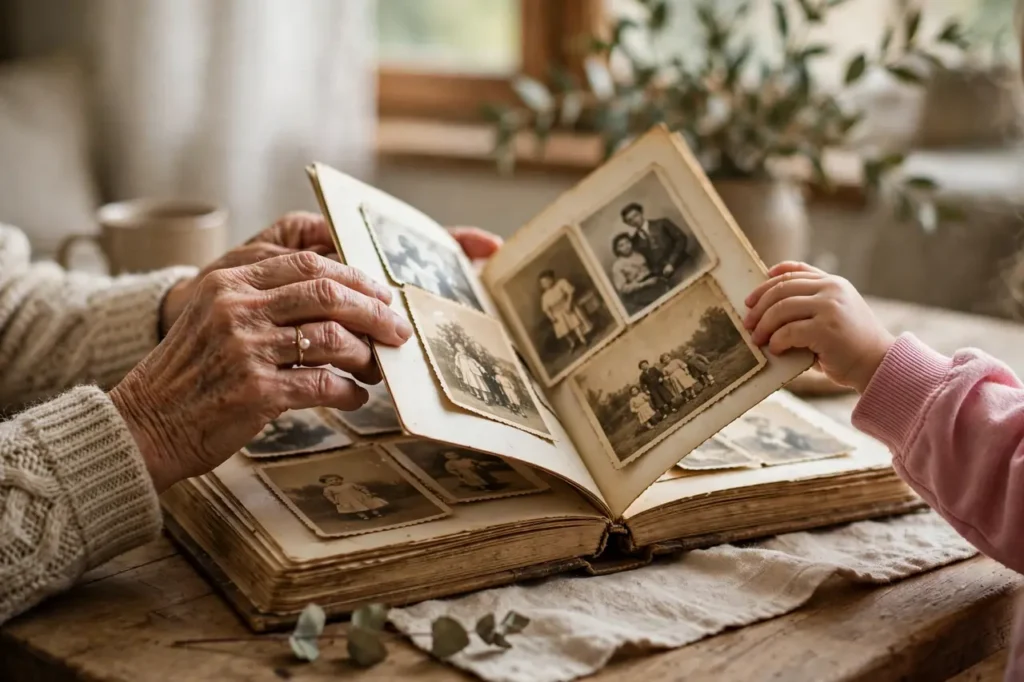
Watch: A Century of Life, Beautifully Celebrated
See what 100 years of life looks like when a family celebrates it with love — the perfect inspiration for your own interview project:
One hundred and twenty questions, one remarkable woman, and a conversation your family will treasure forever. Pick your favorites, press record, and listen — really listen — while she tells you about the century she lived, in her own unforgettable words. Then write it down, back it up in multiple places, and share it widely with everyone who loves her. For more ways to honor her, explore our birthday wishes for wives, birthday quotes for wives, and wedding day wishes for words worthy of her story.