Your wedding photos are the only part of the day that gets better with time. The cake gets eaten, the flowers fade, the playlist ends — but fifty years from now, your photos will still be telling your story to people who were not even born yet. That is why a thoughtful shot list matters: it makes sure the fleeting, unrepeatable moments get captured while you are busy living them.
This guide gives you 45 wedding day photo ideas for couples, organized by the natural timeline of the day — from getting-ready candids to the sparkler send-off. Each idea includes posing guidance and framing tips you can share with your photographer, so you get gallery-worthy images without feeling stiff or over-directed. Whether you hired a seasoned pro or a talented friend, this list ensures nothing precious slips through the cracks — and that your gallery feels like a complete, beautiful story.
How to Use This Shot List
Do not hand your photographer 45 demands — that is a recipe for a stressed vendor and robotic photos. Instead, highlight 10–15 must-haves (the shots that would break your heart to miss) and share the full list as inspiration. Great photographers already know the fundamentals; your list tells them what matters most to you — the quiet moments, the specific people, the details you obsessed over.
Also note the framing tip on each idea. These are written in plain language so you can discuss them with any photographer, and so you understand why certain shots work. The best wedding photos are rarely accidents — they are moments the photographer was positioned to catch.
Getting Ready Shots (1–8)
The morning is full of anticipation — capture it before the polish is complete.
1. The Dress on Display
Your dress (or suit) photographed alone before anyone puts it on — hanging against a clean background with soft window light. Posing/framing: hang on a beautiful hanger at window height; photographer shoots slightly from below to give it grandeur. Include your shoes and bouquet nearby for a styled flat-lay version.
2. The Details Flat Lay
Rings, invitation suite, perfume, jewelry, cufflinks, and flowers arranged artfully on a textured surface. Posing/framing: shoot from directly overhead; odd numbers of items and varied heights create the most pleasing composition. Give your photographer 15 undisturbed minutes with these items first thing.
3. Hair & Makeup in Progress
Candid shots of the transformation — the makeup brush mid-stroke, the veil being placed. Posing/framing: photographer shoots through a mirror for a double-perspective image, or captures the reflection. Keep the background tidy; cluttered vanities ruin these shots.
4. The Bridal Party Robe Shot
The whole crew in matching robes, laughing together. Posing/framing: arrange in a loose group, not a rigid line — have everyone look at each other and laugh rather than at the camera. The joy reads as genuine because it is.
5. The Parent Help Moment
Mom buttoning the dress, dad seeing his daughter for the first time, a parent pinning a boutonniere. Posing/framing: photographer stays back with a longer lens and does not direct — these must be candid. Warn parents it is happening so they are emotionally present, not camera-aware.
6. The Quiet Before
You alone, fully dressed, in a moment of stillness — looking out a window, holding your bouquet. Posing/framing: side or back lighting creates a contemplative mood; shoot through sheer curtains for softness. This is often the most striking portrait of the day.
7. The Groom & Groomsmen Prep
Tying ties, adjusting cufflinks, sharing a toast — the groom’s morning has its own energy. Posing/framing: capture the toast mid-clink from a low angle; get one sharp group shot before anyone’s tie loosens. Groomsmen photos work best with movement — walking, laughing, adjusting each other.
8. The First Look at Yourself
Your reaction seeing yourself fully ready in the mirror. Posing/framing: photographer captures both your face and the mirror reflection. It is a private moment — ask attendants to step out for 60 seconds so it stays genuine.
First Look & Pre-Ceremony Portraits (9–16)
Whether you do a private first look or wait for the aisle, these pre-ceremony portraits are when you look freshest.
9. The First Look Reaction
One partner taps the other’s shoulder; they turn and see each other for the first time. Posing/framing: photographer positions to see the turning partner’s face — that reaction is the shot. Do it somewhere private and beautiful; the emotion needs space.
10. The Forehead-to-Forehead Hold
Standing close, foreheads touching, eyes closed — the most intimate easy pose. Posing/framing: tight crop on faces; soft backlight creates a halo effect. Works for every couple, every time. If you only learn one pose, learn this one.
11. The Walking Hand-in-Hand
Walking toward or away from the camera, holding hands, mid-laugh. Posing/framing: photographer walks backward ahead of you (or shoots from behind); the movement keeps it natural. Look at each other, not the camera — the laughter will come.
12. The Twirl
The bride spins while the groom watches — dress in full motion. Posing/framing: fast shutter speed freezes the fabric mid-air; shoot in open space with a clean background. Do three spins; the middle one is always the best.
13. The Lift (If You Dare)
Groom lifts bride — or a dramatic dip. Posing/framing: practice once before the wedding day; photographer shoots in burst mode. Only attempt what feels safe and joyful — a strained lift photographs as strain.
14. The Veil in the Wind
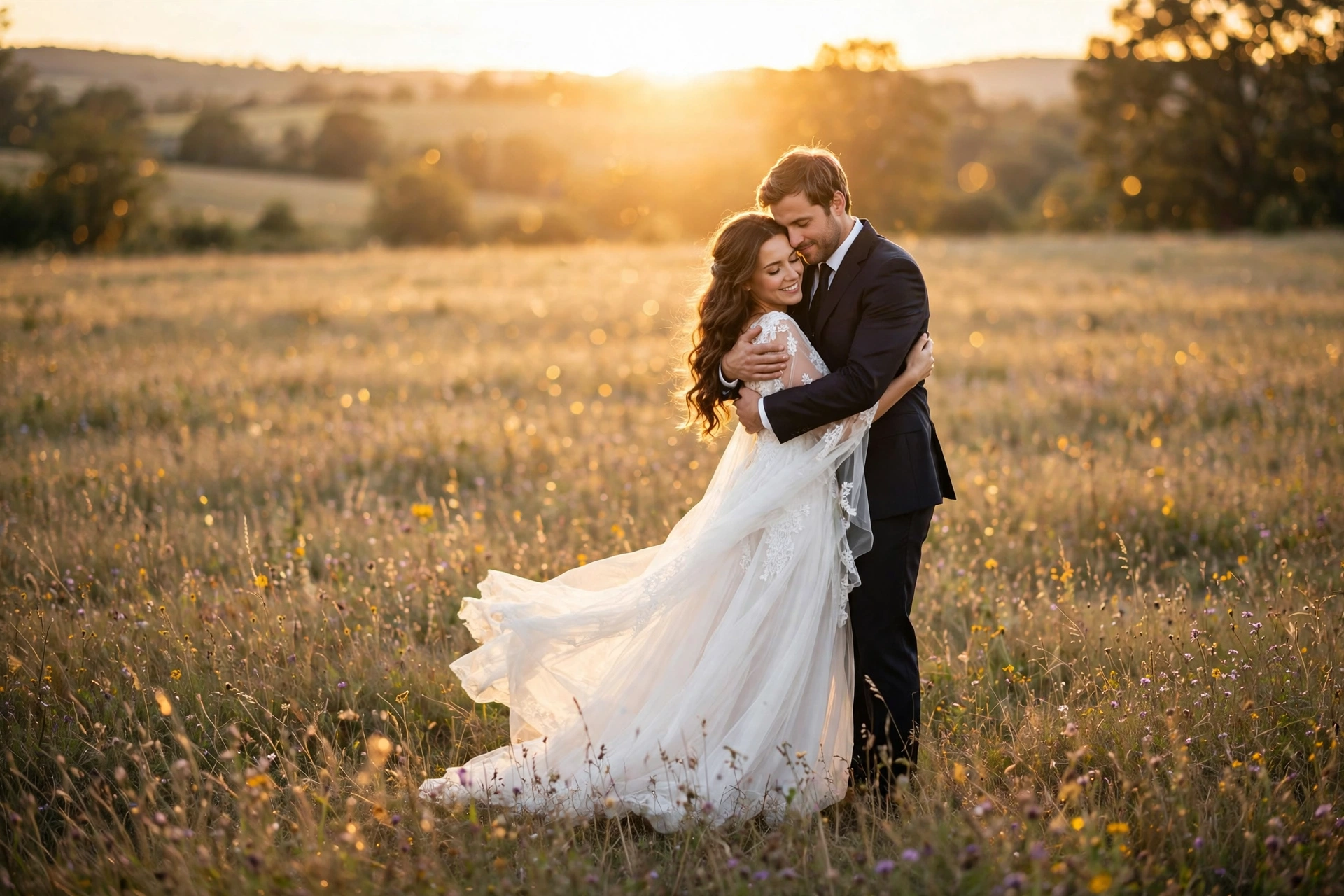
Veil caught by the breeze, framing both of you. Posing/framing: an assistant tosses the veil gently from behind; photographer shoots into the light for translucency. Wind is uncontrollable — embrace whatever it does.
15. The Piggyback Laugh
Playful piggyback ride, both laughing. Posing/framing: wide shot showing the environment; genuine laughter is the whole point. This is the photo that goes on the thank-you cards.
16. The Almost-Kiss
Lips nearly touching, eyes open, smiling. Posing/framing: close crop; the tension of the almost-kiss is more romantic than the kiss itself. Photographers call this the “magazine cover” pose.

Ceremony Shots (17–23)
The ceremony moves fast and cannot be repeated — these are the non-negotiables.
17. The Processional Entrance
You walking down the aisle — the moment the room stands. Posing/framing: photographer at the front captures your approach; a second shooter at the back captures the guests’ reactions. Keep your eyes up and walk slowly — you will want to savor this, and the photos need the time.
18. The Groom’s Reaction
His face as he sees you for the first time (if you skipped the first look). Posing/framing: this is why you hire a second shooter or position the primary on the groom during the processional. It is a top-three image of the day — do not leave it to chance.
19. The Vow Exchange
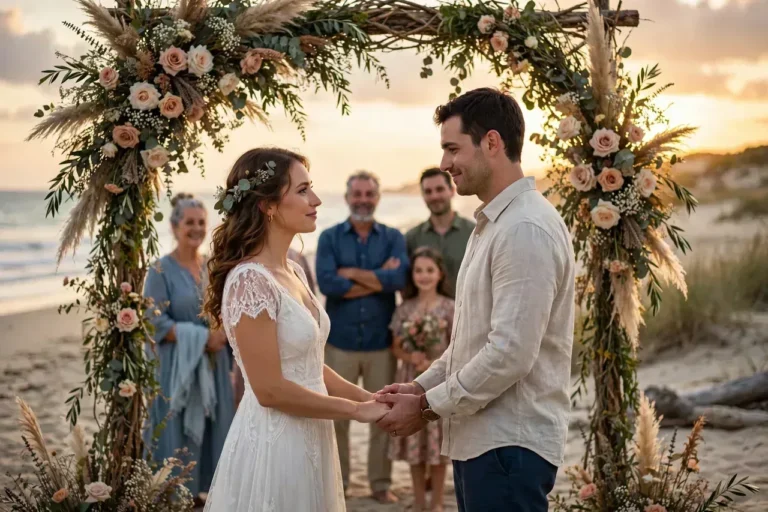
Mid-vow emotion — tears, laughter, trembling hands. Posing/framing: tight shots from the side; the officiant should step aside during vows (discuss this in advance). If you wrote personal vows, the words you choose deserve clean, unobstructed framing.
20. The Ring Exchange Close-Up
Hands and rings, the symbolic heart of the ceremony. Posing/framing: photographer moves in close; hold the ring exchange for a three-count so the camera catches it. Cold hands make rings stick — warm them beforehand.
21. The First Kiss as a Married Couple
The kiss — hold it longer than feels natural. Posing/framing: officiant steps fully out of frame (rehearse this); photographer shoots from the front and slightly below for a heroic angle. Hold for a full three seconds — guests cheer longer, and the photo needs the time.
22. The Recessional Joy
Walking back up the aisle married — pure elation. Posing/framing: wide shot showing the cheering guests; raise joined hands high. This is the happiest walk of your life — let it show.
23. The Ceremony Wide
The full scene — venue, guests, couple small in frame. Posing/framing: shot from an elevated position (balcony, ladder) during the ceremony. It captures the scale of the moment and becomes the definitive “we were married here” image.
Couple Portraits — The Golden Hour Session (24–33)
This is the dedicated portrait time — usually 20–30 minutes around sunset. The light is magic; the pressure is off.
24. The Golden Hour Silhouette
You two as dark shapes against a blazing sunset. Posing/framing: photographer exposes for the sky, letting you go dark; a kiss or embrace silhouette is timeless. Scout the sunset direction with your photographer in advance.
25. The Field Walk-Away
Walking away from camera into a landscape — dress trailing, hand in hand. Posing/framing: wide environmental shot; you small in a big beautiful world. It says “adventure begins” without a single word.
26. The Nose Nuzzle
Noses touching, eyes closed, genuine smiles. Posing/framing: medium-close crop; this pose flatters every face shape and always looks intimate. Breathe — relaxed faces photograph ten years younger.
27. The Forehead Kiss
One partner kisses the other’s forehead — tenderness incarnate. Posing/framing: shoot from the side to capture both expressions. This is the photo mothers frame.
28. The Laughing Embrace
Mid-laugh hug — the photographer says something ridiculous and captures the real thing. Posing/framing: burst mode; the in-between frames (half-laugh, eyes crinkled) are often better than the posed smile. Ask your photographer to keep talking to you — prompts beat poses.
29. The Sitting Portrait
Seated together — on steps, a wall, a vintage car — relaxed and close. Posing/framing: sitting eliminates stiff standing posture; lean into each other. A seated portrait has a calm, editorial quality standing shots lack.
30. The Detail-in-Context Shot
Rings on the bouquet, hands intertwined, the dress detail against the venue. Posing/framing: macro or close focus with soft background blur. These detail images are the jewelry of your album — small, precious, essential.
31. The Dramatic Dip
A practiced dip-kiss with the landscape behind you. Posing/framing: low camera angle for drama; hold the dip steady for three frames. Practice once — confidence makes it look effortless.
32. The Veil Wrap
Both of you wrapped together in the veil, close and laughing. Posing/framing: backlit for glow; the veil becomes a soft white cocoon. Intimate, dreamy, and uniquely bridal.
33. The Epic Landscape
Drone or wide shot — you tiny in a vast beautiful place. Posing/framing: if your photographer offers drone coverage, this is its moment; otherwise a wide-angle from distance. The scale contrast is breathtaking in large prints.
Reception & Party Shots (34–41)
The reception is candid territory — energy, emotion, and beautiful chaos.
34. The Grand Entrance
Your announced entrance into the reception — mid-cheer, mid-applause. Posing/framing: photographer near the entrance captures your faces; the room’s energy does the rest. Come in with big energy — the photos match your vibe.
35. The First Dance
The whole dance, but especially the unguarded middle — when you forget the crowd. Posing/framing: photographer circles slowly; a mix of wide (the room watching) and tight (just you two). Do not choreograph beyond comfort — genuine beats polished.
36. The Parent Dances
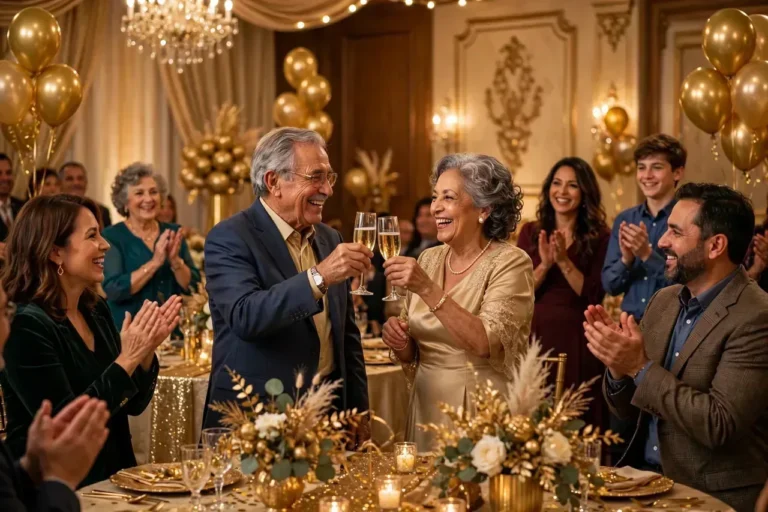
Dancing with mom, dad, or whoever raised you — often the day’s most emotional images. Posing/framing: tight on faces; the tears here are real. If you are choosing gifts that honor family, the parent-dance photo paired with the gift becomes a treasured set.
37. The Toast Reactions
You listening to toasts — laughing, crying, covering your face. Posing/framing: photographer stays on the couple during toasts, not the speaker. Your reactions are the story; the speaker’s face is secondary.
38. The Candid Dance Floor
Guests dancing badly and joyfully — the soul of the party. Posing/framing: photographer gets low in the crowd with a wide lens; motion blur is a feature, not a flaw. The best dance-floor shots are taken from inside the dance floor, not outside it.
39. The Table Laughs
Candid conversations at tables — the images that show who was actually there. Posing/framing: long lens from across the room; never interrupt a moment to pose it. These are the photos guests themselves treasure most.
40. The Cake Cutting
The feed (or the elegant slice — your call). Posing/framing: photographer in close; decide in advance whether cake goes on faces (and tell the photographer). Either way, the laughter afterward is the real shot.
41. The Bouquet & Garter Toss
The toss, the catch, the reactions. Posing/framing: two angles — the thrower and the crowd. The mid-air bouquet shot is a classic for a reason.
Send-Off & Night Shots (42–45)
End the gallery with drama.
42. The Sparkler Exit
Running through a tunnel of sparklers — the quintessential finale. Posing/framing: slow shutter for light trails; run slowly (safety first). Assign one person to light sparklers in sequence so the tunnel stays lit.
43. The Night Portrait
One last couple portrait after dark — city lights, string lights, or headlights as backlight. Posing/framing: embrace under the lights; long exposure for glow. Five minutes, one unforgettable image.
44. The Getaway Kiss
Kissing in or beside the getaway car, “Just Married” sign visible. Posing/framing: wide shot including the car and the sign; the context tells the story. Decorate the car — it is a photo prop that drives away.
45. The Last Dance (Private)
After guests head to the send-off, one final private dance in the empty reception room. Posing/framing: photographer captures it documentary-style from a distance. Ask for this explicitly — it will not happen by itself, and it is the perfect final page of your album.

The Complete Shot List by Timeline
| Time Block | Key Shots | Minutes Needed | Do Not Miss |
|---|---|---|---|
| Getting ready | Details flat lay, dress, H&MU candids, robe shot, parent moments | 45–60 | Details flat lay (needs undisturbed time) |
| Pre-ceremony | First look, couple portraits, wedding party groups | 45–60 | First look reaction |
| Ceremony | Processional, vows, rings, kiss, recessional, wide | Ceremony length | Groom’s reaction + the kiss (hold 3 sec) |
| Cocktail hour | Family formals, couple golden-hour portraits | 30–45 | Golden hour couple session |
| Reception | Entrance, first dance, toasts, parent dances, candids, cake | Full reception | Toast reactions (on couple, not speaker) |
| Send-off | Sparkler exit, night portrait, getaway | 15–20 | Private last dance |
Posing Cheat Sheet: 7 Poses That Work for Every Couple
If you remember nothing else from the 45 ideas above, remember these seven foundational poses. They flatter every body type, work in any setting, and give your photographer reliable winners between candid moments.
- The Promenade: walking hand in hand, looking at each other and laughing. Movement hides stiffness; laughter hides nerves. The universal opener.
- The Forehead Touch: foreheads together, eyes closed, soft smiles. Intimate without being performative — it works for camera-shy couples because you are not looking at the lens.
- The Behind Hug: one partner stands behind, arms wrapped around the other’s waist, chin resting on shoulder. Both faces visible, connection obvious, endlessly flattering.
- The Almost Kiss: lips a breath apart, eyes open or closed. The tension reads as romance in a way actual kisses sometimes do not (kisses can look awkward frozen mid-frame).
- The Lifted Chin Laugh: one partner whispers something funny; the other throws their head back laughing. Genuine joy, beautiful neck lines, zero stiffness.
- The Seated Lean: sitting side by side, leaning into each other, one partner’s head on the other’s shoulder. Sitting removes the “what do I do with my legs” problem entirely.
- The Twirl & Catch: bride spins out and back into the groom’s arms. Dynamic, joyful, and the dress does half the work. Three attempts maximum — the spontaneous ones beat the perfected ones.
Share this cheat sheet with your photographer before the day. A great photographer will use these as starting points and then direct you into natural variations — but knowing the foundations means you will never freeze wondering what to do with your hands.
Pro Tips for Photos You Will Love Forever
- Schedule the golden hour. The hour before sunset is the most flattering light on earth. Build your timeline so couple portraits land in it — even 20 minutes transforms a gallery.
- Do a first look. Couples who do a first look get 40% more couple portraits and report feeling calmer. The aisle moment is still emotional — it is just shared privately first.
- Feed your photographer. A fed vendor is a happy vendor. It is also contractual in many cases — and a hungry photographer misses moments.
- Assign a photo wrangler. One organized friend with the family formal list, gathering people fast. Without a wrangler, family photos eat your cocktail hour alive.
- Unplug the ceremony. An unplugged sign (“please keep phones away”) prevents a sea of iPads in your professional photos. Guests can photograph the reception freely.
- Practice your “photo face.” Not vanity — practicality. Know your best angle, relax your jaw, breathe through your mouth slightly. Ten minutes in a mirror saves a thousand awkward frames.
- Think about the album, not Instagram. The images that matter in fifty years — your grandmother’s hands, your partner’s tears, the love that lasts — are rarely the trendiest. Tell your photographer what you want to remember, not just what looks good today.
Mistakes to Avoid
- Skipping the timeline review with your photographer. They know how long things take. A 15-minute “couple portrait” slot yields stressed snapshots, not art.
- Too many group shots, too little couple time. Cap family formals at 20–30 minutes with a strict list. Every extra group shot steals from your golden-hour portraits.
- Forgetting the details. Rings, invitations, shoes, flowers — if you do not schedule the flat lay first thing, it never happens.
- Posing every photo. The candids are the ones you will cry over. Build unscheduled time into the day and let the photographer roam.
- Ignoring the light. Harsh midday sun creates raccoon eyes; dim reception halls need flash. Trust your photographer’s guidance on timing and positioning — that is what you hired them for.
- Not eating. Faint, shaky, or hangry does not photograph well. Eat a real breakfast, stash snacks, and let catering feed you during the reception.
Frequently Asked Questions
How many photos should we expect from our wedding?
A full-day photographer typically delivers 400–800 edited images. More is not better — a curated gallery of 500 strong images beats 1,200 mediocre ones. Ask about the photographer’s culling process and delivery timeline (usually 4–12 weeks).
Should we give our photographer a shot list?
Yes — a short one. Share 10–15 must-have shots and any must-include people (with names and relationships). Do not hand over a 100-item Pinterest list; it signals distrust and produces mechanical photos. The full 45-idea list in this article is for inspiration and discussion, not dictation.
What is the best time of day for wedding photos?
The golden hour — roughly the last hour before sunset — is unmatched for couple portraits. For ceremonies, late afternoon gives beautiful angled light. Midday ceremonies produce harsh shadows; if yours is at noon, choose a shaded spot or embrace black-and-white edits, which handle contrast gracefully.
How do we look natural in photos if we are awkward?
Movement beats posing. Walk, laugh, whisper to each other, spin — photographers direct with prompts (“tell her what you had for breakfast in a sexy voice”) rather than rigid poses. An engagement shoot with your photographer is the best rehearsal; by the wedding, you will be comfortable together.
Do we need a second photographer?
For weddings over 100 guests, yes — strongly recommended. A second shooter captures the groom’s reaction during the processional, cocktail-hour candids while you take portraits, and alternate ceremony angles simultaneously. It is the single best upgrade for photo coverage.
What photos do couples most regret missing?
Consistently: photos with grandparents and elderly relatives, the details (rings, invitations, flowers), candids of guests enjoying themselves, and quiet couple moments amid the chaos. The traditions and people that shaped you deserve deliberate capture — make a list of VIP combinations and give it to your wrangler.
How should we display our wedding photos afterward?
Order a professional album — it is the only format guaranteed to survive decades. Beyond that: one large statement print for your home, a curated set of framed prints for family gifts (grandparents treasure these), and a backup of digital files in two places. Photos you never print are photos you never see.
Your Story, Beautifully Kept
Forty-five ideas sound like a lot, but they distill to one principle: be present, and let someone skilled preserve it. The best wedding photos are not the most posed — they are the most felt. The tear your partner wipes away mid-vow. Your grandmother’s hand on your cheek. The way you looked at each other when you thought no one was watching.
Share your must-haves with your photographer, build golden-hour time into your timeline, unplug the ceremony, and then forget the cameras exist. Live the day fully — the photos will take care of themselves, and fifty years from now, you will be so glad they did. After all, the flowers will fade and the music will end, but these images will keep telling your love story to everyone who comes after you.