Denver does Christmas trees differently from almost anywhere else in America. Yes, there are charming farms in the Boulder County countryside where you can cut your own. But the metro also runs on excellent seasonal lots, and — most distinctively — Colorado lets you head into the mountains with a permit and cut a wild-grown tree yourself, straight from a national forest or a Denver Mountain Park. If you are searching for christmas tree farms near denver 2026, this guide covers all three paths: the farms, the lots, and the permits, so you can choose the December adventure that fits your family.
The usual caveat applies with extra force in Colorado, where mountain weather writes its own schedule: farm hours, lot opening dates, and permit windows are set fresh each season. Use this guide to pick your approach, then check official listings or call ahead for 2026 season hours and pricing — and for permit programs, confirm availability early, because the free permits go fast.
The Denver Dilemma: Farms, Lots, and Forest Permits
Here is the honest geography: the classic choose-and-cut Christmas tree farm is a rarer creature on the Front Range than in the Midwest or Pacific Northwest. Colorado’s semi-arid climate makes large-scale tree farming harder, so the real farm experiences cluster north of Denver in Boulder County — Niwot, Longmont, Lafayette, Louisville — where growers have spent decades perfecting pesticide-free fields and full-service lots. These are absolutely worth the drive, and this guide’s farm profiles focus there.
But Denver’s tree culture has two more pillars. The first is the seasonal lot scene: long-running local operators like Jolly Christmas Trees and Nice Christmas Trees run multiple lots across the metro — Aurora, Lakewood, Thornton, Golden, Broomfield, Littleton — selling fresh-cut firs, spruces, and pines with delivery and long evening hours. For many Denver families, the lot is the tradition: same corner, same crew, same smell of fresh fir every December.
The second pillar is the wildest and most Colorado: cutting your own tree on public land with a permit. Denver Mountain Parks has historically offered a limited number of free permits to harvest a tree in a forest near Evergreen — a genuine mountain adventure that doubles as wildfire-risk reduction. State and federal lands offer additional permit programs. If your family has four-wheel-drive spirit and a bow saw, this is the most memorable way to get a Christmas tree in America. Details below.
At a Glance: Christmas Tree Farms Near Denver
Your quick comparison of the Boulder County farm country plus the metro’s best lot operators.
| Farm / Operator | Area | Tree Types | Standout Features |
|---|---|---|---|
| CreekSide Tree Nursery | Niwot | You-cut or premium fresh-cut; multiple varieties | No pesticides; saws and headlamps provided; Santa weekends; Boulder potted-tree location |
| The Tree Farm | Longmont | Austrian Pine, Black Hills Spruce | Transplant-after-Christmas advice; living-tree expertise |
| Blue Ribbon Farm | Longmont | Colorado White Fir, Scotch Pine, quirky “Charlie Brown” trees | Great for small spaces; full-size options too |
| Colorado Native Christmas Trees | Longmont (+ Gunnison) | Salvaged native trees | Sustainable sourcing via land-management partnerships |
| Cottonwood Farms | Lafayette | Firs to 10 ft; fire-mitigation trees | Locally grown; pre-cut stand |
| Urban Garden’s Christmas Tree Farm | Louisville | Fresh-cut firs | 400+ handmade ornaments; wreaths; holiday shop |
| Jolly Christmas Trees | Multiple metro lots | Fresh-cut firs, spruces, pines | Long-running local lot operator; several locations |
Watch: How to Choose a Real Christmas Tree
Before you visit a farm, hit a lot, or head for the hills, spend five minutes on the fundamentals: measuring your space, judging freshness, picking a species, and keeping the tree hydrated. This concise guide covers all of it.
The freshness tests in this video — the needle-drop check, the sticky-trunk test — are especially useful at big metro lots, where trees may have been cut days or weeks before you arrive.
Farm-by-Farm Guide: Boulder County Tree Country
CreekSide Tree Nursery — Niwot
The anchor of Boulder County’s tree scene, CreekSide is a full-fledged tree nursery and farm open year-round, which means the Christmas operation is run by genuine tree people. The Niwot lot offers both you-cut-your-own and premium fresh-cut trees, grown without pesticides, with saws — and even headlamps for those short December days — provided. Santa appears on weekend afternoons in season, the trees are wrapped and netted for easy transport, and staff help with professional loading on weekdays. A second location in Boulder sells potted living Christmas trees alongside fresh-cuts, for families who want to plant their tree afterward. Check the nursery’s official channels for 2026 season hours and pricing.
The Tree Farm — Longmont
True to its straightforward name, The Tree Farm in Longmont sells Austrian pine and Black Hills spruce with a specialty worth noting: the staff will talk you through trying to transplant your live tree after Christmas. That living-tree expertise makes it a favorite for environmentally minded families. It is a working nursery rather than a festival ground — come for the trees and the advice, not the hayrides.
Blue Ribbon Farm — Longmont
Blue Ribbon deserves mention for serving the shoppers other farms forget: apartment dwellers and small-space families. Alongside full-size Colorado white firs and Scotch pines for foyers and family rooms, the farm is known for its charmingly quirky, unsheared “Charlie Brown Christmas” trees — sparse, characterful little trees that have a devoted following. If a 12-footer will not fit your life, start here.
Colorado Native Christmas Trees — Longmont
For the sustainability-minded, this vendor is fascinating: working with the Bureau of Land Management, the U.S. Forest Service, counties, and cities, it salvages trees that were cut for other reasons — fire mitigation, land management — and sells them as Christmas trees. Your tree is genuinely local and genuinely sustainable, with a story no farm-grown tree can match. A second location serves Gunnison. Confirm 2026 lot dates on the vendor’s official listings.
Cottonwood Farms — Lafayette
This Lafayette stand offers firs up to 10 feet tall, including locally grown trees sourced from private-land fire mitigation efforts — pre-cut and ready to go. It is a quick, easy stop for east Boulder County and northwest Denver families who want a local tree without the full farm expedition.
Urban Garden’s Christmas Tree Farm — Louisville
Part tree lot, part holiday shop, Urban Garden’s in Louisville pairs fresh-cut firs with a genuinely impressive selection of more than 400 mostly handmade ornaments, plus LED lights, wreaths, poinsettias, and even faux trees for the low-maintenance crowd. Come for the tree, stay for the decorating — you can walk out with the whole holiday handled. Once the tree is home, our Christmas tree theme ideas will help you put those ornaments to work.
For pure metro convenience, the multi-lot operators fill the gap: Jolly Christmas Trees runs lots in Aurora, Lakewood, and Denver proper, while Nice Christmas Trees covers Thornton, Golden, Denver, and beyond. These are pre-cut lots rather than farms, but they are long-running local businesses with fresh stock and delivery options — a legitimate Denver tradition in their own right.
In Pictures: Cutting Day on the Front Range
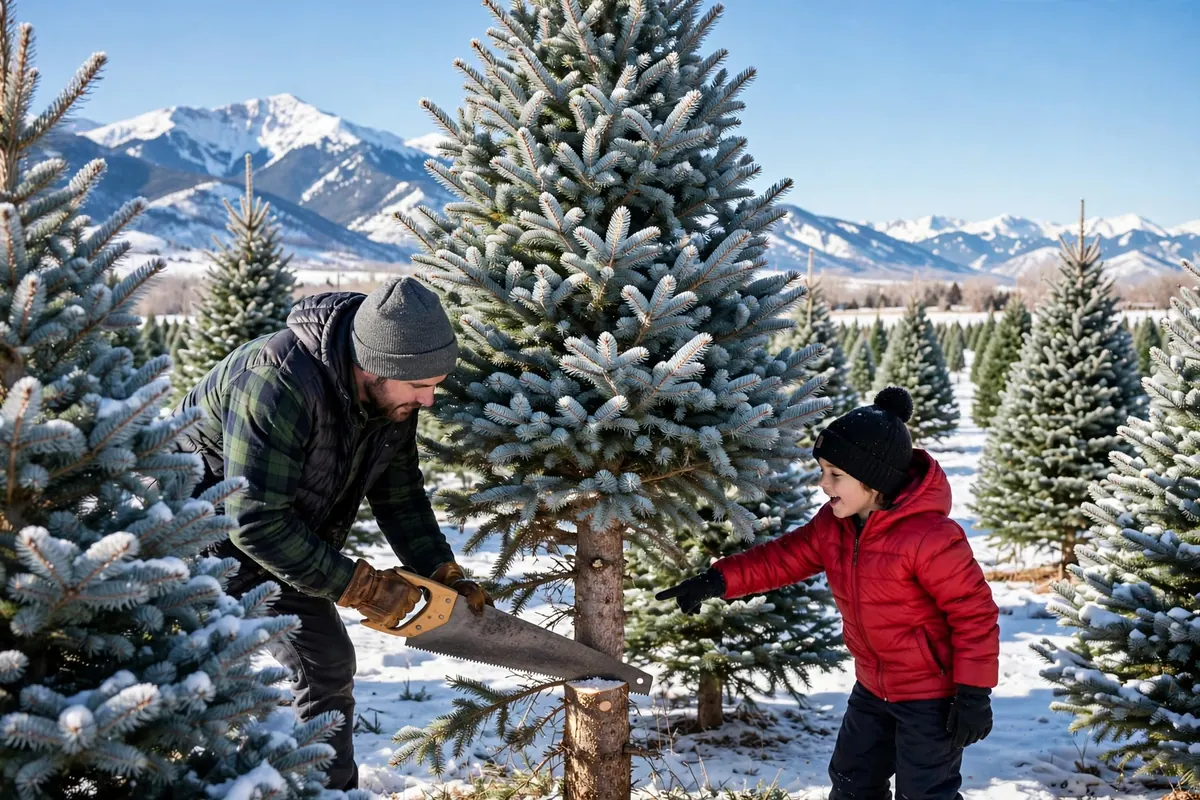
When the farm trip comes together — bluebird sky, snow on the peaks, the whole family debating which spruce is “the one” — it looks like this. Our second photo captures a Front Range cutting morning at its best.
That combination of fresh-cut evergreen scent and mountain air is the reason Colorado families brave December windchill for their trees. Dress for it and you will love every minute.
Permits and the DIY Cutting Option
Now the adventure path. Denver Mountain Parks has historically made a limited number of free permits available — around 250 in recent years — to cut a personal-use Christmas tree in designated forest areas near Evergreen, with applications opening around Black Friday. The program doubles as forest health work: removing small trees reduces wildfire risk. If it runs in 2026, expect details on the Denver Parks & Recreation website as the season approaches, and apply early — the permits go quickly.
The practicalities, drawn from the program’s published guidance: the cutting areas are off paved roads, so you do not need four-wheel drive, but you absolutely need snow boots, gloves, warm layers, a bow or pruning hand saw, rope, and a tarp or blanket to protect the tree on the drive home. Choose a conifer with a modest trunk diameter, cut as close to the ground as possible, and leave about a foot between the treetop and your ceiling for the star. State Forest State Park in north-central Colorado has also offered inexpensive weekend cutting permits in past years — a longer drive, but a genuine mountain expedition for the price of lunch.
Whichever path you choose — farm, lot, or forest — the aftercare is the same: fresh basal cut, big water reservoir, daily watering the first week, and distance from heat sources. And if you are watching the holiday budget after the tree purchase, our Christmas on a budget guide keeps the rest of December affordable. Cap the season with a nighttime drive through the region’s best displays via our drive-through light displays roundup, and explore everything else in the DayZora Christmas collection.
The Lot Shopper’s Playbook
If your December runs through a metro lot rather than a farm field, you can still bring home an excellent tree — you just need sharper shopping skills, because lot trees were cut days or weeks before you meet them. Shop early in the season for the freshest stock, and shop at lots with visible turnover: a busy lot restocks, a quiet one does not. Ask the staff directly when the current stock arrived and whether more shipments are expected — good lots answer proudly.
Run the full freshness battery on every candidate. Bend the outer needles: they should flex, not snap. Run a branch through your hand: minimal needle loss. Lift the tree a few inches and drop it on its base: a few brown interior needles is normal, a green shower is a rejection. Inspect the cut base: fresh and sappy is good, dried and gray is old. Sight the tree from a distance for symmetry, and check the trunk for straightness — a crooked trunk fights the stand all month.
Ask about services before you pay. Many Denver-area lots offer delivery, and some will drill the trunk for pin-style stands. Confirm whether the price includes netting for transport. And measure twice: bring your ceiling number and a tape measure, because lot trees displayed upright against a fence always look smaller than they are. A tree that is six inches too tall is a December of regret; a tree that is six inches shorter than ideal is a tree with room for a great topper.
High-Altitude Aftercare: Denver’s Dry Air
Denver’s elevation brings a challenge most tree-care guides ignore: exceptionally dry winter air. At 5,280 feet with forced-air heating, a Christmas tree loses moisture faster than the same tree would in Seattle or Indianapolis — which means Denver tree owners need to be the most disciplined waterers in America. Check the reservoir daily without exception for at least the first ten days, and never let it run dry; once the trunk base seals, no amount of refilling fully restores uptake.
Choose your tree’s room strategically. Keep it away from heating vents, fireplaces, and south-facing windows where winter sun streams in. A whole-room humidifier near (not under) the tree helps both the tree and your sinuses. LED lights are strongly preferred over incandescents here — less heat, less drying, lower fire risk. If you bought early in the season, consider keeping the tree in an unheated garage in a bucket of water until a week or two before Christmas, then bringing it in; a tree that spends less time in dry heated air looks better longer.
Species choice matters at altitude too. Noble and Nordmann firs hold up best in dry conditions; Douglas fir is lovely but thirstier and quicker to shed. Whatever you choose, the rule is simple: water like you mean it, and the tree will reward you.
Frequently Asked Questions
When do Christmas tree farms near Denver open for 2026?
Boulder County farms and lots generally open the day after Thanksgiving (Black Friday) and sell through mid-to-late December while supplies last. Exact 2026 dates and hours are announced by each farm and lot operator as the season approaches — check official listings or call ahead, especially for weekend Santa appearances and special events.
How much does a Christmas tree cost in the Denver area?
Pricing varies by source: farm cut-your-own, metro lots, and permit-cut trees all price differently, and species and height matter everywhere. Permit programs have historically been free or very inexpensive. For farms and lots, 2026 pricing is set as the season approaches — call ahead or check official listings for current prices, and ask what is included (baling, loading, delivery).
How do the Denver Mountain Parks tree permits work?
In past years, a limited number of free permits were offered for cutting a personal-use tree in designated areas near Evergreen, with applications opening around Black Friday and running into December. Details — including whether the program runs in 2026, how to apply, and the designated cutting areas — are published by Denver Parks & Recreation. Check their official announcements early in the season, since permits are limited.
What should I bring to cut my own tree in Colorado?
For farm cutting: work gloves, sturdy boots, warm layers, a tape measure, and rope or straps plus a tarp for the roof — though most farms provide saws and will bale and load the tree for you. For permit cutting on public land, add a bow or pruning hand saw (required), extra rope, and be prepared for snow and cold with no facilities nearby. Either way, measure your ceiling at home first.
Are Colorado-grown trees different from what I see on lots?
Often, yes. Farm and native options lean toward Colorado white fir, Austrian pine, Black Hills spruce, and blue spruce — sturdy, beautiful trees adapted to the climate. Metro lots typically stock the classic commercial lineup including noble, Fraser, and Douglas firs shipped in from the Pacific Northwest and elsewhere. Both can be excellent; judge each individual tree for freshness rather than shopping by origin alone.
Can I get a living tree to plant after Christmas?
Yes — CreekSide’s Boulder location sells potted living Christmas trees, and The Tree Farm in Longmont advises customers on transplanting after the holidays. Living trees need special care: keep them indoors only briefly (a week or so), keep the root ball moist and cool, and plant as soon as the ground workably allows. Ask the nursery for their specific aftercare instructions.
Is a real tree a fire hazard in Denver’s dry climate?
A dried-out tree is a fire hazard anywhere; a well-watered fresh tree is not. The dry climate just raises the stakes on watering discipline. Keep the reservoir filled, use LED lights, keep the tree away from heat sources, and recycle it promptly after the season rather than letting it linger into late January. Fresh, watered trees are remarkably fire-resistant — the danger comes from neglect, not from the species.
What happens to my tree after Christmas in the Denver area?
Denver and surrounding cities typically run Christmas tree recycling programs in January — curbside pickup or drop-off sites where trees are chipped into mulch for parks. Check your city’s 2026 program dates and prep rules (remove all decorations, lights, tinsel, and stands first). It is a far better ending than the landfill, and some programs even let you pick up free mulch in spring.
Which Denver-area option is cheapest: farm, lot, or permit?
Permit-cut trees have historically been the cheapest by far — free or a few dollars — but they cost you a mountain day, gear, and effort. Farm cut-your-own trees typically sit in the middle, with the experience bundled into the price. Metro lots vary most: early-season premium firs cost more, while late-season remaining stock can be discounted. For 2026 specifics, compare the farm or lot’s current pricing against the permit programs’ published details and pick the trade-off your December can afford.
Do I need a 4WD vehicle for the farm or permit options?
For Boulder County farms and metro lots, no — standard vehicles are fine, though snow tires or chains are wise in December mountain weather. For permit cutting near Evergreen, the published guidance has noted the cutting areas sit off paved roads, so 4WD is not required — but snow boots, warm layers, and winter driving caution absolutely are. Check road conditions before any mountain trip.
When is the best weekend to go for the biggest selection?
Opening weekend — typically the weekend after Thanksgiving — offers the pick of every field and lot, including the tallest and most perfectly shaped trees. If you cannot make opening weekend, the following weekend is nearly as good. By mid-December, selection thins noticeably at popular farms, though patient shoppers can still find excellent trees, and some farms discount remaining stock. Whatever weekend you choose, mornings beat afternoons.
The Bottom Line
The hunt for christmas tree farms near denver 2026 offers three genuinely different Decembers: the Boulder County farm morning with saws and Santa, the easy neighborhood lot run that has served Denver families for years, or the mountain permit adventure you will tell stories about for a decade. There is no wrong answer — only the one that fits your family’s appetite for adventure. Whichever path you choose, the fundamentals never change: shop early for the best selection, judge each tree on its own freshness, water relentlessly in our dry climate, and recycle the tree in January. Pick your path, confirm 2026 details with the source, measure twice, dress warm, and go get your tree. Whether it comes from a Niwot field, a Lakewood lot, or a mountainside near Evergreen, a Colorado Christmas tree carries a little of that mountain air home with it — and that is worth every cold finger.