Valentine’s Day in Serbia is really two holidays in one. On February 14, while much of the world celebrates St Valentine, Serbia also honors Sveti Trifun, the Orthodox patron saint of vineyards and winemakers, whose feast falls on the same date. The result is a uniquely Serbian February 14: a day of both love and wine, where romantic dinners coexist with vineyard blessings, and where couples raise glasses of local wine to both saints at once. This guide explains how Serbians celebrate, the traditions of Sveti Trifun, and how the two holidays intertwine.
Serbia’s February 14 is one of the most culturally distinctive Valentine’s celebrations in Europe, and it is still relatively unknown outside the Balkans. The dual holiday reflects Serbia’s position at the crossroads of East and West: Orthodox tradition and Western popular culture, ancient agricultural ritual and modern romance, all sharing a single date. Understanding both halves is the key to understanding the Serbian Valentine’s Day.
Sveti Trifun: The Saint of Wine
Sveti Trifun, known in English as Saint Tryphon, is one of the most beloved saints in Serbian Orthodox tradition. According to the Serbian Orthodox calendar, February 14 is his feast day, commemorating his martyrdom. Tradition holds that Tryphon was born in Phrygia in the third century, that he possessed the gift of healing, and that he famously cured the daughter of Emperor Gordian III of a grave illness, distributing the emperor’s reward to the poor. Under a later emperor, he was tortured for refusing to renounce his faith and ultimately beheaded.
What made Tryphon the patron of vineyards is the agricultural logic of his feast day. Mid-February is when the vineyard year symbolically begins: the vines are dormant, pruning season approaches, and winemakers look ahead to the growing season. The saint whose feast falls at this hinge moment naturally became the protector of the vines, and over centuries the association deepened into a rich complex of customs. Sveti Trifun is now celebrated by winemakers, vineyard workers, innkeepers, and all who depend on the grape.
It is worth noting the calendrical subtlety: the Catholic Church commemorates Saint Tryphon on November 10, while the Orthodox Church honors him on February 14. Conversely, the Orthodox Church honors St Valentine on a different date (traditionally August 12 in some calendars) than the Western February 14. The Serbian February 14 is thus an Orthodox feast that happens to coincide with the Western lovers’ day, a coincidence that has produced one of Europe’s most charming cultural fusions.
How Sveti Trifun Is Celebrated: The Vineyard Rituals
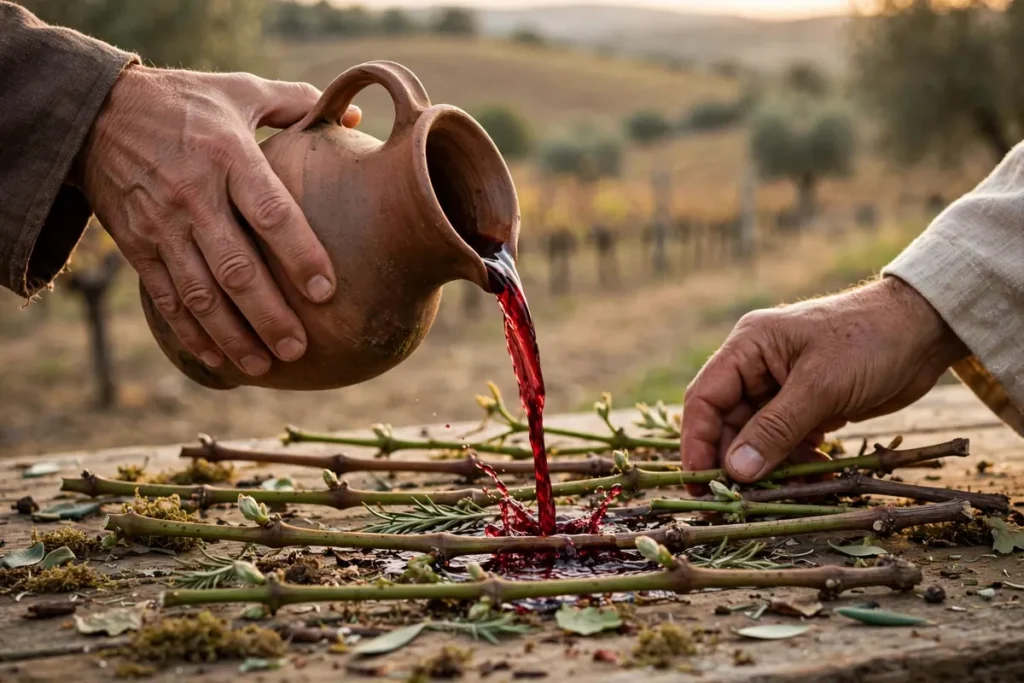
The heart of the Sveti Trifun celebration is the vineyard ritual, and it is a beautiful thing. On February 14, winemakers and their families go out to the vineyards, often in groups, carrying wine, bread, and sometimes a priest. The ritual centers on the first pruning: the winemaker cuts the first vines of the year, blesses them, and pours wine over the cut canes, symbolically giving the vine strength for the season ahead. Prayers are said for a fruitful year, and the gathering shares food and wine among the rows.
Folk belief attaches weather lore to the day. According to tradition, the weather on or around Sveti Trifun predicts the year’s fortunes: rain or snow suggests a fruitful year, while clear skies suggest drought. These are the kinds of beliefs that agricultural societies develop over centuries of watching the sky, and they persist even among winemakers who also consult modern forecasts. The old wisdom and the new coexist comfortably.
The celebration extends beyond the vineyard. In wine regions, the day has a festive, communal character: neighbors visit each other’s cellars, new wines are tasted, and the year’s winemaking plans are discussed over long lunches. Some families observe Sveti Trifun as a slava, the Serbian Orthodox tradition of a family’s patron saint day, with the ritual bread (slavski kolač) and wheat (žito) prepared for the occasion. The slava is one of Serbia’s most distinctive traditions, and a Sveti Trifun slava is a particularly convivial one.
Urban Serbians who do not own vineyards participate in their own way: by drinking Serbian wine on February 14, visiting wine bars and restaurants featuring local wines, or simply raising a glass to the saint. The wine regions most associated with the celebration include Fruška Gora near Novi Sad, the Negotin region in the east, and the vineyards of central Serbia. Wine tourism has grown in recent years, and Sveti Trifun is becoming an occasion for vineyard visits and tastings.
Dan Zaljubljenih: Serbia’s Valentine’s Day
Alongside Sveti Trifun, February 14 in Serbia is increasingly Dan zaljubljenih, the Day of Lovers, the local name for Valentine’s Day. The Western holiday has grown rapidly in Serbia in recent decades, particularly among younger urban Serbians, and it now follows the familiar international script: flowers, chocolates, romantic dinners, and social media declarations. Belgrade’s restaurants offer Valentine’s menus, florists do brisk business, and the city’s nightlife embraces the occasion.
The Serbian Valentine’s has its own inflections. Gift-giving emphasizes thoughtfulness, and the country’s strong café culture means that Valentine’s meetings often happen over long coffees rather than formal dinners. Belgrade’s Skadarlija, the old bohemian quarter, offers a romantic setting of cobblestones, traditional restaurants, and live music. The Kalemegdan fortress at sunset, overlooking the confluence of the Sava and Danube, is the city’s classic romantic viewpoint.
What makes the Serbian Valentine’s distinctive is its coexistence with Sveti Trifun. Many Serbians celebrate both, and the combination is celebrated with a wink: love and wine, romance and vineyards, the Western holiday and the Orthodox feast. Some joke that the two saints are in friendly competition for February 14; others see them as complementary, blessing different aspects of a good life. Couples who begin the day in the vineyard and end it at a romantic dinner are living the full Serbian February 14.
Two Saints, One Day: How They Fit Together
| Aspect | Sveti Trifun | Dan zaljubljenih (Valentine’s Day) |
|---|---|---|
| Honors | Saint Tryphon, patron of vineyards and winemakers | St Valentine, patron of lovers |
| Tradition | Serbian Orthodox; centuries old | Western import; recent decades |
| Central ritual | Vineyard blessing: pruning vines and pouring wine | Exchanging flowers, chocolates, and romantic dinners |
| Key symbols | Vines, wine, pruning shears | Hearts, roses, cards |
| Typical celebrants | Winemakers, rural families, Orthodox faithful | Young urban couples especially |
| Folk belief | Weather on the day predicts the year’s harvest | None traditional; modern commercial customs |
| How they combine | Many Serbians honor both: vineyard rituals by day, romance by evening, wine throughout | |
Serbian Wine: The Third Guest at the Table
No account of the Serbian February 14 is complete without Serbian wine, which is the thread connecting the two holidays. Serbia has an ancient winemaking tradition, with vineyards cultivated since Roman times, and a modern wine scene that is increasingly accomplished. The indigenous grape varieties are the stars: Prokupac, a red grape producing characterful, age-worthy wines; Tamjanika, an aromatic white with muscat-like perfume; and Morava, Smederevka, and others with deep local roots.
The wine regions each have their character. Fruška Gora, the mountainous island in the Pannonian plain near Novi Sad, is Serbia’s most famous wine region, with monasteries and wineries dotting its slopes. The Negotin region in the east, near the Romanian and Bulgarian borders, produces powerful reds. Central Serbia’s vineyards around Aleksandrovac and Topola continue centuries-old traditions. A Sveti Trifun visit to any of these regions combines the saint’s day with the country’s wine culture at its best.
For the Valentine’s dinner, Serbian wine offers excellent value: quality that rivals better-known European regions at a fraction of the price. A Prokupac with grilled meats, a Tamjanika with fish or as an aperitif, or a sparkling wine made in the traditional method for the toast, these are the pairings of a Serbian February 14. The wine is not just a beverage; it is the day’s sacrament, blessed by the saint of the vineyard and shared by lovers.
The History of the Dual Holiday: How East Met West on February 14
The Serbian February 14 did not become dual overnight; it is the product of a century of cultural layering. For most of its history, February 14 in Serbia belonged entirely to Sveti Trifun. The Orthodox feast structured the agricultural year, and the vineyard rituals were a fixture of rural life. Valentine’s Day, as a Western romantic holiday, barely registered: Serbia’s romantic customs followed their own traditions, and the February 14 of greeting cards was a foreign curiosity.
The change came with the opening of Serbian society in the late twentieth century. Western media, advertising, and popular culture brought Valentine’s Day as part of the global package, and younger Serbians adopted it with enthusiasm. Florists and restaurants recognized the commercial opportunity, and within a generation Dan zaljubljenih went from unknown to ubiquitous in urban Serbia. The speed of the adoption is a case study in how globalized culture moves: a holiday can travel the world in a decade when media and markets align.
What is remarkable is that Sveti Trifun survived the invasion. In many cultures, the imported Valentine’s Day simply displaced local traditions; in Serbia, the local tradition held its ground, partly because it was anchored in something Valentine’s Day could not replace: the agricultural calendar and the Orthodox liturgy. You cannot move a saint’s feast or a pruning season for a greeting card. The result is a genuine coexistence rather than a replacement, and it is increasingly celebrated as a point of national distinctiveness.
The dual holiday also reflects Serbia’s broader cultural position. Situated between Central Europe and the Balkans, between Catholic and Orthodox worlds, Serbia has long practice in holding multiple traditions at once. The February 14 that honors both a wine saint and a love saint is Serbia in miniature: layered, adaptable, and unwilling to choose between its inheritances. Visitors who understand this duality understand something essential about the country.
Beyond Belgrade: Sveti Trifun Across the Balkans
Sveti Trifun is not only Serbian; the saint is venerated across the Orthodox Balkans, and February 14 brings vineyard rituals to wine regions in several countries. In North Macedonia, where the saint is also honored, winemakers perform similar blessings. In Bulgaria, the closely related Trifon Zarezan (Tryphon the Pruner) is celebrated, in some traditions on February 1 or 14, with the same ritual of pruning and wine-pouring. The custom maps the geography of Balkan viticulture: wherever vines grow, the saint of the vines is honored.
Each country’s version has local inflections. The Bulgarian Trifon Zarezan is sometimes described as the Bulgarian Valentine’s Day, with the same love-and-wine duality found in Serbia. In Croatia’s continental wine regions, Catholic winemakers honor their own vineyard patrons on different dates, but the ritual logic is the same. The shared custom is a reminder that the Balkans, for all their divisions, share deep agricultural and religious roots.
For travelers, this regional dimension opens possibilities. A February wine tour across the Balkans, from Fruška Gora to the Negotin region to North Macedonia’s Tikveš, following the saint’s day from vineyard to vineyard, would be a unique Valentine’s journey. The wines are excellent, the hospitality is legendary, and the ritual gives the trip a structure and meaning that ordinary wine tourism lacks. It is the kind of travel that the dual holiday invites: rooted, sensory, and shared.
Map: Serbia’s Wine Country
Fruška Gora, shown above, is the heart of Serbian wine country and a center of Sveti Trifun celebrations, with its monasteries, wineries, and vineyard-covered slopes a short trip from Novi Sad and Belgrade.
Belgrade on Valentine’s Day: A City Guide
Belgrade celebrates February 14 with the energy of a city that loves a good occasion. The day begins in the cafés, where couples linger over long coffees in the city’s celebrated coffee culture. By evening, the restaurants of Skadarlija, the Danube waterfront, and the city center fill with Valentine’s diners. The city’s clubs and bars host Valentine’s events, and the festive atmosphere extends late into the night.
The romantic Belgrade itinerary writes itself: sunset at Kalemegdan fortress, watching the Sava meet the Danube; dinner in Skadarlija with traditional music; a walk along Knez Mihailova street, beautifully lit in the evening; and perhaps a nightcap with a view of the illuminated bridges. For wine-loving couples, the city’s wine bars offer guided tastings of Serbian wines, a perfect Sveti Trifun-Valentine’s fusion.
Novi Sad, Serbia’s second city, offers a more relaxed alternative: the Petrovaradin fortress overlooking the Danube, the charming old town, and easy access to the Fruška Gora wine region. A Valentine’s weekend combining Novi Sad and Fruška Gora, city romance plus vineyard tradition, captures the full Serbian February 14 in miniature.
Celebrating Like a Serbian: Practical Ideas
To celebrate February 14 the Serbian way, embrace both halves of the day. Start with wine: visit a local wine shop or bar and taste Serbian wines, or if you are in wine country, join a vineyard visit. Learn the Sveti Trifun story and share it; it is a wonderful conversation piece and a genuine cultural tradition. Pour a little wine in honor of the saint, even symbolically, and wish for a fruitful year.
Then celebrate love in the familiar way: flowers, a thoughtful gift, a romantic dinner. The Serbian combination works because it is generous: the day honors both the fruits of the earth and the affections of the heart, and there is no conflict between them. End the evening with a toast, to Sveti Trifun and St Valentine both, and to the Serbian wisdom that love and wine belong together.
For couples who enjoy the wine angle, our guide to Valentine’s Day gifts for wine lovers offers ideas, and our Valentine’s Day date ideas collection can supplement the day’s plans. The Croatian coast offers a contrasting Adriatic Valentine’s nearby; see our guide to Valentine’s Day in Croatia.
Serbian Love Customs Beyond February 14
February 14 does not exhaust Serbia’s romantic traditions. Serbian folk culture is rich in love customs tied to other dates and occasions. Weddings remain the great romantic theater of Serbian life, with elaborate multi-day celebrations, traditional music, and rituals like the bride’s departure and the apple-shooting custom. These are not Valentine’s customs, but they are the deep background of Serbian romantic feeling, and they shape how Serbians approach love in all its forms.
Folk songs, the narodne pesme, are full of love: longing, devotion, and loss sung in the epic and lyric traditions. The kolo dance, the national circle dance, has courtship variants in which young people meet and flirt within the community’s watchful eye. And the slava tradition itself, with its gathering of family and friends around the saint’s day table, is an expression of love in the broad sense: the love of kin, of continuity, of belonging.
Understanding this broader context enriches the February 14 celebration. The Serbian Valentine’s is not an isolated import but one thread in a rich fabric of affectionate customs. The couple toasting with Prokupac on February 14 stands in a line of lovers stretching back through folk songs and wedding dances to the vineyard blessings of centuries past. That continuity is Serbia’s real romantic gift, and it is available to anyone who raises a glass on the saint’s day. It is also a reminder that the best Valentine’s traditions are the ones with roots: customs that connect a couple not only to each other but to a place, a history, and a community.
Watch: St. Trifon’s Day — Patron of Wine
This video explores the traditions of St. Trifon’s Day (Trifon Zarezan), the patron saint of wine, showing the vineyard rituals and celebrations that mark February 14 across the region. It is the visual companion to the Sveti Trifun customs described above.
Frequently Asked Questions
What is Sveti Trifun?
Sveti Trifun (Saint Tryphon) is a saint venerated in the Serbian Orthodox Church as the patron of vineyards, winemakers, and agricultural workers. His feast day is February 14, the same date as Western Valentine’s Day. According to tradition, he was a third-century healer martyred for his faith. Winemakers honor him with vineyard rituals: pruning the first vines of the year, blessing them, and pouring wine over them for a fruitful season.
Do Serbians celebrate Valentine’s Day or Sveti Trifun?
Many celebrate both. Sveti Trifun is the older, Orthodox tradition, observed especially by winemakers and rural families. Valentine’s Day (Dan zaljubljenih) is the newer Western import, popular especially among young urban Serbians. The two coexist on February 14, and many couples honor both: vineyard traditions by day, romance by evening, with Serbian wine throughout.
What happens in Serbian vineyards on February 14?
Winemakers go to the vineyards, often with family, neighbors, and sometimes a priest. They perform the first pruning of the year, bless the vines, and pour wine over the cut canes to give them strength. Prayers are said for a fruitful season, and the gathering shares food and wine. Folk belief holds that the day’s weather predicts the year’s harvest: precipitation suggests fruitfulness.
What is a slava?
Slava is the Serbian Orthodox tradition of celebrating a family’s patron saint day, one of Serbia’s most distinctive customs. Each family honors its chosen saint annually with ritual bread (slavski kolač), wheat pudding (žito), and a festive meal. Some families celebrate Sveti Trifun as their slava, making February 14 their family’s special day.
What Serbian wines should I try on February 14?
Try the indigenous varieties: Prokupac (red, characterful and age-worthy), Tamjanika (aromatic white), and Morava or Smederevka (local whites). Fruška Gora near Novi Sad is the most famous wine region, with the Negotin region in the east known for powerful reds. Serbian wines offer excellent quality at reasonable prices.
How is Belgrade on Valentine’s Day?
Belgrade celebrates enthusiastically: café culture by day, Valentine’s restaurant menus by evening, and nightlife events after. Romantic highlights include sunset at Kalemegdan fortress overlooking the Sava-Danube confluence, dinner in the Skadarlija bohemian quarter with traditional music, and wine bars offering Serbian wine tastings. The city’s energy on February 14 is infectious, and the combination of the lovers’ day with Sveti Trifun’s wine traditions gives Belgrade’s celebration a character found nowhere else in Europe.