How Valentine’s cards became a global tradition is a story that runs from a medieval prison to a Massachusetts attic to the greeting-card aisle of every supermarket on earth. The valentine card is one of the most successful cultural artifacts ever created: a formula, words plus decoration plus a fixed date, that has survived six hundred years of technological revolution. This guide traces that journey, from the earliest handwritten verses to Esther Howland’s lace-trimmed empire to the digital valentines of today.
The valentine card matters because it is the holiday’s engine. Long before flowers were flown in from overseas or restaurants invented prix-fixe menus, the card was how Valentine’s Day worked. It democratized romance: anyone who could write, or later anyone who could buy, could participate. Understanding the card’s history is understanding how Valentine’s Day became everyone’s holiday rather than remaining an aristocratic game.
The First Valentines: Verses from Prison and Manor
The oldest surviving valentines are not cards at all but poems, and they come from remarkable circumstances. Charles, Duke of Orléans, captured at the Battle of Agincourt in 1415 and held prisoner in England for twenty-five years, wrote French verses to his wife that function as valentines; they survive in the British Library and are traditionally cited as the oldest known valentines. Whether they were specifically intended for February 14 is debated, but they belong to the world of courtly love that made Valentine’s Day romantic.
The oldest surviving English valentine with a clear February connection is a letter written in 1477 by Margery Brews to her fiancé John Paston, addressing him as her “right well-beloved Valentine.” The Paston letters, a extraordinary archive of fifteenth-century English family correspondence, preserve this intimate document: a young woman writing to her betrothed in the language of courtly devotion. It is recognizably a valentine, five and a half centuries old.
These early valentines share key features with their modern descendants. They are personal, they use the language of devoted love, and they are tied to a specific person rather than generic. What they lack is the card format: they are letters and poems, written on paper and delivered by hand or messenger. The transformation from verse to card would take another three centuries, driven by technology as much as by sentiment.
The Handmade Era: Love Tokens Before Mass Production
Through the seventeenth and eighteenth centuries, valentines remained handmade. Lovers exchanged letters, love knots, and small tokens; the wealthy commissioned elaborate verses, while ordinary people made do with sincerity. In England, the custom of the Valentine’s lottery persisted in some regions, with drawn names determining valentines. The emphasis was on the personal and the particular: a valentine was valuable because it was made, not bought.
The late eighteenth century brought the first printed valentines. Advances in printing made it possible to produce decorated sheets with verses, borders, and images at modest cost. These early printed cards were relatively simple by later standards, but they established the template: a decorated surface carrying a romantic message, designed to be given on February 14. Stationers began stocking them seasonally, and the commercial valentine was born.
The postal system supercharged the custom. Britain’s Uniform Penny Post, introduced in 1840, made it cheap to send letters anywhere in the country, and valentines were among the immediate beneficiaries. Suddenly a valentine could be sent anonymously across distance, adding mystery to romance. The number of valentines sent by post exploded, and publishers raced to meet demand. The handmade era was ending; the industrial era was beginning.
Esther Howland: The Mother of the American Valentine
The pivotal figure in the American story is Esther Howland of Worcester, Massachusetts, often called the Mother of the American Valentine. In the late 1840s, Howland received an English valentine and was struck by its beauty and craftsmanship. Sensing an opportunity, she made samples of her own elaborate cards, using lace, colored paper, and floral cutouts, and had her brother, a stationery salesman, show them to his customers. The orders poured in.
Howland built a genuine enterprise. She employed local women as assistants, set up assembly-line production in her family’s home, and created cards of remarkable elaborateness: layered lace, embossed paper, satin and ribbon, movable parts and hidden messages. Her New England Valentine Company produced cards across a wide price range, from affordable to luxurious, and at its peak the business earned her a substantial fortune. She sold the company in the early 1880s, but by then the American valentine industry was firmly established.
Howland’s significance goes beyond business. She professionalized and feminized the valentine trade, creating skilled employment for women in an era when such opportunities were scarce. She also shaped the American valentine’s aesthetic: ornate, sentimental, and unabashedly decorative. The DNA of her designs persists in valentines to this day. When you buy a lace-trimmed card in February, you are buying a distant descendant of Esther Howland’s Worcester workshop.
For the full video story of Howland’s achievement, see the video section below, which features a television report on how the American valentine tradition began in Worcester.
The Golden Age: Victorian Valentines
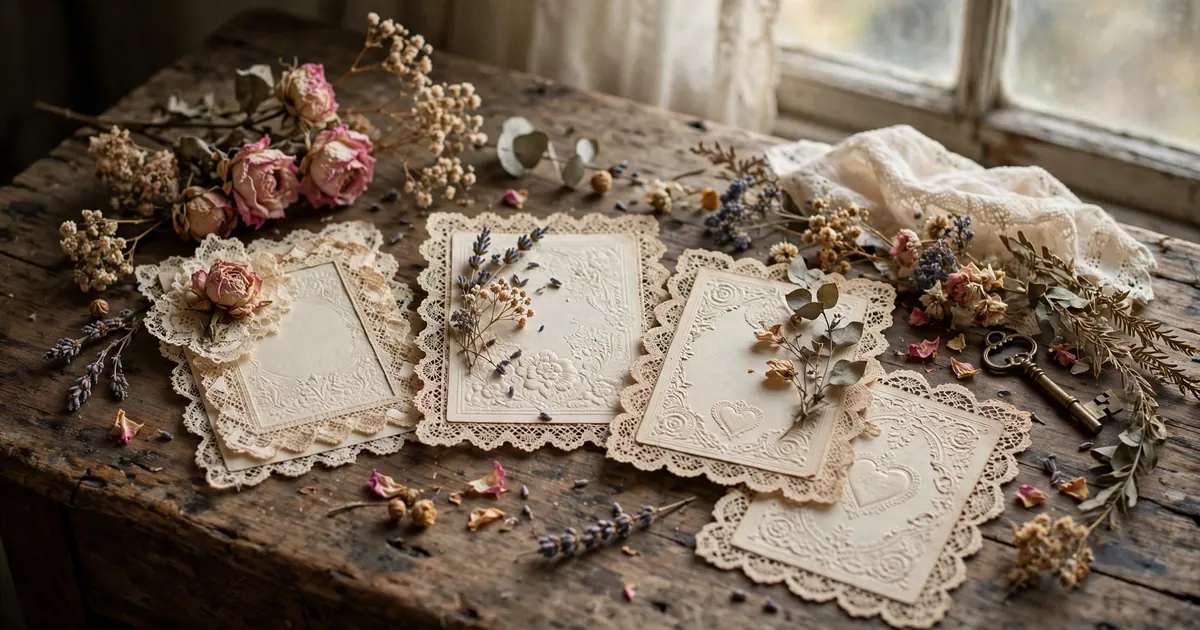
The Victorian era was the golden age of the valentine card. Combining new printing technologies (chromolithography, embossing, die-cutting) with the Victorian appetite for sentiment and ornament, publishers produced valentines of extraordinary beauty and variety. Lace-paper cards, with their intricate pierced borders, were the signature product; but there were also mechanical valentines with moving parts, pop-up scenes, puzzle purses, and cards adorned with real dried flowers, silk, and ribbon.
The Victorians also invented the comic valentine, a parallel tradition of mocking, satirical cards sent anonymously to poke fun at the recipient’s appearance, profession, or pretensions. These “vinegar valentines” were often cruel by modern standards, but they were enormously popular, and they reveal a rowdier, less sentimental side of the holiday. The Victorian Valentine’s Day was not all lace and roses; it had an edge.
Collecting valentines became a hobby, and the finest examples were treasured as keepsakes. Museums today hold Victorian valentines as artifacts of design history, and they remain strikingly beautiful objects. The golden age established the valentine’s visual language, hearts, cupids, flowers, lace, doves, that still signals “Valentine’s Day” instantly, across cultures and centuries.
Hallmark and the Twentieth Century
The twentieth century brought consolidation. Small publishers gave way to large greeting-card companies, with Hallmark, founded in Kansas City in 1910 by Joyce Hall and his brothers, becoming the dominant American brand. Hallmark and its competitors systematized the valentine: market research, seasonal lines, cards for every relationship and sentiment, from the romantic to the humorous to the familial.
The twentieth-century valentine also expanded its audience. No longer just for sweethearts, valentines came to cover spouses, parents, children, friends, teachers, and eventually coworkers and pets. The classroom valentine exchange, in which American schoolchildren give small cards to every classmate, became a defining childhood ritual and a major commercial category. Valentine’s Day was becoming what it is today: a general celebration of affection in all its forms.
Design evolved with the times. The mid-century valentine was cheerful and wholesome; the late-century versions diversified into humor, sincerity, and eventually the alternative and handmade aesthetics of the craft revival. Through it all, the core transaction remained unchanged: a decorated message, given on February 14, saying what is hard to say face to face.
Timeline: Six Centuries of the Valentine Card
| Date | Milestone | Details |
|---|---|---|
| 1415 | Charles, Duke of Orléans, writes valentine verses | Composed during English captivity; held by the British Library |
| 1477 | Margery Brews writes to John Paston as her “Valentine” | Oldest surviving English valentine letter |
| Late 1700s | First printed valentines appear | Decorated sheets with verses sold by stationers |
| 1840 | Britain’s Uniform Penny Post begins | Cheap postage explodes the mailed valentine |
| Late 1840s | Esther Howland founds the New England Valentine Company | Assembly-line ornate cards; “Mother of the American Valentine” |
| Mid-late 1800s | Victorian golden age | Lace-paper, mechanical, and comic valentines flourish |
| 1910 | Hallmark founded in Kansas City | Greeting-card industry consolidates |
| 20th century | Classroom exchanges and cards for all relationships | Valentine’s Day becomes a general affection holiday |
| 21st century | Digital valentines, e-cards, and social media | The tradition adapts to new technology |
The Digital Age: Valentines After Paper
The internet was supposed to kill the greeting card, and for a while it looked like it might. E-cards boomed in the early 2000s, then faded as email itself faded. But the valentine proved resilient. Physical card sales declined from their peak but stabilized, supported by the premium and handmade segments. Meanwhile, the valentine’s function migrated to new media: the romantic text message, the Instagram dedication, the carefully chosen playlist, the video montage.
Social media changed the valentine’s audience. A traditional card has one reader; an Instagram Valentine’s post has hundreds. This transformed the valentine from a private message into a public performance, with all the complications that entails. Couples now navigate the question of whether and how to post about Valentine’s Day, a genuinely new etiquette problem. Our guide to Valentine’s Day Instagram captions addresses this modern ritual.
The craft revival has been the paper valentine’s salvation. Handmade cards, letterpress printing, and artisanal stationery have given the physical valentine a new prestige as an authentic, personal object in a digital world. Giving a handmade card now signals effort and taste in a way that mass-produced cards cannot. The valentine has come full circle: from handmade verses to industrial product and back to handmade, each turn adding a layer of meaning. Notably, younger generations, raised on screens, have embraced physical cards with particular enthusiasm, treating them as deliberate retro gestures. The valentine’s future, like its past, will be determined not by technology but by the human need it serves: to say “I love you” in a form that can be kept.
What to Write: The Eternal Question
Six centuries of valentines have not resolved the basic problem: what do you actually write? The history offers guidance. The earliest valentines worked because they were specific: Margery Brews wrote to John Paston about their actual situation, not about love in the abstract. The Victorian cards that survive as treasures are the ones with personal messages added to the printed verse. Specificity has always been the secret.
The practical advice, distilled from centuries of evidence: write about the person, not about love. Mention a particular memory, a particular quality, a particular hope. Keep it honest; grandiosity ages badly. If you borrow words, borrow well, a line of poetry that genuinely fits beats a paragraph of clichés. And sign it: the anonymous valentine has its charms, but the signed one is the one that gets kept.
For those who want more help, our guides to what to write in a Valentine’s Day card and how to write a Valentine’s Day love letter offer structured advice and examples for every relationship and tone.
Anatomy of a Great Valentine Card
Across six centuries, the valentines that worked, the ones that were kept, treasured, and remembered, share a consistent anatomy. First, a personal address: the card speaks to a specific person, by name or by unmistakable reference. The generic valentine, beautiful as it may be, is the one that gets recycled. The personal one gets kept in a drawer for decades.
Second, a concrete detail. The great valentines mention something real: a shared memory, an observed quality, a private joke, a plan. This is what separates a valentine from a greeting card for any occasion. It says: I see you, particularly. The Victorian cards that survive in museums with their handwritten additions intact are almost always the ones where someone added a sentence that could only have been written by them, to that person, at that moment.
Third, appropriate scale. The valentine’s message should match the relationship. A new romance calls for warmth without presumption; a long marriage calls for depth without complacency; a friendship calls for affection without confusion. History’s most awkward valentines are the ones that misjudged the scale, and its most successful are the ones that got it exactly right. When in doubt, slightly understate; sincerity reads better than grandeur.
Fourth, craft in the presentation. This does not mean expense. A simple card with careful handwriting outperforms an expensive card with a scrawled signature. The presentation signals the care behind the message. Esther Howland understood this: her cards succeeded because every layer of lace and paper said that someone had taken trouble. Trouble, thoughtfully taken, is the whole message.
Valentine Cards Around the World
The valentine card went global with the holiday, and each culture adapted the form. In Japan, where Valentine’s Day centers on chocolate rather than cards, the written valentine is less central, though message cards accompany gifts. In South Korea, the card tradition blends with the broader gift culture of the love-holiday calendar. In Latin America, where Día del Amor y la Amistad emphasizes friendship alongside romance, cards for friends are as important as cards for lovers.
Britain retains the strongest card tradition outside America, with the anonymous valentine still a living custom and children’s classroom exchanges widespread. The British card market remains distinctive for its humor: funny valentines outsell sincere ones in some segments, continuing the Victorian comic tradition. France, despite its romantic reputation, has a more restrained card culture; the French valentine tends toward the elegant and understated.
The digital valentine is the newest global form, and it varies by platform more than by country. The WhatsApp valentine, the Instagram story dedication, the TikTok tribute video: each has its own conventions, and each is evolving rapidly. What is consistent across all of them is the original function identified six centuries ago: a fixed date, a personal message, and the courage to say what is hard to say face to face. The medium changes; the message does not.
Collecting and Preserving Old Valentines
Old valentines are collectible, and the market offers a tangible connection to the history above. Victorian lace-paper cards in good condition, mechanical valentines with working parts, and unusual comic valentines all have collectors. Prices range from a few dollars for common examples to significant sums for rare or exceptional pieces. Ephemera fairs, antique shops, and online marketplaces are the usual hunting grounds.
For family historians, old valentines are treasures beyond price. A grandmother’s valentine, with its faded ink and pressed flowers, is a primary document of a relationship, often the most romantic artifact a family possesses. If you have old family valentines, preserve them: store them flat, away from light and moisture, in acid-free enclosures. Consider digitizing them as well; a scan preserves the content even if the original eventually fades.
Museums with strong valentine holdings include the British Library, which preserves the Orléans verses, and various social-history museums with Victorian ephemera collections. But the most meaningful collection is the shoebox in the closet: the valentines you have received, kept because they mattered. The history of the valentine card is not only in museums. It is in every drawer where someone kept the card they could not throw away.
Watch: How the American Valentine Began in Worcester
This television news report tells the story of Esther Howland, the “Mother of the American Valentine,” whose Worcester workshop industrialized the ornate valentine card in the 1840s. It is the essential video companion to the history above.
Frequently Asked Questions
What is the oldest known valentine?
The oldest surviving valentine verses are generally attributed to Charles, Duke of Orléans, written during his captivity in England after 1415 and held by the British Library. The oldest surviving English valentine letter is from Margery Brews to John Paston, dated 1477, addressing him as her “right well-beloved Valentine.”
Who was Esther Howland?
Esther Howland of Worcester, Massachusetts, known as the Mother of the American Valentine, founded the New England Valentine Company in the late 1840s. Inspired by an English valentine, she designed elaborate lace-trimmed cards and organized assembly-line production employing local women. Her business made ornate valentines widely available in America and shaped the aesthetic of the American card.
When were the first printed Valentine’s cards made?
Printed valentines began appearing in the late eighteenth century as advances in printing made decorated verse sheets affordable. The trade expanded dramatically after Britain’s Uniform Penny Post of 1840 made mailing cheap, and again in the 1840s with Howland’s American enterprise. The Victorian era then brought the golden age of elaborate manufactured valentines.
What were vinegar valentines?
Vinegar valentines, also called comic valentines, were satirical cards popular in the Victorian era, sent anonymously to mock the recipient’s looks, occupation, or character. They were often harsh by modern standards but enormously popular, revealing a rowdier side of the Victorian Valentine’s Day alongside the sentimental lace-paper cards.
Did e-cards replace paper valentines?
Not entirely. E-cards boomed and faded with email’s dominance, while physical card sales declined from peak but stabilized, especially in premium and handmade segments. The valentine’s function also migrated to text messages, social media dedications, and other digital forms. The paper valentine survives as a prestige object: giving one now signals deliberate effort.
What should I write in a Valentine’s card?
History’s lesson is specificity: write about the actual person and your actual relationship rather than love in the abstract. Mention a memory, a quality, or a hope. Borrowed poetry works when it genuinely fits; a line that truly describes your situation will always outperform a paragraph of generic sentiment. And remember the valentine’s original function: to say what is hard to say face to face. If the words feel a little vulnerable, you are probably doing it right. See our dedicated guides to card messages and love letters for examples.
Are old valentines worth anything?
Victorian valentines in good condition are collectible, with prices ranging from a few dollars for common lace-paper examples to significant sums for rare mechanical or unusual pieces. But their greatest value is sentimental: a grandparent’s valentine is a family treasure regardless of market price. If you inherit old valentines, preserve them flat, away from light and moisture, and consider digitizing them. The valentines that survive in families are often the most historically interesting of all, because they show the tradition as it was actually lived.