Dry January — one month with no alcohol, from New Year’s Day to the 31st — has grown from a small public-health campaign into a genuine cultural phenomenon. Millions of people now start their year this way: as a reset after the holidays, as an experiment in mindful drinking, or as the first step toward a different relationship with alcohol. This is the complete guide to an alcohol-free month: what Dry January actually is, how to prepare, a week-by-week plan for all 31 days, simple mocktail recipes, scripts for every social situation, and honest answers about what a month off can (and can’t) do. Whether you’re sober-curious, resetting after December, or just wondering what life feels like without the nightly glass of wine — here’s your month.
A note on framing: this guide is general wellness information, not medical advice. For most moderate drinkers, a month off alcohol is straightforward. But if you drink heavily every day, stopping suddenly can cause withdrawal symptoms that need medical supervision — if that’s your situation, please talk to your doctor before beginning, rather than going cold turkey. There’s no shame in it; it’s the safe, smart approach, and your doctor can help you plan.
What Dry January Is (and Where It Came From)
The concept is simple: no alcohol for the month of January. It was popularized as an organized campaign by the British charity Alcohol Change UK, which launched it in 2013 — and it caught fire far beyond its origins, spreading across the US, Canada, Europe, and beyond. Today “Dry January” is less a single campaign and more a global folk tradition, joined by sober-curious millennials, health-resetting forty-somethings, and everyone in between.
Why January works: it follows the heaviest drinking weeks of the year, rides the fresh-start wave, and — crucially — it’s finite. Thirty-one days is long enough to feel real effects and short enough to commit to. That finiteness is the psychological genius of the challenge: “forever” is terrifying, but “January” is just a month. And a surprising number of people who start with January find themselves extending it, or drinking meaningfully less for the rest of the year — the month becomes a lens, not just a break.
Common reasons people join: better sleep, more energy, weight loss, saving money, clearer skin, curiosity about their own habits, or simply wanting to prove they can. All are valid. Pick your reason and write it down — you’ll want it around day 12.
Before January 1st: The 3-Day Prep
Don’t just wake up on New Year’s Day and white-knuckle it. Three days of preparation multiplies your odds:
- Clear the decks (literally): finish or give away open alcohol; don’t restock. An alcohol-free house removes hundreds of micro-decisions. If others in your household drink, ask for one alcohol-free shelf or zone.
- Stock alternatives: buy the good stuff before you need it — sparkling water, quality mocktail ingredients (recipes below), non-alcoholic beer or wine if those appeal to you, interesting teas. Deprivation fails; substitution succeeds.
- Tell people: announce it — casually, confidently. “I’m doing Dry January” is now so mainstream it rarely raises eyebrows. Telling people creates gentle accountability and preempts the awkward “why aren’t you drinking?” at events.
- Map your triggers: when do you usually drink? Friday wind-down, dinner cooking, social events, stress? For each, pre-decide the replacement (walk, mocktail, tea, bath). The 30-day new year reset guide covers this trigger-mapping technique for any habit change.
- Plan your first weekend: the first Friday/Saturday is the first real test. Schedule something engaging — a dinner with supportive friends, a morning activity Saturday that rewards an early night, a project to absorb the evening hours.
The 31-Day Plan: Week by Week
Week 1 (Jan 1–7): The novelty phase — ride the momentum
Days 1–3 feel easy — you’re motivated, possibly slightly hungover from New Year’s Eve, and the novelty carries you. Use this energy productively: establish your evening replacement ritual now (the mocktail hour, the walk, the tea ceremony — whatever yours is), because rituals built in easy days sustain you in hard ones.
Days 4–7 bring the first real test: the first weekend. This is where preparation pays off. If you normally drink on Friday, do something different on Friday — different restaurant, different activity, different people if needed. Novelty disrupts cue-routine loops. Cook an elaborate meal, start a puzzle, have friends over for a mocktail tasting (recipes below make this genuinely fun). Go to bed Friday feeling clear-headed and wake up Saturday amazed at the difference — that contrast is the experience that converts skeptics.
Week 1 mantra: “I’m just not drinking in January.” Present tense, finite, no drama.
Week 2 (Jan 8–14): The adjustment — this is the real work
Week two is widely reported as the hardest. The novelty’s gone, normal life has resumed, and your brain starts negotiating: “you’ve proven you can do it, so one glass won’t hurt.” Recognize the negotiation for what it is — not wisdom, just habit talking.
This week’s tools: double down on replacement rituals (the fancy glass, the garnish — make the alternative feel like an upgrade, not a consolation), front-load your sleep (many people notice sleep improving around week two — protect it with a consistent bedtime; our sleep resolutions guide has the full system), and track visibly — X off each day on a calendar. A growing chain of X’s is weirdly powerful motivation.
The social test often lands this week: the first dinner out, the first work event. Deploy your scripts (below) with a smile. You’ll be surprised how little anyone cares — and how good it feels to drive home clear-headed.
Week 2 mantra: “The urge is a wave; I just don’t surf it today.”
Week 3 (Jan 15–21): The benefits arrive — notice them
Around the third week, many participants report the shift: mornings feel different — clearer, less groggy. Energy steadies through afternoons. Some notice skin looking better, the scale moving, moods evening out. (These are commonly reported experiences, not guarantees — bodies differ.) Write down what you notice. This evidence becomes your personal case for the month, more convincing than any article.
This is also the week to do the math: calculate what you’ve saved (money not spent on drinks, Ubers not needed, brunches not ruined). Put the number somewhere visible. And try something your drinking self wouldn’t have: the early Saturday hike, the Sunday morning class, the ambitious cooking project. Experiencing what clear weekends feel like is the month’s real gift.
Week 3 mantra: “I’m collecting data on what I actually like.”
Week 4 (Jan 22–31): The home stretch — and the bigger question
The final stretch brings a new feeling: pride, mixed with curiosity about what comes next. Finish strong — plan something celebratory for the 31st that isn’t drinking (nice dinner, a show, a day trip). You’ve earned a real celebration.
Then face the bigger question deliberately, not drunkenly: what did January teach you? Common takeaways: “I sleep dramatically better without alcohol,” “I was drinking more from habit than enjoyment,” “socializing sober is fine once the first drink-order awkwardness passes,” “I don’t miss it as much as I feared.” Use these to design February — whether that’s continued abstinence, mindful-drinking rules (the how-many-when framework below), or simply a more conscious relationship with alcohol. Our monthly check-in system is perfect for this reflection.
Week 4 mantra: “Almost there — and I’m deciding what ‘there’ means.”
What a Month Off Can Do: The Honest Benefits Timeline
Let’s be straight about what 31 days alcohol-free typically brings — based on what participants commonly report and what health researchers generally observe — without overpromising:
- Days 1–7: hydration improves; many people notice less morning grogginess within days. Sleep onset may briefly feel harder if you used alcohol as a nightcap (it sedates but fragments sleep — removing it can mean a short adjustment).
- Week 2: sleep quality often improves noticeably — fewer 3 a.m. wakeups, more refreshed mornings. Energy through the day steadies.
- Week 3: many report clearer skin, less bloating, and modest weight changes (alcohol is calorie-dense and disinhibits eating). Mood often feels more even without alcohol’s rebound effects.
- Week 4: the cumulative effect — better sleep + steadier energy + money saved + pride — is what most participants cite as the real payoff. Liver health markers can improve with sustained abstinence, though that’s between you and your doctor to measure.
What a month can’t do: undo years of heavy drinking alone (talk to your doctor about that), fix unrelated health issues, or resolve a complicated relationship with alcohol by itself. Think of Dry January as a diagnostic tool and a reset — incredibly valuable, but the beginning of a conversation with yourself, not the end of one.
Mocktail Recipes: Your Alcohol-Free Bar
The secret to enjoying Dry January socially and at home: drinks that feel like drinks — complex, beautiful, served in real glassware with garnish. Here are five to rotate:
1. The Faux-jito
Muddle 8–10 mint leaves with 1 oz lime juice and 1 tsp sugar in a tall glass. Fill with ice, top with sparkling water, garnish with a mint sprig. Tastes like a mojito’s bright cousin.
2. Sunrise Spritz
Half fill a wine glass with ice. Add 3 oz blood orange juice (or regular OJ + a splash of grenadine), top with tonic water, garnish with an orange wheel. Bitter, bubbly, gorgeous.
3. Cucumber-Mint Cooler
Muddle 4 cucumber slices with mint and lime juice. Add ice, top with ginger beer (non-alcoholic) and a pinch of salt. Refreshing enough to convert skeptics.
4. The “Whiskey” Sour (Zero Proof)
Shake 2 oz strong brewed black tea (cooled), 1 oz lemon juice, ¾ oz simple syrup, and ice. Strain over fresh ice, garnish with a lemon twist and a cherry. Smoky-tea depth surprises everyone.
5. Berry Basil Smash
Muddle a handful of berries with 3–4 basil leaves and 1 oz lime juice. Add ice, top with sparkling water. Sweet-herbal and endlessly riffable — try rosemary with grapefruit, or thyme with apple.
Batch tip: keep a pitcher of one signature mocktail ready for gatherings — guests love it, and it normalizes the alcohol-free option for everyone. For New Year’s Eve itself (if you’re starting the resolution a night early), our practical at-home NYE celebration plan includes festive alcohol-free ideas.
The Social Survival Guide: Scripts for Every Situation
The hardest part of Dry January isn’t the not-drinking — it’s the other people. Here’s what to say:
Ordering at a bar or restaurant
Order first, confidently, like it’s the most normal thing in the world — because it is. “Sparkling water with lime,” “a ginger beer,” “whatever mocktails you have.” Confidence is contagious; hesitation invites questions. Most bartenders now have a proper zero-proof list — ask.
“Why aren’t you drinking?”
Keep it light and boring (boring kills follow-ups): “Doing Dry January!” / “Taking a month off — feeling great.” / “Just not tonight.” Avoid health lectures or moral framing — they make others defensive about their drinking, which is what creates awkwardness. If someone presses, a smile and “just an experiment” ends it.
The insistent friend (“Come on, one won’t kill you”)
Broken record, warm tone: “I’m good, thanks!” repeated as needed, with a smile. Don’t debate, don’t justify — justification implies the decision is negotiable. True friends drop it after the second deflection. Anyone who doesn’t is telling you something about them, not you.
Work events and client dinners
Arrive with a drink already in hand (sparkling water reads as “a drink” from across the room). Nobody tracks your glass. If toasts happen, raise whatever you’re holding — no announcement needed. In our experience-reporting culture, nobody has ever been professionally harmed by toasting with tonic.
Dating while dry
Suggest coffee, walks, museums, or activity dates — better first dates anyway. If drinks come up: “I’m doing Dry January — mocktail for me.” Confidence about it is attractive; insecurity about it isn’t. Many people report dating better dry — you’re funnier, more present, and you remember the conversation.
Hosting
Serve great alternatives proudly — the mocktail pitcher, interesting sodas, good coffee. Don’t apologize for the absence of alcohol or make it A Thing. Guests follow the host’s energy: if you’re relaxed and the drinks are delicious, everyone is happy.
What to Drink Instead: The Full Replacement Menu
- Sparkling water, upgraded: with bitters (a dash is negligible alcohol, or use alcohol-free bitters), citrus, cucumber, or frozen berries. The fizz satisfies the “real drink” itch.
- Non-alcoholic beer and wine: quality has improved enormously in recent years — try several brands; opinions vary wildly and you’ll find your favorites.
- Zero-proof spirits: distilled botanical drinks designed for cocktails. Pricier, but excellent for the ritual of mixing a proper drink.
- Kombucha: tangy, complex, lightly fizzy. (Trace alcohol content — fine for most, but check labels if that matters to you.)
- Tea, elevated: the world of tea — smoky lapsangs, floral oolongs, spiced chais — is a rabbit hole worthy of January exploration.
- Good coffee, ritualized: the French press, the pour-over — make the caffeine ritual as deliberate as the cocktail ritual was.
After January: Designing Your Relationship With Alcohol
February 1st isn’t a finish line — it’s a decision point. Common paths:
- Extend it: “Dry Q1,” or 100 days, or indefinitely. Many people find month two easier than month one and just keep going.
- Mindful drinking rules: design personal policies from your January data — e.g., only on weekends, only socially, never alone, two-drink max, no drinking on work nights. Specific rules beat vague “drink less” intentions.
- The damp lifestyle: significantly reduced, intentional drinking — the middle path many January participants settle into for the long term.
- Back to normal, consciously: even returning to previous habits with new awareness is a win — you now know what alcohol was doing, which changes the relationship regardless.
Whatever you choose, do the written review: what did you learn, what surprised you, what do you want to keep? January’s data is valuable only if you use it. And if the month revealed that your relationship with alcohol feels complicated or hard to control, that’s important information — consider talking to your doctor or a counselor. Discovering that is not a failure of Dry January; it’s one of its most valuable possible outcomes.
Dry January for Couples and Households
Doing the month solo while your partner drinks is entirely doable — but doing it together (or with household buy-in) is easier and often more fun. If your partner’s interested, frame it as a shared experiment rather than a joint sentence: plan mocktail nights together, compare notes on sleep and energy, and split the savings toward something you both want. Couples who do it together often report it becomes a relationship highlight — novel, slightly adventurous, full of inside jokes about fancy garnishes.
If your partner isn’t joining: have the kind, clear conversation early. You’re not asking them to change — just for a little support: not offering you drinks, keeping one alcohol-free shelf in the fridge, maybe choosing a couple of alcohol-free evenings together. Avoid the newly-sober evangelism trap (lecturing them about their drinking); nothing breeds resistance faster. And in mixed households, the practical move is simple: your alternatives stocked and visible, their alcohol stored out of your sightline. Environment design beats willpower, especially at 9 p.m. on a Friday.
Roommates and family members get the same treatment: a brief, upbeat announcement (“I’m doing Dry January — there’ll be great mocktails if you want some”), zero preaching, and your own well-stocked corner of the kitchen. Most people are supportive; the few who aren’t are usually wrestling with their own relationship with alcohol, which isn’t yours to fix.
In Pictures: The Complete Guide to Dry January
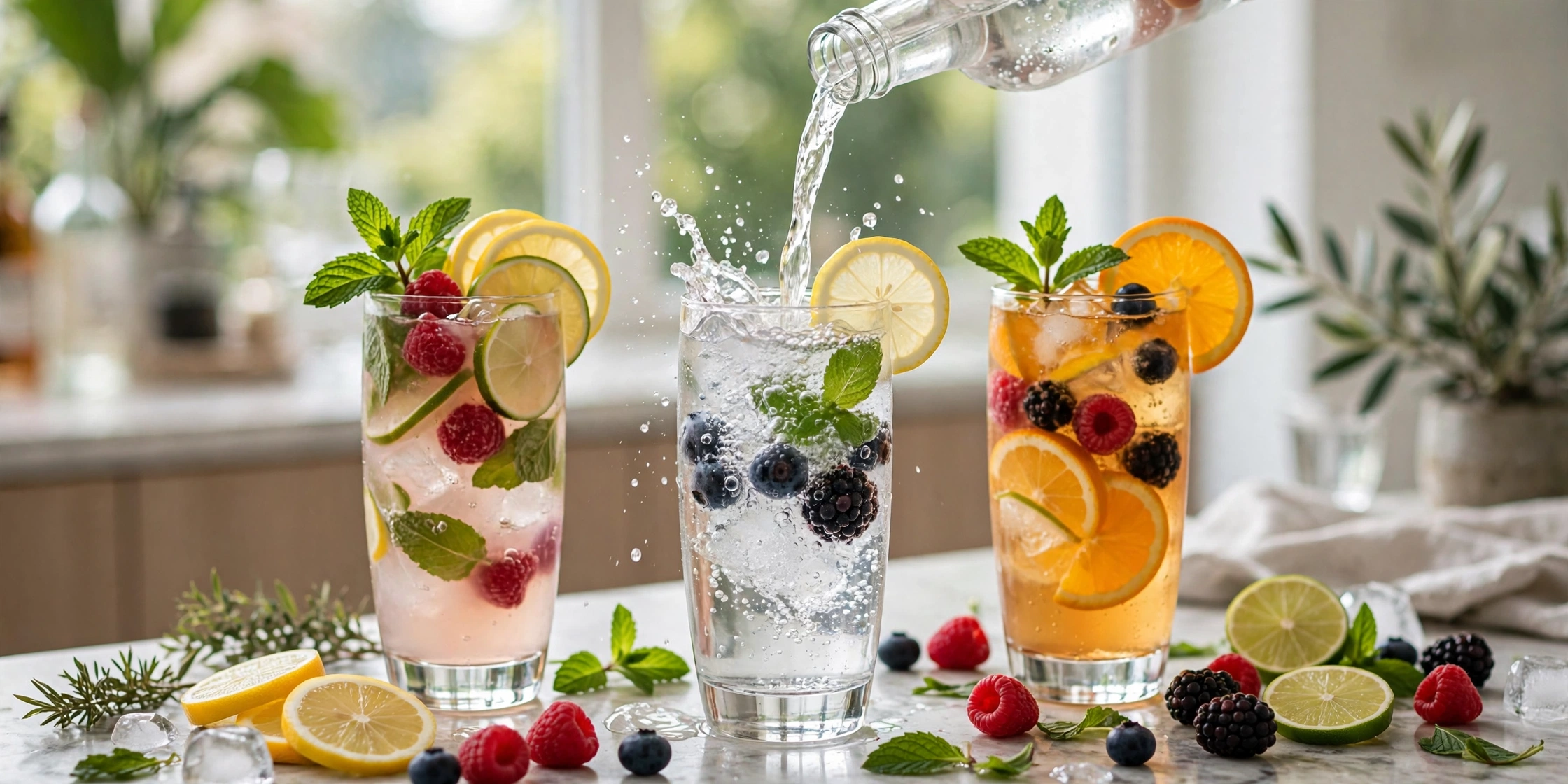
One alcohol-free month, from New Year’s Day to the 31st — a reset after the holidays that’s become a genuine cultural phenomenon.

Dry January: sparkling alternatives, clear mornings, and a month to reset your relationship with alcohol.
Watch: The Complete Guide to Dry January
Why more adults are choosing Dry January — the motivations and benefits behind the alcohol-free month.
At a Glance: The Complete Guide to Dry January
The origins, the rules, and what a month off can do — per published research.
| Fact | Detail | Source |
|---|---|---|
| Origin | Launched as a campaign by Alcohol Change UK in 2012 (widely cited) | The post’s history section |
| The rules | No alcohol from January 1 to January 31 | Simple by design |
| Blood pressure | Study found roughly 6.6% lower systolic and 6.3% lower diastolic after a month off | BMJ Open 2018 (Mehta et al.) |
| Insulin resistance | Roughly 25.9% improvement after the alcohol-free month | BMJ Open 2018 (Mehta et al.) |
| Weight | Roughly 1.5% average weight reduction | BMJ Open 2018 (Mehta et al.) |
| Lasting change | Even non-completers drank less six months later | de Visser et al., 2016 |
Frequently Asked Questions
Can I have a drink at a wedding/birthday during Dry January?
That’s your call — it’s your challenge. Purists say no exceptions (exceptions are where challenges go to die); pragmatists allow pre-planned exceptions for truly special occasions. If you allow one, decide the rules in advance (one event, two drinks max) and return immediately after. But know this: most people who make it through report that navigating the event sober was easier than feared — and the morning after is a revelation.
Will I lose weight during Dry January?
Many people do — alcohol is calorie-dense (a glass of wine ≈ 120–150 calories, cocktails often 200+), it disinhibits eating, and better sleep regulates hunger hormones. But it’s not guaranteed, especially if you replace drinks with sugary mocktails. For weight as a goal, pair the month with our sustainable weight loss resolutions guide rather than relying on abstinence alone.
What if I slip and drink in mid-January?
Don’t torch the month over one evening. Note what triggered it, recommit the next morning, and keep going — a 29-dry-day January is still a transformed month. The all-or-nothing mindset (“I failed, might as well drink the rest of the month”) is the real enemy. Our guide to restarting resolutions without guilt applies perfectly here.
Is Dry January safe for heavy drinkers?
This is important: if you drink heavily every day, stopping abruptly can cause withdrawal symptoms ranging from unpleasant to medically serious. Please talk to your doctor before starting — they can help you plan a safe reduction. Dry January is designed for moderate drinkers looking for a reset; if your drinking feels out of control, professional support is the right first step, and there’s no shame in that.
Do non-alcoholic beers and wines “count” as cheating?
Not at all — they’re tools, not cheats. The point of the month is abstaining from alcohol, and zero-proof alternatives support that goal. Some participants avoid them because the taste triggers cravings; others find them essential social armor. Learn which camp you’re in during week one and proceed accordingly.
How do I handle pressure from a partner who drinks?
Have an honest, non-preachy conversation before January: what you’re doing, why, and what you’d appreciate (not offering, not making it weird). Don’t try to convert them — nothing kills goodwill like a newly sober person’s evangelism. Many couples find one partner’s Dry January interesting enough to partially join; let that happen organically or not at all. The month is about your relationship with alcohol, not theirs.
Thirty-one days. That’s all it is — and all it takes to see your habits, your sleep, your social life, and your Saturday mornings with new eyes. Stock the alternatives, learn the scripts, ride the waves, and write down what you discover. Whether February brings mindful drinking, an extended streak, or simply a wiser relationship with the bottle, you’ll have done something genuinely hard and genuinely worthwhile. January is yours — keep it dry, keep it curious, and enjoy every clear-headed morning. You’ve got this.