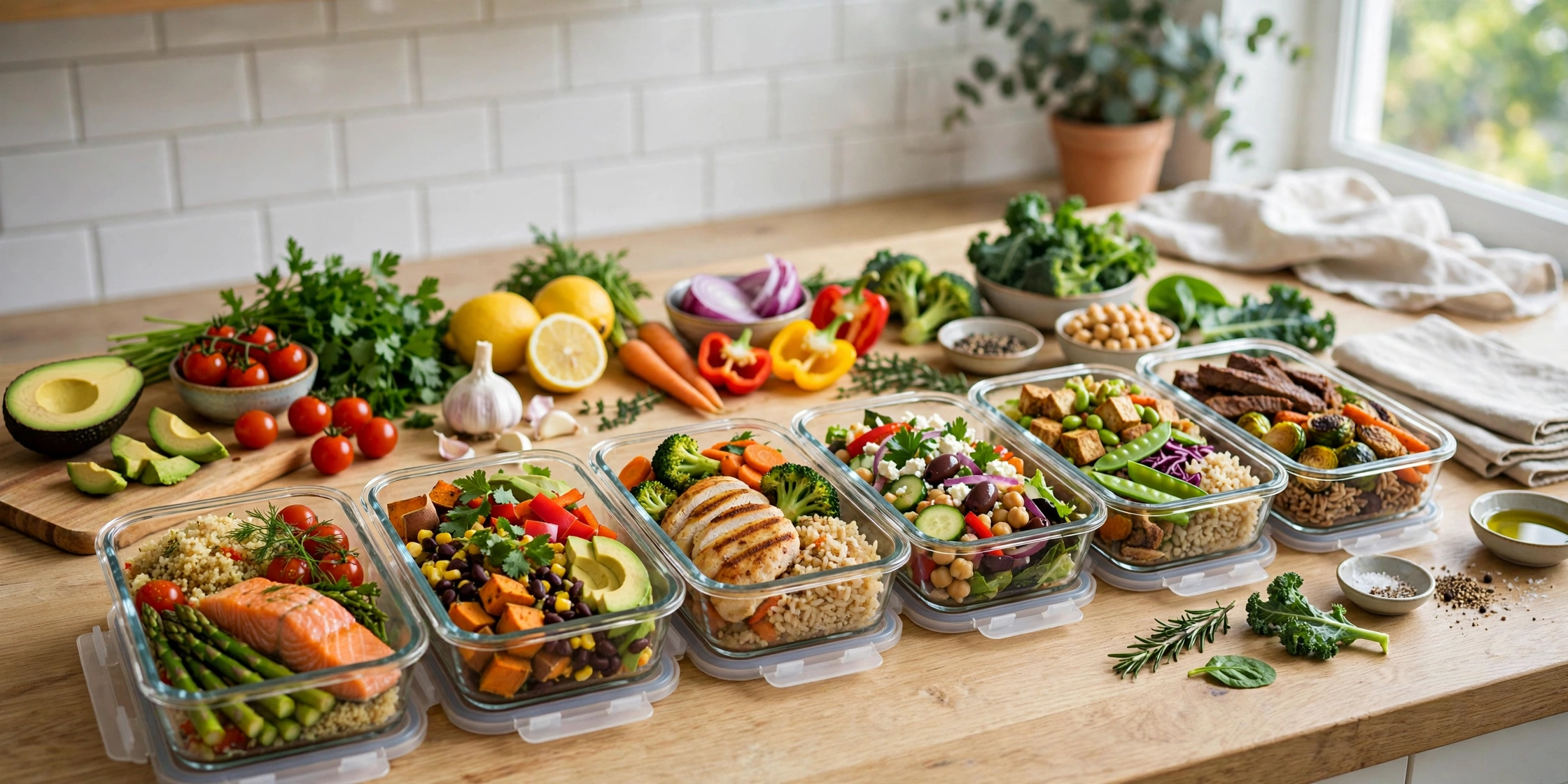
“Eat healthier” is one of the most-made and least-kept New Year resolutions — not because it’s unimportant, but because it’s impossibly vague. What does “healthier” mean on a Tuesday night when you’re tired, the fridge is empty, and delivery is one tap away? Healthy eating resolutions work when they answer that question in advance: simple nutrition goals with clear structures — a plate template, a grocery system, a prep routine — that make the healthy choice the easy choice, month after month.
This guide gives you exactly that. You’ll learn the “add, don’t subtract” philosophy that makes nutrition changes stick, three core frameworks (the plate method, the grocery system, and tiered meal prep), a month-by-month theme calendar that builds your skills gradually across the year, and practical playbooks for dining out, feeding a family, and eating well on any budget — with nods to food cultures worldwide, because healthy eating isn’t one cuisine’s monopoly.
A note on scope: this guide covers general nutrition principles for generally healthy adults — not medical nutrition therapy. If you manage diabetes, kidney disease, food allergies, an eating disorder history, or any condition requiring dietary management, please build your plan with your doctor or a registered dietitian. General frameworks like these complement professional guidance; they don’t replace it.
The “Add, Don’t Subtract” Philosophy
Most nutrition resolutions are subtraction lists: no sugar, no carbs, no snacking, no fun. Subtraction triggers the restriction-rebound cycle — forbidden foods become obsessions, and the plan collapses at the first birthday party. The sustainable alternative: every resolution adds something good rather than banning something bad.
Compare: “No more soda” (subtraction — you’ll think about soda daily) vs. “Drink a glass of water before each meal and keep sparkling water stocked” (addition — soda fades naturally as the new habit fills its slot). “No snacking after dinner” vs. “Eat a protein-rich afternoon snack so evenings aren’t ravenous.” “Cut carbs” vs. “Add a vegetable to every dinner.”
This isn’t wordplay — it changes the psychology completely. Additive goals feel like self-care; restrictive goals feel like punishment. And practically, additions crowd out the less-helpful habits without a battle: a person eating protein and vegetables at every meal has little room — or craving — for much else. Build your year’s resolutions as a list of additions, and watch the subtractions happen on their own.
Framework 1: The Plate Method — Your Forever Template
If you adopt one nutrition framework this year, make it this one. The plate method requires no counting, no apps, no special foods: at lunch and dinner, fill half your plate with vegetables (any kind, any cuisine — salads, stir-fries, roasted veg, curries, soups), a quarter with protein (fish, chicken, eggs, tofu, tempeh, lentils, beans, Greek yogurt), and a quarter with whole grains or starchy vegetables (brown rice, quinoa, whole-grain bread, sweet potatoes, corn, oats).
Why it works: the template auto-balances every meal — high fiber and volume from vegetables (fullness), protein for satiety and muscle, whole grains for steady energy. It works at home, in restaurants (mentally divide the plate), at buffets, and across food cultures: a Japanese meal (vegetables, fish, rice), a Mexican bowl (fajita veg, beans, corn tortillas), an Indian thali (sabzi, dal, roti), a Mediterranean plate (salad, grilled chicken, farro) — all fit the template naturally. Healthy eating is not a cuisine; it’s a proportion.
January goal: use the plate method at dinner, five nights a week. That’s it. Master dinners before expanding to lunches in February. One meal, done consistently, teaches the visual habit that eventually runs on autopilot.
Framework 2: The Grocery System — Health Starts at the Store
You can’t eat what isn’t there, and you will eat what’s easiest. The grocery system makes healthy the default by designing the shopping, not relying on willpower at 9 p.m.
The template list: build a master grocery list organized by category — proteins (3–4 per week), vegetables (5–7 varieties), fruits (3–4), whole grains (2–3), healthy fats (olive oil, nuts, avocado), dairy or alternatives, and flavor (herbs, spices, citrus, condiments). Shop from the template weekly; it removes 90% of in-store decisions and prevents the “I have nothing to cook” paralysis that drives delivery orders.
The perimeter strategy: most whole foods live around the store’s perimeter (produce, meat, dairy); most ultra-processed foods fill the center aisles. You don’t need to avoid the center entirely — just shop the perimeter first and the center with a list. Simple, effective, no dogma.
The prep-ready shop: buy at least three “friction removers” weekly — pre-washed greens, pre-cut vegetables, frozen berries, rotisserie chicken, canned beans, microwave brown rice. These cost slightly more and save enormously: the difference between cooking and ordering out is often ten minutes of chopping you’re too tired to do. If budget is tight, our money resolutions guide covers grocery budgeting alongside bigger savings systems.
February goal: run the template list for four consecutive weeks. By March, grocery shopping takes 30 minutes and your kitchen is perpetually “cook-ready.” As a one-time February project, do a 20-minute pantry reset: move the whole grains, beans, and spices to the front of the shelves and relegate the ultra-processed snacks to the highest, least-visible spot. This tiny environmental tweak quietly steers hundreds of small decisions across the year — you’ll reach for what’s visible, so make the visible things the good things.
Framework 3: Tiered Meal Prep — Pick Your Level
Meal prep fails when people attempt the influencer version — twelve identical containers, four hours on Sunday — and burn out by week three. Tiered prep lets you choose the level that fits your life:
Tier 1 — Component prep (30 min/week): cook one grain, roast one tray of vegetables, prepare one protein. These components mix-and-match into bowls, wraps, and salads all week. Maximum flexibility, minimum effort — the sweet spot for most people.
Tier 2 — Meal prep (90 min/week): assemble 3–4 complete lunches in containers, plus component-prep the rest. Best for people with chaotic weekdays who need grab-and-go.
Tier 3 — Full prep (2–3 hrs/week): lunches plus 2–3 dinners prepped or planned with ingredients ready. Only attempt after Tier 1 feels easy for a month.
March goal: run Tier 1 component prep for the month. Sunday (or whichever day): grain in the cooker, vegetables in the oven, protein on the stove — all simultaneously, all done in half an hour. Notice how many weeknight “what’s for dinner” crises disappear.
The 12-Month Theme Calendar: Build Skills Gradually
Instead of twelve simultaneous resolutions, adopt one nutrition theme per month. Each builds on the last; by December you’ve assembled a complete healthy-eating practice without ever overhauling everything at once.
January — Plates: plate method at dinners, five nights weekly. Learn the visual template until it’s automatic.
February — Groceries: run the template list system. A cook-ready kitchen is the month’s deliverable.
March — Prep: Tier 1 component prep weekly. Weeknight cooking becomes assembly, not production.
April — Vegetables: the “add a vegetable” month — one extra serving daily beyond current habits. Try one new vegetable per week; roasted, with olive oil and salt, converts most skeptics.
May — Protein: protein at every meal, including breakfast (the most-skipped). Notice the effect on afternoon energy and evening snacking.
June — Hydration: water-first month — a glass before each meal, a bottle carried everywhere, sugary drinks to weekends only. Summer heat makes this timely.
July — Cooking skills: learn three new techniques (e.g., stir-frying, roasting, making a vinaigrette, cooking dried beans). Skills compound; each one permanently expands your repertoire. Our learn-to-cook resolutions guide is the perfect companion this month.
August — Snacks: redesign the snack landscape — protein-rich options ready (yogurt, nuts, fruit, hummus and veg), trigger snacks out of easy reach. Planned snacks beat scavenged ones.
September — Breakfasts: fix the first meal — five go-to healthy breakfasts on rotation (oatmeal variations, eggs, yogurt bowls, smoothies). Mornings run on routine; make the routine a good one.
October — Mindful eating: the 80% rule month — eat slowly, check fullness halfway, no screens at one meal daily. The behavioral capstone to a year of structural work.
November — Flexibility: practice the holiday protocols (below) — planned indulgence, maintenance mindset, no guilt spirals. The skill of enjoying food without derailing.
December — Review and keep: which themes stuck? Keep those as permanent practice; schedule the shaky ones for a repeat month next year. Write next year’s calendar — you’re now the person who iterates, not restarts.
Dining Out Without Derailing
A healthy eating plan that can’t survive restaurants isn’t a plan — it’s a fantasy. The restaurant protocol:
- Preview and pre-decide. Check the menu online and choose before arriving. Decisions made hungry, surrounded by options, are reliably worse.
- Lead with vegetables and protein. Start with a salad or vegetable side; choose grilled, roasted, or steamed preparations as the default.
- Apply the plate method mentally. Restaurant portions skew large — immediately box half the entrée, or plan to take half home. (Tomorrow’s lunch, solved.)
- Pick your indulgence. Bread basket, dessert, or cocktail — choose one deliberately and enjoy it fully, rather than grazing on all three mindlessly.
- Drinks matter. Alcoholic drinks and sugary beverages can quietly double a meal’s calories. Alternate with water; choose simpler drinks.
The goal isn’t perfect restaurant meals — it’s good enough meals that keep the overall pattern intact. One indulgent dinner changes nothing; the all-or-nothing story about it changes everything.
Feeding a Family (Without Cooking Twice)
Healthy eating resolutions collide with family reality: kids who reject vegetables, partners with different tastes, and the temptation to cook separate meals. Don’t. The one-meal rule — everyone eats the same base, with customizable components — saves sanity:
- Deconstructed meals: taco bars, grain bowls, pasta with separate sauces, stir-fry with toppings on the side. Everyone assembles their own; the cook makes one meal.
- The “one bite” bridge: kids don’t need to love every vegetable — repeated low-pressure exposure (the food on the plate, no battles) works over months. Model eating it yourself; that’s the most powerful intervention there is.
- Batch the kid staples: keep healthy kid-approved basics always ready (fruit, yogurt, whole-grain toast, eggs) so their snacks don’t become your snacks.
- Involve them: kids who help cook eat more adventurously — a genuine, well-documented effect. Even small children can wash vegetables, tear lettuce, or stir.
Healthy Eating on Any Budget
Healthy eating has a reputation for expense; the reality is more nuanced. The budget playbook:
- Protein economics: eggs, dried lentils and beans, canned fish, chicken thighs, tofu, and peanut butter deliver excellent nutrition per dollar. You don’t need premium proteins to eat well.
- Frozen is fine: frozen vegetables and fruits are typically as nutritious as fresh (often more so, picked ripe and flash-frozen), cost less, and never rot in the crisper. Stock the freezer.
- Seasonal and local: in-season produce costs less and tastes better — learn your region’s calendar. Market-stall produce near closing time is often discounted.
- Cook the cheap staples: rice, oats, potatoes, cabbage, carrots, onions — the humble backbone of healthy cuisines worldwide. A pot of lentils with rice and vegetables costs little and feeds many.
- Waste less: the average household wastes a shocking share of food bought. Meal planning, proper storage, and “use-it-up” meals (soups, stir-fries, frittatas) effectively discount every grocery trip.
Drinks: The Overlooked Category
Beverages are the stealthiest part of most diets — liquid calories don’t trigger fullness the way food does, so they accumulate invisibly. A single daily sugary drink can add up to a substantial annual surplus without ever feeling like “eating.” The drink resolutions, in priority order: first, water-first: a glass of water before each meal and a bottle carried everywhere — most people who “snack all afternoon” are partly just under-hydrated. Second, the soda step-down: if sugary drinks are daily, don’t quit outright — step down (daily to weekends-only, then to occasional), substituting sparkling water with citrus, which satisfies the fizz-and-flavor craving for many people. Third, coffee clarity: black coffee or coffee with a little milk is nearly calorie-free; the 400-calorie flavored latte is a dessert wearing a coffee costume — enjoy it as an occasional treat, not a daily ritual. Fourth, alcohol honesty: alcohol adds calories, loosens food inhibitions, and disrupts sleep — if weight or health is a goal, fewer drinking days per week is one of the highest-leverage changes available. None of these require quitting anything forever; they require noticing what you drink the way you notice what you eat.
Reading Labels Without Obsessing
You don’t need to scrutinize every package — but three label skills pay lifelong dividends. Skill 1 — the ingredient scan: shorter ingredient lists usually (not always) mean less processing; if sugar appears multiple times under different names in the first few ingredients, it’s a dessert regardless of the marketing. Skill 2 — the serving-size check: the numbers on the panel describe one serving, which is often smaller than the package — multiply before judging. Skill 3 — the protein-and-fiber glance: for packaged staples (bread, cereal, yogurt, bars), more protein and fiber per serving generally means more staying power. That’s it — three skills, ten seconds each. Beyond that, remember the meta-rule: the healthiest foods (vegetables, fruits, eggs, fish, legumes) have no labels at all. If most of your cart is label-free, the labels on the rest matter much less.
Worldwide Plates: Healthy Eating Is Every Cuisine
One of nutrition’s happiest truths: nearly every traditional food culture already eats the plate method’s proportions — the modern distortion is the oversized, meat-and-starch-heavy Western plate. Borrow freely:
- Mediterranean: vegetables, legumes, olive oil, fish, whole grains — among the most studied healthy patterns in nutrition science.
- Japanese: small portions, many vegetable sides, fish, fermented foods (miso, pickles), green tea — variety and moderation as aesthetic.
- Indian: dal (lentils), sabzi (vegetables), whole-grain roti, yogurt — naturally plant-forward and protein-smart when built traditionally.
- Mexican: beans, corn, squash, tomatoes, peppers, lime — the traditional “three sisters” plate is a nutritional powerhouse.
- West African: leafy greens, beans, groundnuts, whole grains like millet and fonio — deeply nourishing traditions.
- Middle Eastern: hummus, tabbouleh, lentil soups, grilled meats, olive oil — mezze culture is portion wisdom.
The resolution here: cook one new cuisine’s healthy dishes per quarter. It keeps healthy eating interesting across a whole year — novelty is the antidote to the boredom that kills meal plans — and it honors the truth that there’s no single “right” way to eat well.
The Holiday and Vacation Protocols
November and December test every nutrition resolution. Pre-decide the approach:
- Declare maintenance, not loss. The holidays are for holding steady and enjoying food — fighting for progress in December breeds resentment and rebound. Maintenance is the goal; hitting January at the same weight is a genuine win.
- Keep the anchors. Vegetables at meals, protein at breakfast, daily walks, water — the structural habits survive even indulgent weeks and prevent the “I’ll restart in January” free-fall.
- Plan the indulgences. The special meals (the holiday dinner, the party) get full enjoyment; the ordinary days between them stay normal. It’s the gray-zone grazing — the office candy, the leftover pie at midnight — that does the damage, not the feast itself.
- Vacations: eat the local food joyfully (that’s half the point of travel), walk everywhere, and return to the structure when home. A week of enjoyment changes nothing about a year’s trajectory.
In Pictures: Simple Nutrition Goals
“Eat healthier” fails because it’s vague. The resolutions that stick add good things instead of banning everything.

The plate method in action: colorful, simple, and built for a real Tuesday night.
Watch: Simple Nutrition Goals
Fifteen clean-eating tips for beginners — a no-diet, add-don’t-subtract approach that matches this post’s philosophy.
At a Glance: Simple Nutrition Goals
Frameworks that make healthy eating automatic, not effortful.
| Framework | The idea | In practice |
|---|---|---|
| Add, don’t subtract | Add vegetables, protein, and water before removing anything | The post’s core philosophy |
| The Plate Method | Half vegetables, quarter protein, quarter whole grains | A forever template — no tracking apps required |
| The grocery system | Shop the list, mostly the store perimeter | Health starts at the store: the post’s Framework 2 |
| Tiered meal prep | Pick a prep level: none, components, or full meals | Matches effort to your real week |
| The video’s 15 tips | Simple swaps and beginner habits | The video’s playbook, aligned with the post |
Frequently Asked Questions
What are realistic healthy eating resolutions?
The most sustainable ones are structural and additive: use the plate method at dinners, run a template grocery list, do weekly component meal prep, add protein to breakfast. Avoid vague (“eat healthier”) and restrictive (“no sugar ever”) framings — specific additions you can do daily outperform sweeping bans you abandon by February.
Do I need to meal prep to eat healthy?
No, but some form of planning helps enormously. Tier 1 component prep (30 minutes weekly: one grain, one roasted vegetable tray, one protein) gives 80% of the benefit for minimal effort. If even that feels like too much, the fallback is a stocked kitchen plus the plate method — planning can be as light as a good grocery list.
How can I eat healthy on a tight budget?
Build around cheap staples (rice, oats, lentils, beans, eggs, seasonal vegetables, frozen produce), waste less through planning, and remember that the healthiest traditional diets worldwide are peasant cuisines — inexpensive by design. Healthy eating is a skill and system advantage, not a spending advantage.
How do I stick with healthy eating when my family eats differently?
Cook one base meal with customizable components (taco bars, grain bowls, deconstructed stir-fries) so everyone assembles their own from the same ingredients. Avoid cooking twice — it’s unsustainable. Model the eating you want; involve kids in cooking; keep healthy kid staples stocked so their snacks don’t become yours.
Is it okay to eat out while trying to eat healthy?
Absolutely — a plan that can’t survive restaurants isn’t realistic. Preview menus and pre-decide, lead with vegetables and protein, mentally apply the plate method, box half of large portions, and pick one indulgence deliberately rather than grazing on everything. Good-enough restaurant meals keep the overall pattern intact.
How long until healthy eating feels automatic?
Individual habits typically take anywhere from a few weeks to a few months to feel automatic, varying by complexity and consistency — which is exactly why this guide layers one theme per month. By mid-year, the early frameworks (plate method, grocery system) usually run on autopilot, freeing attention for the later themes. The monthly calendar is designed around this gradual automation.
Healthy eating resolutions don’t require a new personality, a bigger grocery budget, or superhuman discipline. They require three frameworks (a plate template, a grocery system, a prep tier), twelve monthly themes, a little patience, and the willingness to build them one at a time. If you’re also working on the money side of the household, pairing this with our savings plan is natural — the grocery system alone typically trims food spending noticeably. Start this week with January’s theme: the plate method at dinner, five nights. Everything else — the skills, the cuisines, the automaticity — compounds from that single visual habit. A year from now, you won’t be “on a healthy eating plan.” You’ll just be someone who eats well, because that’s how your kitchen, your calendar, and your plate are set up.