

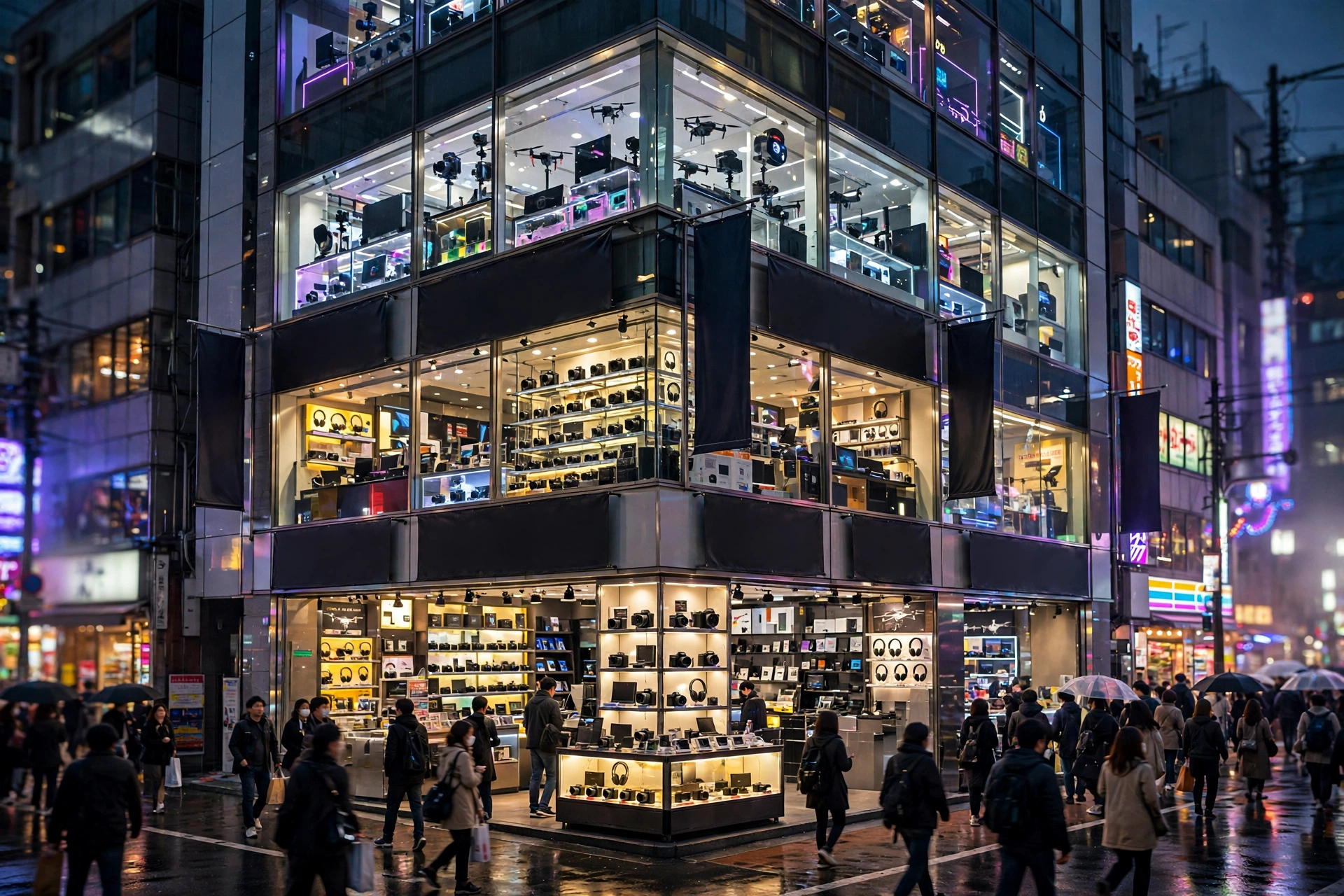
Black Friday in Japan is a fascinating hybrid: an American import filtered through Japanese retail culture, where point systems matter as much as discounts, where the sale runs for over a week, and where the country’s biggest e-commerce event of the year happens on Amazon.co.jp. For black friday japan 2026, the date is Friday, November 27, 2026 — but the real action spans Amazon’s Black Friday sale (historically a 7–8 day event running from late November into early December), Rakuten’s competing campaigns, and the electronics giants Yodobashi Camera and Bic Camera. This guide explains how Black Friday works in Japan, who discounts what, and the very Japanese tactics — points, coupons, konbini payment — that maximise your savings.
Japan was late to Black Friday but has embraced it with characteristic intensity. Amazon.co.jp’s Black Friday has grown into one of the country’s defining shopping events, with past editions running from late November (around the 27th) into early December and featuring Lightning Deals, “second round” sale phases and deep cuts across appliances, gadgets and daily goods. The electronics superstores and Rakuten run parallel campaigns, and the whole country shops it — online and in the great multi-storey electronics districts of Tokyo and Osaka.
How Black Friday Works in Japan: The Cultural Primer
Several things about Japanese Black Friday surprise newcomers:
- It is long. Amazon Japan’s Black Friday historically runs 7–8 days (for example, late November into early December), not one. The electronics chains run similarly extended campaigns. Pace yourself.
- Points are currency. Japanese retail runs on point systems — Rakuten Points, Yodobashi Gold Points, Bic Camera points, Amazon Points. A “10% points back” offer is effectively a 10% discount on your next purchase, and Black Friday brings multiplied point campaigns. Always factor points into the price.
- Coupons stack. Japanese e-commerce loves coupons: store coupons, category coupons, payment-method coupons. Like Singapore’s vouchers, they stack — and the shoppers who collect them beforehand pay less.
- Konbini payment is real. You can order online and pay at a convenience store — useful for shoppers without credit cards, and sometimes tied to its own promotions.
- Tax-free complexities: visitors should note that Black Friday sale prices and tax-free shopping interact in specific ways — confirm at the register rather than assuming.
Amazon.co.jp: The Centre of Gravity
Amazon Japan’s Black Friday is the country’s biggest November event. Based on past editions, expect: a sale running roughly a week from late November into early December; Lightning Deals (time sale) dropping throughout each day in waves; “second round” or “last chance” phases refreshing the offer pool; deep cuts on Amazon devices (Echo, Fire TV, Kindle); and broad brand coverage — Apple products, Anker, SwitchBot, Xiaomi, robot vacuums, dishwashers and home appliances have all featured heavily.
The golden rule from Japanese deal culture: add items to your cart early and watch for the price drop — if the price falls during the sale, you buy at the lower price; if it does not, you delete. This “cart-watch” method is how experienced Japanese shoppers work every Amazon sale. Prime membership unlocks the headline deals, so factor that in if you are not a member. For the global Amazon patterns, see our Amazon Black Friday deals guide.
Rakuten: The Points Powerhouse
Rakuten approaches Black Friday through its superpower: the points ecosystem. Rather than the deepest headline discounts, Rakuten’s sale combines solid prices with multiplied Rakuten Points — and for shoppers embedded in the Rakuten ecosystem (Rakuten Card, Rakuten Mobile, Rakuten Bank), the effective rebate during campaign periods can be enormous. The “Super Sale” mechanics and shopping-marathon point multipliers that Rakuten runs through the year all intensify around Black Friday.
Strategy for Rakuten: the value depends on your ecosystem membership. If you hold a Rakuten Card and use Rakuten services, Black Friday point campaigns can make Rakuten the cheapest effective price on many items — sometimes dramatically so. If you are not in the ecosystem, Amazon or the electronics chains usually win on straight price. Calculate the effective price (price minus points value) rather than comparing shelf prices.
Yodobashi Camera & Bic Camera: The Electronics Giants
Yodobashi Camera and Bic Camera — the towering electronics superstores of Shinjuku, Akihabara, Osaka’s Umeda and cities nationwide — run Black Friday campaigns both in-store and online. Their weapon is the point system: Yodobashi’s Gold Points (typically 10% back on many items, sometimes more during campaigns) effectively discount everything, and Black Friday brings bonus-point offers on top.
The in-store experience is unmatched: floor after floor of cameras, audio, computers, appliances and gadgets, with knowledgeable staff and the ability to handle everything before buying. For cameras, lenses, audio equipment and premium appliances, the electronics giants’ combination of sale pricing plus points is frequently unbeatable — and the points fund your next purchase. Tax-free processing for visitors is well-oiled, though confirm how it interacts with sale pricing.
Other Players: Kakaku, Mercari and the Department Stores
- Kakaku.com: Japan’s legendary price-comparison engine. Check it before buying anything — it shows pricing across Japanese retailers with history, and it is the single best defence against inflated “was” prices.
- Department stores (Isetan, Mitsukoshi, Takashimaya, Daimaru): fashion, beauty and food Black Friday promotions; strong for gifts and premium goods.
- Uniqlo and Muji: limited but real Black Friday participation; worth checking for wardrobe staples.
- Costco Japan: the warehouse chain runs its own November offers — see our Costco Black Friday guide.
What to Buy: Category Strategy for Japan
Home appliances — Japan’s signature category
No country discounts lifestyle appliances like Japan on Black Friday. Robot vacuums, dishwashers, stick vacuums, futon cleaners, air purifiers and kitchen gadgets see the deepest cuts on Amazon.co.jp, with past editions featuring aggressive pricing on cleaning tech and “life improvement” appliances. If your home needs upgrading, this is the category to prioritise — and the cart-watch method works best here, since appliance Lightning Deals refresh in waves.
TVs and audio
Japanese brands dominate: Sony, Panasonic, Sharp and Toshiba TVs, with 55-inch and 65-inch 4K models seeing the strongest discounts at Yodobashi, Bic Camera and Amazon. Audio — Sony and Audio-Technica headphones, in particular — is a Japanese Black Friday strength. Our TV deals guide covers model-number decoding.
Computing and gaming
Laptops, monitors, PC components and peripherals — Amazon and the electronics giants compete hard. Nintendo Switch (a Japanese icon) bundles and PlayStation 5 offers appear, with software discounts delivering the real savings. See our laptop deals guide.
Cameras
The category where Japan’s electronics giants are world-class. Sony, Canon, Nikon and Fujifilm bodies and lenses see genuine Black Friday pricing at Yodobashi and Bic Camera, with points on top — for photographers, this is one of the year’s best buying windows anywhere in the world.
Apple products
AirPods, Apple Watch, iPads and Macs get modest but real discounts on Amazon.co.jp — AirPods in particular have seen large Black Friday cuts in past years. As everywhere, previous-generation models offer the best value.
Daily goods and beauty
Amazon’s Black Friday covers consumables aggressively — detergent, toiletries, supplements — and Japanese beauty (skincare, cosmetics) sees strong promotions. Stocking up on daily goods at sale prices is a very Japanese Black Friday tradition.
The Points-and-Coupons Playbook
This is the tactical core of Japanese Black Friday. Before the sale: collect every coupon you are eligible for on Amazon.co.jp, Rakuten and the electronics chains’ apps — coupons are quantity-limited and the best ones go early. Check point-campaign entry pages and enter them (many Japanese point multipliers require explicit entry). During the sale: calculate effective prices (shelf price minus points value minus coupons), not shelf prices. A ¥50,000 item with 20% points back and a ¥5,000 coupon costs effectively ¥35,000 — but only if you entered the campaigns and collected the coupons.
The ecosystem question: Rakuten’s value scales with your membership depth (card, mobile, bank), Yodobashi’s points reward repeat shoppers, Amazon’s is the most straightforward. There is no universal winner — the cheapest effective price depends on your accounts. Run the maths for your situation on each big purchase; the spreadsheet takes five minutes and routinely saves thousands of yen.
Verifying Real Deals: Kakaku Is Your Shield
Japan’s price-transparency culture is your ally. Kakaku.com tracks pricing across Japanese retailers with history — check any “deal” against its October price before buying. Amazon’s “was” prices deserve the same scepticism as anywhere: the cart-watch method (add in advance, buy only if the sale price drops below your recorded price) is the practical implementation. Our guide on whether Black Friday deals are real or inflated details the audit approach.
Shopping in Tokyo and Osaka: The In-Store Pilgrimage
For visitors and locals alike, Black Friday is a reason to visit the great electronics districts. Akihabara and Shinjuku (Yodobashi’s mega-stores), Ikebukuro (Bic Camera’s flagship), Osaka’s Umeda and Namba — these are multi-storey temples of tech where Black Friday displays run floor to floor. The advantages of going in person: handling cameras and audio before buying, staff expertise, immediate possession, and in-store-only bonus-point offers.
Combine the pilgrimage with online discipline: research on Kakaku, shortlist models, verify in store, then buy wherever the effective price (points included) is lowest — which may be the store’s own website rather than the shelf. And for visitors, confirm tax-free procedures at the register before assuming the sale price stacks with the tax exemption.
Scams and Safety
Japan’s sale season attracts the usual phishing — fake Amazon.co.jp delivery messages, bogus Rakuten security alerts, lookalike shopping sites. Real companies never request passwords or card details via message links. Keep transactions inside the platforms’ payment systems, type URLs directly, and treat impossible prices as scams. Our Black Friday scams guide covers the patterns.
In Pictures: Black Friday in Japan 2026
Black Friday in Japan is an American import filtered through Japanese retail culture — where point systems matter as much as discounts and the sale runs for over a week.
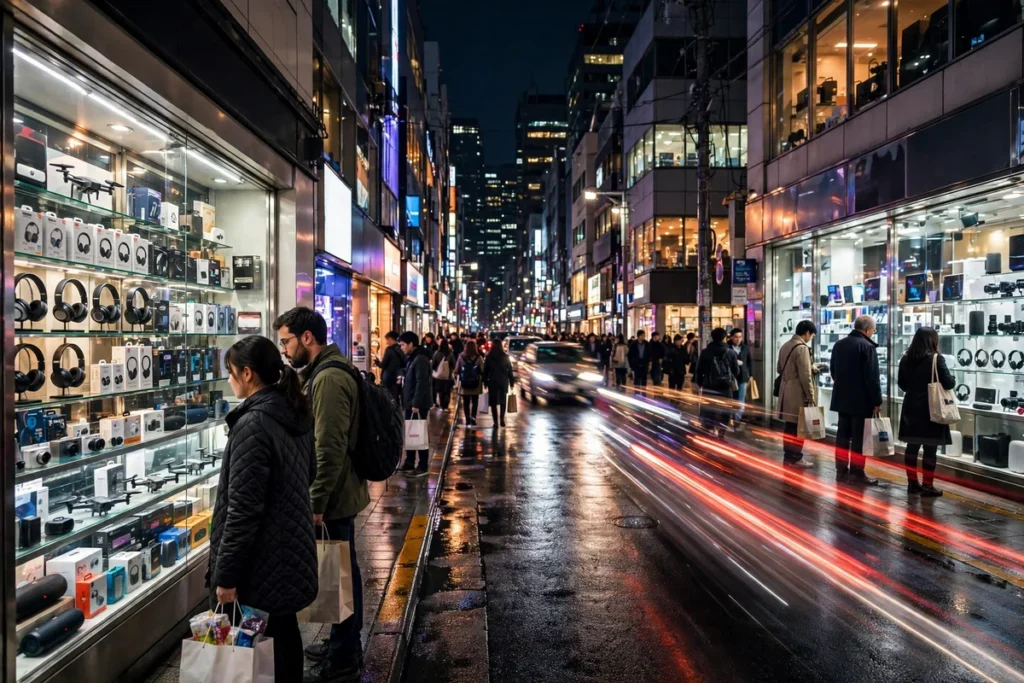
The neon canyons of a Tokyo electronics district at night, where shoppers browse glowing display windows. Japan's defining Black Friday battleground is Amazon.co.jp's week-long sale — historically running 7–8 days from late November into early December.
Watch: Black Friday in Japan 2026
Amazon's sale is the centrepiece of Japan's Black Friday — see which tech picks are genuinely worth your money this season.
At a Glance: Black Friday in Japan 2026
How Japan's Black Friday works: the long sale, the point systems and the players.
| Detail | What to know |
|---|---|
| Black Friday 2026 | Friday, 27 November — but the real action spans a 7–8 day window into early December |
| Key players | Amazon.co.jp runs the country's biggest e-commerce Black Friday; Rakuten competes, with Yodobashi Camera and Bic Camera in electronics |
| Sale mechanics | Lightning Deals, 'second round' sale phases, and deep cuts across appliances and gadgets |
| The Japanese edge | Point systems matter as much as discounts — factor in point rebates, coupons and konbini payment options |
| Currency | Prices in Japanese yen (JPY) |
| Watch out for | Point-expiry dates and campaign-entry requirements — many of the best 'discounts' need an opt-in first |
Frequently Asked Questions
When is Black Friday 2026 in Japan?
Friday, November 27, 2026 — but Japan’s sale is really a week-plus event. Amazon.co.jp’s Black Friday has historically run 7–8 days from late November into early December, and the electronics chains run extended campaigns alongside it. Cyber Monday follows on November 30.
Is Amazon Japan’s Black Friday good?
Yes — it is one of Japan’s biggest shopping events, with deep cuts on appliances, gadgets, Amazon devices and daily goods, plus Lightning Deal waves and “second round” refreshes. The cart-watch method (add early, buy on price drop) is the proven strategy.
How do Rakuten Points work on Black Friday?
Rakuten multiplies point rebates during campaign periods, and the effective rebate scales with your ecosystem membership (Rakuten Card, Mobile, Bank). Calculate the effective price — shelf price minus points value — and enter all point campaigns explicitly before buying.
Which is cheaper: Yodobashi, Bic Camera, or Amazon?
It depends on the item and your point situation. Yodobashi and Bic Camera’s Gold Points (often 10%+ back, more during campaigns) make their effective prices extremely competitive on cameras, audio and appliances. Amazon wins on straightforward discounting and daily goods. Check Kakaku and calculate effective prices.
Can tourists shop Black Friday in Japan?
Yes — the sales are open to everyone, and the electronics giants handle tax-free purchases routinely. Confirm at the register how tax-free interacts with sale pricing and point awards before paying.
What is Kakaku.com?
Japan’s leading price-comparison site, tracking prices across Japanese retailers with historical data. It is the essential tool for verifying whether a Black Friday “deal” is genuine — check the October price before you buy.
The Bottom Line
Black friday japan 2026 is a points-and-patience game played over a week, not a day. Enter the point campaigns, collect the coupons, cart-watch on Amazon.co.jp, verify everything on Kakaku, and calculate effective prices — not shelf prices — across Amazon, Rakuten, Yodobashi and Bic Camera. Do that, and Japan’s uniquely layered sale becomes one of the most rewarding in the world. For the global overview, start with our best Black Friday deals hub — then go enjoy the electronics districts.
Black Friday vs Fukubukuro: Japan’s Two Sale Seasons
Japan has two great sale traditions, and understanding both sharpens your Black Friday strategy. Fukubukuro — the New Year “lucky bags” — offer mystery assortments at fixed prices every January, and they are unbeatable for fashion, beauty and lifestyle discovery. But fukubukuro are surprise-driven; Black Friday is precision-driven. The rule: buy specific, researched items (the exact camera, the exact appliance model) on Black Friday, when you control the choice; enjoy fukubukuro in January for serendipity and categories where surprise is fun.
Electronics, computing and appliances are firmly Black Friday territory — fukubukuro rarely cover them well, and November’s effective prices (with points) are historically the year’s best. Fashion and cosmetics split more evenly: Black Friday discounts are predictable and choosable, fukubukuro offer higher surprise value per yen. Shoppers who try to force everything into one season overpay somewhere; shoppers who match the tradition to the category win twice.
Christmas and Year-End in Japan
Christmas in Japan is a couples’ and children’s holiday rather than a family gift-giving marathon, but the year-end gift culture (oseibo) and New Year preparations make November–December a heavy shopping period regardless. Black Friday’s timing — a month before the year-end — suits Japan’s calendar well: buy the appliances and tech in November, handle oseibo and New Year goods in December.
For children’s Christmas gifts, the toy and game discounts on Amazon.co.jp and at the electronics giants make late November the obvious buying window — our toy deals guide covers the category. And for anyone hosting year-end gatherings, the appliance deals (dishwashers, robot vacuums, kitchen upgrades) are practically timed for the entertaining season.
Regional Notes: Beyond Tokyo and Osaka
Black Friday pricing is national online, but the in-store experience concentrates in the great electronics districts. Tokyo has Akihabara, Shinjuku and Ikebukuro; Osaka has Umeda, Namba and Nipponbashi (Den-Den Town); Nagoya, Fukuoka (Hakata), Sapporo and Sendai all host major Yodobashi and Bic Camera stores. Outside the big cities, the online sale is the whole event — and Japan’s delivery infrastructure (Yamato, Sagawa, Japan Post) handles the surge with characteristic efficiency.
Order early in the sale week rather than at the end if timing matters: even Japan’s excellent logistics feel the Black Friday volume, and the final days of Amazon’s event see the longest delivery estimates. For rural shoppers, the electronics chains’ online stores with points included are often the best channel — full selection, points earned, delivery to the door.
The Points Long Game
Here is the advanced perspective: Japanese Black Friday points are not just discounts — they are the seed capital for your next purchase. Yodobashi Gold Points, Bic Camera points, Rakuten Points and Amazon Points all carry forward, which means November’s shopping funds December’s and January’s. Experienced Japanese shoppers plan their point flows across the year: earn multiplied points on Black Friday appliances, spend them on New Year fukubukuro or spring purchases.
This changes the maths on close calls. When two retailers’ effective prices are within a few percent, prefer the one whose points you will actually use — points in an ecosystem you shop are worth their face value; points in one you do not are worth far less. And watch point expiry: some campaign bonus points expire faster than base points, so spend the short-dated ones first. The shoppers who treat points as a currency — tracked, budgeted, strategically earned and spent — extract hundreds of pounds of extra value a year from the same spending everyone else does.
Final Checklist
The week before: enter all point campaigns on Rakuten and the electronics chains; collect Amazon.co.jp coupons; build your cart-watch list with exact models; record October prices on Kakaku; confirm your Prime membership status; link konbini payment if you use it; and set your budgets. During the sale: buy on effective price (shelf minus points minus coupons), verify against Kakaku, and pace yourself across the week — the “second round” refreshes reward the patient.
Do that, and black friday japan 2026 becomes what Japan does best: a precise, well-instrumented operation where preparation converts directly into savings. The electronics districts will be glowing, the Lightning Deals will be flashing, and you — cart watched, coupons collected, points calculated — will be shopping it like a local.
One Last Piece of Advice
Japanese retail culture rewards the considerate, prepared shopper — and Black Friday is no exception. The crowds in the electronics districts are orderly, the staff are helpful, and the systems (points, coupons, cart-watching) reward those who engage with them properly. There is no need for the frantic doorbuster energy of other countries’ sales; Japan’s version is longer, calmer and more strategic. Embrace that: make your lists, enter your campaigns, watch your carts, and let the week-long sale come to you. The deals will be there — for the shopper who prepared, they always are.
Bookmark this guide, enter those campaigns, and check Kakaku before every significant purchase. Japan’s Black Friday is long, layered and deeply rewarding for the shopper who engages with its systems — and this November, that shopper is you.
いってらっしゃい — go well, and may your points multiply.
A final practical note on paying: Japan’s cashless landscape keeps evolving, with credit cards, IC cards (Suica, Pasmo), QR code payments (PayPay, Rakuten Pay, au PAY) and konbini payment all in play. Black Friday campaigns sometimes tie bonus points or coupons to specific payment methods — paying with a Rakuten Card on Rakuten, or via a campaign-linked QR payment, can add percentage points to your effective rebate. Check each platform’s campaign pages for payment-method bonuses before the sale, and have your preferred methods set up and verified in advance. In a sale decided by stacked percentages, the payment layer is the last few percent — and the prepared shopper collects every one of them.


