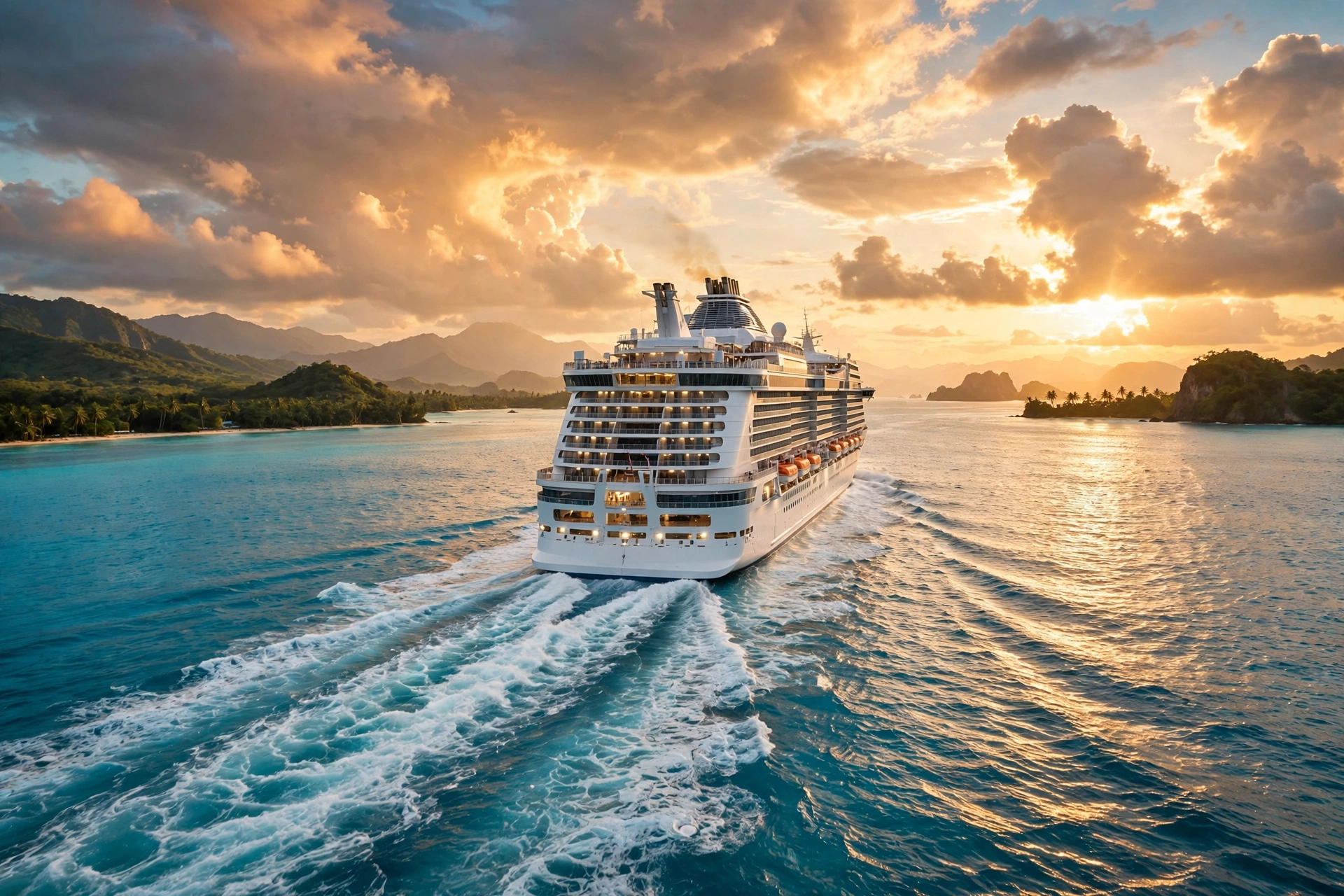
Cruising looks effortless — unpack once, wake up somewhere new — but first-timers who wing it leave serious money and enjoyment on the table. These first time cruise tips cover everything the cruise lines do not put in the brochure: how to pick the right ship and cabin, what your fare actually includes, the onboard upsells to skip, and the embarkation-day moves that separate rookies from veterans. Whether you are sailing the Caribbean, Alaska, or the Mediterranean, these 30 tips will help you cruise like you have done it a dozen times.
Before You Book: 8 First Time Cruise Tips
1. Pick the right cruise line for your style, not just the price
Cruise lines have distinct personalities. Carnival and Royal Caribbean skew lively and family-friendly with lots of activities; Norwegian emphasizes freestyle flexibility; Celebrity and Princess lean more refined and adult; luxury lines like Viking and Oceania are quieter and more inclusive. Read recent reviews from travelers like you — a party ship is miserable if you wanted tranquility, and a sedate ship is boring if you wanted energy. The cheapest fare on the wrong ship is no bargain.
2. Choose your cabin location deliberately
Cabin category matters less than cabin location. Midship cabins on lower decks feel the least motion — ideal if you are prone to seasickness. Cabins under the pool deck, above nightclubs, or near elevators and crew areas can be noisy; check deck plans before booking. Inside cabins are dark and cheap (great sleepers, actually); oceanview adds natural light; balconies add the wow factor and private outdoor space. For a first cruise, a midship balcony on a middle deck is the sweet spot if the budget allows.
3. Understand what the fare includes — and what it does not
Your base fare typically covers the cabin, main dining room meals, buffet, basic beverages (water, coffee, tea, some juices), pools, fitness center, and most entertainment. It usually does not cover: alcoholic drinks, specialty coffees and sodas, specialty restaurants, spa services, shore excursions, Wi-Fi, photos, gratuities, or casino play. Budget for these extras realistically — see the cost table below. If you drink even moderately, price the beverage package against your actual habits before buying.
| Common onboard extra | Typical cost range | Worth it? |
|---|---|---|
| Alcoholic drink package | $60–$100/day per person | Only if you drink 5–6+ drinks daily |
| Specialty restaurant | $30–$60 cover charge | Yes for one special night |
| Wi-Fi package | $15–$30/day | Buy the voyage plan, not daily |
| Shore excursion (ship-booked) | $75–$200+ per person | Compare independent options first |
| Spa treatment | $120–$250 | Book port-day discounts |
| Automatic gratuities | $14–$20/day per person | Non-optional; budget it in |
4. Book excursions strategically, not reflexively
Ship-booked excursions cost 30–50% more than independent tours but guarantee the ship waits if your tour runs late — a real consideration. For low-risk ports (beach days, walkable towns), independent tours and DIY exploring save serious money. For complex itineraries (remote ruins, multi-stop days), the ship’s excursion buys peace of mind. Research each port individually rather than applying one rule everywhere.
5. Fly in at least one day early
This is the most repeated of all first time cruise tips because it prevents the most catastrophic outcome: missing the ship. Flight delays and cancellations are common enough that same-day arrival is a genuine gamble — and the ship will not wait. Arriving a day early also lets you board rested instead of frazzled. Book a hotel near the port and treat the extra night as part of the vacation.
6. Check passport and documentation requirements
Many cruises require a passport even on “closed-loop” sailings where one technically suffices — and some ports of call do not accept birth certificates. Verify requirements for every country on your itinerary, check passport expiration rules, and confirm whether visas are needed. If your passport needs attention, see our passport renewal guide well before final payment is due.
7. Consider travel insurance with “missed connection” coverage
Standard travel insurance covers trip cancellation and medical emergencies, but cruisers should specifically confirm coverage for missed port departures and trip interruption — if you miss embarkation due to a flight delay, you need a policy that helps you catch up with the ship at the next port. Our travel insurance guide explains which policy features matter most for cruises.
8. Join your sailing’s roll call and Facebook group
Nearly every sailing has an unofficial social media group where passengers share excursion plans, organize group tours (often cheaper), and swap tips specific to your ship and itinerary. It is also where you will hear about cabin upgrades, port changes, and theme nights before the cruise line announces them.
Packing for a Cruise: 6 First Time Cruise Tips
9. Pack a day-one carry-on like your luggage is lost
Checked bags can take hours to reach your cabin — sometimes until evening. Your embarkation-day carry-on should hold: swimsuit, sunscreen, medications, travel documents, phone chargers, a change of clothes, and anything you need before dinner. You paid for that first afternoon; do not spend it waiting for a suitcase.
10. Bring the cabin hacks experienced cruisers swear by
Cabins are compact, and a few cheap items transform them: magnetic hooks (cabin walls are metal — instant extra hanging space), a power strip without surge protection (surge-protected strips are confiscated; check your line’s policy), a nightlight for the windowless bathroom, clothespins or towel clips for drying swimwear on the balcony, and a small first-aid kit — the ship’s medical center charges a premium for basics.
11. Pack for the dress code you will actually encounter
Most mainstream lines have relaxed dress codes dramatically — “smart casual” is the norm, with one or two optional formal/elegant nights. You do not need a tuxedo or gown unless you want one. Do pack: layers for air-conditioned interiors and breezy decks, comfortable walking shoes for port days, and modest cover-ups for visiting churches and mosques in Mediterranean ports.
12. Do not overpack — laundry exists
Ships offer laundry and pressing services (pricey) and many have self-service laundrettes (cheap). For a 7-day cruise, five days of outfits plus laundry midweek beats dragging two suitcases. Remember you will also acquire souvenirs. For a full packing system, our travel packing checklist adapts well to cruises.
13. Bring seasickness prevention even if you never get seasick
First-timers cannot know how they will react to open-ocean swells. Pack meclizine or dimenhydrinate, acupressure wristbands, and ginger chews — the ship’s shop sells remedies at triple the price. If you are sensitive, request a midship cabin on a lower deck (tip 2) and spend rough-sea time on deck focusing on the horizon.
14. Pack reef-safe sunscreen and a reusable water bottle
Many ports — especially in Hawaii, Mexico, and the Caribbean — restrict or ban sunscreens with oxybenzone and octinoxate to protect reefs. Reef-safe sunscreen avoids awkward confiscations and is better for the marine environments you came to enjoy. A reusable bottle saves money and plastic; refill stations are common on modern ships.
Embarkation Day: 5 First Time Cruise Tips
15. Arrive at the port at your assigned time, not at dawn
Showing up hours before your boarding window means waiting in a terminal with hundreds of equally eager passengers. Arrive within your assigned window, breeze through check-in, and board to a ship that is already ready for you. Have your boarding pass, passport, and credit card for onboard expenses in hand — not buried in your carry-on.
16. Head straight to the buffet alternative for lunch
Everyone floods the main buffet on embarkation day. Savvy cruisers head to the alternative casual venues — the pizza place, the taco bar, the main dining room if open for lunch — for a relaxed first meal with no lines. Then watch the sail-away from the top deck: the departure party is genuinely fun and most first-timers who skip it regret it.
17. Explore the entire ship on day one
Walk every deck, find the pools, theaters, specialty venues, and quiet corners before the crowds settle into routines. Locate your muster station, note the medical center’s location, and figure out the elevator logic (forward/aft banks serve different decks). This 45-minute investment pays off all week — you will know the shortcuts while others are still studying deck plans.
18. Make specialty dining and activity reservations immediately
The most popular specialty restaurants, spa thermal suite passes, and limited-capacity activities (cooking classes, behind-the-scenes tours) book up on day one. If you want them, reserve at embarkation — you can always cancel later. The same goes for popular shore excursions if you did not pre-book.
19. Set up your onboard account and app right away
Download the cruise line’s app before sailing (ship Wi-Fi for the app is usually free), link your onboard expense account, and check your daily planner each evening. Review your account statement mid-cruise — billing errors are far easier to fix on day three than in the disembarkation-day rush.
Onboard Like a Pro: 6 First Time Cruise Tips
20. Eat in the main dining room at least a few nights
The main dining room is included in your fare and serves genuinely good multi-course dinners — many first-timers default to the buffet and never discover it. Try both traditional fixed seating (same table, same waiters, new friends) and flexible “anytime” dining across nights to see which you prefer. Room service breakfast on your balcony on a sea day is one of cruising’s great free pleasures.
21. Do the math on drink packages honestly
A $70/day drink package sounds simple until you realize it is per person, per day, for the whole sailing — $980 for two people on a 7-day cruise. At $12–15 per cocktail, you need 5–6 drinks daily to break even. Light drinkers save hundreds by paying as they go; many lines also allow one or two bottles of wine per cabin at embarkation. Track your spending for two days, then decide — most lines let you buy packages onboard.
22. Take advantage of port-day onboard discounts
When most passengers go ashore, the ship empties — and the spa, specialty restaurants, and some activities offer port-day discounts to fill the gap. A sea-day spa treatment at 30% off, or lunch at the specialty restaurant with no wait, are veteran moves. If you have been to a port before, consider staying aboard for a blissfully uncrowded ship day.
23. Befriend your cabin steward on day one
Learn their name, mention any needs (extra pillows, ice, hangers), and be friendly — stewards remember kind passengers and often go the extra mile with towel animals, priority service, and insider tips about the ship. Reasonable requests are free; tipping extra at the end for great service is customary and appreciated.
24. Manage your onboard spending deliberately
Cruise ships are designed to separate you from money painlessly — everything goes on your room key, and the numbers feel abstract until disembarkation. Set a daily spending target, check your account on the app every couple of days, and remember that photos, bingo, art auctions, and casino ATMs are high-margin by design. The best cruise memories (sunsets, shows, pool time) are all included in your fare.
25. Do not skip the shows and enrichment
Production shows, live music, comedy, cooking demos, and port lectures are included and often excellent — cruise lines compete on entertainment. Check the daily planner each evening and try things outside your usual taste. The “boring sea day” is a myth for passengers who actually use the ship.
In Port and Disembarkation: 5 First Time Cruise Tips
26. Get off the ship early in port
The first tender or gangway wave means empty attractions, cooler morning temperatures, and first choice of beach spots. Set an alarm, grab an early breakfast, and be among the first ashore — you can always return for a midday pool break while the crowds peak on land.
27. Always carry the ship’s port info card
The daily planner lists the all-aboard time and the port agent’s emergency number. Take a photo of it and carry the ship’s contact card from the front desk. If you are running late, call the port agent — not the main cruise line number. And the golden rule: all-aboard time means on the ship, not “heading back to the pier.” The ship leaves on schedule.
28. Put your phone in airplane mode at sea
Cellular-at-sea roaming charges are legendary — hundreds of dollars for a few minutes of accidental data use. Switch to airplane mode when you leave port and use the ship’s Wi-Fi packages instead. Download offline maps for port days before you sail, and confirm your phone plan’s international terms for port days ashore.
29. Pack and settle your account the night before disembarkation
On the final evening, set out your disembarkation-day clothes and documents, put your checked bags outside your door by the deadline (usually around 10–11 p.m.), and review your final account statement for errors. Keep medications, valuables, and travel documents in your carry-on — not in the bags you set out.
30. Do not book an early flight home
Disembarkation runs on the ship’s schedule, not yours — customs delays happen. Book flights departing no earlier than noon for domestic and early afternoon for international, or better yet, stay an extra night in the port city. The relaxed final morning beats a sprint through the terminal. Our cheap flights guide can help you find a well-timed return fare.
First-Time Cruiser Mistakes to Avoid
| Mistake | What happens | Do this instead |
|---|---|---|
| Flying in the morning of embarkation | One delay = missed ship, ruined vacation | Arrive at least one day early |
| Buying the drink package by default | $500–$1,000+ wasted if you drink lightly | Track 2 days, then decide |
| Booking every excursion through the ship | 30–50% markup on every tour | Mix ship and independent tours by port |
| Ignoring the daily planner | Missing the best free events | Read it every evening |
| Using cellular data at sea | Shock roaming bills | Airplane mode + ship Wi-Fi |
| Skipping travel insurance | Missed ship or medical issue = huge cost | Buy with missed-connection coverage |
Frequently Asked Questions for First-Time Cruisers
How much does a first cruise really cost?
Beyond the advertised fare, budget an additional 40–60%: gratuities ($14–20/day per person), drinks or a beverage package, one or two specialty dinners, Wi-Fi, shore excursions ($75–200 per port), and pre-cruise hotel. A $799 advertised fare realistically becomes $1,200–$1,400 per person all-in for a week. The fare table earlier in this guide breaks down the major extras.
What is the best cruise for first-timers?
A 7-day Caribbean or Bahamas sailing on a large mainstream ship (Royal Caribbean, Carnival, Norwegian) is the classic first cruise: easy logistics, plenty to do, frequent departures, and competitive pricing. Alaska is spectacular for scenery lovers; the Mediterranean suits culture-focused travelers but involves more complex port logistics.
Do I need a passport for a cruise?
Usually yes in practice, even when technically optional. Closed-loop cruises (starting and ending at the same US port) legally allow US citizens to sail with a birth certificate and photo ID, but many cruise lines require passports anyway, and some ports of call do not accept alternatives. Get the passport — it is the only document that works everywhere.
What should first-time cruisers pack that they would not expect?
Magnetic hooks (cabin walls are metal), a non-surge power strip, a nightlight, towel clips for windy decks, seasickness remedies, reef-safe sunscreen, and a small first-aid kit. The ship sells all of these at steep markups, so bring your own.
Are drink packages worth it on a cruise?
Only for consistent moderate-to-heavy drinkers. At $60–100/day, you need roughly 5–6 alcoholic drinks daily to break even — every day, including port days when you are ashore. Couples where one person drinks lightly almost always save money paying per drink. Track your actual consumption for two days before deciding.
Should I book shore excursions through the cruise line?
It depends on the port. Ship excursions cost more but guarantee the ship waits for you — worth it for complex, far-flung tours. For beach days and walkable towns, independent operators and DIY exploring save 30–50%. Research each port individually instead of applying a blanket rule.
How do I avoid seasickness on a cruise?
Book a midship cabin on a lower deck, spend time on deck focusing on the horizon during rough seas, eat light, and bring preventive medication (meclizine works well for most people). Modern large ships have stabilizers that minimize motion — most passengers never feel meaningfully sick.
What happens if I miss the ship at a port?
You are responsible for getting yourself to the next port at your own expense — which is why travel insurance with trip-interruption coverage matters. Call the port agent number from your daily planner immediately; they coordinate with the ship. This is also why experienced cruisers build big time buffers into port days and never cut the all-aboard time close.
The Bottom Line on First Time Cruise Tips
The secret behind all these first time cruise tips is simple: a little knowledge replaces a lot of money. Choose the right ship and cabin, understand what is included before you board, pack the cheap hacks, get off early in port, and keep your phone in airplane mode at sea. Do that, and your first cruise will feel like your fifth — relaxed, well-fed, and free of the rookie mistakes that cost other passengers hundreds. Ready to start planning? Our travel planning checklist walks you through every step from destination to departure day, and our budget travel guide will help you keep the whole adventure affordable.