Headphones are one of the rare tech purchases where spending more genuinely buys a better daily experience — but only if you buy the right type for your life. This headphones buying guide walks through every style, the specs that matter, and the traps to avoid, so you end up with headphones you will actually wear for years instead of a drawer full of regrets.
The Four Headphone Styles (Pick This First)
Style determines comfort, noise isolation, and portability more than any spec. Get this decision right and everything else is fine-tuning.
Over-Ear (Circumaural): The Comfort Kings
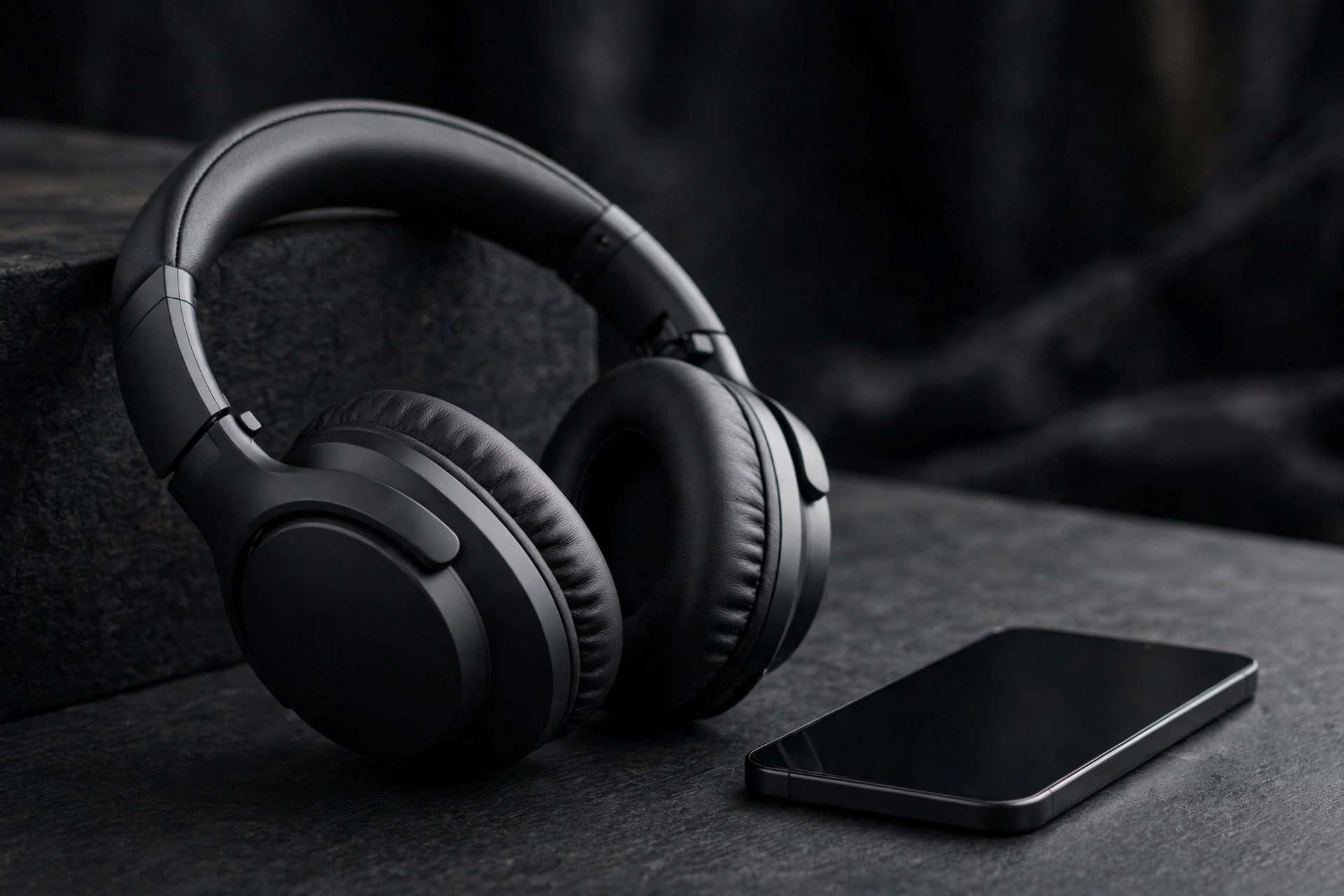
Large earcups fully enclose your ears. Over-ears deliver the best sound quality, the most effective noise cancellation, and the best long-session comfort — which is why they dominate offices, flights, and home listening. Flagship models from Sony (WH-1000X series), Bose (QuietComfort line), Apple (AirPods Max), and Sennheiser (Momentum) live here, typically $250–$550. Downsides: bulky, not workout-friendly, and they can get warm in summer. If you listen for hours at a desk or on planes, start here.
On-Ear (Supra-Aural): The Compromise
Smaller earcups rest on your ears rather than around them. On-ears (like Beats Solo) are more portable than over-ears and cheaper, but they press on your ears — comfort fades after an hour or two for most people, and noise isolation is weaker. A shrinking category in 2026; only worth considering if you specifically want the compact form factor and short listening sessions.
In-Ear / Earbuds: The Portable Pick
Tiny buds that fit in your ear canal or outer ear. Wireless earbuds are the best-selling headphone category by far thanks to pocketability and workout suitability. Sound quality and noise cancellation have improved enormously, though they still trail good over-ears. If your priority is commuting, exercise, or calls on the go, see our roundup of the best wireless earbuds — this guide focuses on over-ear and on-ear headphones, where the buying decisions differ most.
Open-Back: The Audiophile Niche
Open-back headphones (mostly wired, from Sennheiser, Beyerdynamic, HiFiMAN) leak sound in and out by design, creating a spacious, speaker-like soundstage that closed headphones cannot match. They are the choice for critical home listening — and useless on a plane or in an office, since everyone hears your music and you hear everything around you. Only for dedicated home listening setups.
Noise Cancellation (ANC): How It Works and When It Matters
Active noise cancellation uses microphones to sample ambient sound and generates an inverse wave that cancels it out. Modern ANC is remarkably effective against constant low-frequency drone — airplane engines, train rumble, office HVAC, air conditioners — and noticeably less effective against sudden sounds like voices and clattering dishes.
Do You Actually Need ANC?
Buy ANC headphones if you fly more than a few times a year, commute on trains or buses, work in an open office, or live with constant background noise. The difference on a long flight is transformative — you arrive less fatigued because your brain is not fighting engine drone for six hours. Skip ANC (and save $100+) if you mostly listen at home in quiet rooms; passive isolation from a good seal is plenty.
Transparency / Ambient Mode
The flip side of ANC: microphones pipe the outside world back in so you can hear announcements, traffic, or conversations without removing the headphones. Quality varies enormously — Apple’s transparency mode remains the benchmark for natural sound, while budget implementations sound tinny and artificial. If you wear headphones while walking in cities or need to stay aware at work, test this feature before buying.
Sound Quality: What to Listen For
Sound signatures fall into three broad camps, and preference is personal — there is no universally “correct” tuning:
- Balanced/neutral (Sennheiser, Audio-Technica): faithful reproduction, preferred by purists and creators. Can sound “boring” to bass lovers at first.
- Warm and bass-forward (Sony, Beats): fun, energetic, great for pop, hip-hop, and EDM. The most popular tuning for casual listeners.
- Bright/detailed (Beyerdynamic, Grado): crisp highs and clarity, loved for acoustic, classical, and rock. Can sound harsh on poor recordings.
Most 2026 flagships include companion apps with EQ customization, so you are not locked into the factory tuning — check that the app exists and is well-reviewed before assuming. For wireless listening, codec support matters: LDAC (Sony) and aptX Adaptive/Lossless (Qualcomm) transmit noticeably more detail than basic SBC, but only if your phone supports them (most Android phones do; iPhones use AAC, which is fine but not hi-res).
Comfort: The Spec Nobody Lists
The best-sounding headphones in the world are worthless if they hurt after 45 minutes. Comfort factors to evaluate:
- Weight: Under 250g is comfortable for all-day wear; over 300g (looking at you, AirPods Max at 385g) becomes noticeable by hour three.
- Clamping force: Too tight causes headaches; too loose slides around. This varies by head size — try before you buy if possible.
- Earpad material: Memory foam with protein leather seals best for ANC; velour/fabric breathes better for long sessions but leaks more sound.
- Glasses compatibility: If you wear glasses, thick arms break the earcup seal and degrade ANC. Look for softer pads and read glasses-wearer reviews specifically.
Battery Life and Charging
Battery expectations in 2026: flagship over-ears deliver 30–60 hours with ANC on (Sony and Sennheiser lead here; Bose trails slightly). That is effectively “charge once every week or two” for most users. Fast charging is standard on good models — typically 3 minutes of charging for 3 hours of playback, or 10–15 minutes for a meaningful top-up. Check whether the headphones work while charging (most do via cable) and whether they include a wired option for flights and dead-battery emergencies — a 3.5mm cable in the box is a small thing that matters enormously at 35,000 feet.
Bluetooth, Multipoint, and Codecs
- Bluetooth version: 5.2 or newer is standard; 5.3/5.4 adds efficiency and the foundation for LE Audio.
- Multipoint connection: Connect to two devices simultaneously (laptop + phone) and switch automatically when a call comes in. This is a genuine quality-of-life feature for remote workers — prioritize it if you juggle devices.
- LE Audio and Auracast: The next-generation Bluetooth audio standard, rolling out through 2025–2026. It promises better quality at lower power plus broadcast audio (one source to many headphones — think airport TVs and gym screens). Nice future-proofing, not yet a buying criterion.
- Range: Class 1 Bluetooth (up to ~100m line-of-sight in theory, 10–20m through walls in practice) lets you wander the house with your phone on the desk. Worth checking if you move around while listening.
Call Quality: The Remote-Work Factor
If you take calls on your headphones, microphone quality deserves equal weight with sound quality. Multi-microphone arrays with AI noise reduction (Sony WH-1000XM5/XM6, Bose QC Ultra, AirPods Max) now isolate your voice from café chatter and wind remarkably well; budget headphones often sound like you are calling from inside a tunnel. Read call-quality assessments in reviews specifically — it is the most commonly under-tested aspect of headphone reviews and the one remote workers notice most.
Durability and Repairability
Headphones live hard lives — tossed in bags, worn in rain, dropped on floors. Look for: folding designs with metal-reinforced hinges (plastic hinges are the number-one failure point), IPX4 water resistance or better if you will wear them outdoors or at the gym, and replaceable earpads (pads wear out in 1–2 years of heavy use; $20–$40 replacement pads extend a $350 headphone’s life by years). Brands with good warranty service and available spare parts (Sennheiser, Beyerdynamic, Bose) are worth a premium over disposable-feeling alternatives.
Budget Tiers: What Your Money Buys
Under $100: Surprisingly Decent
The budget tier has never been better. Brands like Soundcore (Anker), EarFun, and 1More deliver effective basic ANC, 40+ hour battery, and perfectly enjoyable sound for $50–$100. Compromises show in call quality, app polish, build materials, and long-term durability — but for students, kids, or a beater pair for the gym bag, this tier is outstanding value.
$100–$250: The Sweet Spot for Most Buyers
This is where diminishing returns start bending. You get genuinely good ANC, multipoint, LDAC/aptX support, quality apps with EQ, and comfortable builds from Sony’s mid-range, Soundcore’s flagships, Sennheiser’s Accentum line, and JBL’s Live series. For office workers, commuters, and students, a $150–$200 pair here satisfies 90% of listeners completely.
$250–$400: Flagship Territory
Sony WH-1000XM6, Bose QuietComfort Ultra, Sennheiser Momentum 4/5, Apple AirPods Max (often discounted into this range). You are paying for the best ANC in the business, top-tier call quality, premium materials, and refined tuning. Worth it for frequent flyers, daily 6+ hour wearers, and anyone whose headphones are a primary work tool.
Over $400: Audiophile and Luxury
Focal Bathys, Bowers & Wilkins Px8, Mark Levinson, high-end wired open-backs plus a DAC/amp. Audible improvements over the $300 tier exist but are subtle — this tier is for enthusiasts who can articulate what they are paying for. Everyone else should stop at flagship.
Headphones for Specific Uses
| Use Case | Prioritize | Style to Buy |
|---|---|---|
| Frequent flying | ANC strength, comfort, battery, folding design | Flagship over-ear |
| Open office / remote work | Call quality, multipoint, comfort | Over-ear with strong mics |
| Commuting | Portability, ANC, transparency mode | Over-ear or premium earbuds |
| Working out | Secure fit, sweat resistance (IPX4+), washability | Sport earbuds (not over-ears) |
| Critical music listening at home | Soundstage, detail, comfort | Open-back wired |
| Gaming | Low latency, mic quality, comfort | Dedicated gaming headset |
| Kids | Volume limiting (85dB), durability, price | Budget on-ear with limiter |
Headphones Buying Mistakes to Avoid
- Buying for specs instead of fit. An uncomfortable flagship loses to a comfortable mid-range pair you actually wear.
- Paying for ANC you will never use. Home-only listeners can save $100+ skipping flagship ANC.
- Ignoring codec support. If you own an Android phone and care about sound quality, LDAC or aptX Adaptive support matters; iPhone users should not pay extra for codecs their phone cannot use.
- Skipping the return window test. Wear new headphones for a full workday within the return period. Pressure points that seem minor in a store become miserable by hour six.
- Buying “gaming headsets” for music (or vice versa). Gaming headsets prioritize mic and surround cues over music fidelity; music headphones prioritize tuning over mic quality. Buy for your primary use.
- Forgetting hearing health. The WHO recommends keeping volume below 85dB for extended listening. ANC helps here — by blocking background noise, it lets you listen at lower volumes. Consider enabling volume-limit features in your phone’s settings as a safety net.
Headphones Buying Guide FAQ
How much should I spend on headphones?
$150–$250 covers the sweet spot where ANC, comfort, and sound quality all become genuinely good. Spend $300+ only if you fly frequently, wear headphones all day for work, or are an enthusiast. Under $100 buys perfectly serviceable headphones for casual use.
Are expensive headphones worth it?
Up to about $300, yes — each tier brings audible and tangible improvements. Beyond that, improvements become subtle and use-case-specific. The jump from $80 to $200 is enormous; the jump from $300 to $500 is modest.
How long do headphones last?
Quality headphones last 3–5 years of daily use; the battery is usually what dies first. Replaceable earpads and cables extend life significantly. Budget models often fail at hinges or headbands within 1–2 years.
Can I wear over-ear headphones with glasses?
Yes, but choose carefully. Softer memory-foam pads accommodate glasses arms better than firm ones, and some models are specifically praised by glasses wearers in reviews. The seal break from glasses arms also slightly reduces ANC effectiveness — another reason to try before committing.
Do I need a headphone amp (DAC/amp)?
For wireless headphones, no — the amp is built in. For wired audiophile headphones (especially high-impedance models from Beyerdynamic or Sennheiser’s HD 600 series), a modest DAC/amp ($100–$200) makes an audible difference. For typical 32-ohm wired headphones, your phone or laptop is fine.
Wired vs. wireless in 2026 — which is better?
Wireless won for convenience, and modern codecs closed most of the quality gap for casual and even serious listening. Wired still wins for absolute fidelity, zero latency, and no battery anxiety. Many flagship wireless headphones include a wired mode — the best of both worlds.
Wired Listening in a Wireless World
Wireless dominates headphone sales, but wired headphones deserve a clear-eyed defense. A wired connection delivers uncompressed audio with zero latency and no battery anxiety — meaningful advantages for critical listening, video editing, and competitive gaming where even 40ms of Bluetooth delay is noticeable. Wired headphones also sidestep the entire codec-compatibility question: no worrying whether your phone supports LDAC or aptX, because the analog or USB-C connection just works. The trade-offs are obvious — cables snag, tangle, and tie you to the device, and many phones no longer include headphone jacks (a USB-C DAC dongle, $10–$30, solves this with better sound than the old jacks ever offered). The pragmatic move for enthusiasts: own one good wired pair for desk listening and one wireless pair for everything else. Many flagship wireless headphones include a wired mode precisely because manufacturers know some listeners still want the option.
Understanding Frequency Response (Without the Jargon)
Reviewers love frequency-response graphs, but you only need the intuition behind them. Human hearing spans roughly 20Hz (deep bass) to 20kHz (brilliant treble), and a headphone’s frequency response describes how loudly it plays each part of that range. A “V-shaped” signature boosts bass and treble while dipping the mids — fun and exciting, the default tuning of most consumer headphones. A “neutral” or “flat” signature plays everything evenly — accurate but sometimes perceived as dull by listeners used to V-shaped sound. A “warm” signature gently emphasizes bass and softens treble — smooth and non-fatiguing for long sessions. None is objectively correct; the right one is the one you enjoy for hours. This is also why EQ apps matter so much: a $200 headphone tuned to your preference via EQ will satisfy you more than a $350 headphone with a signature you dislike. When reading reviews, look for descriptions of the tuning (“bass-heavy,” “neutral,” “bright”) rather than star ratings — tuning fit predicts your satisfaction better than any score.
Taking Care of Your Headphones
A few habits dramatically extend headphone life: store them in their case rather than tossing them in a bag — hinge and headband failures overwhelmingly come from unprotected transport. Wipe down earpads periodically with a slightly damp cloth; sweat and skin oils degrade protein-leather pads, and replacement pads ($20–$40) every 18–24 months keep both comfort and sound isolation like new for years. Avoid leaving headphones in hot cars — heat degrades batteries and adhesives faster than almost anything else. Charge lithium batteries before they fully die, and don’t stress about keeping them at 100% — modern battery management handles that. Finally, update the companion app firmware when prompted; manufacturers regularly improve ANC algorithms, call quality, and multipoint behavior through updates long after purchase.
The headphone market rewards buyers who start from their actual routine: where you listen, for how long, and what matters most — silence, sound, or calls. Match the style to the use case, insist on comfort, buy ANC only if your life needs it, and test thoroughly within the return window. Your ears will thank you for years. If portability matters more than over-ear performance, our best wireless earbuds roundup covers the top pocketable picks.