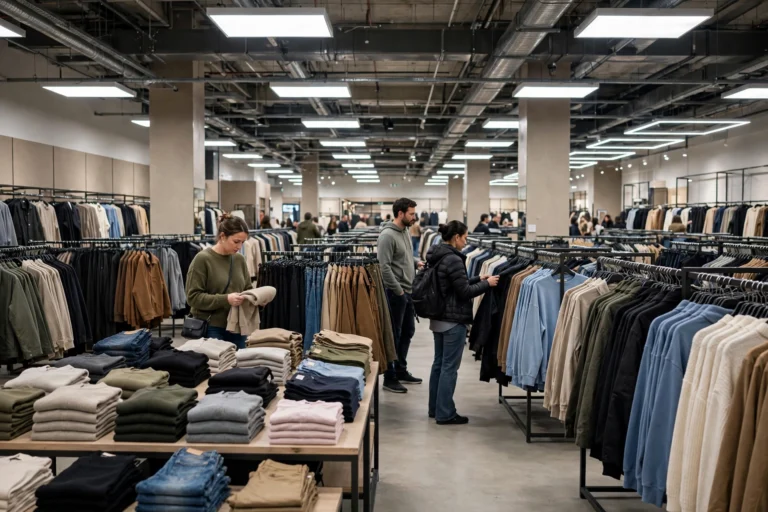
Years of watching smart shoppers save 40, 50, even 65 percent taught us these outlet shopping tips — the difference between a triumphant haul and a bag of regrets is almost entirely about what you do before and during the trip, not luck. Outlet malls reward preparation and punish impulse. Here’s the complete playbook for getting the best deals every time you go.
Most people treat outlet trips casually: drive over, wander, buy what catches their eye. That’s exactly how outlet centers want you to shop — because wandering shoppers pay the “suggested” prices and miss the stacked deals. The shoppers getting legendary deals follow a system. This is that system.
Before You Go: The 48-Hour Prep Plan
1. Join the VIP and loyalty clubs (night before)
The highest-ROI five minutes in outlet shopping: signing up for the center’s shopper program before you arrive. Simon’s VIP Shopper Club (most Premium Outlets), TangerClub (Tanger centers), and individual center programs offer free digital coupon books, often worth an extra 10 to 25 percent off at participating stores. Some offers are member-exclusive and won’t be advertised in-store.
Also join the loyalty programs of your top 3–5 target brands. Brand-level offers frequently stack with center-level coupons — that’s the double-dip that creates the deepest discounts.
2. Make a prioritized shopping list
Write down what you actually need, ranked by priority, with acceptable price thresholds. Example: “running shoes — will buy under $90; jeans — will buy under $60.” This does two things: it focuses your route (hit priority stores first, when selection is best), and it gives you a walk-away rule when prices don’t hit your target. The list is your defense against the $40 “deal” on something you didn’t need.
3. Research current retail prices
For your priority items, spend 15 minutes checking what they cost right now at full-price retailers and the brand’s own website. Screenshot the prices. In the store, this takes ten seconds to compare — and it’s the only reliable way to know whether an outlet price is genuinely good. Our best shopping deals 2026 roundup helps you spot which categories are discounted hardest right now.
4. Check the center’s website for events and new stores
Outlet centers post event calendars: sidewalk sales, midnight openings, brand grand openings (which often feature opening-weekend promotions), and holiday events. A ten-minute check can reveal that next weekend — not this one — is the sidewalk sale. Patience is a discount.
5. Plan your route and timing
Download the center map. Mark your priority stores. Plan to arrive within 30 minutes of opening — the golden window when shelves are fully stocked, fitting rooms are empty, and staff can check stockrooms. Decide your lunch spot in advance (leaving the center for food wastes prime shopping time).
At the Mall: The Deal-Stacking Playbook
6. Hit the visitor center first
Before a single store, stop at the visitor/tourist center or customer service desk. Show an out-of-state ID or hotel key if you have one — many centers hand out free coupon books to visitors. Even locals should ask: some centers offer coupon books for purchase (usually a few dollars) that pay for themselves at the first store. This is free money most shoppers walk right past.
7. Shop priority stores first, in order
Go straight to your #1 priority store. Then #2. Then #3. Popular sizes in desirable items sell out by afternoon on busy days — the “I’ll come back later” plan fails constantly. Browse-and-wander comes after the mission-critical purchases are secured.
8. Stack every discount available
The core mechanic of elite outlet shopping: clearance price + store coupon + center coupon + loyalty reward. A $100 item marked to $60 clearance, minus 20% store coupon ($48), minus a $10 center coupon reward, bought with loyalty points — that’s how $100 becomes $35. Not every store allows every stack; always ask at the register “can I use this with the sale price?” The worst answer is no.
9. Check the clearance and back-wall sections first
In every outlet store, the deepest discounts live in the clearance section — usually at the back. Train yourself to walk past the front-of-store displays (fullest price, designed to catch wanderers) and start at the back. Front displays are marketing; back walls are money.
10. Ask about unadvertised promotions
“Are you running any promotions today?” and “Do you price-match your website?” are magic sentences. Stores run unadvertised manager’s specials, email-subscriber discounts, and military/student/first-responder discounts that aren’t on signage. Associates can also check stockroom inventory for your size — always ask before assuming it’s sold out.
11. Comparison-shop on your phone, every time
For any purchase over roughly $50, take 30 seconds to check the price at the brand’s main site and one major retailer. This single habit eliminates 90% of bad outlet purchases. If the outlet price isn’t clearly better, walk away — the item will still be there online later, probably cheaper during the next site-wide sale.
12. Try everything on
Outlet sizing is inconsistent — made-for-outlet lines can fit differently than retail lines from the same brand, and you can’t rely on “I’m always a medium.” Fitting rooms are empty in the morning; use them. Returns at outlets are often stricter, so getting the fit right in-store matters more.
Timing Tricks: When the Deals Are Deepest
| When | What to Expect | Strategy |
|---|---|---|
| Black Friday weekend | Doorbusters + extra % off, biggest crowds of the year | Arrive at opening; prioritize doorbuster items first |
| January (post-holiday) | Deepest clearance of winter seasonal goods | Best time for coats, boots, holiday-adjacent items |
| July (mid-summer) | Summer clearance begins; fall preview arrives | Swim, shorts, sandals at lowest prices |
| 3-day weekends | Storewide extra % off promotions | Reliable 20–30% stackable discounts |
| Weekday mornings | Best selection, no crowds, full staff attention | Default strategy for planned purchases |
| End of month | Sales quotas can loosen manager discretion | Polite asks on floor models/damaged items work best |
For category-specific timing (when to buy shoes vs. luggage vs. outerwear), our what to buy each month calendar is the perfect companion.
Money-Saving Tactics Most Shoppers Miss
Buy gift cards at a discount
Warehouse clubs and gift-card resale sites sometimes sell brand gift cards below face value. A 10%-off gift card used at an outlet store stacks with every other discount — it’s a discount on top of discounts.
Use the right credit card
A card paying 2%+ back on all purchases (or bonus categories covering your haul) adds a final layer. On a $500 outlet trip, that’s $10+ back for zero effort. Just pay the balance — interest instantly erases every discount you stacked.
Shop the “as-is” and open-box sections
Some outlet stores (especially footwear, luggage, and housewares) have as-is sections with minor cosmetic imperfections at steep additional discounts. A scuffed suitcase that lives in overhead bins anyway? Take the 40% extra off.
Ask about price adjustments
Bought something Tuesday and it went on deeper clearance Friday? Many outlet stores offer price adjustments within a window (often 7–14 days) with receipt. It never hurts to ask — the policy varies by brand.
Split the trip: outlets + off-price
Hit the outlet center for planned brand-specific purchases, then swing by a nearby TJ Maxx, Marshalls, or Nordstrom Rack for treasure-hunt browsing. The two formats complement each other — outlets for targets, off-price for serendipity.
What to Wear and Bring
- Comfortable walking shoes — you’ll log miles. Break in new shoes before, not during.
- Easy on/off layers — you’ll be in and out of fitting rooms; complicated outfits waste time.
- A crossbody bag or fanny pack — keeps hands free and valuables secure in crowds.
- Water and snacks — outlet food courts are pricey and lines are long at peak hours; a water bottle and granola bar sustain a long day.
- Phone charger or power bank — you’ll be comparison-shopping, checking maps, and photographing price tags all day.
- Measurements — if shopping for others, have their sizes (and your own, for inconsistent brands) saved in your phone.
Setting a spending framework before you go multiplies all of these tactics — our holiday shopping budget planner template adapts perfectly to outlet trips.
Common Outlet Traps (and How to Dodge Them)
- The “70% off” sign with tiny print: Often “up to 70% off” on a handful of items, with most of the store at 20–30% off. Read the fine print.
- Outlet-exclusive FOMO: “Only available at outlets!” is marketing, not value. Judge the item, not the exclusivity.
- The companion purchase: “Buy one, get one 50% off” only saves money if you needed two. Don’t invent needs.
- Anchoring on the compare-at price: A $200 “value” for $80 feels amazing until you realize the identical-quality item is $75 at a competitor. Phone-check everything.
- Skipping the receipt check: Verify discounts applied correctly before leaving the store — register errors on stacked promotions are common, and they’re much harder to fix later.
The Outlet Shopping Checklist (Print/Save This)
- Join VIP/loyalty clubs the night before
- Write a prioritized list with price thresholds
- Screenshot current retail prices for priority items
- Check the center’s event calendar
- Arrive within 30 minutes of opening
- Visitor center first — get the coupon book
- Priority stores first, in order
- Start at the back-wall clearance sections
- Ask about unadvertised promotions and stockroom inventory
- Phone-check every purchase over ~$50
- Try everything on
- Stack clearance + coupons + loyalty at the register
- Verify the receipt before leaving each store
For more ways to stretch a shopping budget, see our best deals under $50 and self-care ideas on a budget guides.
Level 2: Advanced Outlet Tactics
Once the basics are habit, these advanced moves separate good outlet shoppers from great ones:
Ask about price adjustments
Bought shoes Tuesday; they hit deeper clearance Friday. Many outlet stores offer price adjustments within 7–14 days with receipt — effectively retroactive stacking. Keep receipts for two weeks after every trip and check the brand’s online outlet section for price drops.
Work the end-of-month window
Store teams have monthly sales targets. In the last few days of the month, managers sometimes have discretionary room on floor models, display items, or slightly imperfect merchandise. A polite “is there any flexibility on the floor model?” lands better on the 30th than the 5th.
Build associate relationships
Regulars at a favorite outlet store get tipped off: “we’re getting a big transfer shipment Thursday,” “that boot goes to clearance next week.” Visit consistently, be pleasant, buy occasionally — the intelligence network builds itself.
Track prices across visits
Keep a simple note on your phone: item, store, price, date. Outlet prices move in patterns — you’ll learn which stores discount on which cadence, and you’ll recognize when a “sale” price is actually higher than last month’s regular outlet price (it happens).
Shop the partner split
Two shoppers, one list, divided by store zone: one works footwear while the other works apparel, rendezvousing every 45 minutes. You cover twice the ground during the golden morning window. Solo shoppers can approximate this by ruthlessly prioritizing — but a partner doubles throughput.
Use gift-card arbitrage
Warehouse clubs periodically sell brand gift cards below face value; gift-card marketplaces do the same year-round. A 10%-off gift card used at an outlet is a discount that stacks with literally everything else. Verify the cards work at outlet locations (most brand cards do) before buying in bulk.
Category Playbooks: Quick Tactics by Product
Athletic shoes
Target past-season models (1–2 seasons old) where the tech differences vs. current models are marginal. Check the clearance wall first, then ask about box-damaged pairs — the shoes are fine, the box isn’t, and the discount is real. Typical winning range: 40–55% off original retail.
Handbags
Identify retail transfers via label tells (see our factory outlet guide’s decoder). For made-for-outlet pieces, compare against the brand’s current online outlet price — in-store “sale” prices sometimes lag website promotions. Inspect hardware and stitching in natural light.
Denim
The simplest category: last-season washes are functionally identical to current ones. Buy the fit you know, in multiples when the price is right. Stacking coupons on already-discounted denim routinely reaches 50%+ off.
Outerwear
Timing is everything: buy winter coats in January (peak clearance) or August (pre-season promotions on last year’s stock). Check zipper and seam quality — outerwear construction differences show up in weather, not in the mirror.
Kids’ clothing
Buy ahead in sizes — kids grow predictably, and outlet clearance prices on next season’s sizes are the best value in the entire store. Don’t overthink brands; durability and price dominate.
The Outlet Trip Budget Worksheet
Fill this out the night before. It takes ten minutes and prevents 90% of overspending:
- Trip budget (hard cap): $______ — the absolute maximum, all-in.
- Priority 1 item: ______ — buy threshold $______ / current retail $______
- Priority 2 item: ______ — buy threshold $______ / current retail $______
- Priority 3 item: ______ — buy threshold $______ / current retail $______
- Flex fund (serendipity): $______ — for genuine surprise finds; when it’s gone, browsing is window-shopping only.
- Food/parking/tolls estimate: $______ — count it in the trip cost, not separate.
- Expected coupon/extra savings: ___% — based on your VIP book and brand offers.
The worksheet’s power is the thresholds. A $90 threshold on running shoes converts every shoe display into a yes/no decision — no deliberation, no rationalization, no “but it’s such a good deal.” Either it beats the threshold or it doesn’t. Shoppers who pre-commit to thresholds consistently spend less and save more than shoppers who “decide in the moment,” because in-the-moment decisions are made by the store’s designers, not by you.
Frequently Asked Questions
What are the best outlet shopping tips for beginners?
Join the center’s VIP club before visiting, make a prioritized list with price limits, arrive at opening, start at the back-wall clearance sections, and phone-check prices against retail. These five outlet shopping tips alone will save most beginners hundreds per trip.
How do I get extra coupons at outlet malls?
Sign up for the center’s free shopper program (VIP Shopper Club, TangerClub) the night before, visit the visitor center for a coupon book, and join your favorite brands’ loyalty programs. These routinely stack for 10–25% extra off.
What day is best for outlet shopping?
Weekday mornings offer the best selection and thinnest crowds. For the deepest discounts, target Black Friday weekend, January clearance, and three-day holiday weekends.
Can you negotiate at outlet stores?
Prices are generally fixed, but polite requests sometimes yield small discounts on floor models or imperfect items. The reliable savings come from coupons, clearance, and stacking — not haggling.
How much should I budget for an outlet trip?
Set a hard total before you go, plus per-item thresholds on your list. A focused half-day trip for 2–3 planned purchases often runs $150–$400; full-day multi-store hauls can reach $500+. The budget — not the deals — should drive spending.
Are outlet VIP clubs worth it?
Yes — they’re free, take minutes to join, and the coupon books typically deliver 10–25% extra off at participating stores. There’s no meaningful downside.